About Joe Moore

#1 Amazon and international bestselling author. Co-president emeritus, International Thriller Writers.

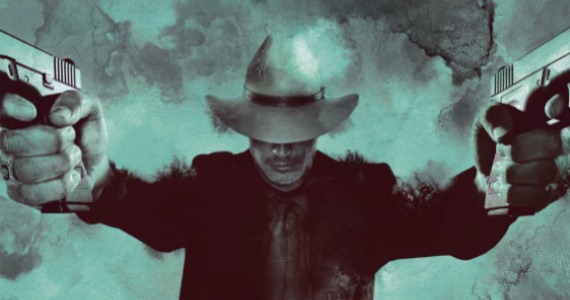
I Am JUSTIFIED

Timothy-Olyphant-Justified-S4

Jordan Dane
@JordanDane


It’s been crazy since the holidays between my writing deadlines, promotion for my latest release Indigo Awakening, and all the relatives coming in and out of town. But this week I’ve been saved. Elmore Leonard’s Justified is back for Season 4 and the first episode – Hole in the Wall – did not disappoint. It was “happy dance” fun.

Yes, Raylan and his bad ass Hat-itude inspires me to dig deep for insanely evocative dialogue and characters that make me cringe and laugh at the same time. I see this series as pure writer inspiration. (I love Elmore Leonard.) There were shockers in this first show. Don’t worry. No spoilers, but for anyone who saw it, I’m already filling my Constable Bob “Go To” bag with all the necessaries to kick some fictional butt in 2013.

What would you put in YOUR “go to” writer’s bag this year? Any resolutions? Here are FIVE writer things I learned from being JUSTIFIED.

1.) Never discount the importance of a good secondary character. Constable Bob is a prime example of how a well-written secondary character can steal your scenes and maybe become a spin-off.

2.) Writing one book can lead to another if you plant the seeds. Add a super hot bail bonds woman, a hotel mini-bar, and a marshal with pliable ethics and you can have a future book plot. Leave threads or seeds to another plot in your current work-in-progress. It never hurts to have ideas and it may leave readers wanting more.

3.) Dark humor is gold. When a loaded hooker comes face to face with something “grizzly” in her place of “business” or a simple phrase like “take care of him” can be construed in more than one way, a well-placed bullet can be JUSTIFIED funny.

4.) Give your anti-heroes loads of baggage and a cast of characters around them that will push their ethics to their darkest depths. Test them. Right from the start, Raylan is tempted into “helping” bring a fugitive to justice, especially if he can benefit from a little bounty money on the side and sees no harm in taking a modest gratuity. What comes next escalates his woes into pure Raylan MO when he has to cover his butt from getting caught. (Hint: If you talk too much, you get a special seat in his car.)

5.) To get a great pace going, jump into the plot without too much back story. The sheer mystery will draw readers in until your reveal. Have patience and don’t “telegraph” where you’re headed. Readers love a twist they never saw coming.

For the premiere, I followed twitter hashtag #JUSTIFIED while I watched the show to see what followers found interesting or memorable. Die hard fans are hilarious and they often quote whole lines to let everyone know what got to them. Twitterville heated up with Justified fans and I had even more fun. Many writers joined in the fun.

So tell me what you’d put in your writer’s TO GO bag for 2013—to be ready for anything like Constable Bob. Or please share what JUSTIFIED has taught you, whether you’re a reader or writer. (I’m pretty sure I’ll never ask Raylan’s daddy Arlo about what he likes to read. Just sayin’.)

Here’s a sneak preview of next week’s episode. If you have trouble viewing it, here is the Youtube link: http://youtu.be/mtMFLlk5lKk

How to stay Focused on your Writing

By Joe Moore

Happy New Year to everyone as we get the 2013 edition of The Kill Zone blog underway. Thanks for continuing to come by and share your thoughts and comments. If you’re a writer, may this be a great year for your efforts. And if you’re a reader, please pick up or download a copy of one of TKZ author’s books and take us for a spin.

bcsThis past Monday night, not far from where I live, the BCS college football championship game was played between the #1 University of Notre Dame Fighting Irish and the #2 University of Alabama Crimson Tide. Notre Dame never had a chance. Within 10 minutes the Tide had scored two touchdowns. By the end of the first quarter, they were a yard away from their third touchdown which they scored seconds later at the start of the second quarter. By halftime they were up 28-0. The middle of the third quarter, 35-0. Final score: 42-14.

Notre Dame forgot how to run. They forgot how to throw or catch the ball. They forgot how to block, tackle, or in general, play the game. It was one of, if not the worst championship football games of all time. Somewhere around the middle of the first quarter, the Fighting Irish lost focus. As a consequence, the viewing audience, the fans in the stadium, and even the sports commentators seem to drift away to other things. Not something you want to happen in a major sporting event.

So why am I talking about sports on a writer’s blog? Because what happened to ND and their loss of focus is something that you never want to happen to you as a writer. To help you keep your focus in the New Year, I suggest the following four tips. I hope they help.

1. Set realistic, obtainable goals. Naturally, if you’re a published author under contract, a deadline is the best goal of all. In most cases, there are nasty consequences for missing your deadline. But if you’re writing your first novel or have yet to nail that first publishing contract, the only deadlines are the ones you set. So your goals can be things like word count, pages per day, hours of writing per week, etc., something that is within your ability. If you find that you consistently meet your goal, then consider expanding it a bit beyond your comfort zone. If you goal is 500 words a day, try upping it to 700 or 1000.

2. Set a writing schedule and stick to it. If you work a day job and can only write a half hour a day, make sure you utilize that half hour to its fullest. Don’t schedule it in conflict with other priorities such as family activities. And make sure everyone around you knows that your scheduled writing time is your serious time to devote to your goals. They need to understand how important your writing is to you.

3. Establish a writing “place”, one with minimum distractions. A corner of a bedroom, out on the patio, the quiet of a spare room. Go there when you write and think of it as your “office”. Avoid any place that contains noises, TVs, or any other distraction that could pull you away from your valuable writing time.

4. Consider joining a local writer’s critique group. If there’s nothing available in your area, there are many groups that meet online. Having to produce a new chapter to present to the group each week is a strong motivator to keep you focused and hit your goals. You don’t want to go to the meeting or log into the forum empty handed.

There are many other tips on maintaining focus, but these four worked for me when I started out writing my first thriller years ago. Remember that writing routines like these are repetition that build mental muscles and help your stay focused on completing your manuscript.

Any other tips out there to stay focused as you hone your writing skills?

===============
THE BLADE, coming February, 2013 from Sholes & Moore
"An epic thriller." – Douglas Preston
"An absolute thrill ride." – Lisa Gardner
”Full-throttle thriller writing.” – David Morrell
"Another razor-sharp thriller from one of my favorite writing teams!" – Brad Thor
"History and suspense entangle from page one." – Steve Berry

Sifting through the stats for nuggets of insight

It’s always fun, and occasionally instructive, to analyze how new readers find their way to TKZ. So yesterday I took a quick look at the blog’s system stats. Here are some of the key word searches that brought  people to the blog:

Rhino, rhino skin: Searches for rhinos take readers to Jim Bell’s Rhino Skin, which contains good advice for writers who need to develop a thicker hide as a survival tactic.

Best written sex scenes: This search phrase has got to be our all-time winner for drawing new readers to the blog. It usually lands on Clare’s post, The Top 5 mistakes made in sex scenes. Written in ’09, it’s the post that keeps on giving.

Semi Colon: This search lands on Jim’s The Great Semi Colon Debate. If your page has a semi colon stuck in its craw and you want to vent about it, this is your post.

Formula for writing a best seller: Those in search of a magic formula for best sellerdom will undoubtedly be disappointed to read there’s no such thing in a post I wrote a while back, How to write a best seller.

Book revolution: This search lands on any number of field reports about the rapidly changing publishing industrY.

Overall, the search stats for TKZ reveal that readers find us because they’re serious about their writing craft, and they’re looking for insights on the journey toward becoming a better writer. From the number of repeat visitors we get here at TKZ, and the blog’s overall growth over the years, I can surmise that we’re providing some discussion that’s useful. The Zoners of TKZ pledge to continue doing our best to engage readers and continue the conversation in 2013.

And now I’d like to hear from you. Are there any particular topics or voices you’d like to hear discussed this year at TKZ?

To New Adventures

by Clare Langley-Hawthorne

Happy New Year from all of us at TKZ

2013 has already ushered in a new adventure for me and my family with us moving to Denver. My twin boys start at their new school today and so there is a palpable sense of nervous tension, excitement, fear and uncertainty in the air – all signals that we are embarking on an adventure indeed. In honor of this, I have also started reading The Hobbit aloud to them – but I have assured them that, as far as I know, they won’t be encountering any trolls, goblins or dragons here in Colorado.

This year I have decided to focus my new year’s resolutions on some of the aspects of my career that I fear were sidelined during my time in Australia. Being so far away from the principal market for my books as well as my agent meant was not necessarily a good thing as I missed out on valuable face-time at conferences and book related events. It was hard to justify the expense of flying over just to meet with my agent or to attend a writing conference and so I focused solely on my writing – which was not a bad thing – but I fear I did so at the expense of ‘driving’ that writing forward into the marketplace. 

It means that I face 2013 feeling like I don’t have very much to show for all my efforts – even though I know it is more a question of timing and patience than it is anything else. But it truly is time that I stopped being reactive and became the driver of my own career. In concentrating on my writing (and completing three manuscripts could hardly be considered slacking off!) I didn’t keep up the other aspects critical to keeping my career on track – I made bugger all changes to my website, did little or no marketing or publicity, and apart from  TKZ blog I didn’t keep up with guest posts or my own Edwardian-era focused blog. Mea Culpa indeed.

My goals for 2013 are pretty intimidating – not in terms of time or commitment but in terms of changing my mindset to make sure I regain a better sense of control over my career and come out of my hermit hole to promote myself rather than focusing solely on my writing to the detriment of everything else. In this ever changing marketplace I cannot afford to remain at shut-off from everything but the manuscript in front of me (and now, I don’t have the literal ‘tyranny of distance’ as an excuse, either). 

But here’s the thing – I’m not exactly sure how I’m going to achieve this change of mindset or  how to overcome the self-doubt that a few years of what feels like self-imposed exile has brought. So I’m seeking advice from you all. What goals have you set yourself and your writing career this year? I’m hoping I’m not alone in wrestling with all the challenges a new year and a new adventure can bring. So how are you going to overcome obstacles and achieve all that you want to accomplish this year?

Happy Holidays!

AWREATH3It’s Winter break here at the Kill Zone. During our 2-week hiatus, we’ll be spending time with our families and friends, and celebrating all the traditions that make this time of year so wonderful. We sincerely thank you for visiting our blog and commenting on our rants and raves. We wish you a truly blessed Holiday Season and a prosperous 2013. From Clare, Boyd, Kathryn, Kris, Joe M., Nancy, Michelle, Jordan, Joe H., Mark, and James to all our friends and visitors, Seasons Greeting from the Kill Zone. See you back here on Monday, January 7.

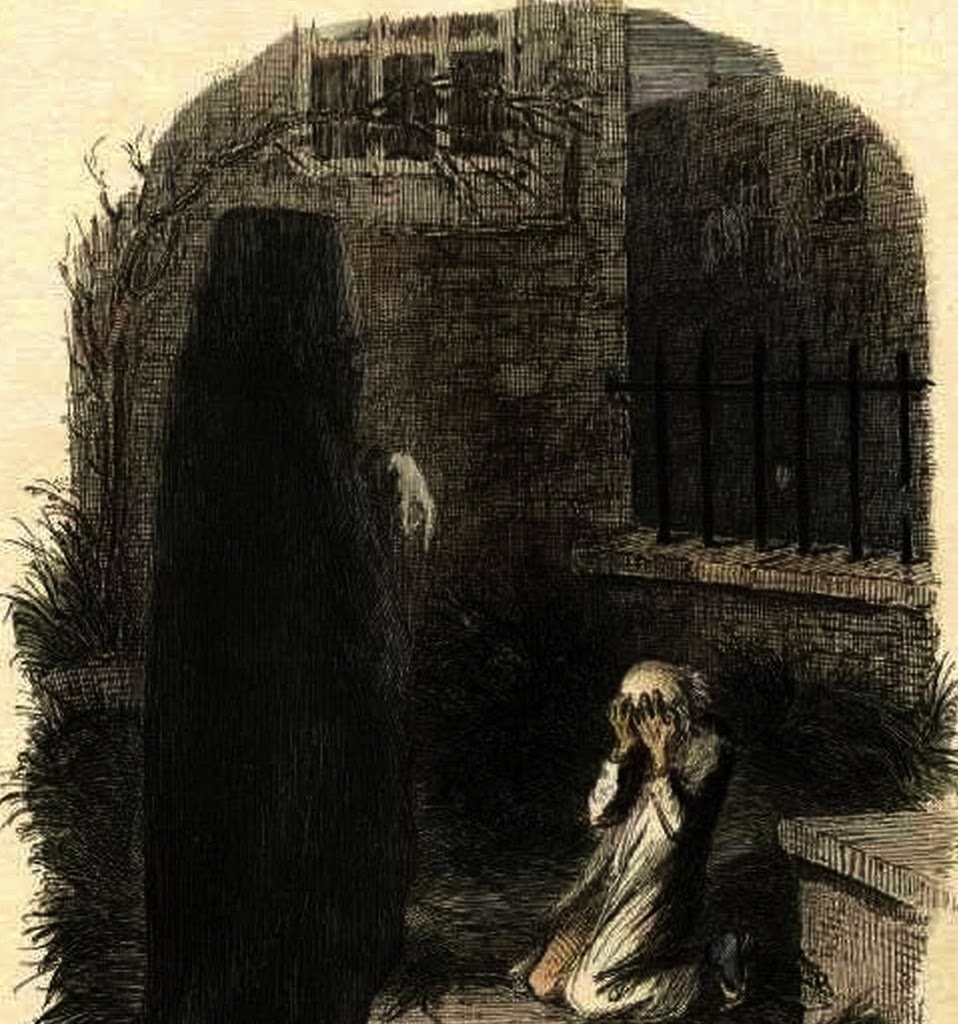
The Ghost of Writing Yet to Come

James Scott Bell
@jamesscottbell


The Phantom slowly, gravely, silently, approached. When it came near him, Ebenezer Scribe bent down upon his knee; for in the very air through which this Spirit moved it seemed to scatter gloom and mystery.
 “I am in the presence of the Ghost of Writing Yet To Come?” said Scribe.
The Spirit answered not, but pointed onward with its hand.
“You are about to show me shadows of the things that have not happened, but will happen in the time before us,” Scribe pursued. “Is that so, Spirit?”
The upper portion of the garment was contracted for an instant in its folds, as if the Spirit had inclined its head. That was the only answer he received.
Scribe feared the silent shape so much that his legs trembled beneath him, and he found that he could hardly stand when he prepared to follow it. The Spirit paused a moment, as observing his condition, and giving him time to recover. It was something out of a Stephen King novel. Scribe, in his youth, had once wished to be “another Stephen King.”
“Ghost of the Future!” Scribe exclaimed, “I fear you more than any spectre I have seen. But as I know your purpose is to do me good, and as I hope to live to be another writer from what I was, I am prepared to bear you company. Will you not speak to me?”
It gave him no reply. The hand was pointed straight before them. The Spirit guided him onward.
Presently, it stopped beside one little knot of writers at a local Starbucks. Observing that the hand was pointed to them, Scribe advanced to listen to their talk.
“No,” said a great fat man with a monstrous chin, “I don’t know much about it, either way. I only know he’s dead.”
“When did he die?” inquired another.
“Last night, I believe.”
“Why, what was the matter with him?” asked a third, breaking off a vast chunk of zucchini muffin and stuffing his cheek.
“God knows,” said the first, with a yawn.
“How many books did he actually write?” asked a red-faced gentleman with a pendulous excrescence on the end of his nose, that shook like the gills of a turkey-cock.
“Not many,” said the man with the large chin, yawning again. “He quit writing some time ago. Didn’t think he was good enough. At least, not as good as we!”
This pleasantry was received with a general laugh.
“It’s likely to be a very cheap funeral,” said the same speaker; “for he did not make any money self-publishing.”
“Because he did not think of it as a business,” said the red-faced man. “Nor did he keep producing new work.”
“Which is what we should be doing,” said the one with the muffin.
“Oh shut up,” said the large-chinned man.
The Spirit beckoned Scribe to follow, and soon they were in an obscure part of the town, where Scribe had never penetrated before, although he recognized its situation, and its bad repute.
Far in this den of infamous resort, there was a low-browed, beetling shop. Sitting in among the wares he dealt in, by a charcoal stove made of old bricks, was a grey-haired rascal, nearly seventy years of age; who had screened himself from the cold air without, by a frousy curtaining of miscellaneous tatters, hung upon a line; and smoked his pipe in all the luxury of calm retirement.
Scribe and the Phantom came into the presence of this man, just as a woman with a heavy bundle slunk into the shop. She opened the bundle before him and exposed three books.
“Here it is, Joe,” the woman said, laughing. “All the writing books he owned, poor soul.”
The old man removed his pipe and took each book up, one at a time. “Why, none of these books is highlighted,” he said with contempt.
“I was his housekeeper, I was,” the woman said, “and I never saw him study a single book. He always said writing couldn’t be learned, you know, and these books was gifts to ‘im, but I don’t see as how they did ‘im any good that way.”
“None at all,” Joe agreed. “He who ignores discipline comes to poverty and shame, the Good Book says, and if he fancied himself a writer he shouldn’t’ve listened to the likes of the naysayers.”
“He didn’t even have a word quota, more’s the pity.”
“And would I be in my exalted position if I did not practice industry daily?” Joe said. “Here, a sixpence for the lot and not a farthing more. I’ll sell ‘em to a young writer who actually has the moxie to write and never quit.”
“Spirit!” Scribe said. “This is a fearful place. Let us go!”
The Ghost pointed with an unmoved finger toward the books.
“Yes, I know I must study the craft,” Scribe returned, “and I know I must write to a quota, and I would do it if I could. But I have not the power, Spirit. I have not the power!”
The Spirit tweaked Scribe on the head with a bony finger. Thwack!
“Ouch!” Scribe said. “Okay! I get it! Hear me! I am not the writer I was. Why show me this, if I am past all hope!”
For the first time the hand appeared to shake.
“Good Spirit,” he pursued, as down upon the ground he fell before it: “Your nature intercedes for me, and pities me. Assure me that I yet may change these shadows you have shown me, by a disciplined writing life!”
The kind hand now made the Okay sign.
“I will honor writing in my heart, and try to keep at it all the year! I will develop ideas and write novels and actually finish them! I will not shut out the lessons you teach!”
In his agony, he caught the spectral hand. It sought to free itself, but he was strong in his entreaty, and detained it. The Spirit, stronger yet, repulsed him.
Holding up his hands in a last prayer to have his fate reversed, he saw an alteration in the Phantom’s hood and dress. It shrunk, collapsed, and dwindled down into a bedpost.
A bedpost Scribe was clutching with his hands.
He was back! In his own bed!
Running to the window, he opened it, and put out his head. “What’s to-day!” cried Scribe, calling downward to a boy.
“Eh?” returned the boy.
“What’s to-day, my fine fellow?” said Scribe.
“To-day!” replied the boy. “Why, it’s the start of NaNoWriMo!”
“NaNoWriMo!” said Scribe to himself. “Then I haven’t missed it!” And then to the boy: “Hallo, my fine fellow, do you know the grocers, in the next street but one, at the corner?”
“I should hope I did,” replied the lad.
“An intelligent boy!” said Scribe. “A remarkable boy! Run and fetch me as many packages of ground French Roast as this’ll buy!” He threw two twenties out the window to the boy. “Come back with the coffee in ten minutes and I’ll give you a shilling!”
“What’s a shilling?”
“Come back in less than ten minutes and I’ll give you half-a-crown!”
“Whatever,” said the lad, and ran away.
Scribe ran to his computer. He turned it on and opened a blank Word document and wrote “Chapter One” and skipped down two spaces. “In all the time I have left on this earth,” he said to himself, “I am going to write. I am never going to stop. I’m going to set a word goal for every week, and I’m going to study those books I have, and buy more! I am determined to get better with each project! And I’m going to develop more than one idea at a time! For I am a writer! That’s what the Spirits wanted me to know! And I can only be stopped if I give up!”
Scribe was better than his word. He did it all, and infinitely more. He completed his NaNoWriMo novel, self-edited it, got feedback from beta readers, edited it again, and had it edited by a professional. He became as disciplined a writer as the old city knew, or any other old city, town, or borough, in the good old world. Some people laughed to see the alteration in him, but he let them laugh, and little heeded them. His own heart laughed, for he was a true writer now, and that was quite enough for him. For he knew that the writing game favors those who produce and risk and sometime fail, but always come back bravely to the page to risk and write again.
May that be truly said of us, and all of us! And so, God bless us, every one!

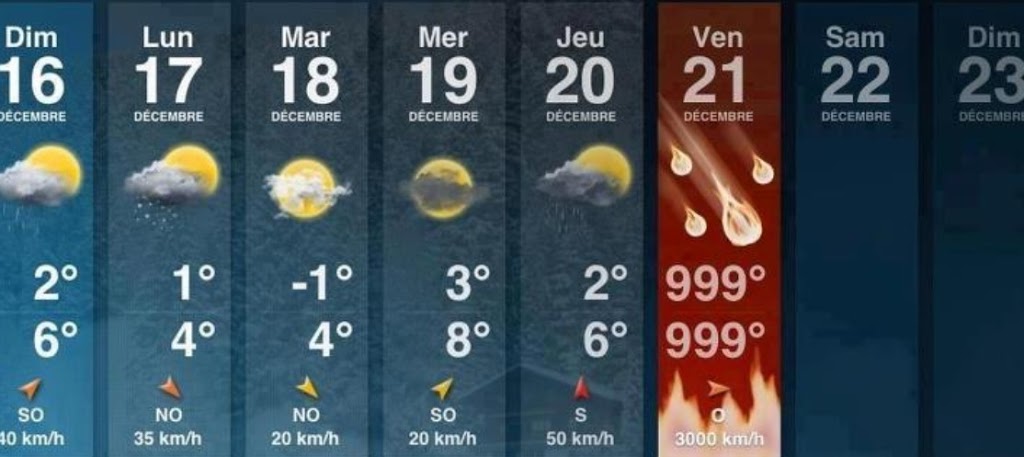
The Day After the Day the World Ended

Hmm. We’re still here. I think we can cue up “Looks Like We Made It” by Barry Manilow. Is anyone out there? You? You as well? Good. I think we’re okay here. We can decorate the Christmas tree and do the last minute shopping we’ve been putting off (somehow, an apocalypse that did not happen is no excuse for giving a loved one a sub-par Christmas). I put off buying a new side-view mirror until the last possible minute yesterday. I sacrificed the old one on the side of the garage earlier this week and figured “What ho! It won’t make any difference after Friday.” Now it does, and I’ll spend Sunday, or at least part of it, installing it. And be glad for it. I think.
Thrillers have long been obsessed with end times of various sorts. A cottage industry of sorts arose a couple of years ago which produced some interesting books (and many that…well, weren’t) about what happens when ancient calendars run out of days, but I’ve been reading books about the world’s end since I could first read, which was a long time ago. My favorite is I AM LEGEND by Richard Matheson. Yes, I know, it’s not quite the same thing, any more than Walking Dead is in either graphic novel or television form, but it amounts to the same thing. The characters in those books, and others, keep on trucking, to the point and the extent that one wonders why. I mean, is the biological imperative that strong? To ask another way, and from another direction: is there anyone out there who was actually hoping that things were going to bite the moose on December 21, 2012? Maybe a little bit, in some dark corner of their psyche they normally keep in a little tiny closet with a triple-bolt deadlock on the door, and that has been scratching like crazy to get out the past few days? I’m not talking about something to the extent and degree that we hoped for blizzards to hit during exam weeks in grade school. I mean something that whispered, “Wow! Now we can go flirt with the neighbor, forget about shoveling snow, and send that pesky collection agency a big foaming cup of…” Well, you can fill in your own end-time dream.
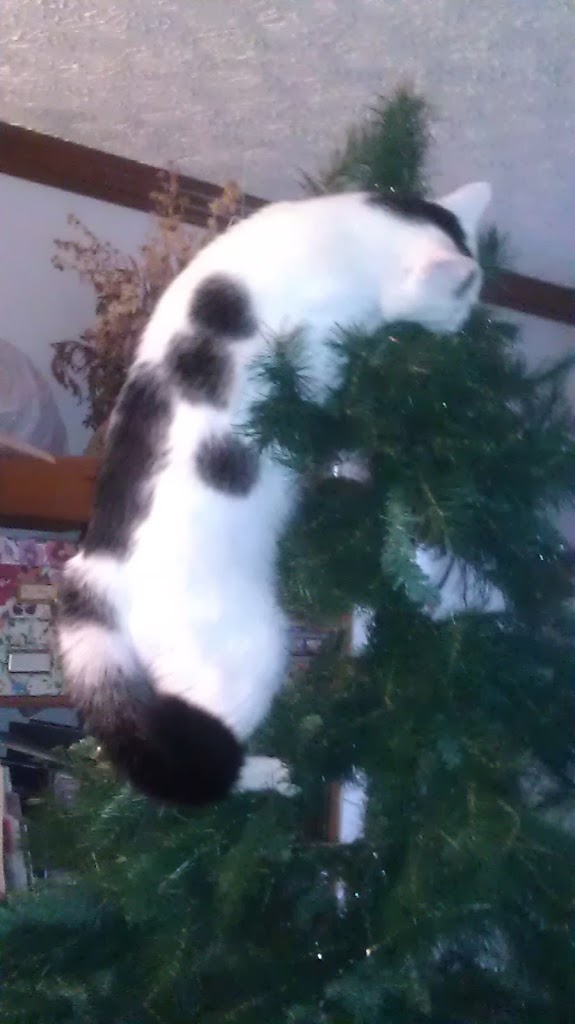
Now that tomorrow is the today that some folks didn’t think would happen, there are things to do. I’m going to bring the granddaughter home and make cookies. That side mirror isn’t going to climb onto the car and attach itself, so I need to do that. The tree is up, but not decorated. Our cat, christened “Fennec” by my younger daughter but nicknamed “Demonspawn” by myself, has claimed it, and attacks anyone who touches it. I think, until the end of time that it has all of the decoration that it needs. You be the judge.
Merry Christmas and Happy New Year! And we’ll see you in 2013, if the Good Lord is willing and the creek don’t rise.


World Building – Indigo-style

by Jordan Dane
@JordanDane


My young adult novel, Indigo Awakening, launched two days ago on December 18. It is the first book in the Hunted series with Harlequin Teen. The inspiration behind this book came from researching Indigo children. Query “Indigo Child” on the Internet and you’ll get over 8 million hits. Real life and headlines often inspire my books and this time is no exception. For the purposes of fiction, I took liberties in my portrayal, but Indigo kids are generally described as highly intelligent, gifted teen psychics with a bright “indigo” aura and a mission to save the world. They have high IQs, see angels and commune with the dead. Are Indigo children real or are they manipulated by adults to believe they’re special? Are they dysfunctional misfits or mankind’s evolutionary savior? You decide, but I find the notion of man’s evolution intriguing. Here is the synopsis:

Because of what you are, the Believers will hunt you down.

Voices told Lucas Darby to run. Voices no one else can hear. He’s warned his sister not to look for him, but Rayne refuses to let her troubled brother vanish on the streets of LA. In her desperate search, she meets Gabriel Stewart, a runaway with mysterious powers and far too many secrets. Rayne can’t explain her crazy need to trust the strange yet compelling boy—to touch him—to protect him even though he scares her.

A fanatical church secretly hunts psychic kids—gifted “Indigo” teens feared to be the next evolution of mankind—for reasons only “the Believers” know. Now Rayne’s only hope is Gabe, who is haunted by an awakening power—a force darker than either of them imagine—that could doom them all.

They are our future—if they survive…

Five Key Ways I Built my Indigo World

1.) I triggered my premise with a “What If…” question that had conflict – The most important question in a writer’s arsenal is “what if.” What if Indigo kids are the next evolution and their psychic abilities are evolving and escalating? Who would fear this and feel threatened? I had to have a larger than life villain with a universal reach to terrorize these children. (Yeah, that’s how authors think.)

2.) I created conflict through a powerful enemy – The Church of Spiritual Freedom (specifically, a covert operation of overzealous “Believers”) use their faith as justification to persecute those they fear, believing God is on their side. They fear that Indigos and Crystal children threaten humanity’s existence with their “unnatural” superiority. That’s the basic conflict, a David versus Goliath storyline with an abundance of potentially evocative themes.

3.) I did research to add depth and dimension –I blended my research on Indigo kids with the topic of psychic abilities to create a different kind of world that wouldn’t be formulaic. I wanted the reader to “feel” these powers and how they erupt or evolve within each character. I didn’t want to simply describe traditional psychic capabilities. I wanted readers to understand how these kids feel as their power explodes or how their gifts morph into something far greater after they make contact with the “hive mind.”

4.) I provided a cultural context and hierarchy to my world that added to internal conflict for my characters – There is a hierarchy of Indigo Children/Indigo Warriors/Crystal Child. I made Indigo kids the base level with the status of a Crystal child more unique, powerful, and elite. Indigos are highly intelligent intuitive teens who “feel” their way through life, trust their instincts above all else, and can often see angels and the dead. Some Indigos are warriors with a fierce fighting spirit and a rebellious nature. This difference fuels future conflict between the cultures as Crystal children tend to be more peace loving and innocent. They are our future, if they survive, but what kind of world will they build?

5.) I built in consequences for wielding power – There is a dark side to having these powers—a duty and responsibility—and when the Believers tamper with science and human nature, they battle something they should have respected more. In book #2, Crystal Storm, There are consequences on both sides when power (of any kind) becomes abusive.

1.) If you could have a secret Indigo power, what would that be?

2.) Have you ever experienced a psychic moment or do you know anyone who you think is a real psychic?


“Dane’s first offering in her new series, The Hunted, is sensational. Indigo Awakening has strong characters and a wild and intense story, matched only by the emotions it will generate within you. Readers will love this book and eagerly await the next adventure. Fantastic! A keeper.”

~Romantic Times Book Review Magazine – 4.5 Stars (out of 5)

Blending Sex and Suspense

Nancy J. Cohen

How do you fit romance into a non-stop thriller? These genres are not mutually exclusive. Look at your movies for examples. Romancing the Stone with Kathleen Turner and Michael Douglas, and The Librarian: Quest for the Spear with Noah Wyle and Sonya Walger are two of my favorites. What recent thrillers have you seen where a romantic relationship is involved? How did the film get this across to viewers?

Here’s how to start with your own story: Give your characters internal and external conflicts to keep them apart. The external conflict is the disaster that will happen if the villain succeeds. The internal conflict is the reason why your protagonists hesitate to get involved in a relationship. Maybe the heroine was hurt by a former lover and is afraid of getting burned again. Or she has a fierce need for independence. Why? What happened in her past to produce this need? Maybe your hero doesn’t want a wife because his own parents went through a bitter divorce, and secretly he feels unworthy of being loved. Or maybe he feels that his dangerous lifestyle wouldn’t suit a family. Keep asking questions to deepen your people’s motivations.

Your characters will be immediately attracted to each other through physical chemistry. This pulls them together while the inner conflicts tear them apart. Soon the benefits of a relationship begin to outweigh the risks. Perhaps they have to work together to rescue a hostage or to escape the bad guys. As the story progresses, they become emotionally closer as they progress through the stages of intimacy. In a thriller, this might happen at a faster pace than other genres. But even thrillers need down times from the tension.

Here’s an abbreviated version of the stages of intimacy:

1. Physical awareness: Your characters notice each other with heightened sensitivity.
2. Intrusion of thoughts: Your character begins thinking about this other person often.
3. Touching: First, it may be an arm around the shoulder, lifting a chin, touching an elbow. They come closer until the desire to kiss is almost palpable. Rising sexual tension is the key here, not so much the consummate act. Your couple can have a stolen moment when they’re being chased by the villain and are forced into close proximity, for example. Even if it’s a momentary diversion, you’re advancing the level of awareness.
4. Kissing
5. Touching in more intimate places
6. Coupling: Focus on the emotional reactions of your characters. Avoid clinical terms or use them sparingly. This is lovemaking, not just sex. For it to be romantic, think “slow seduction”, not “slam bam, thank you ma’am”, unless the scene or characters warrant this behavior. If a sex scene doesn’t fit into the story’s pacing, leave it out. Or maybe all they have time for is a quickie. In that case, let’s see the emotional aftermath. Maybe the hero acts out his concern for the heroine’s safety after they’ve been together.

When all seems to be going well, throw a wrench into the relationship. Perhaps it appears as though the heroine betrayed the hero. Or he walks out on her because he fears his own vulnerability. Finally, they both change and compromise to resolve their differences by the story’s end.

Keep in mind that I’m writing this advice from a female viewpoint. Also, I write romance in addition to mysteries, so I have the mindset for that genre.

I used to read spy stories and men’s adventure in my younger days. Those were guy novels with a woman of the week. None of those relationships were meant to last. I suppose this is what makes the difference. If you don’t care about your two characters ending up together, then the woman may merely serve as a sex object. And that might not endear you to your female readers (who happen to buy more books than men).

As for series, people read ongoing series for the characters and want to see them grow and change. Giving us relationships we care about is what will encourarge readers to buy your next book. So think about your purpose before going into the story. Where do you want these two people to go? Why can’t they get there? What do they have to overcome in order to be together? And if they don’t end up as a couple, then what purpose does their relationship serve?

Here’s an example from Warrior Rogue, my next release. The hero and heroine have just met when they’re involved in a mid-air terrorist attack aboard their private business jet. This is from the heroine’s viewpoint. They’ve landed on a beach on a remote Pacific island.

“Come on, we can’t waste time.” Paz signaled to her from the open hatchway.

She staggered toward him. Peering outside, she was glad to note they didn’t need the emergency chute. They could easily jump the short distance to the ground. Holding her long skirt, she leaped after Paz onto the beach.

He caught her in his muscular arms and gently eased her down. His tousled hair, determined jaw, and ocean blue eyes had never looked better.

“Thank you. You saved our lives.” On impulse, Jen rose on her tiptoes and kissed him.

She’d only meant it to be a brief expression of gratitude, but Paz’s gaze intensified. He swept her into his arms and gave her a passionate kiss that left her breathless.

“We’re safe now.” He broke away with a regretful expression. “At least, for the moment. But we shouldn’t linger.”

“For the moment? What does that mean?” The memory of those ugly men who’d attacked them returned with full force. “You know who assaulted us, don’t you? When are you going to tell me what’s going on?”

“Let’s summon help first. I need to put my comm unit back together. If we can hook it into a local network, you can call your people.”

“I have my cell phone.” She patted her purse.

His hand clamped onto her arm. “We should scout around. Our landing probably attracted attention, and we don’t want the wrong people to find us.”

Note how their level of intimacy advances in this short scene. If you’re writing from the male viewpoint, when Paz catches Jen, he could get a whiff of her scent.

So how do you work romance into your fast-paced thriller?