About Joe Moore

#1 Amazon and international bestselling author. Co-president emeritus, International Thriller Writers.

The ebook future’s so bright that I gotta wear shades

By P.J. Parrish

I am constantly losing my sunglasses. This is a big deal when you live in South Florida where people wear them even in winter. Double big deal for me because I need prescription lenses.
Plus I like looking cool, you know? And as any woman of a certain age can tell you, sunglasses are the way to go if you want to jazz up your look and can’t afford an eye job. (Stay with me here, you men out there, I am getting to what this has to do with writing, I promise).
But I lose my glasses. Have left them all over the world.  So when a girlfriend told me about this great online glasses maker Warby Parker I went to check them out. Nice shades! At prices I can afford! And I don’t have to go to LensCrafter at the mall!
Then, as I was reading about this new online company, I had an epiphany about -– wait for it! –- my ebooks.
Warby Parker is one of many new upstart online-only companies that are finding great success by bypassing the traditional retail model. Which is exactly what all of us writers are trying to do with our ebooks these days, right? 

Brief background: The four geeky guys behind Warby Parker (the name is from two characters in a Jack Kerouac journal) were trying to figure out why designer glasses cost beaucoup bucks and discovered it’s because everyone in the process was taking a cut — designers, manufacturers, brands, wholesalers and retailers. So they eliminated the middlemen, lowered the prices and built their reputation and customer base via the internet.

Sound familiar? In the traditional publishing model, think of all the folks who get a cut before you the author does — agents, editors, designers, copy editors, bean-counters, printers, binders, warehouses, distributors. And that’s before we even get to the bookstores. This is why royalty rates for hardcovers usually range from 10 to 12.5 percent, with 15 percent for big authors. Paperback is even less. Everyone along the book line has their hand out.

Back to Warby Parker for a sec. They seem to be pretty inventive. On their site, you can upload a photo and do a virtual try-on. And they’ll send you five frames to try on at home free. Isn’t such agility also one of the hallmarks of good ebook authors today? Every author I know who is succeeding at ebooks is thinking outside the old marketing boxes.  We are packaging our books in boxed sets. We’re offering short stories and novellas. We’re being flexible with pricing and even — gasp! — giving our products away. (It’s called sampling in business and it’s been a successful practice since the 19th century.) How many of you have tried to get your traditional publishers to do some of this? Maybe drop the price of your backlist ebooks to help catapult your new book? Show of hands for those who succeeded? That’s what I thought…

So what about that epiphany? Well, the more I thought about it, the more I realized that it’s not an epiphany so much as an affirmation of something I already knew in the back of my brain. I am new to the ebook self-pubbing business. I’ve only put one backlist title out there, Dead of Winter, and one novella, Claw Back. I know I have a ton to learn and some catching up to to do. (I mean, I can’t even figure out GoodReads, for corn’s sake).

What I have figured out is that I need to be a better business person. Yeah, I am a writer first and the creation of the story will always be paramount. And I want to keep a foot in traditional publishing because I still believe there is a place for actual books you can hold and actual bookstores you can visit. (even the Warby Parker guys figured this out — they opened a couple boutiques because they realized people still want to touch things before they buy them.).

But my real epiphany is this — that if I don’t pay attention to Parrish Inc. no one will. I have to get rid of any illusions I still might have about some nice big paternalistic publisher being there to always watch over me.

I may need glasses, but I’m not blind.


What is History?

By Clare Langley-Hawthorne

So I have an idea for a new book and it takes place partly in the early 1980s and it suddenly strikes me that, though I lived through this decade as a young teen, for my own children this era is as much ‘history’ as the Edwardian age is…and then I started to worry, am I really contemplating writing a ‘historical novel’ set in the 1980s?!

I was at a writer’s conference a few years ago and on a ‘historical mystery’ panel I remember an editor saying that ‘the 1980’s are not history’ – at the time, I dismissed the idea out of hand because it seemed such a no-brainer. I mean, the 1980’s – that’s hardly ‘historical’ – but then I started thinking about what happened during this time and my ideas fermented…until, I started to write and then I wondered, so what is the recent past like the 1980’s. Is it history or not?

For the most part, classification hardly matters, but when contemplating writing a novel set in the early/mid 1980s, I have to confess I started to wonder…I mean, how does one deal with the recent past in novels? How to you write about an era that hasn’t quite passed into ‘history’ and which, with all its quirks, is very much open to scrutiny. 

Just watching an episode of the show The Americans makes me appreciate just how ‘foreign’ some of the 1980s can seem…but it also makes me worry about dealing with the ‘recent past’. I have to wonder, what is the best approach to writing about an era that seems ‘so near and yet so far’?  One thing is for sure, you have to be absolutely sure about all your references as too many people are ready to catch your errors. But what about the other pitfalls? Are the 1980s ready to be used as a backdrop for a novel, or is the era caught between the past and present and best avoided? 

So what do you think?
Is a novel set in the 1980s ‘historical’?

Let Your Characters Live and Breathe

Among my books on writing is a 1919 title, A Manual of the Art of Fiction, by one Clayton Meeker Hamilton, a professor at Columbia University. It’s a bit academic, but I’ve found some gems in it. Among them is the following. In his chapter on characterization, Hamilton states:

The careless reader of fiction usually supposes that, since the novelist invents his characters and incidents, he can order them always to suit his own desires: but any honest artist will tell you that his characters often grow intractable and stubbornly refuse at certain points to accept the incidents which he has foreordained for them, and that at other times they take matters into their own hands and run away with the story. Stevenson has recorded this latter experience. He said, apropos of Kidnapped, “In one of my books, and in one only, the characters took the bit in their teeth; all at once, they became detached from the flat paper, they turned their backs on me and walked off bodily; and from that time my task was stenographic––it was they who spoke, it was they who wrote the remainder of the story.”

Has that ever happened to you? I suspect it has. It’s one of the most pleasurable aspects of writing (though a little daunting if you’re a dedicated outliner).
So what should you do when a character starts making a few moves of his own?
1. Listen
As Madeleine L’Engle once put it, “If the book tells me to do something completely unexpected, I heed it; the book is usually right.”
Take a breath and just let the turn of events soak in. When writing No Legal Grounds, about the stalking of a lawyer and his family, I had planned all along for the wife to leave the house and go off to stay with her sister. But when I got to that scene she wouldn’t go. Just wouldn’t do it. I tried to make her, but she told me to go pound sand.
So I walked around my writing desk thinking about it. I listened to her reasons. And it turns out she was right. She became a stronger character. Of course, I had to change my plans from that point on, which brings me to:
2.  Re-Imagine
Whether you are a plotter or a “pantser,” now is the time to jot some free-form notes on this new development.
Start with a general document on plot possibilities. Ask yourself questions like:
What further trouble can happen to this character?
What sorts of things has this character unloosed by her independent actions?
How have the other character relationships changed?
And so on. Next, add to your character’s voice journal (this is an exercise I follow and recommend in all my workshops. It’s a stream-of-consciousness document in the character’s own voice). Let the character talk to you about what’s going on, and what she might want to do about it.
3. Plan and Write the Next Two Scenes
Don’t worry about changing your entire outline yet. Just do the next two scenes. Write them. The act of writing itself is the most important way to let the characters live and breathe. Get a feel for who they are now, by writing out the consequences. Then you’ll be in much better shape to write to the end.
So what about you? Do your characters ever take off on you? How do you handle it?


Amazon and Goodreads, Sittin’ in a Tree…


I do not visit Goodreads as often as I should. There are readers out there who spend hours on it, and yes, I probably should as well, but I am one of those people who is good socially only in small doses, whether in person or in cyberspace. I only

use Facebook to wish folks Happy Birthday; I text better than I talk, but never instant message; and I rarely visit Goodreads. Part of the reason for my lack of use of the latter is that I cannot keep up with my reading of those books of which I am already aware; if I discovered, say, an entirely different genre — such as redneck noir, to name but one — it might send me entirely over the edge that I am already toes up against and leaning forward.


I as a result have only a (barely) working knowledge of the site. I know that it is very user friendly; the opening page treats me with more respect than do my children. It does a wonderful job of pretending that its happy to see me. Maybe I don’t visit often because I know that if I did I might never leave. It is just as well, for I discovered today that Goodreads loves another, a suitor known to its friends and detractors as “Amazon.” They haven’t set a date for a nuptials, but a ring has been proffered and accepted, and a dowry promised.

I’m thinking — and I cannot stress enough that I am stating this from a position of ignorance — that, as with other marriages arranged for the purposes of uniting dynasties, this one could result in offspring good and bad. I was amused to read that one of Goodreads’ co-founders asked its users “…what integration with Kindle would you love to see the most?” I was sorely tempted to respond “Kindle. From behind” but felt that such would perhaps be inappropriate. No one asked how the friends of the parties felt about this coming together, however (though that hasn’t stopped Scott Turow from weighing in). 

Until now. I am asking you: how do you feel about Amazon purchasing Goodreads? What do you see as advantages or disadvantages for authors, publishers, readers, and the entities themselves? Is this a good thing or a bad thing, overall? Should Amazon maintain an editorial firewall, if you will, between itself and Goodreads? How will we even know? Ready, steady, go!

Reader Friday: Desert Island Film Festival

Okay, you’re stuck on that proverbial desert island. No one around, but for some strange reason there’s a movie house and a trained monkey that knows how to run the projector. What three films would you want to have with you, one from each category:

1. Drama

2. Comedy

3. Musical

(We at TKZ will try to air drop you some popcorn)

So much for women’s lib…

by Michelle Gagnon

While watching the season finale of GIRLS, there was a moment at the end where I was seriously tempted to hurl something at the television. Because after all the advances women have made over the past fifty years, apparently for the younger generation of women showcased by the show, we’re pretty much back where we started.

This episode concluded with a nod the classic, “An Officer and a Gentleman” scene where Richard Gere sweeps Debra Winger off her feet, literally. Now, I loved that movie–still do–but the underlying message at the end was that the only way for poor Paula to advance in life was to marry well. I’d hope that nearly thirty years later, we were past such tired tropes. But according to Lena Dunham, they hold true. Not only does her character get “saved” by a man (ironically, the same one that earlier in the season terrorized her), but her fellow castmembers all fall in line accordingly. One starts dating her ex-boyfriend again because he’s suddenly struck it rich. Another dumps her boyfriend for not being ambitious enough (as underlined in a scene where his boss explains that, “she wants you to make enough money to be able to keep buying her purses shaped like bread products.”) Even the “hippie” character Jessa takes a payout from the wealthy investment banker she was married to for a heartbeat.

Really? Is this what we’re selling to girls in their twenties? I understand that GIRLS is a fictionalized version of reality, but if this throwback mentality is being showcased ironically, it’s far from apparent. And over the course of the season, this “girls can’t do it” attitude has been emphasized time and again. Hannah finally scores a book deal, but suffers a breakdown over the stress and is unable to write it. Marnie is laid off, becomes a hostess (and paramour to an older artist), and decides to become a singer; but we only see her pursue that dream via an ill-advised attempt to humiliate her ex at his office. And Jessa simply takes off.

I’d like to think that this is not emblematic of a wider issue with the upcoming generation of women, but a recent conversation with a friend was very disheartening. She told me that her recently-divorced brother (a man in his forties) now only dates girls in their twenties; thirty is his cut-off point, because after that age they‘re focused on marriage. Plus, he’s discovered that girls in their twenties are extraordinarily eager to please. They have no problem with him calling last minute because another date cancelled. They text suggestive photos after the first date. In addition to the age limit, he also stops seeing them after five dates–and he claims that most of them don’t seem to expect anything more.

He’s an awful jerk, of course, and probably has a keen eye for girls with low self-esteem. But listening to her, I couldn’t help but think that the behavior she’s describing is precisely what Dunham has been showing us over the past two seasons. Her characters are not strong young women, struggling to forge their way in the world through that challenging post-college phase. They’re highly educated girls whose lives invariably revolve around men, and whose biggest aspirations appear to involve being supported by them.

Mind you, I’m not saying that finding a person to spend the rest of your life with isn’t a lofty ambition. And I also strongly believe that deciding to stay home and raise children is just as valid a choice as pursuing a career in the workplace. But the fact that this is what we’re seeing on television, at the same time that Sheryl Sandberg’s eye opening book “Lean In” is making waves, is telling. Mary Tyler Moore it ain’t.

I’d love to see a show aimed at this age group with strong female role models–and I’m hard pressed to name a single one. A show where the “girls” had some self-esteem, and respected their relationships with themselves and their friends as much as their romantic liasons. A show, basically, where it wasn’t all about finding the right boys. In television, where shows created, written, and run by women are finally becoming more prevalent, is this really the best we can do?


Know Your Audience

Nancy J. Cohen

This past weekend, I had the privilege of speaking to the Southwest Florida Romance Writers in Estero, Florida. Up to 25 members were present when I spoke about Social Networking for Writers and passed around my eight-page handout. We could have discussed this topic for a lot longer than the allotted hour, but our time ended and I left for home.

P1020304 (800x600)   
P1020303 (800x600)

On the drive back to the east coast, I reflected on how a speaker really has to gear her talk to the audience. Speaking to a bunch of writers is a lot different than giving a talk to a roomful of fans. Readers in general are eager to hear how you got published, where you get your ideas, what you researched for your story, and if you make a living at what you do. Don’t ask me why, but that question always arises. Would you ask a lecturer how much money he makes?

You’re expected to be witty and entertaining and to use anecdotes in your talk. I like to educate the public on the realities of the publishing business, so I’ll talk about the impact of the digital era, choices for writers today, and what readers can do to help authors in terms of customer reviews, Liking our pages, sharing our posts, etc. Lay persons find this information to be fascinating. Sure, I’ll talk about my books but mainly as an overview about my series and some of my research experiences. I don’t believe in doing readings or a book review on a specific title. There’s nothing more boring, IMHO, as an author’s droning voice as he reads from his own work. It’s more exciting to talk off the cuff about the publishing world and what fuels my stories.

In contrast, when speaking to fellow writers, I aim to teach. I want to get points across that they can take home and use in their own work. Motivational talks uplift and inspire writers to keep plowing ahead despite the setbacks that we all experience in this career. I’d rather give practical tips, how-to details, and specific instructions. Handouts accompany all of my workshops. This is not necessarily the case if I’m on a panel, however. Then it’s much harder to get across a lot of information because you’re sharing the time and stage. It’s good to come prepared with a few pointers regardless, and handouts are still appreciated, but having one hour to myself is best for in-depth instruction.

I’ve attended panels at writers conferences where the authors prattle on about their work, and attendees leave the room having been entertained but learning nothing new. I don’t care to attend those types of sessions myself. I’d rather go to a workshop where I can gain new insights or tips on a specific aspect of writing or marketing. Anybody can talk about himself. How many can teach in a meaningful, clear manner? Those who can’t teach will do very well speaking on panels at fan conventions, libraries and community groups.

Where am I going with this? If you have a speaking engagement coming up, consider your audience. If it’s a bunch of fans/readers, talk about your books, the publishing world, where you get your ideas, the writing process. If it’s a group of writers, target your material so they can take away something worthwhile.

If you’re a reader, what do you like to hear when you go to see an author? If you’re a writer, do you differentiate how you approach each audience?

On the road again

I’ll be flying most of the day today, praying for a lull in the wacky weather that’s been plaguing the East coast this year. (Whatever happened to Spring, anyway?)

I’ve been known to make heroic efforts to write when traveling. One time back in the 90’s during a family visit in Cleveland, I holed up in a hotel room, rented a typewriter (a typewriter–that’s how long ago the 90’s were),  and banged out several chapters. 

“What is Kathryn doing all day?” my kinfolk wanted to know. 

I never try to write when I’m physically on a plane, however. It’s all I can do to make it through a few pages of whatever book or magazine I grab at the airport store. There’s something about the way the stale, over-pressurized air mixes with the stoic energy of passengers crammed into gerbil seats that puts a damper on creative energy.  I feel like I need my elbows to write.

But that’s just me. What about you? Are you able to write in a productive way on an airplane?

Yes, and…

One of the classes I’m taking during my Hollywood experience is the basic level improvisation course at The Groundlings. This troupe is renowned for launching the careers of many famous comedians, including Lisa Kudrow, Will Ferrell, and Melissa McCarthy. Although reaching the comic mastery those people have achieved would be a dream, my reason for participating is simpler. I think the class will provide great tools for use in my writing and acting.

For those who’ve never seen improv, particularly live, you’re missing out. It’s astounding—and almost unbelievable—that these performers can take a single suggestion from an audience and build an entire scene or even a whole production around that word. Yesterday I saw a two-act play created on the fly in the style of a Jane Austen novel using the audience suggestion of “topiary.” The results were hysterical. I think it’s safe to say that Regency-era contrivances have never before been dependent on a hedge trimmed to look like an ailing cat.

The most important concept in improv is the requirement that you always respond “yes, and” to your scene partner. If your castmate says that you two are at the beach, then you are expected not only to accept that idea but also to build on it, perhaps by saying, “Yes, and here’s your surfboard. Let’s catch some waves.”

As children, we tended to be great at taking an idea from our playmates and building a whole recess period around it, no matter how crazy it sounded. We played. As adults, however, we’ve been conditioned to say “no” or “but” in response to something that may not fit into what we want to do or because it sounds silly. I can attest that it’s very hard to restrain yourself from saying the dreaded b-word in improv. For many of us, it’s our first impulse and has to be consciously quashed.

The problem is that “but” stops any momentum you have in the story you’re building. If your scene partner says you two are at the beach, and you say, “But we can’t be because we’re in the mountains,” the scene dies right there. You’ve completely negated the offer and told the person that you don’t like the idea and want to do it your way. This kind of negative response is called blocking.

As writers, we can suffer from the same blocking process when we’re creating. I always have that little voice in my head that wants to say “but” every time I come up with what initially seems like a brilliant brainstorm. The voice presents all the worst-case scenarios: “But you might paint yourself into a corner with this plot twist”; “But this new character might not end up being interesting”; “But this scene probably won’t work with the rest of the plot.” Often the response is more blunt: “But that’s a stupid idea.”

If I let it go too far, I find myself editing the story before I have anything written, and it can bring the entire process to a standstill. I think that’s where writer’s block comes from: we are blocking ourselves from creating because we’re dismissing everything that comes into our heads, telling ourselves something won’t work before we even give it a chance.

So I’m trying to say “yes, and” to my ideas. That’s where the magic of improv is made. You might start with a simple day at the beach and find it leads you to a mysterious encounter with a fragile object washed up on shore. It’s that serendipity I want to rediscover in my writing. Sometimes I don’t realize where my own mind can take me, and if I say “but” to inspiration, I’ll never get to those amazing destinations.

How to Write a Short Story

James Scott Bell
@jamesscottbell

A novelist friend recently asked, What is it that defines a short story? What’s the key to writing one? How is it different from a novel or novella?
My “boys in the basement” have been working on it, and the other day sent up a message. It said, “A short story is about one shattering moment.”
I pondered that for awhile. Could it really be so? What about the different genres? There are literary short stories (e.g., Raymond Carver), but also horror (Stephen King), science fiction (Harlan Ellison), crime (Jeffery Deaver) and the like. They couldn’t all be about one shattering moment, could they?

I decided to have a cheeseburger and forget the whole thing.
But the boys would not let me drop it. And now I think they’re right (as usual). So let’s take it apart.
When I took a writing workshop with one of the recognized masters of the modern short story, Raymond Carver, I found his genius lay in the “telling detail,” a way to illuminate, with a minimalist image or line of dialogue, a shattering emotional moment in the life of a character.
The story we studied in his workshop was “Will You Please Be Quiet, Please?” A married couple, middle class with two young kids, have a conversation one night. The wife brings up an incident at a party a couple of years before. Slowly, we realize she needs to confess something, needs to be forgiven. She’d slept with another man that night. That is the shattering moment in the story, the husband’s realization of what his wife did.
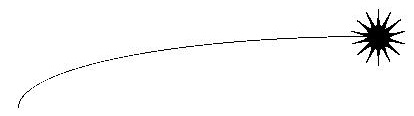
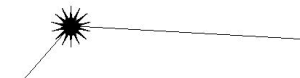
This happens in the middle. The rest of the story is about the emotional aftermath of that moment. Thus, the structure of the story looks like this:
This is the same structure as Hemingway’s classic, “Hills Like White Elephants.” In this story about a couple conversing at a train station, the shattering emotional moment occurs inside the woman. It’s when she accedes to her boyfriend’s desire that she have an abortion (amazingly, the word abortion is never used in the story). We see what’s happened to her almost entirely via dialogue. In fact, she has a line much like the husband’s in the Carver story. She says, “Would you please please please please please please please stop talking?”
We know at the end of both these stories that the characters will never be the same, that life for them has been ineluctably altered. That’s what a shattering moment does.
Structurally, this moment can come at the end of the story. When it works, it’s like an emotional bomb going off. Two literary stories that do this are “The Swimmer” by John Cheever, and “Where Are You Going, Where Have You Been?” by Joyce Carol Oates. That structure looks like this:
Now let’s move to the genre short story. Here, the same idea applies. The shattering moment is usually one that is outside (i.e., a plot moment) as opposed to inside (i.e., a character moment). Often, that moment is a “twist” at the end of the story. The most famous example is, no doubt, O. Henry’s “The Gift of the Magi.”
Jeffery Deaver is a master of this type (see his collections Twistedand More Twisted.) Get your hands on his story “Chapter and Verse” (from More Twisted) to see what I mean.  It’s one of my all-time favorites.
My recent crime short story, “Autumnal,” follows this pattern as well. We think the story is going one way, but at the end it is quite another.
This is also the structure most often used in The Twilight Zone. Think about some of the classic episodes:
“To Serve Man.” Remember the shattering shout at the end? “It’s a cook book!”
“Time Enough at Last.” Always voted the most memorable episode, because of its heartbreaking twist at the end. This is the one where the loner with the thick glasses emerges after nuclear war has killed everyone, but now has time enough at last to read all the books he wants. And then…
“The Eye of the Beholder.” This one blew me away as a kid. It’s the one where the surgeons, in shadows all the way through, are working to save the disfigured face of a patient. One of the all time great twists.
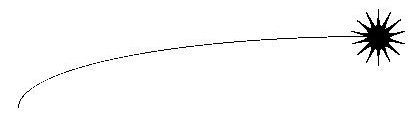
This pattern is just like the one described above for literary short stories, only now it’s a shattering plot twist at the end:

And, you guessed it, you can also do a story with the shattering moment somewhere in the opening pages, and work out the aftermath in the rest of the tale. Lawrence Block’s “A Candle for the Bag Lady” is like that (You can find this story in Block’s collection, Enough Rope). The structure looks like this:
So there you have it. If you want to write a short story, find that moment that is emotionally life-changing, or craftily plot-twisting. Then write everything around that moment. Structurally, it’s simple to understand. But the short story is, in my view, the most difficult form of fiction to master. So why try? Two reasons: First, when it works, it can be one of the most powerful reading experiences there is. And second, with digital self-publishing, there’s an actual market for these works again. The short story form was pretty much dead outside of a few journals. Now, in digital, you can make some Starbucks money with them. That’s what the Force of Habit and Irish Jimmy Gallagher stories have done for me. And when I put together a collection, I expect to make even more.
And nothing will give your writing chops a workout like a short story. Why not make them part of your career plan?