About Joe Moore

#1 Amazon and international bestselling author. Co-president emeritus, International Thriller Writers.

Parched For Readers

A few years ago I met a gentleman in New Orleans who had never heard of Stephen King. He was thirty-three years old at the time, a musician for whom a classical education even at the elementary level had never been a priority but who nevertheless was still knowledgeable of pop culture. Still, he was unfamiliar with King and Carrie, The Stand, The Shining, and the other King books which had been adapted for film. He didn’t have a book in his house; neither, as it happened, did his mother, or the five of his eight siblings whose homes I visited.
Stephen King, I think I can safely say, is a household name, so people such as my acquaintance who have never heard of him are probably the exception rather than the rule. That no-book thing, however…that bothers me. I know people who watch Castle, which begins its sixth season next month, who haven’t read a mystery novel in decades, if ever. Dexter? Longmire? I still find people who have no idea that these popular dramas are based on novels. Justified slyly winked at Raylan Givens’ literary origins a couple of years ago but I doubt it increased sales of Raylan, which was published on season premiere night.
James Bell’s question from last week regarding the future of publishing was an interesting one which evoked a number of interesting responses. Almost all of them, however, implicitly made an assumption that I don’t think we can make anymore, in this era of entertainment everywhere: we’re each and all of us assuming that there will still be readers. Do you walk into homes without books in evidence? When you’re out somewhere and see people reading, how many do you not see reading? How many times in the past month have you been talking to someone about the last book you’ve read and heard them say, “Gee, I haven’t read a book in years. I just don’t have the time”?
I’m not attempting to be an alarmist here, or a Chicken Little. What I think I’m seeing, however, is a situation where the problem isn’t that we’re drowning in books; it’s that we’re parched for readers, and we’re fighting a battle of attrition. There are plenty of books out there worth reading. For every book I read there is at least one, often more, that I don’t get to and that winds up on my “someday” list. That’s not the problem, as I see it. The difficulty is that for everyone one of me, and you, there are, it seems, five or six who just don’t care. They’d rather watch reality television or something like that.

Am I wrong here? Or am I pointing out the 800 pound gorilla in the room that we’re all trying to studiously ignore?

First Page Critique: AVANTI

Note: The blog administrator deeply apologizes for the tardiness of today’s post. She’d like to blame technical difficulties, but can’t bring herself to lie to her valued TKZ peeps. Life got in her way.

As usual, my comments follow the text.

***

 AVANTI

WAY BACK BEHIND HER flashing lights—reds and blues—closing like a rocket. THE COPS! Imagine that, she thought. Out here, middle of nowhere. Desert all around, guy sittin’ half the night all alone in the dark, his radar gun, or whatever, poised and ready for action, unlikely event some speeder comes bopping by, not a care in the world. And that of course, would be me, just daydreaming like some schoolgirl and totally ripping up the landscape. Sooo stupid. 

“Gettin’ stopped out here will never do, girl.” She said it aloud, followed by a “No way” . . . and then she punched it.

 Her car, all made up special. Custom everything. Suspension. Wheels. Tires. Engine. All state-of-the-art. Outrun anything. Anything! “We’ll just see ‘bout that,” she said. Accelerator to the floorboard, the flashing lights recede. “Chase is on now, son.” She cracked a big wide smile. Fully alert. Arms locked. Shoulders set. One-twenty-five and climbing! Dips in the road punching her gut. Weightless one instant, then wham! Needle passes 145. Everything outside’s a blur.


She checked her side mirror. Still there and coming on strong. Whoa, baby! Got me a tiger on my tail. HAH! Time to light the candle. Her reference was to an enriched fuel mixture she could employ in time of trouble, like, now. She slipped a pair of NODs—Night Optical Device—over her eyes and cut headlights. In total darkness she reached down and flipped the special switch. Soon as she stomped the accelerator, the result was explosive. Explosive!

WHAT A SIGHT it was, viewed from back down the road in the cop car. First off, the tail lights recede. 

Oh, man! Got me a runner! So he steps on it. Closing the gap the tail lights simply vanish. An instant later, KAPOW! Ten feet of angry flame lashes the darkness. And this time she really is gone, except for the heady smell of burnt kerosene and rocket fuel.

AND SHE’S FLYING. Not like back in the old days piloting Black Hawks and Apaches in Iraq, Afghanistan and numerous other places the censors deleted from her logbook. Only, here he comes . . . again. Reds and blues winking away back there in the dark, until . . . Headlights bouncing and he’s off the road. A tower of flame geysers into the starry sky.

Oh, no! What have I done?

***

My comments:

I found this to be a really interesting submission. I liked the “in the moment” sense of the narrator’s voice, which immediately draws you into her action. I like how the technical details were slipped in to give the reader a sense of her expertise. This writer doesn’t make the mistake of  explaining the reasons his character has competence and history–he suggests it by introducing technical clues while never breaking the action’s pace. That’s good. That’s strong. I like this.


I have a couple of suggestions to make. 

Title
AVANTI meant nothing to me as a title. Frankly, it sounded to me  like an aperitif or a menswear designer. I looked it up and found the definition as:

Kingdom of Avanti, an ancient Aryan kingdom of W central India, with its capital near modern Ujjain; flourished in the 6th–4th centuries b.c.

So, is this story going to pull us into a story based in West central India, or is it going to be some kind of CIA historical time traveling thing? Or is there another definition for Avanti that I’m clueless about?

The trouble is, the title is one of the strongest weapons you as a writer have to get a reader’s attention. If the reader is completely ignorant about what your title stands for, you’ve just lost your chance to lure that reader into your story. (And even if I’m the last person in the world to know what Avanti means, and everyone else chortles at my ignorance, I stand by that statement. You don’t want to lose even one reader if possible, especially on the cover.) So bottom line: I suggest finding a stronger title that suggests more about what the story is about.

POV transition
This comment is just a nit. When you switch from the narrator’s POV to the view from behind (aka the cop’s POV), in the following sentence:

WHAT A SIGHT it was, viewed from back down the road in the cop car.

It’s a slightly jarring, possibly confusing transition. Switching POV midstream can easily throw a reader. We read the line “What a sight it was,” before we know we’ve just switched to the cop’s POV.  I can’t really figure out an easy fix for that, but I would suggest playing around with it to get a smoother transition. I also think the writing got a bit awkward when it switched to the cop’s POV. His “voice” also sounded exactly like the main character’s in style and presentation. It’s important to distinguish the sound of your characters’ voices from one another. As a possible fix, maybe he could reach for the radio and have him speaking into it–that would be a natural way to introduce the cop’s thoughts and dialogue without repeating the “inside the head” style you have for the main character.

Capitalization and Exclamation Mark : In general, all caps and exclamation marks are no-no’s for creating a sense of drama. And this piece doesn’t need them. The writing is very dramatic as it is. And I’d be careful about overusing ellipses as a “thoughtful pause” device.

Voice:  I love the voice here. I love its narrative flow and the way it conveys an “in the moment” sense of being in the character’s shoes (or car, in this instance). I like the use of language. (For example, I liked how the writer uses “geysers” as a verb instead of choosing something more mundane, like “shot”). I did think some of the terseness was slightly overdone at a couple of points, but only very slightly.

Overall, I find this to be quite a strong first page. Well done, writer! 

TKZ’ers, your thoughts?

Leaving a Legacy

Nancy J. Cohen

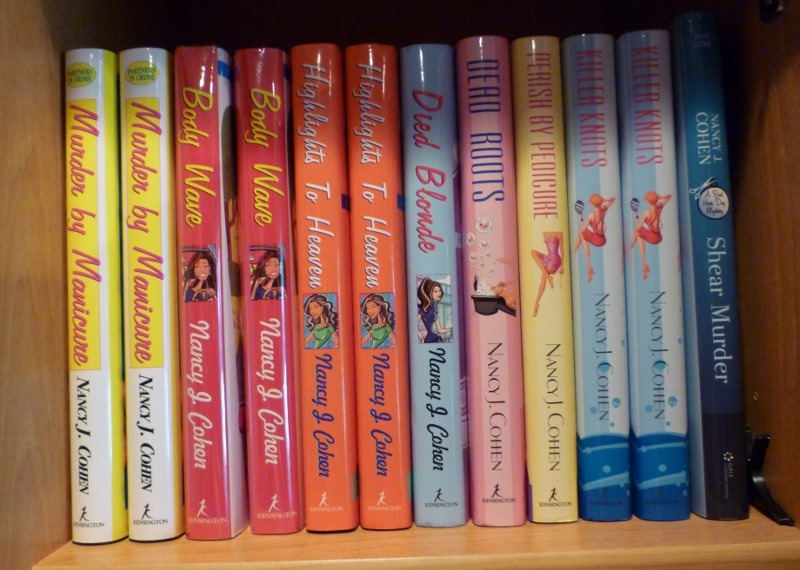
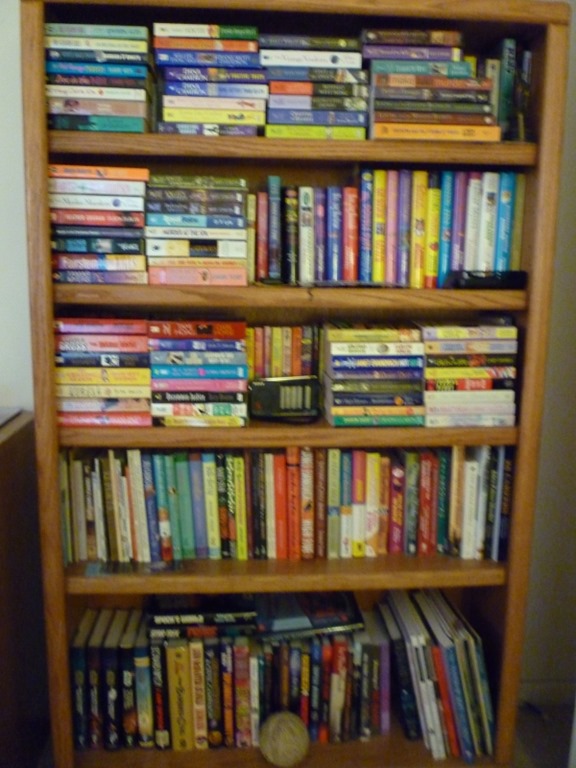
I had the weirdest dream, wherein my family moved into a multi-room apartment. Along came a man and his wife who claimed they had the legal right to occupy a room in any one of a multitude of properties in the city. We had no choice except to allow his presence. But when he began to redecorate, I got angry. He replaced my pictures on the walls, changed the furniture around, and put out his own knickknacks. But what fueled my fury the most was when he covered up my bookshelves. I could no longer see my collection of books—in particular, the hardcover mystery novels I’d written.

P1020561 (800x570) 

The man had no idea I was a writer, so he didn’t understand when I desperately began moving his belongings out of the way to search the shelves. I became frantic to find the books with my name on them.

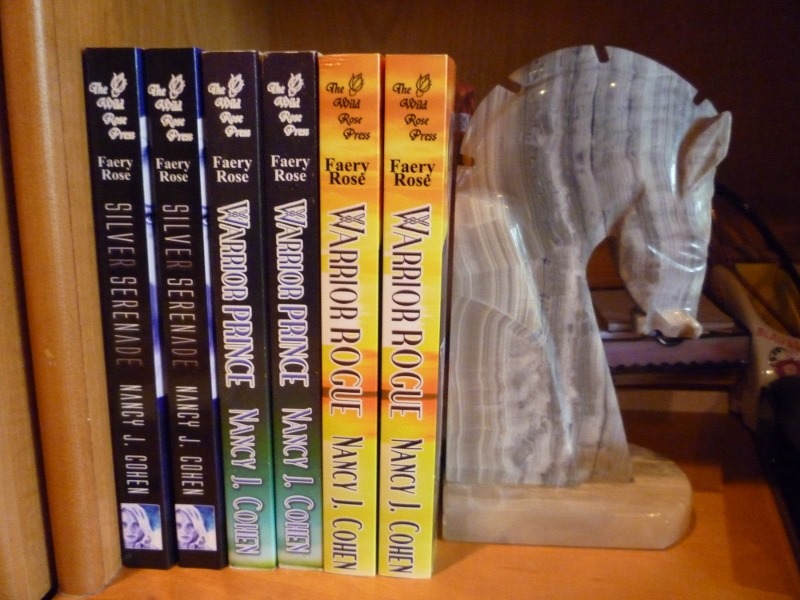
When I awoke, I realized how much those shelves of books meant to me. These are my legacy, more so than anything I can leave my children. The books I’ve written will hopefully stay around in libraries and used bookstores and people’s minds long after I’m gone. Perhaps I am arrogant in this belief, and I will be forgotten after my demise. But unless there’s a big bonfire like in the science fiction tales or folks stop reading altogether, the books will still be around somewhere.

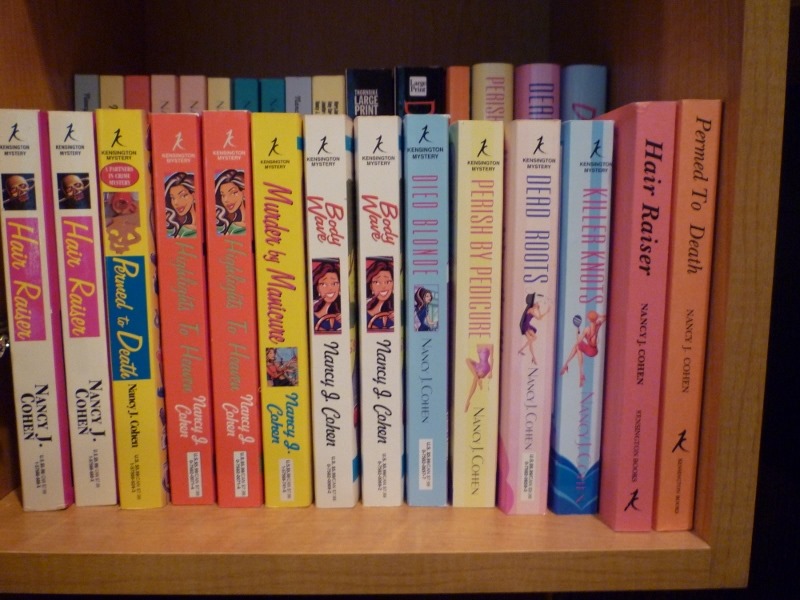
So where does that leave e-pubbed only authors? With a digital file? And why does hardcover seem more durable than mass market paperbacks? Will trade editions stand the test of time?

P1020546 (800x600)

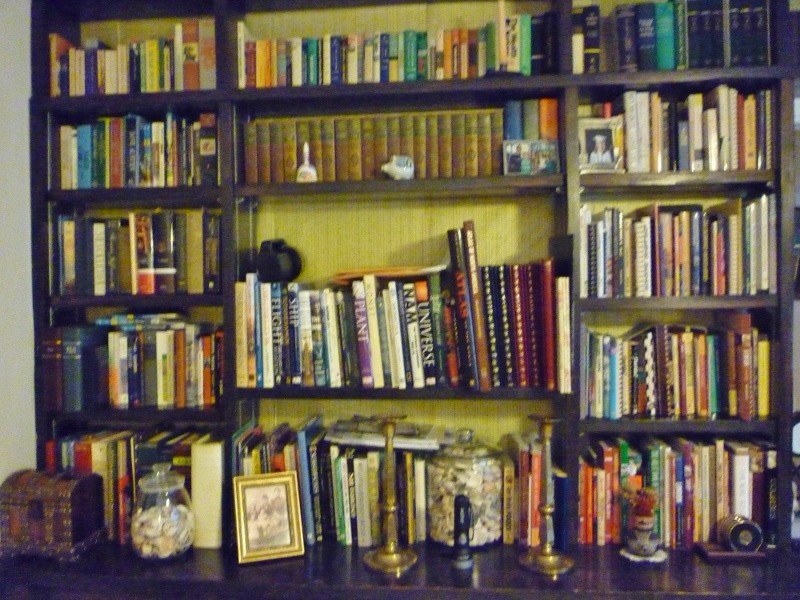
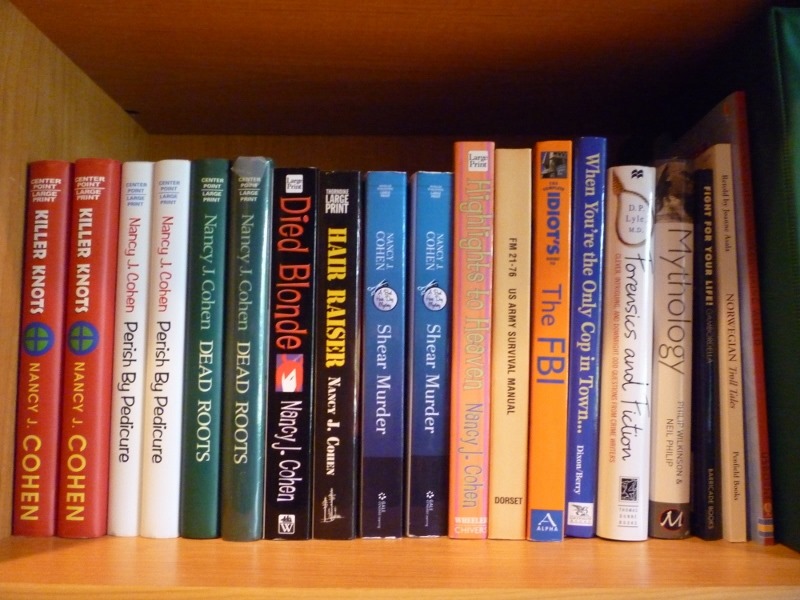
When you see pictures of those big manor houses in England, they all have the most sumptuous libraries. Is this tradition to be lost forever in the digital age? Will no one care to have home libraries anymore, regarding books as dust collectors rather than cherished tomes of knowledge, adventure and imagination?

P1020551 (800x600)  P1020550 (600x800)

This legacy is something to think about when you make your choice about where and how to publish your work. Holding a print book with my name on it still means a lot to me.

This post does not address other parts of leaving a creative legacy, such as donating your literary materials to a library collection. Those provisions should be included in your will along with instructions for ongoing management of your creative literary estate.

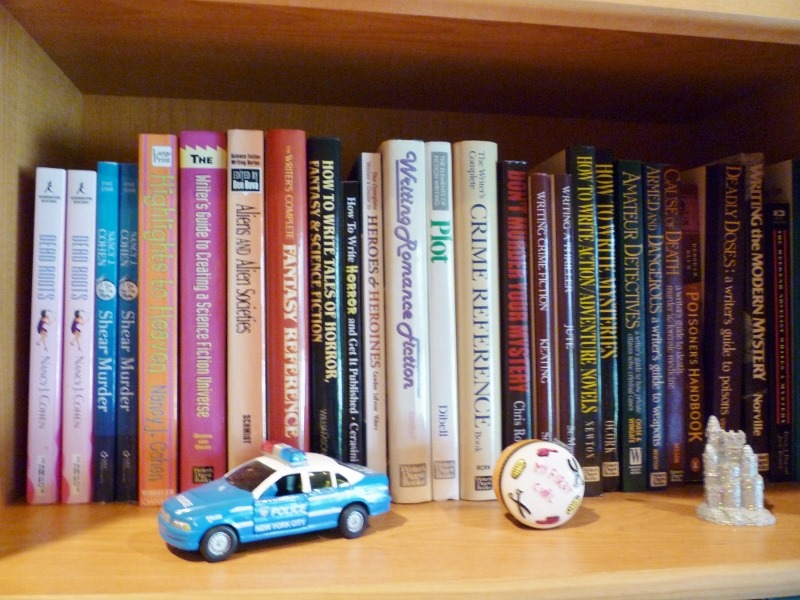
Here are some more shelves with some writing references plus more of my books in different formats.

P1020563 (800x600)
P1020564 (800x600)P1020565 (800x600)

How do you feel about leaving your books in print formats versus digital for posterity?

No book left behind? Sadly, no.

Like Joe was moving homes a few weeks back, and Clare has done a couple of times in recent years, I’m in the process of moving. My family and I aren’t moving very far–just to the next town over, Manhattan Beach. This new town is closer to our tennis club and is known to be slightly tony. (Read: Old people live there). Our current home is in Hermosa Beach, which is famous for having a certain Animal House vibe. We’re about 30 years too old to fully appreciate the finer merits of Hermosa, like the fun of slinging beer bottles into shrubbery as one staggers home from a pub crawl at 2 a.m.

The main challenge in getting our current house prepared for sale is that we need to do a little decluttering. Make that a massive amount of decluttering. My husband and I are both pack rats–we’re the same species, just slightly different  breeds and scale. (Scale-wise, I’m like a Jack Russell Terrier and he’s more of a Great Dane. But I don’t want to get personal here.)

My husband doesn’t like to throw out paper, and I don’t like to part with books. Over 11 years of marriage our  combined traits have made our house a bit…how shall I say…full.

So we’re currently analyzing everything that’s been collecting here over the years, and making some hard choices.  My hardest choices involve books. How do you let them go? Where do you send them? I have a strange possessiveness about books. I can’t even part with ones I didn’t enjoy and may not have even finished. I have this weird suspicion that there’s a kernel of something useful hidden in each one of them, something that I shouldn’t let go of, just in case I ever need that kernel down the road. (It’s my version of hoarding. I totally empathize with the crazy people on Hoarders whose houses are filled to the ceiling with old plastic bags, bent forks, buttons, and the occasional cat carcass.) You just never know when you’ll need those things again. (Except for the cats. The poor things probably just lost their way in the jungle pile.)


Sadly, I’m having to downsize when it comes to my physical books. I’m convinced we could live in Versailles with every wall lined with bookshelves, and we still wouldn’t have enough space for all of these books. But what do you do with the ones you decide to let go of? Donate them to a library? Goodwill? 

I actually found a site called BookCrossing, where you can “release your book into the wild”. The idea is that you let other readers know where you left your book(s), and those people will come pick them up, and then pass them on. I guess the system even lets you track your book as it zigzags the globe, checking in from time to time like the Travelocity gnome. The whole thing sounds fun, kind of like the Readership of the Traveling Books.  But I’m not so sure the authorities would be thrilled if I released my entire stash into the wild. For example: Where do you dump 10 years’ worth of so-so mystery cozies? I guess I could leave the knitting mystery near a yarn shop.  Maybe I could park the restaurant reviewer mystery and an old Zagat guide near CPK. But I’m afraid I just have too many books to “set free” all at once. It might even violate some local dumping ordinance. I might run into a humorless merchant or constable who doesn’t appreciate my attempt to create my own episode of Lit Gone Wild.  

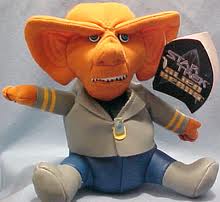
So, what would you do with a ginormous book pile that you must somehow unload? We are working with a professional organizer who will help us resell things, including books. But I would hate for my letting-go process to turn into a tawdry commercial transaction. Selling them would make me feel kind of unclean about the whole thing, like I’m turning into a Ferengi from Star Trek. But really, what other choices are there? Any ideas?

You Made Me A Criminal

We have a great guest today – fellow mystery writer and all-round nice Brit, Simon Wood. Please make him feel welcome TKZers!
Clare

Some people give me odd looks after they’ve read something of mine. They see me, they read the stories and they merge the characters and me together and see the same person. They don’t see easy-going, Simon. They see evil-doing Simon. I’m not evil doing. I’m actually very nice. I rescue animals off the street, I pay my taxes and I’ve never held up a bank (well, not in California and besides, I was very young).
 
Consider this quote for one of my books: “Simon Wood is a criminal genius. We should all be glad he’s writing this stuff and not doing it.”
This isn’t the kind of quote I should have on a tee shirt when I visit the FBI.
That’s the problem. Readers blur the lines between the characters we scribblers create and the scribblers. I’ve been told on several occasions that I’m not a nice person based on my stories. I’ve been asked if I’ve cheated on my wife when they’ve read about a character’s infidelity. As shocking as these statements can be, I can understand them. I’ve said myself. When I tell a story, I don’t base my characters on people I know or people I’ve read about, but I place myself in the shoes of those characters and view the world how they view the world. So for all intent and purposes, I am the good guys in my stories and I’m the bad people in my stories.
But that doesn’t make it me.
I’m not living out my fantasies on page because I fear capture if I committed them in the real world. I’m not outlining my future crimes. I’m not a depraved person getting my kicks on paper. I’m nice, easy going, animal rescuing Simon. But I can conjure up crimes and motives for killing and invent people react to those circumstances and I am empathic to their sensitivities. If I was faced with the crisis of conscience that a character is faced with, I can see their point of view and follow it. That character can be a good person doing the wrong things for the right reasons or a bad person doing the wrong things for the wrong reasons. I can see it from their perspectives. But am I like them? No. Would I act like them if their position? Perhaps. But the people on the page aren’t me. A lot of writers I’ve met and befriended are nothing like the people they write. Most horror writers I know are some of the most down to earth people I know. Eavesdrop on conversation at any World Horror Convention and you’re going to hear them talking about pets and their kids and not how to dismember a body a dozen way from Sunday.
Granted, characters are the writer’s alter egos and altered egos. They are the people they would like to be, possibly, but they are also the kind of people we wouldn’t like to be. But at the end of the day, there is a big distance between the writer and his darker characters—well, certainly in my case. I can’t speak for everyone.
I will no doubt be in for an interesting time with my new book, NO SHOW. Seeing as the book is inspired by something my wife did to me (or more accurately, didn’t do) on my first day in America, I’ve already had a few emails from people wondering if I’m getting back at her with this book.  For the record, no.  I got a book out of it, so I’m grateful to her—now.  🙂
At the end of the day, I’m a storyteller and like Marvin Gaye says, I need every kind of people to tell my tales and that includes the bad ones. So the next time you read a nasty character and you start comparing the writer to that character, put some distant between the two. I know we do.


BIO: Simon Wood is a California transplant from England who’s been a competitive race car driver, is a licensed pilot, and an occasional PI. He shares his world with his wife, Julie, and their longhaired dachshund and five cats. His short fiction has appeared in a variety of magazines anthologies, such as Seattle Noir, Thriller 2 and Woman’s World. He’s a frequent contributor to Writer’s Digest. He’s the Anthony Award winning author of Working Stiffs, Accidents Waiting to Happen, Paying the Piper and We All Fall Down. As Simon Janus, he’s the author of The Scrubsand Road Rash. His latest novel, No Show, is out now. To learn more about Simon, visit his website.

The End of Discoverability and the Rise of Merit


One of the long-term consequences of the digital revolution is, of course, the decline of physical bookstores. Remember when there were at least two or three great bookstores in town? More in a big city, with a lot of indies to choose from as well as the chains? I remember Pickwick, which was bought out by B. Dalton, which was bought out by Barnes & Noble.
There was Brentano’s, which was acquired by Waldenbooks, which was acquired by K-Mart and rolled over into Border’s.
Then, all of a sudden, there was no more Border’s.
And now poor Barnes & Noble is the last chain standing. But it’s been closing stores left and right. A couple of weeks ago its CEO was ousted. The future of its remaining brick-and-mortar outlets is cloudy at best. Which of course ripples upward to the traditional publishers.
We all should have bought Proctor & Gamble stock in 2007, when the Kindle hit the market. Because P & G makes Pepto-Bismol. Sales of the pink elixir must have shot through the roof in publishing boardrooms across Manhattan.
All of which leads us to another consequence of monumental importance: the end of discoverability.
What do I mean? Take a look at these stats from an article in Salon:
According to survey research by the Codex Group, roughly 60 percent of book sales — print and digital — now occur online. But buyers first discover their books online only about 17 percent of the time. Internet booksellers specifically, including Amazon, account for just 6 percent of discoveries. Where do readers learn about the titles they end up adding to the cart on Amazon? In many cases, at bookstores.
The brick and mortar outlets that Amazon is imperiling play a huge role in driving book sales and fostering literary culture. Although beaten by the Internet in unit sales, physical stores outpace virtual ones by 3-to-1 in introducing books to buyers. Bookshelves sell books. In a trend that is driving the owner of your neighborhood independent to drink, customers are engaging in “showrooming,” browsing in shops and then buying from Amazon to get a discount. This phenomenon is gradually suffocating stores to death. If you like having a bookseller nearby, think carefully before doing this. Never mind the ethics of showrooming — it’s self-defeating. You’re killing off a local business you like. (If you prefer e-reading, many independent stores have agreements with Kobo and Zola Books that give them a cut of e-book sales.)
As online sales continue to gain ground and shelf space diminishes, “discoverability” has become a big worry-word in the industry. To make a point so obvious that it’s sometimes overlooked, the most crucial moment in bookselling is the moment a reader finds out that a book that sounds interesting exists. How else is she going to buy it?
So there you have it. Physical bookstores are (were?) the big driver of discoverability. You walked in and saw a huge front-of-the-store display of a writer the publisher put big bucks behind. You saw recommendations from store staff, you saw certain titles cover out. You saw all sorts of books in all sorts of ways.
But when that space is no longer there, what happens to discoverability?
Well, you can try to create a new stream. The recently designated CEO of Random Penguin believeshe and the big publishers are the ones who will be able to “crack the code of discoverabiity in a world of fewer bookstores, to come closer to the end consumer, to keep readers more interested in reading and provide them with the best reads.”
To which I say, with all due respect, there is no code to be cracked. There never was. Once upon a time there was but one system with but one player: the publishers, who controlled placement in bookstores.
But the era of massive placement is over. What do we have instead? An old-fashioned system, one your grandparents called merit. That means trust which is earned, over time, as people come to rely on the quality of your offerings.
This is good news for writers. Because it should be about the writing, and writing is a craft, and craft can be learned, and writers can get better.
In the past, writers needed the backing of a big publisher to get any prominent real estate in a store. Precious few writers ever got the royal treatment. But now the playing field is digital. And those who compete directly for reader loyalty do so with the same chance to grab market share as anyone else.
Thus, the key to success in this game is not advertising, shelf space, co-op, The New York Times, algorithm ping pong, bookstore signings, launch parties, or social media saturation. It is simply and reliably what we all concluded in Friday’s open forum: good book after good book.
Sure, you need a home base (website) and a modicum of exposure to social media. You have to give some thought to how you present your professional self to the world. You’ll have to explore some means of “getting the word out” when you have a book available. Just don’t stress out about it. Don’t fall prey to Obsessive Promotion Disorder.
Instead, concentrate now and forevermore on the most important thing: the quality of the experience you deliver to readers. Focus on that and discoverability will take care of itself.

First Page Critique – The Scissorgate

Jordan Dane
@JordanDane

We have another brave soul who anonymously submitted their intro to a book entitled THE SCISSORGATE. My comments on the flip side.


The Scissorgate

January 2002
The tire treads dug into the snow covered road, shattering the icy surface, as the car with government issued plates pulled over.  The car’s exhaust blew billows of white steam that hung in the air before dissipating.  The Chicagoan neighborhood was still and the air was light and brittle.  The two men prepared to approach the modest home at 428 Lincoln Drive. 

Even with the heater running they could still feel the bite in the freezing air. As they exited the vehicle, they immediately squared the hard shiny brim of their service caps across their foreheads.  Frosted vapors expelled from their lips and noses with every breath.  Their patent leather shoes, shined to a mirrored finish, crunched over the snow as they passed through the gate across the small yard.  The naked branches, like fingers on the trees, pointed accusingly and directed them to leave.  No matter how well groomed, with their hard starched lines and mirrored shoes, in every way their presence was an assault and even nature knew they shouldn’t be there. 

“Jaxon, son, you left your socks and shoes in the middle of the living room again!”  Olivia yelled as she bent to pick up the discarded items.  

“That boy would lose his head if it weren’t attached,” she mumbled.  She started toward his room when a knock at the door stopped her in her tracks. 

She couldn’t imagine anyone being out in the weather as cold as it was.  But unbeknownst to her, the chill the two soldiers brought to her doorstep was far more than Mother Nature could ever conjure.
Olivia saw two dress blue uniforms standing on her porch.  Her mouth went instantly dry while her upper lip became beaded with sweat.  Every Army wife’s worst nightmare. Her heart painfully began to thud against her sternum, screaming to escape. 

Don’t panic.  Jason’s home early to surprise us.  He always found new ways to surprise her and Jaxon.  She tried to convince herself that that is what brought these two to her home.  But something about the soldiers standing on the other side of the glass front door . . . something about their stillness . . . the tension so thick and heavy made the seconds pass like minutes but her thoughts raced out of control.  They’re in dress blues.  It’s too formal.  Where’s Jason? 

“Ma’am are you Mrs. Olivia Parks?”  The first frozen soldier finally broke the silence.

Critique:

Tag line 
I like the use of tag lines to immediately let the reader know when and where the story scene takes place. In this case, the date of January 2002 is used, but for a bit of house cleaning, I would add another line – Chicago, Illinois – so the use of “Chicagoan” would not be necessary. This is a very minor point. Maybe it wouldn’t bother anyone else.

First line structure 
The very first line of a book should stir some element of mystery or capture the imagination of the reader, such that if the sentence stood alone, it might make the reader want to read the book just to know more. Many readers post their favorite beginning lines on Goodreads, for example. This structure of this sentence could be stronger, since the subject (the car) is at the end of the line. See Recommendations for suggestions on a different focus for the first line.

Point of View (POV)
1.) For the first two paragraphs, there is no clear POV. It’s as if there is an omniscient narrator until the action gets to Olivia and the POV switches to her. There are two men in the government issued car and the word “they” is used to describe them. To make the POV clearer, it would be better if the action started with Olivia and she noticed the dark sedan pull onto her street. Create a mystery and center it on her emotion as she sees the car stop at her house. 

2.) Another POV issue is the phrase “unbeknownst to her.” If Olivia doesn’t know whatever is unbeknownst to her, then it can’t be in her POV. An editor or agent would look at this first few paragraphs and see “head-hopping” POV and assume the rest of the book is full of it. I would suggest picking one POV per scene and stick with the action as if it’s through that character’s eyes. I usually select the character with the most to lose. In this case, Olivia is a solid choice since she’s worried about the bad news these soldiers are bringing to her door.

3.) The last line is a POV problem too. The reader is in Olivia’s POV, but she can’t possibly know that the soldier is frozen.

Setting/Over-writing 
There is a lot of really pointed use of the cold weather in the first two paragraphs. I love a good setting and weather is a great way to emphasize the emotion of a scene, but I would prefer it be used more subtlety. As example of overly dramatic use of setting AND POV problems are these lines: The naked branches, like fingers on the trees, pointed accusingly and directed them to leave.  No matter how well groomed, with their hard starched lines and mirrored shoes, in every way their presence was an assault and even nature knew they shouldn’t be there. It’s as if the Chicago chill and the icy trees have POV now. The trees are telling the soldiers they should leave and shouldn’t be there. This is over-writing to me. Similes and metaphors can be done effectively, but they should be more subtle and add clarity to what the main POV character is feeling, not inanimate trees.

Character Names
This is a minor point, but Olivia’s husband is named Jason, but the son is named Jaxon. Since I’m not sure how relevant this will be later in the story, if there are two characters with such similar names, the reader could be confused. I try to pick names using different letters in the alphabet, to make sure each name is more distinctive. This goes for secondary characters as well.

Recommendations
Since the main objective of this intro is to establish that Olivia has two soldiers at her door, presumably to give her bad news about her husband Jason, I would start with the anticipation of her getting that bad news. Have her see the car pull up. Maybe have her dealing with her son more directly, but trying to get him out of the room, while she deals with her emotions and the start of her horrific day. 

Focus on her physical reaction to what she’s seeing – her heart racing, trembling fingers, unable to catch her breath and wanting to throw up, with flashes of her husband’s face in her mind as the soldiers walk to her door. A blast of cold air could hit her as she opens the door. 

As they speak to her, where does her mind go? What does she see as the bad news hits her? She might focus on the details of the formal uniforms these men wear – their shiny shoes and belt buckles – or how a glob of ice melts on their shoes. But the point is to focus on Olivia and keep the POV in her head. That’s where the emotion is. The book may jump off into other characters and other action, but in this scene, it is about Olivia getting bad news.

What do you think, TKZers? What advice would you give this brave author if you were their critique partner?

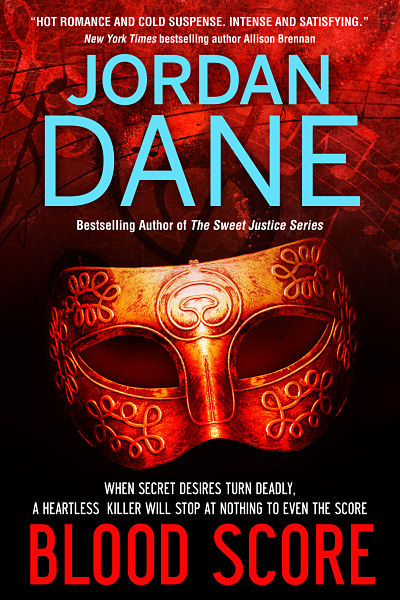
Blood Score by Jordan Dane – Now Available on Amazon Ebooks at this LINK.

“Jordan Dane has an extremely skilled and talented hand at creating riveting suspense and characters that become real to us. You will find yourself living the story, holding your breath and turning the pages as fast as possible. I highly recommend BLOOD SCORE to everyone. It’s truly among my Top Ten reads of all time.”
~Desiree Holt

There’s no place like home

By Joe Moore
@JoeMoore_writer

A beginning writer once asked me, “How do you find out what motivates your characters?” I suggested it could be done with something as simple as an interview. I said to consider interviewing your character as if you were a newspaper reporter asking probing questions about their life, quest, current situation, and other topics that could yield the answers. Come up with all the questions first. Then conduct the interview. It sounds simplistic, but it works.

As authors, we know how vital it is that all our characters have a goal. They must want something, and that something is what drives them forward in the story. But it’s more than just a want. They must also have a need. If we don’t know what our characters wants and needs are, neither will our readers. With nothing to root for, the reader will lose interest. And in the end, they won’t care about the outcome.

So what is the difference between want and a need?

The want is what our character consciously pursues in the story (Dorothy wants to get home after being transported to the Land of Oz by wooa tornado). The need can be a quality she must gain in order to get what she wants (courage, selflessness, maturity, etc.) or the need can be in direct conflict with what she wants. In Dorothy’s case, she needs to find the Wizard of Oz who supposedly can help her return home. Of course, we find that her real need is a lesson learned while interacting with all the good and evil characters along the Yellow Brick Road—a need to appreciate what she already has.

So the quality she needs to obtain is an appreciation of the love her family and friends have for her. If we work backwards, we already know that at the beginning of the story, she should show a lack of appreciation (or apparent lack) of those around her. Around the farm she lives on, they give her little attention and constantly tell her to stay out of the way. Knowing this need, we have now given Dorothy room to grow.

Now we can start forming Dorothy’s character in our head. We know that the story should force Dorothy into progressively greater conflicts so she sees how much her friends care for her, how much they stand by her and come to her aid. These conflicts should build until the final crisis (the Wizard leaves without her and she is trapped in Oz) where she is made aware of the deep love her family and friends feel toward her.

Every character must have a want and a need. The most critical are the ones for our protagonists and antagonists. But I think that even the smallest, one-time, walk-ons must be motivated. If we determine the goals of every character, we will have an easier time writing them, and the reader will have a more distinct picture of the character in their minds.

In planning our stories, it’s important that we determine our main character’s wants and needs first. In doing so, we’ll always have a goal to focus on as we write. Ask ourselves, what are our main character’s wants and needs? Can we express them in one sentence? Dorothy wants to return home and needs to find the Wizard of Oz to help her. Give it a try. If you get lost, just click your heels together and repeat, “There’s no place like home.”