About Joe Moore

#1 Amazon and international bestselling author. Co-president emeritus, International Thriller Writers.

Fear and the Ordinary

by Clare Langley-Hawthorne

The end of this week marks the 10 year anniversary of 9/11 and I still vividly recall where I was when the news came that a plane had hit the World Trade Center. I was sitting in my office in Oakland, early that morning (I worked for a UK company at the time so I would start pretty much as soon as I got up). I saw the news on AOL and then quickly turned on CNN. My husband had already left for work and I called him in the car. He had no idea what I was talking about or why I was worried about news reports that there were still planes in the air unaccounted for. I had only my old dog Benjamin for company as I watched the towers fall on CNN and heard reports of the plane crashing into the Pentagon and, later, flight 93 which plowed into a field in Pennsylvania. Since I had just finished some legal work relating to the bombing of Pan Am flight 103 over Lockerbie, Scotland, the World Trade Center attacks seemed to be a further, horrifically poignant reminder of how the ordinary can turn to tragedy in a matter of minutes.


I think it was Stephen King who said that he wrote to try and confront his fears and I believe at the heart of every great thriller is the sudden overturning of everything that is mundane and ordinary – the world literally turned upside down. On the weekend we saw the televised account of flight 93 – now, I am not usually into watching that kind of thing, but I was struck by just how ordinary that morning was and just how familiar it seemed too (having waited for many an early morning flight to San Francisco). That made the events of that day all the more chilling.


So when you write, do you try and confront some of your own fears? Do you try and create a world that is familiar and ordinary before turning everything on its head?


PS: Apologies, this post is abbreviated as my beloved puppy, Hamish, went missing a few hours ago – he got frightened and bolted (with his lead on and everything). I am very much afraid he has dashed into the bush – so I need some collective good thoughts/prayers that he will be found.


PPS: Just in! I retrieved Hamish from a very kind neighbor who found him – some 5 hours after he went missing – so all’s well that ends well! Though I think I’ve had enough angst and upset for one day….

When Did You Decide to Become a Writer?

James Scott Bell
Twitter.com/jamesscottbell

Can you identify the moment in your life when you made the decision I am going to be a writer?

What did it feel like? 


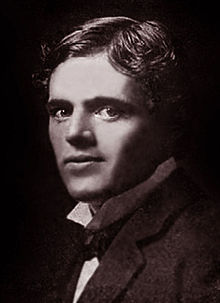
Perhaps the best novel about a writer, Jack London’s semi-autobiographical Martin Eden, captures this singular passion. Early in the novel young Martin is at sea, returning to San Francisco, when the idea takes hold:

And then, in splendor and glory, came the great idea. He would write. He would be one of the eyes through which the world saw, one of the ears through which it heard, one of the hearts through which it felt. He would write–everything–poetry and prose, fiction and description, and plays like Shakespeare. There was career and the way to win to Ruth. The men of literature were the world’s giants . . . Once the idea had germinated, it mastered him, and the return voyage to San Francisco was like a dream. He was drunken with unguessed power and felt that he could do anything . . . To write! The thought was fire in him. He would begin as soon as he got back . . . There were twenty-four hours in each day. He was invincible. He knew how to work, and the citadels would go down before him.

Back on land, Martin sets out with zeal, up to 18 hours a day of it, to realize his writing dream:

He was profoundly happy. Life was pitched high. He was in a fever that never broke. The joy of creation that is supposed to belong to the gods was his. All the life about him–the odors of stale vegetables and soapsuds, the slatternly form of his sister, and the jeering face of Mr. Higginbotham–was a dream. The real world was in his mind, and the stories he wrote were so many pieces of reality out of his mind.

I can pinpoint the day I took the big dive into writing. It was in 1988 and I went with my wife to see a double feature. The movie I really wanted to see was Wall Street. The movie it was playing with I didn’t know that much about, except that it starred Cher.

That movie was Moonstruck, and it knocked me out.

I was a practicing lawyer at the time and had been told writers were born, not made. I had believed that for ten years.

But Moonstruck was so good I knew I had to try to learn to write, even if I failed. I was determined to use the study disciplines I’d picked up in law school to find out how to write fiction. In my journal I wrote: Today I have decided to become a writer.

And I was soon lost in the joy of creating, like Martin Eden. I still remember those early years of writing and discovering as primarily joyous.

So when did you decide to become a writer? Was it a specific moment? A particular influence? And what did it feel like when you started on your quest? 

One Minute Mystery

I have what my friends in Louisiana would call the “red ass” about something and maybe you can help me out. This is a real world occurrence, one which may have passed under your radar, and I am quite frankly puzzled as to the official explanation. I am going to present what has occurred as a writing exercise, in the form of a hypothetical situation, and maybe one of you can explain to me how such a thing could occur. Maybe you can see something that I can’t, and in the course of an imaginative whimsy explain to me what I seem to be missing.

Here we go: a woman was found dead, hanging from a second-floor balcony, a noose around her neck. Her hands were tied tightly behind her back. Her feet were bound as well. I also note, as an element of distraction, that she was naked. A relative who had spoken with her the evening before the discovery of her body stated that the deceased did not seem depressed or despondent. Her death, after a six-week investigation, was ruled a suicide by the local sheriff‘s office. The victim supposedly bound her hands and feet, tied a rope around her neck, and hung herself from the balcony. In that order.

Assuming, arguendo, that the ruling is correct, how was this unfortunate woman able to do this? Any theories among you mystery aficionados?

Note: Stephen King, for his novel GERALD’S GAME, actually had his family handcuff him to a bedpost in order that he could determine whether and how he could in fact free himself from the situation which he devised for his protagonist in the novel. I don’t want you to follow suit in attempting to solve my puzzle, no matter what sort of day you are having. To be honest with you, I just tried to do it and could not. I couldn’t get past tying my feet together. That was a neat trick in itself, since I haven’t seen them since 2001.

There is a prize for the best answer, by the way, which will be awarded at my discretion to the winner of my choice. Start your engines and shake your heads.

Meet My Friend Brett Battles

Every now and then you run into the new writer who pisses you off. Here you’ve been churning out reliable thrillers on a reliable schedule, and this kid shows up who has it all: great characters, great plot, great pacing. He’s the punk who wanders into town with a pea shooter on his hip who can out-shoot every gunslinger in town.

I’ve only met a few of these wunderkinds in my time, and Brett Battles is one of them. We first ran into each other at the inaugural ThrillerFest in Scottsdale, Arizona. His reputation preceded him, and in spite of my heartfelt desire to hate him, he even turned out to be a nice guy. Dammit. He’s had his ups and downs in the blender that is the publishing industry, but he’s never lost his sense of humor, and he’s never lost his sense of who he is. In my book, praise doesn’t come higher than that. The fact that he’s as good a writer as he is continues to piss me off, but that’s just my curmudgeonly side talking. In reality, folks don’t come much better than Brett. I’m honored to dedicate my space in the Blogosphere to him today.  By the way, Brett periodically posts on his blog The Independent Writer.  For a limited time, Brett has put the Kindle and Nook versions of his novel LITTLE GIRL GONE on sale for only 99¢.

PICTURES OF WHO
By Brett Battles


The picture is of two people. The man in the center looks tall, maybe six feet. But the photograph cuts him off at the waist, so there’s no way to tell for sure. He’s smiling in a way that you know he’s not just putting it on for the camera. He Caucasian face looks even whiter than it probably is because of his dark hair and matching goatee. You can’t really tell what he’s wearing. A dark sweater that zips up in the front, perhaps, but the background is black, so his clothes quickly fade into it.


Standing next to him with an arm thrown loosely over his shoulder is a woman. She is impossibly beautiful. Not runway model beautiful, she is real and she is stunning. The smile on her face isn’t so much a smile as a knowing smirk. Her eyes, half closed, match her mischievous grin. She is of African descent, her skin darker than some, and lighter than others. Above the right corner of her lip is a dark mole Marilyn herself would have killed for. Her hair is straight, though it, too, blends into the background and gets lost. The only parts you can see are where it passes over her ear, and the strands that drape down her neck and onto her partially bare shoulder.


It’s a party, or a night at a club, or someplace similar. Wherever it is, it’s easy to see they are enjoying themselves. The rest of the photo is merely shadows on shadows in the background. Could be people, could be things, or could be stains that accumulated on the photo before I found it.


I don’t know these people. I’ve never seen them in my life. And yet, the photography—a Polaroid—hangs on my wall, protected now in a zip lock bag that’s held in place by a piece of tape.


I found the photo at least a year ago when I was out for one of my frequent walks. It was lying on the ground, half hidden by a few leaves at the edge of the sidewalk. I almost passed it by before I realized what it was.


How long it had been there? I don’t know. But Polaroids fade in the sun, and this one still had most of its color intact. Still, it’s life, post whoever had dropped it, hadn’t been an easy one. Some of the white on the frame in the upper left corner had flake off, revealing the silver backing below. The rest of the frame was smudged and dirty, like it had been kicked around for a while.


I stopped where I’d found it, and stared at the image while cars drove by on the street a dozen feet away. I didn’t care about the traffic, though, or the couple of people who walked passed. I only cared about the two people in the photo, the man and the woman.


There was a story there. A story I needed to tell. What I didn’t know yet was what that story was. So I carried the photo home, and I put it in that bag, and I taped it to my wall.


A few times every week I look at it. I study the faces. I try to listen in case they have something they want to say. There is a story here. A story I do need to tell. I don’t know what it is yet, but it will come.


It always comes.


Inspiration is out there for all of us, doesn’t matter if you’re a writer or not. So where have you found unexpected inspiration?


Too Many Voices In My Head

by Michelle Gagnon

Today I’d like to discuss multiple points of view, or what I like to call too much of a good thing. I’m currently working on a Young Adult novel with six characters. Initially, my goal was to give each character a voice in the story. I wanted to try and jump around between them, maintaining a close third person throughout (which tends to be my default setting for novels).

But it’s just not working. Fifty pages in, it’s a big mess. The problem is that when you see a situation from too many perspectives, it tends to get muddied, and not in a good way. The voices lack clarity, and the story becomes convoluted.

It’s funny, because I’ve done something similar before and never had this problem. But what I realized was that in other books, some characters enjoyed the vast majority of scenes, while the reader only saw through the eyes of others for a few critical pages.

With my latest book, that approach hasn’t been working. I’ve been forced to acknowledge that I need to narrow the field, staying inside the heads of a handful of my cast of characters. The rest can be seen through their eyes, but leaping into their minds is too jarring.

Most Young Adult novels are written in first person. That always helps the reader connect with the hero or heroine immediately on a base level. A first person POV wouldn’t work with my particular story, but I can see the appeal. It would be far easier to stick view everything through one character’s eyes. The alternative can be far more complicated and challenging.

Adding to the issue is the fact that this is intended to be a shorter book than some of my others, weighing in at a mere 50,000 words-which doesn’t provide much room for character development in the first place. Harder still if I’m bouncing around every few pages between my motley crew.

My last book was comparatively easy, with only two characters to play off of. I’m feeling like I set myself up for a fall with this one, but at this point I’m far enough along in the story that I’m loath to start cutting people out of the novel.

So when it comes to telling this particular story (and really, any story), here’s what I’ve arrived at:

  • Keep it simple. If you have a large cast, select the three or four main players and stick with them.
  • Your weakness could be a strength. The characters whose heads you don’t peek inside could be hiding something specific that will affect the outcome of the story. Staying out of their POV can add to the mystery.
  • My editor suggested trying an omniscient narrator, but I tend to find that off-putting. I might play around with telling the story in alternating third and first POVs, however, to see if that helps resolve the problem.

I’m open to any and all other suggestions, though.


Networking for Writers

It’s always great to gather with other writers and talk about the craft you love. Recently, I had the privilege of presenting a Fiction Writing Workshop to Florida Sisters in Crime. If you live in Northern Florida, consider joining this dynamic group. We met at a library and their community room was filled with over 50 attendees, all eager to take notes.

We covered fiction writing essentials in the morning and business aspects in the afternoon. In between, people met each other and mingled. That’s the best part of conferences, too. You never know who you’ll discover sitting next to you in a seminar or at the bar. You’ll make new writer friends, greet old acquaintances, and learn the industry buzz. Everything I’ve learned about the business of being a professional writer, I have gained from other authors.
This past weekend, I attended a meeting over on Florida’s west coast. The Southwest Florida Romance Writers meets regularly in Estero, located between Naples and Fort Myers. Whoever wants to meet for lunch first gathers in the Bistro downstairs at the Miromar Design Center. The meeting with a speaker begins at 1:00 on the third floor. Member Michael Joy shared some tips he’d learned during a residency in a Master of Fine Arts program. I enjoyed his teaching technique as much as the tools he mentioned on creating realistic dialogue.
Writers are very generous in sharing what we know. Attending local meetings, reading online blogs, going to conferences, and entering writing contests offer a tremendous amount of valuable information and feedback. In Florida, we have branch chapters of RWA, MWA, and Sisters in Crime. This year the Ninc national conference in October will be held here, too. It’s New Rules, New Tools: Writers in Charge, an essential and dynamic topic. And in case you didn’t already know, Sleuthfest will be moving to Orlando next March so you can bring your families along.
Don’t know what all these abbreviations mean? Then jump on the bandwagon and find out. There’s nothing more gratifying than schmoozing with fellow authors and sharing industry news. Join as many different writers organizations as you can afford and attend meetings. Get to know authors in other genres and exchange ideas. Let’s mingle!
*****
If you live in SE Florida, there’s still time to sign up for the remaining classes at the Author’s Academy. All workshops are held at Murder on the Beach Bookstore, 273 NE 2nd Avenue, Delray Beach, FL. Instructors are multi-published authors. Call 561-279-7790 or email murdermb@gate.net for reservations. $25 per person per class.
Saturday, September 10, 10am – Noon
How To Get Published. Learn what it takes to get your work published.
Instructor: Joanna Campbell Slan, author of Photo Snap Shot.

Saturday, September 24, 10am – Noon

Finding an Agent. Query Letters, Synopses, and the Pitch!
Instructor: Nancy J. Cohen, author of the Bad Hair Day mysteries.

And More Local Author Events:

Tuesday, October 11, 6:30 pm – 7:30 pm
, Sun, Sand & Suspense Panel, “Three Dangerous Dames,” Nancy Cohen, Elaine Viets, and Deborah Sharp; Broward County Main Library, 100 S. Andrews Avenue, Ft. Lauderdale, FL 33301, 954-357-7444

Saturday, October 29, 2:00 – 3:30pm,
Florida Romance Writers Panel Discussion and Signing, Delray Beach Public Library, 100 West Atlantic Avenue, Delray Beach, FL 33444

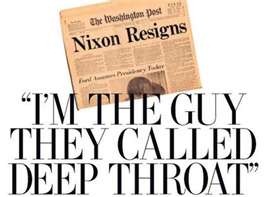
INTERNET RESEARCH: Not Always the Deep Throat of Trusted Information

By: Kathleen Pickering  http://www.kathleenpickering.com

When turning your research sights on Internet sources for your writing, how can you be certain you’re discovering trusted information?

deepthroatIt’s not like back in Watergate days, when Bob Woodward spoke to a voice on the phone who gave him enough evidence to prove he was reliable enough to deserve the title, “Deep Throat.”

Those were the days. Drama while researching a story. Nice. Now, who knows from where comes the wellspring of Internet “facts”? How can we be sure the information we pull from the digital ether won’t leave us with egg on our face? Or worse: some reader sending an email proving our information was wrong. Major story killer!

Personally, I prefer on-site research for my stories, and so far have been able to use that tool successfully. However, I do rely on the Internet for facts. Ironic as it sounds, I searched the Internet to find guidelines for researching reliable sources on-line. I found the most reliable tips from websites for university libraries. Since the first tip was to check the authority of a source, I thought colleges would offer the most unbiased tools for determining reliable information.

research3I found when choosing an article, blog, website, government document, historical journal or any resource posted online five key areas should be considered:

1. The Authority of the author/publisher of information.

You should be able to identify the author of the work/site, his/her credentials, relevant affiliations, and past writings. The article itself should offer information, or sources like Who’s Who, the  author’s home page, or Google search the publishers/author’s name to see what other works support their credentials.

2. The Objectivity of the author.

What is the motive for your source’s article, blog, website? Does your source admit to a particular bias? Offer historical, medical or industry facts and not opinions, or affiliation viewpoints? Can you compare the information to other independent sites/articles to verify facts?

3. The Quality of the information:

Do the facts agree with your own knowledge of the subject? Can you insure information is complete and accurate by comparing with other specialists in the field? Does this author list other sources for his/her information, as well? And, believe it or not, check the site, article or blog for grammatical and spelling errors, typos. These usually indicate a non-professional delivery of information, making the facts suspect.

research6

4. Evaluate Date of information:

When was the information published?  Check the date on the web page for publication date and revision dates. Is the information current? Does it update old facts? Substantiate other materials you’ve read? 

5. Establish Relevance of the information:

Are these facts popular vs. scholarly? (Huffington Post vs. Wall Street Journal)Does the information use raw data, photographs, first-hand accounts, reviews or research reports? Has the information been analyzed and the resources cited? Are footnotes, endnotes or bibliographies listed?

Remember, Wikipedia is no the end-all of resources, since anyone can edit it. And, a rule of thumb is to ensure you tap at least five different sources to verify your facts before accepting your information as usable.

So far, I’ve been lucky. But, I’ve only just begun my writing career. Has anyone out there put facts in their book they pulled from the Internet only to discover the source was wrong?


The Future is Theirs


Finally everything seems to have calmed down at the Langley-Hawthorne household – Dad’s recovery is going well, Jasper’s cough no longer elicits shrieks of horror and Sam’s face is healing nicely after he and the asphalt collided last Monday. I’ve been to see doctors, dentists and teachers and we now seem to be in the clear (touch wood…) for this week at least.


On Thursday, I went into my sons’ classrooms to talk about ‘being an author’ as part of their school’s ‘book week’. Honestly, I wasn’t sure what reception I’d get with the 6 year-old set but I was pleasantly surprised – I think the long touted ‘death of the book’ has been grossly overstated. At least among kindergarteners, we authors rule (though, of course, I was no where near as cool as a children’s book author would have been).


The most telling moment was when I asked the class if any of them ever wanted to write their stories down or write a book – literally all the hands sailed into the air (even both teachers’!). The desire to listen to and tell stories is alive and well (thankfully) and for that, I think every author can take heart. Stories have not lost their significance – no matter what the delivery format (e-books, paperbacks, hardbacks, papyrus…) books still remain integral to many children’s lives.


Now of course I am totally biased, as I shamelessly inflict reading on my boys in every shape and form. We listen to audiobooks on the way to and from school (we just finished the Harry Potter series), sit down and read picture books as well as chapter books every night, and the boys see me reading research books, magazines, newspapers (sadly only iPad versions now) all the time. It would be nice to think this was normal for everyone, but even if it’s not, I took comfort from seeing all the eager faces in the classroom as I spoke. There was no child who sighed or looked bored and no child who groaned at the thought of having to hear about stories. Hurray! I thought, my confidence in the future of books restored.


Some of the questions I got were pretty off the wall, from “If you write all day how do have time to make lunch?” to “How do you write so neat and straight?”. Other questions prompted a few heart palpitations (“What do you do when you run out of ideas?”) and I had to laugh at the responses I got, when I asked how long they thought it took someone to write a book. “An hour,” said one little girl. “20 million years,” said a little boy. I compromised and said somewhere between the two.


It was so inspiring to see all these kids excited to learn about books and writing. It was only when I was sitting in my car afterwards, that I suddenly thought about all the adults out there who have lost their love of reading. When does that happen? How does such promise and eager appreciation for stories get snuffed out?


At least we can all take heart that, among 6 year olds, we are celebrities. Long may that continue:)


PS: Any one got any ideas for what my boys can listen to next – after finishing the Harry Potter series we are quite bereft. We have Roald Dahl and some Enid Blyton but what we really need is a juicy new children’s series!


You’ve Got to Please Yourself

James Scott Bell
Twitter.com/jamesscottbell

But it’s all right now,
I learned my lesson well.
You see, you can’t please everyone,
so you
got to please yourself.
– “Garden Party” by Ricky Nelson
So, writer, do you write to please yourself? Do you write for “the market”? Or is it something in between?
I advocate that you know about the market, have a sense of what’s out there. This is, after all, a business. Publishers actually want to make money. Editors will talk about seeking fresh voices, but they also know they can be “too fresh” to sell to their pub boards.
But in the end, when you finally decide what story you’re going to devote a significant chunk of time to, you’ve got to please yourself.
This is the pattern I followed for Pay Me in Flesh. I came up with a concept I thought was great for the market, something that hadn’t been done before. Kensington took it on and I proceeded to write a book that pleased me—because that’s the only way you can write something ultimately refreshing to readers.
That’s my view, anyway.
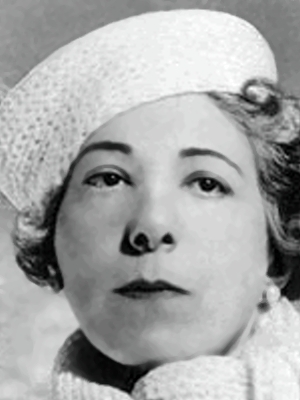
Which brings me to Edna Ferber.
(What? How did he go from zombie legal thrillers to Edna Ferber? Watch!)
No one seems to read Edna Ferber much anymore. But in the early twentieth century there was scarcely a more famous, or more popular, American writer. From her first novel in 1911 to her last in 1958, she had one of great careers in American letters. Not just novels, but plays (co-writing, among others, Dinner at Eight and The Royal Family), short stories, memoirs and newspaper columns.


I didn’t know all this a year ago. All I knew about Miss Ferber was that she wrote the novel for a film I’ve never been able to get into, Giant (1956). I find the movie overlong and mostly tedious. I’ll watch some of it when it comes on TV for two reasons: a) to look at Elizabeth Taylor in her prime; and b) the final fight scene where an aging Bick Benedict (Rock Hudson) takes on a bigoted diner owner.
Anyway, one day last year I got a miserable head cold that had me whining around the house like a bored five-year-old. My wife finally told me to get out of her hair and into a sick bed. Too miserable to read, I turned on TCM to watch whatever was on.
It turned out to be a 1953 film called So Big,starring Jane Wyman and Sterling Hayden, both of whom I like. So I just started watching it and what do you know? I got caught up in the sheer storytelling. It’s about a Chicago girl who grows up wealthy, only to see father lose everything. She’s forced to take a teaching job in Dutch farm country well outside Chicago city limits.
It would seem like a recipe for a disappointing life. But Selina Peake is a woman of grit, with the ability to see beauty in the mundane. The practical Dutch don’t get her at all, until she catches the eye of the big farmer, Pervis DeJong. They marry and have a son, and the story covers about thirty years after that.
I enjoyed the heck out of it.
The film was based on Edna Ferber’s 1924 novel, which won the Pulitzer Prize. So I thought I should read some Ferber. I ordered a used copy of So Big and downloaded what’s free from Project Gutenberg.
So Big was just as enjoyable as a novel. There is also an interesting afterword in my edition, a bit about Miss Ferber’s life and craft. She started to get critical blowback the more popular she became. What a surprise. Some critics said she should have “written better” prose.
Edna Ferber’s response is the reason I wrote this post and titled it as I did:
“Those critics or well-wishers who think that I could have written better than I have are flattering me. Always I have written at the top of my bent at that particular time. It may be that this or that, written five years later or one year earlier, or under different circumstances, might have been the better for it. But one writes as the opportunity and the material and the inclination shape themselves. This is certain: I never have written a line except to please myself. I never have written with an eye to what is called the public or the market or the trend or the editor or the reviewer. Good or bad, popular or unpopular, lasting or ephemeral, the words I have put down on paper were the best words I could summon at the time to express the things I wanted more than anything else to say.”
So, writers, what do you think about that?  

A Matter of Time

John Ramsey Miller

The world is so connected now that a film taken seconds after a bomb kills civilians in Nigeria is on our computers minutes after the event––perhaps before the bodies have been lifted into ambulances. A purchase can be made in Europe using a credit card stolen in California minutes earlier. It is flat amazing how connected we all are. The faster things happen, the more I want to write about a time when a war could be at full tilt and most of the world be unaware of it for weeks, months or years. Hard to imagine a time when fingerprints were all but useless in connecting people with their actions. I long to put my mind, my writing ability, in a slower world.

I write this blog every other week, and I don’t always write about writing, because my life isn’t about “How To-ing.” Although connected to authorship, I’m not ruled by writing. Life takes up most of my time, and I can go weeks without writing anything but this fleeting missive.At the moment I am waiting for my daughter-in-law and two of my grandchildren to arrive from Wilmington, NC fleeing from a Hurricane Irene and my dear friend Dr. Phillip Hawley, who wrote STIGMA, a few years back is coming to visit. Phillip is a pediatrician from LA, who had a business degree, before he went to medical school. And he is a talented writer, who writes when he has time. His book is now available on KINDLE, and it’s a great thriller.

I have decided that, with the time I have left, I am going to adhere to a tough schedule and write the books I want to write, and to publish electronically from here out. I ain’t at my first rodeo and I can probably sell my books as effectively as a publisher can. I will have to find an editorialista who wants to work with me, and I am going to control my own future to the extent we can control anything. If I chose to write over the top, here and there, I will do it. I won’t care if my characters are not PC, or if they are more graphically violently inclined than someone else thinks is proper for the readers they think I have.

I also want to write my favorite continuing characters, and my publisher didn’t think the number of people who bought the books were adequate to keep the series going. The writing is what I love. The publishing part of the business has often gotten in the way of the creating.If forty thousand people read Winter Massey’s adventures, that is worth the time it’ll take to write. Starting on Monday I’m going to start polishing a standalone novel I completed last year so that it should be available for e-readers in six or eight weeks. I’ll let you know how it goes as it goes.

I think I’ve got time for a dozen books in the next three or four years. Then maybe I’ll take some time off.