About Joe Moore

#1 Amazon and international bestselling author. Co-president emeritus, International Thriller Writers.

Truth and Consequences

by Simon Wood

I put myself in a tricky position with my latest book, DID NOT FINISH. With most of my books, it’s inspired by something that happened in the real life. But whereas there’s usually a little distance between myself and incident, this time there wasn’t. I was there at the time of the incident.
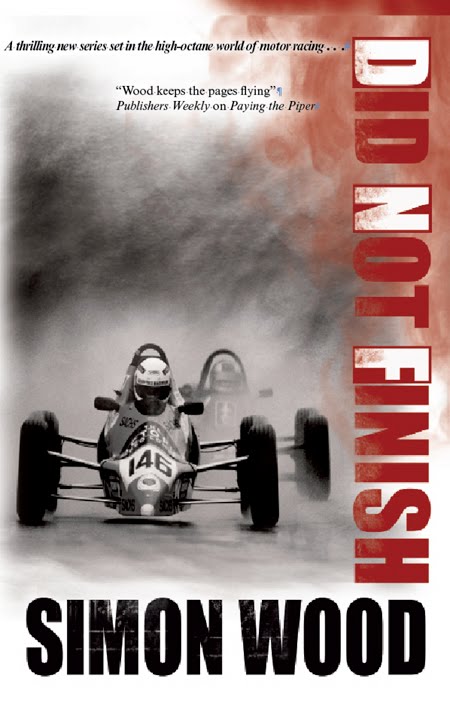
In the 90’s, I was a competitive racecar driver. At the end of my third season, one of the drivers threatened to kill another driver unless he let him winning the championship deciding race. Word of this threat spread through the paddock like wildfire. No one took the threat seriously. It was just talk. That went out of the window when those two driver touched wheels during the race and the threatened driver died. Some odd things happened in the aftermath of the crash, such as edited TV coverage and a seemingly nonexistent police investigation. It was all very puzzling to a number of us who’d heard and seen things.

I’d always said I would write about the incident, but writing the book proved much harder than I’d ever expected. The problem was that I was too close to the source material. When I wrote about viatical settlements for ACCIDENTS WAITING TO HAPPEN and a series of suicides for WE ALL FALL DOWN, I spun a story around some very bare facts to construct a book that had very little in common with the facts. The problem with the early drafts of DNF was that it was autobiographical which made the novel very dull as it was way too personal and to be frank, not that entertaining. My problems were compounded by my thinly veiled attempts to hide the identities of actual people. I had hoped that in the 20 years since the actual incident went down that many of the characters were still very much involved with the sport. Then there was the victim and his family to consider. I’m sure they wouldn’t appreciate me raking up old memories. At the end of the day, as much I think I know what happened, I only had my perspective on events and not a complete picture and to make any insinuation was reckless. The upshot was the book ground to a halt
After a long chat with my wife, we got to the heart of the matter—stop trying to rewrite history and write a novel. I had to do what I always do when I use something real to write a work a fiction. Incorporate the essence and leave the rest. Once I unshackled myself of any responsibility to tell the truth, the book became easier to write. I developed characters with some real depth and history. The plot went off in a direction that real life never went. And all in all, I have a book I’m very proud of.

The tough thing about writing, even with fiction, is that it’s a role that comes with responsibilities. You can’t just say anything and say it’s okay because it’s made up. Words are as powerful as bullets and you need to be careful where you aim before firing. And that’s the truth.

Simon Wood is an ex-racecar driver, a licensed pilot and an occasional private investigator. Simon has had over 150 stories and articles published. His short fiction has appeared in a variety of magazines and anthologies, and has garnered him an Anthony Award and a CWA Dagger Award nomination, as well as several readers’ choice awards. He’s a frequent contributor to Writer’s Digest. He’s the author of WORKING STIFFS, ACCIDENTS WAITING TO HAPPEN, PAYING THE PIPER, WE ALL FALL DOWN, TERMINATED and ASKING FOR TROUBLE. As Simon Janus, he’s the author of THE SCRUBS and ROAD RASH. His latest book is DID NOT FINISH.
Advance Reading Copies

It’s been four years since I’ve had my last hardcover release, so getting ARCs for my January title, Shear Murder, is both a delight and a challenge. My publisher sends them to the major players, so it’s up to me to find other reviewers willing to read my humorous cozy mystery. This isn’t as easy as it sounds. I’ve put hours into visiting various sites online and following up on other author’s recommendations, then sending out queries to see who’s interested. Some sites require you to fill out a form online. Then there are sites that give an address for you to send your book, but they don’t guarantee it will get reviewed. It’s almost like that old adage: throw a lot of spaghetti on the wall and see what sticks. And each time you mail a book out, it costs you the postage. You want it to count.

ARCs are good for contest prizes and Goodreads giveaways, but otherwise you don’t just want to hand out free books to anyone out there. You want to put the ARCs into the hands of people who will spread the word: reviewers, booksellers, and bloggers with decent followings. Hopefully this effort will garner quotes you can use in promotion.

There’s a site online, NetGalley, where publishers can post digital versions of books to be downloaded by reviewers. Have any of your books been available this way? For those of you who have received ARCs or who make your own, how do you meet the challenge? Do you prepare a list of review sites ahead of time? Have you been satisfied with the responses you’ve gotten? Do you find this process easier or harder than pre-digital days when we did everything via snail mail?

CONFERENCE NETWORKING: Essential Part of the Writer’s Job

by: Kathleen Pickering  http://www.kathleenpickering.com

I love my job.

I may get a tad over enthusiastic about it, but hey, why not? I mean, how many folks get to climb onto a plane, fly to somewhere with a personality of it’s own, like New Orleans. Stay in the French Quarter in an historic hotel, that may or may not include a ghost with the room. Attend a poetry reading,

nola-7

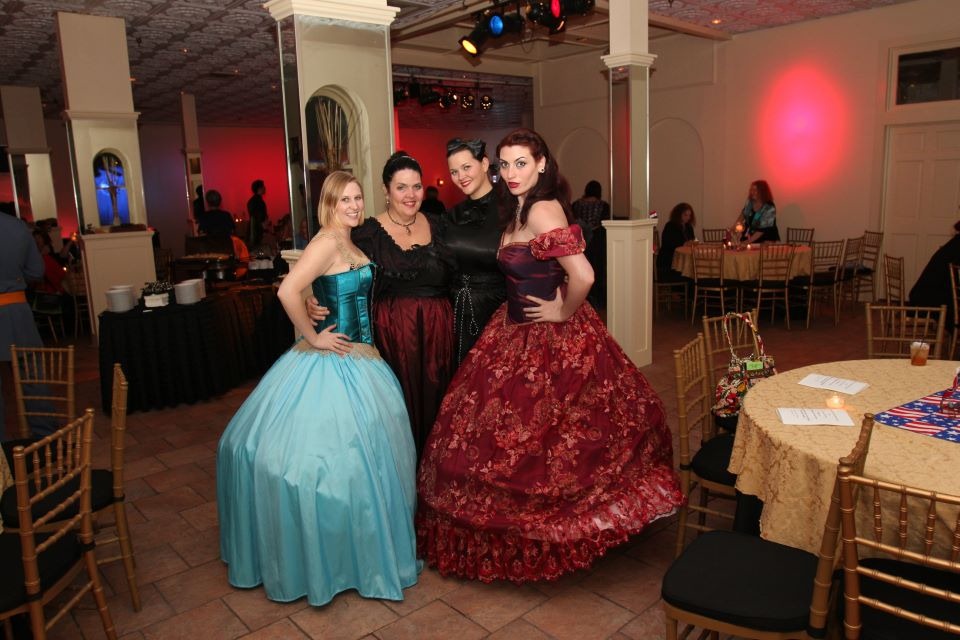
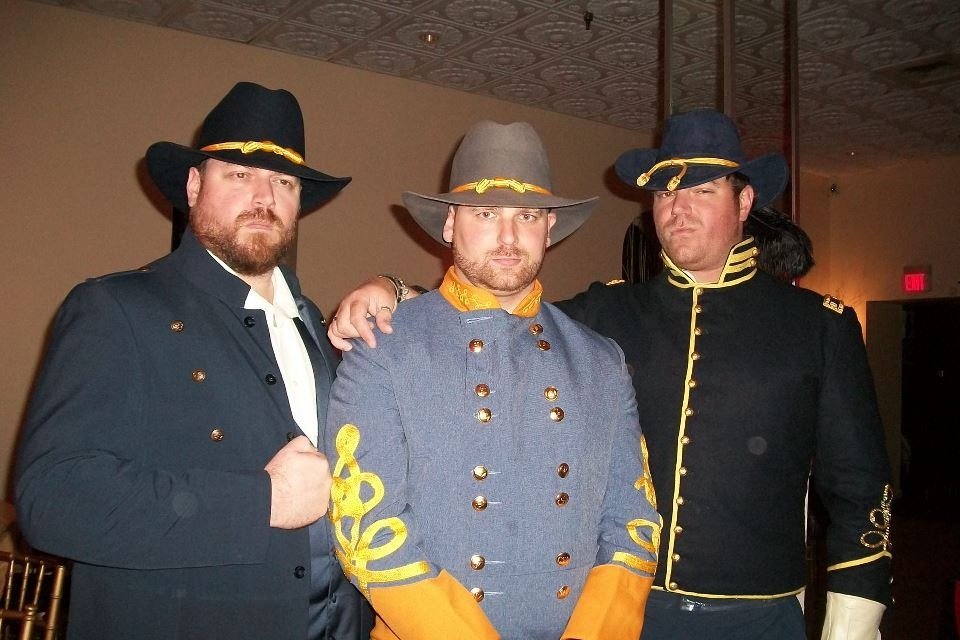
a Civil War era cocktail party,

nola9civilwr22

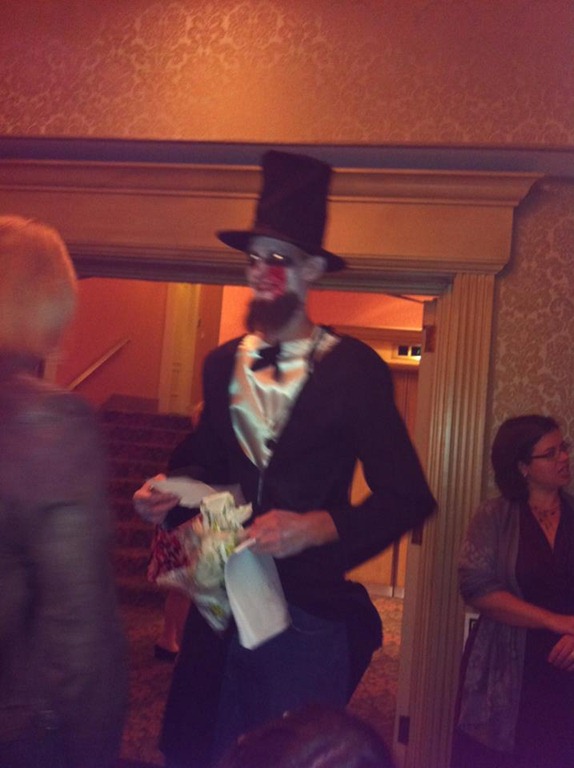
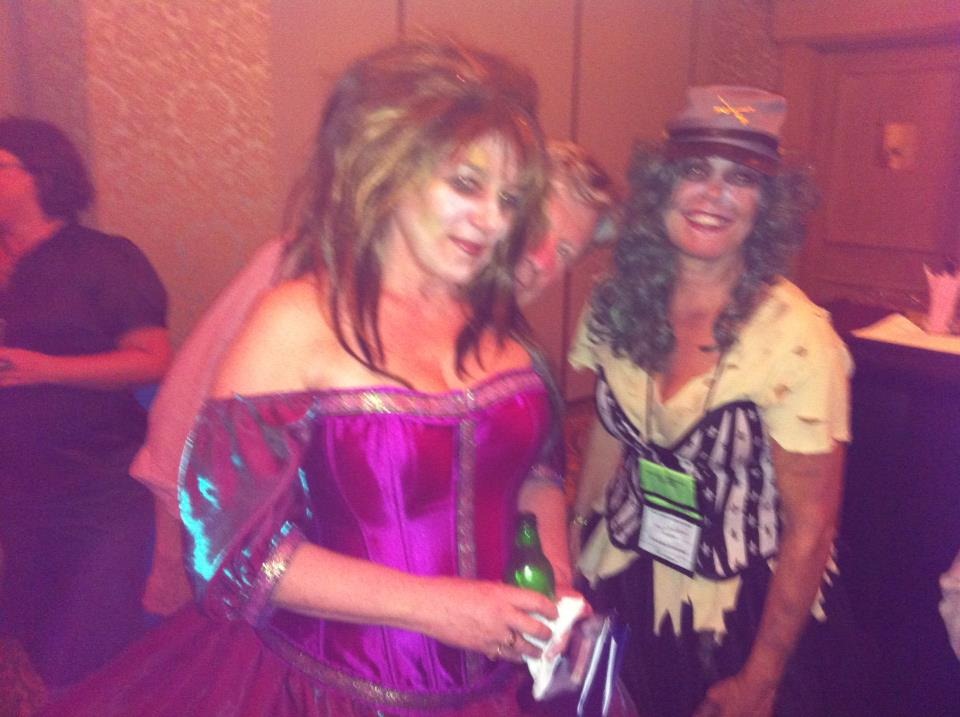
then attend and/or speak on panels about writing the next day until it’s time for the Civil War Zombies for Peace dinner theater that evening—costumes and all?

NOLA-lincolnheather kathy paul

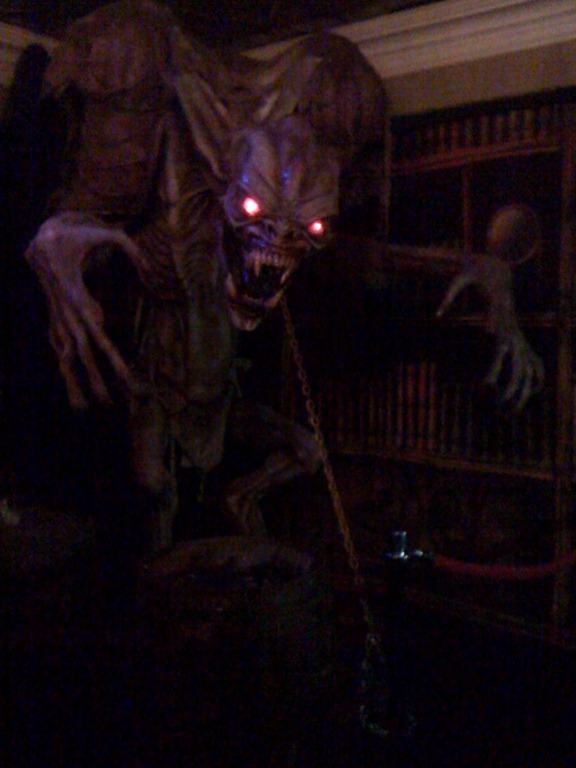
Top that off the next day with an English Tea, a well stocked book signing, a power lunch with a fascinating few where possibilities are hatched for future projects, finished with a romp through a really scary Haunted Mortuary,

nola14 NOLA22

and I’ve worked hard at my craft all weekend.

What? Don’t all writers do this?

Maybe not exactly that, but I have yet to meet a dedicated writer who just sits on his/her duff. For example, there’s Jordan Dane who shoots guns and blow up bombs. (I’d love to be right behind her!) Or, Basil Sands who hosts radio shows and views the world from his perch in Alaska. Or Joe Moore who knows how to infiltrate the Internet-within-the-Internet to retrieve information that no man should see. Or, James Borne who uses his knowledge in law enforcement to enhance his writing.

Writers can’t write unless they experience life and indulge their voracious curiosities. That includes attending conferences to keep one’s finger on the pulse of the industry. Since I’d already landed my current editor and agent from previous conferences, I really didn’t need to pitch anything. Only network. This time I met a producer from Hollywood looking for books to pitch for TV options. Chatted up a ‘sleeper’ work of mine to a boutique publisher and captured his interest. Not bad for leaving an open space to see what might materialize from networking. You never really know what nugget of success you’ll find, but the bottom line is: unless you attend you won’t know.

The weekend I described above was spent at Heather Graham’s Sixth Annual Writers for New Orleans Workshop. Heather began this tradition intending to help infuse the local New Orleans economy after Hurricane Katrina. What she didn’t expect was to develop what is now a six year tradition of bringing writers together from as far away as Australia into a pool of enthusiastic camaraderie, information gathering, and creative inspiration. Despite her lack of sleep, one of our cohorts was so inspired, that she began writing her next book on the flight home. Each year in New Orleans gets better and better.

Heather’s workshop is only one example. I’ve mentioned before how critical networking is for a writer’s career, especially now. The age of communication and technology demands we put ourselves into the current. coral-24It’s like the writing industry is this huge ocean reef, with our little coral tentacles waving in the current for sustenance. If you’re not waving, you miss the juicy bits. Me? I’m waving with both hands and feet! After all, this is my career, we’re talking about. Research. Writing. Riding the Conference Current. It’s all part of the job.

If I couldn’t physically be present at conferences, I’d have to find another avenue, like YouTube. But, quite honestly, I don’t think anything works better than being there. The flow of energy alone from all that talent in one place is worth attending.

So, my author friends . . . do you ride the conference current? What’s your focus, and what are your goals when you do?

Book Scars

Inspired by a recent article in the New York Times ‘What we Do to Books‘ I thought I would scour my bookshelves and look for the ‘life scars’ that I have inflicted on my books over the years. As the article points out, there has been a lot of discussion about the effect that reading books has on us but far less attention has been paid on the effect that we (the readers) have on them (the books).

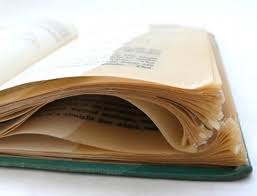
Now, I don’t consider myself to be a book vandalizer – I’ve never been one to underline or annotate in pen or highlighter (pencil, maybe) and I certainly would never deliberately rip a page or desecrate a cover…nonetheless, my books certainly have a ‘lived in quality’ that is worth remembering.

First there are the children’s books – Enid Blyton stories with grubby, Vegemite-y finger prints on some of the pages, dog-eared school books and the beautiful collection of Little Grey Rabbit books that my sister scribbled over (luckily for me, even as a toddler she appreciated pictures and only ever scribbled on the text). Then there are the teenage books – my copy of Wuthering Heights that always falls open at the “I cannot live without my soul” page, the copy of Jane Eyre that you dare not open too wide for fear that the whole book will fall to bits. There are the much loved 1960’s Georgette Heyer paperbacks I nicked from my mum’s bookshelves which still smell musty and romantic.

As a move across the shelf I find textbooks from law school that are still embarrassingly pristine (probably because I rarely opened them) and history books bursting with post-it notes from recent research explorations (which, like all good Victorian expeditions, have been frequently abandoned or gotten lost). Then there are the holiday reads – some still smelling of suncream with tiny grains of sand lodged in their spines. Of course, there are also those deliciously pure and untainted volumes of the unread pile – waiting for my grubby mitts to take hold and destroy.

One of the great joys of owning a library of books is that they reflect all the experiences of reading. From the heavy tombs which required constant setting down to endure (and hence, no longer lie flat) to the light reads that are dog-eared and bent from frequent ‘comfort’ reads. To look at a used book is to see a lifetime of a reading (and the damage we inflict while doing so).

From the coffee stains on covers, to indecipherable annotations; from pages folded and crumpled to rips and tears, blots and foxing, a book is an amazing physical record of its reader.

With an e-reader there will be only smudges and fingerprints on the screen to remind us.

So what kind of damage do you inflict on books? Is there a book in particular that (like a face) bears the scars of a particular encounter? Do you think with the increase in e-books we will appreciate the physicality of our paper books all the more? Or will we lose the joy of opening one of old books to find some nugget of the past (a boarding pass used as a book mark, a theatre ticket wedged between the pages) inside?

The Church at Ground Zero


George Washington prayed here.
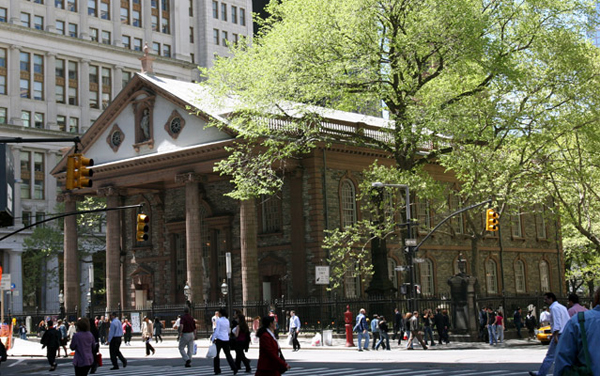
St. Paul’s Chapel in lower Manhattan has stood since 1766. It’s the oldest continuous use building in New York. Inside you’ll still find George Washington’s box pew on display. I’m sure our first president offered up prayers for the young country he helped create. Perhaps he prayed for citizens yet to come, hoping they would continue the selflessness that was so needed in those early years.
If so, his prayers were answered in the days and months following the attacks of September 11, 2001.


St. Paul’s is a pebble’s throw from Ground Zero. When the towers went down those who knew the chapel thought it had to be a goner. But miraculously it was untouched, save for the debris and ash that accompanied the destruction.
There was a reason for this.
The chapel became a base for the rescue workers. They came here for respite and sleep, often lying down right on the wooden pews. Their gear put scuffs and scratches on those pews in what many came to see as holy marks of what was taking place inside St. Paul’s.
Over the course of time more than 5,000 volunteers would help turn St. Paul’s into a place of refuge and recovery, refreshment and rest. Doctors and lawyers swept floors and served coffee. Single moms and teenagers took out trash and prepared food.
This was America coming together in a time of crisis. It was our true spirit displayed, our best side writ large. That’s what I remember most each September 11: the rescue workers and volunteers who became the living, breathing embodiment of “Love thy neighbor.”
So on this tenth year of remembrance of 9/11, take a few moments to put down the cell phone, rest the computer, turn off the TV, set aside the e-readers. Find a quiet spot and for a little while think about what’s right with our country. Think about­­ the ordinary citizens who, when the chips are down, spring into action and help those in need, and do so without a second thought.
Think about the African American woman, some eighty-years-old, who heard on the news that a worker at Ground Zero had hurt his leg. She got on the subway in the South Bronx and came all the way down to Lower Manhattan. She talked her way through the police lines, would not take No for an answer, and found her way to St. Paul’s. Inside she went up to one of the associate ministers and gave him her own cane to give to the man who was hurt. Then she quietly turned around and hobbled away.
Think about such things for just a little while, and be thankful.

I CAN’T TEACH YOU TO BECOME A PUBLISHED AUTHOR.

John Ramsey Miller

Once, just before THE LAST FAMILY was released, I mentioned to my editor that I was thinking about taking a creative writing class at a local university. I had never taken a writing course in college–never graduated. She told me not to let any teacher tamper with the way I write. She said that they had nothing they can teach me without messing with what came to me naturally. She referred to my ability as a gift. She said nobody should trade what comes naturally by learning what others think you should pay attention to. I didn’t take the course. In fact I’ve never taken a writing course, or an English class after graduating high school. I am not an academic, never have been and never will be. Nothing bores me quite so much as formal learning.

I guess if I were operating in the art world I’d be what they call a primitive. In high school I was terrible in English classes, couldn’t diagram a sentence, and confused adjectives and adverbs. As a writer, I’ve been called a natural, but I’m not impressed with me because I’ve always operated at half speed and in my comfort zone. It comes easy for me, the writing thing. I’ve been told many times that were I more competitive and aggressive and a self-promoter I would be far more successful. I am what I am, what I have become based on my personality and experience, and I’m comfortable with it. I have two million books in print, and I enjoy telling the stories I tell, and it’s never been about the money or the prestige or anything but enjoying myself and making people forget their lives for a few pages at a time.

I cannot teach others how to write, or how to become published authors. I did it the way I did it and I don’t think my way could be repeated by anyone else. Had I known what the odds were, I might have done something else. I was lucky in how the cards hit the table. I met the right people when I was ready and all of the stars lined up in a certain way…

I think this the struggle is different for everybody because everybody has different strengths and weaknesses. There is no right way or wrong way to tell a story that is teachable. Either you can write or you can’t. Either you can tell a story or you can’t. I write the only way I know how to write. I write the way I talk.

I don’t think I have anything to tell anybody that will make a difference in their careers. I wish I did. All I can tell anybody is that if you know you know that you have it, go for it. Show us. Work hard, think harder. I never thought for one minute that I would fail, it just never occurred to me that becoming a published author was not probable. It just fit me. I truly believe I was born to it, that I was meant to do it. I never doubted myself. I just always knew. I never saw myself as a best selling author, but I saw myself as a successful author.

Now I have contracted with an editor, because I am an author who needs a good editor to make me a better writer. I’m going to publish my own books as ebooks. I’m going to be a movie that goes straight to DVD, and I’m going to work even harder than I have before, because I don’t have a major house to give me a feeling of security. I’m going to have to be my own marketing department. I don’t know how things will work out, but I don’t doubt for a minute that I will be successful. I’ve always been successful at doing what I love doing. I know it’s the stories, the characters, and I truly believe my books will be better than ever and I’ll be able to tell the stories I want to tell, and that my audience will appreciate my work more because it will be what I want to say the way I want to say it. I can experiment. I’ll keep you posted. I’m truly becoming excited and that is something I haven’t felt in a long time.

Well, I’ll keep you posted.

Gilstrap’s Guide to St. Louis

By John Gilstrap
I’m really looking forward to Bouchercon this year, as I look forward to it every year. Last year, San Francisco provided a terrific backdrop for the conference, but I have to say that in my experience, Midwest conferences somehow work out better. Perhaps it’s because there are fewer distractions, and therefore more people hanging around the conference hotel.

My Big Boy Job takes me to St. Louis a lot—at least twice per year. I don’t pretend to know the city well, but as a creature of habit, there are certain haunts that are particularly worthy of note:

JF SanFilippo’s Restaurant. If you like down home Italian food, complete with a full bar and a great wine list, this is a place you’ve got to visit. Located at 705 North Broadway, it’s just a few blocks from the conference hotel, an easy walk. The food is reasonably priced, and the owner, Joe, is a terrific guy. It’s a good-size place, but reservations are a good idea. (314) 621-7213.

Carmine’s Steak House is a terrific high-end beef restaurant, though compared to New York or DC, the menus is very reasonably priced. They’ve got an impressive wine list, too. Attached to the Drury Plaza Hotel at 20 South Fourth Street—virtually across the street from Busch Stadium—it has a warm ambience and a terrific menu. Be sure to try their toasted ravioli appetizer. The restaurant is walkable from the conference hotel, but allow fifteen minutes to get there on foot. While on the small side, it never feels cramped, so you’d be wise to make reservations here, too. (314) 241-1631.

If you’re a scotch drinker, the bar that’s attached to Carmine’s Steak House has one of the best selections of single malts I’ve ever found anywhere.

If you’ve never visited the Gateway Arch, you really ought to, if only to experience one of the weirdest elevator rides ever. The underground museum there is okay, but it used to be better.

Bouchercon.  If you find yourself truly with nothing better to do, you might even consider coming to one of my panels. Thursday morning at 10:00, Kathryn Kennison will be wrangling—er, moderating—Val McDermid, Parnell Hall, Charles and Caroline Todd and me on a panel called, “The Mermaids Singing.” I think it’s loosely about Magna Cum Murder, but given the players, lord knows where it’s going to go.

On Saturday afternoon at 1:00, I’ll be moderating a panel called “Beyond Here Lies Nothing: The Challenges of Writing Your Next Book” which will feature authors John Billheimer, Jonathon King, David Levien, Lawrence Light and Jonathan Santlofer. I intend to lead the discussion in the direction of much of the stuff we talk about here in The Killzone: the future of the industry, eBooks, and lots of other stuff.

If you can’t make it to one of my panels, I’m pretty much a sure thing in the bar in the evenings. Y’all come and have a great time!

Have Books Been Distilled Down to a Commodity? Will Any Book Do?

One of my greatest joys was my weekly trip to a bookstore. I didn’t have to be looking for anything in particular. I just liked being in a book store and always found treasures to take home. I became addicted to the bargain priced hard cover table. I especially loved finding first time authors in hard cover for under $5.00, less than the price of a MMPB. I have a debut author collection in pristine condition, but haven’t added to that collection in a while. I still buy physical books in any format, but much fewer than I ever did.
How I buy now has changed since I have my e-reader. Technology gets me excited these days. In seconds, I can buy a book and start reading. The convenience is a marvel and I can shop and buy any time of the day or night. No store hours. No holiday closures. No “Sorry, we’re out of that book. Can I order it for you?”
After Joe Moore’s intriguing post yesterday on “The Great MMPB Vanishing Act,” it got me thinking about the quality of a book if the outer packaging goes away and all that’s left are the words. What defines quality then? Do books become a price driven commodity? Will any book do? How much will price play into the decision to buy for the average digital reader?
The Big 6 publishers have all seen revenues rise significantly as a result of ebook sales. B&N shows 140% increase in digital sales; Penguin and S&S indicate digital to be 14% & 15% (respectively), Hachette is reporting ebooks as 20% of US Sales; and Bertelsmann/Random House are reporting their digital sales in the first 6 months of 2011 has exceeded all their digital sales in 2010. Volumes might be down, but profits are up slightly. So it would appear that publishers responded to the market and moved their emphasis to digital at a decent time. No forward thinking, but they reacted to a trend and have seen benefit from that change.
But all this comes at a time when lawsuits are heating up on accusations of price fixing. Apple and major publishing houses face class-action lawsuits over allegedly conspiring against Amazon’s discounted $9.99 price point. More parties have jumped in the fray. The complaint focuses on the agency model where the publisher, not the retailer, sets the price for ebooks.
What no one seems to be talking about is how these increased digital sales are breaking down by price point. Indie book publishers certainly seem more nimble to adapt to a market trend or test a discounted price in order to increase overall sales, but what about perceived quality—Indie vs. Big 6? As readers, I think we know a quality book. It’s a subjective determination, but when you make a decision on a digital book, do you look at the publisher name? How much does price enter into your decision to buy?
Will any book do? Distilled down to words, are we turning books into commodities to be traded purely on price? If this is true, what ramifications could follow?

The Great MMPB Vanishing Act

By Joe Moore

In a recent article in The New York Times, it was revealed that according to a survey last month from the Association of American Publishers, mass-market paperback sales have decreased by 14% since 2008. According to the article, there are a couple of factors responsible. Heavily discounted hardcover pricing from the chain stores and online sellers have contributed. Second, the increase in the trade paperback format as an alternative. Although a soft cover book, the trade paperback is larger, can command a higher price than the MMPB, and is usually a better quality product from a production standpoint. A third factor is the rapid rise of the e-book’s popularity, which is priced at or below MM prices and aimed directly at the MMPB reader as an attractive alternative.

The mass-market paperback was developed in the late 1930s to create an efficient, affordable, and highly portable form of printing books for the masses. One of the first to succeed in the venture was Simon & Schuster which created the Pocket Books imprint. It was so successful that the term “pocket book” became synonymous with paperback. Two of the most notable books published in pocket editions were James Hilton’s Lost Horizon and Pearl Buck’s The Good Earth. Both appeared in paperback in 1939. A number of companies followed after Pocket Book’s concept including Ace, Dell, Bantam and Avon.

Today, according to the NYT’s article, many big box stores and national chains are gradually shrinking their shelf space for MMPBs and using the space for more hardcovers and trade paperbacks. These include Hudson, Barnes & Noble, and Wal-Mart.

The slow vanishing act of the MMPB is another sign of a changing marketplace for the publishing industry. Once a devoted reading fan purchases a device on which to read electronic publications, the advantages of e-books over MMPBs are compelling. These include similar pricing, portability, convenience, and the immediate availability of the book as opposed to waiting a year for the paperback version of a hardcover.

Next time you walk into your favorite drugstore, airport, mall store, or newsstand, check for yourself. It doesn’t take long to realize that the MMPBs are disappearing right before your eyes.

If you’re an author and are being published as original mass market, what is your agent or editor telling you about the future? Are you going to be converted over to trade format or e-book only? And for readers, are you still buying mass market paperbacks? New? Used? Or have you made the transition to some other format?

What’s your story’s DNA?

Recently I found a fun new site called Booklamp–it helps you find new books by comparing and contrasting the content of books you enjoy, similar to the way Pandora.com helps music lovers find new music. To quote Booklamp:

“We’re attempting to help you find books with similar themes and writing style to books you’ve enjoyed in the past – comparing elements like Description, Pacing, Density, Perspective, and Dialog – while at the same time allowing you to specify details like… more Medieval Weapons.”

Booklamp identifies and parses the “story DNA” of various books, then uses that information to help you find similar stories. You can search for books by Story DNA, Book Title, Author, or Genre.

As an experiment I searched for books with DNA similar to Hostage Zero by our own John Gilstrap. Booklamp suggested matches to “similar” books by various authors, including Christopher Reich, Lisa Unger, Anne McCaffrey, Louis L’Amour, and even William Faulkner.  


Booklamp claims to be advertiser independent, which means you won’t have your results filtered through marketing budgets. This means that mid-listers and newbies will have a fighting chance to turn up in results. 


Booklamp is actively seeking publishers to sign on to the project right now–many publishers (and therefore authors) are not represented. But I’m hoping the project will catch fire.  


Check it out, and let us know what you think. Is this something you would use, as a reader or writer?