Government Funding for the Arts (?)

Fair warning: This post wanders into the realm of political discourse, but I assure you that I’m coming from a very honest, confused place.

Earlier this week, Ron Schiller, National Public Radio’s (NPR’s) senior vice president for development (read: fundraising) accidentally went on the record stating that Republicans were ““radical, racist, Islamaphobic, Tea Party people . . . not just Islamaphobic, but really xenophobic, I mean basically they are, they believe in sort of white, middle-America gun-toting. I mean, it’s scary. They’re seriously racist, racist people.” He made this statement during an amateur sting engineered by filmmaker James O’Keefe, in which Mr. Schiller thought he was speaking to representatives of the Muslim Brotherhood, whom he believed would be donating funds to NPR.

Skirting the perceived truth or untruth of the statement, there’s no denying the leftward leaning political orientation of the speaker, whose parent company, the Corporation for Public Broadcasting, is supported by something north of $400 million in taxpayer funding. Mr. Schiller went on to say, “it is very clear that in the long run we would be better off without federal funding.” This at the very time that the newly-elected Republican majority in the House of Representatives is hunting for a reason to cut billions of dollars from the federal budget.

From a strictly business perspective, Mr. Schiller is a moron. There’s a time and a place for bigoted statements, and the moment when you’re under a microscope by people who are trying to shut you down is exactly the wrong time. He resigned, as did his boss (also name Schiller, but no relation), and that’s exactly as it should be, as far as I’m concerned.

All of this raises a larger question in my mind: Should taxpayers be compelled to pay for art?

I’m really on the fence on this one. On the one hand, I’m a big believer in the arts, and I fully subscribe to the notion that without art, there can be no civilization. On the other hand, I am as pure a capitalist as one could imagine, and I abhor the very thought of state-run media and state-rung propaganda campaigns. An independent media is our primary safeguard against totalitarianism.

There’s a huge part of me, as a resident of the Greater Washington Metropolitan Area, that loves the millions of dollars in subsidies that go to the John F. Kennedy Center for the Performing Arts (The Kennedy Center). To the degree that Lincoln Center in New York, and the Buttscratch Community Center in Middle America get federal funding (thanks to recently-prohibited earmarks), part of me supports the introduction of “culture” into areas of the country that would otherwise not see it. There’s real value to federal grants that help artists find their voice.

On the other hand, we are a free-market economy—and economic model that I believe in 100%. Every dollar I’ve made in my lifetime has been paid for by customers who decided that the products and service I represented were better than those represented by our competitors. I’ve never received a penny in grant money (I’ve never applied). For me to succeed in the book business, I have to produce compelling stories that people want to read, and I need to convince them that spending money on my imagination is at least as rewarding and an identical investment in the works of my competitors. The marketplace will decide whether I am financially successful or not. If I crash and burn, there you go. A bitter part of me questions why I should subsidize with my hard-earned income on art that I will never see in a part of the country that I will never see.

What do you think, dear Killzoners?  Should the United States government be subsidizing art?

DEAD GIRL Visits TKZ (It could happen…)

DEAD GIRL – Chapter 1

The Shadow Lands

Dahlia felt rough cotton beneath her fingertips. She clenched her fist, wadding the sheet in her hand. Took a deep breath of cold air and caught the scent of ammonia.
And the smell of something else. Something thick and coppery.


Dahlia opened her eyes and stared up at a gray rectangle of pebbled plastic–a fluorescent ceiling panel. Unlit. She brushed her hair out of her eyes. Her face felt greasy.

She sat up, but a wave of dizziness hit her. She put out her hands to steady herself and felt a tug. A clear tube was taped to one wrist.
Dahlia heard a low smacking sound. Smelled salt and copper. She looked up. A wide metal door stood shut on her right. To the left, a gauzy curtain hung from a track on the ceiling. Beyond the fabric, gray light seeped through a window on the far wall.
Something moved on the other side of the curtain, but it wasn’t close enough to make a silhouette.
Dahlia shifted and a fat cockroach ran from under the blanket. She jerked. The bed creaked.
The smacking sound paused. Dahlia held her breath. The sound resumed, wet and crunchy, like someone eating celery.
Dahlia swung her legs off the bed. The cold tile floor shocked her bare feet. Still sitting, she grabbed a handful of curtain and yanked.
Eight feet away a thin, bald man lay in a bed identical to hers. A hunchbacked monster the color of pus straddled the old man, its head buried in his open stomach. Pink-tipped ribs and quivering organs lay revealed. Blood dripped from the bed frame to the floor.
Dahlia tried to scream but only hissed.
The old man’s head turned. His eyes found Dahlia’s. His lips moved. “Help me.”
The monster drew its bloody head out of the man’s ribcage. Its head rotated on a boney, elongated neck. Small, hard eyes glared at her. A ribbon of intestines hung from its teeth. The monster’s mouth widened in a red smile.
This time Dahlia screamed.
* * *

In the next scene, I’m really expecting Woody Harrelson to burst through the door with his shotgun blasting, Zombieland revisited. And before you ask – YES, I did see the movie. Bill Murray was the best part.

What I liked from this excerpt:
The author does a fine job of using all the reader’s senses and “shows” some of Dahlia’s feelings through her actions and reactions, rather than “telling” the reader. And by keeping the sentences relatively short, the focus is on the suspenseful build up. Also, the metaphoric description of celery really grossed me out, but it also described the scene in a way that brought it home for me, without more graphic wording.

Areas for possible improvement:
This is a great framework to start, but in my opinion and my personal reading taste, I would like to see more “meat on the bones,” pun intended. I want to know what is really in her head as the scene unfolds. The author does a fine job of describing the setting, almost like doing an inventory, but until Dahlia is really made human for the reader by giving her an opinion and “voice,” the reader doesn’t feel as connected as they could be to her plight. More of her needs to be layered into this scene to make her more human. And here are a few ways to do that.

Questions for Dahlia – Rather than me saying what I would do, I like to ask questions for the author to answer for Dahlia if they choose. And by infusing these answers into the story, you can see how this might add the layering of other emotions or senses into this section of the book. This is not an invitation for backstory. Stick with the action of the scene, but choose your words carefully and frugally to keep the pacing.

(As an exercise, it might be helpful for the author to switch this scene into first person point of view for Dahlia, just to get into her head more. I’m not suggesting this story should be in first person, but rewriting a short scene into 1st person POV is a good way to look at one scene in a different way.)
• What makes Dahlia wake up? Does she wonder that? Do buzzing flies awaken her? Does a steady dripping (of blood coming from behind the curtain) awaken her? What does she think of the reason that forces her to open her eyes?
• Does she struggle with the memory of what she was doing before this? Does she remember being taken or attacked? Who is Dahlia? And besides the big bad flesh eating monster about to have seconds, why should the reader care about her? Is she a continuing character or just a second helping? (She may be the DEAD GIRL or a secondary character, but either way, this scene could be enhanced if the reader knows more about her, even if it’s a quick glimpse.)
• Once she gets her first look around, does she wonder where she is? It’s human nature to react to what she sees. Given her past experiences, what is she thinking as she sees where she is?
• Is she completely alert when she first opens her eyes or is she fuzzy? When she stands, is she nauseous? Does she wonder why?
• Does she wonder what is going into her veins? Did she wake up because the drugs used to sedate her had run out?
• Does Dahlia like cockroaches? Does she want to cuss? (By giving more of a reaction that readers can relate to, this humanizes her.)
• Before she sees the monster, she’s scared about what is behind the curtain or door number 2. Does she look for a weapon…or even pull out the tube attached to her wrist? How would she defend herself?
• I would imagine someone being eviscerated would really stink. Does Dahlia want to gag or puke? How does she see the scene, given she’s in shock? Does she see it in one narration with lots of details, or does she see it in horrific snapshots, one more grotesque than the last?

I once wrote a scene where the reader was in the head of a guy getting his throat cut. He was an assassin and deserved his fate, but he was hunted in the dark by men more cruel. At the beginning of that scene, I had him thinking one more job would allow him to retire to a beach. He was smelling coconut oil as he entered the warehouse to meet a new client, when he should have been more guarded. He wasn’t used to being prey. But instead of graphically describing the scene as if I was a third party looking on, I wondered if he would go into shock like a rabbit does in the jaws of a wolf. So after his throat was cut, his mind drifted to the beach. And as he drowned in his own blood, he was under the waves trying to swim for the surface and just misses it. I chose that way to describe it so the reader was spared the graphic violence and I also tied in the assassin’s ego being his downfall.

In a similar manner, Dahlia could sense or hear something that the author continues to the end reveal, tying the scene together a little more too. The reader needs to see this scene from inside Dahlia’s head. And wrapped in her brain are all her life’s experiences that her opinions filter through. The reader needs to get a glimpse of this in order for her to be more real for them. As the scene is written, she is only a prop to the monster. Nothing is really known about her.

Overuse of name – Dahlia’s name is overused, in my opinion. It makes the writing sound stilted and formal. She is the only woman in the scene. The name of Dahlia is stated NINE times in this short intro, when “she” would suffice for most of them. Consider using her name at the beginning and end of this scene, with “she” used in between. And why not use her full name at the beginning? Does she have a last name? Even a throw away character can benefit from a last name. That can humanize her for the reader.

Words that Threw Me Out – Also, the door “stood shut” and “quivering organs lay revealed” took me out of the story. A door is shut or closed, but we assume it is standing and is not on the floor. And the “lay revealed” is too stilted and formal and passive, compared to the other vivid descriptions. I’m not sure the old guy who is serving as an appetizer would be awake and asking for help the way he is, with his ribs cracked open like a smorgasbord, but I’d still like to see what Dahlia thinks of what she sees.

Conclusion – In order for an author to completely get into the head of a character, even a secondary one or a victim, the writing should be layered with the inner emotions, life experiences, and opinions of that character. This is their motivation. Editors often use the term TSTL, which means a character is “too stupid to live” like the babysitter who answers the door in the middle of the night in a slasher flick. Even if Dahlia is a victim, she needs some history to make the reader care more about her and she needs enough smarts to do everything she can to defend herself. By adding the right depth to this scene, the reader will care whether she gets away, and be less grossed out by the graphic violence. Editors will be looking for this. Writing is about stirring all the emotions, not just fear.


First Page Critique: DISSONANT CHORDS

By Joe Moore

Looks like I’m first up with our first-page critiquing fun. Before I take on today’s submission, I wanted to pass on some good news for e-book publishing and local bookstores. A recent Authors Guild bulletin stated that Random House, the largest trade book publisher in the U.S., announced last week that it is adopting the agency model for selling e-books. For readers and authors concerned about a diverse literary marketplace, this is welcome news, a chance for online bookselling to avoid the winner-take-all trap. Random House’s move gives brick-and-mortar bookstores, many of which are now selling e-books but cannot afford to lose money on those sales, a fighting chance in the new print + digital landscape. To read the entire bulletin, click here.

And now for today’s first page.

Dissonant Chords

Professor Bridget Sutton heard the screams.

Light seeped in beneath the door, a faint glow visible in fragments between the huddled bodies around her. Parts of her bare legs were numb where the marble floor wicked away her body heat. Her open toed shoes offered no protection from the unheated air, as pins formed in her feet. She needed a bathroom. She wanted to stretch. She would shift her weight, remove the shelf knifing her back, but the trembling girl latched around her neck prevented her from moving.

The girl gasped for air, breaking the silence.

“Shh, shh, shhhhh,” she pressed her lips into sweaty hair, taking in the smell of unwashed scalp. Hot breathe buffeted her chest. When the trembling intensified, and it seemed the girl was going to jump out of her skin and run through the door, she pressed her cheek against the girls head and held her tight, overpowering the kicking and clawing. When it was over, the girl put her head back under Bridget’s chin, and her body went limp. Bridget worried that others would panic from the darkness, lose it from being restricted, feeling like easy targets and attempt freedom, and try their luck on the run. Afraid to speak, to betray their location, she kept her reassurances to herself, running down a mental list of why they were safer locked behind a door in a storage closet down a side hall at the back of the admissions office. The fact that only one guard was on duty, unarmed, left her discouraged.

Sand scraped her skin, adding to the discomfort she felt everywhere else. Even in the dark, she was aware that her skirt was off center, riding higher that was comfortable. Pulled to one side and unbuttoned by the outburst, her blouse stuck to her skin, the silk soaked through by the girls steady leaking. She adjusted nothing, even as her bladder succumbed to the pressure, her pain threshold breached, nothing any amount of kegels could have prepared her for. The relief was temporary. The disgust lingered.

One of the things we preach here at TKZ is the importance of conflict—drop us into the conflict right off the bat, whether it’s physical or mental, or both, and make us keep turning the pages to find out how it resolves. This sample contains plenty of conflict. A woman is hiding inside a dark storage room with what I think is a group of kids. There is obvious danger on the other side of the door and little protection from that danger. The discomfort for the woman and the kids is extreme. The child she is holding in her arms is either reacting violently to the danger or experiences some sort of seizure. There seems to be nothing good going on here, and the situation calls for the woman to give in to her lack of access to a bathroom. The last two sentences sum up the situation well.

Overall, I found the sample intriguing but a bit over-written. Since I don’t know what type of danger the woman and the others face, maybe it’s appropriate. But there is a great deal of mixed visuals coming at me here, some of which are strong on their own but as a whole, seem to work against each other. But again, I don’t know the whole picture.

For instance, I get the impression that she is in the storeroom with children and yet we are in an admissions office with a professor. So are these college students or kids?

The woman smells sweaty hair and an unwashed scalp. I think that should be the other way around—hair doesn’t sweat, scalps do. Most people wash their hair, not their scalps. Does that mean that the girl is dirty and unkempt? That’s another reason I’m picturing children, not college students.

I’m not sure what “as pins formed in her feet” means.

Why is sand scraping her skin? Is there sand scattered across the cold marble floor?

The woman’s blouse became unbuttoned by the outburst. Could that be said better, such as the blouse was yanked open rather than the slower, more calculated action of unbuttoning?

Word choice is vital.

I’m sure that all my questions would be addressed if I had the opportunity to read the next few pages. And I’d definitely keep reading if I had the chance. All the elements of tension, suspense, conflict, danger and mystery are present. I think this first page reads like a first draft with great potential but in need of a rewrite. I don’t think it’s ready to be submitted to an agent or editor yet, but it’s a good start. What do you think? Would you keep reading?

————————————
THE PHOENIX APOSTLES, coming June 8, 2011.
(The Phoenix Apostles has) “so many twists and turns that you won’t have time to catch your breath!" — Tess Gerritsen, New York Times bestselling author of ICE COLD

First-page critique of your work, here at TKZ

We’re launching another round of first-page critiques  here at TKZ! You can send us the first page of your manuscript (anonymously, of course!), and we’ll critique it. Sound good?

Here’s how it works: Send the first page (350 words max) of your manuscript  as a Word attachment, along with the title, to the email address killzoneblog at gmail dot com. (We’ll take the first 33 submissions we receive over a month’s period, first come first served.) The pages will be divvied up among the Killers. From time to time we’ll post each page, and do a critique. Everyone will be able to comment as well.

Last year we had great fun doing this exercise! We’re looking forward to reading some of your pages!

Shipwrecked novels

by Clare Langley-Hawthorne

“Writing a novel is like paddling from Boston to London in a bathtub. Sometime the damn tub sinks. It’s a wonder most of them don’t.” Stephen King

I saw an article in the New York Times on the weekend about why writers such as Michael Chabon, Jennifer Egan, Stephenie Myers and Harper Lee abandon novels after investing substantial research, angst and years of work on them. The article got me thinking – why (and how) do novels get shipwrecked?

Now I am not talking about novels that fail to achieve lift off. God knows, I am sure we have lots of them…the idea that never quite got off the ground, the first few chapters abandoned…no, I am more interested in those books that are nearly done, or completed, which get abandoned despite the work that went into them.

Michael Chabon abandoned his novel Fountain City after 5 and a half years because it was “erasing me, breaking me down, burying me alive, drowning me, kicking me down the stairs” – clearly despair at a novel not working plays a large role in its abandonment! But there are also other forces at play – Stephenie Myers did it out of sadness after the first 12 Chapters of her Twilight spin off, Midnight Sun, were leaked on the internet. Harper Lee was stymied by her very success (” when you’re at the top there is only one way to go”).

So what has caused you to abandon a novel? Has despair every forced you to shipwreck a project despite the months or years invested? Do you think those lost novels will stay dead forever, or will you be able to rewrite them in the future a la Stephen King who turned a 30 year old abandoned book into the bestseller “Under the Dome”?

– Posted using BlogPress from my iPad

Train Wrecks and Bad Guys

Unless you just got back from exploring the surface of Pluto, you have heard about the train wreck that is Charlie Sheen.
It started as a bit of industry gossip a couple of weeks ago. Sheen went on a radio show and started ranting about his producer in very unflattering terms. It got worse, to the point where the producer and CBS put a hold on their big hit show. Which means hundreds of millions of dollars in lost revenue. Which means this was getting serious.
The media was more than happy to put Sheen on the air, where his wild eyes and self-reflections (“I’m a total bitchin’ rock star from Mars”) evidenced a mind that desperately needed help. Even his X-rated inamorata described him as “a sad hot mess.”
California authorities apparently agreed, and stepped in to remove Sheen’s children from his presence.
Now, I like Charlie Sheen the actor. Very talented and appealing onscreen. My three favorite Sheen films: Wall Street, Terminal Velocity, The Arrival.
So at first I shook my head at Sheen’s unraveling, then I started to get a little ticked off at what he’d done to himself and others. Finally, sadness was added to the mix.
Yes, I know he’s responsible for what drugs he puts in his body, how he’s treated women, and so on. He is reaping what he has sown. Still, I can’t help feeling a little sorry for the guy.
Which brings me to the point of today’s post. When you write about train wrecks — people whose lives are a mess and who do things society generally frowns upon — you need to find your way to a compassion point. If you do, you’ll write much better fiction, because the emotions you create in the reader will be more complex.
This is especially important in the writing of “bad guys.” I make writing students answer this question about their villains: Why do I love this character?  I force them to get deep into the background and relate to the bad guy in a tough love kind of way. As if he were a family member you deeply understand and care about. Sort of the way Martin Sheen, Charlie’s dad, must feel right about now.
The least interesting bad guys are those who are pure evil, or just crazy. The ones who stay with readers will have different levels that give off a gray, rather than a black tone.
Dean Koontz put it this way: The best villains are those that evoke pity and sometimes even genuine sympathy as well as terror. Think of the pathetic aspect of the Frankenstein monster. Think of the poor werewolf, hating what he becomes in the light of the full moon, but incapable of resisting the lycanthropic tides in his own cells.”
So, for an insatiable public, the Charlie Sheen saga continues. I hope he gets the help he needs and really cleans up this time, because his children need a father.
Which reminds me, I have a bad guy right now who needs a little more of my sympathy. I’m going to see what I can find out in his background that makes him do the things he does.
What about your bad guys? Do you love them?

Story ideas? I got your story idea right here.

Stories ideas? Here is a story idea. And it’s drawn from real life.

I have a client and friend some years older than I am who among other things is a legend in the history of doo-wop music. He is in his seventies and has never owned a computer or had an e-mail address. I was visiting with him a couple of weeks ago when a question came up. I pulled out my phone and googled the subject matter. He was surprised I could do something like that; then he got quiet for a minute, and asked if I could use the internet to find people. You bet, I replied. I have both located and been located in such a manner. He then proceeded to tell me a story. When my friend was in his twenties, he was in the U.S. Army and stationed in France. During his tour of duty he became involved with a young woman who followed him to Germany and then back to France. Their relationship ended when he returned to the United States. Though their lives went in different directions he never forgot her. And now, over a half-century later, he wondered if I could find her.

And I did. It took a bit of doing, but I found her picture, and then, with much more effort, found her e-mail address. I just sent off a message to her, which I hope she will receive in the spirit in which it is sent. I asked my friend what he was going to do if she responded. He just laughed.

Like I said, it’s a story. It’s not a mystery or suspense or a thriller but it’s…a romance? Maybe. I’ll let you know what happens. Maybe. But with a little imagination you could turn it into anything you wanted to. She receives the e-mail and bodies start dropping, in both the United States and France. Or someone tries to kill the guy who sent the e-mail. Or the long-separated couple makes arrangements to meet in say, Montreal, where someone shoots at her when she is but steps away from his embrace. You want stories? You want ideas? They are all around you, like piles of bricks. It’s the mortar that’s hard to fill in. But the bricks? They are around you by the yardful.

Blessed Bad Luck

by John Gilstrap

Hand to God: If 11-year-old John Fretz had not been hit by a car and critically injured in 1979, my son would never have been born in 1986, and I would be nothing like the man I am today.

From 1976-1979, I was a summer camp counselor for over-privileged rich kids in Falls Church, Virginia.  That’s how I earned my annual $800 in spending money that got me through cheap college dates.  On my last day of that last year of extended childhood, young John Fretz, who had been a staple of my group since he was seven, chased a ball into Sleepy Hollow Road and got nailed by a car doing 35-40 miles per hour.

I heard the bang and the screams of the witnesses.  When I got there, I was the first adult(ish), other than the hysterical driver.  John’s leg was bent at a 100-degree angle at mid-thigh.  He was unconscious, and a color of pale that to this day brings tears to my eyes.  By the time all the diagnoses were complete, the list of internal and external injuries was a page long, but what I remember most about sitting in the emergency room was the look on his father’s face.  Rick Fretz was a widower, and John was his only son.  If prayer can take a physical form, Rick was it.

Within a year, John was fully recovered.  I was a part of that, but only on the sidelines.  On one of my visits to the hospital within a week or two of the accident, Rick offered me a challenge:  “It’s easy to visit in week one or week two,” he said.  “But week ten and week twelve are when he’ll really need the company.”  It was that kind of recovery, and I was a regular for over a year.

I’ve lost touch with them now, but last I heard, everyone was thriving, and there was even a wife and a baby or two in the mix.  Congregation say “Amen” and tip a glass to the new generation.

So, how does this create my son?

John Fretz’s accident is the single reason why I enrolled in an EMT class at my local community college.  I was never again going to be caught feeling that helpless.  EMT class led to 15 years in the fire service.  The fire service led to a degree in safety engineering, which got me a job at an explosives manufacturer, where my boss’s boss was dating the sister of a woman named Joy, who’d recently gone through a bad break-up.  Said grand-boss arranged a blind date that resulted in love at first sight (literally), which led to the marriage that created Chris.  Really, it’s that much of a straight-line connection.

As a lifelong Catholic, I can’t say that I buy into predestination; but I can tell you from the heart that I don’t believe in coincidence, either.  Stuff happens for a reason.  If the first 27 agents I queried hadn’t rejected my first novel, I’m certain that I’d have fallen short of a couple of mega-buck deals.  If I hadn’t fallen out eventually with my first agent, I never would have found my current agent, who, along with the team she’s introduced me to, have become the architects of a whole new career.  If my career hadn’t taken a disappointing turn a few years ago, I never would have pursued the alternative routes that have opened doors that I never dreamed of.

If you’ve been in this writing game for more than a few years, you inevitably encounter the terminally-frustrated, burned-out artist who is on the verge of self-destruction.  Tastes have changed, and suddenly his market has dried up.  Or, maybe, after too many second-callbacks without ever making the final cut, he’s ready to throw in the towel.  It happens, and in a creative endeavor, I think rejection stings more than usual.

There’s a lot of Pollyanna in me.  I believe that it’s hubris for any one of us to proclaim in real time what is and is not “bad” fortune.  Certainly, there are events in life that are so dark that light cannot be imagined, but those tragedies are blessedly few.  On any given day, rank-and-file disappointments are really opportunities for forging new paths.

You just never know where that uncharted fork in the road is going to take you.

What about you, friends and Killzoners?  Have you found surprising good fortune buried in a stinking mound of disappointment?  Tell us about it.

Dueling Manuscripts


by Michelle Gagnon

So I’m currently working on two writing projects at the same time. One of the novels I’m actually getting paid for, the other is a passion project that I started last year and have yet to finish. The goal is to complete both novels in the next six months.

These days, dueling manuscripts aren’t a rarity–in fact, most of the writers I know are doing the same, publishing multiple books a year just to stay afloat.

But a few weeks into this multitasking adventure, I can’t for the life of me figure out how they’re managing it. I feel like I’m trying to nudge two balls up a mountain simultaneously: I manage to move one a few feet, only to discover that the other has slipped down and I have to race back to it.

In the past I’ve worked on short stories while writing a novel, or tackled a screenplay while editing a book. But this is the first time I’ve confronted the challenge of working on two completely separate series simultaneously. Better yet, one is geared toward a Young Adult audience, and I’m still somewhat confused about what limitations that places on it (I don’t generally have much sex in my books, but my characters do tend to have filthy mouths. Is that okay? Do teens say “like” anymore? And what kind of music are the kids listening to these days anyway? You see the problem.)

My agent expressed concern when we first discussed the possibility of signing a new book contract. After all, we’d agreed that I would take my time with the passion project (which will henceforth be referred to as MOPWW, or “My Own Personal White Whale”), working on it without deadline pressure.
“So you’re sure you can write both in that timeframe?” she asked (sounding, in all honesty, a little dubious).
“Oh, absolutely,” I said with confidence. “In fact, I’ll probably have them both done early.”

Ha ha ha.

While contract negotiations were finalized, I did my utmost to finish MOPWW. Unfortunately, I didn’t succeed, and suddenly the “i’s” were dotted and “t’s” were crossed and the September 1st deadline for the YA novel became a reality. I was forced to admit that I’d have to work on both books at the same time.

Initially, I didn’t think it would be a problem. I figured I’d spend mornings on one, and then alternate after lunch. Easy, right?

The problem is, I end up becoming so engaged with one project, it’s hard to switch gears. I find myself really wanting to forge ahead with MOPWW, to the complete neglect of the other manuscript (you know, the one I’m actually getting paid for). Just one more day, I figure. If I can write just a few more scenes, and get within striking distance of the ending, I can set it aside and work on the YA in earnest…

Next thing I know, another week has passed and I’ve primarily made progress on the whale.

Meanwhile, that deadline clock is ticking away in the background, dishes are piling up in the sink, laundry is overflowing the hamper, bills are sitting on my desk unopened (and oh, the mess on my desk–I’m sure it puts Clare’s to shame).
So how do people do it? And is anyone willing to take care of these dishes for me?

Inspiration for Writers

Readers always ask writers, “Where do you get your ideas?”
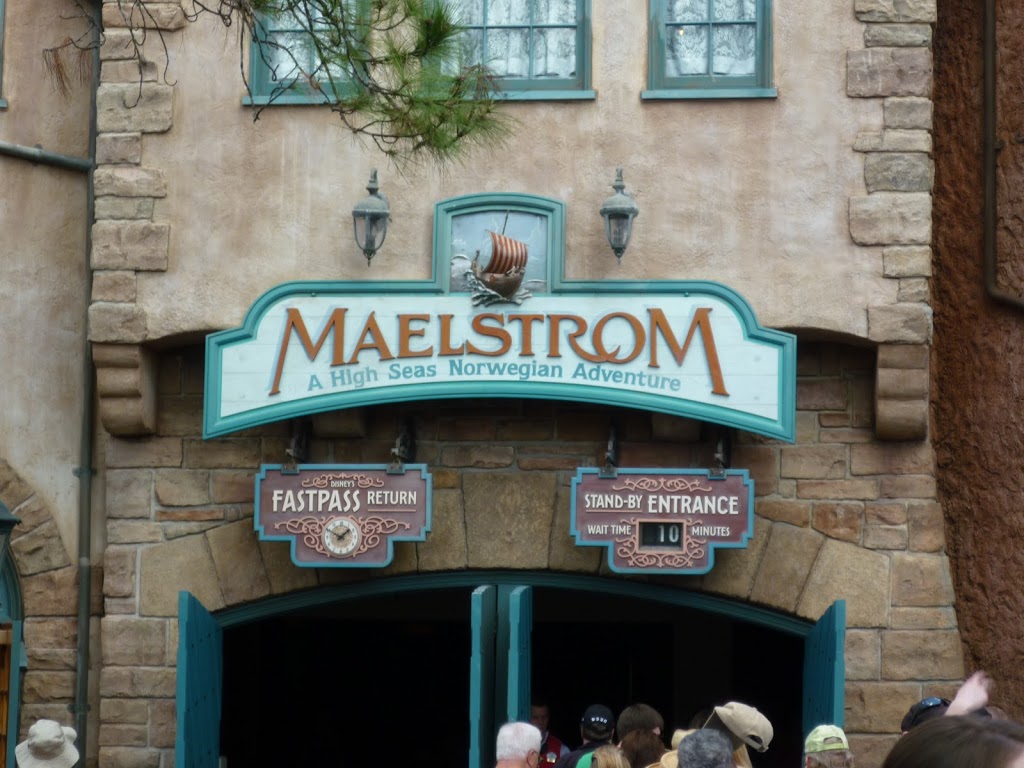
Ideas for novels can come from anywhere. The inspiration for my paranormal romance series arose from a ride at Disney World’s Epcot theme park (Epcot = Experimental Prototype City of Tomorrow). In World Showcase stands the Norway pavilion and a ride called Maelstrom, one of the best attractions in the theme park, in my opinion. You board a boat and enter a dark tunnel up a steep incline. At the top, staring down at you, is a glowing eye. The boat takes you into a misty forest where a troll pops up (or is it three trolls? I don’t remember). This evil character casts a magic spell on you to “Disappear…disappear.”
Suddenly, you are whisked backward through time (and literally backward as well). Then the  boat glides past a series of historical panoramas depicting Norse history. But then, uh oh, it appears as though your transport is about to plunge over the edge of a waterfall. Instead, after a slight turn, your boat does plunge downward but at a much less scary angle, landing with a splash amid oil rigs at sea. You’re back in the present and disembark at a seaside village.
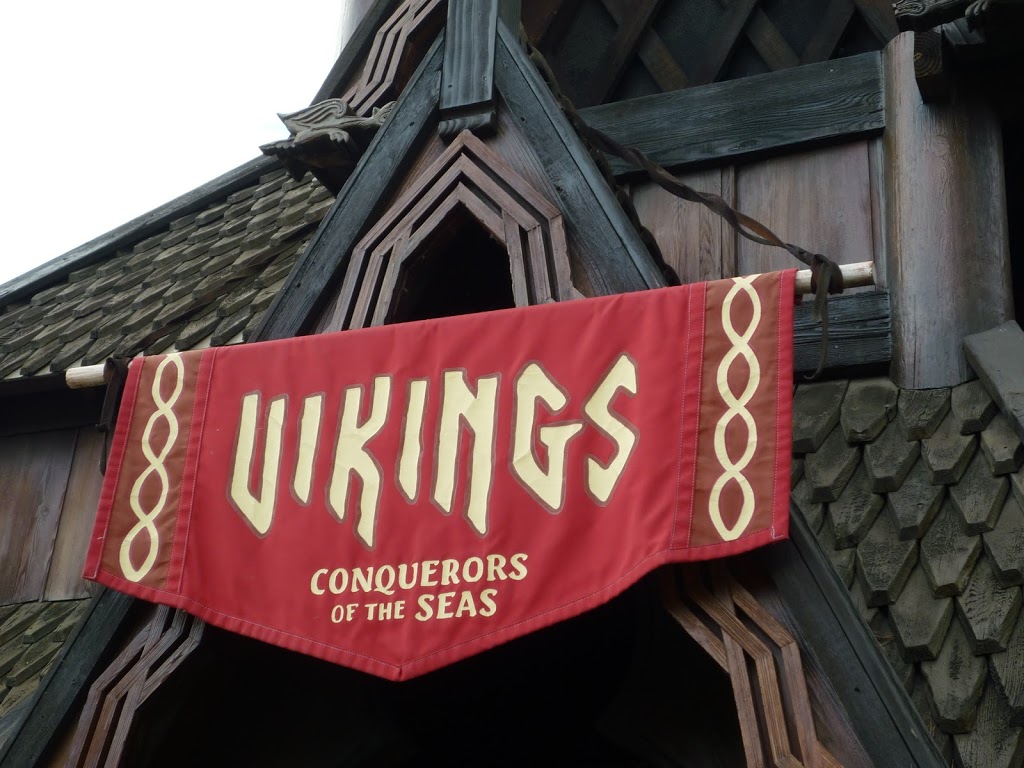
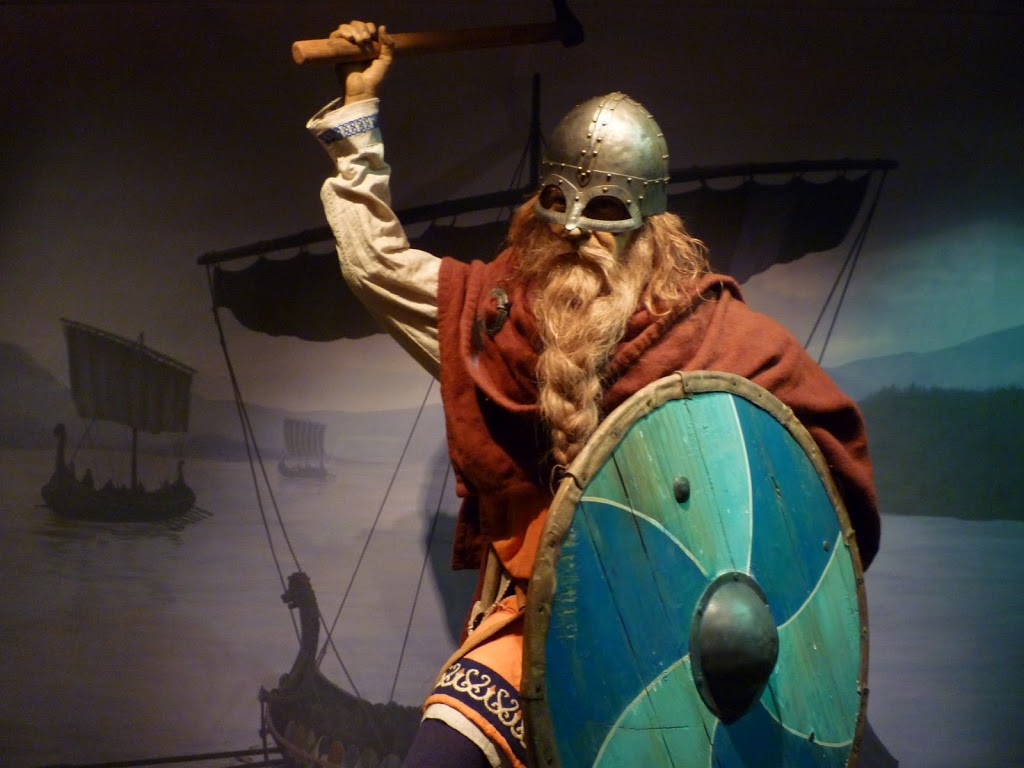
From here, guests are herded into a theater for a film about Norway. Here’s a tip: if you do not wish to linger, walk directly past the seats and out the door on the opposite side before the film starts. You’ll exit in the shops and can browse the expensive wool sweaters, fanciful troll dolls, books, and jewelry. The Norway pavilion also has a sit-down restaurant and a fast food café. A little known gem is a tiny museum with lifelike figures depicting ancient kings and warriors.
From this experience was born my fictional Drift Lords series with a band of warriors who come from outer space to save Earth from an invasion of Trolleks (my term for trolls), who arrived through a rift between dimensions (think Bermuda Triangle). They join forces with a group of Earth women whose special powers are just awakening. An ancient prophesy says history is repeating itself and Ragnarok, the destruction of the universe, approaches and only our heroes and heroines can prevent disaster.
My story is based on Norse mythology. I bought some books at the Norway pavilion on Vikings and Norse gods, studied up on the mythology, and watched some movies involving trolls. By now I’ve completed two books in this trilogy with one more to go. I put that aside to work on later because I’m working diligently to finish a mystery, first book in a new series, inspired by a reader at one of my book signings who said, why don’t you write a mystery about xxx−and so I did. Again, inspiration hit from an unexpected place.
Where do our ideas come from? They’re out there. We have only to latch onto them and turn them into our fictional worlds. And world building is a topic for another time.
So fellow writers, what inspired your current project?