Criticizing the critic

Novelist Alice Hoffman created a dust-up recently when she used Twitter to fire back at a less than glowing review of her latest novel, THE STORY SISTERS.

Reviewer Roberta Silman wrote in The Boston Globe: “This new novel lacks the spark of the earlier work. Its vision, characters, and even the prose seem tired.” Hoffman posted a number of tweets calling Silman a moron. She asked, “How do some people get to review books?” Hoffman also posted Silman’s phone number and email, inviting fans to contact the reviewer and “Tell her what u think of snarky critics.”

By Monday, Hoffman had issued a statement of apology through her publisher.

OK, as authors, we’ve all received negative reviews somewhere along the line. As far as I know, no one has ever written a book that was accepted and loved by 100% of its readers. And even the most famous or best-selling books of all time have been lambasted with negative reviews. Just ask Dan Brown.

So what would cause any author to lose it and publically shoot back at a reviewer? Don’t we all know that when we take that giant, risky step into the public arena by having our words published, that we are aware the results might be positive AND negative? What could possibly be accomplished by criticizing a critic? Would it encourage the reviewer to be gentler next time? Doubtful. It might even narrow the number of future reviews by other critics.

There’s an old saying that if you do the crime, be ready to do the time. If you write a book and have it published so anyone can read it, be ready for the good and the bad, because that’s what you’re going to get.

How about you? Have you ever wanted to shoot back at a reviewer who gave you a less than favorable review? Did you? Should you?

Does being a writer make you a lousy reader?

By Kathryn Lilley

I brought home many, many books from Thrillerfest. So many books that Delta charged me an extra fifty bucks for the sardine flight back to LA.

As soon as I settled into my seat, I opened the first thriller from my TBR bag. I was looking forward to it. The book had an eye-catching cover that was plastered with snippets of positive reviews, accompanied by blurbs from BNAs (Big Name Authors). Best of all, the story opened with a plane crash. I’m a nervous-Nelly flier, so I was ready to be terrified.

But ten pages into the book, I was yawning. Worse, I was getting irritated with the author.

As the pages dragged on, I started pulling apart each paragraph in my head, muttering things like, “This dialogue is way too symmetrical. You should have changed up the rhythm here, lost that attribution tag there. How the heck did you get those BNA blurbs?”

After a few more pages, my mental rewrite got too exhausting. Thriller #1 was a bust. I tossed it back into the bag.

Thriller #2 was a winner, but I still couldn’t get into it fully. Every time I hit a taut scene or a seamless transition, I detached and thought, “Okay, so how did this writer pull that off? What can I learn here?”

Unfortunately, being a writer has spoiled the reading experience for me. I can’t lose myself in books the way I used to. I’m like a nosy, jealous chef, sampling dishes and trying to figure out what spices were used.

My reading rut started about the time that I started writing my current series. I had no time to read due to a combination of deadline pressures and my day job. Now that I’m shifting gears to write in a new genre (and am sans day job, say hallelujah), I’m reading again. It’s like I’m mapping brand new waters, separating the sharks from the flounders. (I know: Block that metaphor!).

It’s good to be reading again. But darnit, the thrill is gone.

How about you? Does being a writer kill some of the joy of the reading experience?

Fighting for Author Rights Down Under

by Clare Langley-Hawthorne

Many of you may not be aware but there’s a battle brewing down under – pitching Aussie publishers and authors against the chain booksellers and the government – all in the name of cheaper books. Now as a reader I am all for cheaper books, particularly in Australia where book prices are (in my opinion) ridiculously high (typically about $45 for hardbacks; $25 for paperbacks).

Recently the Australian government asked the productivity commission to evaluate the current restrictions on the parallel importation of books into Australia. Basically this law protects publishers and authors who hold the Australian rights to a particular book from competition by suppliers of foreign editions of that book. On July 14th the productivity commission released its report. The recommendation? Screw territorial copyright for Australian authors and publishers. Although the commission backed away from full abolition of parallel importation restrictions they recommended that territorial copyright last only 12 months from date of first publication. I’ll spare you all the boring legal details, suffice to say that if this recommendation is accepted and the copyright laws in Australia are amended it could have significant ramifications for the Australian publishing industry as well as Australian authors.

Many of my fellow mystery and thriller writers in Australia have warned that they may lose their Australian publishers all together, see a significant decline in income and feel that it will be even harder for Australian writers to get published…all so that the big chain book stores can import cheaper books (even with no guarantee that they will actually drop book prices to consumers as a result). Sounds a little like madness…and it is yet another reminder of how precarious our author rights can be. It’s hard enough to get published, even harder still to make a living at it – and without full copyright protection, even harder to hold on to the slim opportunities we have…

So this is Monday’s rant – and a reminder for us all to support the Aussie writers down under who are facing this very real threat to their livelihoods. If you want to learn more here’s a link to a great website: http://www.ausbooks.com.au/ It also provides perspectives from authors such as Tom Keneally and thriller writer Michael Rowbotham.

And one question – How do you think places like Australia should go about trying to balance the demands for lower book prices (and they get no argument from me on this) and the desire to maintain a thriving local publishing and writing industry?

Writing What You Know: Missing People

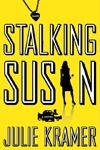
Today, our guest blogger is Julie Kramer, a freelance network news producer. Her debut thriller, STALKING SUSAN, won the RT Reviewers Choice Award for Best First Mystery, the Minnesota Book Award for genre fiction, and was a finalist for the Mary Higgins Clark Award. It’s also been nominated for Best First Novel in both the Anthony and Barry Awards.

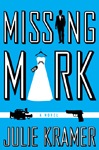
Her second book, MISSING MARK, is available now from Doubleday.

by Julie Kramer

kramer-julie If authors are going to take readers inside a fictional version of their own world, it helps if that world holds some natural intrigue to outsiders.

That’s where I lucked out, working as a career producer in the increasingly desperate world of TV news. By coming clean about some of my profession’s flaws, my debut, STALKING SUSAN, (recently out in paperback) takes a little of the mystery out of the media. And my readers seem to appreciate the insider knowledge on how news decisions are made to how hidden cameras work.

Of course, some of my news colleagues wish I hadn’t been quite so candid. They ask: Did you have to tell them all that stuff about ratings? Did you have to tell them “If it bleeds it leads?”

In my sequel, MISSING MARK, my TV reporter heroine answers a want ad reading “Wedding Dress For Sale: Never Worn” and is drawn into a dangerous missing person case during sweeps month.
susan1bAs a journalist, I’ve covered numerous missing people and I never know how the cases are going to turn out. Some victims, heartbreakingly, end up dead (Dru Sjodin – North Dakota). Others, miraculously, turn up alive. (Shawn Hornbeck – Missouri) Some, hauntingly, are never found. (Jodi Huseintruit -Iowa) Some are abducted. (Jacob Wetterling – Minnesota) Others stage their own abduction. (Audrey Seiler – Wisconsin) I used MISSING MARK as an opportunity to show readers how newsrooms decide which missing people get publicity and which don’t. It can be a provocative discussion.

When a child disappears, the media goes into action. And those actions, from broadcasting Amber Alerts to interviewing sobbing parents, are fairly predictable. Children should never be missing, so missing children are news.

It’s when adults go missing that the situation gets tricky because grownups are allowed to leave without sharing their plans with friends and family. And hey, often enough they do show up just days later. Back from Vegas. Sheepish. So without signs of foul play, there’s some controversy in how long the police wait to investigate a missing adult. Often journalists take their cues from law enforcement. If the cops don’t appear to be taking a case seriously, the media might not either. Some states, such as Minnesota have recently passed legislation like “Brandon’s Law,” requiring police to more aggressively investigative missing adults deemed to be “endangered.”

Whether a missing person gets news coverage can depend on how slow the news day is, or if a holiday is approaching and other news events come to a standstill. I don’t think it’s any coincidence that lots of missing people who became household names disappeared near holidays. Remember Lacy Peterson and Christmas?

I’ll never forget the time a friend of mine decided to enlist the help of a Denver Private Investigator to solve a missing person case. There are lots of reasons why people go missing and often the mysteries are never truly solved, but a private investigator may be able to use surveillance techniques to help.

How accessible the victim’s family is for interviews and photographs can also make a difference in publicity. That’s content. And newsrooms seek content. Without a family pushing the police to search and the media to broadcast descriptions, the missing tend to stay missing. And until someone reports them gone, the missing aren’t even considered missing. That’s why serial killers who target prostitutes or the homeless tend to stay under the radar longer.

One of the most controversial aspects of missing people and the media is why attractive, white women seem to get the most national media attention. There’s no good answer for that. I know for a fact, news managers don’t consciously decide coverage based on the victim’s appearance. But if you look at the faces of the missing who have gone viral, that seems to be a common denominator.
stalking-susan Certainly it’s more understandable that missing women get more coverage than missing men because, historically, missing women are more likely to be in jeopardy. But as for appearance, it might be one of those chicken vs. the egg quandaries. Are attractive victims more likely to get publicity because that’s who viewers watch and that’s who draws ratings? Is the media merely giving the public what it wants? Or is the media deciding what the public wants? As a journalist and as a viewer, I don’t know the answer to that debate. But I know newsrooms are troubled by it.

When I started writing what eventually was titled MISSING MARK, I had in my mind that the bride was the missing character. But after my neighbor, a West Point cadet home on leave, went missing, I decided to make my victim a man to discuss some of the challenges missing men face.

So instead of Here Comes The Bride, my story became There Goes The Groom.

A MISSING MARK case in the headlines recently involves South Carolina governor Mark Sandford going AWOL to visit his Argentina mistress. If you dropped that kind of plot in a novel, critics might call it improbable. But that’s just one example of truth being stranger than fiction.

What do you think about how the media covers missing people? What do you think about how they’re portrayed in fiction?


WHAT ELSE WOULD I BE DOING?

John Ramsey Miller

Here I am, a once-upon-a-time-NYT-best-selling author, back at the beginning of my career yet again, but with a couple of million books in print. This is the third time I’ve been writing a novel without a publishing contract and I’m not getting any younger and other than writing novels I have few prospects for an alternative career. Writing thrillers is easy for me. Everything else looks really hard.

In my life––if you count the part time gig in high school––I’ve had exactly four jobs as an employee of someone else. I drove a delivery truck for Solomon’s Dry Cleaners in the eleventh grade. I got fired after my fourth accident in two weeks. Mrs. Solomon was nice about it. Her insurance company insisted she replace me. After high school I worked a summer on a tow boat that ran up and down the Mississippi River non-stop at five knots maximum from New Orleans to somewhere up the Ohio River. The engines were so loud you couldn’t have a conversation except out on the barges. The food was excellent. They had to put me off in Greenville, Mississippi after I got sun poisoning after spending a day on the barges outside New Orleans. Fair skin made a day laborer in the sunshine a pipe dream, and truthfully it lacked something crucial. My third actual job was as a graphic artist/photographer for a TV station in the Mississippi Delta. I got fired because I hid Martha Mitchell out from the media and the TV station thought that was some sort of a breech of media ethics. Evidently I was supposed to hold her down while they skewered her. I was glad I got fired. Working at a TV station sucks. My fourth job was in 1978 as the official disseminator or public information for Leflore County Schools, the poorest county school district in Mississippi, which means poorest in the free world. The predominantly black county schools had books from the 1960s that the white school students had dog-eared, scribbled in until they looked like redacted documents from the FBI, and could either burn or hand off to the county. There were actually high-school teachers at the county schools who didn’t have a college degree and were no more than babysitters. In Mississippi the county schools were historically parking places until crop season. The federal government paid my salary. That job I quit. I can’t remember exactly why, but I guess it was being that I figured being depressed was something I could manage on my own without the government’s help.

Before I started writing, I made a living as an artist or a free lance photographer or something else I did to earn money and I never went hungry. I’ve made my living writing since the mid-eighties. First as an ad copy writer, a journalist, a non-fiction author, as a scriptwriter, and a thriller author. I have made a living at it, although not as good a living as some, better, I suppose, than most fiction authors. I do have a book in the can and I’m going to do some painting and sculpting before I start another book. This writing thing keeps me off balance and maybe I’m as insecure as most other authors I know. It’s just a weird business, and its the business side I don’t think I’ll ever understand or master. I’m not much for politics, and self promotion has never been easy for me. I grew up in a “be modest” and “don’t blow your own horn” family. I guess I need a larger ego than I possess, more self assurance or something.

Writing has always been easy for me. I just sit down. I see the scenes and I transcribe them. Maybe it’s too easy. It’s something I know I’m good at. I enjoy doing it. It has been my art form and I have painted my words, told my stories, on an international scale. I have touched people, made their lives better for a moment or two. I am blessed and lucky and fulfilled in the writing thing. As long as I enjoy it, I will keep doing it, but not one moment longer. You have to make a living, but life is too short to do a thing you don’t love doing.

http://www.johnramseymiller.com

Nobody Pinch Me

By John Gilstrap
http://www.johngilstrap.com

I’ll start with an apology for shirking my blogging duties last week. I was at ThrillerFest and had neglected to plan ahead. I suppose I could have just ignored the parties and . . . Nah, people who know me understand that I am incapable of ignoring the parties.

Those who’ve been to T-Fest know that the parties there are different. Those other people in the bar or at the receptions aren’t just regular folks that you see at work every day. To a person, the people I met there in New York—from fans to fellow authors and everyone in between—were friendly, intelligent and fascinating. It’s what makes the conference a not-to-be-missed event for me every year.

I arrived on Wednesday afternoon on the heels of some media events in Boston the previous day, and I went to dinner with Jeffery Deaver. We had drinks at a little hotel bar on 44th Street, and then we ate at a largely forgettable restaurant whose name I’ve in fact forgotten. We were done by 9:00 and not yet ready to go our separate ways, so we wandered into the bar at the Algonquin Hotel. THE Algonquin Hotel, of Algonquin Roundtable fame.

That’s when it hit me: I’m living my own dream. Sitting there in such a famous room, I realized that had I been around in 1925, I might have had a place at the table. I might have participated in the conversations of those literary and critical giants, laughing at their jokes and maybe even offering up a few of my own. (Conversely, I might have been rejected as a commercial hack and banned from their presence, but this is my fantasy, so let me run with it.)

Now, of course, all of those giants are dead. Instead, I spent my time engaged in conversations with Joe Moore, Jeff Deaver, David Baldacci, Harlan Coben, Andrew Grant, Gayle Lynds, Joe Finder, Brett Battles, Kathryn Lilly and dozens more brilliant, witty writers. Forgive a moment of aggrandizement, but it occurred to me that collectively we might all be remembered as the next famed group. Given the level of talent in the room, I’m certain that at least a few will be tagged with greatness.

And I was there. God willing, I’ll be there again.

When I was a kid, I was in awe of writers and writing. I had little opportunity ever to meet an author in person, but on the occasions when I did, I stood there star struck. To think that I might ever join that elite club—if not as an equal, then at least as a colleague—was beyond my ken.

Yet there I was in New York, surrounded by talent. During the course of the next few days, I would have lunch with Anne Hawkins, my agent, and dinners with Michaela Hamilton, my editor, and Sam Franco, the producer who optioned Six Minutes to Freedom.

I’ll say it again: Agent, editor and producer. Never in a million years would I have dreamed that the guy at those meetings would be me.

Last Wednesday, as we sat in the Algonquin sipping scotch and chatting about whatever we were chatting about, I asked Jeff if he ever stopped to think about how cool this whole experience is, about how lucky we are.

“Every day,” he said.

Exactly. Every day. I am an author. I am what I’ve always wanted to be, and every day I wake up wondering what I did to deserve the good fortune.

And I pray that I don’t do something to screw it up.

Does anyone else find themselves amazed at where they are, and fearful that it might all go away?

Wagging the Dog

by Michelle Gagnondog tail

I recently heard from a friend who has written a number of critically acclaimed but only moderately successful standalones. Her agent is pushing for a switch to a series character. Another friend’s publisher wants him to do the opposite, abandoning a series for standalones (the Harlan Coben model). A third is working on a YA novel, since apparently that’s all that’s selling these days.

As I hung up the phone, I thought about the tail wagging the dog. The advice that’s always offered at conferences is, “Don’t try to chase trends, just write the book you want to write, as well as you can write it,” (or some variation therein).

But that’s not always possible. Everyone from agents to editors has a say in your next book. Sure, you can give them the brush off, but then there’s always the risk that they won’t be excited to shop that manuscript, or market it if it is slated for publication.

For writers, this can serve as a real wake up call, especially since occasionally the advice you’re receiving stands in direct contrast to what was offered by the same source months earlier. I might be mistaken, but at times it seems as though no one has any idea what will sell in this marketplace. I know a lot of writers who are racing around trying to figure out which project they have the best chance of selling, especially if they’re writing it on spec. Which is perfectly understandable- devoting months or years to a manuscript that doesn’t sell is incredibly disheartening (and I speak from experience). Moreover, for writers who rely entirely on their books for income, the prospect of not getting another contract is downright terrifying.

For the first time recently, I received some negative feedback on a synopsis I’d submitted for my next book. All legitimate concerns, I realized as I re-read what I’d written. However, the suggestions offered for the direction the book should take didn’t sit well with me; that wasn’t the book I wanted to write. In the end, after some brainstorming, we came up with a solution that (hopefully) makes everyone happy, but I’ll confess that I did experience a moment of panic. In the past I’ve worked as a writer for hire; most of my freelance articles were written for money, not for love of the subject matter. The thought of doing the same for a novel, committing months to a project I just wasn’t that excited to sit down and write, was nervewracking. But then again, to have that manuscript rejected would have been far worse.

~~~~~~~~~~~~~~~~~
Join us on Sunday, July 19, when Julie Kramer, thriller author of MISSING MARK and STALKING SUSAN will be our guest blogger.

Should you write a series?

Last October, THE 731 LEGACY, the last installment in our Cotten Stone thriller series was published. It ended the 4-book series. My co-author Lynn Sholes and I are about to finish writing a new standalone that could develop into a series if the literary gods smile down on us. But in taking on the task of a new set of main characters—something we haven’t done in many years—it got me to thinking about the pros and cons of writing a series as opposed to a standalone.

I think the biggest advantage is that we know our main characters really well having lived with them through four books. We’ve watched them act, react, and grow. Dealing with a character that we’re familiar with presents less challenges that starting from scratch with a new main protagonist. And with that knowledge, we can concentrate more on plot. In keeping our series heroine fresh in each book, we always begin by asking, “What does she still need to learn?” The answer to that question is our challenge for new character development in the next book in the series.

Of course, with a new series main character, we have to learn all the idiosyncrasies and motivational forces as we go through the development process. Rather than springing off the starting line, we must first crawl, then learn to walk all over again.

There are a number of things to remember when writing a series. Don’t assume that your reader has read the first book in your series when he picks up number two or three. Add a few reminders with enough details so if the reader didn’t read the first book, he can still understand what’s going on. Make sure that each book in the series has a solid resolution. Include themes that thread through the series. Document your characters and their reoccurring haunts such as where they live, their jobs, their families, births and deaths, habits, settings. You never want to show a lack of historical knowledge about your characters in a later book.

One of the biggest challenges of a series is backstory—how much do we have to retell with each new book? Where do we draw the line between bringing the new reader up to speed that may have started reading in mid-series and boring the established fan who has already read the previous books and just wants us to get on with the new story?

For the series authors out there, are you happy to keep the story going through multiple books. How do you keep your characters fresh and interesting. Do you ever get the urge to cleanse your creative palate and take a chance now and then by writing a standalone?

~~~~~~~~~~~~~~~~~
Join us on Sunday, July 19, when Julie Kramer, thriller author of MISSING MARK and STALKING SUSAN will be our guest blogger.

Notes from Thrillerfest

I just returned from my first Thrillerfest–it was a fantastic conference! Fellow Killers John Gilstrap, Joe Moore, and James Scott Bell were there, and it was great to see them. Thanks to everyone here for holding down the blog-fort while we were in NYC.

A few notes from the Thriller front:

Drumroll, please!

As a former journalist I know better than to bury the lead. During the conference it was announced that our own Joe Moore is the incoming co-president of ITW!

Joe moved onto the board of directors last October as Vice President, Technology, and will officially take over the co-presidency on October 1st 2009. He replaces James Rollins as he steps down due to term limits. Joe’s fellow co-president is Steve Berry. Joe and Steve are in charge of setting the direction for the future of ITW as well as acting as executive directors.

Congratulations, Joe! You deserve the honor; we’re proud to be your blog-mates.

Star power
Thrillerfest ’09 featured some of the brightest lights in the thriller-writing cosmos: Sandra Brown, Clive Cussler. Robin Cook, David Baldacci, David Morrell, and many more! We got to ask them lots of questions during the breakout sessions. I brought home many writing tips that I’m already putting into practice.

Panel fun

I was on a panel with NYT bestselling author Peter De Jonge and Kathleen Sharp, where we shared stories about what it’s like to jump from journalism to a career in fiction. I got a lot out of all the panels I attended, especially “Can you cross genres?” with James Rollins and Jon Land. I hate to miss anything, so I brought home CDs of many of the panels I was not able to attend.

Goin’ to the dogs

There was a dramatic K9 demonstration of “tactical” dogs (the preferred term instead of attack dogs) and explosives detection. The very brave Panel Master, Andrew Peterson, put on a padded sleeve to demonstrate how the tactical dog takes down a suspect. An ATF officer explained that the dogs think they’re playing a game when they attack. But this is one game that the criminals are bound to lose!

To sum up, Thrillerfest ’09 was indeed a thriller–I can’t wait until next year!

The YA Market

Now that I have finally finished the third Ursula Marlow book, Unlikely Traitors, I’m turning my attention to a few ideas I have for a young adult novel and I need help! This is pretty much an entirely new area/market for me. I confess I’ve always been a sucker for children’s and YA books – I’ve devoured Harry Potter, guiltily polished off the Twilight series, relished the Luxe books and when it comes to TV and movies I have been known to have more than a passing interest in all things high school. I guess I just never grew up…so now I want to indulge my passion for history, mythology and mystery in the YA market – but where to start in terms of looking at the YA market? Here’s where I need some help.

My first question is the state of the YA mystery market…Is there even such a thing? It seems from my initial research that the YA market is dominated by paranormal and fantasy books. Even in the historical context what I’ve read has a decidedly paranormal bent – either that or it’s Gossip Girls for the 1900 set. So does anyone have any recommendations or insights into YA mysteries? Are there any that you would highly recommend? Is there even a market for YA mysteries anymore (most seem designed for a younger more middle grade or elementary school readership…)

The second question is – does history totally suck for most YA readers? This is another concern I have – that history equates with deadly dull – do you think that’s true? What about recommendations – any really cool historical YA books out there that I should check out?

Finally I have to wonder, am I actually thinking about a YA book or is it an adult book with a young protagonist??? At this stage it’s difficult for me to tell. I guess what I’m really wondering about is voice and which authors out there have a strong grasp of what I’d call the YA voice…Again any recommendations?

I’m at the research phase at the moment so any insight or recommendations you could provide would be greatly appreciated. It’s my first foray into the YA market but it feels right…Of course, writing the next Twilight series would definitely feel very, very, right…but at the moment I’ll settle for just gaining some insight into this market and (hopefully) writing the best book I can…