Judging a book by its cover

By guest blogger, Alison Gaylin

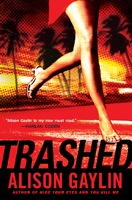
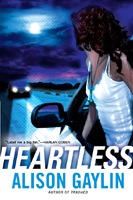
heartless This is a big month for me because I have two books coming out. HEARTLESS, my new standalone, launched in the states September 2, while TRASHED – which came out a year ago in the US – launched in the UK September 4.

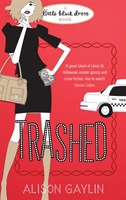
Unlike Alafair Burke, who posted here recently, I was never trashedasked to make any changes to “Britishize” the book, which is set in L.A. and features a reluctant supermarket tabloid reporter who uncovers a grisly series of Hollywood murders. But what makes it feel like a new book to me is the cover. Check it out; TRASHED’s British exterior is markedly different.

TrashedBrit Not to jump into the whole “lipstick on a pig” dialogue but please look at this cover and tell me if any man would be caught dead carrying TRASHED to a checkout counter. (And don’t forget to factor in the chapter headers, which all feature sweet little striped satin hangers hovering over them).

I’m not surprised – LBD is a chick lit oriented imprint whose name says it all – and I actually think their covers are adorable. But I’m fascinated by all of this from a marketing perspective. A British friend assures me that chick lit is still huge in the land of Bridget Jones, but here’s the thing. I’m hoping I can fulfill my end of the deal. I’m hoping that the murders in TRASHED aren’t JenMay_Alison_6047_sm too gruesome, that there’s enough romance and shoes and pure girly fun to live up to what the cover promises. Over the next year, my other four books will be coming out – four months apart – on the LBD imprint. I can’t wait to see what their covers look like – I know they’ll be miles away from my US covers. That’s fine with me. I just want British readers to buy my books, and read them. Cover to adorable cover.

How important is a cover to you? Have you ever bought – or not bought – a book based on the jacket it’s wrapped in? (I sort of hope the answer is “yes,” because HEARTLESS’s cover is pretty great.)

A Non-Glamorous Life

My children have accused me of being a boring person. I like to think I merely give that impression because I listen more than I talk, and I am usually content to be an observer of the world around me. And now I live in a boring place––very rural North Carolina––where nobody seems impressed by authors who didn’t write something practical and useful to their daily lives. For instance my coffee table at this moment has two books sitting on it: a copy of Storey’s Guide To Raising Chickens, and Basic Country Skills. I don’t advertise the fact (to my few neighbors) that I’m an author, because people out here would view making a living writing stories as suspicious behavior. But my new environment is making me a more relaxed, and much more focused, writer.

After fifty-eight years of living in major cities, large or small towns, my wife and I decided we wanted some solitude and more control of our lives. My wife, a proven country girl, and I sold our house in Concord, NC, and moved way out here off a gravel road named for a small clapboard church. It’s a place where most of the roads, that aren’t just numbers, are named for churches or schools they run in front of, or harness shops, or are called things like Shortcut Road.

They knew me in town as a fiction author, while out here at the feed and seed store they know me only as “Blue Toyota Highlander” because that is what they put my feed sacks into after I pay for my order. One of the perks of living several miles from the middle of nowhere is that despite my fish-belly-white, chicken legs, I can go around the community in shorts without anyone making “sunglasses” jokes or caring at all. Sometimes, when it’s cool enough, I wear overalls or jeans with missing knees. And I have been honing my carpentry and necessary 4-H skills.

My writing studio is a converted feed storage shed, a 12X12 room (with a covered porch where my three dogs lounge while I work), which despite new oak floors, large double-pane windows, and sheet-rocked and painted walls still smells of sweet feed. Plus I can shoot my guns at stationary targets from the rear deck without a single complaint from neighbors, as they often shoot from their own decks as well. Most late afternoons I get a cold beer, or perhaps a Martini or a single malt, and my wife and I sit on the deck and watch the chickens milling about the yard in search of bugs and young plants. I have snakes: black rats, hog-nose, rough greens, kings, and corn snakes, which have free run of the place since they eat crickets, rats, mice, and poisonous snakes, and are left more or less alone by my dogs. My field is surrounded by thick woods. We raise and eat organic chickens, we buy grass fed beef from the farm next door. We eat fish I catch, fresh produce from our garden, wild hogs I shoot, venison I shoot, and free-range eggs we grow to counteract the effects of all those years of eating food from the shelves of grocery stores. This morning wild turkeys came to the chicken pen and gobbled at the rooster, that cockadoodledooed back at them. My grandson walked right up to them, and they didn’t run, just watched him. I took a pictures.

You know you’ve arrived in the country when of your neighbors lists his occupation for the IRS as, “working in the woods”. People out here mind their own business, drive pickup trucks because they need to haul more than booming speakers, work hard all day, and enjoy the simpler things in life. I’m doing my part to fit in.

I can sit at my desk, cruise the Internet and watch all manner of wildlife crossing my field or my driveway. But, best of all, I can commute to the office in my boxer shorts without worrying that anyone will come by unexpectedly. I love my friends, but because it’s just too inconvenient for the vast majority of my city dwelling friends to pop in, it allows me fewer interruptions and longer spells at my desk.

Character Motivation Redux

By John Gilstrap
www.johngilstrap.com

The writing process fascinates me. Reading Joe Moore’s excellent post about the Nemo family got me to thinking how I would answer the question about motivating characters. Even as I write this, I’m still not sure. Fact is, I’ve never thought of the process that way. Interview my characters? I can’t imagine doing that. As I’ve posted before in this space, my characters have the annoying habit of staring back at me until I tell them what to do.

For me, I think, plot is character is motivation is drama. The various elements of storytelling are so interwoven and interdependent that I don’t know how to break them into their separate component parts. When a character’s child is stolen, the motivations are inevitably cast. The kidnapped child is motivated to survive and/or get away. The parent is motivated to get him back. The kidnapper is motivated to see his plan through to the end. Maybe it would be more nuanced for me if I wrote love stories; but as a thriller writer the whole motivation thing has never been a problem for me.

Sometimes I think the best advice we can give to struggling new writers is to think less and imagine more. Given the set of circumstances you’ve conjured, put yourself in your character’s position and start pretending. It was easy when we were kids, after all, before we attended creative writing classes and people started putting labels on the things that came naturally. When I was a boy and I played with my friends, the non-sports games were always of the role play variety, and nearly always involved imagined gunplay. (I cleared the neighborhood of marauding Apaches when I was very young, and then kept the Nazi threat at bay as I approached adolescence.) But here’s the thing: I became the character I was pretending to be. My bike was a motorcycle, and the pine cones were grenades.

When I started writing stories in elementary school, that reality transference continued. The reality of the imagined world trumped the reality of my actual surroundings. It still happens to me when I’m really in the zone—it’s the great thrill of writing. I don’t have to think about motivating my characters because all I have to do is report on what I’m seeing, hearing and feeling through their senses.

Being a big fan of Inside the Actor’s Studio, I’ve often thought that the Method, as described by the guests on that show, has a lot in common with my writing process. Once I create a premise that feels real, I don the emotional garb of the character from whose head I’m writing, and I embark on a great pretend.

Are ebooks the future of publishing?

by Michelle Gagnon

So a few months ago I posted about ebooks on the Bookbitch blog. I was an unexpected convert, one of those people who waxed eloquent about the smell of the paper and crack of the spine. But last year I purchased a Sony Reader for my husband to take on a trip to Europe. For months after his return, the Reader sat forgotten in a kitchen drawer.

Then came the day I was packing for a vacation, doing my usual tortured book shuffling, trying to figure out how I was possibly going to bring everything I wanted to read. I remembered the Reader, and decided to give it a whirl—if nothing else, it would free up some room in my suitcase. I was trepidatious, convinced my eyes would tire after a few hours of reading, or that the simulated page turning would prove irritating.

I returned home a convert. I’d read six books in a week, a tiny fraction of what the Reader was capable of holding, all in a device smaller than a trade paperback. No tired eyes, and once I got the hang of it I didn’t even notice that I was reading the books in a completely different format. In fact, turning pages was easier than it would be with a “real” book. I was hooked. In fact, now I own a Kindle too—my husband gave me one for my birthday, so that I’d stop hogging his.

And that got me thinking about what these new electronic readers mean for the future of publishing. Amazon Kindles are flying off the proverbial shelves. There’s a generation of kids who are acclimated to reading everything off a screen. On the opposite end of the spectrum is a generation of baby boomers with aging eyes, and the new readers offer up to six different font sizes, eliminating the need for large format books. As the prices of these devices come down, and more books become available electronically, I foresee them attracting an ever-increasing share of the reading population.

And you know what? IMHO, this is a good thing. Readers are readers, it doesn’t matter to me whether my books are bound or scrolled across screens. And environmentally speaking, it’s hard to argue with a format that doesn’t destroy any trees, and leaves a negligible carbon footprint.

If I’m correct, it’ll be interesting to see how this changes the publishing landscape. Some people have posited that publishers as a whole will be eliminated, that being able to sell books directly to vendors will eliminate the need for them. Frankly, I don’t think that will happen. Every book needs a good editor (at least, I know that mine have always benefited from having one), and I believe that the publishing houses do tend to provide a filter for what reaches the public. Sales and marketing teams are still necessary to get the titles into the public eye. And every book needs an attractive cover.

But imagine the savings for them. No longer will they have to gamble when determining a book’s print run. No more remaindering. Every author could potentially earn out their advance. The risks and costs for publishers will be greatly reduced, which might lead to a more even split of the proceeds.

Going a step further, imagine what else could change. Recently, to celebrate the release of her latest book, Julia Spencer-Fleming’s publisher offered free downloads of her first novel for a limited time. Brilliant marketing idea, in that it offered the possibility of garnering new readers at little or no cost. Currently, the Kindle offers a free download of the first chapter of every book, then gives you the option of purchasing it. I love that feature, and nine times out of ten I end up buying the book. Which then downloads to the device in a minute or less: instant gratification.

Further down the line, picture interactive book covers. Alternate endings that the readers can choose, or links to backstories on the characters. It could be a brave new reading world.

Of course, there are concerns. Piracy is an issue, one that the music industry has been grappling with for years. That initially prevented them from seizing opportunities, something that Apple readily exploited by exploding onto the scene with iTunes while major labels were still churning their wheels with outdated marketing models.

And as a huge fan of independent bookstores, I fear for their demise as much as all of their other supporters. If ereaders really take off, it could prove an insurmountable obstacle for them. I’m hoping it won’t be, because there will always be a need for the kind of knowledge base and informed guidance they do such a wonderful job of providing. But bookstores on a whole will be facing an uphill battle.

Of course, I’m not saying that books will stop being printed entirely. There will probably still be limited editions for collectors and everyone who loves the feel of a real book in their hand. I still buy books, even ones that I’ve already read electronically, when I’ve enjoyed them so much that I couldn’t resist adding them to my shelves. You can’t gift wrap an ebook, and as of right now they’re still not ideal for reading in the tub or at the beach.

So tell me what you think. Are ebooks the wave of the future? Or have I just fallen under the thrall of my spiffy new Kindle? (Speaking of which, on October 1st one lucky subscriber to my newsletter will win a Kindle and be inducted into the cult. There’s more info on my site if you’re interested).

Finding Nemo’s Needs

nemo I was over posting on Absolute Write the other day and a beginning writer ask the question, how do you find out what motivates your characters? I suggested it could be done with something as simple as an interview. I said to interview your character as if you were a newspaper reporter asking probing questions about their life, quest, current situation, and other topics that could yield the answers. Come up with all the questions first. Then conduct the interview. It sounds simplistic, but it works.

As authors, we know how vital it is that all our characters have a goal. They must want something, and that something is what drives them. But it’s more than just a want. They must also have a need. If we don’t know what our characters wants and needs are, neither will our readers. With nothing to root for, the reader will lose interest. And in the end, they won’t care about the outcome.

So what is the difference between want and need? Think of Marlin, Nemo’s father in FINDING NEMO. Marlin’s only son, Nemo, is captured by a scuba diver and placed inside a fish tank in a dentist’s office. Marlin sets out to find Nemo. But he has a big problem, one that’s quite unusual for a fish: he has a terrible fear of the open ocean. So with just that much information, we now know his want and need. He wants to find his son, but to do so he needs to overcome his fear of the ocean. The reader (or viewer in this case) will root for Marlin to make it through all the perils he faces in order to find Nemo and rescue him.

Every character must have a want and need. The most critical are the ones for our protagonists and antagonists. But I think that even the smallest, one-time, walk-ons must be motivated. If we determine the goals of every characters, we will have an easier time writing them, and the reader will have a more distinct picture of the character in their minds.

In planning our stories, it’s important that we determine our main character’s wants and needs first. In doing so, we’ll always have a goal to focus on as we write. So what are your main character’s wants and needs? Can you express them in one sentence like we did with Marlin? Let’s find your Nemo’s needs!

Note: Join us on Sunday, September 28 when our guest blogger will be bestselling author Allison Brennan and on Sunday, October 26, when Agatha award-winning author, Chris Roerden is our guest.

As a writer, do your characters invade your “real life”?


“Careful, dear. You’re acting like your character.”

That was my husband’s warning to me last week, after I survived a risky (and slightly smelly) stand-off with a mentally challenged dude on board a tram in Portland. For the roily details, see last week’s post, Too close for comfort.

I escaped from that little adventure with nary a scrape. In fact, I ended the episode with a thumbs-up sign and a jaunty little wave; but seriously, my part in the encounter was stupid. I could have gotten my ass seriously kicked by that guy, or worse.

All of which got me to thinking: To what extent (if any) does our writing affect our choices and actions in “real life”? Is there a bright red line that is never crossed between fantasy on the page and reality? Or do you find that there is ever any psychological “page-bleed,” as they say in the publishing world?

In my case, last week’s tram episode was completely out of character for the “real me,” Kathryn Lilley. Ever since I was an adolescent, I’ve always been a shy, retiring soul. I’ve traditionally avoided eye contact with strange men, much less interaction. In the past, I would never have tried to remove a mentally disturbed person on public transportation. (And let’s be honest—what I did was supremely stupid. I’ve been told by a number of Herman Munster-sized, macho-macho guys that the only reason I’m alive today is that I’m a woman, and that I stayed utterly calm throughout the encounter. Seriously, my heart rate didn’t even increase. I have no idea why.).

But ever since I started writing the Fat City Mysteries, I’ve found that I’ve been getting deeper and deeper into the emotions of my main character, Kate Gallagher. And now, I’m like one of those actors who stays “in character” between shooting scenes of a film. In many aspects of my life, I find myself coming up with quicker ripostes, more assertive actions—bottom line is, I’m acting more like Kate.

So my question is, is this experience a unique and unhealthy response to getting too deeply involved in the writing or characterization process? Have the rest of you experienced anything remotely similar?

But just as a reassurance to myself, I have made a solemn vow—no matter how much Kate Gallagher inhabits my thoughts and feelings, going forward, I will never, ever again attempt to toss someone off a tram.

It can be way too hazardous to your health.

Oh, The Glamour of it all

By Clare Langley-Hawthorne
www.clarelangleyhawthorne.com

How I wish that air travel was like it used to be – glamorous, exotic, even adventurous. Now it is a grueling ordeal which, after the recent long haul flights to and from Australia, makes me wonder why I even bother to fly at all (probably because I have no choice).

Our flight to Sydney was actually good – we had two rows of four seats for us all risking that no one would, in their right mind, want the middle two seats in the final two rows in economy if they knew there was a three and a half year old sitting on the aisle. Our plan paid off and the boys got to stretch out, so we actually got a fair amount of sleep on the 15 hour flight over. But landing in Sydney in the middle of a thunderstorm,with each twin threatening to throw up and crying the eternity it took for us to land amid the lightning and rain, soon brought home the realization that flying is no fun at all.

Once on the ground we also had to wait on the tarmac as lightning prevented any of the ground crews from operating the jetways with the result being that four jumbo jets (at the very least) all deplaned (a word which I never thought existed) at the same time once the storm passed. Two hours getting through customs and immigration – and we’re bloody Australian citizens – meant that we missed our connection to Melbourne and could not get on another flight for four hours. Great, four hours in Sydney airport with three and a half year old twin boys after a 15 hour flight. The thing that got to me the most was that no one seemed to give a shit. Not at the airlines, not at customs. That’s what flying is all about now – endurance.

Can you put up with the power play of the customs guy who refuses to let you go in the shorter line because (and I quote) “Just because I said no” (bastard!) despite two little boys in tow.

Can you put up with the Qantas staff who shrug and say ‘oh well’ when you are faced with a four hour wait after a long flight mainly due to the fact that Qantas had originally cancelled your international connecting flight (without telling you) forcing you on to a domestic flight which meant clearing customs etc. in Sydney – which meant you were screwed.

On the return flight, there were no spare seats so the boys got to sprawl over us instead (I was in a mini Yoga session trying to contort my body so I could sleep amongst the toddler heads, feet and arms). Qantas flight staff appeared maybe three times the whole flight and couldn’t even be bothered handing out a kids activity pack (good thing I always have about 100 hours worth of entertainment packed into a backpack and miracle of miracles our in flight entertainment did work – the family behind us had none that worked!) I guess at least the return flight was smooth but still the food was lousy, the service (if you can even call it that) was indifferent and this was on an Australian airline – which used to be a safe haven – an expensive but welcome change to the American flying experience.
No more.

So as I gear up for my first ever book tour which my publisher, Penguin, is actually paying for (!) for The Serpent and the Scorpion my excitement is tinged with trepidation. Because lets all face it – flying today is not what it used to be. Flying even in Australia is not what it used to be and that’s damn depressing.

So much for jet-setting to glamour and fame.

Lost in translation

By guest blogger, Alafair Burke

burke-alafair So I got an email today from an editor with my UK publisher, which will publish Angel’s Tip in November under the title City of Fear. All of my prior books were published in the UK in the identical form as the US editions. This time, however, the UK editor has ach-bunk suggested deleting cultural and  commercial references that might not be recognized on the other side of the pond: e.g., deleting an Archie Bunker reference and changing Tasti-delite, a ubiquitous NYC not-quite-ice-cream-like "food," to a Starbucks.

starbk I honestly don’t know whether UK versions of US-based books are typically changed to delete cultural references. Are they? Should they be? If I read a book based in the south and a character chows down on some ridiculous fried something or another at a food shack called Lucy’s, I don’t need to know about Lucy’s to get the general picture. On the other hand, if readers in the UK don’t want to feel left out of the story, I can certainly understand. What do you think?

Alafair Burke is the author of what the Sun-Sentinel has hailed as "two power house series" featuring NYPD Detective Ellie Hatcher and Portland Deputy District Attorney Samantha Kincaid. A former prosecutor, she now teaches criminal law at Hofstra Law School. She is a graduate of Stanford Law School and frequently serves as a legal and trial commentator for radio and television programs. She lives in New York City.

Note: Join us in the Sunday Kill Zone when our guest bloggers will be:
Allison Gaylin, September 14
Allison Brennan, September 28
Chris Roerden, October 26

Welcome to Bean-Counter Land

I still hear tales of authors in the old days whose work never sold impressively, but were published religiously because their words were deemed by the houses to be important to future readers and gave an author’s work deserved time and effort on their part to eventually build an audience. I don’t have to tell you that those days are, for the most part, long gone and any author’s importance to a publisher is measured strictly in units sold. The exception would be authors with exalted reputations whom a house wants to list as an author of theirs for reasons of status. Like movie studios, publishers seem only interested in books they believe will be blockbusters that will rapidly swell their quarterly numbers for stockholders. We can decry it as a shame, but we all need to understand that the world we write in is about numbers. The good old days, if they ever truly ever existed, are gone, baby gone.

By the way, it isn’t just numbers sold, but also the numbers of returns that publishers tend to go by. If you sell 50,000 copies of a first book, but they figured it would be a hunko seller so they printed 250,000 units because that was what “they” decided to print, you have failed them the worst way imaginable. And chances are that they will make you feel like a child who has disappointed his father––picture a New England Episcopal minister’s son who marries a snake-handling, poison-sipping toothless Holy roller from the mountains of West Tennessee.

Unless you are somehow able to sell a substantial number of books on your own, or if a book builds from word of mouth, the publishers won’t advertise, and if they do they will plant one ad in one spot and wonder why the advertising failed to move books. I was in advertising for many years and I can tell you that (according to some vague research we believed in) any ad has to be seen nine times to make an impression on an individual––and that’s a person who’s open to the product the ad is about. Print ads are a prohibitively expensive way to sell books, and unless you are a major best-selling author you will be lucky to get even one ad anywhere. Best-selling authors need ads only to hold their market share, so you can’t blame the publishers for putting their money where they are most likely to see results on their bottom lines. You can’t blame a business for wishing to make money because that is how everything is measured. It’s disheartening for an author to put a year of their life into a book, work to make sure it’s as good as they can make it and then watch the publisher ship it out to see what happens to it on the shelves. Even if a book wins a major prize, and gets great reviews, unless it hits their expectations, they watch it disappear after a few weeks and that’s it. It isn’t that they don’t care or believe in the book, it’s just a fact of business.

I have a great editor and a publisher I’ve been with since I started writing fiction and I know they care about me personally and want to see my career take off for all concerned. Okay, there’s some enlightened self-interest there, but such makes the world go around. I don’t mind. I am loyal to them, and they have been loyal to me. Each time I write a book I know they are watching and working hard and praying it will break out and I’ll sell enough books to make their sales team smile. I know when I fall below expectations, and I have, they are as disappointed as I am, but perhaps for a shorter time than I spend frustrated about it.

This business is hard, but I think no harder than most others. I see authors as cottage industry manufacturers working alone who make a product for a company that will refine and distribute it the best they know how. Some of us see the publishing company we’ve been with as our extended family, but unfortunately it’s not unconditional love, or life-long commitment. No matter how big your numbers are today, you are only as valuable to a publishing company as your sales sheets say you are. When you are selling big and making the lists, they dote on and pamper you, but when those sales slip, they will go to the next thing. This is true in most businesses. It’s as disheartening as discovering that the person you loved and thought you’d stay with forever has a change of heart, and falls for another, but it’s the reality.

The life of an author is hard. We work alone, are paid by the job, don’t receive insurance benefits from the company, work long hours, have no job security whatsoever, probably have little or no 401 Ks building up, and, if we are lucky manage to make a boom-to-bust living at it. But we do it for our own personal reasons, and if we complain, we know we’re wasting time we could be using to write, and that nobody outside our family really cares.

Recently a student asked me what advice I’d give an aspiring author. I said what I always say, “The writing life has its rewards for sure. Making a living doing what you love is as good as it gets. Despite highs and lows, creating stories from thin air and living with a book as you create and improve it is almost orgasmic. Seeing your books on bookstore shelves is a rush for sure, and hearing from truly appreciative readers is truly a great feeling. But… don’t become a writer if you think you will get rich from doing so. Don’t write for a living if you have a thin skin or can’t take rejection. Don’t become a writer, especially of commercial fiction, if you can’t take direction from editors and hack at your wonderful novel with a meat cleaver when it is necessary. And, if you are lucky enough to sell a book to a publisher, treat the first and each subsequent advance as though it is the last money you’ll ever see from your publisher …because it just might be.”

How Much Violence is Too Much?

By John Gilstrap

Language and violence are sensitive topics for fans and critics alike. My first book, Nathan’s Run, which I never considered to be a young adult book but nonetheless won the Alex Award from the American Library Association because of its relevance to teenage readers (the Nathan of the title is 12 years old), was banned by several school systems because of its language and violence. Apparently, there are 109 objectionable words in the book—an incensed mother actually counted. Maybe it was 409. Anyway, the book was banned from school libraries. (Memo to file: If you want to sell a lot of books, get it on a banned list somewhere.)

The whole book-banning thing is a soapbox of its own which likely will be the subject of a future rant, but for this blog entry, I want to focus on violence. As a society, we’re a little weird about it. There’s a whole subgenre of suspense fiction that celebrates vampires, the eroticization of oral exsanguinations, but if you kill a puppy or a kitty cat on the page, you’ll never sell a book in this town again. A few years ago, I was writing a very loose adaptation of Norman McLean’s Young Men and Fire for Warner Brothers, a never-produced flick about smoke jumpers—those wonderfully insane men and women who parachute into forest fires. The producers told me in no uncertain terms as I wrote the script that I should feel free to kill as many firefighters as I needed to serve the story, but that I could under no circumstances show a suffering, dying or dead animal. If I showed an animal in jeopardy, I had to later include a scene where we see that Yogi and Bambi made it out safely. Hey, the rules are the rules, and I signed the contract, so who am I to argue? But still.

In the world of the novels I create, no one tells me what I can and can’t do, and I have to say that the violence thing is something I struggle with. Not to keep flogging my fire service background, but I’ve seen violence up close. Torn, punctured flesh and broken bones are all ugly as hell. The screaming is unnerving, and injured people invariably smell awful. They make wee-wee and doo-doo on themselves, and if they’ve been dead for more than a couple of hours, they’re really unpleasant to be around.

As an author whose job it is to bring readers into the word of my characters, isn’t it my responsibility to make violence and its aftermath as squirmy as it is in real life? Shouldn’t violent actions have terrible consequences on the page as they do in the mean streets and combat zones? Clearly, I think the answer is yes, but truthfully, only to a point. A very fine line separates verisimilitude from a discomfiting violence-as-pornography. Like other forms of pornography, I suppose, it’s hard for me to define, but I know it when I see it.

A couple of weeks ago, John Ramsey Miller posted brilliantly on the importance of keeping scenes real in the reader’s mind. Along those lines, I become infuriated when I’m reading a story and a protagonist takes a bullet in the shoulder (or the thigh or the knee . . .) and keeps going. It’s not possible. The human body just doesn’t have a lot of free space in it. Every joint is a fragile structure. If you shatter a part of the scaffold that gives us structure, it doesn’t matter how tough you are; you’re going to fall down. You’re sure as hell not going to have one more fist fight with the bad guy just because you’re angry. Again, the anatomy and physiology of traumatic injury can be the subject of yet another future blog entry.

So here’s the tacit deal I make with my readers: Even when I take you to unpleasant places, trust me that I don’t do it for prurient reasons, and that I’ll never make you want to throw up because of what you’ve read.

Shake on it?