So much for the Glory Days

by Clare Langley-Hawthorne

Just a short blog today as I’m on the road – the railroad that is. My family and I are riding the California Zephyr from Emeryville to Denver for Spring Break (who knew preschools had Spring Break?!) While jostling along enjoying the magnificent scenery I couldn’t help but reflect that the glory days of the American railroad are well and truly gone. Though I could just about pretend at night in the sleeper (when I closed my eyes) what it must have been like in the 19th century to travel this way (in much more luxurious surroundings – sigh!) the pathetic ‘amenities’ and airline quality food soon dispelled any imaginings I may have had. So this got me wondering – how does a writer successfully evoke the past when so much today has abandoned any notion of respect for it? This then led (as my muse often does) to more immediate issues at hand as I write the third Ursula Marlow book – how does an author balance action and atmosphere when the book must get people turning the pages as well as evoking the past?

It’s a tough balance to achieve – especially when I want to utilize all the senses to help modern readers get a whiff of how Edwardian London must have smelled, sounded and felt. It’s easy when I’m in London where the past shadows every footfall down the streets and alleyways – but here in America? – in some of the towns I passed on the train? – how to make the past accessible to them? How to recreate life as it then was while also telling a thumping good story?

Who do you think achieves this balance successfully?

I can tell you one thing – I won’t be using Amtrak as my guide…

Body Dump Sites and a Nice Merlot

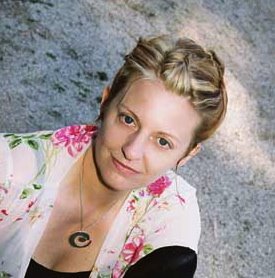
Today TKZ welcomes acclaimed Aussie author PD Martin, for an in-depth discussion of why crime fiction authors make the most stimulating dinner companions…

by P.D.Martin

Like most crime fiction authors, I do a great deal of research, everything from handwriting analysis and lockpicking to forensics and police/FBI procedure. It’s part of the job and a part that I love doing.

However, sometimes getting into the mind of an author can lead to some bizarre conversations. For example, I was away on a writing retreat doing some edits when I came to a crucial part…I had to finalize my killer’s MO and signature. I wanted to bounce some ideas off someone, so I rang my husband. This is how the conversation went:

“Hi, honey. Do you think my victims should be raped pre- or post-mortem?”

Silence, then: “Hang on, I’ll just take you off speakerphone.”

I’d called him on a Sunday and he was at a local football game (Aussie Rules, that is) with our one-year-old daughter and a group of our friends and their children. He’d seen it was me calling so had immediately hit the loudspeaker button on his mobile (cell) phone expecting a lovely chat. Maybe he should have known better.

A more recent example that comes to mind happened last year. I was in the States for Bouchercon and then headed to LA for some location research. While you can find pretty much anything on the Internet, nothing compares to actually seeing a location first-hand. And certainly for me, living in Australia and setting my series in the US has some challenges. Anyway, through my online research I’d picked out a body dump site and crime-scene location for the book – Castaic Lake – and decided my characters would live and party in Santa Clarita. However, Santa Clarita wasn’t what I’d envisaged. It was way too clean cut and “suburban” for my characters and when I drove through it I couldn’t see a bar in sight. That night, as I had dinner with the family friends I was staying with in LA, I was asked:

“So what did you do today, Pip?”

To which I replied in between mouthfuls: “Checked out a couple of body dump sites.”

There was an initial stunned silence, and then we laughed. I guess it’s not your usual tourist trail for Aussies in LA. When I explained my problem with Lake Castaic and that I had to find a new location, my host said:

“I’ve got the best body dump site, ever. Have you checked out Temescal Gateway Park?”

And so, after a dinner conversation about potential body dump sites in LA, I had the crime-scene location for my fifth novel. Isn’t that what everyone talks about over dinner?

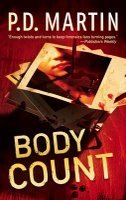
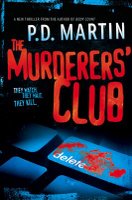
PD Martin – Phillipa Deanne Martin – is an Australian author with a background in psychology. She has written four novels featuring Aussie FBI profiler Sophie Anderson, of which the first two are currently available in North America – Body Count and The Murderers’ Club. Her third novel, Fan Mail, will be released in North America in July this year. See www.pdmartin.com.au for more information.

Mayhem, Murder Through Little Eyes and Big Ears

By John Ramsey Miller

I come from a town most people would describe as a slow, sleepy Mississippi Delta backwater. Cleveland, Mississippi is where I lived for six years, and I consider it my home town because those were my high-school years and I am connected to the people I knew there. Thomas Harris spent time living there as a young man, and has relatives there still. The town library was named for the Carpenter family whose members died from asphyxiation when their heating system malfunctioned and filled the house with smoke. The home had just been renovated and the windows painted shut. One of the bodies was found at a window and there were scratch marks …well I won’t delve into details. This week a friend of mine from high school wrote me a Facebook note that suggested that Harris modeled Hannibal Lechter on a man that was caught in our old town with a collection of human heads and human jerky in his pockets.

This took place in the late thirties and I’m sure Harris heard this story about the grave-robbing, head-collecting, human meat-eating Mr. Robinson. Mr. Robinson, an African/ American also murdered the entire Turner family, which incidentally happened to be Scot/Irish and cut an embryo from the murdered woman, whose body provided him with jerky. He was caught and admitted the killings, but said the heads he had accumulated were trophies from his grave robbing, not murders. Although it was reported in the media that he was shot while trying to escape, I believe the actual story is that he was de-celled and hanged while the town looked on, perhaps shot in the shoulder as he hung, and this was witnessed by an audience of angry, outraged individuals.

I suppose Thomas Harris may have given this murdering drifter a medical/ psychiatric degree, had him love fine things, and listen to opera while he drank rare wines and dined on the finer cuts of corpse meat. I don’t know Thomas personally, but it may have been Robinson and not Ed Gein he modeled Dr. Lechter’s cannibalism on. It was very likely Mr. Gein that inspired the body-skin wearing tailor, Jame “Buffalo Bill” Gumb, in Silence of the Lambs.

There were also three boys killed in nearby Rosedale, MS, whose killer and mutilator was never caught. That happened before I moved there, but was something parents had in the backs of their minds when we guys wanted to go camping. Even small towns have these stories of mayhem and murder, and retribution and justice dealt by private citizens outside courtrooms. When Mrs. Ringold killed her doctor husband with a shotgun one night after he’d beaten her, he was acquitted because the lawyer told the all male jury that it had been an accidental shooting. When the prosecutor brought up the fact that she had shot him more than once using a pump shotgun, Mrs. Ringold’s attorney (who later became Governor) argued that as a woman she was unfamiliar with the workings of shotguns and in her confusion and fright and horror she had reflexively pumped the shotgun three times, hitting him all three times. Released, she moved away, but a lot of people sympathized with her.

When I was very young we lived in the Methodist parsonage in Starkville, Mississippi and it was located across the street from a funeral home and the hospital was located within a hundred yards of us. The mortician had two sons I made friends with, and their father also had the town’s ambulance for emergencies. When he would take the ambulance out, he would either bring a corpse or two back to the funeral home or to the emergency room for repairs. We would wait for the siren, if there were survivors, we’d rush to the hospital’s loading dock to see what he had on a gurney, and if there was no siren, we’d be waiting at the funeral home for the delivery there. I can’t tell you how many maimed and dead people I saw, or how many times we laid ourselves in the grass outside the basement windows of the embalming theater and watch through the window, a young and impressionable audience, as Mr. Barry did his work. More than once I had known the corpses he worked on. I don’t know if he saw us, but if he did he never ran us off. He also had a notorious drinking problem, and lost his business when he was driving intoxicated and wrecked the ambulance depositing a battered casket and its corpse in the middle of the highway outside Jackson.

All of these stories and things I witnessed helped forge my imagination and introduced me to violence, death, justice, tragedy, and the heartbreak associated with them. I wouldn’t change a thing about my formative years, because it all contributed to bending me into the writer I am. I also learned about human nature and the complexities of the social structure and how good people can participate in bad things, and do surprising things for complex reasons. I grew up in the Civil Rights era, but that is a different blog for another time, although it is related when it comes to witnessing human complexities and contradictions.

We become who we are based on our experiences and we bring ourselves into everything we write, and how we see everything. I write about evil and the battle when good brings right to the table. In my stories good always wins over evil, not matter the odds. But life is not always so cut and dried, and evil often triumphs, and evil people often win the day in real life, if rarely in fiction. Our readers don’t want to see evil win, but to see good people facing seemingly insurmountable odds and both triumphant, whole, and happy at the end of their trial or quest. Our readers don’t need to know what the experiences were that made us become storytellers who seem to know violence and evil. They just want us to use our imaginations and experiences to make this battle between sides seem real, and to leave them feeling hopeful that they too can surmount the odds against them and prevail. As long as I can do so, I’ll do my best to accomplish that and leave the readers entertained, satisfied and hopeful.


PBO Prejudice

By John Gilstrap
http://www.johngilstrap.com

“The only bad news is that it will be published as a paperback original.” That’s what my agent told me when she called a year ago to reveal the otherwise wonderful news about my new contract with Pinnacle to launch the Jonathan Grave thriller series. (No Mercy arrives in bookstores on July 7.) My previous agent once told me that it is better not to be published at all than to be published as a paperback original.

The paperback stigma undeniably exists. Several people in my day-job office have complimented the stunning cover for No Mercy only then to offer condolences on the soft cover. “Maybe next time,” one of them said. This from people who religiously wait for the paperback reprints of their favorite authors’ novels to be released before they buy.

More evidence: At hardcover signings, fans occasionally ask sheepishly if I would be willing to sign my books in paperback. That they would think even to ask the question is troubling. That some authors in fact do refuse to sign paperback reprints is infuriating.

No Mercy is my sixth book, yet my first PBO. In the eyes of many, many hardcover authors who sell a fraction of the books I sell, this is clear evidence that my career is moving backward. I fight the urge to explain that it’s a strategic move that will make Jonathan Grave available not just in bookstores, but also in grocery stores and Wal-Marts and airports and corner bodegas because there’s no way to articulate the strategy without sounding defensive.

Here it is for the record and from the author’s mouth: I’m thrilled (albeit a little nervous) to be launching the Jonathan Grave series in mass market paperback. With a terrific cover (which it has) and terrific placement (B&N took a big position in the book), it makes sense to me that people will more readily lay down $6.99 to take a chance on a new character than they would $25.99. A good product that costs less should resonate at least as well as a good product that costs four times as much. Right? Granted, nothing in this business actually makes sense, but it sure seems reasonable to me.

Will the book be reviewed? Lord I hope so. (David J. Montgomery, listen up: Not only are there ARCs, but the ARCs are gorgeous!) It won’t be reviewed in the prestigious dailies of course because, well, they don’t review paperbacks. Publishers Weekly—THE trade magazine of the industry—may deign to review it, but only as one of a couple of mass market paperbacks. I don’t think they even did that until a few years ago.

That leaves me dependent upon online outlets, newsletters and word of mouth to get the word out about my book. There, too, I think the stigma thrives. A completely unscientific survey leads me to believe that even on amazon.com—the ultimate in populist literary criticism—PBOs get way less attention than their hardcover or reprint brethren.

Here’s the harm, then, in ITW’s decision to eliminate the PBO category from awards consideration: They deprived five books and their authors of their deserved high profile. It’s worse, in fact, than Michelle pointed out in her terrific post yesterday. Out of ten nominations between two categories (Best Novel and Best First Novel), not one was a mass market paperback original.

(By way of full disclosure, when I wrote a see-I-told-you-so email to the powers that be at ITW, I was told unofficially that the no-PBO experiment had been deemed a failure and that the decision would be reversed.)

Looking to the future, I think the debate should sidestep the question of whether PBO prejudice is real or even justifiable. It is real, and it doesn’t make a lot of sense. The operative question is what are we going to do about it? What is, needn’t be.

So how do we start changing things?

The Dying Art of Writing…Letters

By John Ramsey Miller

http://www.johnramseymiller.com

I have a letter I keep in a lock box that my mother wrote to me thirty years ago just after she discovered that her breast cancer had returned in a big way. That letter arrived in the brand new lock box a few days after she died, handed to me by my father. In the letter she tells me how wonderful her life was and no regrets, and how much she loved me, and how everybody needs a lock box for important papers so here’s one I bought for you. That letter is still in that lock box under my bed––a prized possession. I like to read it. My mother’s penmanship was flawless. My own is quite good.

Thirty years ago people still wrote letters, but as long distance calls grew less expensive, it became easier to call and talk than to write a letter. With cell phones we are always near enough to a cell tower to talk whenever we feel like it. With the Internet, people send electronic messages. I get e-mails from friends almost every day, and I almost never print them out. Mostly the communications are short blurbs, and messaging on the cell phone means even briefer information passing.

Back when we wrote letters, we put a week’s or a month’s worth of news in the letter. We wrote our feelings and what life was doing to us. You’d sit with a pen imagining who we were writing to and thinking about the person who’d be reading it. You opened a letter, you unfolded it and you read the letter in your hand. The paper was in the hands of a under the pen belonging to the person who’d written it. You could fold it up and open it again later, as often as you wanted to for as long as the paper held up. Think of the archives filled with personal letters from the famous and not so famous. I think of Ken Burns’ Civil War series for PBS and what it would have been without the personal letters from the time. We are losing history. The e-mails are being deleted almost as fast as they are read, which probably goes to what they are worth. We don’t compose e-mails the same way we did letters. I officially name it “jit-jotting.”

Recently I sent my step-mother a letter. She is in an assisted living facility in Dallas, and I love her dearly. Her daughter told me that she reads that letter over and over again. That letter connects us in a way no telephone or e-mail on a screen can. After my father passed away my brother went through his papers and he gave me several letters I’d written to him over the years, along with pictures I’d sent in the envelopes. I could tell he’d read them over and over, and I found myself wishing I’d written him more of them.

My dead mother is alive in that letter. Like the letter from my mother, they only matter to me now––the living half of the communiqué. I suppose after I’m gone my children will dispose of them, and that’s okay with me since nobody else will feel the connection or its importance.

I think of the books written from the collected letters between two people, mostly famous, and I wonder how many will be written in the future from the collected e-mails or telephone conversations of famous people. There is a style in written letters that aren’t reflected in most e-mails and lost forever with telephone calls.

My wife and I do send text messages through the week days because they are less intrusive in her work place or to my writing time. We can just check our cell phones for them at our convenience. I also text with my sons.

Maybe part of the reason we authors write books is to leave something of ourselves behind. We are all jit-jotting our way through our days and our lives, and are leaving a thinner and thinner trail as we go. And I think it somehow diminishes us, and our importance to each other when we communicate through quickly typed electronic transmissions.

The Results are in…

by Michelle Gagnon

The ITW recently posted the nominees for their Thriller Awards. Some of you might remember a post I wrote last August, when it was first announced that the paperback original category had been eliminated. Henceforth all of those books would be battling it out with the hardcovers for the moniker “Best Thriller.” There was a range of responses to my post, everything from “Hear, hear!” to “It’s silly to have different categories for different formats.” A few people chastised me, saying that any bias against paperbacks was only perceived, that I didn’t have enough faith in my fellow authors to judge a book based on its merits alone.

Well.

The results are in, and I am shocked, shocked! to report that not a single paperback original made the cut. thriller-award

Here are the finalists:

BEST THRILLER OF THE YEAR
Hold Tight by Harlan Coben
The Bodies Left Behind by Jeffery Deaver
The Broken Window by Jeffery Deaver
The Dark Tide by Andrew Gross
The Last Patriot by Brad Thor

Now, I’m not claiming these aren’t the best thrillers of the year- of the five I’ve read three, and they were great. But I also read a slew of PBO thrillers last year, and I’d rank them as high (or higher) than those three. The ITW is always battling charges that it’s morphing into a club for NY Times bestselling authors, and judging by this list, that might be the case. Granted, books are subjective little beasties, and what I love others might loathe. Perhaps these were the best thrillers of the year. I plan on reading the other two to satisfy my curiosity (and because they’re probably good books).

But I still don’t see where having a separate category for Paperback Originals does any harm. If paperbacks are consistently passed over in favor of their hardcover brethren for another few years, I believe there will be an exodus of PBO authors from the ITW. Which would be a shame, considering the fact that this award was initially conceived to address the fact that few thrillers were acknowledged by the established mystery awards. And making PBOs the red headed stepchildren of the organization doesn’t help anyone.

That’s my two cents.

Comments?

From self publish to self storage

By Joe Moore

My Kill Zone blogmates and I are all professionally published mystery and thriller authors. You can visit your favorite bookstore to find and purchase our novels. We have agents that represent us on a commission basis and publishers that pay us advances and royalties based on our sales. We all have multiple books published. There are literary award winners in this group. Many of us have been on bestseller lists. If anyone asks us what we do for a living, without hesitation, we declare that we are writers. If you’re a writer and you want to get published, in general you have to follow the same accepted publishing business model that we did.

But it’s not the only way to wind up holding your published book in your hands. There’s always the method called self publishing or subsidy press. And getting published in this manner is a subject that comes up often in writing forums, especially with new writers. So I thought I’d use up a few inches of blog space today to comment on the virtues and evils of self publishing.

First the evils.

In general, the world of self publishing is fed by desperation. Someone writes a book, sends out dozens if not hundreds of query letters to agents and editors with no takers. At some point, out of desperation, the writer decides to give up on the normal channels and turn to self publishing his book. He finds that there are many self publishing companies out there with beautiful websites, exquisitely designed brochures, hard-to-turn-down promises, amazing testimonials, somewhat reasonably priced publishing “packages”, and a way to put him on a fast track to finally holding that precious book in his hands. When asked why he is going the self publishing route, he brings up examples of books that were originally self published but went on to become huge international bestsellers such as THE SHACK and THE CELESTINE PROPHECY. If it could happen to those authors, it could happen to him.

But the bottom line is that when a writer turns to self publishing, it’s usually out of desperation.  He’s impatient and misguided, but mostly desperate. These are not the qualities of a successful author. And in most cases, the result will be a disappointed writer with a garage full of boxes of books no one wants. Here are some reasons why.

  • Self publishing comes with a stigma, deserved or not, that the author could not get published in the traditional manner and therefore the book probably sucks. Self publishing usually means weak, unsalable writing. Some people call these type of publishers vanity press because they prey on the vanity of the writer.
  • One of the mainstays of promoting sales is to get your book reviewed by publications such as newspapers and magazines. A self-published book has virtually no chance of being reviewed by Publishers Weekly, Library Journal, Kirkus, the New York Times book review, USA Today, and similar publications.
  • You will not get your self-published book into national distribution channels, and therefore booksellers will not be able to order it.
  • Booksellers must have the option of returning unsold copies of a book for credit. That is normally not an option with subsidy publishing.
  • Pricing is almost always higher with self-published books and cuts into the discount expected by the bookseller. This discourages them from stocking your book even on a local level.
  • The quality of production, editing, printing, and artwork is usually sub-standard. Most self-published book covers are laughable and amateurish.
  • Self publishing companies can and usually charge for just about all phases of the process including cover art, copyright registration, purchase of ISBN number, etc. Writers never pay for these or any charges with normal publishing channels.
  • Despite those rare self-publishing rags-to-riches stories, you aren’t going to sell many books. Once you get past your immediate family and circle of friends, you can expect the numbers to be in the tens, not tens of thousands. Most self-published authors sell 40-100 copies. The rest of the books will wind up in a self storage rental unit to collect dust and grow mildew.

So what are the virtues of self publishing?

The best candidate for self publishing is an author who writes a non-fiction work with limited market interest or appeal. These can include cook books created for church or school fund raising, a family history to be distributed exclusively to a particular family, local or regional historical guides, and supplemental books that accompany a live presentation or motivational program. These are usually sold on the spot at a particular event.

These type of books and others like them may very well be worth publishing, but the number of potential sales are so small and the marketing potential is so limited, that they would not be attractive to a traditional publisher.

There are other reasons to self publish, but they are almost always restricted to a small group or area of interest, and are usually works of non-fiction. Self-published novels rarely earn back the writers investment.

If you’ve written a novel and so far haven’t had any luck getting it published, don’t give up. Persistence is the key, not desperation. If it’s on the page and between the lines, it’ll rise to the top and find a real home at a real publisher. And look at how much you’ll save on self storage costs.

Any experiences out there with self publishing? Can you think of more evils or virtues?

~~~~~~~~~~~~~

Coming up on our Kill Zone Guest Sundays, watch for blogs from Philippa Martin, Eric Stone, Tim Maleeny, Oline Cogdill, Alexandra Sokoloff, James Scott Bell, and more.

How to write an evil character

My subject today is how to write a really, really evil character.

When I say evil, I’m talking about nature, not about motive. Evil goes beyond the normal catalysts that drive human beings to commit murder and mayhem–those catalysts can include jealousy, anger, rage, fear, even a distorted kind of love.

When I think of evil-doers (and I have to credit the former Prez for that phrase), I’m talking about psycho-killers. Cold-ass weirdos. As writers, sometimes we need to create those kind of unabashed, dead-at-the-seams, evil characters. We especially need to create this type of character when we are writing a big, breakout book.

Back in August, we had a week of posts on this blog about our favorite villains. But now I’m wondering, how do you write that evil? For example, who could forget the moment when Jack Torrance’s nonsensical pages of writing were finally revealed to his wife in The Shining? That one moment showed both his insanity and his being overtaken by the evil of the Overlook Hotel.

Just because it’s true, doesn’t mean it works on the page

One of my greatest frustrations in writing group is when someone defends their not-so-convincing work by saying, “But it’s true. It really happened this way.” So the f’n what? If it doesn’t work on the page, it doesn’t work, period. Writing what is true is not always convincing.

Here’s a true story that would be hard to convey in fiction: A successful, apparently-happily married scientist, the mother of an adorable toddler, one day decides to poison her husband with a massive dose of arsenic. She’d been building up with “test” doses for months, giving him flu-like symptoms. No one could believe she’d done it. Even the man’s parents didn’t believe she’d killed him. She was visiting them in their house when she was arrested by the police. Even when the husband was dying of the last dose of poison she’d injected into him while he was in his hospital bed, he still thought that they were a happily married couple.

It turned out that this woman was a true psychopath. She didn’t want the shame and perceived social failure of a divorce, so she decided to off her hubbie and start over as a “grieving” widow. There’s evidently no stigma to being a widow in a psychopath’s mind.

How do you write that in a convincing way?

Right now I’m struggling to write such an evil character, one of those people who on the surface seems to be a caring, warm pillar of the community. And even though this is one cold, unsympathetic creature, I am trying to wiggle inside her head through the writing. Right now I’m researching the type of emotional disorders that might have given rise to her pathology. And (as Joe points out in the comments section), a well-written villain-psycho needs strong motivation beyond mere pathology. Even Hannibal Lechter had that going for him. So I am also going to give her a powerful motivation to kill for what she wants, in addition to her psychosis.

And I’d love to know, what are some techniques you use to convey a character’s evilness?

Stay tuned for upcoming guest appearances at the Kill Zone:

April 5 P.D. Martin

April 12 Eric Stone

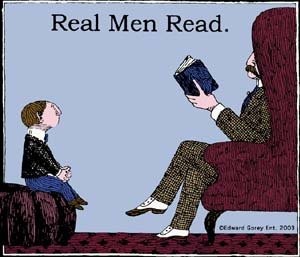
Real Men Read Fiction

by Clare Langley-Hawthorne

As I rushed to finish my current book club book over the weekend (which is, by the way, the terrific Snow Flower and the Secret Fan by Lisa See) I could sense my husband getting antsy – he kept asking me what I had to ‘do’ each day and, when I remained vague, he catalogued all the errands and chores that he would be doing. I felt I could hardly confess that apart from playing with the boys, cooking and the like my only plan was to read…because let’s face it in my husband’s world that was tantamount to doing pretty much ‘bugger all’.

So what is it with men and reading?! I did a quick google search before writing this blog and the statistics were depressing – basically the death knell for the male fiction reader has well and truly been rung. I only have to look at most of the men I know to be convinced of this- sure they read (well sometimes) but when they do it’s usually non-fiction, and the mere suggestion of forming or joining a book club is met with stony-eyed suspicion. As all the surveys indicate, women are the major purchasers of fiction, they consistently read more books and participate in book groups to the almost complete exclusion of men. So what does this mean for the publishing industry and, is it in part the fault of the industry that men don’t want to read much fiction anymore?

The exception to the fiction-free zone for men is (apparently) what some of the articles termed ‘manfiction‘ – you know, the full blooded male adventure thrillers by the likes of James Patterson, Clive Cussler or John Grisham – the kind of stuff that some of my fellow bloggers might write (though I have to confess I doubt any of my stuff would ever be called ‘manfiction‘ by any stretch of the imagination…) When it came to most other forms of fiction, however, (particularly that written by women) the gap soon widens up and this started me wondering: who failed whom? Was it the industry? Writers? Or was it just all the men’s fault :)?

I certainly know that when it comes to historical fiction everyone in the industry always says that a strong female protagonist is essential unless you are writing military historicals…Romance, which commands a whopping percentage of the market is pretty much solely for women and when it comes to that dreaded term ‘literary fiction’ , I think women are also the primary target – for they rule when it comes to book groups (and book groups are probably the only way literary fiction can become commerically successful). So what are you blokes out there going to do about this situation? Do you even care?

If you are a writer, does the fact that so few men read fiction affect your writing? For me I confess I have always assumed that women will be my main readership base (I’m always amazed when I get an email from a male reader who loves my books!) and I probably (though not deliberately) write accordingly. But it depresses me nevertheless – so will one of you endangered male fiction readers out there try and explain to me why you think this is the situation and tell me (reassure me perhaps?) – do you think it’s ever going to change?

How “green” is your book?

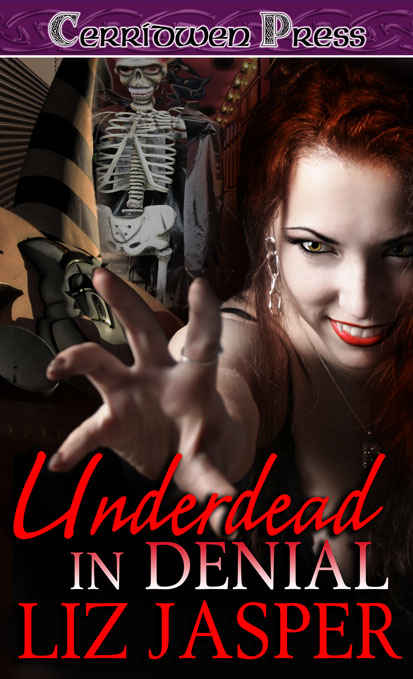
Today we’re pleased to host Sunday guest Killer Liz Jasper, an award-winning mystery author and avid eBook reader. Liz is blogging this month for All Romance eBooks’ Go Green/Read e Campaign.

How green is your book, Dracula?

Earlier this week Michelle Gagnon blogged about Internet promotion for authors. The fact that I’m guest blogging here today is a good illustration of another common type of internet promo: authors popping in on one another’s blogs to “meet” new readers. The fact that I’m mentioning this supports another of her very good points: that it’s a small world in the author community. I know two of the bloggers here at The Kill Zone–Kathryn Lilley invited me here today. (Nonetheless, I’m using Michelle’s name at the top of my blog because I’ve seen her shoot a Glock. Okay, it was at a gun range for a Sisters In Crime event, but still. Girl’s got aim.)

I am spending my promotional time guest blogging rather than Twittering (not that an author can’t do that simultaneously) or updating my MySpace and Facebook pages because I hate doing those things. Hold on did I type that out loud? Ahem. What I meant to write is that I’m a Go Green/Read-E (book) ambassador. Which means I’m blogging to help promote ebooks as an eco-conscious alternative to the traditional paper book format.

Being green is important. Especially if, like me, you live in the sort of city where if you forget to bring your own, reusable, organic ink, fair trade, recycled material grocery bags to the supermarket, the collective laser beam of guilt focused on you is so awful you find yourself buying a fresh new set of reusable bags. To add to the pile you have at home big enough to form into a meditation yurt in the backyard.

However, as I researched things like how many trees a reader would save if he/she read 20 books and two newspapers electronically (one tree a year, which adds up to a lot of forests given all the readers in the world) I ran across a study that had already done this. (If you’d like to run across it, too, head for: http://tinyurl.com/cwj86y
Fortunately, my native eco-sensitivity awarded me plenty of time to ponder what else I could blog about. I thought long and hard during my eighteen trips back and forth from car to kitchen to unload groceries. (“You’re out of reusable grocery bags? Someone’s been buying them all up? Who would do that? Of course I don’t want plastic ones. Just load everything back to the cart.”) And what I realized, during a break on trip ten to protect the Chunky Monkey by carefully siphoning off the melty bits with a soup spoon, what I really should be assessing is my own contribution to global warming. Forget the paper versus electronic publishing format debate. What about the book itself?

As an eco-conscious paranormal mystery writer, what I need to know is this: Are vampires bad for the environment?

Think about it. Unless they have the bad fortune to collide chest first with a sharp stake or (in my books) step out into a lovely, sunny, existence-ending day, they live forever. Longer than Styrofoam. Or Twinkies. Or broccoli on my niece’s plate (unless I happen to look away, in which case the stalks magically disappear in a puff of air that curiously also makes the light fixtures above the table swing…).

It seems pretty obvious Vampires take up more than their fair share of resources, don’t you think?

Well…

On the plus side, and this is a big plus they don’t eat human food. And if you ever read the statistics about what’s trashing our environment, the resources we use to grow food are a big part. There’s methane from cattle (a discreet way of saying cow farts) polluting our air, fertilizer polluting our streams, etc. etc. Major eco points for Dracula!

Also on the plus side, the undead don’t commute. Not in cars anyways. Granted any vampire worth his sex symbol status will own a nice set of wheels, but it’s not as if he’s stuck in rush-hour traffic every day. No vampire with the least bit of brains would spend an hour or two a day battling road rage on the freeway when he could just turn into a bat and fly where he needs to go. (I assume any technology that would allow him to drive a car during daylight hours could also be used to protect his batty little wings. Excuse me. Very sexy, uber-masculine man-vamp wings.)

This is sounding pretty good for a vampire’s carbon footprint, except for the fact that for most vampires, one person equals one meal. Tsk. Tsk. Really, vampires of the world, do you have any idea how much it takes to get a pretty young maiden to eighteen in this country? In purely financial terms, estimates range from $38,027 to $104,532. Do you know how many McDonald’s Happy Meals the average eighteen year old has eaten? I don’t, but I imagine it’s a lot. Let’s face it, puberty, is one long Fry Emergency. In cow farts alone, the cost of producing one young maiden must be astronomical. No wonder cow methane is such a big pollutant!

Clearly, vampires need to get on board with the eco message of Reduce, Reuse, Recycle. I know it will be hard–like telling a writer to lay off the chocolate near a deadline. But it’s important! Everyone must do their part. Including readers, especially, it seems, those who like vampire stories. Why not do your part to help the planet and make you next book an ebook!
You can find out more about the Go Green/Read e Campaign at http://www.gogreenreade.com/. To learn more about Liz Jasper and to read excerpts and reviews of her books, visit her website at http://www.lizjasper.com/.

You can find Liz Jasper’s Underdead mysteries and thousands of other eBooks on-line at www.allromanceebooks.com.

Stay tuned for upcoming guest appearances at the Kill Zone:

April 5 P.D. Martin
April 12 Eric Stone