Folding newspapers: An ill omen for book publishing?

I was gobsmacked when I read that the Boston Globe might be shut down by the New York Times. I spent a lot of my growing-up years in Boston, and the idea of the 137-year-old Globe going under seems…unthinkable. (An update about that story here.)

The Globe is the newspaper of record for the entire Boston metropolitan area. Following on the heels of that news was the doom-and-gloom pronouncement by Warren Buffet that he would never invest in any newspaper, ever. The newspaper in my own hometown, the Los Angeles Times, is evidently in financial distress too. Columnists have been writing fretful stories about the economic woes of the paper, and I recently spotted a box-advertisement on the front page, which in my mind is the sort of thing they do only in throw-away weeklies. If major newspapers are going under for the third time, what will be next…major book publishers?

I graduated from the Columbia University Graduate School of Journalism in 1979 (Yikes. I grow old, I shall wear my trousers rolled). Back then, newspaper reporters were still considered to be the “real” deal. Even though I was enrolled in the broadcasting program, I knew that TV reporters were viewed with disdain (The term “media type” hadn’t even been invented yet).. Inspired by the example of Woodward and Bernstein, members of my class believed that writing, that ideas, that journalists, could make a difference.

Fast forward 30 years, and Oh. My. God. Where are we now? Today’s journalists seem reduced to Twittering, red-and-blue-state cable talking heads. I keep thinking of one particular “news” host on cable who announces every night, “It’s Twitter time!” Newspapers are going away, and the Fourth Estate is going to the twitter heads.

As a fiction author, I have another concern: when I see newspapers collapsing left and right, I worry that the book-publishing business model might be just as fragile as newspapers. Leap forward another five years, and we might be talking about the collapse of major publishing houses.

What do you think? Are newspapers the “canaries in the mine” for publishing? Are they simply the first to bite the dust?

~~~~~~~~~~~~~~

Coming up on our Kill Zone Guest Sundays, watch for blogs from Sandra Brown, Steve Berry, Robert Liparulo, Paul Kemprecos, Linda Fairstein, Oline Cogdill, James Scott Bell, and more.

Out Damn Block!

by Clare Langley-Hawthorne

http://www.clarelangleyhawthorne.com/

We at TKZ had a mini writing school yesterday for our Sunday post and one of the questions posed was about how to deal with writer’s block. At the moment I’m on the final, final, final edits (that’s when even I am totally sick of the manuscript!) and what I am struggling with is what I call ‘final editor’s block’.

I’m not talking about the big stuff like plot or character – I’m talking about those small, yet irritating things that you start to notice when your on the homeward stretch. For me the things I particularly notice are:

  • Overuse of the em-dash: I used to overuse the ellipse…but now, I’ve gone and got married to the em-dash and – just to interject here – I’m seeing those damn dashes everywhere!
  • Repeated words: It drives me nuts that even after all these iterations I still find myself repeating the same words and images. In my current WIP my writing tics include too many ‘sharp’ or ‘brittle’ replies and dry mouths. I mean there’s only so many times people can swallow, lick their lips or have their mouths feel like glass-paper (the precursor to sand paper in case you were wondering).
  • Boring dialogue tags: I try (I really do!) not to use so many adjectives but ‘said’ and ‘asked’ get really boring and when in edit mode trying I try to balance the boring with the slightly more interesting repertoire of ‘replied’, ‘responded’ or ‘queried’ tags without becoming ridiculous (like having people ‘exploding’ or ‘exclaiming’ all over the place!)
  • Flat writing: When there are still tiny pockets of sagging, flabby writing…shit, why are they still there?!

The problem I find is that when in final edit mode I often experience ‘editor’s block’ – when I’ve lost the ability to know what should be changed and what should not, when I’m afraid I’ll start buggering up the good bits and when I’m down to the last persnickety edits and I can’t think of how to improve the manuscript without someone else’s ‘mouth going dry’.

It drives me a wee bit crazy but as much as I read Dickens (far more inspiring than the thesaurus); listen to tortured 80’s music; and brainstorm ideas, I still feel, well, ‘blocked’.

For me writer’s block per se hardly ever happens and when it does I have lots of strategies (mostly driven by panic) that help me overcome the fear of the blank page. It’s another skill entirely, however, for me to overcome the inner ‘editor’s block’ I get when gazing at the page crowded with words – words that I have already combed and preened over many iterations…

So any ideas on how I can tackle the dreaded ‘editor’s block’? How do you manage the homeward stretch edits and, let’s face it, do you ever know when you are really, well and truly ‘done’?

~~~~~~~~~~~~~~

Coming up on our Kill Zone Guest Sundays, watch for blogs from Sandra Brown, Steve Berry, Robert Liparulo, Paul Kemprecos, Linda Fairstein, Oline Cogdill, James Scott Bell, and more.

Sunday Writing School

We’re having another one of our periodic Sunday Writing Schools today at the Kill Zone (See the link to our inaugural school).

Here’s how it works: We post a couple of writing-oriented questions that we’ve collected over the weeks, and do our best to answer them. Readers can post more questions in the comments. Feel free to chime in with your own opinions, including snarky ripostes to our advice. This is basically intended to be a free-for-all exchange of ideas about writing, not a serious-minded Fount of Wisdom.

We’ll just have some fun.

The first question in the mail bag is from Win Scott:

Q: I know some writing books say not to use prologues, but I need to open my story with an event that precedes the main story. This event is also much more dramatic than my first chapter, and it lays the groundwork for everything that comes next. Can I use a prologue in this case?

A. [From Kathryn]: I’ll admit my bias here–I don’t like prologues. I think they’re old fashioned, and you risk turning off screeners if you use them. Readers don’t care when you start your story, so why not make your Prologue your “Chapter One,” and then turn what was your first chapter into a “forward flash” in time? You can add a date-anchor at the beginning of the chapter to orient the reader in time. I’ve seen many thrillers use this technique, and the effect is much more immediate and dynamic than if you use a prologue.

But that’s just my two cents. I’ll let the other Killers chime in.

Here’s a question from Joy F.

Q. What are some methods of getting over writer’s block?

A. [From Joe] Getting the juices flowing can be tough sometimes. We all experience it. Here are a few tips that might help. Try writing the ending first. Consider changing the gender of your character or the point of view. Tell the story or scene from another character’s POV. Just for grins, switch from third person to first or vice versa.

You don’t have to keep the results of these exercises but they might boost your imagination and get you going again.

(If you would like to ask other questions today, feel free to add them in the Comments. We’ll answer them there.)
~~~~~~~~~~~~~~
Coming up on our Kill Zone Guest Sundays, watch for blogs from Sandra Brown, Steve Berry, Robert Liparulo, Paul Kemprecos, Linda Fairstein, James Scott Bell, Alexandra Sokoloff, and more.

The Dying Art of Writing …Letters

By John Ramsey Miller

http://www.johnramseymiller.com

I have a letter I keep in a lock box that my mother wrote to me thirty years ago just after she discovered that her breast cancer had returned in a big way. That letter arrived in the brand new lock box a few days after she died, handed to me by my father. In the letter she tells me how wonderful her life was and no regrets, and how much she loved me, and how everybody needs a lock box for important papers so here’s one I bought for you. That letter is still in that lock box under my bed––a prized possession. I like to read it. My mother’s penmanship was flawless. My own is quite good thanks to public schools in Mississippi and a lot of practicing over the years.

Thirty years ago people still wrote letters, but as long distance calls grew less expensive, it became easier to call and talk than to write a letter. With cell phones we are always near enough to a cell tower to talk whenever we feel like it. With the Internet, people send electronic messages. I get e-mails from friends almost every day, and I almost never print them out. Mostly the communications are short blurbs, and messaging on the cell phone means even briefer information passing. Twitter is dumbing down America faster than evolution. I text with my wife because she is at her desk and she can check every once in a while to see if I’ve said anything worth responding to. She texts me because it doesn’t interrupt my writing time.

Back when we all wrote letters, we put a week’s or a month’s worth of news in the letter. We wrote our feelings and what life was doing to us. You’d sit with a pen imagining the person we were writing to and thinking about that person who’d be reading it. The mail came, you opened a letter, you unfolded it and you read the letter in your hand. The paper had been in the hands of the person who’d written it. You could fold it up and open it again later, as often as you wanted to for as long as the paper held up. Think of the archives filled with personal letters from the famous and not so famous. I think of Ken Burns’ Civil War series for PBS and what it would have been without the personal letters from the time that gave it texture and meaning and humanized the war. We are losing history. The e-mails are being deleted almost as fast as they are read, which probably goes to what they are worth. We don’t compose e-mails the same way we did letters. I officially name it “jit-jotting.”

Recently I sent my step-mother a letter. She is in an assisted living facility in Dallas, and I love her dearly. Her daughter told me that she reads that letter over and over again. That letter connects us in a way no telephone or e-mail on a screen can. After my father passed away my brother went through his papers and he gave me several letters I’d written to him over the years, along with pictures I’d sent in the envelopes. I could tell he’d read them over and over, and I found myself wishing I’d written him more of them.

My dead mother is somehow still alive in that letter. The letter from my mother, only matters to me now––the living half of the communiqué. I suppose after I’m gone my children will dispose of it, and that’s okay with me since nobody else will feel the connection or its importance.

I think of the books written from the collected letters between people, mostly famous, and I wonder how many will be written in the future from the collected e-mails or telephone conversations of famous people. There is a style in written letters that aren’t reflected in most e-mails and lost forever with telephone calls.

Maybe part of the reason we write books is to leave something of ourselves behind. We are all jit-jotting our way through our days and our lives, and are leaving a thinner and thinner trail as we go into the future––and it seems to me to be a bleaker place in most respects.

~~~~~~~~~~~~~~
Coming up on our Kill Zone Guest Sundays, watch for blogs from Sandra Brown, Steve Berry, Robert Liparulo, Paul Kemprecos, Linda Fairstein, Oline Cogdill, James Scott Bell, Alexandra Sokoloff, and more.

John Gilstrap’s on the road–will be back next week

Our intrepid co-blogger John Gilstrap called in from his Blackberry to report that he is on the road this week, traveling. He’ll return with a killer blog next Friday. See you next week, John!

~~~~~~~~~~~~~~
Coming up on our Kill Zone Guest Sundays, watch for blogs from Sandra Brown, Steve Berry, Robert Liparulo, Paul Kemprecos, Linda Fairstein, Oline Cogdill, James Scott Bell, Alexandra Sokoloff, and more.

Nothing to Fear but Fear Itself

by Michelle Gagnon pig

For the past few weeks I’ve been recovering from a cold. It was a nasty one- I rarely get sick, but when something manages to overcome my immune system, it’s generally a humdinger. On Monday night I was out to dinner with friends, still coughing.

At the first wheeze, the woman sitting next to me paled and slid away. “Have you been checked yet?”

“For what?” I asked innocently (I should clarify: I’ve been on a bit of a news blackout for the past few weeks. Between being ill and dealing with page proofs, current affairs fell by the wayside).

“Swine flu,” she said.

Now everyone slid a few inches away. I’d seen a headline about swine flu, guffawed at the bizarre name, and promptly forgot all about it. “It’s coming from Mexico, right? I haven’t been to Mexico.”

“Oh, it’s here now. Cases in Marin, the South Bay.”

“I heard they closed the airports overseas,” another friend interrupted. “A friend of mine was trying to fly out for their honeymoon, and the entire E.U. is refusing planes from the United States.”

“Really?” I said. At first, this had seemed funny. But now I was overly aware of the constant tickle in my throat. “But I’m not sick anymore, so even if I had it, it’s gone now, right?”

“Walking pneumonia.” My friend said solemnly. “You seem fine, then in a week you’re dead.”

And it’s killing healthy people our age,” another friend agreed. “They’re saying it could be the next Spanish flu.”

Now as you can imagine, all of this was very disconcerting. The SARS scare and avian flu had barely been blips on my radar: probably because at the time, I hadn’t been ill (and let’s be honest: avian flu sounds bad, but “swine flu” sounds positively vile, like you might suddenly sprout a snout).

Living in California, we’re frequently told that we’re ground zero for potential pandemics thanks to constant traffic from Mexico and Asia. But despite that, I always blithely assumed that me and mine would remain unaffected.

The mention of Spanish flu put it in a whole different league for me, however. My grandmother lost two siblings during that pandemic, and to her dying day discussed it in hushed tones.

So I ended up leaving dinner, heading home and going online to read everything I could about swine flu.

Good news: half of what was discussed at dinner was not true. Flights from the U.S. to Europe are continuing without pause (although a flight from Mexico to London resulted in all passengers being examined). Not only that, but U.S. citizens aren’t even being told to change travel plans to Mexico.

The whole incident got me thinking about fear, however, and the ways we sow panic amongst ourselves. 14 swine flu cases have been confirmed in the U.S. as of the time I’m writing this, with one fatality. The normal, run-of-the-mill flu kills about 36,000 Americans a year. So why this fear? Does the media create it to fill air time and drive up ratings? Why is the mere mention of a “pandemic” enough to send us heading for the hills? Some of my friends are debating keeping their children out of school. A local parent sent out an email detailing how we should be washing our produce in a diluted vinegar/bleach solution. One friend has even considered dropping everything and going to a relatively unpopulated area until sometime after May 6th, when apparently if all goes well, the worst of the danger will have passed.

Recently Philip Alcabes, the author of a book entitled, “Dread: How Fear and Fantasy have Fueled Epidemics,” was a guest on The Daily Show. He claimed that most of the threats we get all worked up over are meaningless in comparison to the much more real daily dangers we face. For example, in San Francisco it’s statistically far more likely that I’ll be hit by a car than die of swine flu (it’s not a great city for pedestrians. We’re working on it, but if you visit, look both ways before crossing the street. Even on one-way streets. Seriously.) Getting hit be a car doesn’t sound as scary as swine flu, though, does it?

So I made an appointment with the doctor to get checked out (if nothing else, this cough is driving me crazy). Fingers crossed, I won’t grow a snout.

So what do you think? Much ado about nothing, or should we head for the hills?

~~~~~~~~~~~~~~
Coming up on our Kill Zone Guest Sundays, watch for blogs from Sandra Brown, Steve Berry, Robert Liparulo, Paul Kemprecos, Linda Fairstein, Oline Cogdill, James Scott Bell, and more.

I don’t like Twitter

By Joe Moore

I don’t like Twitter. I know, I know, it’s the latest craze in shorthand communication on the Internet and by cell phone. And a bazillion people are joining ever hour. And you can “follow” your family and friends and famous people instantly.

But I don’t like it.

twitter Before I tell you why, let me explain what Twitter is for those that have been living in a mountain top monastery in Tibet and are excited that they are only now getting push button phones.

Twitter is a simple means of communicating between anyone and everyone. You type a description of what you’re doing right now such as what you had for breakfast, what color you painted your garage floor, what you thought of Adam on American Idol, whatever is on your mind, then share your tweet with your friends. Here’s the catch: you must deliver your message using 140 characters or less. The Twitter system sends your “tweet” to all your “followers” which are anyone that signed up on Twitter and then chose to “follow” you. And you get to see the tweets of those that you are following.

Twitter relies on cell phones for much of its interaction hence the 140-character rule. That’s about the limit of most mobile phone text messages. You also get your own special webpage to post your tweets and see the tweets of those you’re following.

The goal of Twitter is to make it easy for you and other tweeters to post and update their status from anywhere, anytime. So like their coffee in the morning, many tweeters post their first tweet while waiting for their Chock Full O’ Nuts to finish brewing. And there’s a lot of tweeters who make it a point to wish everyone goodnight as the head off to Dream Weaver Land. In between wakeup and lights out, you’re bound to read rants, raves, rehashes, relishes, and restaurant recommendations along with every other activity in a tweeter’s life.

There’s a Twitter-style shorthand—not quite as BFF-cryptic as cell phone text messaging, but almost. It takes a bit of getting used to, but you catch on quickly. And because you are limited to 140 characters, it’s created a cottage industry for long-character URL conversion to short-form at sites like TinyURL. That way, if you want to include a link in your tweet to some cool website, you can convert the address to a shorter form that saves on characters.

There are a couple of things you need to know before you start twittering. The system seems to crash often. This is because another bazillion members just signed up. So you’ll get errors and strange page configurations throughout the day. In order to see the latest tweets, you have to “refresh” your browser window. This gets old fast. And then there’s the question, If someone follows you, should you follow them back? If you don’t, is that considered an insult? You can also “unfollow” someone. This of course is the ultimate punch in the gut to your estranged followee. Tough love.

So, why do I not like Twitter? Because it’s usually more interesting than anything I’m doing at any given time, and I don’t have the willpower to turn it off and get back to what I do: write books. I don’t like Twitter or the people who invented it or the people who follow me or the people I follow or the people that I will start following today. I have a lot more to say on this subject but I have to run update my Twitter status. Happy tweets!

How about you. Do you love Twitter or, like me, hate it? It is a way to fill in the gaps of your life or is it a total waste of time? Please limit your answer to 140 characters (or more).

~~~~~~~~~~~~~~
Coming up on our Kill Zone Guest Sundays, watch for blogs from Sandra Brown, Steve Berry, Robert Liparulo, Paul Kemprecos, Linda Fairstein, Oline Cogdill, James Scott Bell, and more.

How to write a bestseller

By Kathryn Lilley

“There are three rules for writing the novel. Unfortunately, no one knows what they are.”

– W. Somerset Maugham
Bestseller. That’s why we’re all in the blogosphere, isn’t it? We all want to write (or read) a bestseller, we writer-reader-bloggers.

This blog is gifted with multiple bestselling (and modest) authors. Clare, for example, recently hit the IMBA Bestseller list with two of her books at the same time.

But I think everyone wants to learn the secret for vaulting onto the New York Times or USA Today bestseller’s list, and then stick there like Krazy Glue.

So today I set off on a hunt for the magic formula for writing a best seller. Is there one? What exactly does it take to write a breakout novel?

In his excellent book, Writing the Breakout Novel, agent Donald Maass says to write a “breakout” book, you have to open up your story. Make it bigger. Give it higher stakes, a larger theme, one that impacts many more people than you’d find in, say, the population of Cabot Cove. So, I’m assuming that with a few exceptions, most cozy mysteries are not going to be bestsellers. If you do have a “small,” domestic family drama in your story, Maass says, you must find a way to amp up the stakes. Think Grapes of Wrath. It’s a family drama, but man, talk about major stakes.

I ran across an interesting article about how not to write a best seller in the New York Sun, which stated that positive reviews in major review outlets don’t guarantee best sellerdom. The author said that catchy titles do seem to be a plus, however.

Interestingly, I found one reviewer in a British newspaper, The Guardian, who advised would-be best seller writers to avoid putting too much originality and sex into their work. That doesn’t sound right to me, but I don’t know. Is that a British thing? Here’s the article.

As I continued my web browsing, I found an article by Cliff Pickover called How to create an instant bestselling novel. It’s worth reading for the “Bestseller Plan” (You have to scroll down to see it). Pickover’s Bestseller plan refers to a NYT article called How to Manufacture a Best Seller by Michael Maxen. I couldn’t find Maxen’s original article at the NYT site (although I did find some crabby Letters to the Editor from authors who resented the article. Maxen must have skewered their books.). I did follow the link that claims to summarize the major points of Maxen’s article. That article offers up an actual 10-step formula for how to write a best-seller, by God. Generally, it seems to involve creating a hero-expert, a villain-expert, and a team of experts. When the action flags, you’re supposed to kill someone. See what you think.

I also read “Lester Dent’s magical recipe for writing a best seller.” It’s sort of interesting. It seems oriented more toward selling than best selling, though, and calls writers “pulpateers.” I loved his tip about how to fake local color and fool editors about murder weapons, though. That’s the kind of thing that most writers will never confess they do.

So I wish I could tell you I found the absolute formula for writing a best seller. Actually I’d like to hear from you. What do you think makes a book leap to the top of the NYT list? Is there a formula, or a secret? Do you think that to become a best seller, you simply write an excellent story, and accept the rest as a crapshoot? Or do you think that it is all a big fix–that publishers mostly decide who will become the Next Big Thing, by promoting certain books?


~~~~~~~~~~~~~~
Coming up on our Kill Zone Guest Sundays, watch for blogs from Sandra Brown, Steve Berry, Robert Liparulo, Paul Kemprecos, Linda Fairstein, Oline Cogdill, James Scott Bell, and more.

How Technology Will Change The Way We Read And Write

by Clare Langley-Hawthorne
http://www.clarelangleyhawthorne.com/

Last week my husband forwarded me an excellent article in the Wall Street Journal (http://online.wsj.com/article_email/SB123980920727621353-lMyQjAxMDI5MzI5MTgyMDE5Wj.html) on how e-books will change the way we read and write and it sparked a great deal of enthusiastic debate between us. The author of the article, Steven Johnson, basically had his ‘Aha’ moment when he bought, on sheer impulse, a copy of Zadie Smith’s book ‘On Beauty’ on his Kindle. His ideas about how technology can revolutionize not only the book publishing industry but the act of reading itself are, I think, intriguing as well as exciting.

There were three aspects of his article that immediately caught my attention:

The way that technology will transform the essentially solitary, linear act of reading into a community, interactive activity;

The possibilities that technology open up for the e-book-world from hypertextual, searchable books to global book groups;

The revolutionary way e-books will alter the way people buy books from pay per chapter options to the reemergence of ‘forgotten’ books that are now being rediscovered.

Imagine your home library transformed into a virtual, searchable repository of knowledge…

Imagine being able to drill down into the backstory of a book just by clicking on hypertext links embedded in the e-book (as a writer of historical fiction this opens up all manner of possibilities to help inform and deepen the reading experience for my books)…

Imagine being able to highlight a paragraph in the book you’re reading and make comments that will be accessible to both the author as well as the community of readers who are looking at the same e-book…

After reading this article, I was like, wow, the possibilities are endless…and when I look at my four year old boys I can’t help but wonder – what will the world of ideas and books be like for them in the future?

So what do you think about Steven Johnson’s take on the future of e-book technology? What do you imagine that future will be like? What excites you the most about the way technology can revolutionize both the way you read and/or the way you write?

Looking Backwards

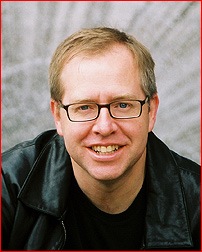
by Tim Maleenytims author

Today TKZ is pleased to host author Tim Maleeny, whose Cape Weathers series not only has some of the coolest covers on the market, but also displays some of the best, funniest writing out there (think Chinatown meets Elmore Leonard). And for a feel of the real San Francisco, his books can’t be beat.

In the novel Downtown, a classic comedic thriller by Ed McBain, the hapless protagonist involved in the twisted storyline says glumly that it’s “a drug plot for sure.” It turns out to be much more than that, but the reference was an inside joke on the publishing industry, because at the time that novel was released, drugs were at the heart of every popular crime novel.

For the past few years vampires have been the drug of choice. The conventional wisdom has been, if you want to break into publishing, put a vampire in your book. Bookstore shelves are now crowded with romantic teen vampires, rural vampires, vampire detectives, gay vampires, bipolar vampires, vampire dentists, you name it.

Some of these books are great, others are pale imitations of the novels that paved the way. They got bought by publishers who believe that in our marketing-driven world, the nature of the subject is more important than the quality of the story.

Now there’s been a lot of buzz about Dan Brown’s forthcoming follow-up to The Da Vinci Code, which is understandable given the wager the publishing industry is placing on the success of this book. And it will be a success because “the machine” will make it one — the hype has already begun, and the marketing expenditures behind the launch will dwarf the promotional budgets of nearly a hundred other top sellers combined. So whether it’s the best book of the year or not, it certainly will be the biggest.
greasing And much like Michelle, I fall into the camp of writers who enjoyed The Da Vinci Code a lot, despite its flaws. The story worked, the subject matter was fascinating, and it cooked along. (And because I’m a blood relative to the Merovingians and have seen nude photos of John the Baptist on the internet, the story had a particularly deep resonance for me.)

But after all the code-copycats —in books and film — all the variations on a theme, the coming of the new book does feel a bit like the return of the vampires.

Which is funny, because before The Da Vinci Code, I understand it was damn near impossible to sell a mystery featuring art history, because the subject matter was perceived as too academic and boring. After The Da Vinci Code hit, countless authors were told by their publishers they had to work a conspiracy involving ancient art into their books. (A novel with a professor of art history who happens to be a Southern vampire would certainly have started a bidding war.)

The machine has become its own self-fulfilling prophecy. Rather than invest in new authors, the pressure from the chains has become so severe, and the margins so thin, that the plan is to bet on a sure thing. The marketing guys look for safe bets and proven brands. But as a marketing guy from way back, I can tell you there are no safe bets, and if you solve for the short-term, it often costs you big-time in the long run.

Sure, you can keep selling an existing franchise for a long time, no doubt about it. But at the end of that push, when the books start to feel predictable, the cost of that approach is reader fatigue, and beyond that, a slippery slope indeed.

This is what happened to the music industry before Napster and then iTunes came onto the scene and opened the floodgates, allowinapsterng us to rediscover our love of music instead of listening to only the Top 40 being pushed by the big labels. The industry almost collapsed under its own weight because it threw all its money at artists who already had a fan base waiting for their next record, or even worse, over-invested in artists who had clearly jumped the shark and weren’t putting out anything fresh.

The same thing happened in Hollywood before independent film put some control back into the hands of directors. Check out some of the bombs from the eighties and imagine them getting funded today, to the tune of hundreds of millions of dollars. Movies with plots so thin that any movie-goer in the country could have told the studios they were going to suck before a single scene was filmed.whos that
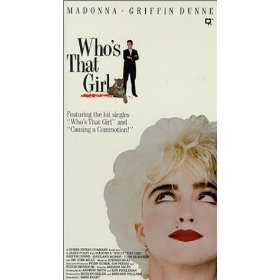
If you talk to voracious readers, let alone other writers, they can tell which books to bet on, and if you listen carefully, you can tell which books have broad appeal and the potential to break out, if only the machine would get behind them. But with so much money at stake, in an industry of taste makers, are you really going to trust the readers, or, heaven forbid, the writers, when you can just sell the same thing you sold before.
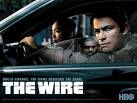
the wire Same thing happened with TV, before cable tore down the walls protecting laugh-track sitcoms, canned plots and formulaic dramas. HBO broke all the rules and, to no one’s surprise except the big networks, it became a magnet for viewers starved for original programming.

For some reason, all these so-called “entertainment” industries forgot that for something to be truly entertaining it has to be unexpected, fresh, something new.

Push the boundaries, twist a familiar story into a new shape, take me somewhere I’ve never been before. Only then will I come back, instead of putting down the book and turning to cable, powering up my computer, or playing a video game. There are too many options on my entertainment menu for me to just sit there and eat the same thing you’ve been serving again and again, because frankly it’s getting stale.

I am told by friends in publishing that zombies are the next vampires. I kid you not, one very talented writer I know was told to rewrite her book to include the walking dead, because “zombies are the next big thing.” Maybe so, but why can’t the next big thing be a great story, one I haven’t heard before. Maybe it features a zombie, but maybe the big thing after that doesn’t. Mix it up a little and see what happens.

Which is why I ask myself, whenever I walk into one of the big chains, does the next big thing have to come in waves? Because personally, I’m getting a little seasick.

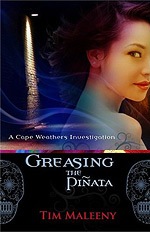
Tim Maleeny is the bestselling author of Greasing The Piñata, which recently won The Lefty Award for best humorous mystery of 2008, and the forthcoming standalone novel Jump that Publishers Weekly called “a perfectly blended cocktail of escapism, with or without the beach towel.”

~~~~~~~~~~~~~~

Coming up on our Kill Zone Guest Sundays, watch for blogs from Sandra Brown, Steve Berry, Robert Liparulo, Paul Kemprecos, Linda Fairstein, Oline Cogdill, Alexandra Sokoloff, James Scott Bell, and more.