A little inspiration is in order

If you’re like me and could use a little inspiration, you should read this wonderful essay about becoming a writer by Alexander Chee. He writes eloquently about the experience of studying writing with novelist Annie Dillard.

After you read it, come back and tell us about your own most important writing teacher. In my case, a creative writing course I took from Robert Pinsky (who later became Poet Laureate) at Wellesley College changed my thinking about writing. I remember how one day he opened a classroom window (on an upper floor) and leaned way, w-a-a-y out of it, to a point that made me nervous; he was showing us that we had to risk discomfort and break out of our Wellesley-refined shells, to dig deep enough to get the stories out. Even though I was focused back then on becoming a journalist (I didn’t think of writing fiction as a “real” career), I still remember the impact that course had on me.

What about you? Which teacher had the most direct influence on you as a writer?

Here be Sharks…

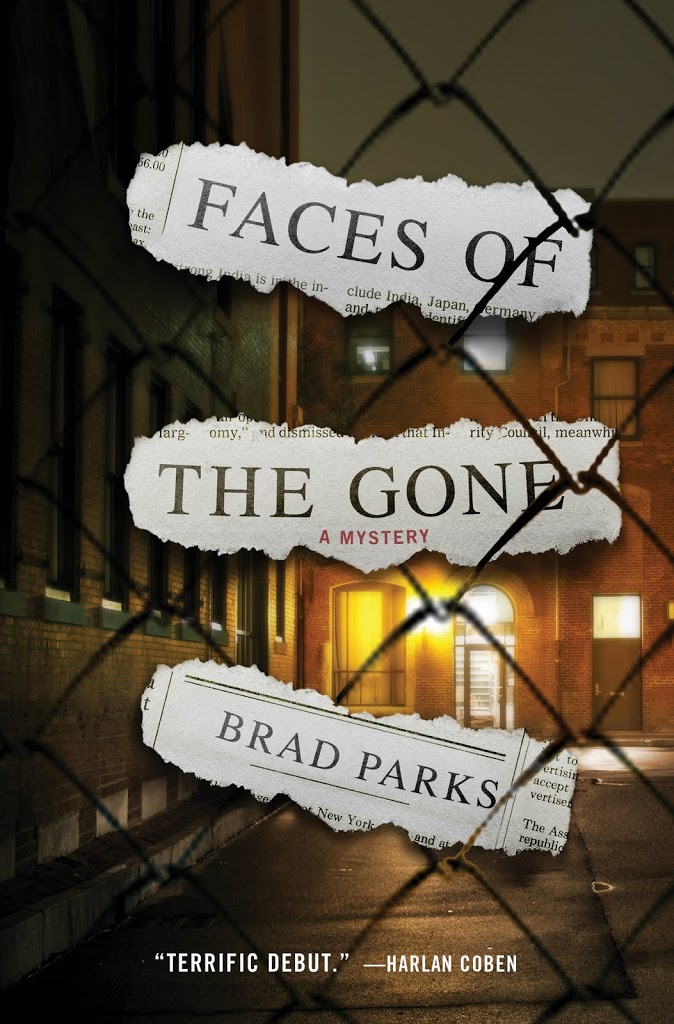
Please join me in Welcoming guest blogger, BRAD PARKS, to the Killzone…though be warned, treacherous waters lie ahead…

Editor’s note: In this guest blog post, the author has indicated he will be employing an extended metaphor to explain how he writes. Metaphors are highly complex literary devices and should only be attempted with great care. Ask your doctor if you’re healthy enough to use metaphors. Do not use metaphors if you take nitrates for chest pain. If your metaphor lasts more than four hours, consult an editor immediately, as this could be a sign of rare but serious case of over-writing.

There are a lot of different writing methods out there, and – like a lot of you, I’m sure – I experimented with a number of them through the years. I tried outlining, but found it stifled my spontaneity. I tried starting with the end in mind, but found it made the end too predictable. I tried sketching out key scenes before I began, but found myself too impatient trying to get from once scene to the next. Finally, I found the method that works best for me. I call it, “Writing like an open-water distance swimmer.”

Editor’s note: Wait a tick, isn’t that actually a simile? You used “like” or “as.” That makes it a simile. You must be one of those kids who daydreamed through the section of eighth grade English where you were supposed to learn the difference.

I got into swimming a few years back when my surgically repaired knee kept making it difficult to continue jogging as much as I wanted. I enjoyed swimming, except for one thing: Pools are boring. You swim to the wall. You do a flip turn. You swim back. It’s the equivalent of writing by formula – it’s exercise, sure, but there’s not enough to keep it interesting.Then my wife and I moved to the tidewater part of Virginia, to a small cottage on a wide section of the Rappahannock River, not far from the mouth of the Chesapeake Bay. The climate is fairly mild here, so I’m able to start swimming in April each year and, with the help of a wetsuit, can keep it up until the end of October.

Editor’s note: Yeah, yeah. You’re a freakin’ iron man. Get on with it, will you?

And here’s where, for me, writing is like open water distance swimming: Each day, I know where I’m starting (on the beach just down from our house). And I know I need to get back to dry land eventually. But I don’t know exactly what I’m going to encounter on the way. All I can do is plunge into the water and start stroking. Certainly, there are dangers involved in open water distance swimming. You can get swept away by strong currents. You can suffer a cramp. You can get attacked by a great white shark.

Editor’s Note: Hold on. A great white shark? C’mon. You already said you swim in a tributary of the Chesapeake Freakin’ Bay. Everyone knows great white sharks are ocean-going creatures. More importantly, Wikipedia knows it. Shape up, buster.

You can get stung by a jellyfish.
Editor’s Note: Better.

Yet that sense of danger is what keeps it fun and interesting. Between the tide, the wind and the waves, the river is never quite the same place from one swim to the next. I’ve found writing this way keeps things fresh – every day is a new adventure.

Plus, as a writer, you get the chance to edit what you’ve done and correct your mistakes. It’s the equivalent of going back over your swimming route in a row boat, being able to say, “Oh, that’s where the current got a little strong for me, I should have swum over here instead. That’s where I got attacked by that great white shark…”

Editor’s Note: You’re just testing me now.

“… that’s where I got stung by that jellyfish.”

Editor’s Note: Better. Hey, did you hear about the giant jellyfish that sunk a 10-ton Japanese fishing boat (http://www.telegraph.co.uk/earth/6483758/Japanese-fishing-trawler-sunk-by-giant-jellyfish.html)? Honestly, how embarrassed were those guys when they went back to the dock and had to tell their fishing buddies, “Yeah, the Mary Jane gave it her all, but the jelly was just too much for her!”

And then you go back and fix it. But – and here’s perhaps the most important part of the metaphor – there’s really only one way to get from one side of the river to the other. You have to keep swimming.Unlike jogging, or working out on an elliptical machine or lifting weights, you can’t just stop when you get tired. Once you’ve thrown yourself out there in the river, in water over your head, you’ll drown if you let yourself stop. And maybe there are times when the shore looks like it’s an impossible distance away or you think you won’t be able to make it. The only way to get through it is to keep going, one stroke at a time. And you know from your previous swims – or your previous writing sessions – that if you just keep doing that, you’ll eventually get back to shore, with soft sand under your feet.Do you have a good metaphor for your writing? I’d love to hear it.

Editor’s Note: Just, please, no sharks.

BRAD PARKS is an escaped journalist, having done time at The Washington Post and The (Newark, N.J.) Star-Ledger as a sportswriter and news feature writer. A graduate of Dartmouth College, he is a washed-up jock, a veteran of community theater and a terrible golfer. He lives in Virginia with an understanding wife and two adorable young children. To learn more about Brad or FACES OF THE GONE, visit http://www.bradparksbooks.com/. You can also sign up for his newsletter (http://www.bradparksbooks.com/fan-club.php), become a fan of Brad Parks Books on Facebook (http://www.facebook.com/pages/Brad-Parks-Books/137190195628#) or follow him on Twitter (www.twitter.com/Brad_Parks).

What, Writers Worry?

by James Scott Bell

In light of last week’s post about how “bleak” November seemed to many fiction writers, I thought I’d reflect a little on worry. Writers, after all, really have no cause to worry about anything, right?

I mean, putting aside anxiety over whether they’ll ever get an agent, get published, sell enough to stay published, or if they do get published will they get stink bomb reviews; or wondering if they are real writers or only massive frauds, or if they are doing too little self-promotion, or too much; concerns over whether they’re putting undue strain on their marriages or other close relationships; and getting migraines wondering what the future of publishing will look like – discounting all that, writers really have no reason to worry at all.

But, given that some do (I’ve actually met a few of them), I should like to offer two ways to deal with this mental malady: drugs and Bell’s MO (not to be confused with Phillips MO, which offers relief of another kind entirely).

First, drugs. Luckily for writers, pharmaceutical companies have been on the job to develop several treatments for all manner of writerly concerns. Among the most popular are:

Damitol – relieves symptoms associated with wanting to chuck the whole writing thing. Side effects may include cursing, smashing things and inordinate sobbing. Should not be taken by nursing mothers and church deacons.

Agenex – Controls blood pressure when you have to fire your agent. Side effects may include obsession with the number 15.

Bombasic – makes you think you’re charming when drunk (Hemingway reportedly was in a research group for this drug). Side effects may include social opprobrium, intense morning headaches and regret.

Tuborin – alerts you to long sections in your manuscript without conflict.

Promotia – help overcome depression when you discover how much your publisher is paying for marketing.

Noloft – take this if your book fails to make a bestseller list.

Paynaise – Prevents the onset of angst associated with two-figure royalty checks.

Ripitor – normalizes the nervous system after you’ve read a horrible review.

Okay, not everyone is into pharmaceuticals — and recreational drugs are definitely off limits — so I offer an alternative. Call this my own, personal modus operandi for dealing with writer worry. It will work for you if you follow these steps:

1. Take a moment to note the benefits of your worry. You are engaged. You are alive. You have blood coursing through your veins. You are not a chair.

2. Remind yourself of the truth handed down by a wise Jewish carpenter, who once said, “Who by worrying can add one cubit to his span of life?” IOW, worry does absolutely no good regarding future outcomes and you know that. Tell yourself over and over until it sinks in.

3. Now, figure out what’s the worst thing that can happen if you don’t get your desired result. Let’s say you’re waiting to hear about a submission to Penguin. What’s the worst? You get rejected by Penguin. That’s it. (Do not let your imagination run away with you. The very worst thing that can happen is that the acquisitions editor is so angry at your abuse of literature she hires a hit man to take you out. I mean, be reasonable).

4. Next, write down all the ways you can come back strong if the worst thing happens. You got rejected by Penguin. How do you come back from that? You can a) submit elsewhere; b) prepare another project; c) rework the current project according to feedback; d) schedule a talk with your agent; e) study some aspect of the craft you’re weak on. And so forth.

5. After going through steps 3 and 4, tell yourself that you can live with the worst thing. If it happens, it’s not going to debilitate you. It’s not going to stop you. Determine to accept the worst if it happens.

Shameless bonus tip: Read chapters 15 & 16 of The Art of War for Writers, which has more about conquering writer’s worry.

There is still one more step to go, to keep the worry from creeping back up on you. And that is – you know what’s coming –write.

Writing is the best antidote to any worries about writing. When you’re into the page, when the story is coming out, you haven’t got space for any of that anxiety stuff.

Write a short story. Write an opening chapter that you make up on the spot – and see if you have something here that sparks a novel. Write an essay or a diatribe. Start your memoirs. Write a blog entry or well thought out comment for someone else’s blog. Write a character biography.

Do writing exercises, like morning pages. Download Dr. Wicked’s reasonably priced Write or Die program, and then . . . write or die.

Life is too short, and your window for writing too narrow, for you to let worries hang you up. So don’t let them.

Is worry a big problem for you? How do you handle it? Feel free to leave an anonymous comment if you wish to be more open than your public persona is comfortable with.

A Small Change In Genre

By John Ramsey Miller

My oldest grandson, Elijah, started it seven years ago. He had issues with his hearing due to a chronic gathering of fluid in his ears and when he heard his father calling me Pops, it sounded like “Dots.” Since then, each consecutive grand child added to the family has called me Dotz. My sole concession to having that tag for the remainder of my life was to butch up the name by replacing the “s” at the end with a “z.” Now even my children and my wife refer to me as Dotz. I’ve never minded it at all. In fact I sort a like it. The other grandfather is called grandpa Ed, and I bet he’d kill for an actual nickname like Dotz. You can choose a self-aggrandizing nickname for yourself, but those rarely stick.

The grand children love coming out to the place because we have dogs, chickens, frogs, lizards, bugs, a large fire-pit, art supplies, a large field, woods, a motor-driven wheelbarrow, several wagons, a four-wheeler, computers, a toy closet, and their grandmother is always cooking something tasty, which Dotz won’t be allowed to eat because his doctor says so. They can run and play out here without having to worry about traffic, or a lot of the perceived dangers of town. We do have sharp tools, ropes, barbed wire, thorns, grass stains, nettles, exposed tree roots, holes, poison oak and ivy, falling satellite debris, and the possibility of an occasional Copperhead, Black Widow spiders, and rabid animals wandering onto the property.

My 4-year-old granddaughter spent the weekend at our ten-acre mini-farm. There are always chores to perform out in the boonies, and I had dropped some trees a few weeks back so it was time to cut them up for winter fires since cold weather was fast approaching. Sasha was complaining because all we do is work, so I piled my chainsaw and splitting tools into my motor-driven wheelbarrow, and put her up into the bed and took off through the woods.

When we got to the trees, I trimmed the limbs off and started cutting the trunks into sections that would fit into the stove. Sasha loved the ride and as I started cutting, she watched from the wheelbarrow.

Then my wife asked me to cut kindling and I cut the limbs up. Then while I was cutting the trunk, my wife had Sasha help her load the wheelbarrow with smaller logs, and Sasha accompanied the wheelbarrow to where we were stacking wood and helped her grandmother stack it. Sasha helped until we were done, smiling all the while. I realized that my grandchildren all get involved with chores like gathering eggs and feeding chickens and a million little things we have to do to stay above the water, so to speak. And I thought about how mush they enjoy being with us and what they are learning. It’s giving them a boost to their self-images, and perhaps even more important than playing video games or watching TV.

So I’ve been setting aside part of my days to work on children’s stories based on my personal experiences with my grandchildren and the lessons we learn on this mini-farm. These stories are a bit different that the usual stories for children. These are a few of the “Farm Fun With Dotz” titles:

“Gathering Eggs With Dotz” or “Eggs are not baseballs, Little Rush.”

“Wild Creatures On Dotz’s Farm” or “This is why we never pick up snakes.”

“Being Gentle With The Farm Babies” or “Dotz is going to teach you how to use a shovel.”

“The Rooster Has Spurs” or “First Aid on the Farm.”

I like writing simple sentences and books that are just a few pages long. But writing for children isn’t as uncomplicated as you’d think since the lessons have to be positive, and it’s so easy to warp young minds. Telling children stories isn’t nearly as easy as writing thrillers. Don’t take my word for it, give it a try. You might just write the next CHARLIE AND THE UNFORTUNATE CHAINSAW INCIDENT.

Ever thought about going cross-genre into something totally different?

A New Cover For The New Year

by John Gilstrap
http://www.johngilstrap.com/

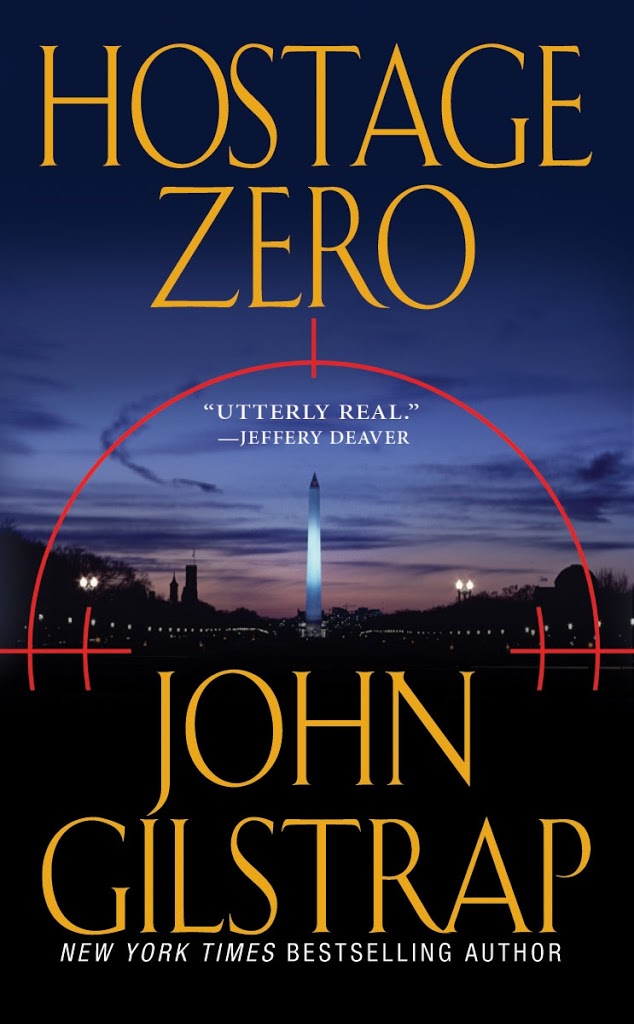
When my new book, Hostage Zero, is released next July, it will mark my 7th time going through this process, and I confess that it continues to amaze me every single time. I start with the nugget of an idea, and then nurture it into a concept and from there into an outline. When it looks like something that can sustain itself as a whole story, I take that deep breath and start filling up the page.

Man, those first few chapters really fly. Look, ma! I’m a real writer! I’m freaking brilliant! Jeeze, why isn’t every book this easy? Then I read what I’ve written.

Uh-oh. Who the hell wrote those sentences? They suck. They’re all clunky and awkward. Grammar, anyone?

So the rewrite of that first section begins, and as the layers of polish begin to show a shine, I begin to believe that maybe some smattering of talent remains. Sure, I can do this.

Then, halfway through the second act, I begin to think that I might have chosen the wrong story to write. Why would the characters do what I’m having them do? Jesus, nobody talks like that in real life. Oh, for crying out loud, that character needs to know how to shoot, but I’ve already mentioned three times that he’s never held a gun. Time to re-rewrite the front of the book.

At last, there’s the ending. I know it’s the ending because I actually wrote those magic words, “The End.” But I can’t end it there. It’s flat. Nobody wants to read a book with a flat ending. Time to re-rewrite the back of the book.

Meanwhile, my deadline has come and gone. I’m late on delivery. I read the book through, from beginning to end, making edits along the way, but you know what? It seems good now. But do think that because I really think it, or because I’m past my deadline and I have to think it? Only one way to know for sure. I attach it to an email to my editor and I click “Send.”

Then I wait. And wait.

Then I get the call. The editor loves the book! I mean, really loves it. She tells me great things, and I relax, hoping–praying–that I end up with a cover that will actually help sell the book. (We’ve discussed here before that some covers kill books before they’ve had a chance to thrive.) My editor tells me that the art department is working on a great concept, but every art department tells every author that same thing. Please, Lord, get me a good cover.

Then I see it. Wow. I love it. But do I really love it, or is that torpedo already in the water and I have to love it. What do y’all think?

WORK THOSE L’IL DOGGIES

by Simon Wood

Today TKZ is thrilled to welcome Simon Wood, a darn good writer who I was fortunate enough to tour with last summer (I can still recite his “one time I literally ran into an assassin” story by heart). He shares a unique take on what we’ve been discussing quite a bit lately, creative ways for authors to earn a living in the digital age.

The writing world is an odd industry, but no different from any other. I think writers sometimes forget that our stories are commodities. A writer’s body of work doesn’t lose its value. Therefore, stories should be worked for all they’re worth.

I didn’t look at my work this way until I heard science fiction and fantasy legend Gene Wolfe speak at a convention a few years ago where he was the guest of honor. He was talking about how he’s always made his stories work for him. A good story doesn’t have to end its life at its first printing. Like Halley’s Comet, it can keep coming back again and again for the enjoyment of a new audience. He’d calculated how much some of his stories had earned for him. A number of his stories had earned several dollars per word. Admittedly, it had taken a couple of decades to do that. Nevertheless, that was pretty amazing.

This was quite a revelation to me. I took to heart what Gene had said. I’d had a handful of stories published so far, most earning a couple of cents per word on average. I looked at my body of work and found ways of getting my stories published and re-published. Stories I sold to print markets I resold to webzines. I looked to foreign language markets where the story would be fresh. Within a couple of years, I’d resold some of my stories three times over.

While I still have a couple of stories reprinted every year, with print markets shrinking and most other markets looking for unpublished fiction, I turned to the internet. A few years ago, I discovered Fictionwise.com. They were only interested in previously published fiction. They operate on a similar platform as iTunes where users downloaded stories like people do with songs. It’s worked out very nicely. My stories are still available and their popularity is determined by the readers.

I’m now taking this approach with my books that are going out of print. I like to think there’s a demand for these books. Maybe not enough for a re-issue, but there’s certainly more than enough for e-publishing. The likes of Amazon’s Kindle and Smashwords.com have made it easy for me to keep my books out there and meet a demand. I’ve recently e-published DRAGGED INTO DARKNESS and WORKING STIFFS, two books of mine that I believe contain good work.

This is where a little discretion comes in too. I’m only republishing things that people ask about or that I can hand-on-heart say represent my best writing. There’s no point in me putting out things that are subpar. And I’ll be honest. There’s stories of mine that got published, especially in the early years, which I look upon as amateurish now and while I’m not ashamed of those stories I don’t feel they represent what I write now. I could be a total reprint slut and toss everything I’ve ever written at the eBook reader but it’s not worth it. There’s a massive pinball effect with a writer’s work. Someone reads a story and like it, so they check out something else I’ve written. That only works if what is out there is good. If it’s bad, it has the converse effect and they’re unlikely to seek out other works.

I view eBooks as another weapon in my publishing arsenal and not a threat to it. That’s why I’m also going to explore the e-publishing route for some stories that I’ve been sitting on that don’t fall into traditional print publishing options such as novellas and novelettes. There’s certainly an opportunity for me to experiment.

So how has working my stories hard fared for me? Not as well as it has for Gene Wolfe, but I’m getting there. Several of my stories have been picked up for different anthologies and have earned me two and three times what I was originally paid for the piece. One story, TRAFFIC SCHOOL, was published three times, each time earning pro-rates, before I put it on Fictionwise and there, it has found a following. It’s by far my bestselling story by a factor of at least two to one. I think this creepy little short about bad driving habits will be my little goldmine. My work for Writer’s Digest has done well too. A couple of the pieces have been reused two and three times and have earned four-digit paydays. I’ve now placed them on Smashwords.com and I’ll see how they work out there.

At the end of the day, as long as there are readers, stories are commodities that don’t diminish with age or time and the electronic option is helping there. And that’s all good as far as I’m concerned.

Learn more about Simon at www.simonwood.net and his work at:

Kindle Store
Smashwords.com
Fictionwise.com

Conjugating Verbs

By Joe Moore

Each week, all the Kill Zone authors fly to a Denny’s in Wichita (chosen because of its central location) for a breakfast meeting to plan our upcoming blog posts. Some of us lean toward topics about life and how we equate it to our stories while others gravitate toward the mechanics of writing. There’s usually a smattering of rants, and of course we can count on Miller to have some great tales about his free-range chickens. It gives us an opportunity to chat while enjoying a tasty Grand Slam breakfast that’s always fresh and fruity.

gs At last week’s meeting, we realized that not only were we running out of 2009, we were also running out of new ideas to blog about. We agreed that we needed a break to recharge the portion of our brains devoted to posting at TKZ. We made the executive decision to repeat what we did last year and take two weeks off for Winter Break. So from Monday, December 21 until Sunday, January 3, the Kill Zone blog will be closed for the Holidays. That doesn’t mean we won’t be hard at work thinking up new and exciting topics for 2010. As a matter of fact, next year we will be announcing two really brilliant ideas in which all of you can participate. One involves the combined creative efforts of your seven Kill Zone bloggers and the other will involve all you writers out there. The end result of both should be very cool. So stay tuned to TKZ for two unique and (as far as I know) original ideas.

At this point, I bet you’re wondering why this post is called Conjugating Verbs? Well, just as the waitress was bringing my second helping of Silver Dollar pancakes, which I like with the strawberry flavored syrup, I declared to my fellow bloggers that I was so out of ideas, my next post would be about conjugating verbs. So here goes. This is my most cherished and only memory from four years of high school Latin: Amo, Amas, Amat.

Five gifts you don’t want to unwrap this holiday season

We’re coming off a pretty depressing month of November, so I thought I’d kick-start the holiday season with a few early reflections about gifts: Gifts given, gifts received. The Good, the Bad, and the Butt-ugly.

When it comes to worst-ever gifts, it’s not the gift per se that counts. If you get a hideous Rudolf the Reindeer sweater from your Aunt Minnie, at least you know she meant well. (Unless she’s like some of the Minnie-hahas around my tree).

The worst gifts are ones you know were chosen with malice aforethought; they reflect–badly–on you, or on the relationship between giver and givee.

Here, in no particular order, is my own Top 5 list of worst-ever gifts:

  • A set of Franklin Mint quarters, given to me by a buddy who kept borrowing money.
  • A refrigerator alarm that oinked, the year I put on a few holiday pounds.
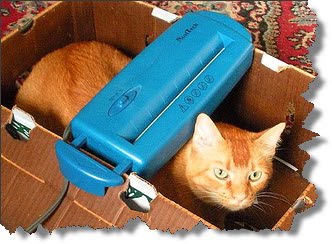
  • A paper shredder, right after I announced my plan to become a professional writer. (I already had an organic paper shredder–my cat).
  • A set of candles that was regifted to me, from the person I’d given it to the previous year.
  • Any of the “For Dummies” books I’ve ever received. (And I hate to admit, there’ve been more than a few.)

To be fair, here are a few clunkers I’ve given over the years that didn’t go over so well:

  • A Christmas card I regifted in the first grade. It had the original recipient’s name erased, but still clearly legible.(I was only six, okay?)
  • An Epilady hair remover, for a hirsute friend.
  • A jumbo box of See’s Candy, for someone who was on a diet.
  • A set of carving knives, for a soon-to-be ex.


Looking over that list, I’m…I’m ashamed. And I solemnly vow not to leave any passive-aggressive lumps of coal in any one’s stocking this year.

So what are some of your worst-ever gifts given? Received?

Thanksgiving Day Bravery

by Clare Langley-Hawthorne

Having just spent a great Thanksgiving in LA (despite the horrible traffic) I have returned re-motivated. Why? Because my friend Charysse gave me a much needed boost. In a recent work evaluation she had to list the ten people she would most want to have at a dinner party and I was one of the chosen. While this was nice and all – it was her reason for choosing me that caused a lump to form in my throat. She said she had told her boss it was because I was one of the bravest people she knew. Now I’m no courageous Clare that’s for sure – I’m terrified of heights, wimpy about woods (there’s bears out there you know) and squeamish about virtually everything – but I was, in my friend’s estimation, brave because I chose to ‘lay it all out there’ – abandoning my successful career in pursuit of a dream and risking all in the process. Her support brought tears to our eyes and it made me realize (as it was Thanksgiving after all) how thankful I am for so many things…Yes, here’s where it gets soppy (and I have to admonish my fellow Killzoners – where was the obligatory ‘what are we thankful for’ post last week?! Hey, I adopted this country for these kinds of celebrations!)

So here’s my top 5 things that I’m thankful for:

  1. My family (obviously) – you gotta love two five year old boys who manage to make it in the car to LA (and the three hour traffic jam we encountered Wednesday when we arrived) without watching even one DVD…
  2. That I still have an agent (he hasn’t abandoned me yet, at least I don’t think so…)
  3. That I still LOVE to write (despite the publishing industry’s best efforts…)
  4. That I get such great support from friends, family, fellow writers and fans so that even in the bleakest of November moods I can see a glimmer of hope.
  5. That I finally had my hair cut.

Okay, the last one may seem trivial but believe me I needed it! I’ve been growing my hair all year (see New Year’s resolution post) only to discover that (surprise, surprise) I hated it. Not only did my husband think it made me look older (yes, it’s a miracle sometimes that we’re still married) but I also never had the time to style it into any pseudo-Edwardian glory. I have to admit, as much as I might want to channel Ursula in my life, I need a maid to be able to do so…otherwise I’m just another boring old mum with her hair in a pony tail. Now, of course, post-hair cut, I’m the chic, youthful, cool mum with the gorgeous 1920’s bob:)

But enough about me…what are you thankful for?

PS: In the spirit of Thanksgiving, I’d also like to invite all killzoners to help out Basil Sands in his quest to name his blog radio show. He’s offering $25 if you suggest the name he ends up using, and for those of you who regularly read the comments you know he is hilarious (so his show is bound to be great!). You can visit his website: http://www.basilsands.com/ for more details.

Bleak November

by James Scott Bell

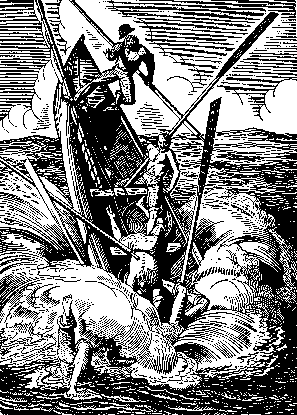
Whenever I find myself growing grim about the mouth; whenever it is a damp, drizzly November in my soul; whenever I find myself involuntarily pausing before coffin warehouses, and bringing up the rear of every funeral I meet; and especially whenever my hypos get such an upper hand of me, that it requires a strong moral principle to prevent me from deliberately stepping into the street, and methodically knocking people’s hats off–then, I account it high time to get to sea as soon as I can. This is my substitute for pistol and ball. – Moby-Dick (Rockwell Kent, Illustrator)

Why does November feel like the month the Earth stood still? Or imploded? Or got hit by that tsunami in the movie 2012?

It seems like this month all the upheavals in the publishing industry started to coalesce into one big flaming mess on the order of the Hindenburg. At least, that’s how it sounded on various blogs and comment sections, where rhetoric sometimes reached conflagration levels.

All the anxiety over eBooks and eReaders, the move of some big publishers into the self-publishing market, the revelation of paltry incomes associated even with a New York Times bestselling book, and the apprehension of authors and agents over just how anybody is going make any kind of a buck as a novelist anymore – it all seemed to come to a head this month.

Why should this be so?

First, the very pace of change in our world is now such that major developments happen almost as fast as chair throwing incidents on Jerry Springer. And humans naturally feel anxious about change until we can catch up and figure out what’s going on. But we always seem to feel a few steps behind these days.

How fast are things moving? Already there’s talk that the Kindle is on the way out. Authors and publishers are even now embedding links to websites and YouTube for added content in digital novels, links which can be accessed on, say, an iPhone but not a Kindle. There’s even a name for such digi-novels: Vooks.

Which leads to the technological changes that seem poised to alter the paradigms we’ve lived with for centuries, such as books on paper being paid for by readers. No one knows what a paradigm shift feels like until they’ve actually been through it, and we haven’t been through it yet. We’re inside it.

So as all this is happening, hands are being wrung throughout cyberspace. The only thing we know for certain is nothing is certain, and the landscape we see today will be very different tomorrow.

I have but two predictions:

1. People are still going to want good stories to read.

2. They’re not going to pay as much money to get them.

As to #1, writers need to do what they’ve always done: write and write well. Over and over. That calls for commitment to the craft and resistance to the “easy way” of self-publishing.

Let’s be blunt. We all know the overwhelming majority of self-published books aren’t good enough to be published the traditional way. That doesn’t mean there aren’t exceptions. There are. But they are as rare as Susan Boyle.

Yes, I do believe authors will do more direct selling in the future. They will make their stuff available in digital form directly. But they still have to prove themselves to be good writers, or people won’t buy.

Which leads to #2. Consumers are being trained to pay $10 or less for books. This means hardcovers are probably a dinosaur. The mastodons are in the tar pits.

But there will still be a market for books, because of #1. You know what it feels like? The mass market paperback boom post-World War II. Low price point, ease of use. The eBook revolution may be recreating this type of market. (According to Kelly Gallagher, VP of Publishing Services at RR Bowker, eBook consumption favors fiction over nonfiction at a rate disproportionate to print).

The cream will rise to the top. Those novelists who can deliver, book after book, are going to gain a following and have the chance to make some coin.

EBooks still represent only a small portion of the book market, by the way. I mean, let’s not be hasty. The “early adopters” drove sales of eReaders over the last year. The curve is going to flatten in 2010 or 2011. It’s not going to be like the personal computer boom. We’re talking about a convenience rather than a necessity. (That may change somewhat as businesses find ways to use the ever improving devices. But will they become “little laptops”? I don’t think so because we already have something called . . . a laptop).

How far eReaders will eventually reach is still a tough call. I know there are purveyors of pervasiveness out there, but hold the iPhone. I’ve pointedly spoken to several twenty-something readers over the past few weeks, and was gobsmacked when none of them liked eReaders. They were paper people! Astonishing.

So whenever I get to feeling like old Ishmael, with a “damp, drizzly November of the soul,” and when I, too, want to go outside and knock some hats off, I remember that fiction writers will always be around. The world needs us.

Maybe now more than ever.