Open Tuesday Rant: I Beg You to Stop

James Scott Bell


All right, I want you all to stop it.


I’m not the Language Sheriff. Grammar was not my strongest subject in school. I doubt I can tell a gerund from a gerbil. But there are some obvious sins that are creeping into our mother tongue. And some of them are worth beating back with a stick.


This is one of them.


“Begs the question” does not mean “Invites the question.”


It doesn’t. No matter how many times you use it that way, no matter how many talking-heads-trying-to-sound-smart blabber it on TV. Whoever started this trend should be taken out back and slapped around with a copy of Strunk and White.


Begs the question is a fallacy of logic. “Begging” here does not mean “pleading.” It is an alternative use of the word, and it means to “assume the answer.” It’s a form of circular reasoning.


Professor: Make an argument that war is always wrong.


Student: War is always wrong because too many lives are lost.


Professor: That begs the question. You assume that loss of life is, ipso facto, wrong. But you have yet to prove that. Loss of life might very well be justified for a greater purpose. Try again.


Student: Will this be on the test?


That’s what begging the question means. So when I hear some White House correspondent tell the home studio, “The President has decided to visit the Gulf Coast again, which begs the question, Will that do anything to stop the leak?” I want to make him eat his microphone so he can’t do any more damage with it.


So that’s my rant. Do not, under any circumstances, use begs the question as invites the question.


Now it’s your turn. What language sins drive you batty?

Write what you love not what the market does

by Clare Langley-Hawthorne

I thought I’d follow on from Jim’s terrific post yesterday about writing with heart, and discuss an issue that is just as important in my view – writing what you love and not what you think the market will love. It drives me crazy when people say “you should write a romance – you’d make more money that way” or (even weirder) “You should write erotica – it’s really hot (no pun intended) right now.” For some reason there always seem to people wanting to make ‘helpful suggestions’ on what you should write – usually by pointing out the ‘hot’ genre on the current bestseller list, as if that is all it takes. Hey, if you just added a paranormal element to your mystery, shazam, you’d have it made.

If only it was that easy…For many wannabe writers the thought of becoming the next J K Rowling or Stephenie Meyers is enticement enough, as is the belief that somehow if you write to what you think the market wants, your future will be secure. Wrong.

Setting aside the obvious (that by the time you’ve written what the market loves now, the market has already shifted to something else) there is something more fundamental at stake. As my agent always says, you must write what you love. Why? Because it shows.

It shows if you are writing a romance when you think it’s ‘easy money’. It shows if you write a YA fantasy when you really want to write contemporary thrillers…If your heart isn’t in it, the readers will know you’re faking it.

I did a course in Australia years ago on ‘how to write a romance’. I admit I did it as a lark and in the mistaken belief that ‘anyone can write a romance’ (I cringe now when I think of my attitude). I had never actually read a Harlequin romance before I did the class, and once I had, I realized I didn’t enjoy them at all. They weren’t my thing. So why did I think I could write one?? It wasn’t until the end of the course that I realized my mistake: it felt fake, and then the realization set it, I was writing a romance for all the wrong reasons.

When I came to the US, I did another class and this time I fell into a different trap. This class was full of so-called serious writers and I felt the constant pressure to prove my ‘literary merits’ (when given everyone’s ego was impossible – the only way members of this class felt good was by putting other members down). So then I faced another hurdle – how could I write what I loved when all I was worrying about was making sure what I wrote was ‘literary’ enough.

It took a while before I could set aside my misconceptions (that I should write what will sell, that I should write something ‘worthy’ etc.) Eventually I sat down and wrote what I loved, what I actually wanted to read, and you know what, it showed…(and, thankfully, it also got me published!)

So what about you? Have you ever felt pressured to write for the market, or to switch genres just because there was money it in? How have you dealt with the ‘helpful’ suggestions people make which means putting the market ahead of your heart?

Ya Gotta Have Heart

James Scott Bell

Technique alone is never enough. You have to have passion. Technique alone is just an embroidered potholder. – Raymond Chandler

John D. MacDonald wanted to bury the corpse. In this case, the corpse was one of his books. In 1963 he accepted an offer to write a novelization of a movie. The movie was Judy Garland’s I Could Go on Singing. MacDonald took the gig because the money was good.

The book wasn’t. Even he knew it. After it went out of print, MacDonald never gave permission for it to be printed again.

Since I collect MacDonald, I snagged a copy from a bookstore owner I know, who charged me a fair price. I did read it. And no, it isn’t up to MacDonald’s usual standards.

It’s pretty obvious why: his heart wasn’t in it. It wasn’t his material.

Lesson: If you’re going to get your writing noticed, read, published and re-read, you have to put your heart into it.

You’ve no doubt heard that before. At least once at every writer’s conference, you’ll hear someone on a panel say, “Forget chasing the market. Just write the book of your heart.”

I understand what’s being said, though I would tweak it a bit. You have to find the intersection of the market and your heart, then get that heart beating.

I’m a professional writer. I cannot afford to frolic in the fields of eccentric experimentation. But that doesn’t mean I only write what I think will make money.

There are those who have done that. Nicholas Sparks is right up front about how he chose his genre. He saw the tear-jerker-romance-by-a-male-author slot as a great business opportunity. David Morrell talks about this in his fine book, Lessons From a Lifetime of Writing. Morrell himself says he couldn’t do it that way. He has to have something “gnawing” at him to write. He has to find the heart of the matter.

It’s like when I was a criminal defense lawyer. (Spare me the jokes. When your son or daughter is arrested, you’ll call someone like me.) Anyway, defense lawyers have an essential part to play in our system of justice. It’s called upholding the Constitution. That’s what you have to believe when you’re defending someone who is pretty much cooked as far as the evidence goes. You have to believe that, or you’ll do a lousy job.

I write for readers. I write so that readers will enjoy what I write and buy my next book. But to do that, I have to find the heart of the story and ramp up the passion level.

See, the unexpurgated “book of my heart” would be a post-realistic satirical look at the philosophy department of a major university, written somewhat in the style of Kurt Vonnegut channeling Jack Kerouac.

Could I sell such a book? I don’t know. I know I’d enjoy writing it, but I also know it would be tough to sell a marketing department on it.

I could write it for fun, and might someday, but right now I need to keep earning a living.

So what I do is take my favorite genre, thrillers, think up concepts and then make them the book of my heart. I find ways to fall in love with my story.

The way it happens for me is through characters, getting to know them deeply, creating a colorful supporting cast –– and then scaring the living daylights out of them in the plot.

How about you? What gets you amped about your writing?

About that barn on your property…

John Ramsey Miller

I’ve been censusing for six weeks and I’ve about used up all the Census form non-compliers in two counties. Saying good-by to my team was very much like the day I left summer camp in the early sixties. The job is over and during it I have only written this blog and little else. I am going to go back at writing with a cold vengeance and I’m not going to stop for a long time.

Because I can pretty much write whatever I like here, I am going to relate an incident and because of John Gilstrap’s blog I’m going to ask you to guess if it is reality filtered through my memory, part fictional, or full-blown bullsh*t.

Over the past few weeks I’ve been spending sometimes 10 hours a day knocking on doors of people I don’t know. Because I was working in my own community the first several weeks, I had on my list the name of someone I know very well. So instead of visiting the house right off, I called him on the phone. Now this person is a good friend of mine so I borrowed a cell phone because he had my number in his phone and he’d know it was me. The conversation went something almost exactly like this:

I dial…

“Hello?”
“Yes, this is Special Enumerating Census Agent Lamar D.Smithe with the United States Census Non-Compliance Division in Washington DC. Is this 221 Farm Pond Lane ? A Mr. A. B. Sedgewick?”
“It is.”
“Do you have a problem if I record this interview.”
“Why are you recording this interview?”
“I am recording this conversation in case I deem that further action is to be taken.We understand that you stated to certain people that you didn’t fill out your census form. “
“I sent in my form the same day I received it.”
“But you didn’t fill it out before you mailed it?”
“Of course I did. Why would I send it in blank?”
“We got tens of thousands of blank EQ forms from people whose pens were out of ink and like that, but mostly for various anti-governmental reasonings too numerous to list. Well, if you had put the intel we requested ––because it is a Federal offense not to comply––why I would be calling you? I assure you I do not call people at random.”
“Maybe it got lost in the mail.”
“Are you implying misfeasance on the part of the USPS? Is that what you are implying?”
“I have never told anybody that I would not send in my form. How can I clear this up?”
“You can comply now over the phone. Doing so and answering the few questions will arrest the investigation and any prosecution forthwith.”
“Okay.”
“These questions are non-invasive and the same laws that protect your privacy mean that failure to answer them truthfully results in a fine of up to two-hundred- and-fifty thousand dollars and/or imprisonment of five years. Do you swear hereby to tell the truth to this officer knowing as I have stated that lying to a sworn Federal agent in pursuit of his duty is a felony?”
“I knew lying to an FBI agent is a crime.”
“But you can lie to a census agent because we are less important? We can arrest and that as well and cross state lines. Were you living in your residence as of April 1, 2010?”
“Yes.”
“Were you alone or were there other residents in the abode at that particular time?”
“Just my wife and I.”
“Names, please. First name last, middle name and last name first.”
(He gives the names, last first and first last with middle initials)
“I see And what about the names of your three children?”
“We don’t have any children.”
“Not living in your home, you mean.”
“We don’t have any children living in any home.”
“Do you have any other homes?”
“No.”
“Any barns?”
“Barns?”
“Somebody may have been residing in your barn on April first, if you have one.”
“I don’t.”
“Are you sure?”
“Yes.”
“Our records indicate a barn on your property. A blue barn with an air conditioner mounted in the wall. I’m looking at the satellite image right now. And what appears to be a Golden Retriever in the yard with a red collar.”
“I don’t have a barn. Who did you say you were?”
“That’s something we can rediscuss after I’ve cleared you …or not.”
“If you are who you say you are, why is your number a local cellular number?”
“Do you occasionally look at pornography on the internet?”
“Who is this?”
“Just answer my questions, sir.”
“I believe all I have to give the census is the number of people who live in my house, ages and sexes.”
“So now you want to tell me about the sexual materials you look at on the net.”
“Okay. So what is your name and badge number?”
“Enumeration Special Agent Buddy Blivins Badge 666213-7-11 ha. “
“Who the hell is this?”
“We’ve already established that to my satisfaction, Sir. On what date did you lose your virginity? By date I don’t mean first date or second. I need the actual year when you lost it. This question may seem irrelevant and invasive, but I assure you these statistics are important to the government for the allocation of funds for birth control for high school students.”
“Miller…”
“How did you know it was me?”

What do you think, fact or pure fiction of or a bit of both?

Little White Scholarly Lies

By John Gilstrap
www.johngilstrap.com

One of the few undeniable, irrefutable take-to-the-bank rules of the publishing industry is that nonfiction is easier to sell than fiction. It’s as true in the bookstore as it is on an editor’s desk. If you’re a celebrity, your book is a slam-dunk, even if you have precious little to say. If you’re just an average Joe, on the other hand, you’d better have a pretty enticing angle.

James Frey had just such an angle in his explosive memoir of addiction entitled, A Million Little Pieces. You might remember that book as the target of the Greatest Oprah Meltdown Ever, when she found out that the ridiculously unbelievable, over-the-top autobiography was, in fact, fiction. The world learned this when The Smoking Gun did a little elementary school-level fact checking. Frey’s publishers, Doubleday and Anchor Books, were shocked—shocked, I tell you—that a book with their name on the spine (and its earnings in their coffers) was not everything that the author had crossed his heart and hoped to die and pinky-swore was absolutely true.

After all, if it weren’t true, they couldn’t have marketed it and promoted it as vastly more profitable and easily promoted nonfiction.

Stephen Glass had gasp-inducing angles, too, on all the wild news items he wrote for The New Republic in the late nineties. For a kid in his twenties, he had remarkable access to some of the world’s most interesting people and fascinating stories. After stories were published—many of them fantastical and negative—the subjects (victims?) wrote letters to the editor complaining about inaccuracies and fabrications, but hey, isn’t that what people always do when they’re called out by hardworking investigative reporters? It took different elementary school-level fact checking from a Forbes Magazine reporter to knock down that house of cards.

The Stephen Glass scandal rocked the journalistic world. So many investigative reporters, quoting so many unnamed sources, all of them looking for a marketable angle, were shocked—shocked, I tell you again—that one of their brethren had cheated.

Truth is, I expect a fair level of fabrication from young and hungry “journalists” who are looking for their marketable angles. What’s the harm in a little fantasy, after all, if you’re giving the editors and the audience what they want to read? Isn’t the fact that targets can never confront their accusers part of the beauty of using unnamed sources? And if anyone presses too hard on the accuracy thing, there’s always the convenient excuse that the 24-hour news cycle demands corner-cutting, thus transforming the reporters into victims themselves.

Sorry, Killzoners, but you don’t live and work in Washington, DC for as long as I have without becoming cynical.

Even my cynical outlook, though, didn’t prepare me for the New Yorker’s revelation in April that the late, presumably great Stephen E. Ambrose was himself a serial fabricator of facts. His claim that his benchmark autobiography of Dwight D. Eisenhower was based on “hundreds and hundreds of hours” of one-on-one interviews was a bit overstated. The real number of interview hours, while apparently hard to nail down specifically, numbered “less than five.” I understand that we all succumb to hyperbole from time to time, but even the forgiving, non-cynical among you have to concede that there’s no innocent way to exaggerate less-than-five into hundreds-and-hundreds.

Ambrose cheated. Apparently, his many Eisenhower-related books (I confess I’ve never read them) are replete with footnotes and annotations referring to these one-on-one interviews that never happened. All those quoted passages, then, really are only quotes from Ambrose’s imagination—a representation of what he thought Ike would have said if asked.

This one hurts, folks. We’re talking about the author of Band of Brothers here. The author of D-Day. The guy was a freaking brilliant author. He just, you know, made up a lot of his nonfiction facts. The income from his work, however, was very real, and I’m sure that continuing royalties will continue to pay a lot of bills for his descendents.

Let’s be clear: I don’t begrudge the Ambrose estate a penny. Nor do I begrudge the incomes of Messrs. Frey and Glass. They’re gifted writers who understood the markets they were selling to, and they gave their publishers exactly what they craved. I think the authors did a crappy unethical thing, but I know a lot of people who make their livings doing crappy unethical things. (I mentioned that I work in Washington, right?)

When Kurt Muse and I wrote my only nonfiction opus, Six Minutes to Freedom, I made it clear from the beginning that while the story would be 100% true, I was going to take shortcuts for the sake of pacing. Since I was changing names anyway—a requirement of many of the participants before they would agree to be interviewed—what difference would it make if I combined some personalities and created dialogue that represented the gist of what was said, even if the direct quotes were fabricated? Hell, in the “true” movie The Perfect Storm, Warner Brothers took us into the wheelhouse to witness the conversations of people who never lived to be interviewed, and the world ate it up.

Unlike the other examples I mention of fabrication, when I wrote Six Minutes to Freedom, I was protective enough of my integrity as an author to clearly explain my shortcuts in my Author’s Note. I was honest. And I paid a price. More than a few nonfiction purists objected to my admitted juggling of reality, preferring, no doubt, to read works of history by true scholars like Stephen E. Ambrose. He used footnotes and everything.

So, Killzoners, what do you think? Borrowing from the great Stephen Colbert, is “truthiness” a high enough standard in the world of nonfiction? On a scale that measures ethics alone, absent personal preference, are the offenses of Frey, Glass and Ambrose all equal? And the depressing, distressing elephant in the room: Does any of it matter in the end if the little white scholarly lies sell books?

First Page Critique: Kerguelen

by Michelle Gagnon
We’re winding up our first page critiques this week. Thank you everyone for your patience, especially all of you brave folks who submitted pages. We apologize for any delays in posting them.
Today I thought I’d talk a little bit about formatting. As a savvy commenter pointed out last week, some of the first pages we’ve posted appear to be longer than others. Some of you sly dogs submitted a 10 pt font, single-spaced page. This isn’t something an agent or editor will let you get away with, however, so in the interest of keeping the process as fair and helpful as possible I re-formatted today’s submission (which ended up weighing in at TWO full pages, not one).
Here’s why: the point of this process is that we’re critiquing what most agents would read, and that’s one page. You have that much time to grab their (and our) attention. So fudging the formatting doesn’t really help. The main goal should be to make that first page compelling enough to keep a reader turning to the second, and then the third…and so on.
Here, then, is the true opening page of Kerguelen:

Prologue

My boots are slick with blood and guano. I push my feet through dead terns and petrels, their downy wings flopping, their necks lolling as though life never belonged there. I plow ahead, daring not lift my feet. In some places the litter of birds is half-a-foot deep across this flat headland overlooking the gunmetal ocean. Not a sound from the cliff-face rookery just beyond the edge, an odd braid of birds now and then falling off into dead space. I turn around and follow my plowed trail over the headland back toward my cottage.
Day without wind—a rarity. Fog creeps past the knobheads of grass and fennel, thinning, whispering above the flagstone steps of my cottage. It’s simple really. Fog is moisture, water laden with whatever is in the air: pollution, particulates, poisons. Give us our gales, thank you, from sea-borne air currents that daily carry more and more of the rest of the world to us. Even as far away as the southern Indian Ocean. No one lives isolated—even on a remote island like Kerguelen. Air circulation patterns being what they are in our little whirlpool pocket of climate, yes, in time, we will breathe the same air as everyone else.
There. My last breath was joined by some remainder of a cough from a 19th century Liverpool tubercular ward and a little something from a hacking terminal flu case in Coeur-d’Alene and, of course, the tick-tick-ticking of some isotope, Strontium 90, perhaps, Lawrencium, Polonium.
Some of us thought of going underground, but now it’s surely too late for that. We hope that each day will bring a topping out, and then we will begin the downhill slide, nursing our inevitable lesions, losing hair, pressing on despite frail appetites. We’ve all read and reread the survival manual. We know how it will go. We just hope it won’t turn out as badly as all that.
The good news here is that I would definitely keep reading. I’m a sucker for post-apocalyptic novels anyway (ORYX AND CRAKE, anyone?) I do think the language could use a merciless edit, however. Some of the metaphors didn’t really work for me, they felt somewhat melodramatic and cumbersome. For example, in the second sentence: “I push my feet through dead terns and petrels, their downy wings flopping, their necks lolling as though life never belonged there.”
I think the image of the dead birds is powerful enough on its own: lose the “as though life never belonged there.” Also, consider cutting “my feet.” You also repeat “plow” in the first paragraph, a big no-no. I’m not entirely certain what a braid of birds looks like: that expression briefly took me out of the story.
I’m assuming that the rookery is on a sea cliff- shouldn’t there be a splash when the birds hit the water? I actually think incorporating one makes that sentence more effective. Word choice is always critical. Instead of “some of us thought about,” I would write, “some of us considered.” It’s tighter and less clunky. Also, the second half of that sentence, “but now it’s surely too late for that,” is overwritten. Just say, “it’s too late for that now.”
I’m a little confused by the “topping out” and “eventual slide” in the final paragraph. Is the topping out when air quality reaches the absolute worst point, then gradually starts improving? Or is it when the worst of those air currents finally reaches the island, setting about the inevitable death of the inhabitants? I think if that information is being offered on page one, clarity is key. I love how the page ends, however. Great work.
So, to sum up: compelling premise, just needs some tightening up. And since I’m just emerging from full-bore editing mode on my own manuscript, here are my suggestions for a much tighter opening page:
My boots are slick with blood and guano. I push through dead terns and petrels, their downy wings flopping, necks lolling. In some places the litter of birds is half-a-foot deep across this flat headland overlooking the gunmetal ocean. Not a sound from the cliff-face rookery, except for the occasional splash of a dead bird tumbling into the water. I turn around and follow my plowed trail over the headland back toward my cottage.
Day without wind—a rarity. Fog creeps past the knobheads of grass and fennel,
whispering above the flagstone steps of my cottage. Fog is moisture, water laden with
whatever is in the air: pollution, particulates, poisons. Give us our gales, sea-borne air
currents that daily carry more of the rest of the world to us. No life remains isolated—even
on a remote island like Kerguelen. Air circulation patterns being what they are, in time we
will breathe the same air as everyone else.
There. My last breath was joined by the remnants of a cough from a 19th century
Liverpool tubercular ward, combined with a hacking terminal flu case in Coeur-d’Alene
and, of course, the tick-tick-ticking of some isotope: Strontium 90, perhaps, or Polonium.
Some of us considered going underground, but it’s too late for that now. Every day we pray for a
topping out, after which we begin the downhill slide, nursing our inevitable lesions, losing hair,
pressing on despite frail appetites. We’ve all read the survival manual. We know how it will go.
We just hope it won’t turn out as badly as they promised.


First Page Critique: A Pearl of Great Price

by Joe Moore

We continue our first-page critiques with the anonymous submission: A Pearl of Great Price.

“Fug,” Jasper Moore muttered under his breath.  It felt good.  He hadn’t worked himself up to saying the real f-word, but he would.  It was damn hard to get past all those years of living with Prissy Miss Minnie.  If she’d even heard him say “fug,” she’d look like she was passing a pig from her butt.

He looked down at the bulging gut hanging over his dungarees, his hairy freckled arms, his fingernails dark with grease.  That was who he was.  His damn job kept him hovering over dirty engines twelve hours a day, this damn house always needed something fixed, and his damn wife wouldn’t even let him say “damn.”  Don’t forget the damn church was sucking him dry and scaring the pee out of him.  And those awful snake dreams.  Snakes crawling all over him, sticking their long fangs deep in his arms.  It was enough to make a man run screaming for his life.

He looked down at the large grease stains on the garage floor.  This was the only place in the house that was his.  Minnie had claimed everything else with lace doilies, prim little pink flowerdy furniture, and pictures of that pansy-assed Jesus.  Christ on a barbecue.  Except it was him, not Christ, that was roasted—every single goddam day.

Reaching past the canvas tarps covering a five-gallon bucket, he grabbed a hot Budweiser, dragging it out through the empties.  A man couldn’t even drink in his own home.  Had to hide it from the little woman who said drinking was a mark of the beast.  Well, he’d show her who the beast was when she got home from that stinkin’ church.  The Tabernacle of the Children of the Only Real Living Lord with Signs Following.  Huh.  One of these days he’d tell her just what that damn Tabernacle was all about.  One of these days.  He took a gulp of the hot beer and wiped his mouth his left hand.

A creak from the back door startled him.  A man stood against the light from outside, so Jasper couldn’t make out who it was.  The only light in the garage came from the open doorway and the grimy window above his workbench.

“What the heck?”  He didn’t like anybody to sneak up on him.  His heart pounded in his chest.  The man was about the size of his stinkin’ father-in-law, the man who made it clear that Jasper wasn’t anywheres near good enough for his precious daughter.  Hell.  He was too good for that little tight-assed prude.  Then, Jasper realized the man hadn’t said nothing.  He had to hold tight to the Bud to keep it from slipping out of his hands.

“What you doin’ here?  Ain’t good manners to sneak up on a man quiet-like.”  Still nothing.

“Now, looka here.  Just what the heck you want?”  Jasper felt a weight in his chest. “Why, Jathper, we gonna have uth a little talk.  You know the kind.”  The man’s calm voice spooked Jasper, who recognized that lisp from the Tabernacle and the trips the took to the beach. Only one man talked like that—Flembo Reeves.  He held a large wooden box in front of him, one like the snake-holding boxes the Tabernacle used.  Weird rattling and bumping sounds came from the box.

Jasper’s heart thumped even harder.  You coulda called, you know.  I’m busy right now.  Got stuff to do here.  And what you doin’ here with that box anyway?   Them things belong in the Tabernacle, not in a person’s home.”  He looked down at the Budweiser in his hand.

“Oh, I coulda called.  But I wanted to thurprithe you.  Juth like I have.  Don’t you like thurprithes, Jathper?”  Jasper’s hands shook, as he crushed the beer can in his hand.  Damn Flembo scared him like the snakes did.

I have mixed feelings about this one; I want to like it but I don’t. What I do like is that it contains an interesting voice with an edgy taste of humor, but the humor is walking a tightrope between appealing and raw. Like so many of our first-page submissions, this one is top heavy with exposition. I feel like I’m being forced to like Jasper. And like many other submissions, I believe the writer has started in the wrong place. As Jim previously stated, start with your character in motion, then drop back and explain. Or as he also puts it: Act first, explain later.

Possibly a better place to start would be somewhere around the fifth paragraph; A creak from the back door startled him. Of course, the writer would have to massage it a bit, but that would be my call.

Also, there are missing quote marks, missing words, and a couple of typos. Here’s a tip: proofread your submission before you send it to anyone; agent, editor, whoever.

Finally, be VERY careful using colloquialisms and characters with speak impediments. Strange or unusually spelled words will stop the reader’s eye cold. They are the equivalent of roadblocks placed in the sentence to cause the reader to slow down, pause or stop altogether. Never make the reader work at reading. There are too many other books out there that that your reader can choose from. Is it really so vital to THE STORY that you let the words get in the way?

I think with a little bit of work, this could be smoothed out. I would strive to let that unique voice come through that right now seems to be hiding just below the surface.

Other’s reactions? Would you keep reading?

First Page Critique: Character in Motion

James Scott Bell


Filling in for Kathryn today, with a first page from a story entitled “The Wizard of the Middle Realm.” Here we go:

Katie stared restlessly at the creamy white ceiling as she lay back on her bed. The summer holidays started two weeks ago, but she was not enjoying them at all. Apart from the fact that she was hot and sticky, a discomfort the whirring pedestal fan by her bed was doing little to ease, Katie was feeling lonely. She had never had a lot of friends, but she did have one very good friend who was unfortunately at this very moment moving to the opposite side of the country.

Katie rolled over onto her stomach and rested her cheek against her pillow. The book she had just finished reading lay discarded on her bedside table. At least she still had her favourite characters to keep her company on the long summer days ahead.

Katie pulled herself slowly up from her dampened bed, unsticking her white cotton t-shirt from her stomach as she did so, and wandered moodily over to her bookshelf. She fingered each book looking for another novel that might transport her mind to some faraway fantasy land and help her stop thinking such depressing thoughts.

A tingling sensation prickled in her outstretched fingers, travelled down her arm and spread throughout her entire body. She felt a tightening in her stomach as though invisible hands had wrapped around her waist and tried to pull her backwards. She dropped her hand from the book she was removing from the shelf and frowned. She looked around, half expecting someone to be behind her, but her room was empty of anyone besides herself. The pulling sensation intensified and Katie lost her balance. A tightness formed in her chest and her breathing grew shallow.

“Don’t panic,” she told herself in a shaky voice, “It’s just the heat.”

Katie turned towards her door thinking she would just go get herself a glass of water. She didn’t make it. As she fell forwards her room became a whirlwind of colours.

***

This page does get us to an opening disturbance. That’s good. That’s what we want. It’s just that getting there is a bit of a slog. But we can fix that.

As I mentioned in a previous post, starting a book with a character alone, thinking, is not a wise choice. Readers want to see a character in motion and in trouble, and then later on will care about what the character is feeling and thinking.

When I see a page like this, I move forward until I find some action, some motion, closer to that immediate disturbance (which is anything that presents a change or challenge, even small). Sometimes (often, in fact) I have to move right to Chapter 2 to find that place.

Here, I think we can start with a tweaked third paragraph, this way:

Katie pulled herself up from her dampened bed, unsticking her white cotton t-shirt from her stomach as she did so, and wandered to her bookshelf. She fingered each book looking for another novel that might transport her mind to some faraway fantasy land and help her stop thinking about her best friend – her only friend – moving away.

See the difference? We get Katie moving toward the bookshelf right away, where the disturbing thing will happen.

Now, you can put the first paragraph next, revamping it slightly. This will give you a chance to describe the room (e.g., pedestal fan) and drop in the bit about it being summer. What you’re doing is simply a variation of the chapter 2 switcheroo. When you do that kind of surgery, you begin with chapter 2 and drop in, bit by bit, only what is absolutely necessary from chapter 1. Much of the time, you don’t need any of it. Here, drop in a couple of things from paragraph 1 after the ball is rolling.

I think the second paragraph can be cut entirely, as it doesn’t add anything to the scene. Everything there is implied elsewhere.

So that’s the big lesson to draw here. Get a character in motion as close to the disturbance as possible.

And if you really want to zoom things along (and why wouldn’t you?) you can put that disturbance in the very first line and then “drop back” for a bit of set-up. Dean Koontz used to do this all the time in his early fiction.

For example, Dance With the Devil (written under the pseudonym Deanna Dwyer), begins:

Katharine Sellers was sure that, at any moment, the car would begin to slide along the smooth, icy pavement and she would lose control of it.

Koontz then “drops back” to fill in the set-up information – after we are hooked by this character in trouble.

By the way, these opening strategies can be employed throughout the novel. Sometimes, to slow the pace, you can open a chapter with description or introspection. But if you need to pick things up, start with action or dialogue and then “drop back” to explain how the characters got to the scene.

Other notes on this page:

There are chunks of telling in these opening paragraphs: she was not enjoying them . . . she was hot and sticky . . .Katie was feeling lonely . . . wandered moodily (watch those adverbs!) . . . depressing thoughts.

What we want is more showing. The opening line I suggest has her unsticking her tee-shirt, which gets the hot, sweaty impression out there naturally.

Also, the first three paragraphs start the same way: Katie, Katie, Katie. It’s always good to vary the rhythm of paragraphs that are close together.

All in all, this is not a bad set-up. I do want to know about the whirlwind of colors. But we can capture that interest more quickly with the trims suggested.

Any other notes?

Relationship Driven

by Clare Langley-Hawthorne

After last week’s mini-discussion about character-driven versus plot-driven novels (and the difficulty involved in distinguishing one from t’other) I started thinking about what really gets me hooked in a good book. Sure I like characters that I can care about and plots that keep me turning the page, but what I most often find keeps me glued to the page is the evolving relationships in a book.

I admit, I’m a hopeless romantic, but when I speak of relationships I don’t necessarily mean the lovey-dovey kind. For me, I want to see the sparks fly on all kinds of levels – because (as far as I’m concerned) it’s conflict and thwarted objectives that make relationships between characters come to life. I just finished a very light regency era mystery/romance which disappointed on the relationship level precisely because the conflict was never really evident between the two main protagonists (that and the fact that I had to wade through pages and pages of the most ‘awesome sex ever’ escapades which defied belief). This got me thinking about what I look for in a novel when it comes to the critical relationships in the story.

One of the key relationships we often look for in a good thriller is between the antagonist and the protagonist – whether it’s a serial killer and an FBI agent or a police officer and his suspect, I want to become invested in a real ‘cat and mouse game’. I want to see a relationship develop between these two opposites that intrigues as well as satisfied. If only one of these characters is sufficiently interesting to hold my attention then no matter how much this character might drive the plot, I will probably still feel let down.

Of course, many times I am looking for a good romance to develop alongside the mystery, and this is where (in my humble opinion) many mysteries and thrillers fall down. The relationship is either way too obvious and heavy-handed or so underplayed as to be totally underwhelming. I want chemistry (!) and both the promise of a romantic relationship as well as the seeds of doubt. In a mystery series the evolution of key relationships are often the most enjoyable things to watch – though as ever writer knows, once those relationships become ‘consummated’ all too often the fizz and the thrill of it all can die.

So what do you look for in terms of relationships in a thriller or a mystery? Are you like me hooked by relationships in a story? Do you enjoy seeing these evolve over a series or do you to see character relationships as ‘second fiddle’ as long as there’s a ripping yarn to be told?

Blown Calls

UPDATE: I changed the title of the post because it started sounding a little more negative than I liked. You purists can still find it in the URL.

James Scott Bell

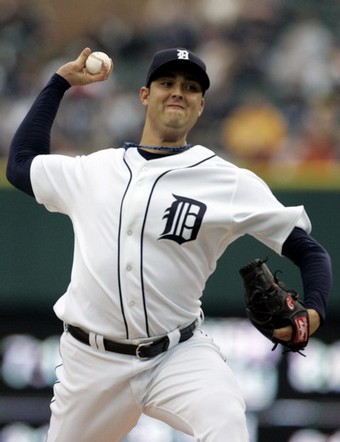
Maybe you heard about the terrible blown call in baseball last week. Pitcher Armando Galarraga of the Detroit Tigers was on the verge of doing what only twenty other pitchers in Major League history have accomplished: pitch a perfect game (a no-hitter wherein no opposing player even reaches first base).

It was two outs in the 9th inning. Only one player left to go. But then the Cleveland Indians’ Jason Donald hit a grounder to the first base side. Galarraga ran over to cover. He caught the throw and stepped on the bag a split second before Donald’s foot.

In other words, Donald was out. Only he wasn’t.

He wasn’t because a veteran umpire, Jim Joyce, blew the call. He was in position to call it correctly, and did not. Because there is no instant replay review in MLB, the call stands. No perfect game. Not even a no-hitter. (For you trivia buffs, there have also been ten occasions where a perfect game was lost on the very last out.)

To their everlasting credit, all parties concerned handled things with class. Umpire Joyce manned up and owned it. He wept at his mistake. The Detroit fans showed class, too, by giving the highly regarded Joyce a standing ovation when he came out to umpire the next game.

And Galarraga and the Tigers did not do what 90% of other players and teams would. They did not overturn water coolers, or moan and complain.

Nor should they have. This is the reality of baseball. Human error by umpires is part of the game. You accept that going in. You know it’s going to happen. You want to change the rules and bring in replay, fine. But as it stands, blown calls are as much a part of baseball as peanuts and beer.

It’s like the publishing business, and life. Bad stuff happens to good people, and good manuscripts.

You get turned down by an agent in summary fashion. Your submission gets kicked at a publishing house for some reason other than the writing itself. You see someone else – maybe even a friend – score a great contract or get on the bestseller list. And it hacks you off, because you know you can write just as well, or better.

Life hands you blown calls. So what do you do about it?

When my son was first pitching Little League, he had a tendency to let a bad play or a home run upset him. So early on I made this rule for him. “You are allowed one ‘Dang it!’ And you can hit your glove as hard as you want. But that’s it. Then you go back to pitching to the next guy.”

That’s what he learned to do, and in fact won a championship game that way.

So you get that rejection, or see that unfairness. You can have one ‘Dang it!’ (or its adult equivalent). I’ll let you feel it for fifteen minutes. But that’s it. Don’t hang onto it. Don’t go moaning all over the Internet. Don’t yell at your spouse or kick your dog.

Instead, turn that energy into action – by writing.

Here’s what I love about being a writer. Every day is new. Every day I get to wake up and pound those keys and keep going. It doesn’t matter to me if I get a setback, a bad review, a rejection. I can keep punching, and I will keep punching until groundhog delivers my mail.

How about you? How do you handle blown calls?