Tipos

by Michelle Gagnon

There was a lively debate about typos last week in one of the crime fiction forums. This is always a particularly painful subject for me. You see, I’m a bit of a perfectionist, especially when it comes to my books. I’ve gone through each and every one of them with a fine-tooth comb at least twenty times before they leave my hands and head off to the printer. My sister, a talented editor and copy-editor, has also read through each manuscript three or four times by that point. And of course, my editor and copyediting team at the publishing house have played their part in making sure that the final product is as close to perfect as we can get it.

And yet, somehow, someway, they always get in there.

I first discovered this with my debut THE TUNNELS. My book club offered to read the book, which was a real thrill until they sat down and said almost in unison, “Oh my God, that typo!”

Turns out that a particularly glaring one appears early in the book. I was completely mortified. I raced home after the meeting and dug up my final line-edited copy of the manuscript: no typo. How it got there remains a puzzle to this day.

Which is why I adamantly refuse to crack the cover on my books once they appear in printed form. Because one of those little buggers probably snuck in there. And some sharp-eyed reader is going to make a note of it, and think less of me because of it. Which makes me crazy.

My favorite part of the discussion last week, however, involved other peoples’ “worst typo” ever stories. So I took it upon myself to consolidate the really, truly awful, culled both from that site and other sources:

  • Based on a completely unscientific analysis (conducted by me), one of the more common typos involves neglecting to include the “l” in the word “public.” Several people listed this as an issue, including a woman who produced a newsletter sent to 20,000 pub(l)ic employees, supervisors, and the district office. I would argue that there’s a definite Freudian component to this one.
  • Along the same lines…one contributor used to live on St. Denis Street. Unfortunately their Catholic newsletter incorrectly recorded the “D” in “Denis” as a “P.” And yet somehow, the mail continued to arrive at their house. Apparently they had a better mail delivery person than I have ever been blessed with. Or at least one with a decent sense of humor.
  • Penguin Group Australia once had to reprint 7000 cookbooks due to a typo. The recipe in The Pasta Bible called for “salt and freshly ground black people.” The lesson here: spell check and autofill are not always your friend.
  • One author received a note from a reviewer who, “loved the book, but was concerned by the fact that at one point your heroine looks out across a sea of feces.”
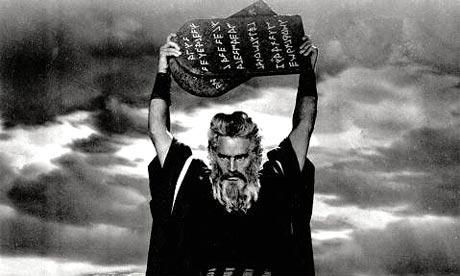
  • And finally, one from the history books: A bible published in the 1600s in London omitted the word “not” in the Seventh Commandment, leading to the mandate, “Thou Shalt Commit Adultery.” Perhaps this is the version many prominent politicians were raised on.

So I’d love to hear any great (as in, truly terrible/mortifying/hilarious) typo stories.

The First Line Game, part II

By Joe Moore

Last month, my blogmate Jim Bell posted a blog called The First Line Game, a cool exercise he and some friends do to have fun with the first lines of their WIP. We’ve often discussed the power (or lack of) that first lines have on the reader. It can’t be emphasized enough how much a first line plays into the scope of the book. For just like first impressions, there is only one shot at a first line. It can set the voice, tone, mood, and overall feel of what’s to come. It can turn you on or put you off—grab you by the throat or shove you away. It’s the fuse that lights the cannon.

Some first lines are short and to the point—built to create the most impact from a quick jab. Others seem to go on and on and on. And only when we arrive at the period at the end do we see how expertly crafted it was for maximum effect.

So in the spirit of sharing what I consider examples of pure genius, true literary craftsmanship, and genuine artistic excellence, I’d like to share what I think are some of the best first lines in literary history. Let’s start with two of the most famous:

It was a dark and stormy night; the rain fell in torrents, except at occasional intervals, when it was checked by a violent gust of wind which swept up the streets (for it is in London that our scene lies), rattling along the house-tops, and fiercely agitating the scanty flame of the lamps that struggled against the darkness. —Edward George Bulwer-Lytton, Paul Clifford (1830)

It was the best of times, it was the worst of times, it was the age of wisdom, it was the age of foolishness, it was the epoch of belief, it was the epoch of incredulity, it was the season of Light, it was the season of Darkness, it was the spring of hope, it was the winter of despair. —Charles Dickens, A Tale of Two Cities (1859)

Lolita, light of my life, fire of my loins. —Vladimir Nabokov, Lolita (1955)

I am an invisible man. —Ralph Ellison, Invisible Man (1952)

The sun shone, having no alternative, on the nothing new. —Samuel Beckett, Murphy (1938)

This is the saddest story I have ever heard. —Ford Madox Ford, The Good Soldier (1915)

It was a wrong number that started it, the telephone ringing three times in the dead of night, and the voice on the other end asking for someone he was not. —Paul Auster, City of Glass (1985)

The sky above the port was the color of television, tuned to a dead channel. —William Gibson, Neuromancer (1984)

All this happened, more or less. —Kurt Vonnegut, Slaughterhouse-Five (1969)

If you really want to hear about it, the first thing you’ll probably want to know is where I was born, and what my lousy childhood was like, and how my parents were occupied and all before they had me, and all that David Copperfield kind of crap, but I don’t feel like going into it, if you want to know the truth. —J. D. Salinger, The Catcher in the Rye (1951)

Through the fence, between the curling flower spaces, I could see them hitting. —William Faulkner, The Sound and the Fury (1929)

Ships at a distance have every man’s wish on board. —Zora Neale Hurston, Their Eyes Were Watching God (1937)

He was an old man who fished alone in a skiff in the Gulf Stream and he had gone eighty-four days now without taking a fish. —Ernest Hemingway, The Old Man and the Sea (1952)

It was the day my grandmother exploded. —Iain M. Banks, The Crow Road (1992)

It was a pleasure to burn. —Ray Bradbury, Fahrenheit 451 (1953)

It was love at first sight. —Joseph Heller, Catch-22 (1961)

Once upon a time, there was a woman who discovered she had turned into the wrong person. —Anne Tyler, Back When We Were Grownups (2001)

We started dying before the snow, and like the snow, we continued to fall. —Louise Erdrich, Tracks (1988)

Every summer Lin Kong returned to Goose Village to divorce his wife, Shuyu. —Ha Jin, Waiting (1999)

In my younger and more vulnerable years my father gave me some advice that I’ve been turning over in my mind ever since. —F. Scott Fitzgerald, The Great Gatsby (1925)

"To be born again," sang Gibreel Farishta tumbling from the heavens, "first you have to die." —Salman Rushdie, The Satanic Verses (1988)

The seller of lightning rods arrived just ahead of the storm. —Ray Bradbury, Something Wicked This Way Comes (1962)

Granted: I am an inmate of a mental hospital; my keeper is watching me, he never lets me out of his sight; there’s a peephole in the door, and my keeper’s eye is the shade of brown that can never see through a blue-eyed type like me. —GŸnter Grass, The Tin Drum (1959; trans. Ralph Manheim)

In the late summer of that year we lived in a house in a village that looked across the river and the plain to the mountains. —Ernest Hemingway, A Farewell to Arms (1929)

He was an inch, perhaps two, under six feet, powerfully built, and he advanced straight at you with a slight stoop of the shoulders, head forward, and a fixed from-under stare which made you think of a charging bull.  —Joseph Conrad, Lord Jim (1900)

The past is a foreign country; they do things differently there.  —L. P. Hartley, The Go-Between (1953)

I write this sitting in the kitchen sink. —Dodie Smith, I Capture the Castle (1948)

Of all the things that drive men to sea, the most common disaster, I’ve come to learn, is women. —Charles Johnson, Middle Passage (1990)

In the town, there were two mutes and they were always together. —Carson McCullers, The Heart is a Lonely Hunter (1940)

High, high above the North Pole, on the first day of 1969, two professors of English Literature approached each other at a combined velocity of 1200 miles per hour. —David Lodge, Changing Places (1975)

The cold passed reluctantly from the earth, and the retiring fogs revealed an army stretched out on the hills, resting. —Stephen Crane, The Red Badge of Courage (1895)

Let’s finish with my personal all-time favorite:

It was a bright cold day in April, and the clocks were striking thirteen. —George Orwell, 1984 (1949)

So which ones have I missed? If it’s not on this list, what’s your favorite first line?

————————————
THE PHOENIX APOSTLES, coming June 2011
"A knockout apocalyptic thriller." – Douglas Preston

Save the snollygoster, and other dying words

I voted for a snollygoster this week, and I’m not ashamed to admit it.

Snollygoster (“a shrewd, unprincipled person, especially a politician”) is a word I adopted this week over at SaveTheWords.org. The web site enables people to “adopt” underused or dying words that are at risk of being dropped from the English language.

According to Savethewords, 90 percent of everything we write in English is communicated by only 7,000 words. People can browse through the Savethewords site, adopt neglected words, and pledge to promote them by using the words in everyday communication. (The site has a fun interactive display–the words actually leap at you and demand to be chosen).  

As writers, we all love finding fresh and original-sounding ways to communicate. Who doesn’t want to sprinkle her prose with potent words such as mingent (discharging urine), philagyrist (someone who loves money), woundikins (a mild profanity), jobbernowl (a stupid person), or mowburnt (crops spoiled by becoming overheated)? 

Once you’ve adopted a word over at Savethewords, you can order a tee shirt with your word printed on it.  Maybe next election I’ll order some shirts with “Snollygoster” printed on the back and hand them out to my least-favorite candidates. Hopefully they won’t bother to look it up.

How about you? Is there a particular word you’d like to save from extinction?

Is a Higher Profile Agent Better?

by Clare Langley-Hawthorne

So I few of my writing friends are in the process of changing agents and agonizing over who to approach. Most have references from other writers which (in my opinion) is a good way to proceed but they are also weighing up their options based on the status of the agents involved. This reminded me of a conversation I had at a writers conference a few years ago where a young would-be author quizzed me on the merits of getting a ‘high profile’ New York agent versus a local California agent (something I was totally unqualified to help her with!).

When I was looking for an agent this was the last concern on my mind (hey, I was amazed anyone would want to represent me at all!) – what I really wanted was an agent that felt like a good fit for my work and who would champion my books.

Still, I wonder whether the perception continues that having a higher profile, ‘status’ agent is better. Does it perhaps help when it comes to landing a book deal (?), does it make an author feel more important to have an agent who represents a whole heap of bestsellers (?), does it, in short, matter (?)

So what do you think? Does a higher profile agent make a difference?

Want to Be a Professional Writer? Act Like One.

James Scott Bell

I’ve been teaching at writers conferences for over fifteen years, and I’ve seen a ton of aspiring writers in various stages of disequilibrium. Everyone wants to get a book contract, and everyone’s a little scared they never will. They hear stories about the odds and it sends shivers to the tips of their typing fingers.
Those who persevere have a chance.
In the course of these conference years I’ve seen a number of writers who have gotten that contract and gone on to be published by major houses. I’ve even helped a few get there, which is nice. And while it’s nearly impossible to judge why one manuscript makes it and another, which is comparable or even better, does not, I have made note of one item. The overwhelming majority of writers I’ve seen make it are those who look and act like a professional.
When you meet unpublished writers who act like pros, you form the immediate impression that it’s only a matter of time before they make it. This impression is not lost on agents and editors.
So what are the marks of a professional?
1. Grooming. Successful writers-in-waiting look professional. They do not come off as slobs or slackers. They dress sharply though unpretentiously. They say you can’t judge a book by its cover, but we do it all the time with people. Don’t shoot down your first impression by looking unkempt or having stink-breath that can kill low flying birds.
2. Industry knowledge. Professionals know something about their profession. They spend time reading blogs and books and the trades, though not to the exclusion of their writing.
3. To the point. A pro has the ability to focus on what the other person (e.g., an agent) will find valuable and, most important, can deliver that in a concise and persuasive manner. You should be able to tell someone, in 30 seconds or less, what your book is about, in such a way that the person can immediately see its potential.
4. Courtesy. Common courtesy goes a long way. If you have an appointment with an agent, be there two minutes early. When you’re done, thank them. Follow up with a short and appropriate e-mail.  Don’t call them unless you’ve been invited to. Don’t get angry or petulant, even if there’s a reason for it. Burning bridges is never a good career move.
5. Take action every day. Over the long haul, a successful professional in any field is always in a growth mode. Always looking for ways to improve, studying, doing, taking action toward goals. When you do this, day after day, you begin to build momentum. That, in turn, will fuel your confidence and keep you going. And there is nothing an unpublished writer needs more than motivation to keep going.
So . . . keep writing. Keep learning. And act like a pro. 

Bringing Inhumanity Home

I love a good history. This week, while I’ve been healing, I’ve been reading a history on my Kindle. BLOODLANDS, by Timothy Snyder. It is the true story of the largest loss of human life in human history, and all due to the efforts of two men: Adolph Hitler and Joseph Stalin. Hitler is the illustration for evil, but Stalin made Hitler look like Mother Theressa. I’m not talking about their soldiers killing each other, and people in the way of those battling forces, but innocent people targeted specifically. Genocide and ethnic cleansing and murder and destruction of life on such a scale that it is inconceivable. The thought of having tens of thousands of people to slaughter millions is so stunning there is no word to describe it.

We write books about threats on a personal level, not wholesale butchery. As I read the statistics––fifty thousand here, three hundred thousand there ––I realized that the scale made less of an impression than two here and ten there. Each of these forty or fifty million individuals had a life and a story, as each killer had, but with few exceptions they were never recorded except as a name and number, a space in a hole or bones under the sky. If you want to read the whys and hows of the mega murder of whole ethnic populations, political movements, and religious groups, it’s a good enough book. But in all of the numbers and statistics and justifications and evil there was one scene that most horrified and affected me. There were two orphaned Jewish children on the street in the Warsaw ghetto when a van stopped to collect them for death. The girl, holding her brother’s hand, told the German soldiers, “Please, sir, don’t hit us. We will get into the truck ourselves.” I am more haunted by those words, and that scene, than by all the murder and mayhem in the entire book. Sometimes, one personalizing paragraph is worth a library of facts and figures. You suddenly can imagine your own children or grandchildren in the same situation and it breaks your heart on a whole new level.

What I’m driving at here is the small stories within larger ones often make the difference to the reader.

First Thing We Do, Let’s Kill All The Writers

By John Gilstrap
Yesterday, an otherwise unknown writer named Phillip R. Greaves II became way more famous than he deserved after publishing an ebook no one would ever have read but for spasms of media apoplexy. The work in question is The Pedophile’s Guide to Love and Pleasure: A Child Lover’s Code of Conduct.

Disgusting concept, eh? In case you’re on the fence, read the author’s summary of the book, as reported by The Los Angeles Times (the grammar and spelling are all Mr. Greaves’s): “This is my attempt to make pedophile situations safer for those juveniles that find themselves involved in them, by establishing certian rules for these adults to follow. I hope to achieve this by appealing to the better nature of pedosexuals, with hope that their doing so will result in less hatred and perhaps liter sentences should they ever be caught.”

Oh, my goodness. Where to start? Let’s first agree for the sake of argument that “pedosexual” is a word. Next we need to accept that child rapists aren’t all bad. I confess that I haven’t read this code of conduct, but sight unseen, it’s tough to imagine a set of social rules that would make child rape somehow less worthy of hatred or more worthy of “liter” sentences. If I’m elected king, these monsters will spend long months dangling from the anatomical tools through which they perpetrated their crimes and fulfilled their fantasies.

I think I read that Greaves’s book first appeared on Amazon.com on October 28, and instantly climbed the list to #1.3 bazillion in paid Kindle sales. Then someone noticed it and tweeted discontent. The presence of a pedophile manual went viral faster than Bieber and the fat kid with the light saber combined. Soon pressure was building for Amazon.com to take the book down. Amazon refused initially, but as the Mad Morality Police Force built momentum to boycott all Amazon.com products if the book remained, the company caved and pulled it down. We have lost forever our opportunity to learn Mr. Greaves’s child rapist code of conduct.

Unless, of course, he decides to put it up on a website of his own. If he does that, I wonder if the MMPF will demand a boycott of computers and cyberspace.

The world is no doubt a better place without a pedophile’s guide in circulation, but man oh man, I am not comfortable with this kind of de facto censorship. Book burning is scarier than any idea I can imagine, even if the burned books are printed in electrons instead of ink. It’s not as if someone was proposing to mentor wannabe kid-touchers.

If this is the precedent, where do we stop? In these days of self-publishing, cyberspace teems with poorly-written, ill-conceived screeds on all kinds of topics. Is The Anarchist’s Cookbook next on the list? How about Tom Clancy’s early books where he gives excellent instruction on how to build a nuclear warhead? (A side note to terrorists: Please follow all of the instructions in The Anarchist’s Cookbook to the letter. The only people you blow up will be those who are gathered in your terror lab. And maybe your next door neighbor if your house is small.)

A pivotal moment in Prince of Tides involves the rape of a child. When do we boycott Pat Conroy? What about Alice Sebold? The Lovely Bones is all about a child’s murder, for God’s sake. That’s even worse than pedophilia. Golly, when I really put my mind to it, I can draw up a huge list of story lines that might offend.

Make no mistake, there’s no Constitutional issue here. The First Amendment does not guarantee a right to have one’s words stocked in a bookstore, and to my knowledge, no one’s threatening to prosecute Mr. Greaves for writing his book. (I wouldn’t be surprised if someone took a peek at his research materials, however.) What bothers me is the tyranny of the outraged majority dictating what’s available for purchase.

Help me out here, Killzoners. Are there thoughts that are so distasteful and upsetting that they should be banned?

HELP WANTED

By Jordan Dane

My husband. He’s one of the most focused people I know. And he can never sit still. He just retired from a long career with the airline industry as a customer service rep, or as I like to say, he’s the guy who lost your luggage. I should have known that even with time on his hands, he would act like there’s never enough hours in a day. (I mean seriously, what did he do when he had a full time job?) No kidding, this guy works non-stop, running errands, adding his personal touches to our new home (mostly guy type stuff like switch plates, bulbs, window tinting, garage shelves, etc), and wandering the aisles of Home Depot looking for new projects worthy of his attention. What’s not to love about this guy? Especially when he putters around the house and leaves me to write.

Now I’ve got the holidays coming up, and yet again, I have a book project deadline that is looming. It’s a squishy one. My publisher has already given me more time, but I still don’t want to abuse that courtesy, so I’m trying to stick close to the original date. But as the holidays get closer, there are certain things I do that are purely my thing, like our Christmas newsletter. (Joy to the world! Another writing project with a hard and fast deadline.)

Now for years, my busy, detail-oriented husband dutifully has given me HIS list of noteworthy things we’ve done during the year, to make sure I don’t forget to mention them. Need I say, that as an author of FICTION, I find these things fairly tedious and mundane. Are they real? Yes. Do people need to know we did them? Not so much.

So in the past, I have embellished our lives with my creative imaginings by making us ambassadors to foreign countries, or polar bear hunters, or the first line of defense when space aliens invaded Aruba while we were drinking numerous libations at the Pega Pega bar. So before my husband gives me his list, I was hoping to get help from the very creative people we have posting to this blog.

What fun—and very untrue—things can I add to my Christmas letter for 2010? Or what fun things have you read in other Christmas newsletters? Has anyone made you laugh out loud at their annual letter?

Job Skills

A recent news article said that more than one million people in Florida need a job, but many positions are not being filled because applicants don’t have the proper skills. Employers want enthusiastic people who have a broad knowledge base along with cutting edge skills. Technology keeps changing. Applicants need to keep up with the times to be competitive.

How does this apply to the writer? Most communications today take place via email between editors, agents, and authors. We’re expected to format our manuscripts according to publisher guidelines and know how to follow track changes in Microsoft Word. We’re asked by publishers if we have a webpage, blog, Facebook fan page, and Twitter. It’s great that we can save money by not having to copy and mail manuscripts anymore, but do we save time? Not when we have to keep up with the rapidly changing technology.

A writer can’t get by without these skills nowadays. Never mind that all an author wants to do is write the next book. Too much involvement in these business activities can lead to burnout. One doesn’t get tired of writing the story. One gets tired of the racing train that keeps going in circles, round and round the promotional track. The pressure to stay on top can build to a momentum that forces our creativity to derail. This wasn’t the train we wanted when we got on board, but we’re stuck with it now.

I’m about to get my first eReader device. After much consideration, I’ve decided to get a Kindle. Now I read that the next generation may have E-Ink Color, as opposed to LCD color. As for touch screens, there’s two different types and one is supposed to be better than the other. Dedicated eReader, Tablet, or Smart Phone? Eventually all of these devices may be rolled into one of ideal size and technology to perform multiple functions with clarity and readability under all lighting conditions. But until then, we have to choose which device will serve the purposes we need. We have too many choices, when we should be focusing on word choice instead.

In the writing kitchen, what kind of cook are you?

Clare’s post yesterday about NaNoWriMo reminded me of something I wrote awhile back when I was blogging over at Killer Hobbies (KH is a great blog about mysteries that incorporate crafts, by the way). Back then I’d never heard of NaNoWriMo (maybe the contest hadn’t even been invented yet), but I’ve always known I could never survive a rapid writing marathon. Here’s a recap:

Maybe I’ve been watching too much Top Chef on TV this week, but my two obsessions in life—writing and food—have started to converge.

Because I’m on a killer deadline right now, I’ve been doing some stressed-out musing about my personal writing practices. And I’ve decided that as a writing “chef,” I am a slow cooker. You could even call me a crock-pot.

My forward progress through the first draft of a novel is chunky and irregular, like an ice cutter breaking its way across a packed-solid river. There’s the occasional hang-up on the ice as I stall for a few days, working and reworking difficult sections. My average forward progress rarely exceeds a page a day. Barely tugboat speed, in other words.

On the plus side, I write every day. Every day, at the same time of day: before dawn. Over the past year, I’ve missed only two days of writing—once when I was stuck in an airplane (when I fly, I can’t concentrate on anything more challenging than a Danielle Steel novel). And once when I was retching my guts into the toilet from a bout of stomach flu.

As a writer who produces at this relatively stately pace, I reel in shock and awe when I read that some writers can tap out thousands of words a day. In the great writing kitchen of life, these people must be the flash fryers .

My best friend from college is a flash fryer. As a student she redefined the time-honored, collegiate art of procrastination. She’d wait until well past midnight to start a paper that was due at eight a.m. the next morning. Finally, in a Selectric burst of typing and crumpled pages, she’d bang out her essay. And receive an A. One time she procrastinated so long on a paper about Chaka, King of the Zulus, that it endangered her graduation status. We still call it “Chaka time” when one of us is desperately behind on a deadline. (These days, my friend is an uber-successful sitcom writer. And still procrastinating, but man her shows are funny!)

I admire the flash fryers, but I am resigned to chugging along at my crock-pot writing pace. I have to go back (and back, and back) over sections, layering in changes, rethinking descriptors, building connections, to make the prose sing. Or at least, warble.

I figure that no matter what our cooking style, all writers are heading toward the same goal: to serve up sizzling prose to the reader’s table.

What about you? Are you a slow cooker, fast fryer, or something in-between?