James Scott Bell
Twitter.com/jamesscottbell
Paint Me Blue and Call Me Stupid, But I Want One
I was in New Orleans and Baton Rouge for several days. The high points of the trip included hanging with my new friend Doug Woolfolk, who very kindly took time out of his extremely busy schedule to give me a tour of the state capitol building, including the hallway where Governor Huey Long was assassinated (or accidentally shot by his own bodyguards, depending on which story you care to believe) in 1935, and to visit Spanish Town, a revitalized neighborhood on the edge of downtown. When I reached New Orleans, I was able to visit with my dear friends Toni McGee Causey, author extraordinaire, and her husband Carl Causey, who may well be among the five most brilliant minds on the planet. Seriously. I also attended a legal seminar, had lunch with video and film director Jason Furrate to discuss a new project, and made some new friends. Oh, and I discovered that Louisiana sells Barq’s root beer by the glass bottle, and it’s different from what they ship in cans to Yankees up north. All in all, not a bad ten days. The downside was that my computer’s motherboard fried on the second night of the trip so that I was reduced to operating my practice and writing by swipe-typing on my smart phone. This is not recommended for those of us on the wrong side of middle age; I am hoping that at some point very soon my left hand comes out of the claw configuration in which it seems to be frozen.
My computer is replaced (it was actually cheaper to buy a new one than to have the old one repaired) and I am busily uploading dis, dat, and de udda to it so this is going to be a short offering this week. So, I’ll take the easy way out and just ask a question: are you going to buy a Kindle Fire, the soon-to-be-released multi-media tablet? Do you want it? Do you need it? To answer my own questions: I am not going to buy one. I might when a 3G version comes out but it really doesn’t do much more than my phone does, from an application standpoint. Do I want one? Yes. Do I need one? No, and hell no. How about you?
A Lesser Me
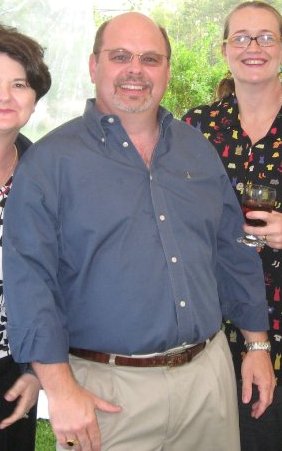
Well, it’s author photo time again. The one here on the left is the one that my publisher likes best. Truth be told, I’m not entirely sure that I agree. I don’t like the sloppiness of the shirt in the front. I wish the photographer had told me that the shirt was all bunched up.
The exciting part of the author photo this time around is that for Damage Control (July, 2012), my ugly mug will dominate the back cover of the book. I wish I were modest enough to say I didn’t care about that, but we all know each other too well for me to pull that off. I think it’s very cool.
Now, if I had my ‘druthers, the chosen pic would be the one in the sports coat.
I just think it’s a sleeker look. It also shows me in the first Armani jacket I have ever owned. Trust me, it was bought at a steep discount, but still. Armani! Note to the uninitiated: I learned a long time ago that while expensive clothes are, well, expensive, they also fit better and last longer.
For me, though, this particular author shoot is a milestone event for me. As you read this post, I will have officially crossed the one-year mark for having kept off the fifty pounds that I lost. Not to get all sappy, but in May of 2010, I had emergency gallbladder surgery that didn’t go entirely well, but left me alive. I didn’t enjoy looking mortality in the eye. On the day I left the hospital, I vowed to my wife, Joy, that I would take life’s warning shot for what it was, and change my gluttonous ways.
I understand that no one is more annoying than the recent convert who presumes to preach to others. I, too, remember that moment when Oprah celebrated her weight loss by rolling a wagon full of animal fat onto the stage to show what a wonderful thing she’d done, only to apply all of that fat back to her waistline within a year or so. Having been prone to weight issues my entire life (I’ve been way more self conscious of my profile than I ever was of my hair line), I know better than to boast, because I know that I could backslide anytime. Still, it’s a good sign that I like vegetables now, and that they don’t have to be fried for me to get them down.
Does it help a weight loss regimen to spend a few months barfing up food that annoyed your gallbaldder? You betcha. It’s God’s ultimate diet plan, and I credit Him with half of the fifty pounds. The rest of it, though, is on me, and I’m proud of it.
My pride and narcissism aside, let’s turn this into a discussion about books. Do author photos matter to you when it comes time to buy a book?
Does the fact that Bob Crais looks like a friggin’ movie star make you more likely to buy his books than if he were, you know, more Gilstrapian? Does putting an author’s mug on the outside of the cover where it can be seen by the casual observer make any difference at all? Or is book buying really about the quality of the writing?
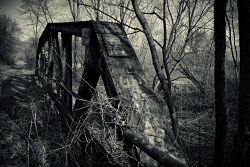
There’s a Story in Every Picture – Come Tell Us Yours
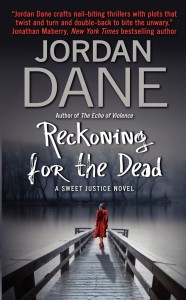
By Jordan Dane

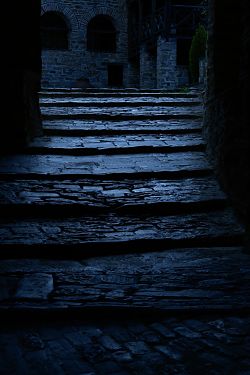
The Dungeon – The Stuff of Nightmares
There’s definitely a story here. Please, no booking photos.
Book Giveaways
As Writers, we want to get our books into the hands of as many readers as possible. One of the easiest ways to do this is to give away books for free. Here is a sampling of sites that promote giveaways plus some other suggestions.
Goodreads: http://www.goodreads.com/ Click on Visit your Dashboard, then scroll down to where it says Giveaways. Note that your book must be available on Amazon before you’re allowed to list it or it’ll deny your request and say your book doesn’t match anything in their database.
International Thriller Writers: You have to be a member to offer a giveaway. http://thrillerwriters.org/
Library Thing: http://www.librarything.com/er/giveaway/list
Or scroll down right column and click on Member Giveaways, then sign up to participate in the program
MWA: http://mysterywriters.org/ Mystery Writers of America offers monthly reader book giveaways. You must be a member to participate as an author and donate your book.
Who else should you consider?
- Your Service People
Give your book as a holiday gift to people who serve you, i.e. the hairdresser, doctor, dentist, accountant, etc. Include a chocolate treat or Starbucks gift card with a nice coffee mug.
- Speaker Engagements
When you give a talk, give out a book or two to folks who ask questions or for door prizes.
- Key Niche Market People
Send a free copy of your book to key people in your niche market along with a cover letter explaining why your book matters to them
- Book Club Leaders
If you can find book club leaders who are willing to accept ARCs, and you have enough to spare, you might see if you can interest them in reading your book and recommending it to their group.
Giveaways are fine when you receive author’s copies from your publisher but not so cost effective when you have to pay for a POD book yourself, so economics may not always make this a feasible tactic. However, even a free ebook edition will be welcome by many readers.
Contests are another way for you to offer your book to a lucky reader. As an example, often I will offer a signed book from my collection to a blog commenter during a certain month. I use the Random Integer Generator at http://www.random.org/integers/ to pick the winning numbers.
**Chance to win a free book! Leave a comment on this blog, and I will enter your name into a drawing for a free signed book of your choice from my collection of fifteen novels (if available). Winner will be announced as a final post on this site.
What other suggestions do you have for book giveaways? Does the format of your book make a difference? As a reader, do you prefer print or ebook editions?
FISHING FOR READERS: It’s all about the Hook
By: Kathleen Pickering http://www.kathleenpickering.com
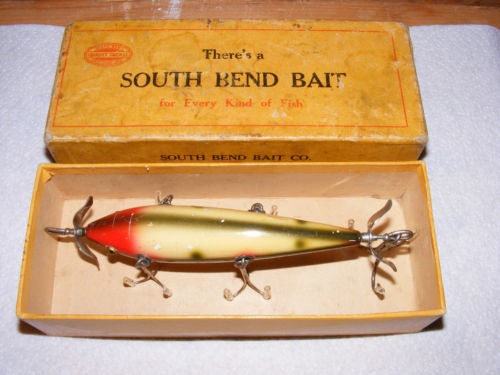
Some hooks look like this:
Other hooks look like this:
– I bared my balconet-supported breasts on the grocery line to see if they matched the bosoms the gossip magazine hanging on the rack featured as mine.
– Stella broke his arm with a thought; the sickening snap thrilling her like a deep, wet kiss.
– Leaning forward in their chairs for his next answer, the audience remained clueless to the fact that Rodger Heller no longer stood before them. (Future hooks by Kathleen Pickering)
Not just for fishing any more, hooks are considered the number one lure for catching readers.
Your first line—your highly polished bait–attracts readers and gets them to bite again and again, turning pages and creating fans.
While ancient fishing tackle and cave paintings suited small communities and worked for plying waters close to shore, today’s audiences are huge and are easily distracted by flashing media and super-speed technology. Today’s hooks, although still the ultimate writer-tackle of choice, must be sharper than ever.
Hooks–so many types! Of the various suggested techniques, I’ve listed my five favorite hooks below.
1. Three-Pronged Hook. This is a wonderful approach using three sentences to pull the reader deeper into the story.
Here are three, expertly crafted Three-Pronged Hooks:
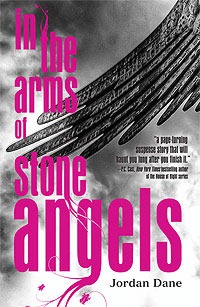
“I sleep with the dead. I don’t remember the first time I did it and try not to think about why. It’s just something I do.” (In the Arms of Stone Angels, by Jordan Dane)
Or:
“Two Whom It May Concern: My name is Wilfred Leland James and this is my confession. In June of 1922 I murdered my wife, Arlette Christina Winters James, and hid her body by tupping it down an old well. My son, Henry Freeman James aided me in this crime, although at 14 he was not responsible; I cozened him into it, playing upon his fears and beating down his quite normal objections over a period of 2 months.” (Full Dark, No Stars by Stephen King)
Or:
“The boy stood naked in the middle of the road. Sam Hall’s headlights caught him there, frozen in position, like a deer. He was covered in something slick and it dripped down his flesh.” (The Evil Inside, by Heather Graham)
Makes you want to read more, yes? You’ll also see that expertly composed hooks manage to combine techniques to create a masterful atmosphere. With hooks created by the guest authors I’ve featured here today, if readers were fish, they’d be jumping into the boat.
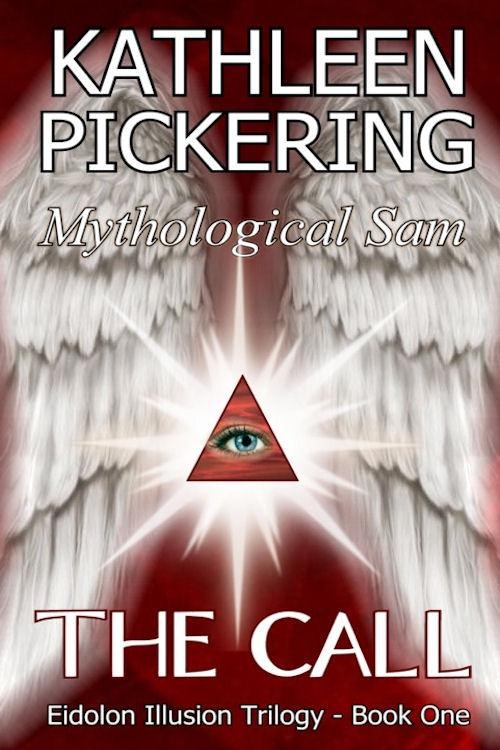
2. Startle Hooks. These hooks capture audiences quickly because the readers can’t quite believe what they’ve just read (like those hooks above). Folks will keep reading to discover what is really going on. Another example, and shameless plug, is in Mythological Sam-The Call, where Sam Wilson starts the first chapter with a surreal visual:
"I steer around the bend and my breath catches in my throat. A hideous, mythological hydra suspends across the bay, clawing each shore with twin, snarling heads straining towards the sky." (Mythological Sam-The Call by Kathleen Pickering.
Couldn’t help but include myself here, especially in such good company, but I hope you’ll agree that no normal dude driving along the road is going to see a snarling, mythological beast where a bridge is supposed to be. I’d like to think the startle factor will keep the audience reading to learn what’s really happening.
3. Describe a personality and elicit emotion. See how a master handles this one:
“Myron lay sprawled next to a knee-knockingly gorgeous brunette clad only in a Class-B-felony bikini, a tropical drink sans umbrella in one hand, the aqua clear Caribbean water lapping at his feet, the sand a dazzling white powder, the sky a pure blue that could only be God’s blank canvas, the sun as soothing and rich as a Swedish masseur with a snifter of cognac, and he was intensely miserable.” (The Final Detail, by Harlan Coben).
Superbly done. (Applauding from my chair!) This hook flashes Myron as a law enforcer of high caliber who knows danger, attracts sexy women, lives life like a hedonist and is bored out of his gourd, eliciting both envy and concern from the reader over a intriguing personality. All done in one sentence. Amazing.
4. Establish a Setting. Mr. Coben also combines setting into the above hook, so I will cite the same quote. While establishing a setting is a gentler hook, when professionally cast as Coben has done, the results reel readers in hook, line and sinker. (I just know you were waiting for me to use that cliché!)
5. Introduce the Main Character. This hook is most effective when working with character driven plots, especially if the author is establishing a series with a particular character. Here, F. Paul Wilson’s character, Repairman Jack, has developed a cult-like following by portraying a darkly dangerous Jack with a quirky yet endearing, under-the-radar life style.
"Jack looked around the front room of his apartment and figured he was either going to have to move to a bigger place, or stop buying stuff. He had nowhere to put his new Daddy Warbucks lamp." (Conspiracies – Repairman Jack Series, by F. Paul Wilson)
Paul told me Repairman Jack was only supposed to be a few books. Instead, Jack’s huge success spawned fifteen Repairman Jack novels. Paul recently released a Repairman Jack young adult series to explain Jack’s formative years. Yes, indeed. Dr. Wilson must own a pretty snazzy tackle box to hook such a huge fan base.
So of the various techniques for creating hooks, including use of dialogue, and introducing conflict and/or problems, these are my top five picks. What are your hooks of choice? Feel free to give examples. I’ll check back later because I’m off to bait another hook. I’m going deep sea fishing, this time!
The Big Apple
I’m off to New York today to attend a friend’s 10th wedding anniversary party and to see my agent. I’ll be back online (I hope) next week. In the meantime, any pearls of wisdom (?) – I am saying ‘a few words’ at the anniversary/renewal of vows ceremony and hope not to sound too soppy, sentimental or dull. Any advice??
An Open Letter to Traditional Publishing
James Scott Bell
Twitter.com/jamesscottbell
The Zombification of Miller
John Ramsey Miller
I’ve been reading a lot of Zombie books lately, and I’m not truly remorseful. A guilty pleasure. There are so many, and so many authors writing in that horror sub-genre write great books indeed. Damn it, people just like Zombie hoards. It seems to me that before NIGHT OF THE LIVING DEAD, Zombies were unfortunate people brought back to life by a Voodooie priest to become a slave of some sort. Usually there was a secretish herby drug involved that accomplished this and (supposedly) there have been actual cases of Caribbean-based people who were once dead, and had no memory of their prior existence. Whatever. But the point is (as far as I know) they didn’t spend their time above ground, looking to eat flesh and brains until John Carpenter’s low-budget Chittlin’ yard party outside the old farmhouse near Pittsburgh.
James Scott Bell’s Zombie lawyer, Mallory, breaks the mold, and it’s an hilarious book. A Vampire’s trial held at night is a hoot I know he thought his book through, and made his zombie more realistic than most authors writing about Zombies. But his book is comedy and not horror so much.
Each Zombie book, like the Vampire ones, is different but shares certain similarities. There are lots and lots, but I’ll list a few.
1) Some sort of virus (celestial based or scientific experiment gone bad) gives the dead their locomotion fuel
2) The physical sharing Zombie Juice, or the airborne Zumbo-dust that covers the world, makes you become one upon dying
3) Being Zombified cuts IQ toward single digits. They can move around mostly in a shuffle, but can’t open doors, or use ladders, although steps are not a problem.
In some of these books Zombies learn tricks like opening doors and even setting up ambushes.
4) only opening the skull and scattering brains stops the things.
5) They do not respect old relationships and will eat their immediate family as soon as they’ll eat a politician
6) They begin to rot out and decay which adversely affects their appearance and gives them an unpleasant odor
7) They can walk if they have retained their legs, or crawl if legless, but wheelchairs are too complex to operate. If immobile, a zombie head can lie waiting like a rock until an ankle or a finger finds its way into its mouth.
8) All they think about is eating flesh and or brains
9) They have a keen sense of smell, see and hear well above the average living human
10) They often repeat old habits like going home to eat their friends and family, or go to the mall
10) They tend to gang up
11) The children zombies are usually faster moving than the adults
12) They coexist peacefully until preying
So this got me to thinking about how much disbelief I should suspend. I was asking a Chiropractor the other day how if tissue and muscle was rotting normally, how long could a Zombie walk around before critical disconnection and failure of the ability to locomote. If they can “live” just fine for years without eating, why do they go to so much trouble trying to eat something they can’t digest or pass? He said, “None of it is possible.” He wasn’t willing to theorize. I can believe all of it in a well-written story, but I do have questions galore that I often wonder how the writer can deal with. Bodies decay to bones, which are connected by living tissue and not even a reanimated brain can make tissue regenerate.
I think people are so into Zombie books because it appears society could degenerate and the institutions that keep us safe, break down. When anarchy is the norm, the strong will try to subjugate the weaker members of the non-society. I suppose that is a big factor in the surge of popularity. Plus, I think people just like seeing Zombies get it, more than they do ghouls or politicians.
If you want to read two very good series, try Stephen Knight’s GATHERING DEAD series, or Joseph Talluto’s White Flag of the Dead series.
What’s your guilty pleasure in novels?
Reader Baggage
By John Gilstrap
A couple of weeks ago, I received an email from a “fan” who loves my books, but is deeply annoyed that I allow my “left wing liberal politics” invade my work. I’ll give those who know me well a moment to stop laughing.
As evidence of my “politically correct bullshit” he notes that in Threat Warning, my fictional terrorists are “God fearing Christian men and women” when “we all know” that the true terrorists are Muslims. In my reply, I ignored the substance–including his assessment of who my fictional terrorist truly are–and thanked him for reading my work. Some conversations are just not worth having.
For the record, I work very hard to keep politics out of my writing. It just doesn’t belong. I’ll leave that subgenre of the thriller market to Brad Thor and Barry Eisler—between the two of them, the ends of the political spectrum are well covered. Still, I guess it makes sense that because Jonathan Grave is a former Delta operator and he uses a lot of weaponry, people might assume that he’s a right-winger, but that would be based only on the clichéd assumptions made about groups of people. Truth be told, I don’t think that Digger would have much time for any politician.
This email got me thinking, though, about how much of our reading is informed by the baggage we bring to the material we choose. We’ll all give a second (or third or fourth) chance to a writer whose earlier work impressed us, but think about how hard it is to give that same break to the same author who everyone loves, but whose first effort you experienced was sort of meh.
And it’s not just true of books. I like just about everybody, but there are a few folks on my shit list whose email correspondence always seems snide or hurtful. I have to remind myself that it’s entirely possible—maybe likely—that no offense was intended, and that where there’s no intent, there’s no foul, right?
When I was in junior high, I read my first Great Novel: Lord of the Flies. I was a better than average student, and as I read it, I remember being so proud of myself for catching on to the social subtext—the symbolism—of the book. My cousin was a high school English teacher at the time, teaching Lord of the Flies to seniors. When he told me that the pig-killing scene had Oedipal overtones, I thought he was making it up. Even after he explained it, I didn’t get it. That’s because I was reading an adventure story while he was teaching literature.
In Threat Warning, I wrote a thriller that my fan apparently read as a political treatise. At a book signing years ago, a very enthusiastic fan lauded Nathan’s Run for its symbolic depiction of the plight of the American Indian. She meant it as a compliment and I took it as such. I never told her that American Indians never once entered my consciousness as I wrote the book.
I’ve come to the conclusion over the years that once my words are published, my opinion of what I meant to say has no more validity—perhaps even less validity—than the opinion of those who read the words through their own filters. That’s the nature of art in any form, I think. I get my shot when I create it; after that, it’s all up to the observer/consumer.
What do you think? If a book arouses in you an intense emotion, does it matter that it might never have been the author’s intention to do so? Do authors’ intentions for their own work matter at all after the book is published?