Thanksgiving Supper Rules for Social Networking

by Michelle Gagnon

Clare’s excellent post on Monday discussed what not to blog about. I thought I’d add an addendum to that, based on something I read recently about employers Googling prospective employees and checking their Twitter and Facebook feeds. It got me thinking about crafting an online persona, and how the list of “do’s” and “don’ts” is basically the same as our family’s Thanksgiving dinner table commandments.

I don’t know about you, but we have a wide and varied mix of relatives huddled around the turkey every year. There are aunts and uncles who define themselves as Tea Partiers, liberal cousins who spent a significant chunk of the past few months hunkering down at various Occupy demonstrations, and everything in between. To maintain the peace and insure that stuffing doesn’t start flying across the table, we established these groundrules:

  1. No discussion of politics. This includes snide and offhand references, thinly veiled metaphors, and oblique asides. I realize that at times, this can be a tough rule to follow. After all, we are in the middle of a run up to a major election, and the national discourse has become increasingly polarized. But based on past experience, finding a middle ground for a free exchange of ideas is challenging when everyone has had a couple tumblers full of Aunt Millicent’s Magic Punch. Not everyone might agree with me on this, but I feel the same way about posting on social networks–staking out a soapbox can lose readers, which as an author is not a good thing. Even if you aren’t a writer, do you really want a future boss to reconsider hiring you based on the fact that your political views diverge? If you just can’t resist reposting that link to the latest outrageous act by Congress/police/protestors, do what I do and set up a separate, private Facebook account that is limited to people you actually know and trust (of course, those constantly changing privacy settings still make this a potential minefield, so proceed with caution).
  2. Ditto for religion. I respect the right of everyone sharing my cranberry sauce to worship whom or whatever they want. But things tend to get sticky (no pun intended) when you try to explain to Grandpa that he’s been wrong all these years, and the true savior is Lord Zod. Again, this is the sort of thing you can put on a private page, if you feel so inclined. But this is another hot button issue that could alienate more followers than you end up gaining.
  3. Swearing. Don’t do it. I have a friend (in real life, and on Facebook and Twitter) who has been known to put sailors and truckers to shame under the right circumstances. This same friend will instant unfollow anyone who uses offensive language in a post. There’s an impact to words in print that shouldn’t be underrated. And really, it’s generally unnecessary. You can always resort to $%#^&.
  4. Embarrassing Stories. The worst part of social networking is that these can be accompanied by actual photographic evidence of said embarrassing moments, which is always the kiss of death. So if you wouldn’t tell your five year old nephew about spending the weekend passed out on the floor of a train station, why would you broadcast it to the world?
  5. Cats. Okay, this one isn’t necessarily on our Thanksgiving tablets, but I’ve learned the hard way that any negative comment about felines will result in an instant loss of roughly 5% of your followers. It’s true–try it if you don’t believe me. So I call this the “Rita Mae Brown” rule. Be nice to the kitties online. You don’t need to go so far as posting adorable photos/videos of them, but it’s also a bad idea to share one of a cat falling out a window.

In a world where we live increasing portions of our private lives online, the line between what gets shared and what doesn’t has become blurred. It’s remarkable that some people tell utter strangers tidbits about their inner thoughts and prejudices that they probably wouldn’t share with close friends. Many people mistakenly believe in the illusion of anonymity, assuming that a post about the awful mistake you made last night will soon be forgotten. The truth is, years from now that same nugget could be unearthed, with embarrassing consequences.

Just for fun, here’s Stephen Colbert’s take on it. Happy Thanksgiving.
The Post-Book Blues

Everyone knows about post-partum depression, but how about the post-book blues? A writer works for months on a project. Momentum builds to the grand finale. And then poof, it’s all over. You’re done. Finished. Past the creative hurdle. What happens next?

What’s next is that you face reality, just like new parents who come home from the hospital with a squalling baby. Now it’s time to exert your parenting skills. For a writer, a manuscript is her baby. You polish your masterpiece, submit it, and then risk rejection, but you learn a lot along the way. Meanwhile, you begin to gather the research materials for the next story. It’s sort of like learning how to change a diaper and warm formula while already thinking about baby number two.

During this gap between writing projects, you can pay attention to bills, family members, and household issues that you’ve skirted while absorbed in your story. Dental cleaning? Check. Doctor visits? Check. Sort through files in home office? Check. Call for repair estimates? Check. If you have a day job, you can throw yourself into your work with renewed frenzy.

Is any of this fun? Nope. But you also have time to meet friends for lunch, to stroll in the park, to go shopping, or to do sports. Your mind is free to follow other pursuits. And yet as you go about your business, a yawning emptiness erupts. Where are those voices in your head? The characters who keep you company? The plot threads that invade your dreams?

When you can’t stand the silence any longer, the time has come to plant the seed for the next story or the next child, if you will. The joy of creation becomes impossible to deny.

So when you finish a book, how does it make you feel? Are you elated, relieved, or depressed?

SHARING GOOD NEWS: A Twit speaks on Tweets

By Kathleen Pickering  http://www.kathleenpickering.com

I’m calling myself a Twit because it took me so long to understand the REAL value of Tweeting. If there is a glimmer of a chance that I’m not alone in this, I’d like to share the value I’ve discovered, as well as offer tips I have found to enhance the Twitter experience.

Two very cool events have happened that I want to share. When I “tweeted” the first one, the proverbial light bulb finally illuminated in my marketing head on the enormous benefits of Twitter.

I tweeted this:

Just learned my 1st Super Romance WHERE IT BEGAN earned 4.5 Stars from RT: http://www.amazon.com/Where-Harlequin-Superromance-Kathleen-Pickering/dp/0373717547/ref=sr_1_4?ie=UTF8&qid=1317497566&sr=8-4

Of course, Twitter shortened the link automatically for me. For my mystery writing/reading friends, RT = Romantic Times Magazine.

Well guess what happened? Within an hour, incredible author notables (and I dare say friends or acquaintances) such as, F. Paul Wilson, Christina Dodd, Beth Ciotta, Allison Chase, Cynthia Thomason, and Mary Stella re-tweeted my announcement to their friends.

Let me say this: HOLY QUACAMOLE! Paul has almost 3000 followers, Christina Dodd enjoys the company of over 7000 friends. Talk about spreading the good news!

That means my message was received by an exponentially larger audience than my own. (Which sits at under 1000 friends and will hopefully grow as I become more active.)

So, for those of us who could use a suggestion . . . or seven . . . on how to enhance the Twitter experience, here’s what I’ve learned:

1. Short but Important: the first words you choose to post are critical to catching friends’ attention. I humbly submit, however, that as authors trained to “hook” a reader, that should be a comfortable task.

2. Less is More: If you saturate your channel with uninteresting material, folks will start passing over your Tweets rather than clicking to read more. Be INTERESTING with fewer tweets with links than over-posting babble. The more clicks per tweet you receive, the longer your Tweets stay alive.

3. Timing Counts: That being said, visibility goes a long way to receive attention for your messages. “Packaged” Tweets (bundled together at one time) are not as attractive as well-spaced notices. Folks are saying posting every 30 minutes to every hour, or once every 2-3 hours is optimal for business activity.

4. Keep Your Post Alive: An interesting Tweet with a clickable link to more information that is news worthy can stay alive for over three weeks if done correctly. What is correct you ask? First, it helps if you have a good friend base established (or begin one with an amazing first Tweet); Second, Tweets with links to websites, blogs, freebies and contests do very well.

Now, here are some FREE tools I discovered to enhance your Twitter experience:

A. Tweet Scheduling: There is a free application that helps you set up your Tweeting schedule of–don’t forget– compelling Tweets. Click here: It’s called, TIMELY.

B. Sharing Photos: Check out POSTEROUS as a free and easy means of uploading photos to your Tweets while keeping within the 140 character requirement.

C. Get More Followers: I find this link incredibly clever for earning more followers. Offer something for free (an e-book, a contest on your website, gift certificate, and interview, etc.) by getting Tweeters to repost your Tweet to their friends or on Facebook, etc. It’s a great way to amass an e-mail list as well as gaining Twitter friends. Check out CLOUD:FLOOD for more information.

So, this Twit has finally caught on the the Twitter experience. I’m hooked, now. Better late than never and really looking forward to more Twitter fun. I hope these tips help anyone out there who may have felt as awkward as I over not understanding Twitter.

Does anyone have any other Twitter tips they can share?

Oh, and, as for the second event I’d like to announce? You’ll have to wait for my next blog!

Hope your Tweeting week is grand!


What not to Blog About

by Clare Langley-Hawthorne

I came across a blog post by literary agent Rachelle Gardner on ‘what not to blog about‘ and it prompted me thinking about social media in the new age of publishing and what is and is not ‘off limits’.

Rachelle’s list of what authors should not blog about includes:
  • contract provisions (including advances, royalty rates etc.);
  • status of your manuscript being shopped;
  • unhappiness with your publisher, agent or publicist;
  • extreme social or political opinions; or
  • basically venting or ranting ad infinitum on pretty much anything:)
I think what should or should not be included in your blog depends on your aim and focus for blogging in the first place. At TKZ we pretty much focus on the craft of writing, the writing life, and the publishing industry. As such we tend to steer clear of political/religious or social discussions outside that (admittedly pretty wide) remit. I think one thing we all strive for is to appear professional about our writing and this is where I think Rachelle’s blog post provides a timely reminder to be careful about crossing the line when it comes to social media.

What do I mean by crossing the line? – Saying anything that might negatively impact your writing career. In this era of digital publishing the rules may be changing but the need to appear professional remains the same.

In addition to Rachelle’s list, I would also hesitate to disclose too much about your current WIP (apart from generalities), status of your discussions/contracts with an agent, or anything that your publisher may regard as confidential. In addition, I think authors need to be cautious about what material they self-publish when under contract (witness the controversy when Kiana Davenport lost her traditional deal after refusing to pull a self-published work). While it is fine to blog about the challenges of writing, it is also important not to appear negative or unprofessional or to disclose too much about particular people or publishers involved (after all, you never know who may be reading what you post…)

Now perhaps some of you think I am too cautious, but I worry that there are so many mechanisms for authors and readers to reach a ‘personal connection’ – from blogging to Facebook and Twitter – that sometimes the line between personal and professional gets blurred. Rachelle’s blog post was a great reminder of this for me.

So what do you think? What things do you think authors should not blog about? Have you ever blogged, tweeted or posted on Facebook anything you later regretted?

How to Eat the Publishing Elephant

James Scott Bell
Twitter.com/jamesscottbell

The elephant is our most versatile bestial metaphor. 
We sometimes refer to the big issue everyone knows is there (but no one is talking about) as “the elephant in the room.” Back in November of 2008, in conference rooms at publishing houses throughout New York, the elephant in the room was the Amazon Kindle. Was this device going to change publishing as we know it? Maybe no one wanted to talk about it back then, until the elephant broke out of the room and started stampeding all over midtown Manhattan.
Then there’s the story of the three blind men coming up to an elephant. One touches the tail, another the leg, the other the trunk. Each man assumes the elephant is something other than it is, because he has only one bit of data. This we can liken to those who think they know everything there is about publishing (or anything else, for that matter) when they only have experience with one part of it.
But the metaphor I want to work with today is the question, How do you eat an elephant? The answer, of course, is “one bite at a time.”
This applies to the world of successful self-publishing. Note the key word successful.It’s easy to self-publish (too easy, some would say). But to be successful at it is an entirely different matter.
A lot of people are expecting to eat the whole elephant in one bite. That’s because some of the early adopters did that. Joe Konrath, Amanda Hocking, John Locke, Blake Crouch – these are some of the names that jumped in early and did some heavy munching. Barry Eisler famously walked away from a traditional print deal and went E to feast on elephant. Bob Mayer, king of the backlist, consumed several elephants earlier this year when releasing all those titles close to one another. 
But these are the notable exceptions to what is now the undeniable rule: the vast majority of writers will not get anywhere near rapid success. And if they expect to, they will be sorely disappointed and may even chuck the whole publishing thing.
Which is fine. We need less content, not more, because most of the two million self-published offerings out there are, well. . . let’s just say the bulk of it pretty much affirms Sturgeon’s Law.
But if you want to be successful as an indie author, you can be – if you eat the elephant one bite at a time and chew thoroughly.
By “success” I mean making a profit. You can make a profit from your self-publishing if you do certain things and do them right (like knowing how to write. That really helps). How large a profit it is impossible to say up front. It may just be Starbuck’s money. Everyone’s mileage is going to vary. But here’s the rub: If you keep taking more and more bites, and do so carefully and with purpose, you have a chance to make more profit. That’s called “business.” If you want to be a professional writer, you are essentially running a small enterprise. Your job: provide value.
My business includes a traditional arm where I partner with publishers like Kensington and Writer’s Digest Books. It also now includes an indie division. I have taken a few bites at the indie elephant, wanting to learn as I go and see what works. I’ve studied the field, too. And while there are many things one needs to do well, the unalterable foundation is quality + volume. Thus, the elephant wisdom that has become evident over this last crazy year of indie publishing is: if you want to be successful at ityou need to be in it for the long haul, and by that I mean the rest of your life.
Let me repeat: the rest of your life.
If you are truly a writer, that won’t be difficult for you. But if you are just in this to try to make some easy lettuce, it will be. And should be.
A real writer writes, wants to write, would do it even if the prospect of making killer money was nil. Storytellers tell stories, which is why I plan to be found dead at my computer, my stone cold fingers over the keyboard. I only hope I have just typed “The End.” Or better yet, clicked “Upload.”

I will keep on biting the elephant. And when I’m old and toothless, I’ll gum the elephant. Because a real writer never stops.
Happy eating, friends. 

Tis That Season Again


John Ramsey Miller

Tomorrow (that would be 2 days ago in Blog time) around three AM I am going to drive 11 hours into the much deeper South for a weekend with my old hunting buddies. Opening Day in Mississippi. I’ve worked my enjoyment of hunting into several of my books because it is a part of my life that is just plain getting back to my basic nature. I now the Bambi lovers (I actually am one) are cringing, but only those who have never done it before. I’m not going to say deer are happier dead, but I am happier when I have a freezer full of venison. It’s the other red meat.

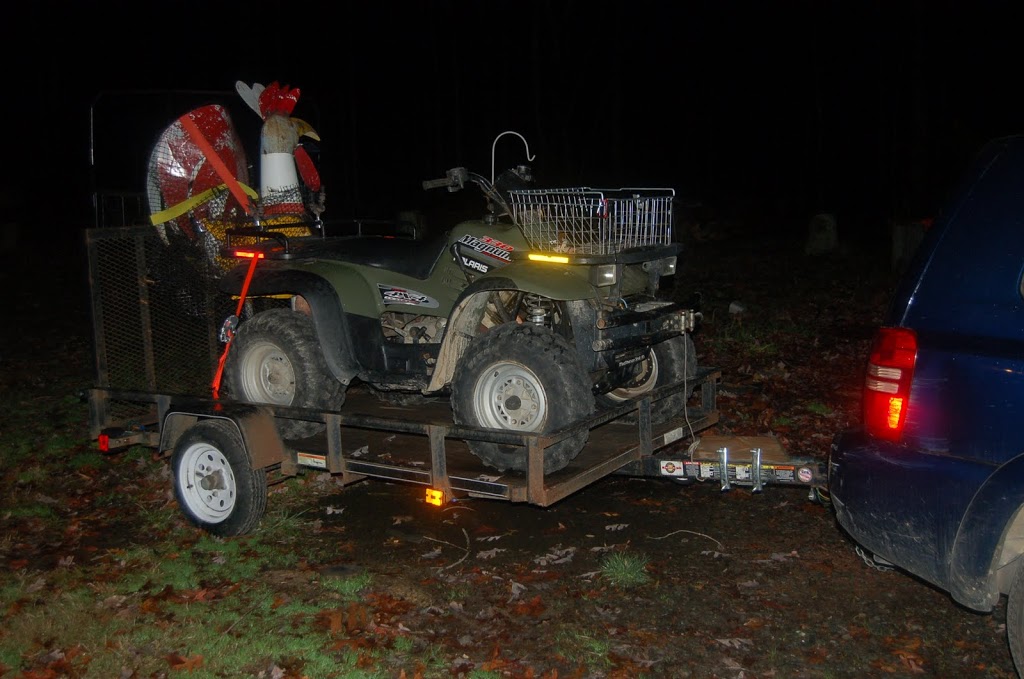
A few days before I go, I start getting things together. Yesterday I rewired my trailer with new wires and lights. During the year I use the trailer around the place and beat off the lights. On the trailer I have my four-wheeler for tough terrain, and to keep from walking. Also I put the deer I harvest (kinder image than knock down) on the back. On the trailer I also have a five-foot tall galvanized, three-dimensional steel rooster which I will drop off in Nashville. Long boring yard-art story.

The best part of the annual hunt is that I get to spend quality time with my old friends. There is wine and scotch involved. We tell stories around the fire, and then go inside.

I don’t many authors who hunt, but the time I spend sitting alone in the deep woods is something I can’t imagine living without. It charges my batteries. I have talked with both my editor and agent while I was watching deer graze. I do write in my head as I sit in my stand.

Shooting is no challenge. I’m a good shot and I go for a clean shot or I don’t shoot. I eat what I shoot and that is why I only hunt deer.

Anti-hunters have all sorts of reasons why I should let the slaughterhouses handle this end of the food chain. I won’t get into why that is worse than taking an animal that is in its environment when it goes and not in a line of panicked beef that… Remind me to tell you the story about visiting a commercial slaughterhouse when I was a cub scout.

So, what I’m saying here is I find my trips invigorating, stimulating, and when you read this I’ll be in one of my stands watching and listening and living my life. No apologies offered.

Averting Disaster

by John Gilstrap


Okay, Damage Control (July, 2012) is finished and submitted and the publisher is happy.  Now I can come clean:


By way of background, my Jonathan Grave books are slated as the lead titles for July in their respective years of publication.  The first week of July, to be specific, chosen to coincide with ThrillerFest.  Being lead title is a big deal because of the horsepower that get focused behind the book.  Recognizing that there’s only one (maybe a couple) lead title per genre per publisher per month, and given that there are only 12 months in a year, it’s a position worth earning, and once earned, it’s definitely worth defending.


In order to make that July 1 slot, I have to submit my manuscripts by September 15.  That might seem like a lot of lead time, but it’s really not, given all that goes into the production and marketing of a book.  If you miss the deadline, you imperil your spot on the list.


Okay, now for the living nightmare.


In mid-July (the week after I returned from ThrillerFest), I realized that I had painted myself into a corner with Damage Control.  I had too many characters, the story was rambling.  I’d lost control of the damn thing.  I’d written a little over 300 pages that just weren’t going to work, and I faced the reality that is no less daunting for a writer than it must be for a surgeon: If the patient (book) was going to live, it would need serious surgery.  Thus, on or about July 20, with less than two months to go before my deadline, I amputated over 200 pages.  I essentially took myself back to the end of the opening sequence, and rebuilt.  Understand that my manuscripts run 400-430 pages.


I told my editor that I was going to blow my deadline, but “not by that much.”  I didn’t have any idea how I could make even an extended deadline, but there was no way I was going to lose my spot in the catalog.  Too many people work too hard on my behalf to let them down that way.  I’m a professional, and professionals plow through to the end.


When failure is not an option, success is guaranteed.


Meanwhile, my Big Boy job had me on the road nonstop, and Joy’s dad’s health started declining rapidly.  When it rains, it pours, right?  Work days grew to be eighteen hours long and weekends disappeared entirely.  If I wasn’t busting my ass for my day job, I was busting my ass for the night job.  Sleep was a five- to six-hour per night luxury.


I’ve never written so hard in my life–or under such pressure.  But you know what?  I got it done.  And, if you ask me, it’s really, really good.  From mid-late July till October 17 when I submitted the manuscript, I wrote, rewrote and polished 315 manuscript pages.  I don’t know how I did it, and I pray that I’ll never have to do it again.


If there’s a lesson here beyond the old standby of don’t-let-this-happen-to-you, it’s that any obstacle can be overcome if you want it badly enough.  When you’re caught in a crack, the last thing to let go of is your professionalism.  Friends will wait for you, family will understand.  Employers are paying for an honest day’s labor, and you owe them that and more.  With what’s left, you turn to the next obligation in line.


On a personal level, I learned an invaluable lesson that is reflected in one other accomplishment: Here it is mid-November, facing another September 15 deadline in 2012, and I’ve already started the second chapter of the next book.  My goal (and it’s a soft goal, not a sword worth falling onto), is to have this one finished by June 15.  I think I’d like to try to enjoy a season of book conferences without staring down the maw of a deadline.


We’ll see . . .

ADR3NALIN3

I wanted to share with TKZ that Michelle Gagnon and I will be launching a new group blog geared for thriller authors writing dark YA. Our blog will be called ADR3NALIN3. I hope you’ll check it out at this LINK.


ADR3NALIN3 is the brainchild of a group of authors who write the dark side of middle grade and teen fiction. We are far from cozy and we don’t do warm and fuzzy. We want to make your skin crawl and your heart beat faster as you venture deeper into the dark recesses of our imaginations. Reality can be overrated or just plain scary. We offer you a savory feast of chilling contemporary thrillers, eerie mysteries, fantasies from your worst nightmares, and our bent and twisted take on the paranormal.


Michelle’s new series sounds absolutely fantastic—dark & delicious. Here’s a sneak peek.

Don’t Turn Around (Series-Book #1)
HarperTeen, TBA 2012


Sixteen-year-old Noa has been victimized by the system ever since her parents died. Now living off the grid and trusting no one, she uses computer hacking skills to stay safely anonymous and alone. But when she wakes up on a table in an empty warehouse with an IV in her arm and no memory of how she got there, Noa starts to wish she had someone on her side.


Enter Peter Gregory, A rich kid and the leader of a hacker alliance. Peter needs people with Noa¹s talents on his team. Especially after a shady corporation called AMRF threatens his life in no uncertain terms.


But what Noa and Peter don¹t know is that she holds the key to a terrible secret, and there are those who¹d stop at nothing to silence her for good.


Fans of THE GIRL WITH THE DRAGON TATTOO will devour the story of Noa, a teen soulmate to Lisbeth Sander.

 And another of our members launches a book tour this week, Carol Tanzman. Here’s a sneak peek of her book:


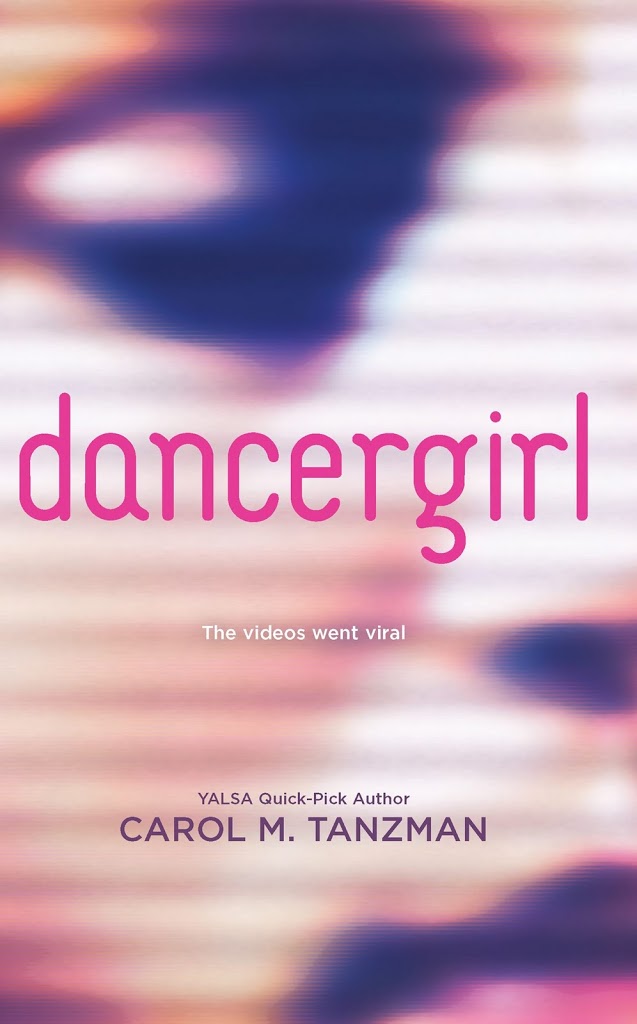
Dancergirl

by Carol Tanzman

Harlequin Teen, Nov 2011


Part mystery and part romance in this digital age where teens put their lives online, dancergirl (Harlequin Teen) will grab you from the first page and won’t let you go until the thrilling conclusion. When someone secretly films 16 year old Ali Ruffino dancing at a concert and posts the video online, things start to get out of control as the dancergirl craze takes on a life of its own. Her admirers want more, the haters hate, her best friend Jacy—even he’s acting weird. And if someone watching has their way, Ali could lose way more than just her love of dancing. She could lose her life.

We are officially starting active posts during the first week of January 2012 but since we have two virtual book tours starting in Nov & Dec, we are getting the word out earlier. I’ve featured two of our authors, but visit our site to see who else has joined us. We also hope to promote the genre with featured guests. I hope you’ll follow our new blog and on twitter at @ADR3NALIN3BOOKS.

Once we get going, what kinds of posts would you like to see on ADR3NALIN3? What have you liked most about following TKZ?

The trashing of a guerrilla library

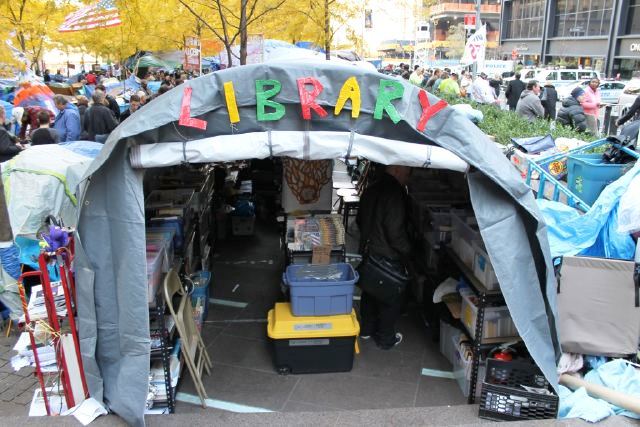
I woke up this morning to the news that police in New York have trashed a library. Literally.

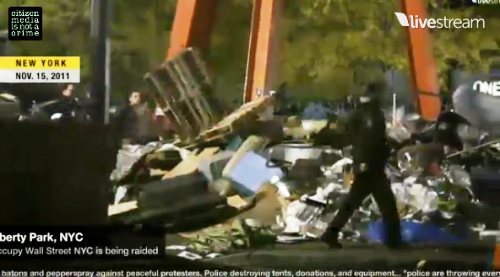
According a firestorm of tweets and reports that are starting to emerge, early this morning, NYPD swooped down on the Occupy Wall Street camp in Zuccotti Park, routed the protesters, and tossed everything in dumpsters–including 5,500 books that had been donated to a pop-up guerrilla library.

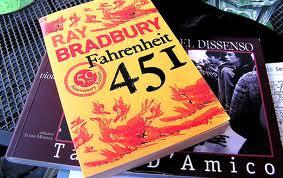
I know that many people dismiss the OWS protesters, or reject their tactics, or simply think they’re silly. But the wanton  trashing of thousands of books by police is a scene I never thought I’d see in America.  In his book FAHRENHEIT 451, Ray Bradbury’s vision of the future was right on the money.

The destruction of the little “People’s Library” is bound to become a symbol of the squelching of dissent in our society, and a rallying cry for new Occupy protests.

I just wonder if a copy of FAHRENHEIT 451 is sitting in that trash dumpster in New York City.

We can’t say ol’ Ray didn’t try to warn us.

Update (5:40 p.m. ET): A recent Tweet from the NY mayor’s office indicates that the OWS library books are actually being detained in a Sanitation Dept. garage. They even posted a “proof of life” photo, so people would know that at least some of the books are alive and unharmed.

Good to know.

NaNoWriMo Writing Tips

by Clare Langley-Hawthorne

So it’s that time of year again – National Novel Writing Month (NaNoWriMo) – and I’ve been looking over some of the tips and advice metered out to those willing to give it a go. I thought today I would highlight five of the more useful ones I’ve seen and get feedback on what advice other people have found helpful – because most of this is just as applicable to writers surging ahead with NaNoWriMo as to those of us plodding along at our own pace:)

1. Remove all distractions that clutter both your mind and your desk.

I think one of the hardest things for most aspiring writers to do is to make time to write – and once you have committed to doing this you really have to remove all the things that provide the temptation to procrastinate, get distracted or avoid writing. During NaNoWriMo I notice lots of tips that focus on preparation and inspiration but I think it’s also important not to get caught up in mind maps, name generators, role playing or brainstorming to the point where you aren’t actually writing!

2. Learn from your mistakes (and you’ll make them)

Everyone writes crappy first drafts, includes a few cliches and loses the plot at some time or other. Give yourself permission to make mistakes and turn off that ‘inner editor’ until the first draft is done. I like one of last year’s tips by author Elif Batuman who said ‘everyone has a certain amount of bad writing to get out of their system’ – so get it out!

3. Raise questions early, resolve later on

One of the dullest things you can do is inundate your readers with too much information/answers too early on. You need to entice and intrigue and the best way to do this is by raising questions early on in the book so readers have to keep reading to find out the answers. Of course, this has to be balanced with a well grounded narrative structure, voice, characters and sense of place otherwise readers will merely wonder what the hell is going on:)

3. Constantly raise the stakes

I’ve heard Donald Maas talk about this at writing conferences in terms of making a ‘bigger’ book in which the stakes are the highest they can possibly be for the characters you have developed. A good writer constantly raises the stakes -in each scene and each chapter – to really create a scenario that truly grips the reader. It also helps provide great opportunities for character development – there’s nothing like seeing a character react to a life and death situation to reveal what really makes them tick!

4. Keep the momentum going

Everyone gets stuck at some point in the writing process – whether it be finding inspiration, nutting out a tricky plot question or just trying to find words that don’t totally suck! NaNoWriMo strikes me as the perfect laboratory for exploring all the techniques you need to overcome writer’s inertia. For me inspiration usually comes from rereading the last few chapters so I can get back into the flow or, failing that, take the dog for a walk and free up my imagination. The key is not to spend so much time reinvigorating yourself that you don’t actually sit back down again and write!

5. Don’t Finish

I saw this on GalleyCat’s list from last year and thought this was great advice – “Don’t finish, make it the start of something.”

NaNoWriMo is a great jumping off point for people to make great headway on their novel but then the real hard work of editing and polishing begins. I like to think that for many aspiring writers NaNoWriMo is the start of a beautiful long term relationship with writing rather than just a mere fling:)

So are you doing NaNoWriMo this month? If so, how is it going? What piece of advice has worked best for you?