Thank You All

By John Gilstrap

I’m taking the occasion of this final Killzone post before our Holiday Hiatus to say some thank-yous.

To the readers of Suspense Magazine for naming my novel Threat Warning the Best Book of 2011.

To my colleagues here at TKZ for enriching my life–in some cases with their friendship, but in all cases with well-considered insights into a craft that is always worthwhile, and a business that makes less and less sense.  The quality of discussion in this corner of cyberspace is second to none.

To my wife, Joy, for making every day special.  Her boundless patience allows me to pursue two full-time careers.

To my son, Chris, for his wisdom, his knowledge of all things electronic (and a never-grudging willingness to train his untrainable dad on such things), his love of books and music and movies, and his unfailingly good character.

To my publishing team, who together make Joy’s boundless patience seem like a reasonably good idea.  My agent, Anne Hawkins, makes everything else happen.  Because of her, I get to work with Micheala Hamilton, the single best editor I’ve ever encountered (and I’ve worked with quite a few).  But she doesn’t toil alone.  The rest of the team–Adeola Saul, Alexandra Nicolajsen, Laurie Parkin, Steve Zacharius and the entire sales team–show old school commitment to embracing new developments in the industry.

To the authors in my monthly critique group–Donna Andrews, Ellen Crosby, Alan Orloff and Art Taylor–for at last making it easy for me to share my works in progress with others.

To my friends and colleagues at the Institute of Scrap Recycling Industries–my Big Boy job–for granting me a venue to allow me to exercise a completely different part of my brain.  Special thanks go to Robin Wiener, Anne Marie Horvath, Joe Bateman, Commodor Hall, Kent Kiser, Joe Pickard, Chuck Carr and Ed Szrom.

To dear friends because they’re dear friends.  Lists are dangerous because they can’t possibly be all-inclusive, but I offer a special nod to Bob and Bert Garino, Pat Barney and Sam Shockley, John and Susan Miller, and Jeff Deaver.

Finally, and most importantly, to readers everywhere.  I love that you read and respond to my posts here on TKZ, and I love that you read my books and provide me feedback.  That ability to communicate directly with readers is one of the great pleasures of the 21st Century.

I wish all of you–all of us–a wonderful Holiday Season, and a terrific 2012.  May none of us gain more than ten pounds in the next two weeks.

Seeya next year!

Perseverance

By Jordan Dane

For my last post in 2011 with TKZ, I found a Wall Street Journal article on self-publishing that offered something a little different. We’ve all heard the big blockbuster sales of a precious few who have seen sales of more than a million books, but who can really relate to that? We can all hope lightning will strike and we’ll be the one benefiting from that good fortune, but I picked out the elements of this article that addressed the digital trend, growing successes that have not gotten much highlight, and what one author—Darcie Chan—did to grow her self-pub sales.


Many have heard about Amanda Hocking and John Locke’s stories of hitting it big. These stories represent a miniscule fraction of independent authors, but success is still being found. According to Amazon, 30 authors have sold in excess of 100,000 copies of their books through Amazon’s self-pub Kindle program and a dozen more have seen sales of 200,000+ — a program started in 2007 that allows authors to upload their own books, set prices, and publish in multiple languages. Barnes & Noble have their own version for their Nook readers.


Self-published books have fueled the surge in digital sales from $287 million in 2009 to $878 million in 2010, according to the Association of American Publishers. Analysts speculate that e-book sales will pass $2 billion in 2013. We’ve all seen how the publishing industry (authors, agents, publishers, stores, etc) are scrambling to figure out how to capitalize on this exploding trend.


So here is one author’s story about how she stuck to her dream of writing a book she believed in and took the plunge.


It took Darcie Chan two and a half years to write her book during the hours she wasn’t working her day job of drafting environmental legislation. After getting feedback from friends and family, she sent queries to more than 100 agents, but since it was a cross genre story (with elements of romance, suspense and mystery), it didn’t fit neatly on retail book shelves and got rejected as a “tough sell.” She eventually landed an agent who submitted her book to over a dozen publishers, they all rejected it for the same reason, so the book of her dreams landed in a drawer and Darcie got on with her life. FIVE YEARS LATER, she read about the rise in e-book sales and self-publishing and decided to do something about her dream. Here is what she did:


She made her own cover for THE MILL RIVER RECLUSE (about an agoraphobic philanthropist) from a photo her sister had taken of an old mansion and added Photoshop graphic elements to make it look gloomy.


She uploaded her book into the Amazon Kindle self-publishing program and sold a trickle of copies. A few weeks later, she loaded it onto Barnes & Noble, Smashwords, Apple’s iBookstore, Sony, and Kobo.


Her first royalty check was $39. That’s when she noticed that popular e-books were priced at $0.99 and immediately dropped her price from $2.99 to $0.99. (That cut her royalty percentage under Amazon rules from 70% on books priced at $2.99+ to 35% for novels priced below that threshold.) But sales picked up immediately for her and she found new readers who liked her book.


During the first month at her lower price, she sold 100 copies. She was thrilled with this, but by the end of June, her book got mentioned on a site called Ereader News Today, that posts tips for Kindle readers. Over the next two day period, she sold another 600 copies, giving her hope that she could drive her own sales.


She spent $1,000 on marketing, buying banner ads on websites and blogs devoted to Kindle readers and also bought a spot on Goodreads.com with its more than 6.6 million members.


She also learned that self-published authors could pay to have their book reviewed by some sites. She paid $35 for a review on IndieReader.com (who no longer offers paid reviews) and she paid $575 for an expedited review from Kirkus Reviews, a notable book review journal and website. (The Kirkus review service, launched in 2005, gives self-published authors the option to review privately if the review is negative. Darcie opted to have her book reviewed on Kirkus’s website and Kirkus called the novel “a comforting book about the random acts of kindness that hold communities together.” Darcie used quotes from the review and other reviews on Amazon and B&N for publicity purposes, to encourage more reviewers to try her book.


By July, she had sold more than 14,000 copies and got her noticed and featured on two of the biggest sites for e-book readers, which generated more sales. In August, she had sold more than 77,000 copies and had hit the New York Times and USA Today e-book bestsellers lists—and later she landed on the Wall Street Journal’s list too. In September, it sold more than 159,000 copies and 413,000 copies have sold to date.


Darcie and her agent have since offered her book to traditional publishers, but none have matched her royalty rates of 35-40% that she gets from Amazon and B&N. (Average print royalties range 10-15% with digital royalties usually set at 25%.) Simon and Schuster offered to distribute the book—as is—but Darcie wants the book professionally edited and marketed. So as of now, she is staying the course, content with how well her book is selling. She made an estimated $130,000 before taxes PLUS she’s getting a steady royalty check every month.


And from her success, she’s seeing interest from other parties. Foreign rights and audio book publishers have made offers and six movie companies have inquired about film rights.


Bottom line is that Darcie didn’t give up, even when everyone told her “NO.” No matter how you’re published, I think we can all learn from this woman’s perseverance.


This is my last post for 2011 since TKZ will be on our 2-week hiatus starting Dec 19th—the day my virtual tour starts with YA Bound. Happy holidays to our TKZ family and have a great 2012.

The Amazon Daily Deal

By Joe Moore

Today, Amazon has graciously chosen THE GRAIL CONSPIRACY (Midnight Ink, 2005) as their “Daily Deal”. This means that for one day only, they have reduced the price of the Kindle version to $0.99. I don’t know the tgcprocess by which they choose books for their Daily Deal, but I really appreciate it. Back on October 18, they picked my latest thriller THE PHOENIX APOSTLES, and by the end of the day, it became the #1 bestselling Kindle book on Amazon. So having 2 of my novels picked is a really big deal, and really cool. As you can imagine, I’m hoping for a repeat performance today.
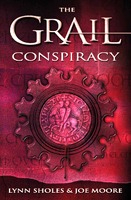
THE GRAIL CONSPIRACY is very special to me because it began my writing career being the first book I ever had published. And the story of how it came about is also very special.

In 1994 a friend phoned my co-writer Lynn Sholes and told her to read the article Crusade’s End? in the April issue of Discover magazine. The caller thought it had great promise as a premise for a book. The article was about Leon Decoeur, an archaeologist, working late on Christmas Eve at a dig site in Jerusalem where he uncovered an ancient cup he believed could be the Holy Grail. Preserved inside the cup was a brown residue, later determined to be human blood. Discover quoted Decoeur, "You remember that cosmologist a couple of years back who claimed he’d seen the face of God? Well, I think we’re going to see His DNA."

As all writers do, Lynn started asking What If questions. In this instance it was: what if someone used the DNA to clone Christ?

At about the same time, I was a freelance writer reviewing books for the South Florida Sun-Sentinel and other Florida newspapers. A mutual friend introduced me to Lynn. I reviewed her second novel (she was writing historical fiction at the time and eventually had 6 novels published) and we began talking about the business of writing. I joined Lynn’s local critique group where we often discussed current projects and those we envisioned in the future. The Discover article story came up repeatedly, but Lynn just didn’t feel comfortable taking on the task of making a book from it since it was outside her genre. So, even though the story intrigued everyone who heard the cloning-Christ premise, it sat dormant until I couldn’t stand the waste of a good idea any longer. One day, several years after the magazine article, I called Lynn and “threatened” her. I told her if she didn’t write that story, I would outright steal the idea and write it myself. I think that shocked her into the reality of “getting on with the rat killing!” as she likes to say. Lynn and I decided on collaboration. We spent countless hours writing a detailed, 52-page, chapter-by-chapter outline. Finally finished, we agreed we didn’t like major segments and started all over again, adding more dimension and texture.

The more research we did, the bigger the story grew. Finally, we thought the skeleton was ready for the flesh, and we began the first draft. That’s when we became acutely aware of the differences in our writing styles: her voice was lyrical, mine bold. Those two voices fought each other on the page. But we also realized our strengths: Lynn’s was character development while mine was plotting. It took a great deal of work to put our egos aside and build trust in each other before our different styles started to blend. (This is why you rarely see collaboration in writing fiction. It’s generally an impossible task.) After three years of working on our book, we felt, as did our beta readers, that our voices were blending and our strengths were paying off to the story’s advantage. When our manuscript was finally complete, we sent it off to Lynn’s agent who loved it.

Then came the bad news. Enter Dan Brown.

Now, TGC was conceived, outlined, and drafted a decade before Brown’s book, still he took all the air out of our story. Even though TGC was not the same story as THE DA VINCI CODE, it was still a “Grail” story. And there were small coincidences and idiosyncrasies in the plots, like killing someone off and making it look like an allergic reaction. So we went back to the drawing board. BTW, our working title from the beginning was CORPUS CHRISTI (Latin for the Body of Christ). When we finished, we changed it to THE ENOCHIAN PROPHECY.

We worked our way through the book again, doing more research so we could replace those close calls with THE DA VINCI CODE. And we even added a few additional twists. Then we sent it off again.

It found a home with Llewellyn Worldwide, and the book was published in 2005 as part of Llewellyn’s launch of their new mystery imprint, Midnight Ink. They wisely changed the title from THE ENOCHIAN PROPHECY, which no one knew the meaning of much less could pronounce, to THE GRAIL CONSPIRACY.

That year, it was named Book Of The Year by ForeWord Magazine, landed on a number of international bestseller lists, and was eventually translated into 24 languages.

TGC was the beginning of my writing partnership with Lynn Sholes resulting in 5 novels published: THE GRAIL CONSPIRACY, THE LAST SECRET, THE HADES PROJECT, THE 731 LEGACY, THE PHOENIX APOSTLES and the short story BAM! JUST LIKE THAT. We’re closing in on finishing the first draft of #6, the standalone thriller THE BLADE.

So what is THE GRAIL CONSPIRACY about? Here’s the website promo copy.

From a newly unearthed crusader’s tomb in Iraq to the guarded treasure vaults of the Vatican to a secret genetics lab on the banks of the Mississippi, THE GRAIL CONSPIRACY uncovers a sinister plot of ultimate revenge.

A small wooden box hidden for centuries is passed on to network correspondent Cotten Stone by a dying archaeologist. With his final breath, spoken in a language Cotten has not heard since childhood, he declares that she is "the only one who can stop the sun . . . the dawn." Unable to open the box, Cotten seeks the help of John Tyler, a noted biblical historian and Catholic priest on leave of absence from his duties but not his vows. Inside the box, they discover a cup wrapped in a cloth bearing the insignia of a powerful medieval order that professed to be the Guardians of the Grail.

Cotten is propelled into the headlines as she and John deliver the Cup to the Vatican for authentication, and she reports the story of its journey from Calvary to cable TV. But her life quickly becomes caught up in a global plot driven by an ancient sect devoted to bringing about the Second Coming. As those around her fall victim to the Grail Conspiracy, Cotten soon learns her true legacy and must question if she is stopping an abomination or is she working on the side of Evil. In the final conflict she learns why she is the only one who can stop the ultimate revenge against God by the Prince of Darkness.

If you haven’t read TGC, please take advantage of Amazon’s $0.99 Daily Deal and download a copy to your Kindle. If you’ve already read it, I hope you’ll download and enjoy it again. I’ll be forever in your debt.

—————–

This is my last post until next year since TKZ will be taking it’s annual 2-week Winter break starting December 19. Thank you for reading and commenting on my posts throughout the year. Merry Christmas and Happy New Year to you all.


It’s a Wrap!

As this is my last blog post for 2011 before we go on winter hiatus (or in my case, summer hiatus!) for a couple of weeks, I want to wish everyone all the best for the holidays. We’ve had another amazing year blogging at TKZ. For me 2011 was a period of readjustment – to life back in Australia (still a challenge as I miss California!) and to my sons starting school. It took a while to get back into my writing routine since the move, especially with all the work that was done to the house after we flooded in February, but I think I am finally on track…just as my boys are off on holidays for 8 weeks:)

One of the greatest things about this year is watching both my sons become avid readers and lovers of books. From being engrossed listening to Harry Potter in the car to sitting reading in bed at night, they have both embraced literature in a way that has amazed even me (especially given all the negativity in the media about children and reading). It has also been exciting for me to discover a new generation of children’s books (and a great excuse to read them for myself!).

The year also brought with it the challenge of dealing with people who have a less enlightened view of the world of literature and writing. Just yesterday another mother said to me (when we were trying to arrange picking up a lost sweater) “unlike you, the rest of us have day jobs.” That brought me back down to earth with a smack!

So what was the most memorable thing about 2011 for you?

What writing success will you celebrate?

These holidays I am going to celebrate nurturing a love of reading, the fact that I am at page 230 of my current WIP, and that I get to pursue my dreams every single day – all it takes is a blank page and my imagination (take that day-job naysayers!)

10 Reasons Why I Am Self Publishing


We had quite a dust up this week over the self-publishing revolution, beginning with my thoughts on agents, followed by Clare’s post on reasons NOT to self-publish. As I have just released a new story for Kindle (more on that below), I reflected on the reasons I choose to self-publish alongside my traditionally published work.
1. It’s real money
I write for a living. Self-publishing increases my income substantially, and pays off monthly. I’m sort of old school on this. The pulp guys who wrote during the Depression were, first of all, trying to put food on the table. Writing is my job, and if I can up the income at my job, why would I not do that?
2. It’s not either/or
I don’t have to choose self-publishing to the exclusion of traditional publishing. I do both. The nice thing is I can make sound business decisions with more options and information than ever before.
3. It’s not about hate
One thing I didn’t understand about the original reasons-not-to-self-publish post was the point about not being a “hater.” Yes, I know there is some vitriol out there about trad publishing from authors who have been burned by it. But hate is a personal invective and traditional publishing is not a person. It’s a business. One should simply make clear-headed business decisions, with self-publishing as one of the options on the table.
4. It’s what I love to do
I love to write and have people read what I write. Self-publishing lets me get more of my work to more readers. This is why traditional publishers should not fret over authors self-publishing non-competing work (and should take a liberal stance on what constitutes “competing”). An author who makes more readers helps the traditional publisher sell more of that author’s books.
5. It lets me try different things
I am free to write what I want and put it out there in the marketplace. I can stretch my muscles, try new styles. My latest story, described below, is an example. This is major.
6. It’s a market for shorter works
I love the novella, novelette (10 – 20k words) and short story forms. This market was pretty much dead until the self-publishing revolution. Now you can actually make a buck off this type of material.
7. It’s fun
Traditionally published authors always love the day a box of their new book arrives from the publisher. You take out a fresh copy, smell it, admire the cover, riffle the pages. Well, it’s just as much fun to see your book become available online, even more fun when people start buying it.
8. It’s empowering
Writers have never had the power they have now to reach readers. It used to be there was only one way to do it, and that was through the largesse of a difficult-to-reach Kingdom called the publishing establishment. I like having more power. But with power comes responsibility, and it’s up to me to make sure my writing is the best it can be. I like having that power, too.
9. It’s a free market
It’s nice that the market — the readers themselves — get to decide how much reward an author gets. That’s as it should be. The more an author writes and publishes and pleases readers, the more the market will reward said author.
10. It’s fast
This may be my favorite reason of all. I don’t have to wait a year or 18 months to see something I wrote go out for sale.
As an example of all the above, let me tell you how my latest offering came to be:
A few months ago I purchased the Kindle edition of the Robert E. Howard Omnibus. Howard was one of the most prolific pulp writers of the 30s, best known for creating Conan the Barbarian. He wrote in several genres, including the Steve Costigan boxing stories.
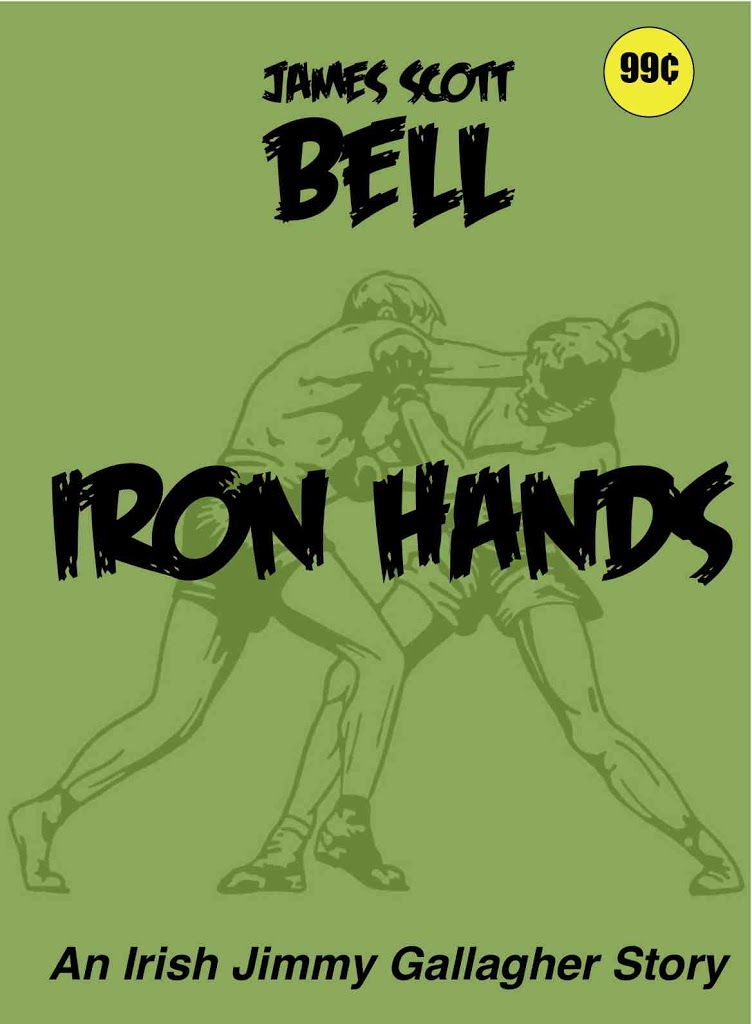
I liked the style of these stories because I’m a boxing fan (old school, that is, from Jack Johnson to Muhammad Ali), so about six weeks ago I found myself tapping out a first person narrated boxing tale. I called my character Irish Jimmy Gallagher and set the story in 1955 Los Angeles. Pretty soon I had about 6000 words in a voice I really liked.
I rewrote the story then sent it out to a group of beta readers, who I told to be “brutally honest” with me. I really didn’t know what I had. The feedback was 100% positive, with a few suggestions and typo snags. So I took their notes and made some changes and then did the following:
* I created a cover to suggest the pulp-style boxing stories of yore. I purchased a license for a pen-and-ink boxing picture fromiStockphoto and designed a template (I’ll change colors for future stories) in Pages for Mac. Total cost to me: $45 and a couple hours of time.
* I wrote the marketing copy for the story, which is a crucial link in the self-publishing chain, but I enjoy that process, too. Fifteen minutes.
* I converted the story to .mobi format using Calibre software. For a novel with a TOC, I would probably hire this step out. But I wanted to see if I could do it with a simple short story, and I could. A few hours to learn the program and mess with it.
* I uploaded the story to Amazon on Monday morning (ten minutes to fill out the info on their publishing page) and it went live later that day.
From the finishing of the story to getting it vetted by beta readers, doing the formatting and design and placing it online, it was about a week. That absolutely rocks.
So now I have a boxing story for sale. If I had sold it to a pulp magazine in 1935, I might have been paid $100 for it as a one-time fee. Now I will make royalty income off it for the rest of my life. While one 99¢ story is not going to buy a new car, it is certainly going to be substantially more over the long term than our forefathers of the pulp days ever saw. So I will be writing more stories in this series, and start other series as well.
This is a good thing. No, a great thing for writers.
So those are ten of my reasons for self-publishing. And now it’s my pleasure to introduce you to Irish Jimmy Gallagher, who checks in at 6’3″ and 225 pounds. A boxer with dancing green eyes and a wit born of the Blarney Stone, Jimmy is a hell of a fella, quick with a laugh and quicker with the jab.
But if you foul him, stand back.

Available for 99¢ exclusively on Kindle.

My Favorite Books of 2011

It has become a practice at the end of a year to compile a “Best Of” list. That is tough to do, and to call it such is a bit of a conceit. Who am I to say? The following is a whittled down list of books that I read in 2011 that grabbed me and touched me. I had 27 or so to start with; when I started to pare it down, there were three that I felt had to be there for certain — THREE SECONDS, THE DEVIL ALL THE TIME, and FEAST DAY OF FOOLS; I literally picked the rest of the titles out of a hat. Here they are, in no particular order:

THE WOODCUTTER — Reginald Hill
LUCIFER’S TEARS — James Thompson
THE DEVIL ALL THE TIME — Donald Ray Pollack
THE HYPNOTIST — Lars Kepler; translated by Ann Long
THREE SECONDS — Anders Roslund & Borge Hellstrom; translated by Kari Dickson
FEAST DAY OF FOOLS — James Lee Burke
THE PACK — Jason Starr
BREAKING POINT —Dana Haynes
COLD SHOT TO THE HEART — Wallace Stroby
SOFT TARGET — Stephen Hunter

John Miller will be here next Saturday and I will be back after the first of the year, hopefully with some interesting news. Merry Christmas and Happy New Year to you all. And thank you for spending time with me this year.

Judging a Book by its Cover

by Michelle Gagnon

There was an interesting piece in last week’s New York Times on the transition back to so-called “gilded covers.” It confirmed a theory that I’ve had for a few years now. Despite the gloomy predictions of prognosticators, I don’t believe that hardcover novels are facing extinction. For one thing, libraries will always need hardier books to loan out. However, I do think that as eReaders become increasingly prevalent, hardcovers print runs will be dramatically reduced. Not phased out entirely, but the vast majority of books will be released in trade paperback form. The hardcovers that are produced will predominantly be special limited editions. More care will go into cover design and production, from the paper quality to the font to the dust jackets. And chances are that the price will increase as a result, since you’ll be paying for something a bit more special.

Currently, hardcover novel sales are being hit hard. As of September, hardcover sales had declined 25% for the year. Meanwhile, eBook sales rose 161%. Total eBook sales are forecast to reach $10 billion dollars by 2016, and thus far Kindle sales have outpaced Amazon’s rosiest predictions for the Christmas season. Mass Market paperbacks are being phased out more rapidly than anticipated, and many publishers are switching even consistently bestselling novelists to trade paperback rather than hardcover releases.

And let’s be honest– hardcover book sales should be dwindling. Now, before all you fans of “real” books, who extol, “the weight of it in my hands, the smell of ink on paper” jump all over me, hear me out.

Recently I was standing in my father’s library, poring over his collection. He’s always been an avid reader, and he has a stunning collection of leather bound books. Books that are truly works of art, and an experience to read. Books with soft vellum paper and calfskin bindings; books that really do have a special smell and feel to them.

Compare that to my collection of hardcovers. The vast majority of them don’t merit the same level of adulation. The truth is, most are just as mass-produced as MMPs. They’re heavy, cumbersome, printed on relatively cheap paper with cardboard covers and a dust jacket. Honestly, few are dramatically nicer than a trade paperback. By and large, those books don’t look stunning lined up on my shelf.
So given a choice, why would I spent $20-30 for a book that, content-wise, I can enjoy on my Kindle for half that price?
I would, however, pay a bit more for something that was special.

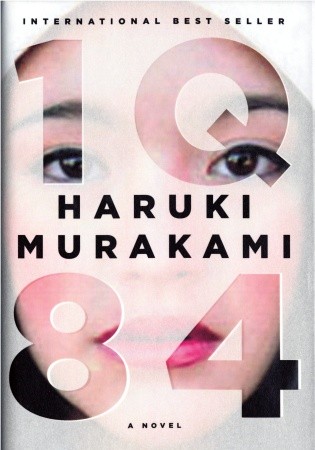
Publishers are finally coming around to that realization. The NY Times piece discusses recent hardcover releases that included special touches. Haruki Murakami’s latest novel 1Q84 features a “translucent jacket with the arresting gaze of a woman peering through.” Based on the book’s impressive sales so far, which has been the reverse of most books, (95,000 hardcover as opposed to a mere 28,000 in eBooks), investing in exquisite covers can help print sales.

The irony of this for me is that for the first time next year, my books will start appearing in hardcover form. Given the current sales climate, I’m nervous about shifting formats at this stage. However, I do think that we have an amazing cover, and hopefully the rest of the production quality will match up to it.

Real-Life Characters

Have you ever met a person who is so interesting that you had to incorporate him into a story?

We’ve just returned from a one week cruise on Allure of the Seas. My review and photos can be followed on my personal blog. It was a fabulous trip on the largest cruise ship in the world. But despite its size, we often ran into the same people.

We first saw the man at dinner. Although we had My Time Dining, we’d reserved a spot at 5:45 in the Adagio Dining Room, deck 5, each evening. My startled gaze landed on the guy as we passed him by seated at a table with a younger man.

His shoulder-length wiry black hair inevitably drew my attention. He had a black moustache to match that curved down to the edges of his mouth. His dark eyes and facial features were Asian. My imagination instantly pegged him as a karate master. Was that his young disciple with him? The younger guy had light brown hair in a short cut with sideburns and looked like some fellow you’d meet on the street in the States. A more unlikely couple couldn’t be found.

What were they doing on a cruise together? The long-haired man looked like he’d stepped out of a movie screen. He could have played an ancient conqueror, a great warrior who’d landed incognito into our time. Or perhaps he really was a foreign film star and the young man was his manager. Then again, maybe he was a secret agent or private investigator on a case and the younger guy was his sidekick, likely a computer expert. 
 
Oh, my. I could create so many stories just from this one person. This had happened to me once before on a cruise. I saw a lady with coiffed white hair and a perfectly made up face who wore elegant Parisian ensembles. She became a countess in my cruise mystery, Killer Knots. How could I use my karate master? Time will tell, but no doubt he’ll show up in one of my books. And his role will be a lot more glamorous than in real life, where he probably was on a pleasure cruise with his partner.

Have you ever met a character so compelling that you had to put him into a book?

Presenting the Author: 24/7

By: Kathleen Pickering  http://www.kathleenpickering.com

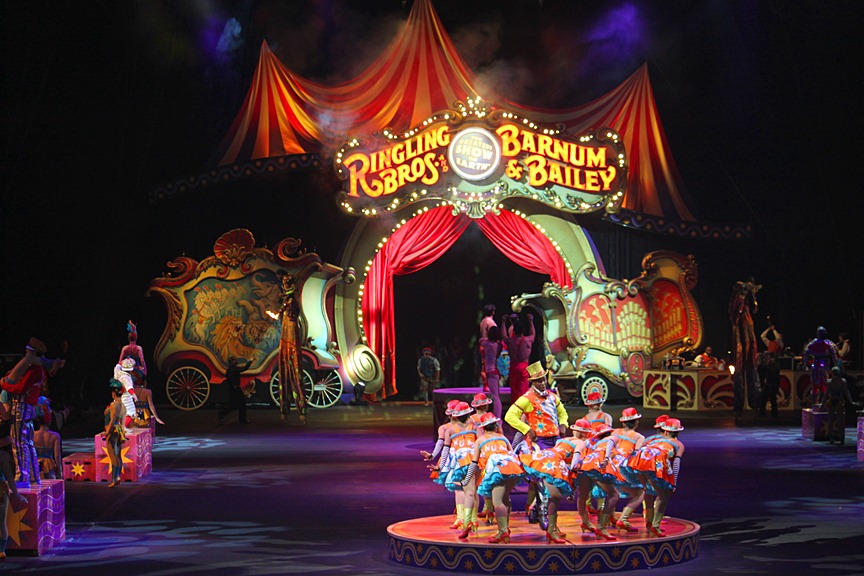
My life is a three ring circus. No wait. My husband said living with me is like a three ring circus.

circus

A far more honest assessment, for sure. One for which I take immense pride.

Why?

Because if a writer is going to be effective in her work, she must experience life. Things have to happen. Places must be seen. People must be met, interviewed, interrogated or just plain stalked! (Just kidding. Actually, no. I’m not. Ask Heather Graham or Bonnie Raitt. Another story for another  time, but at least I didn’t leave Heather horror-struck and plastered against her tour bus!)

What does this have to do with my promise from my last blog to reveal the second Tweet I am tweeting on Twitter? (What a fun sentence!)

My friend and mentor, Heather Graham, proves the “you gotta live to write” theory to me constantly. Meaning an author views the world and “is” an author 24/7. The simplest event in an author’s life is a possible morsel for a plot.

Today when I post this blog link on Twitter, my Tweet will read: Member of the Peer interviews Heather Graham at my house!

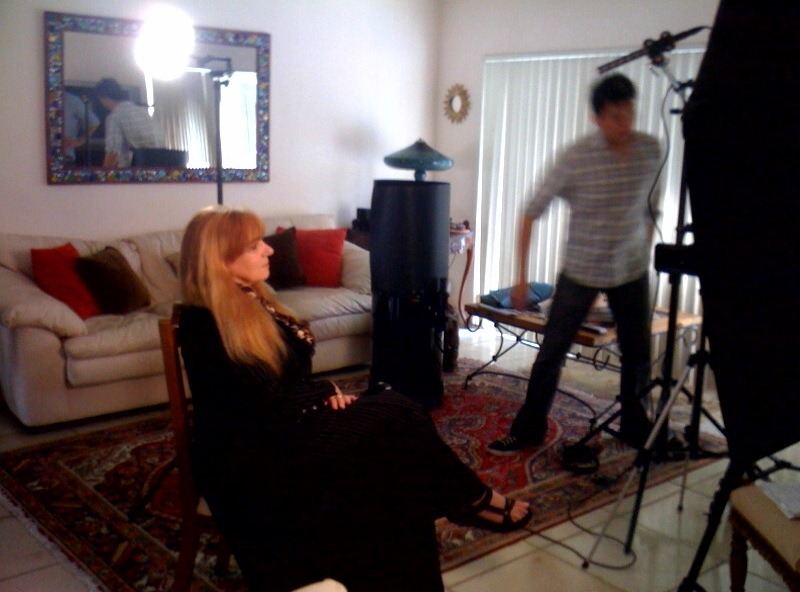
HEATHER INTERVIEW1

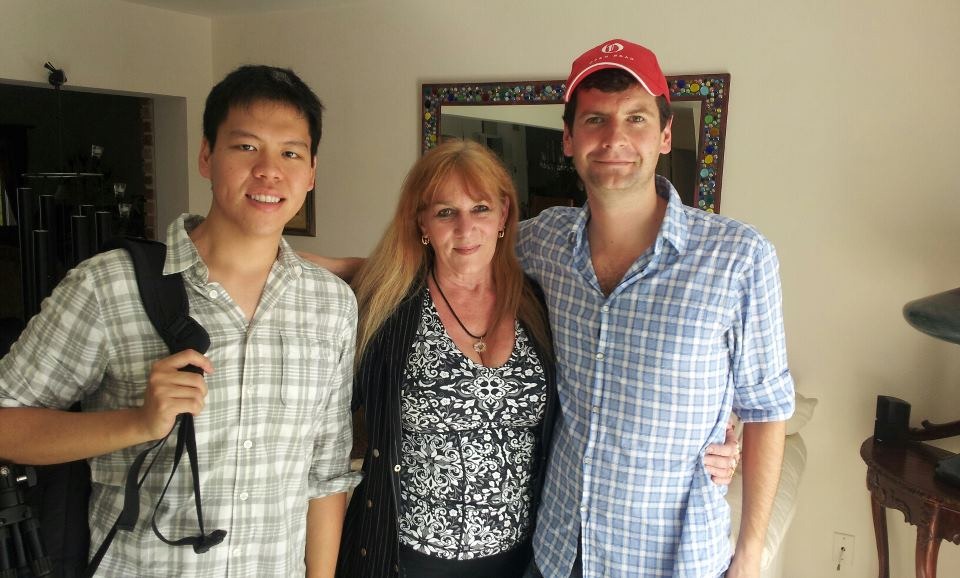
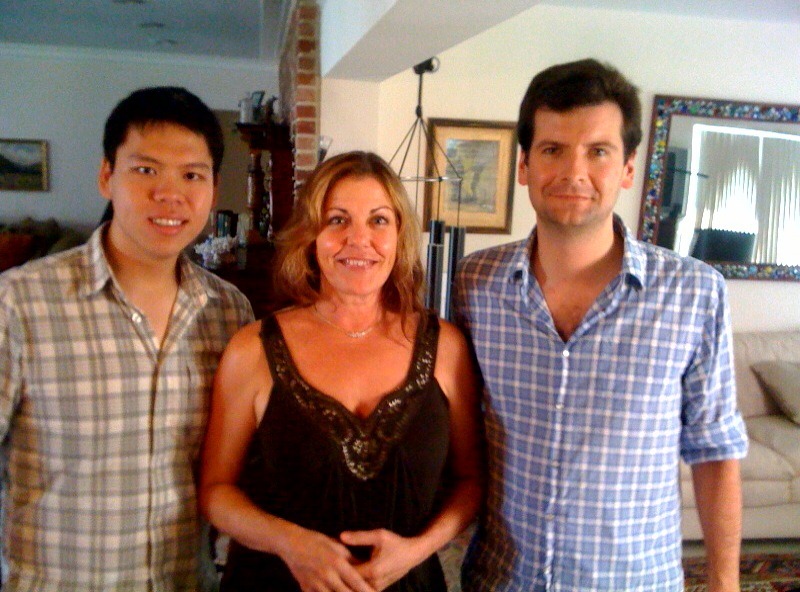
Heather is always doing exciting things to fill her “creative well” to the brim. And, sure enough, one of her adventures was an interview with British transplant Luke Parker Bowles from Open Road Media in New York. She was photographed by Tim Wu.

Heather Interview

Heather’s interview is part of a future media campaign and I was invited to join in the fun . . . which makes Heather’s “you gotta live to write” theory suddenly a part of mine.

HEATHER INTERVIEW3

A good student pays attention!

Now, you may ask what makes this event a three ring circus in my life?

Well, it’s simply that this interview happened on Monday when I had just returned the evening before from a quick two day jaunt to New York for a family gathering of 75 people for a double-engagement party for my sister’s twins. And that on the heels of a five day real estate search to help another family member invest an insanely huge amount of foreign dollars in US real estate. (Yes, I am a Realtor in my secret life.)

All of which is fueling new stories. And, there is more.

This fun filled day with Heather and friends was followed by in instant surge of 12 family members, including a first for us which was both mothers-in-law under the same roof for the Thanksgiving holiday.

mothers in law

Did the family drama that ensued give me fodder for a new book? I know I don’t even need to answer that one.

I still have a few more days before I launch my mother-in-law back to Chile. However, the circus continues. While attending to my MIL’s needs (and they are many), going to yoga classes, taking a 12 week on-line Agents for a Conscious Evolution class, brainstorming with author friends, contributing to social media AND spending quality time with my husband, I am scrambling to finish two more book proposals for my editor to cement her beautiful offer for a three book contract with Harlequin.

What can I say to that?

I am thrilled for the circus that is my life because after I finish this blog, I can finish the two “romance in real life” proposals for my editor. Why? Because I gleaned story ideas from my travels and mingling with family, friends and strangers. I am an author 24/7. I live to write and I write to live. The trick is to see every moment as a writing opportunity. Oh, and to make really good use of those few hours of sleep!

Soooooooo . . .

Ladies and gentlemen, and children of all ages! I invite you to tell me how your lives fuel your creative wells. I am already laughing at the prospect of how Basil Sands will answer this one. (I just read on Facebook that he was grilling 40—count ‘em—40 steaks in freezing weather.)

Let the show begin!


Reasons not to Self-Publish?

By Clare Langley-Hawthorne

Last week I read a blog post by Edan Lepucki entitled Reasons not to Self-Publish and it prompted me, yet again, to consider the pros and cons of going it alone. As James Bell discussed in his TKZ blog post yesterday if you decide to go the ‘indie’ route be sure to start with your eyes wide open as not every adventure into the forest ends happily. But as Lepucki explains there are reasons why some authors decide to stick with the traditional route despite the positive experiences of some on the indie side.

At the risk of raising the ire of a few writers who have very determined opinions, I thought I’d explore some of the reasons that resonated with me. I suggest if you’re interested you read the original post to see all eight items on her list (some of which are more controversial than others judging by the comments!). I have highlighted (and paraphrased) just some of Lepucki’s reasons…those which speak to my own confusion/dilemma over the best road ahead… and apologies to Lepucki as I have also renamed her list items to accord with my own views)

1. A traditional publisher often gets it right…

The first reason on Lepucki’s list is entitled “I guess I am not a hater” and like her, I guess I don’t have any negativity towards the publishing industry. My experience has been very positive – with agents, editors and publicists all eager to do their very best for an author despite the business imperatives of the industry.

More controversially, Lepucki states “I want a reputable publishing house standing behind my book; I want them to tell you it’s so good so that I don’t have to.” Now this may say a lot about my own self-confidence, but this statement did resonate with me. I understand her need for validation. It’s what has always made me hesitant about self-publishing. Even though it’s probably a bit dorky to admit it, I wonder how many other writers feel the same?

2. The conversation about self-publishing often ignores the role of smaller independent publishing houses.

Lupecki rightly points out that these independent presses offer a great option for authors. They tend to be well-respected and provide a specific brand and identity that can give an author an opportunity to get their work out there even if they don’t meet the formula for a bigger house. Lupecki argues that these small presses provide a level of ‘legitimacy’ and quality control suggesting again the importance of having a traditional-style publisher backing an author.

In previous blog posts about the current publishing industry we haven’t really touched on the role of these smaller presses (sadly, many of which have closed due to the harsh economics of running such an operation) so I would be interested in hearing opinions on the role and value of the small independent presses in the current market.

3. The conversation overlooks the value of the publishing community

Lupecki quotes Peter Straub’s acknowledgement of the invaluable contributions made by editors and copy-editors to his books and goes on to describe how helpful some of the comments made by editors rejecting her first novel were. In many ways, much of what Lupecki argues comes down to the same issue of mentoring that James Bell discussed in his blog post yesterday.

I do think she asks an important question when it comes to writers hiring their own editors and copy editors: How is that role affected by the fact that they are being paid by the writer him/herself? What, Lupecki asks, if the hired editor told you not to publish?

Having only worked with editors from my publisher I don’t know the answer to this – have any of you hired an editor only to have them recommend against publication as the work wasn’t up to snuff? And if so, did you take their advice or go ahead and submit or self-publish it?

4. The e-reading conundrum

Lupecki argues that while she doesn’t mind if Amazon is just one of the places to purchase her work she is worried about Amazon monopolizing the reading landscape. Her concern certainly resonates with me – I would hate to find the traditional publishers being replaced by a monolithic self-publisher either. But what do you think – is this a legitimate concern? While I would argue this isn’t really a reason against self-publishing (there are other avenues available, after all, not just Amazon), I think her fear of Amazon’s potential power in the marketplace is valid.

5. Is the self-publishing boom best for readers?

Now this is a tricky question and I think in many ways this goes back to Lupecki’s need for validation – but as a reader I certainly don’t want to wade through thousands of unfiltered self-published novels without any guide as to quality. I do think, however, (and TKZ have touched upon this in many previous blog posts), that as the digital industry matures, there will be more self-selection/review options which will help guide readers to quality work.

So what do you think about Lupecki’s reasons against self-publishing?