Here Goes Miller and His Zombies Again.

John Ramsey Miller


Recently, as I’ve discussed here before, I binge-read a load of Zombie Apocalypse books just hoping to read something for entertainment and are they ever. I read several standalones and several series. In my quest I stumbled across an author by the name of Mark Tufo, who writes in the the Zombie Quadrant of the horror genre. His ZOMBIE FALLOUT series is to die …and reanimate for.

You don’t have to be a horror fan, much less a fan of Zombie books to enjoy the series. The books I read a while back were the first Zombie books I’ve ever read. Sure I’m a fan of George Romero movies, and those of other directors of Zombie films. But watching a film and committing to reading for a hours over the course of days is a different matter.

Zombie books are more of a Western story with zombies as Indians chasing a wagon train filled with settlers but who have to aim strictly for the heads of the attacking tribal warriors. I love westerns, even if they are cast with zombies. As I was going on about the books to friends, my wife decided to try one. I suggested the first of his Zombie Fallout series. Ten minutes in (on the kindle) I heard her laughing as she read. She read all four in a few days, just as I did. They are beautifully constructed, frightening and humorous. Tufo is a self-described blue collar guy, and he writes as well as most any author I know. Mark’s a Marine (there are no ex-Marines) and he has a natural gift for this writing thing. He gives great characters, action, descriptions, settings, knows survival strategies, and weapons.

And his Zombies are amazing. His Zombies stink to a degree that you generally smell them long before you see them. Just think thirty male skunks fighting while sealed inside of a septic tank filled with cat offal and rotting hamburger meat packed into two-day-old shrimp heads. His descriptions of them are gut-wrenching, easy to imagine, and often hilarious.

Tufo’s Zombies answer a lot of questions I have to ask about Zombies as portrayed in other books and films. MTz’s (Mark Tufo’s zombies) are not technically dead at all. If Zombies were dead they would decompose to immobility in very short order. Wait in a basement for a few weeks and it’s all over. His Zombies are infected by a virus, but their hearts are beating just very, very slowly. You blow up their heart and they will still go on for a long while. Since they eat, they move human flesh through their systems with the hygienic awareness of infants. In the winter they slow down and hibernate until a meal happens along. When they aren’t looking for food, they rest in piles so they won’t waste energy. TMz’s also have a leader who is a vampire who drank the blood of someone infected with the Zombiizer virus.

So anyway Mark Tufo was until recently completely self-published (this is his second series) and his books have accumulated quite a following. Although he has never published conventionally, a large well-established company that we are all familiar with is going to do audio releases of the Zombie Fallout series. A small publisher of horror books has published one his novellas, TIMOTHY, but he is holding on to his eBook rights because there is nothing a publisher can do in that area. His eBooks are selling very nicely, and 65% of the people who read his first installment of Zombie Fallout go on and read the rest. That is an impressive carry over rate for a series from an unknown author.

TIMOTHY is a novella written from a Zombie’s perspective. Timothy is an ex-football player who is dressed as a clown when he turns due to being bitten by an infected child at a birthday party. Timothy is aware of what is happening and is not driven insane by the invading entity (constantly screaming, “EAT!”) as most of the turned are. In time, Timothy makes a deal with the invading entity so he is able to enjoy shared control of his powerful body, which is a win/win for both Timbo the entity. So he can think as usual, open doors, move fast and talk. By the way, Timothy was a sociopath and makes a perfect vessel.

WARNING: TIMOTHY one is not for the weak at heart, or those with a low threshold for acute grossness. Cozy fans would be well advised to stick with Agatha.

I sent him a laudatory email after reading his books. I have exchanged emails with him and had one telephone conversation with him about writing and publishing. I offered a blurb, which he accepted. I hope that helps him somehow. It never helped me having my name on my books. I am not writing this to sell Mark’s books. Plain fact is he makes more money than almost all of us do.

We all understand that there are more very talented authors in the world than published books would bear testament to.

Mark has completed the fifth, and, almost certainly, not the last Fallout book. He and his wife, Tracy, are getting it ready to set to selling it. Good, cause I can’t wait to get back to the fun.

What is it About Spy Novels?

Next week at SleuthFest in Orlando, Florida (where all the cool kids will be), I’ll be moderating a panel with Jeffery Deaver, Jamie Freveletti, Keith Thomson and Mike Cooper entitled “I Spy With My Little Eye.”  The point of the panel will be to explore the present and future status of spy novels.
True to my essential, DNA-based laziness, I thought I would reach out to my Killzone family for help in structuring the session.  If you were in the audience and able to explore any angle of the espionage/spy/international intrigue novel, what would you want to know?
If you had the opportunity to launch a rant, what would the topic be?  What thrills you and disappoints you?
What would you like to see more of or less of in the genre?
There are no guarantees (panels are by nature dynamic and unpredictable), but I’ll try to get as many of your points out there as I can, and I’ll report back on the answers week after next.  Can’t wait to hear what you have on your mind.

‘Splain It to me, Lucy!

By Jordan Dane

I’m teaching an online writing class from Feb 20 – Mar 2, hosted by YARWA, the online chapter for Young Adult Romance Writers of America. We’ve chatted about how to get over the hump and finish a book once you’ve stalled out for various reasons. Some people might call this writer’s block, but for me, I refuse to acknowledge anything like that exists. It’s too easy to blame an affliction we seemingly have no control over. I prefer to think my brain is secretly trying to tell me something that I’m not hearing, even though we are close neighbors.

When I can’t hear my brain SCREAMING at me to stop writing, apparently my body can hear that pesky 3-pounds of mush. My fingers boycott me and quit hitting the keyboard or I find many excuses to distract myself—even doing laundry, for cryin’ out loud. Now that’s desperate.


I’ve learned to listen to my body when this happens. It’s my interpreter when it comes to “brain speak.” One way to get me back on track is first understand and accept that my brain is trying to tell me something about the plot, character revelation/motivation, or certain scenes aren’t working and could be better. Usually this part only lasts hours or a day or two, or a good night’s sleep. I’ve found answers for my dilemma in commercials, the NOVA channel, and even have found the complete ending of a book from watching an old skateboard flick, starring Christian Slater, called “Gleaming the Cube.”


But when I can’t find the answer alone, I’ve found a tried and true method for me is cornering ANYONE to listen to me ‘splain it. Usually this poor person is my husband, John. We can chat over breakfast, spending quality time talking about how to kill people and get away with it, or he listens to my ramblings as we drive. (Your gas mileage may vary.) One thing amazes me about this process. It doesn’t seem to matter who I corner or how I ‘splain it, I invariably come up with the answer on my own as I talk it out. It seems the brain needs the mouth to communicate back to my brain. What a weird Détente!


If you haven’t tried this, do it. It will blow your mind. Literally! I’ve concluded that since I spend most of my day in my own head—without speaking—that when I finally DO speak, my brain is listening and finally sends messages that result in solutions. Things I wouldn’t have explored purely thinking about them. Apparently explaining things to someone outside my “brain trust”—whether they ultimately contribute to the process or not is irrelevant—forces me to work things out in a way I can’t do on my own. The act of being more thorough in my explanation seems to be a critical element to my process.


But given the old adage about a tree in the forest, does it take someone else listening to get results to my dilemma? Or is this the first stages of schizophrenia and my way of justifying it? I haven’t ranted to me, myself, and I on this yet. That day might come on its own—along with a nice helping of meds.


Please share with us:


1.) How do YOU jumpstart your writing process?


2.) What have been your strangest diversions when you should have been writing?


Below is a video on how the publishing industry works from author to store:


The five most disturbing homicides in fiction

One day when I was ten years old, I plucked one of my mother’s books from a shelf. It was a shiny paperback with a knife dripping blood on the front–a “potboiler,” she called books of that type.

That story (which technically I wasn’t allowed to read) helped me graduate from Nancy Drew to the world of grisly homicide. I never developed my mother’s taste for potboilers, but I quickly discovered Poe and later, Truman Capote.

Some of these murder stories remain standouts–over the years, I’ve never quite shaken their chill. Here’s my list of the top five most disturbing homicides in fiction:


1. The Cask of Amontillado
I’ll never forget my horror as I read the story of a chained Fortunato being sealed behind a brick wall. It was the cheerfulness of his murderer that most unnerved me. Never again would I put my full trust in a smiling face.


2. The Tell-Tale Heart
Another Poe classic, this story of guilt and obsession is also told from the the murderer’s point of view. What sound could be louder than the victim’s heart beating from beneath those floorboards?


3. The Silence of the Lambs
This story is the perfect intersection of creepiness and terror. It blends cannibalism with the skin-deep antics of a cross-dressing tailor.

4. The Godfather
This book counts the many, many ways one can eliminate the business competition. My favorite was being garroted by a wire from behind. 


5. Jaws
Technically, death by monster-shark isn’t murder. But twenty years after reading this novel, I’m still won’t put a toe in the ocean. Jaws killed my love of swimming. So I’m counting it.


So what tales of murder have most disturbed you over the years? Are blood and gore as disturbing to you as the psychological aspect of a crime?

Who are your characters?

by Clare Langley-Hawthorne


Most writers at one time or other get asked “is your protagonist you?” – in the belief, maybe, that all of us secretly yearn to place ourselves in our work (hey, as a character, you get to have all the fun!). When I completed Consequences of Sin and handed it to my husband to read, his immediate reaction was “I know Ursula is you, but who is Lord Wrotham, because he sure as hell isn’t me!” I of course vigororously denied that Ursula was in any sense, me, but, in many ways, she was a direct projection of who I would have liked to have been had I lived in Edwardian times.


It was only when my sister, Bridget, got upset that I had named the housemaid after her (completely unwittingly, I might add), that I realized how much family and friends were trying to see if they recognized anyone in my books. No one seemed to believe that I hadn’t based any of my characters on anyone I actually knew in real life (well, that’s my story and I’m sticking to it).


This question has got me thinking about other writers and whether they incorporate themselves or other people they know into their novels. I’m sure all of us has subconsciously done this to some extent – but how many of us have deliberately chosen to model a character on someone we know?


While I often use real historical figures to inform my writing, I have never deliberately based a character of anyone in particular. To me that seems to be crossing the line into non-fiction (and opening up a potential can of worms if any descendants get upset!)


What about you? Have you ever deliberately incorporated someone you know as a character (victim, hero or perpetrator!)?
Did you try and disguise them to ensure the person didn’t realize the character was based on them?


If you have used a real person, did that person recognize themselves when they read it? If so, how did they react (…any lawsuits pending…?!)


Who are your characters?

by Clare Langley-Hawthorne


Most writers at one time or other get asked “is your protagonist you?” – in the belief, maybe, that all of us secretly yearn to place ourselves in our work (hey, as a character, you get to have all the fun!). When I completed Consequences of Sin and handed it to my husband to read, his immediate reaction was “I know Ursula is you, but who is Lord Wrotham, because he sure as hell isn’t me!” I of course vigororously denied that Ursula was in any sense, me, but, in many ways, she was a direct projection of who I would have liked to have been had I lived in Edwardian times.


It was only when my sister, Bridget, got upset that I had named the housemaid after her (completely unwittingly, I might add), that I realized how much family and friends were trying to see if they recognized anyone in my books. No one seemed to believe that I hadn’t based any of my characters on anyone I actually knew in real life (well, that’s my story and I’m sticking to it).


This question has got me thinking about other writers and whether they incorporate themselves or other people they know into their novels. I’m sure all of us has subconsciously done this to some extent – but how many of us have deliberately chosen to model a character on someone we know?


While I often use real historical figures to inform my writing, I have never deliberately based a character of anyone in particular. To me that seems to be crossing the line into non-fiction (and opening up a potential can of worms if any descendants get upset!)


What about you? Have you ever deliberately incorporated someone you know as a character (victim, hero or perpetrator!)?
Did you try and disguise them to ensure the person didn’t realize the character was based on them?


If you have used a real person, did that person recognize themselves when they read it? If so, how did they react (…any lawsuits pending…?!)


Going Deeper With a Series Character


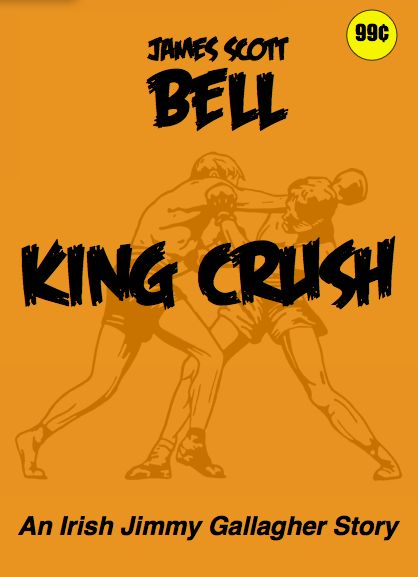
Today’s post is brought to you by my new boxing story, “King Crush,” now available for 99¢ exclusively for Kindle. And, as a special inducement, for a limited time the first story, “Iron Hands,” is available FREE. 
Today I have a question: What do you like to see in a series character? The same “feel” over and over, or deepening and changing?
There are two schools of thought on this.
Lee Child once remarked that he loves Dom Perignon champagne and wants each bottle to be the same. He’s not looking for a different taste each time out. So it is with his Jack Reacher novels. And millions of fans are tracking right along with him.
There are other enduring series where the character remains roughly static. Phillip Marlowe didn’t change all that much until The Long Goodbye. James Bond? Not a whole lot of change going on inside 007.
At the other end of the spectrum are those characters who undergo significant transformation as the series moves along. The best contemporary example of this is, IMO, the Harry Bosch series by Michael Connelly. What he’s done with Bosch from book to book is nothing short of astonishing.
Lawrence Block’s Matthew Scudder was traipsing along as a pretty standard PI until Block made a conscious decision to kick it up a notch. He did that with Eight Million Ways to Die, a book that knocked me out. Here we have Scudder not just on a new case, but also battling his alcoholism and the existential angst of life in New York City in the early 1980s. By going deeper Block created one of the classics of the genre.
In my Mallory Caine, Zombie-at-Law series (written as K. Bennett) I have a lead character who is a zombie hungering (you’ll pardon the phrase) for change. She doesn’t want to be what she is. The just released Book 2,The Year of Eating Dangerously, begins with Mallory in the hills looking down at a motorcycle gang and thinking, Lunch.And then reflecting on her damaged soul.
Book 3, due out later this year, begins with Mallory at a ZA meeting—Zombies Anonymous. She is trying to stay off human flesh (substituting calves’ brains) but it’s not easy. And I say without hesitation that I was inspired by the above mentioned Eight Million Ways to Die.
So here’s my series about boxer Irish Jimmy Gallagher. These are short stories, and I’m going for “revealing” more of Jimmy in each one. “Iron Hands” was the intro, giving us Jimmy’s world and basic personality. Now comes “King Crush.”
The new story takes place in 1955 and revolves around an old carnival attraction they used to have in America, the carny fighter who would take on locals. If the locals stayed with him long enough, they might earn back their five bucks and some more besides. But these carny pugs knew all the dirty tricks, and it was usually the hayseeds who ended up on the canvas.
Jimmy just wants to have a good time at the carnival with his girl, Ruby, and his bulldog, Steve. He’s not looking for trouble. But sometimes trouble finds Jimmy Gallagher.
I started writing these stories because there’s something in me that wants to know Jimmy Gallagher, what makes him tick. And that’s my preference as a writer and a reader of series. I want to go a little deeper each time.
So who is your favorite series character? Is this character basically the same from book to book? Or is there significant change going on?

If you’re writing a series, do you have a plan for the development of your character over time? Or is it more a book-to-book thing?

Going Deeper With a Series Character


Today’s post is brought to you by my new boxing story, “King Crush,” now available for 99¢ exclusively for Kindle. And, as a special inducement, for a limited time the first story, “Iron Hands,” is available FREE. 
Today I have a question: What do you like to see in a series character? The same “feel” over and over, or deepening and changing?
There are two schools of thought on this.
Lee Child once remarked that he loves Dom Perignon champagne and wants each bottle to be the same. He’s not looking for a different taste each time out. So it is with his Jack Reacher novels. And millions of fans are tracking right along with him.
There are other enduring series where the character remains roughly static. Phillip Marlowe didn’t change all that much until The Long Goodbye. James Bond? Not a whole lot of change going on inside 007.
At the other end of the spectrum are those characters who undergo significant transformation as the series moves along. The best contemporary example of this is, IMO, the Harry Bosch series by Michael Connelly. What he’s done with Bosch from book to book is nothing short of astonishing.
Lawrence Block’s Matthew Scudder was traipsing along as a pretty standard PI until Block made a conscious decision to kick it up a notch. He did that with Eight Million Ways to Die, a book that knocked me out. Here we have Scudder not just on a new case, but also battling his alcoholism and the existential angst of life in New York City in the early 1980s. By going deeper Block created one of the classics of the genre.
In my Mallory Caine, Zombie-at-Law series (written as K. Bennett) I have a lead character who is a zombie hungering (you’ll pardon the phrase) for change. She doesn’t want to be what she is. The just released Book 2,The Year of Eating Dangerously, begins with Mallory in the hills looking down at a motorcycle gang and thinking, Lunch.And then reflecting on her damaged soul.
Book 3, due out later this year, begins with Mallory at a ZA meeting—Zombies Anonymous. She is trying to stay off human flesh (substituting calves’ brains) but it’s not easy. And I say without hesitation that I was inspired by the above mentioned Eight Million Ways to Die.
So here’s my series about boxer Irish Jimmy Gallagher. These are short stories, and I’m going for “revealing” more of Jimmy in each one. “Iron Hands” was the intro, giving us Jimmy’s world and basic personality. Now comes “King Crush.”
The new story takes place in 1955 and revolves around an old carnival attraction they used to have in America, the carny fighter who would take on locals. If the locals stayed with him long enough, they might earn back their five bucks and some more besides. But these carny pugs knew all the dirty tricks, and it was usually the hayseeds who ended up on the canvas.
Jimmy just wants to have a good time at the carnival with his girl, Ruby, and his bulldog, Steve. He’s not looking for trouble. But sometimes trouble finds Jimmy Gallagher.
I started writing these stories because there’s something in me that wants to know Jimmy Gallagher, what makes him tick. And that’s my preference as a writer and a reader of series. I want to go a little deeper each time.
So who is your favorite series character? Is this character basically the same from book to book? Or is there significant change going on?

If you’re writing a series, do you have a plan for the development of your character over time? Or is it more a book-to-book thing?

Teach Your Children

I’m actually encouraged about the publishing business. I don’t know how the publishing industry, as it now exists, is going to do; my guess is that it will still be here when the dust settles and the smoke clears, though it’s probably going to be a somewhat leaner. But the publishing business will still be here, and still be strong: it will be because of the authors who are now writing books aimed at children and young adults.
Reading is something you learn to love when you are young. Either your parents read to you or you encounter a teacher who opens up the library to you but you get that jones while you are young. I have yet to meet anyone who turned 30 and suddenly decided that they had to start reading for pleasure. My mom read Rudy Kazootie books to me and my dad brought home a set of the hardbound “All About” books and that was that. I started reading comic books — I got a Dick Tracy comic when I was four, somehow — and that’s all she wrote. I saw a serial adaptation of a Hardy Boys’ book — THE TOWER TREASURE — on The Mickey Mouse Club and then discovered that there were twenty-odd books (at that point, which was 1959) in the series and read all of those, and went on to read Tom Swift, Rick Brant, and Tim Holt. In one summer. What next?
Well, a year or so later I discovered Shell Scott paperbacks but what really got me rolling were books by established authors of adult fiction who also wrote for the children and Young Adult markets. We’re talking Andre Norton, Robert Heinlein, Isaac Asimov, and the like. There weren’t many, not like there are now, but there were some. I read them and then ventured into their adult work. I haven’t stopped reading for pleasure since. But it all started with children’s books and the Young Adult market, such as it was, way back when.
We can talk about changes in publishing and e-books and physical books all that we like but if we don’t have readers then writers will be relegated to the status of the appendix. And we won’t have readers unless we grow them early. Those authors who labor in the grammar mine of the Children and Young Adult markets, regardless of genre, are the most important link in the chain of which we are a part. I am not smart enough to understand the markets, but I know enough about it to understand that there are books that will interest anyone with who is fourteen and who has a pulse. Take them to a bookstore or put them on an online book site or yes, a library, and set them loose.
Just for curiosity’s sake: how old were you when you started reading? What was the book? And how did it influence your ultimate love of literature?

Teach Your Children

I’m actually encouraged about the publishing business. I don’t know how the publishing industry, as it now exists, is going to do; my guess is that it will still be here when the dust settles and the smoke clears, though it’s probably going to be a somewhat leaner. But the publishing business will still be here, and still be strong: it will be because of the authors who are now writing books aimed at children and young adults.
Reading is something you learn to love when you are young. Either your parents read to you or you encounter a teacher who opens up the library to you but you get that jones while you are young. I have yet to meet anyone who turned 30 and suddenly decided that they had to start reading for pleasure. My mom read Rudy Kazootie books to me and my dad brought home a set of the hardbound “All About” books and that was that. I started reading comic books — I got a Dick Tracy comic when I was four, somehow — and that’s all she wrote. I saw a serial adaptation of a Hardy Boys’ book — THE TOWER TREASURE — on The Mickey Mouse Club and then discovered that there were twenty-odd books (at that point, which was 1959) in the series and read all of those, and went on to read Tom Swift, Rick Brant, and Tim Holt. In one summer. What next?
Well, a year or so later I discovered Shell Scott paperbacks but what really got me rolling were books by established authors of adult fiction who also wrote for the children and Young Adult markets. We’re talking Andre Norton, Robert Heinlein, Isaac Asimov, and the like. There weren’t many, not like there are now, but there were some. I read them and then ventured into their adult work. I haven’t stopped reading for pleasure since. But it all started with children’s books and the Young Adult market, such as it was, way back when.
We can talk about changes in publishing and e-books and physical books all that we like but if we don’t have readers then writers will be relegated to the status of the appendix. And we won’t have readers unless we grow them early. Those authors who labor in the grammar mine of the Children and Young Adult markets, regardless of genre, are the most important link in the chain of which we are a part. I am not smart enough to understand the markets, but I know enough about it to understand that there are books that will interest anyone with who is fourteen and who has a pulse. Take them to a bookstore or put them on an online book site or yes, a library, and set them loose.
Just for curiosity’s sake: how old were you when you started reading? What was the book? And how did it influence your ultimate love of literature?