Lift-Off
If you wander into your local Barnes & Noble this weekend, you will, with luck, trip over the copies of Damage Control that are stacked in racks near the front of the store. It’s launch time, and I’m thrilled to report that B&N has taken a big position on the book. They’ve also posted the Jonathan Grave’s Arsenal videos I talked about in last week’s post.
And yes, today’s post is going to be pure, breathless, shameless self-promotion. It only happens once a year, folks, so please hang in there with me. Onward . . .
If you check the book section of USA Today next week (or maybe it’s the following week), you’ll see an ad for the book. USAToday.com, too. And lots of other places.
Are you a subscriber to Goodreads.com? If so, in the next few weeks, you’ll see this ad:
I love that ad. It was designed by MJ Rose with Authorbuzz. Folks, if you’ve got a few extra bucks in your pocket for promotion, I highly recommend you give her a shout. I’ve used her with great success for all of the Grave books, and she’s really good at what she does.
Now, all that has to happen is for the stars to align, for people to like Damage Control and tell all their friends.
Keep your fingers crossed for me. And next week, I promise I’ll be back to regularly blogging.
First Page Critique: Shopping Can Be Deadly (& Fun)
by Jordan Dane
Yesterday, in my office she told me that for the past two weeks she had been followed while shopping in Beverly Hills and hired me to find out who it was. She didn’t feel threatened but she wanted him stopped.
The expensive streets in Beverly Hills were filled with bustle and haste on this Valentine’s Day buying posh presents and keeping out of the rain. I got out of my ’94 Tercel and glanced around the soaked street. I wasn’t the only one watching my client. A dark haired man, with a deep tan and dressed in a brown plaid suit fit Mrs. Donefield’s description. And yes, he was definitely watching that body too. I felt professional, finding my man right away.
Mr. Plaid looked directly at me, checked his watch, then turned his gaze back to Juicy Couture the boutique Mrs. Donefield had just entered. I knew this guy had no idea of who I was but to look inconspicuous, I also looked at my watch and tapped my foot as if waiting for my girlfriend. Little did he know Janice broke up with me two months ago. She didn’t believe my new business venture would generate a large income. So far, she was right.
Mrs. Donefield emerged from the store after a few minutes of shopping. I watched her out of the corner of my eye. Too busy waiting for my pretend girlfriend, I didn’t notice that the Mr. Plaid was gone.
Detective Rule #3: You can lose a sock when doing laundry but don’t lose the guy stalking your client.
Okay, by the end of this book, I can see the author doing an anthology on all the “Guy” rules, the “World according to Graff.” All anyone would need is a Craig’s list ad and they’d be in the PI business. This has a classic PI feel to it, but it’s updated with the appealing wit of the author. I definitely want to read more of this story.
The first line pulled me out a little. “I checked my watch and then the wet windshield.” The wet windshield might be a way for the author to comment on the weather, but it struck me as odd that anyone watching a vivacious woman (and client) would notice the drops of rain on the windshield, especially on their first case.
In the first paragraph, the words “on his first case” are redundant after the very funny Rule #13. I’m sure this clever author can think of many ways to get this across another way, like “a twenty-seven year old private investigator with a newly minted license with the ink still wet and a week old ad on Craig’s list.”
“…her highly pilates-ized body was covered with St. Somebody’s fashions and her back was covered by me, Guy Graff…” This is a very funny way to introduce the first person POV character, without the reader waiting too long to know who the voice is. (I love the character name too.)
This sentence should be broken apart or revised since the subject—streets—cannot buy posh gifts. “The expensive streets in Beverly Hills were filled with bustle and haste on this Valentine’s Day buying posh presents and keeping out of the rain.” The streets can be filled with bustle and haste (I like that description), but a secondary subject needs to be added to make this grammatically correct. Also, the word “expensive” when describing the word “streets” is a miss for me too. The “shops” are expensive, unless streets in Beverly Hills are made of gold, which they might be.
“’94 Tercel” – Priceless! Nuff said.
“Little did he know Janice broke up with me two months ago. She didn’t believe my new business venture would generate a large income. So far, she was right.” This little aside by Guy is so funny. The author jabs in a touch of back story, but does it with humor that also reflects on Guy. He thinks he’s being clever with his toe tapping “technique.” I love this.
The way this submission ended is priceless too. “Too busy waiting for my pretend girlfriend, I didn’t notice that the Mr. Plaid was gone. Detective Rule #3: You can lose a sock when doing laundry but don’t lose the guy stalking your client.” I love how the author spells out Rule #3 by starting with losing a sock in the laundry. This not only makes the character very relatable, but it endears him to the reader as well.
Summary – First person POV works so well in this story. It’s classic PI, but the humor of this character shines through and the reader will want to stay in his head, especially if the funny rule making descriptions continue. It’s like Guy is making stuff up as he goes and these rules will come more from his mistakes than his successes. Each thought feels as if it comes straight out of Guy’s head and that not only reflects on what’s happening, but each line also shows his self-deprecating humor, his opinion of his surroundings, and his nature.
Whoever wrote this, thanks for the laugh and I wish you well! Great stuff. What did you think, TKZ?
DOG: First Page Critique
This story shows the importance of making the reader care about your characters. Engage the reader right away and she’ll want to see what happens next. Tell her what’s happening without any emotional impact and she won’t care. Let’s see what you feel when you read this page.
DOG: FIRST PAGE CRITIQUE
Kathy Culbrennan probably wouldn’t have paid attention to the dog except that it was a cold day and threatening snow.
“Poor thing,” she murmured as she passed.
The German shepherd had been tied to the bike rack alongside the Strand Theater, the town’s only movie house. It followed her with mournful eyes, head on its paws, belly against the cold concrete, but didn’t offer to rise.
In the summer, dog owners often left their pets tied to the grating while they ran down the block to Horace Drugs or sometimes kids would tether their pets while they took in a movie. But on this day before Christmas Eve, winter had settled into the Rockies with a vengeance.
As an emergency nurse Kathy had seen unimaginable things, so many that this was barely a blip on the radar. Even kind folks could be thoughtless in surprising ways, especially if their mind were on other things. Still, leaving a pet tied up this way on such a frigid day seemed odd. She glanced back. Beautiful dog, classic black and tan markings. She hoped the owner returned soon.
The dog went out of mind as she cut across the town square to the Teapot Inn, a small brunch restaurant and the town’s go-to place for ladies who lunched. Today would be the last chance she and her two closest friends would have to get together before the new year.
Emilie Winthrop would be flying off to join her husband in London on Christmas Day, and Thane Margulies had planned a lengthy Mediterranean cruise so she wouldn’t have to face New Year’s Eve alone, having just broken up with husband number five or six, depending on how you counted.
The tearoom was almost empty and service quick as the ladies laughed their way through soup, salad, and a hearty blackberry/chicory tea that Del, the owner, had brought back from her last trip to Mumbai. Emilie, the oldest member of the group and a decorator, handed out remembrances of small golden knight statuettes done up in sprigs of holly and thin red ribbon.
My Critique
I am engaged in this story right away and feel sorry for the German Shepherd. Kathy is a sympathetic character who cares about the dog, at least initially. It may be a little harsh to say “this was barely a blip on the radar,” but she does hope the dog’s owner will return soon.
Could you add in the town after Strand Theater? I’m wondering where this takes place.
Regarding the last two paragraphs, I’d rather learn this info through dialogue. Can you have the friends in conversation reveal tidbits of backstory? Even if you want to get past the lunch date quickly to get back to the dog, as I suspect, a quick conversation here would be more interesting on revealing character than just telling us about her friends and having them laugh their way through the meal. And you might have Kathy peering out the window, worrying about the dog who is still there.
As a reader, I am intrigued by the story and care about what happens. Good job!
GRAPHIC NOVELS: Writer’s Tools to Entertain and Educate
By: Kathleen Pickering http://www.kathleenpickering.com
Author Plug: Want to put your finger on the pulse of the writing world? Attend writing conferences. The latest? Graphic Novels.
While at the Romantic Times Convention in Chicago last month, I attended a workshop on Graphic Novels with notable panelists such as Gregg Hurwitz, Heather Graham, F. Paul Wilson and Jade Lee. Romance author and graphic novelist, Anne Elizabeth, moderated the panel. Quite a line-up of professionals to talk about something as juvenile as comic books, wouldn’t you say?
Let me tell you, the Crash! Boom! Blam! about graphic novels and the impact they are having on the industry opened my eyes faster than a speeding bullet.
Snooping around the Internet, I discovered that as far back as 2005, librarians have espoused the benefits of graphic novels as educational tools in schools and libraries.
In an article written by Leslie Bussert, an ethics/humanities librarian at the University of Washington, Bussert stated, “Comic books and graphic novels are becoming two of the most pervasive and influential media forms of popular culture. Placed within the context of changing society, comic books and graphic novels entertain and educate, but they have also been instrumental in documenting and interpreting social, historical, and current events.”
Comics and graphic novels are proving to be great tools for students to analyze character development, dialogue and language structures. Combine these with visual elements and readers are presented with a multi-variable art form that stimulates the imagination more than just the written word.
Granted, some graphic novels may be too graphic for some folks to digest. Lots of concerned parents feel this way. The issue against graphic novels has been so strong that the American Library Association distributed materials to librarians on how to defend graphic novels in public libraries. Just like going to the movies, parents must take an active role in their children’s entertainment consumption. Concern like this shows how powerful comics and graphic novels are in reaching their readers.
From an author standpoint, writing graphic novels is like screenwriting on steroids. Where a screenwriter must distill the salient points of his story to about 95 pages, a graphic novelist must reduce his story to snippets and still keep the plot powerful with artwork that will say more than words, all within perhaps 30 pages, or less.
The panelists at the RT workshop provided wonderful insights to this genre. Two points that I found fascinating were that, one, they found working with graphic artists in creating their stories an incredible inspiration during the creation process. And, two, they insisted that not only was creating graphic novels a whole lot of fun, the genre is becoming an excellent and profitable spin-off for novel writing.
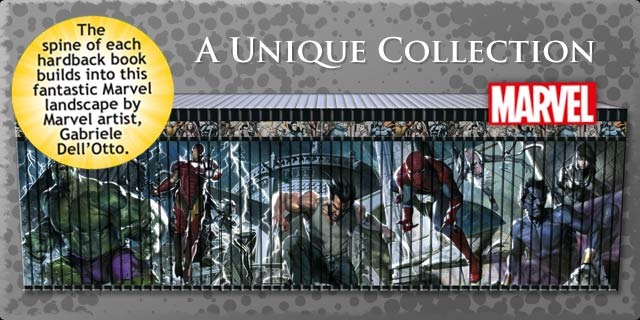
Our culture is devouring graphic media, as evident not only in comics and graphic novels, but on the silver screen. The Batman, Spiderman, Superman series have been crowding movie theaters for years. Now, with the Avengers series focusing on all the Super heroes, comics-gone-movies are block busters.
I heard that in comparing first sales, The Avengers outsold Harry Potter in the opening weekend. That says much about the allure of comics and graphic novels.
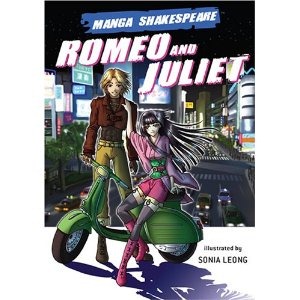
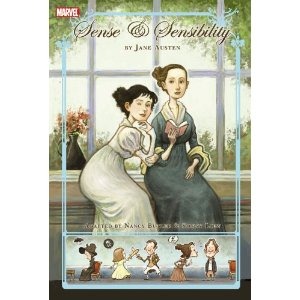
The TV series Buffy the Vampire Slayer has gone graphic novel. Classical greats, such as Shakespeare and Jane Austen’s, Sense and Sensibility, can now be found as graphic novels.
Are graphic novels another venue for the writer to consider? Absolutely. I can see turning my Mythological Sam series into graphic media down the road. Actually, since attending this workshop, graphic media has become another benchmark for my publishing plan. I wouldn’t have thought of it had I not attended this workshop.
How about you? Do you like graphic media? Do you see graphic novels as a part of your writing future?
xox, Piks
Literary Heritage or Irrelevancy?
A couple of weeks ago there was what you might call a mini literary dust-up here in Australia following the revelation that over a third of the winners of Australia’s most prestigious literary prize (the Miles Franklin Award) are now out of print.
This prize was only awarded as of 1957 so we’re not talking about ancient tomes, but rather a body of literature that some people at least regard as critical. In lamenting this situation, the director of the Melbourne Writers Festival said (and I quote) “the best writing is timeless, and without some recognition and understanding of our literary history, we’re forever focused on the new – as if history, knowledge and culture don’t play a part in our understanding of ourselves.”
In recent months there has been a lot of finger pointing about how people are losing touch with their literary heritage. This includes a lengthy debate over the failure of Australian universities to teach Australian literature and the generally shabby way in which our so-called literary darlings have been treated.
I recently attended a lecture intent on helping revive interest in some of the so-called Australian classics and I have to admit I did start to wonder – should we really be worried about such dire pronouncements about our so called literary heritage? Or does the fact that no-one is reading these novels only point to the fact that they aren’t really classics that have withstood the passage of time. Maybe (dare I say it) they are just too dull to survive?
Now don’t get me wrong, there are plenty of amazing books out there that are no longer in print. There are also classics, however, that continue to be as popular as ever (people are still reading Dickens and Jane Austen after all).
Should we really be force-feeding kids with books simply in the name of preserving ‘literary heritage’ (and to be honest I’m not sure I even know what this even means!)
Likewise I feel passionate that we shouldn’t neglect our literary past or ignore well-written books in order to merely pander to popular taste but the study of literature is (I hope) about much more than either of these things….
And yet…
What does this say about the relevance of so-called ‘classics’ to readers today? Should we be forced to feel some collective guilt over what may just be a natural evolutionary process (whereby the torpid and the dull don’t survive?)
What do you think? No matter whether you live (and I’m assuming Australia isn’t alone in it’s predicament – although if it is, that might be even more telling!) do you think we should be concerned about our so-called literary heritage? Should we be worried about keeping the winners of prestigious writing awards in print – or should we just let history (and the readers) decide?
5 Things Every Author Needs to Understand About Self-Publishing
Here, there and nowhere …much.
John Ramsey Miller
MISSING PIECES
First paragraph:
How can he be “more” stunned if he was sleeping and we didn’t see him stunned the first time? I might do something like this, “It was dark, but no darker than it had been on other occasions in the dead of night. Thank God the porch light was on and illuminating the bedroom (?) through a curtain redly. THE CLOCK!!! Dear Lord is that the time???” Or not.
So in reading this I’m not at all sure if it is dark or light? Is he is in bed or hanging from the ceiling? So… how does Max know what time it is? Wouldn’t the clock light the room somewhat? Or did the mad hatter tell him what time it is? How does he move without lifting his feet? When did he get out of bed? Did he leave the bed or is he astro-traveling? He is looking out of windows without getting out of bed! Is the driveway empty?
Okay, author. First of all, put yourself in Max’s house and maybe even in his bedroom. Imagine what is happening and what the reader is seeing, as you tell the story and slow down. Allow Max to actually do things as he goes from point A to… well you get the drift. Here is Max and this is what he’d doing. Don’t jump from his mind to the voice at the door. Is this about Max’s insanity? Or is everybody else is insane? Is this about Pod people? Would I read deeper into this? Of course I would. It’s hilarious. It isn’t very good, but I think it could be if it is fully thought through before being committed to paper.
For God’s sake go back and try again. And then you may have to try again after that. This can take years and hard work. This is a tough line of work and the righter you do it, the harder it is. Think hard before you write. Remember: if this is easy you are doing it wrong. “See” what you are saying. Don’t write what you have not seen like it actually happened. Tell me what you are seeing and feeling and smelling and tasting. Put me there. You may know what Max is thinking, feeling, doing, but I have to know what you know and see what you are seeing. Otherwise you are just playing at lining up words. I got nothing from reading this opening that I’m curious enough about to justify investing more time.
When I write, I am almost telling myself a story and typing it as I go. But I only write after I have thought all the way around and through the scene. In my opinion (and that is all it is) this piece is more sloppy scribbling than storytelling.
So go back at it and don’t quit if you know you can do better. If you don’t think you can, then get out now.
Please, for Christ’s sake… take the narration away from Max before he hurts someone and give it to his sister… At least she’s safely outside the house.
Jonathan Grave’s Arsenal
By John Gilstrap
My next book, Damage Control, hits the stands on June 5. In this edition of the Jonathan Grave thriller series, Jonathan steps into a trap when he and Boxers travel to Mexico to rescue a busload of missionaries from the hands of a drug cartel. Someone in Washington betrays him on what should have been a routine ransom drop-off, and the result is a lot of dead hostages and kidnappers. As Jonathan and Boxers escape with the lone survivor, the cartel and their sponsors in Washington move heaven and earth to stop him. Publishers Weekly gave the book a glowing review, and I’m pleased to report that my publisher, Kensington, is pulling out some new stops in the promotion department.
One of the coolest things I’ve been asked to do is a video blog that brings readers deeper into Jonathan’s world. I’m calling it “Jonathan Grave’s Arsenal.” In two-minute segments, I’ll give overviews and demonstrations of the weapons Jonathan has at his disposal. So far, I’ve completed videos highlighting Heckler and Koch’s 5.56 mm HK416 (designated the M27 by the US Marines), the Colt Model 1911 .45 caliber pistol, and the Mossberg 12 gauge shotgun. By the time I’m done, the series will cover, at a minimum, the 7.62 mm HK 417 and the amazing 4.6 mm HK MP7. I’d like to do some episodes on explosives, too, but I haven’t yet figured out the logistics of that, what with all those pesky ATF rules.
While I’ve written a few movies over the past decade or so, I haven’t actually shot one in a long time. The last time I edited a film, I used a home version of a Moviola, literally cutting the film and splicing it with tape.
When first approached about this video blog thing, I had no idea how I was going to do it. Sure, I have a digital camera that shoots video, but I’d never actually shot video with it. Plus, since talking heads are boring—and, in my case, shiny—I knew I’d want to do cutaways.
Well, lo and behold, my Windows 7 program comes complete with Microsoft Movie Maker, an editing program that is way more powerful than I would have imagined. More than adequate for my needs. You simply drag the segments you want to work with to the work window, and you can make precise cuts.
With the first episode in the can, as it were, my next challenge was figuring out what the hell to do with the 60MB files. They’d choke anybody’s email server. Enter: YouSendIt.com. For $149 a year, you can email an unlimited number of HUGE files to people. The Kensington team is thrilled with the results.
My only frustration—and I’m turning to you dear Killzoners for help—is how to do voiceovers in Movie Maker. From what I can tell, on the digital recording, the audio track and the video track are all together. Is this correct?
“Jonathan Grave’s Arsenal” will be exclusive to Barnes & Noble for the first few weeks of its existence, but then I’ll add it to my website and upload it to YouTube.
I feel a new obsession coming on. I deeply don’t need another obsession.
Critique of VANGUARD RISING
Today I’m offering a critique of an excerpt from VANGUARD RISING. I believe it serves as a great example of unexpected openings. Read on, and you’ll see why…
The darkness was all encompassing. Dan could turn in any direction and save for the glow from the radio in the dashboard[,] there was only black. It was very fitting, it matched his mood. He had been feeling the black, emptiness since he woke up this morning. It was getting late. He looked at the clock on the radio faceplate. It had just turned ten.
The glowing radio dial meant there was noise coming from the speakers in back. He didn’t hear any of it. He only heard the storm in his mind. You don’t amount to anything. You’re a failure. Nothing you do is right. He pictured every mistake he had ever made. Every embarrassing moment he had ever experienced was brought to the surface, magnified tenfold.
When he was up he didn’t think about those things. But he was down right now. Way down. And he had been this way for days. He couldn’t take it anymore. He wanted it to stop.
Dan knew this personal trial well. He would put himself through it almost routinely. This time was different. The void he felt in his belly would be silenced this time. For good.
He reached over and opened the glove box, allowing the door [to] drop freely. He sat and stared for a moment at his savior nestled inside. One of the many things he had inherited from his father after his death. The cold blackness of its six inch barrel seemed soothing to him somehow. It was a statement of ultimate control in his world.
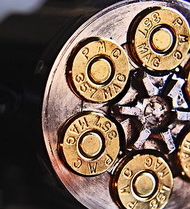
He reached in and grabbed the checkered walnut grip. It seemed heavier than [it] was only a few hours earlier. In the dim light of the radio he read the barrel, Colt Python .357 Magnum. For some reason, maybe because she knew it had value, she had kept it instead of selling it to one of his father’s friends.
He had found the last of the ammunition in the house. His mother had thrown out all of it she could find after the funeral. It seemed fitting that he came across it this morning in the garage by accident. Eight rounds in the bottom of a toolbox drawer.
He needed something to give him a feeling of control. Knowing he had it was burning at the back of his mind all day. He had a gun, and now he had bullets to go with it. They were even the right ones, 145 grain Winchester Silver Tip hollow points. More than enough to do job.
He unlocked the cylinder and swung it open. Six rounds. He only needed one. With a quick flick of his wrist the cylinder and its lethal cargo snapped back into place. He pulled the hammer back quickly with his thumb. The trigger moved rearward in its housing. It was in single action mode. Just another four pounds of pressure and it would be over.
He raised the revolver up and placed the barrel under his chin. Four more pounds of pressure. The top of his head would most likely be blown off. The bullet would probably put a hole in the roof of the car. Four more pounds is all it would take. His index finger rested on the trigger hesitantly. Is this what he wanted? Four more pounds. With a squeeze of the trigger he answered.
Then came the blinding white light out of the darkness, and everything was once again black.
All in all, I think this is a very strong beginning. As I said at the outset, losing a character on the first page of a book is unexpected, and can do a lot to draw a reader in. I’m curious to find out why Dan was feeling depressed enough to kill himself, and to know who said those terrible things to him. Clearly he’s lost his father relatively recently–could that alone have been the impetus? I would definitely keep reading to find out more.
A few technical points. I inserted edits in brackets, where a word was needed to clarify what was happening. I also think that since he was given a name, it should be used more frequently: “Dan” in place of “he” in several more spots.
The language could also be trimmed some, which would help with clarity and would additionally serve to drive the reader toward the conclusion more rapidly. For example, “His mother had thrown out all of it she could find after the funeral” is a bit wordy. Better to say, “She’d thrown it all out after the funeral–except for the eight rounds in the bottom of a toolbox drawer. It seemed fitting when he’d come across them in the garage this morning.”
Also, there are a few places where punctuation could be used to strengthen the impact of a sentence. “With a squeeze of the trigger he answered,” might be better served by inserting a comma, “With a squeeze of the trigger, he answered.” I’d advise the writer to go back through this passage and carefully examine all the punctuation choices to make sure that they add to the narrative flow.