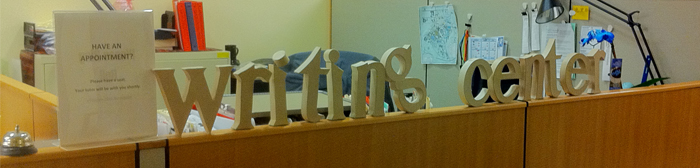
We all know there are a ton of great writing resources out there. What are some of your favorite go-to resources on the web for inspiration or information about writing? (In addition to TKZ, of course!)

By Jordan Dane
@JordanDane
Sorry for the delay in posting. I just got back from the trip from traveler’s hell. I had a speaking gig in the beautiful Madison, Wisconsin, but the weather on departure day resulted in our flight being cancelled. It took us two days to get back. I felt like I was in a John Candy & Steve Martin movie, without the trains.
For this post, I wanted to share my recent experiences with creating an audio book for my YA debut, In the Arms of Stone Angels. My publisher omitted audio rights from my contract, which gave me an opportunity to try Audiobook Creation Exchange (ACX), a site from Audible that I learned about through the International Thriller Writers (ITW). Others using ACX are: Neil Gaiman, M. J. Rose, award winning voice talent Tavia Gilbert, Tantor Audio, and Random House (a key ACX launch partner). ANY narrator with a home studio (or access to a studio) can be listed as a voice actor and audition for work.
ACX provides a central location where authors, publishers, agents, narrators, studio producers, and other rights holders can match up projects to create an audiobook for distribution through Audible (and elsewhere) under two different royalty models.
Parties can create a profile of the project for others to see. Narrators can audition, audiobook publishers can express interest, producers can make offers, and rights holders don’t have to let their rights languish. Setting up a profile is easy. I started the project in July and listed my book. Within a short while I had narrators auditioning, but I waited to see if I could get an audiobook publisher or producer interested, since I had no experience with this.
Narrators can be their own producers. I could have been more aggressive about seeking narrators and sending them a message through ACX, but I waited to see what would happen. In October, Audible added a stipend incentive to my project, meaning they offered to subsidize a producer to create my book by giving them $150/finished hour (up to $2500) for a 10-hour completed project. This stipend flag brought more auditions and producers to my project. The stipend had a deadline so Audible could get my book by year end for the holidays.
Once I decided to be more proactive in pushing my project, I decided on a narrator who had experience, awards, and a solid producer to go along with her voice actor talent. The steps from there are all online. I extended the offer, based on a royalty sharing model with my narrator, so I wouldn’t have to shell out money. The Audible stipend helped entice the narrator and producer I chose. Royalty rates will vary depending upon whether you give Audible exclusive or no-exclusive distribution rights. You decide how this can work and set it up. For more details on how ACX works, click HERE. For FAQ, click HERE.
Once I extended the offer and the deadlines ACX wanted for the stipend, I got a standard agreement printed through ACX between the parties, and my narrator had her deadline for acceptance (up to 72 hours). I talked with my narrator on the phone to share my thoughts on my central character, to help her create the voice of my teen girl, sent my book in PDF for her to read, and a 15-minute narration came within 5 days for my approval. In 60 days, I will have a finished audiobook to approve, but Audible will also act as a quality control checkpoint. If you opt for Audible to be your distributor, your book will be set up for distribution through Audible, Amazon, and iTunes. If you don’t give Audible exclusivity, you can distribute your audiobook anywhere you want to go.
I’m very excited to “hear” the voice of Brenna Nash, my character, through my award-winning narrator, Michelle Ann Dunphy. ACX has been very easy to use and I like the control aspects I keep with this project. I’m working with my German cover designer to develop the audiobook cover now. ACX is self-publishing for audio.
If you’re an author, do you retain your audio rights? How many of you like to listen to audiobooks? I love them for long road trips and for camping, listening to a story over a blazing fire.
For mystery writers, having a dirt file is akin to keeping a gold mine in your house. What is it? I’m referring to a folder full of clippings you’ve taken from the newspaper or magazines that may be relevant to your work someday. I get out a pair of scissors whenever I read a paper copy of the Sunday newspaper. A recent issue’s headline caught my eye: Bomb Case Awash in Mystery. 
As soon as I saw mention of a pipe bomb found under an SUV in a suburban neighborhood, I knew I’d hit gold. Suspect A noticed something strange under his car. It turned out to be a homemade bomb. He accused his wife’s lover of planting the device. This man, suspect B, said that he was framed by Suspect A and the wife. But it didn’t help his claim of innocence when the wife was found to have a $500,000 life insurance policy on her husband. Then the lover’s DNA was found on the bomb. But was it rigged to go off, or was it set as a false trail? To complicate the issue, police discovered videos of Suspect B and his stepdaughter having sex. Oh, man. I couldn’t have made this up! You know how truth is stranger than fiction? Here’s a perfect example.
When might I use this information? When I’m determining the suspects in my next mystery. I’m always looking for motives and secrets people may hide. Or an article like this might kick off a new plot. Think about the puzzles here. It seems an open-and-shut case about the wife and her lover trying to do away with the husband. But what if it’s really the husband and wife trying to frame the lover? Why would they do that? What if…? And here we go. Our imagination is off and running.
Stockpiling clippings doesn’t only apply to the mystery genre. For my science fiction romances, I obtain articles on futuristic technology, whether it’s on flying cars or electromagnetic weapons. Even the power of invisibility has a basis in reality. I have articles to show for these topics. I also cut out stories of true adventure travel. You never know when my hero might have to explore a volcanic crater or traipse through a jungle. Even off the beat pieces that tickle my fancy go into a general research file. You might need inspiration and one of these printouts could fire your imagination.
So are you a crazy clipper like me? I make sure my husband reads the newspaper first before I put holes in it. What kind of dirt do you look for?
by Mark Alpert
As I mentioned in my last post, I take my family to northern Michigan every summer to visit my in-laws, who have a place on Little Traverse Bay. A few years ago my father-in-law casually asked me, “Would you be interested in meeting Ernest Hemingway’s nephew? He’s a heck of a nice guy.” Well, of course I was interested! Hemingway is a touchstone for all writers of fiction, but his influence is particularly strong for thriller writers. His short story “The Killers” is often cited as one of the first examples of “hard-boiled” fiction (although some academics argue that it was Dashiell Hammett who influenced Hemingway and not vice-versa). What’s more, after all our time in northern Michigan I felt a bit of geographical kinship with Hemingway, who spent the summers of his youth at his family’s cottage on Walloon Lake, just a few miles from Little Traverse Bay. The area became the setting for most of the Nick Adams stories as well as The Torrents of Spring, Hemingway’s early novel set in Petoskey, Michigan.
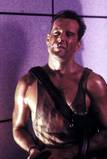
To get your inspiration engines started, here’s a link to some literary character costumes squidoo.com
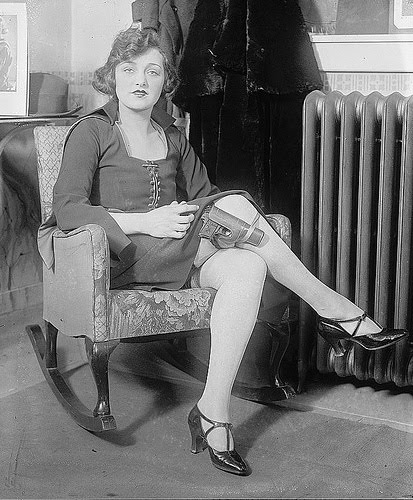
Here’s a challenge–let us know which literary character you choose for Halloween! And of course, you’ll need to send us pictures! You can send your photos to Killzoneblog at gmail dot com.

So I just emerged from my editing cave (my second draft of book 2 for the PERSEF0NE trilogy is done- whew) to some disturbing news. Digging through a backlog of emails, I came across a few from fans that were extremely troubling. Apparently these fans tried to submit reviews of my book on Amazon, and their reviews either a) never appeared, or b) were abruptly taken down.
Two of the fans send transcripts of the reviews, and they were standard (and positive, thankfully): nothing offensive at all in terms of content.
One of the fans took the time and trouble to write to Amazon, asking why his review was removed. He received this form letter reply:
I’m sorry for any previous concerns regarding your reviews on our site. We do not allow reviews on behalf of a person or company with a financial interest in the product or a directly competing product. This includes authors, artists, publishers, manufacturers, or third-party merchants selling the product.
We have removed your reviews as they are in violation of our guidelines. We will not be able to go into further detail about our research.
I understand that you are upset, and I regret that we have not been able to address your concerns to your satisfaction. However, we will not be able to offer any additional insight or action on this matter.
Now, I’ve known this fan for years–he’s read (and reviewed!) all of my other books. And he has no financial stake in my work. He also doesn’t sell anything on Amazon, ever–never mind competing products (which would be what, exactly? Other books? Does this mean that I’m no longer allowed to review thrillers by my contemporaries?)
From there, it became even more disturbing. When the fan wrote back and pointed out that he’s never sold anything on Amazon, and doesn’t have any financial interest in my books, they sent another letter–and in this one, the powers that be declared that if he tried to contact them again about reposting, they would REMOVE MY BOOK FROM THE SITE.
That’s right, remove my book. Even though, had he not written, I wouldn’t have a clue that any of this was transpiring.
Hello, Big Brother.
Needless to say, I found this very disturbing, particularly since it doesn’t appear to be an isolated case. After all, two other fans sent similar messages; and I can only wonder how many others had the same experience, but didn’t write to let me know.
All I can think is that this is some sort of misguided attempt by Amazon to try and remedy some of the abuses that came to light in the recent sock puppet debacle (and if you missed all that drama, here’s a link to catch you up). But if so, it’s overkill. These days, with fewer review outlets available to writers, those Amazon reviews can be worth their weight in gold. And on what basis is Amazon is deciding that some posts should be barred? It’s very disturbing.
Thoughts?
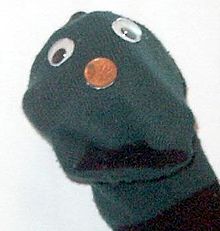
So I just emerged from my editing cave (my second draft of book 2 for the PERSEF0NE trilogy is done- whew) to some disturbing news. Digging through a backlog of emails, I came across a few from fans that were extremely troubling. Apparently these fans tried to submit reviews of my book on Amazon, and their reviews either a) never appeared, or b) were abruptly taken down.
Two of the fans send transcripts of the reviews, and they were standard (and positive, thankfully): nothing offensive at all in terms of content.
One of the fans took the time and trouble to write to Amazon, asking why his review was removed. He received this form letter reply:
I’m sorry for any previous concerns regarding your reviews on our site. We do not allow reviews on behalf of a person or company with a financial interest in the product or a directly competing product. This includes authors, artists, publishers, manufacturers, or third-party merchants selling the product.
We have removed your reviews as they are in violation of our guidelines. We will not be able to go into further detail about our research.
I understand that you are upset, and I regret that we have not been able to address your concerns to your satisfaction. However, we will not be able to offer any additional insight or action on this matter.
Now, I’ve known this fan for years–he’s read (and reviewed!) all of my other books. And he has no financial stake in my work. He also doesn’t sell anything on Amazon, ever–never mind competing products (which would be what, exactly? Other books? Does this mean that I’m no longer allowed to review thrillers by my contemporaries?)
From there, it became even more disturbing. When the fan wrote back and pointed out that he’s never sold anything on Amazon, and doesn’t have any financial interest in my books, they sent another letter–and in this one, the powers that be declared that if he tried to contact them again about reposting, they would REMOVE MY BOOK FROM THE SITE.
That’s right, remove my book. Even though, had he not written, I wouldn’t have a clue that any of this was transpiring.
Hello, Big Brother.
Needless to say, I found this very disturbing, particularly since it doesn’t appear to be an isolated case. After all, two other fans sent similar messages; and I can only wonder how many others had the same experience, but didn’t write to let me know.
All I can think is that this is some sort of misguided attempt by Amazon to try and remedy some of the abuses that came to light in the recent sock puppet debacle (and if you missed all that drama, here’s a link to catch you up). But if so, it’s overkill. These days, with fewer review outlets available to writers, those Amazon reviews can be worth their weight in gold. And on what basis is Amazon is deciding that some posts should be barred? It’s very disturbing.
Thoughts?