15 questions for your beta readers – and to focus your own revisions

by Jodie Renner, editor & author; @JodieRennerEd


So you’ve completed the first draft of your novel? Congratulations! Now it’s time to start the all-important revision process. Be sure not to shoot yourself in the foot by sending it off or self-publishing it too soon. That’s the biggest mistake of unsuccessful novelists – being in too much of a hurry to get their book out, when it still needs (major or minor) revisions and final polishing.

To start, put it aside for a week or more, then change the font and print it up and read it in a different location, where you don’t write. Or, to save paper, put it on your tablet and take it outside to a park or a (different) coffee shop to read. That way, you can approach it with fresh eyes and a bit of distance, as a reader, rather than in too close as the writer. Using the questions below to guide you, go through the whole manuscript for big-picture issues: logistics, characterization, plot, writing style, flow. Try to put some tension on every page, even if it’s just minor internal disagreement. Remember that conflict and tension are what drive fiction forward. As you read, correct minor errors and typos that jump out at you and make notes in the margins and on the backs of the pages. Then go back to the computer and type in your changes.

Now it’s time to seek out about 3 to 6 avid readers to give you some feedback. It’s best not to ask your parent, child, significant other, sibling, or bff to do this “beta” reading, as they probably won’t want to tell you what they really think, for fear of jeopardizing your relationship. Or they may be so critical it actually will hurt your relationship! Your volunteer readers don’t need to be writers, but they should be smart, discerning readers who enjoy and read your genre, and are willing to give you honest feedback.

So how do you find your beta readers? Perhaps through a critique group, writing class, workshop, book club, writers’ organization, or online networking such as Facebook, Twitter, or Google+. In the case of a YA novel or children’s book, look around for be age-appropriate relatives, neighborhood kids, or the children of your friends – or perhaps you know a teacher or librarian who would be willing to read some or all of it aloud to students and collect feedback.

To avoid generic (and generally useless) responses like “I liked it,” “It was good,” or “It was okay,” it’s best to guide your readers with specific questions. Here’s a list to choose from, based on suggestions from novelists I know. If you’re hesitant to ask your volunteers so many questions, you could perhaps have them choose the ones that seem most relevant to your story and writing style. And of course, if you first use these questions as a guideline during your revisions, the responses from your beta readers should be much more positive, or of a nature to take your story and your skills up a level or two.

1. Did the story hold your interest from the very beginning? If not, why not?

2. Did you get oriented fairly quickly at the beginning as to whose story it is, and where and when it’s taking place? If not, why not?

3. Could you relate to the main character? Did you feel her/his pain or excitement?

4. Did the setting interest you, and did the descriptions seem vivid and real to you?

5. Was there a point at which you felt the story started to lag or you became less than excited about finding out what was going to happen next? Where, exactly?

6. Were there any parts that confused you? Or even frustrated or annoyed you? Which parts, and why?

7. Did you notice any discrepancies or inconsistencies in time sequences, places, character details, or other details?

8. Were the characters believable? Are there any characters you think could be made more interesting or more likeable?

9. Did you get confused about who’s who in the characters? Were there too many characters to keep track of? Too few? Are any of the names or characters too similar?

10. Did the dialogue keep your interest and sound natural to you? If not, whose dialogue did you think sounded artificial or not like that person would speak?

11. Did you feel there was too much description or exposition? Not enough? Maybe too much dialogue in parts?

12. Was there enough conflict, tension, and intrigue to keep your interest?

13. Was the ending satisfying? Believable?

14. Did you notice any obvious, repeating grammatical, spelling, punctuation or capitalization errors? Examples?

15. Do you think the writing style suits the genre? If not, why not?

And if you have eager readers or other writers in your genre who are willing to go the extra mile for you, you could add some of the more specific questions below. These are also good for critiquing a short story.
Captivate_full_w_decal– Which scenes/paragraphs/lines did you really like?

– Which parts did you dislike or not like as much, and why?

– Are there parts where you wanted to skip ahead or put the book down?

– Which parts resonated with you and/or moved you emotionally?

– Which parts should be condensed or even deleted?

– Which parts should be elaborated on or brought more to life?

– Are there any confusing parts? What confused you?

– Which characters did you really connect to?

– Which characters need more development or focus?

Once you’ve received feedback from all your beta readers, it’s time to consider their comments carefully. Ignore any you really don’t agree with, but if two or more people say the same thing, be sure to seriously consider that comment or suggestion. Now go through and revise your story, based on the comments you felt were insightful and helpful.

What about you writers out there? Do you use beta readers? If so, how do you guide their reading? Do you have any questions or suggestions to add that have helped you focus their reading, so you can get a good handle on the strengths and weaknesses of your novel? And beta readers – do you have any questions you’d like authors to ask? I’d love to hear from all of you!

Also, see my post, “12 Essential Steps from Idea to Published Novel” here on TKZ.

And for a lengthy list of WRITERS’ CONFERENCES & BOOK FESTIVALS in North America in 2015, with links, click HERE.

 Jodie Renner is a freelance fiction editor and the award-winning author of three craft-of-writing guides in her series An Editor’s Guide to Writing Compelling Fiction: Captivate Your Readers, Fire up Your Fiction, and Writing a Killer Thriller. She has also published two clickable time-saving e-resources to date: Quick Clicks: Spelling List and Quick Clicks: Word Usage. You can find Jodie at www.JodieRenner.com, www.JodieRennerEditing.com, her blog, http://jodierennerediting.blogspot.com/, and on Facebook, Twitter, and Google+.

.
 

Amazon, Hachette, Michael Corleone and Me

@jamesscottbell

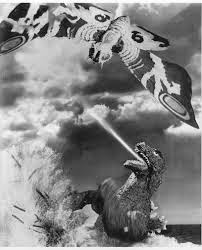
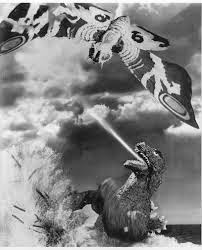
Unless you’ve been on the surface of Saturn for the last couple of months, you have no doubt read at least something about the clash between Godzilla and Mothra.

By which I mean, of course, the strained negotiations

between Amazon and Hachette. There is a whole lot out there on the internet about this. Just tickle Google and you’ll find hours of reading pleasure.

On the macro level, this is about nothing less than the future of publishing. If Hachette “wins,” things will look brighter for the entire traditional publishing industry. If Amazon “wins,” traditional publishing will face ever-increasing challenges to its relevance and perhaps even its survival.
So this is a very big deal indeed, which is why both sides are entrenched and why so much acid is being hurled from advocates of either side. For a bit of this, consider James Patterson (Hachette advocate) versus Joe Konrath (Amazon advocate).
Which brings me to  Michael Corleone.
You’ll recall that Michael is the good son, the Army vet who comes back from the war determined not to get involved with his family’s enterprises.
That all changes when his father, Don Vito Corleone, is nearly assassinated. Michael comes to the hospital one night and foils another attempt on his father’s life. Outside the hospital he confronts the dirty police captain, McCluskey, who proceeds to break Michael’s face.
At a meeting of the Don’s inner circle, Sonny Corleone rants and raves. Michael then quietly suggests a plan to take out the traitor, Sollozzo, and the dirty cop. He, Michael, will be the shooter. (This, by the way, is the “mirror moment” for Michael).
Sonny rejects Michael’s suggestion. After all, Michael is just a “nice college boy.” What does he know about such things? He’s mad just because a cop slapped him around? “You’re taking this very personal,” Sonny jokes.
But Michael lays it all out in further detail, convincing everyone to go along with it. Then he looks at his brother and says, “It’s not personal, Sonny. It’s just business.”
And that’s what’s going on with Amazon and Hachette. It’s business. Big business. Really, really big business.
But it’s not personal. This is what businesses do: jockey for the best position in a competitive marketplace. (Of course, if a business runs afoul of anti-trust law in this competition, the Department of Justice is liable to step in).

This time, we assume everyone’s playing by the rules. How does the game look?
Amazon does not owe Hachette a profit and Hachette does not have to do business with Amazon.
If Amazon loses Hachette’s business, it will not have a huge affect on Amazon’s bottom line (one that is fed by other items than books). If Hachette walks away from the world’s biggest book seller, Hachette will suffer a major hit.
On the other hand, Hachette believes that if it accedes to the current offer by Amazon it is accepting a long, downward trendline.
But it’s not personal. Except for authors. Because right now Hachette authors are being squeezed out of the Amazon store, and that means real harm to actual careers. This week Hachette revealed just how much they are being impacted in the Amazon dispute. And several Hachette authors have gone public on said harm, often making Amazon the villain in very Godfather-like terms (“Amazon stabbed me in the back!”).
So when I see frothing and vitriol from authors over this fight, I am not surprised. I’m even sympathetic. Yet I remind myself that such fights are just business as usual, and fuming does not put steak on the table.
I am a Hachette author and I am an indie author.
But I am also a cork riding on top of the roiling sea. No matter what happens around me (most of it out of my control), my job is to keep writing and then find the best place for what I write.
Which is why, as Godzilla and Mothra decimate Tokyo, I sip coffee in Los Angeles writing my next novel.

So how do you view the Amazon/Hachette kerfuffle? Do you see villainy here or simply the free market at work?  

Amazon, Hachette, Michael Corleone and Me

@jamesscottbell

Unless you’ve been on the surface of Saturn for the last couple of months, you have no doubt read at least something about the clash between Godzilla and Mothra.

By which I mean, of course, the strained negotiations

between Amazon and Hachette. There is a whole lot out there on the internet about this. Just tickle Google and you’ll find hours of reading pleasure.

On the macro level, this is about nothing less than the future of publishing. If Hachette “wins,” things will look brighter for the entire traditional publishing industry. If Amazon “wins,” traditional publishing will face ever-increasing challenges to its relevance and perhaps even its survival.
So this is a very big deal indeed, which is why both sides are entrenched and why so much acid is being hurled from advocates of either side. For a bit of this, consider James Patterson (Hachette advocate) versus Joe Konrath (Amazon advocate).
Which brings me to  Michael Corleone.
You’ll recall that Michael is the good son, the Army vet who comes back from the war determined not to get involved with his family’s enterprises.
That all changes when his father, Don Vito Corleone, is nearly assassinated. Michael comes to the hospital one night and foils another attempt on his father’s life. Outside the hospital he confronts the dirty police captain, McCluskey, who proceeds to break Michael’s face.
At a meeting of the Don’s inner circle, Sonny Corleone rants and raves. Michael then quietly suggests a plan to take out the traitor, Sollozzo, and the dirty cop. He, Michael, will be the shooter. (This, by the way, is the “mirror moment” for Michael).
Sonny rejects Michael’s suggestion. After all, Michael is just a “nice college boy.” What does he know about such things? He’s mad just because a cop slapped him around? “You’re taking this very personal,” Sonny jokes.
But Michael lays it all out in further detail, convincing everyone to go along with it. Then he looks at his brother and says, “It’s not personal, Sonny. It’s just business.”
And that’s what’s going on with Amazon and Hachette. It’s business. Big business. Really, really big business.
But it’s not personal. This is what businesses do: jockey for the best position in a competitive marketplace. (Of course, if a business runs afoul of anti-trust law in this competition, the Department of Justice is liable to step in).

This time, we assume everyone’s playing by the rules. How does the game look?
Amazon does not owe Hachette a profit and Hachette does not have to do business with Amazon.
If Amazon loses Hachette’s business, it will not have a huge affect on Amazon’s bottom line (one that is fed by other items than books). If Hachette walks away from the world’s biggest book seller, Hachette will suffer a major hit.
On the other hand, Hachette believes that if it accedes to the current offer by Amazon it is accepting a long, downward trendline.
But it’s not personal. Except for authors. Because right now Hachette authors are being squeezed out of the Amazon store, and that means real harm to actual careers. This week Hachette revealed just how much they are being impacted in the Amazon dispute. And several Hachette authors have gone public on said harm, often making Amazon the villain in very Godfather-like terms (“Amazon stabbed me in the back!”).
So when I see frothing and vitriol from authors over this fight, I am not surprised. I’m even sympathetic. Yet I remind myself that such fights are just business as usual, and fuming does not put steak on the table.
I am a Hachette author and I am an indie author.
But I am also a cork riding on top of the roiling sea. No matter what happens around me (most of it out of my control), my job is to keep writing and then find the best place for what I write.
Which is why, as Godzilla and Mothra decimate Tokyo, I sip coffee in Los Angeles writing my next novel.

So how do you view the Amazon/Hachette kerfuffle? Do you see villainy here or simply the free market at work?  

What the %#$@?

Tomorrow is the hundredth anniversary of the publication of James Joyce’s Dubliners. It’s perhaps the greatest short-story collection ever written, and yet Joyce had to struggle for eight years to get it published.
Why did it take so long? For one thing, publishers objected to disparaging comments about the English royal family in the story “Ivy Day in the Committee Room.” They were also worried about the sexual references in “Counterparts” and “Two Gallants.” But one of the strongest objections was to Joyce’s frequent use of the swear word “bloody.” Joyce eventually agreed to remove the offending word from some of the stories, but not all of them; it remained, for example, in “Two Gallants” (“two bloody fine cigars”) and “The Boarding House” (“if any fellow tried that sort of a game on with his sister he’d bloody well put his teeth down his throat, so he would”). Joyce insisted that in those instances no other word would do.
But Joyce was a genius, so he could take certain liberties. What about the rest of us, the merely mortal writers? How do we walk the fine line between underuse and overuse of vulgarities and swear words? Many characters in thrillers are unsavory types, and in the real world such people often use words that are a lot more offensive than “bloody.” If we’re going to show their dialogue and thoughts in a realistic way, we can’t avoid typing “shit,” “fuck,” “piss,” and all the other dirty words on George Carlin’s famous list. And yet many readers strongly object to the foul language.
I confronted this issue a few years ago when I got an e-mail from a reader who enjoyed my first novel Final Theory. She wanted to share the novel with her 13-year-old son and asked me if there was a kid-friendly version of the book with none of the swear words. I had to tell her there was no such animal, but I made a solemn vow: if I ever wrote a Young Adult book intended for the twelve-and-up crowd, it would contain no swears whatsoever.
I started writing a YA novel a couple of years ago, and in the beginning I had a hard time complying with my no-swears rule. For instance, I’d developed the bad habit of having my characters either think or say the word “Shit!” whenever something shocking happened. I realized that I was using the word as a crutch, an easy way to signal strong fear or surprise. When I forced myself to avoid the word, I came up with more imaginative ways to convey these emotions.
In the end I wrote nearly 100,000 words with nary a vulgarity among them. The most offensive word in the whole novel is “freaking.” The book is scheduled to be published a year from now. (We haven’t officially announced it yet because we’re still trying to choose the title.)

I’m still using swear words in my thrillers for adults, but now I’m trying to exercise some restraint. I’ve learned that less can be more. As Joyce might say, you better bloody well believe it.  

What the %#$@?

Tomorrow is the hundredth anniversary of the publication of James Joyce’s Dubliners. It’s perhaps the greatest short-story collection ever written, and yet Joyce had to struggle for eight years to get it published.
Why did it take so long? For one thing, publishers objected to disparaging comments about the English royal family in the story “Ivy Day in the Committee Room.” They were also worried about the sexual references in “Counterparts” and “Two Gallants.” But one of the strongest objections was to Joyce’s frequent use of the swear word “bloody.” Joyce eventually agreed to remove the offending word from some of the stories, but not all of them; it remained, for example, in “Two Gallants” (“two bloody fine cigars”) and “The Boarding House” (“if any fellow tried that sort of a game on with his sister he’d bloody well put his teeth down his throat, so he would”). Joyce insisted that in those instances no other word would do.
But Joyce was a genius, so he could take certain liberties. What about the rest of us, the merely mortal writers? How do we walk the fine line between underuse and overuse of vulgarities and swear words? Many characters in thrillers are unsavory types, and in the real world such people often use words that are a lot more offensive than “bloody.” If we’re going to show their dialogue and thoughts in a realistic way, we can’t avoid typing “shit,” “fuck,” “piss,” and all the other dirty words on George Carlin’s famous list. And yet many readers strongly object to the foul language.
I confronted this issue a few years ago when I got an e-mail from a reader who enjoyed my first novel Final Theory. She wanted to share the novel with her 13-year-old son and asked me if there was a kid-friendly version of the book with none of the swear words. I had to tell her there was no such animal, but I made a solemn vow: if I ever wrote a Young Adult book intended for the twelve-and-up crowd, it would contain no swears whatsoever.
I started writing a YA novel a couple of years ago, and in the beginning I had a hard time complying with my no-swears rule. For instance, I’d developed the bad habit of having my characters either think or say the word “Shit!” whenever something shocking happened. I realized that I was using the word as a crutch, an easy way to signal strong fear or surprise. When I forced myself to avoid the word, I came up with more imaginative ways to convey these emotions.
In the end I wrote nearly 100,000 words with nary a vulgarity among them. The most offensive word in the whole novel is “freaking.” The book is scheduled to be published a year from now. (We haven’t officially announced it yet because we’re still trying to choose the title.)

I’m still using swear words in my thrillers for adults, but now I’m trying to exercise some restraint. I’ve learned that less can be more. As Joyce might say, you better bloody well believe it.  

Five Ways to Stand out with Humor in Your Writing

Jordan Dane
@JordanDane

Orphan Black

I learned early on that I can’t write the serious suspense plots that I do and NOT add humor. People/characters use humor when they’re nervous, or a fictional buddy is a cynical smart ass and great comic relief at key times. Laser sharp wit can become a way for any writer to stand out in a crowd of authors or a slush pile. 

I remember reading Robert Crais in an airport when Elvis Cole was on stakeout and spied a small dog taking a dump in a yard, ‘straining so hard its back hunched double.’ Elvis thought, “Awful, the things you see in my line of work.” That line made me laugh aloud and I had to call my husband to read him the passage before my plane boarded. I never forgot it.

Lately I’ve been influenced by odd/dark humor in shows like FARGO and Orphan Black, where the writers do the unexpected. They take quirky characters, weird outlandish settings, and put those elements into over-the-top plot notions. This type of humor isn’t new, but I love that the only limits are the writer’s imagination. It feels like the writers took a dartboard of wild ideas/settings/elements/characters and whatever they darted, they had to come up with a story. So I thought it would be fun to talk about use of humor in novels and break it down into elements I have tried (not just read about) and enjoyed writing.

FIVE WAYS TO ADD HUMOR


1.) Put Serious Characters Into Ludicrous Situations

I used this strategy for a novella I wrote and sold recently – Lillian & Noah – An uncommon Coming of Age Novel. Picture a small fictitious town in Texas, called Why. A well-intentioned bowling team of widows, called the Ball Busters, meet on league night at Why Bowl & Tanning Spa to brainstorm a scheme to compromise certain influential citizens of the town, in order to stop one woman from financially ruining a nice young man who’s trying to send his sister to college. The Ball Busters convert an old carwash at the edge of town (the Why ScrubADub – Motto: “You like it clean, we like it dirty”) and remake it into a sexual fantasy hotspot to raise money for tuition. Harold & Maud meets Risky Business for the baby boomer generation.

BBC America’s show Orphan Black is a prime example of this brand of humor. The characters are deadly earnest in their attempts to dig into the clone conspiracy and stay alive, but in each episode there are ridiculous situations that make a viewer laugh aloud. One incredible actress, Tatiana Maslany, plays all the clone parts from a crazed Russian assassin to a soccer mom to a scientist to this week’s gender challenged Tranny. One example of their over-the-top humor: several of the clones are discussing strategies on Skype with one who can’t be there because she’s sewing costumes for a play she is starring in after she killed her neighbor (by garbage disposal) who had the starring role.

With this type of humor, don’t edit your ideas. Fling them onto a notepad or whiteboard without censorship. Maybe brainstorm with your craziest friends to see what makes you all laugh.

2.) Write Earnest Dialogue With a Sarcastic Internal Monologue from the POV Character

Cut loose on your inner smart ass with this type of scene. The dialogue lines would read as idle banter or may not appear to have color, until the reader sees what the character is thinking or gets a whiff of their cynicism. Whether you write in first person POV or deep third, you can make this happen and add attitude to your character. Remember, people don’t censor their opinion when they think no one hears them, in their head. So let the sarcasm fly, without filter.

Example: From My WIP – Legacy in Blood. My 24-year old bounty hunter wannabe, Trinity LeDoux, argues with Hayden Quinn about coming along on a dangerous trip:

“We? Oh, no,” he said.

“Yeah, but that’s the deal. I go too.”

“That’s crazy. I’m not a coaster ride at Six Flags. You can’t buy a ticket and climb onboard.”

If Quinn were a ride, I’d definitely buy a ticket, but now wasn’t the time to embarrass us both. I had to find another way to pique his interest before he voted me off his island.

Example: Hayden notices Trinity is carrying a weapon when he “visits” her condemned warehouse home

“You’re carrying a weapon,” he said as he let me pass. “I feel better already.”

Busted. Okay, yeah. I had a gun tucked under my Ren and Stimpy T-shirt, my one big investment in my new career. I couldn’t read Hayden’s reaction, but his deadpan sarcasm had begun to grow on me.

I’d once argued that bullets were more valuable than a gun. My shooting instructor went ape shit crazy over that one, especially when I said, ‘Without bullets, any gun is only a passable paperweight.’ It’d been a chicken and egg argument. You had to be there.

3.) Use Funny Sounding Unusual Words to Add Color & Humor

How about these zingers? Bamboozled, bazinga, bobolink, bumfuzzle, canoodle, carbuncle, caterwaul, cattywampus, doohickey, gobsmacked, gunky are but a few of the words listed in my link below, but imagine how you might use these words in a story and who might say them. These words alone could stir your imaginings on a character.

Example: The word ‘parsimonious’ means stingy. Here is how I used it in my latest WIP – Legacy in Blood:

I hadn’t eaten since early yesterday. If Hayden didn’t kick me off his property, I’d eat enough to last. I’d stuff it in my cheeks like a parsimonious squirrel if I had to. 
(The internal voice of Trinity LeDoux. She’s presently homeless and beggars can’t afford to be persnickety.)

4.) Try Tongue-in-Cheek/Deadpan Delivery in the Banter Between Characters 

In my opinion, less is more. Write the banter in short punches and don’t explain. If the reader finds it funny, that’s good, but don’t overwork it by trying too hard to be funny. Also be mindful of pace. Too much of a diversion can slow the plot. Get in, get out. Or in the case of Robert Crais’s example below, add several quick schticks of the same idea (ie. John Cassavetes) through the book to reinforce the humor in short spurts.

Example: In Monkey’s Raincoat, Robert Crais carries on a schtick with Elvis Cole, PI. A new client flatters him by saying he looked like a young John Cassavetes. After that, Cole asks others if they think so too. Each short punch is funnier and funnier. Here’s one encounter:

“Tell me the truth,” I said. “Do you think I look like John Cassavetes twenty years ago?”

“I didn’t know you twenty years ago.”

Everyone’s a comedian.

Example of Lillian’s POV from my novella – Lillian & Noah:

“It’s a sexual fantasy site,” I said. “Members share their most intimate erotic fantasies on their profile.”

“In my day, guys just wrote those on a bathroom wall.” Vinnie snorted.

“Shut up, Vinnie. Let her finish.” Candy shushed him with her red nails. “What happens next, doll? I think I saw something like this on Days of Our Lives.”

I clenched my jaw as heat rushed to my face. Not even a pig in a blanket helped.

5.) Use Odd Parings in Comparison Humor
In the examples below, it would take a witty or outlandish character to come up with these descriptions, so get your creative juices flowing to conjure who might say these lines. In the case of Schimmel’s bittersweet memoir on cancer, I can see my younger brother saying things like this. When he had his cancer scare, he made sure I was with him at his doctor appointments (along with my mom) because he knew I would laugh at his defensive humor. Mom couldn’t. So I was stuck between my more serious worrying mom, and my irreverent bro who had to laugh or go crazy(ier).

Example:
Games of Thrones is like Twitter. It’s got 140 characters and terrible things are constantly happening.” 
This kind of comparison takes a poke at Game of Thrones AND twitter.

Example: From the late Robert Schimmel’s memoir ‘Cancer on $5 a Day’

“…this stupid hospital gown is riding up my ass. I try to pull it down and it snaps up like a window shade. I cross my legs and suddenly I’m Sharon Stone.”

Any book can be enhanced with some humor. Think about people you know. Most everyone has humor in one fashion or another. Maybe you need a funny secondary character to offset the dire circumstances as comic relief, or the clever banter between a man and a woman could focus on their gender gaps. By adding humor, you put another layer to your writing and another tool in your arsenal of tricks.

Humor Writing links:
Writer’s Digest Article on Humor Writing.
Funny Words

So for TKZ Discussion:
1.) Share some of your funny (short) scenes or one-liners.
2.) Or post authors you’ve enjoyed who use humor in a memorable way.

Five Ways to Stand out with Humor in Your Writing

Jordan Dane
@JordanDane

Orphan Black

I learned early on that I can’t write the serious suspense plots that I do and NOT add humor. People/characters use humor when they’re nervous, or a fictional buddy is a cynical smart ass and great comic relief at key times. Laser sharp wit can become a way for any writer to stand out in a crowd of authors or a slush pile. 

I remember reading Robert Crais in an airport when Elvis Cole was on stakeout and spied a small dog taking a dump in a yard, ‘straining so hard its back hunched double.’ Elvis thought, “Awful, the things you see in my line of work.” That line made me laugh aloud and I had to call my husband to read him the passage before my plane boarded. I never forgot it.

Lately I’ve been influenced by odd/dark humor in shows like FARGO and Orphan Black, where the writers do the unexpected. They take quirky characters, weird outlandish settings, and put those elements into over-the-top plot notions. This type of humor isn’t new, but I love that the only limits are the writer’s imagination. It feels like the writers took a dartboard of wild ideas/settings/elements/characters and whatever they darted, they had to come up with a story. So I thought it would be fun to talk about use of humor in novels and break it down into elements I have tried (not just read about) and enjoyed writing.

FIVE WAYS TO ADD HUMOR


1.) Put Serious Characters Into Ludicrous Situations

I used this strategy for a novella I wrote and sold recently – Lillian & Noah – An uncommon Coming of Age Novel. Picture a small fictitious town in Texas, called Why. A well-intentioned bowling team of widows, called the Ball Busters, meet on league night at Why Bowl & Tanning Spa to brainstorm a scheme to compromise certain influential citizens of the town, in order to stop one woman from financially ruining a nice young man who’s trying to send his sister to college. The Ball Busters convert an old carwash at the edge of town (the Why ScrubADub – Motto: “You like it clean, we like it dirty”) and remake it into a sexual fantasy hotspot to raise money for tuition. Harold & Maud meets Risky Business for the baby boomer generation.

BBC America’s show Orphan Black is a prime example of this brand of humor. The characters are deadly earnest in their attempts to dig into the clone conspiracy and stay alive, but in each episode there are ridiculous situations that make a viewer laugh aloud. One incredible actress, Tatiana Maslany, plays all the clone parts from a crazed Russian assassin to a soccer mom to a scientist to this week’s gender challenged Tranny. One example of their over-the-top humor: several of the clones are discussing strategies on Skype with one who can’t be there because she’s sewing costumes for a play she is starring in after she killed her neighbor (by garbage disposal) who had the starring role.

With this type of humor, don’t edit your ideas. Fling them onto a notepad or whiteboard without censorship. Maybe brainstorm with your craziest friends to see what makes you all laugh.

2.) Write Earnest Dialogue With a Sarcastic Internal Monologue from the POV Character

Cut loose on your inner smart ass with this type of scene. The dialogue lines would read as idle banter or may not appear to have color, until the reader sees what the character is thinking or gets a whiff of their cynicism. Whether you write in first person POV or deep third, you can make this happen and add attitude to your character. Remember, people don’t censor their opinion when they think no one hears them, in their head. So let the sarcasm fly, without filter.

Example: From My WIP – Legacy in Blood. My 24-year old bounty hunter wannabe, Trinity LeDoux, argues with Hayden Quinn about coming along on a dangerous trip:

“We? Oh, no,” he said.

“Yeah, but that’s the deal. I go too.”

“That’s crazy. I’m not a coaster ride at Six Flags. You can’t buy a ticket and climb onboard.”

If Quinn were a ride, I’d definitely buy a ticket, but now wasn’t the time to embarrass us both. I had to find another way to pique his interest before he voted me off his island.

Example: Hayden notices Trinity is carrying a weapon when he “visits” her condemned warehouse home

“You’re carrying a weapon,” he said as he let me pass. “I feel better already.”

Busted. Okay, yeah. I had a gun tucked under my Ren and Stimpy T-shirt, my one big investment in my new career. I couldn’t read Hayden’s reaction, but his deadpan sarcasm had begun to grow on me.

I’d once argued that bullets were more valuable than a gun. My shooting instructor went ape shit crazy over that one, especially when I said, ‘Without bullets, any gun is only a passable paperweight.’ It’d been a chicken and egg argument. You had to be there.

3.) Use Funny Sounding Unusual Words to Add Color & Humor

How about these zingers? Bamboozled, bazinga, bobolink, bumfuzzle, canoodle, carbuncle, caterwaul, cattywampus, doohickey, gobsmacked, gunky are but a few of the words listed in my link below, but imagine how you might use these words in a story and who might say them. These words alone could stir your imaginings on a character.

Example: The word ‘parsimonious’ means stingy. Here is how I used it in my latest WIP – Legacy in Blood:

I hadn’t eaten since early yesterday. If Hayden didn’t kick me off his property, I’d eat enough to last. I’d stuff it in my cheeks like a parsimonious squirrel if I had to. 
(The internal voice of Trinity LeDoux. She’s presently homeless and beggars can’t afford to be persnickety.)

4.) Try Tongue-in-Cheek/Deadpan Delivery in the Banter Between Characters 

In my opinion, less is more. Write the banter in short punches and don’t explain. If the reader finds it funny, that’s good, but don’t overwork it by trying too hard to be funny. Also be mindful of pace. Too much of a diversion can slow the plot. Get in, get out. Or in the case of Robert Crais’s example below, add several quick schticks of the same idea (ie. John Cassavetes) through the book to reinforce the humor in short spurts.

Example: In Monkey’s Raincoat, Robert Crais carries on a schtick with Elvis Cole, PI. A new client flatters him by saying he looked like a young John Cassavetes. After that, Cole asks others if they think so too. Each short punch is funnier and funnier. Here’s one encounter:

“Tell me the truth,” I said. “Do you think I look like John Cassavetes twenty years ago?”

“I didn’t know you twenty years ago.”

Everyone’s a comedian.

Example of Lillian’s POV from my novella – Lillian & Noah:

“It’s a sexual fantasy site,” I said. “Members share their most intimate erotic fantasies on their profile.”

“In my day, guys just wrote those on a bathroom wall.” Vinnie snorted.

“Shut up, Vinnie. Let her finish.” Candy shushed him with her red nails. “What happens next, doll? I think I saw something like this on Days of Our Lives.”

I clenched my jaw as heat rushed to my face. Not even a pig in a blanket helped.

5.) Use Odd Parings in Comparison Humor
In the examples below, it would take a witty or outlandish character to come up with these descriptions, so get your creative juices flowing to conjure who might say these lines. In the case of Schimmel’s bittersweet memoir on cancer, I can see my younger brother saying things like this. When he had his cancer scare, he made sure I was with him at his doctor appointments (along with my mom) because he knew I would laugh at his defensive humor. Mom couldn’t. So I was stuck between my more serious worrying mom, and my irreverent bro who had to laugh or go crazy(ier).

Example:
Games of Thrones is like Twitter. It’s got 140 characters and terrible things are constantly happening.” 
This kind of comparison takes a poke at Game of Thrones AND twitter.

Example: From the late Robert Schimmel’s memoir ‘Cancer on $5 a Day’

“…this stupid hospital gown is riding up my ass. I try to pull it down and it snaps up like a window shade. I cross my legs and suddenly I’m Sharon Stone.”

Any book can be enhanced with some humor. Think about people you know. Most everyone has humor in one fashion or another. Maybe you need a funny secondary character to offset the dire circumstances as comic relief, or the clever banter between a man and a woman could focus on their gender gaps. By adding humor, you put another layer to your writing and another tool in your arsenal of tricks.

Humor Writing links:
Writer’s Digest Article on Humor Writing.
Funny Words

So for TKZ Discussion:
1.) Share some of your funny (short) scenes or one-liners.
2.) Or post authors you’ve enjoyed who use humor in a memorable way.

Smoke and Mirrors

By Joe Moore
@JoeMoore_writer

One of the most frequently asked questions Lynn Sholes and I get is “How is it possible for two people to write fiction together?” The answer is: it ain’t easy. At least it wasn’t at first. Collaboration on non-fiction is somewhat easier to understand. In general, with non-fiction, usually the “facts” already exist and the collaborators’ job is to organize them into a readable document that has a beginning, middle and end. A good outline and knowledge of the subject matter along with professional writing skills may be all the authors need.

But with fiction, nothing exists. It’s all smoke and mirrors. Fiction is a product of an individual’s imagination. It might be inspired by actual facts or events, but only the individual writer has a specific vision of those events in his or her head. So how can two people have a similar enough vision to be able to write a novel?

I can’t speak for the handful of other writing teams out there, but Lynn and I have managed to complete 7 novels together because of a number of reasons.

First, we love the same kind of books—the ones we read are like the ones we write.

Second, we have an unquestioning respect for each other’s writing skills and a deep belief that whatever one of us writes, the other can improve upon it.

Third, we believe that there’s always a better way to write something.

Fourth, we never let our egos get in the way of a good story. This comes from spending over 10 years together in a weekly writers’ critique group.

Fifth, we know each other’s strengths and weaknesses, and are willing to admit them.

Sixth, we agree on the same message in each book.

Seventh, we believe that we are on the same level of expertise.

And last, we believe that the whole is greater than the sum of the parts.

Those points cover the mental portion. Now, how do we handle the mechanics of the job? We talk, and talk and talk. Once a day we conference call, brainstorming and telling and retelling each other the story. Our two favorite words are: What if? Whether it’s global plot points or an individual scene or character motivation, we keep telling each other the story until that little imaginary movie in our minds becomes as in sync as possible. Then one of us will declare they have a “handle” on the scene or character or chapter, and create the first draft.

We write very slowly because each chapter must go back and forth many times for revision. Years ago, when we first started, everyone who read our drafts could tell who wrote what as we tried to write our first book. It took three years of hard work before we melted our voices together. Now, because the process goes through so many revisions, even I can’t always remember what I wrote and what Lynn wrote. I rely on my co-writer so much that I’ve come to wonder how individuals can possibly write a book on their own.

There are a number of advantages and disadvantages to collaborating. A disadvantage is that you split any money you make. So you’ll always make half of what you could as a single author. And like any relationship, there is always a chance of a falling out. And something could happen where an ego can become inflated and affect the process.

One of the pluses is that we never experience writer’s block. One of us will always have an idea on how to get out of a jam or move the story forward. And unlike our family, friends, trusted beta readers, and everyone else, a co-writer has an intimate, vested interest in the success of the story that no one else could have.

Lynn and I are working on our eighth book together. I’ve found that creating the first draft of a chapter is just as exciting as getting a new chapter from her and seeing where the story has gone from her perspective. I guess the whole thing boils down to trust. Trust in each other and in the goals we both want to achieve with the story and with our careers.

I truly believe that the old adage of two heads being better than one is true when it comes to writing our novels.

———————–

shield-cover-smallTHE SHIELD by Sholes & Moore is now available in print and e-book.

“THE SHIELD rocks on all cylinders.”
– James Rollins,New York Times bestselling author of THE EYE OF GOD.

Coming soon in audio.