Embracing Change

by Clare Langley-Hawthorne

New year! New decade! and 100 years since the date I set my first book (yes, that would be 1910)… So I’m figuring it’s probably a good time to consider embracing change – not that I’m a stick in the mud (like Winston Churchill I believe there’s nothing wrong with change so long as it’s in the right direction) but I do like to know how things turn out (which, of course, is impossible). I’m a great one for worrying about the not-so good changes (pointless I know), so this year I’m going to throw off my shackles and embrace uncertainty and change in all aspects of my life (yes, really…)
I met most of last year’s resolutions after all – I did grow my hair long (and then cut it all off in horror at what I looked like); I learned how to ride a bike (my husband bought me one for Christmas so my fate is sealed) and I did lose weight (although after eating my way through the holidays my bum is now exponentially larger…sigh). My writing resolution (put the writing first!) fell a bit by the wayside – but then with twin five-year old boys I guess what else can I expect! I completed two books and am three-quarters of the way through a third…so not too bad…(though on the publishing end of it, 2009 was bit of a dud).

I’m reminded of a quotation from Washington Irving that I think I may adopt for the year:

“There is certain relief in change, even though it be from bad to worse! As I have often found in traveling in a stagecoach, that it is often a comfort to shift one’s position, and be bruised in a new place.”

I know that 2010 is going to be year of change – and so I am going to focus my efforts on trying to adapt as best I can. I shall shift my position in the stagecoach and see how it feels:)
I have ideas for lots of new books (even I need a break from Edwardian England sometimes) and I am completing a short story as well…so maybe I’ll even foray a few more times into this medium (or maybe not…let’s see…)
So forget resolutions – let’s just accept the inevitability of change and fess up – what kind of change will you be embracing this year?

Santa List

Ah, the holiday season…time of looniness and mayhem… Today, being my last blog post for 2009, I’m going to channel the holiday spirit and write about conspicuous consumption (of books of course!) and my family’s current wish list for Santa.

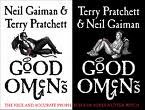
Now first up (appropriately enough) are my parents. Notoriously hard to buy for as they devour their favorite authors’ latest books as soon as they come out, they have few books still on their list so I’m going for the audio book approach: I figure I can’t go wrong with Good Omens by Neil Gaimon and Terry Pratchett (my father is a huge fan of both) or The Screwtape Letters by C.S Lewis…only problem, not sure Santa’s up on the whole ‘bureaucracy of hell’ or ‘the end is nigh’ stuff – might dampen the ho, ho, ho…but, bah humbug, that’s what they’re getting.
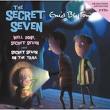
My twin boys are so much easier – I’ve already indoctrinated them into loving mystery books (the old fashioned, English kind, of course). Once again, Enid Blyton rules and my boys are already obsessed by the Secret Seven mystery series (seven kids, a dog named Scamper and lots of English village mysteries to solve) and are about to discover the Adventure series (four kids, a talking parrot and mysteries in exotic locations). Santa is fully up to speed on their book requirements though (sigh), Lego is still number one on their Santa list.

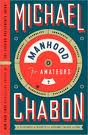
My husband is always a trickier proposition, book-wise. He barely has enough time to start a book let alone finish it, but I recently introduced him to a terrific Australian thriller writer, Michael Rowbotham, so I know he’ll be trying to read him over the holidays. As for his list, well I’m going for non-fiction instead with Michael Chabon’s latest, Manhood for Amateurs. I wasn’t quite ready to put his wife’s book, Bad Mother, on my Santa list (my fragile ego couldn’t cope with unwrapping it on Christmas Day…) but I’d love to read it all the same.

I have a veritable library of titles on my list for Santa…and certainly not enough time to read them all…but my top three are: AS Byatt’s Edwardian saga, The Children’s Book; Cormac McCarthy’s post apocalyptic, The Road, and Juliet Nicholson’s non-fiction account of collective mourning in the aftermath of WW1, The Great Silence.

So what books are on your Santa list??

Thanksgiving Day Bravery

by Clare Langley-Hawthorne

Having just spent a great Thanksgiving in LA (despite the horrible traffic) I have returned re-motivated. Why? Because my friend Charysse gave me a much needed boost. In a recent work evaluation she had to list the ten people she would most want to have at a dinner party and I was one of the chosen. While this was nice and all – it was her reason for choosing me that caused a lump to form in my throat. She said she had told her boss it was because I was one of the bravest people she knew. Now I’m no courageous Clare that’s for sure – I’m terrified of heights, wimpy about woods (there’s bears out there you know) and squeamish about virtually everything – but I was, in my friend’s estimation, brave because I chose to ‘lay it all out there’ – abandoning my successful career in pursuit of a dream and risking all in the process. Her support brought tears to our eyes and it made me realize (as it was Thanksgiving after all) how thankful I am for so many things…Yes, here’s where it gets soppy (and I have to admonish my fellow Killzoners – where was the obligatory ‘what are we thankful for’ post last week?! Hey, I adopted this country for these kinds of celebrations!)

So here’s my top 5 things that I’m thankful for:

  1. My family (obviously) – you gotta love two five year old boys who manage to make it in the car to LA (and the three hour traffic jam we encountered Wednesday when we arrived) without watching even one DVD…
  2. That I still have an agent (he hasn’t abandoned me yet, at least I don’t think so…)
  3. That I still LOVE to write (despite the publishing industry’s best efforts…)
  4. That I get such great support from friends, family, fellow writers and fans so that even in the bleakest of November moods I can see a glimmer of hope.
  5. That I finally had my hair cut.

Okay, the last one may seem trivial but believe me I needed it! I’ve been growing my hair all year (see New Year’s resolution post) only to discover that (surprise, surprise) I hated it. Not only did my husband think it made me look older (yes, it’s a miracle sometimes that we’re still married) but I also never had the time to style it into any pseudo-Edwardian glory. I have to admit, as much as I might want to channel Ursula in my life, I need a maid to be able to do so…otherwise I’m just another boring old mum with her hair in a pony tail. Now, of course, post-hair cut, I’m the chic, youthful, cool mum with the gorgeous 1920’s bob:)

But enough about me…what are you thankful for?

PS: In the spirit of Thanksgiving, I’d also like to invite all killzoners to help out Basil Sands in his quest to name his blog radio show. He’s offering $25 if you suggest the name he ends up using, and for those of you who regularly read the comments you know he is hilarious (so his show is bound to be great!). You can visit his website: http://www.basilsands.com/ for more details.

Setting the Pace

by Clare Langley-Hawthorne

I’m at the point in my current WIP where I’m checking the pacing of the story so far. I often do this when I feel that something just isn’t clicking – either the story is starting to drag or I’m in danger of losing direction – and I find pacing is often at the crux of the problem. Being the anal outliner that I am, I have a number of steps which I undertake when I need, quite literally, to go through the paces. When I finished the first draft of my first novel, Consequences of Sin, my study was plastered with butcher paper graphs of the story – with different colors for all the critical aspects of the story – mystery, character development, romance etc. and with all the highs and lows (as well as lulls) represented. It was a visual way for me to gauge how well I was pacing the story (or not!).

Pacing is a tricky thing and one, I suspect, gets easier with practice (at least I bloody well hope so!) but when the pacing gets out of whack the story either dies a long, lingering death or seems to hurtle from scene to scene without stopping for air (leaving the reader a little winded and unsatisfied at the end). Somewhere between the two, the story sings.

So this is how I try and attack the pacing issue:

  • Chapter outlines – I know, I know, only an outliner would start with this anyway, but I actually redo these midway through the first draft, emphasizing what key tensions are involved, what key plot points are revealed, and how the relationships between the characters are unfolding. This type of outlining helps me visualize if there are places in the book where nothing seems to be propelling the story forward and also where they may be spots where too much seems to be happening all at once.
  • Graphing the book: Using the classic three act structure I map out the critical conflicts and plot points in the book. Being a visual person this helps me immediately see how the contours of the story are coming along: too many troughs and I know I’m in trouble; too many peaks early on and I know it’s too much like ‘Days of our Lives’…
  • Editing for pace: Midway through the first draft I often find myself in edit mode, not necessarily for the nitty-gritty writing elements but more the big picture pacing issues: How is it flowing? Does the book feel like it’s building suspense or is it already starting to deflate?…This type of editing helps me focus attention on storyline structure as well as pacing. Many writers probably wait until the end of the first draft to undertake this but I find it helps to do this about half way through – helps me avoid getting bogged down in the saggy middle.
So how do you tackle the issue of pacing in your books? As a reader, who do you think has mastered this (for it is an art to do it well I think)? Any additional tips or pointers – because, let’s face it, I could use all the help I can get at the moment!

Where Angels Fear to Tread…The PW Top 10 List

by Clare Langley-Hawthorne

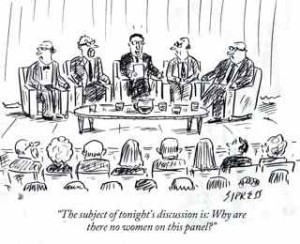
I seriously considered entitling this post ‘Gender Blind My Arse’ but was worried it might be too…ambiguous…and I wisely held off from commenting on John’s Saturday post for fear that I might come across as some half crazed loony, or worse…a feminist…that’s right, that terrible eight letter word (I know, it’s amazing, I can count!)

But before I start pissing everyone off already, let me say that the PW top 10 list doesn’t bother me all that much. Why not? Because it’s not surprising. Because all lists are subjective. Because at least on the extended list women are (sort of) represented. So why, do you ask, am I pissed off? I’m angered by the reaction it has garnered – because it feels like we’ve been down this road so many times before and it’s always a dead-end. Reviewers will always say they were gender-blind, that they tried their very best not to be influenced by anything other than the writing itself (what lies beneath the covers, not what lies between the legs to paraphrase from John’s post). To this, groups like Sister-In-Crime will always counter by saying that gender bias is systemic in the publishing industry – from the books selected for review, the level of critical ‘gravitas’ bestowed, and in the awards handed out. As far as I’m concerned it’s a no-win situation and this is what drives me nuts – I mean, after all that we have fought for, I can’t believe we’re still having this debate.

What I don’t get is how women, who buy the overwhelming majority of novels and dominate the publishing industry (at least in terms of editors), don’t just proudly denounce all the nonsensical crap that comes up around the gender issue:

  1. Women do not write ‘small’ ‘domesticated’ books. So what if the traditional cozy doesn’t have zombie dismemberment, it can still be well-written and it can still deal with important ‘universal’ issues surrounding the human condition. Just because there’s a picture of a cat with a ball of yarn on the front does not mean the book has to be marginalized as ‘chick-mystery-lit’.
  2. Romance does not equal brainlessness or crappy writing.
  3. There are no inherent gender traits in writing. Just because I’m a woman doesn’t mean I write emotions well and action scenes badly. I may write a traditional historical mystery but that doesn’t mean that (as a woman) I couldn’t write a gruesome, psychologically disturbing book (Val McDermid, anyone?) .
  4. White men don’t write better books…

The final point seems spurious to me…but in light of PW’s list…I guess I had to say it.

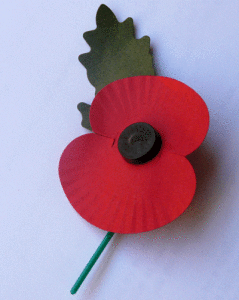
Lest We Forget

By Clare Langley-Hawthorne

We’ve had some terrific blog posts this last week and, if I hadn’t been in London, I would have commented more because there has been some great advice. Yesterday James made the observation that it takes a great deal of courage to be a writer and I think it’s a particularly difficult brand of (non-lethal…) bravery that is required – because in the world of writing the public and the personal overlap. Publishing means that your work is out for all to see (for better and for worse) and, if criticism of you work feels personal, praise feeds your dreams and ego in a way that no other job ever could.

Being in London the week before Remembrance Day has meant, however, that my own writing has been informed by the courage of those who have served and died in the service of their country. I came to London to celebrate my birthday as well as undertake some research at the Imperial War Museum. As it turned out, I have been surrounded by references and material relating to the First World War that has (serendipitously) fed into almost all my books: from my current WIP which is set against the backdrop of the outbreak of war in 1914; to the sequel to Lady Coppers and the fourth Ursula book which are both set in the midst of ‘the Great War’.
The excitement of undertaking research never fails to inspire me. At the Imperial War Museum, I was reading the diary of a female policewoman stationed at a munitions factory during the First World War and was delighted to find a special pass for her dog ‘Rip’ in the files (along with an official studio portrait of the dog!). Only this kind of hands-on research can reveal the eccentricities of the real people who help me create my characters. It seems strangely appropriate that everywhere I turn at the moment there is a reminder of Edwardian Britain. Indeed, sometimes I have to wonder – did I pick the historical period for my books or did it pick me?

Unlike my fellow bloggers I don’t have any pearls of wisdom to share, but rather a couple of questions: Have you ever felt a period, place or person resonate so acutely that you were drawn to write about it? What real people or real events inform your writing?

For me, it would seem that it is the Great War that is calling me and, especially as Remembrance Day approaches, the ghosts of the past insist that I heed the call…Lest we forget.

We the Jury…

by Clare Langley-Hawthorne

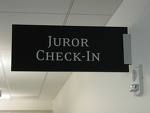
Well, it’s gone midnight and I’ve just finished up my final proofing edits (why does this always seem to take so long?!) – I would have had them completed much earlier (yeah, right…) if I hadn’t been called up for jury duty last week. Now before you all roll your eyes in sympathy, I was actually excited about the prospect of serving on a jury. In Australia, you see, lawyers (at least when I was practising) are not allowed to serve on juries.

The thought that I was never going to get a glimpse of what it was like to be on the other side – hearing the arguments rather than making them, weighing up the evidence and actually getting to decide whether a person was guilty or not – always bugged me until I realized that now, as a US citizen, I may actually get to be on a jury (I know, it’s sad just how cool I thought this would be).
Last Wednesday was my first ever experience of the American criminal justice system (really…) and my first ever jury duty summons as a US citizen, and I have to say it was anticlimactic to say the least.

First off, I had no idea how boring it would be – or how bizarre it was to sit in court listening to people on the first ‘randomly chosen’ jury panel go over their backgrounds, while the rest of us schmucks had to wait…and wait…just in case. I found that I couldn’t turn the lawyer in me off – after each potential juror finished answering their background questionnaire, I found myself mentally deliberating on whether, and on what grounds, I would have tried to excuse them. Every time the judge (who was, I have to say, exceptionally nice as well as funny) issued instructions I also found myself saying ‘yeah, yeah…blah, blah,blah..beyond a reasonable doubt…’ before an inner voice shouted “Just get on with it!!”

As it turned out the case (should I have even ended up on the panel) was due to run through this week and since I’m heading off to London later today (yay!) on a research trip I had to be excused anyway.

So, since my first jury experience turned out to be a bit of a fizzer, I was wondering if anyone had any juicy jury stories to tell me instead. Go on, let me live vicariously…or at least provide me with some truly excruciating, bored to the eyeballs stories so I can feel vindicated.

A Smashing Good Read – An Interview with Keith Raffel

by Clare Langley-Hawthorne

I’m excited to welcome thriller writer (and fellow Norcal’er) Keith Raffel to the Kill Zone – and to my very own ‘hot seat’ to answer some questions about his newest thriller, Smasher.
So Keith, what can readers of your first book, Dot Dead, expect from Smasher? What’s in store this time for Ian and Rowena?

Ian’s facing a “smash and grab” for his company engineered by a Silicon Valley billionaire. Rowena, a deputy district attorney, is trying her first homicide. Ian’s mom is insisting that he get credit for her dead aunt who made a major discovery in particle physics. And then while the couple is on an early-morning run, a car comes out of the darkness and smashes Ian’s leg and leaves Rowena in a coma.

I’m intrigued (and let’s face it an ignoramus) when it comes to physics – what research did you have to do (or how sexy is the Stanford Linear Accelerator really?)

The
accelerator at Stanford is a two-mile long rifle barrel that shoots electrons at its targets at over 99% of the speed of light. Back in the 1960s it was the center of world particle physics research, the place where the building blocks of the universe were discovered. I took a tour of the building at SLAC where those revolutionary discoveries were made four decades ago. And you know what? It’s filled with dusty boxes. Now, Edison’s lab is a national monument. Where the Wright Brothers first flew at Kitty Hawk is a national memorial. But in the midst of Silicon Valley, the very place where scientists first identified the particles that make up everything in the universe is a warehouse. (Not too sexy, is it?)

I’m a history major, so I had experts like Professor Martin Breidenbach who is at SLAC vet my physics. I figured if a person was zapped by countless electrons traveling at well over 99% of the speed of light, it would mean death-by-raygun. Nope. Marty told me the electron beam would pass right through a person. Unless, of course, the person was wearing a piece of lead that would diffuse the beam and cook him alive! (Is that sexy enough?)

Writing is a solitary profession – how and where do you write? Do you have a writing routine?

Writing may be a solitary profession, but I write surrounded by people at a café that’s a seven-minute walk from my house. To the consternation of my wife, I don’t use my beautiful office for writing at all. When I tried writing there, I’d stop to think about what came next. Then I’d just take a little peek at my email. About ten minutes later, I’d be reading a Wikipedia article about the generalship of
Gustavus Adolphus during the Thirty Years War.

At the café, I have no Internet connection. When working on a manuscript, I walk over every day for about a five-hour stint. The staff is great. When I come in, they turn down the music. I put on my noise-canceling headphones. They keep me supplied with fresh pots of a special green tea which is the gasoline for my writing engine. I finished the first draft of Smasher there in about four months.

Are you an outliner or a ‘fly by the seat of your pants’ kind of guy?

I do not outline. Here’s why. I write in the first person and try to get in the skin of that person, be that person. I experience what he experiences, hear what he hears. I can’t know what’s going to happen. I need to be surprised. What I’m saying is that I try to inhabit an alternative reality while I’m writing. It’s exhilarating and addictive. Who wouldn’t want to be someone who’s better-looking, smarter, braver, and more attractive to women? (Yes,
Walter Mitty is definitely a kindred spirit.) On days when I don’t fly off to Fictionland, I miss it. I get grouchy. Sounds a little aberrant, doesn’t it? I thought so, too, until I read what E.L. Doctorow said: “Writing is a socially acceptable form of schizophrenia.” I am so glad to know what I do is socially acceptable.

People are always intrigued by a writer’s path to publication – tell us a bit about yours (I mean Silicon Valley techie and CEO to writer – not that common!)

I was a little bored at the office so I signed up for a mystery-writing class at the
University of California Extension with Margaret Lucke. I wrote about the first third of Dot Dead, but in the end, I was still a little bored at work and decided to leave and start a company called UpShot. That was over six years of obsession. Then in 2003 we sold UpShot to Siebel Systems, and I came back to that manuscript. The story of finding an agent follows a more familiar path. I queried over 30 of them before finding Randi Murray (who’s left the business). She in turn found several interested publishers and we went with Midnight Ink. In February 2007 I left Oracle, which had swallowed Siebel, and went to work writing full-time.

Which writers have been most influential for you?

My answer here is a little embarrassing. It’s not a writer who’s the biggest influence, it’s a movie director – Alfred Hitchcock. In a prototypical Hitchcock film, some regular American or Briton is leading a comfortable life when he or she gets caught up in some murderous conspiracy. Think North by Northwest, The 39 Steps, The Man Who Knew Too Much, or Shadow of a Doubt. As I said above, I love getting in the skin of the hero-narrator of the books I write and testing how he fares when confronted with a life-and-death challenge.

What is the most challenging aspect of the writing process?

Characters and setting are not easy, but they don’t drive me crazy. It’s that damned plot. In Smasher, well, the protagonists were carried over from Dot Dead and the setting is Silicon Valley, my stomping ground. But what about the plot, what was the twist? That’s always the toughest challenge for me. I tried several drafts that went nowhere. Then one Saturday night my wife and I went out to dinner with Brian Rosenthal and his wife Cindy on Castro Street in downtown Mountain View, California. We took a postprandial stroll. Our wives were up ahead window-shopping. Brian and I were talking about this and that when he made a comment and a supernova went off in my head. Ten seconds after that almost-literal brainstorm, I had the plot for Smasher. What’s funny to me is that Brian has read the book and still doesn’t remember what he said that inspired the plot.

If you were to give an aspiring thriller writer one bit of advice, what would it be?

After you’ve finished your manuscript and made it the best it can be, find an agent. In the old days, unpublished writers would send manuscripts into publishers who would have hired bright grads from the Ivy League or Seven Sisters to sift through the slush pile. Now that’s been outsourced. Most publishers won’t accept unagented manuscripts. And you want to get a publisher to have credibility and to obtain distribution for your book. Self-publishing is not the answer. Sure we hear about self-publishing leading to success as with the remarkable
MJ Rose. But that’s a one in a thousand chance. She’s a marketing genius, too, and not that many of us are. It’s not easy to find one, I know, but your odds are a heckuva lot better with an agent.

Is there anything you don’t like about being a crime fiction novelist? What’s the downside of life as a writer?”

Just thinking about the answer to this one gets me pissed off. I’m writing full-time now. So people ask me if I’m enjoying life since I “stopped working.” Stopped working? What the hell? There’s the research, the writing, the editing, the finding an agent, signing with a publisher, the touring. I just sent off the manuscript of my next book to my agent. The launch of Smasher was last Tuesday and I have thirty more events by Thanksgiving.
Dr. Johnson wrote, “No man but a blockhead ever wrote, except for money.” So how is writing not working?

Does this happen to anyone else? Do your friends and family treat your writing career as though it’s recreation, a hobby? Go ahead and kvetch in the comments. I want some moral support.

I have to confess I get this all the time, Keith, so I say go ahead everyone kvetch while you can!!

***********************************************************************************

As counsel to the Senate Intelligence Committee, Keith Raffel held a top secret clearance to watch over CIA activities. As a Silicon Valley entrepreneur, he founded UpShot Corporation, the award-winning Internet software company. These days he stays busy writing his mysteries and thrillers in his hometown of Palo Alto, California. His latest novel, Smasher, is out this month. Check out his website and book trailer at www.keithraffel.com.

Surprise!

by Clare Langley-Hawthorne

How much do I love surprises? Let me count the ways…

I’m sitting in a hotel on Maui typing this blog all because my husband has a great knack for surprises – this one is an early birthday present and it’s also the first time in five years we’re having a vacation together…alone…(well if you don’t count my laptop and current WIP which I carry with me like surrogate twins…) so you can imagine how much I love this surprise!

I also love books that surprise me. I love it when an author can genuinely deliver not just the shocks but also the delightful out-of-left-field moments which cause me to smile. I remember the first time I read Jasper Fforde’s Thursday Next series and how surprised I was that his brand of lunacy actually worked. I also remember reading the first Harry Potter book and catching hold of the same sense of magic I felt as a child reading. The element of surprise is one that I relish in a book. I love how Carlos Ruiz Zafron’s Shadow of the Wind captures the essence of Gothic surprise that imbues the glorious Victorian novels that I adore and how Neil Gaimon’s books (and quirky imagination) continue to delight and amuse me.

Surprises can be powerful things – they can draw a reader into a book in a way that is (I think) often more powerful than a mere plot twist or a shocking ending. They can take the form of an unsuspected insight into a character, a happy coincidence, or just the details of a world created that transports the reader’s imagination. The element of surprise is however much harder to achieve than suspense or the power to shock and I think (in terms of craft) it requires:
  • An appreciation of language – the beauty of a turn of phrase that can delight as well as surprise should never be underestimated.
  • An understanding of the nuances of the human condition – many of the best surprises occur only because an author has a grasp of the full idiosyncrasies of characters (both real and imagined).
  • An ability to create parallel worlds full of quirks and charms that allow a reader to suspend disbelief.
  • And, finally, the bravery required to take a book into rough uncharted waters…
I certainly don’t believe I have mastered any of the above but when a book truly takes me by surprise, the effect is magical.

So when did a book last surprise you?

The Book Group Experience

by Clare Langley-Hawthorne

I’ve had many terrific experiences speaking to book groups and, as a member of a book group, I’ve spent many hours debating and (let’s face it) dissecting other people’s novels. While my mother-in-law is visiting, she and I have been talking about the role of book groups and how difficult it is to please many book group attendees. In my mother-in-law’s group it’s rare that any book passes muster – and this got me thinking about the power of book groups and their evolving dynamics.
There’s no denying the power of book groups today – they are the fuel that can propel a literary book to bestsellerdom (think of books like The Kite Runner or The Memory Keeper’s Daughter). I think many publishers are eager to please the ‘book group’ demographic (women aged 35-65) because without the book group ‘word of mouth’ few literary books would probably achieve commercial success.

As an author I love speaking with book groups but there is always the fear that someone will hate the book or tear it to pieces in front of me. Before I was published I never thought twice about ripping into a book I felt was unworthy – now, I confess, my criticism of novels is more tempered (as I know just how bloody difficult it can be to write the darn things!). Still, I cannot help but be impressed by the influence book groups can wield – and I’ve been mulling over just how certain books end up being the perfect ‘book group’ read.

So here are my questions:
  1. Are you in a book group, and if so, how do you select the books you read? Are the bestseller lists influential or is it mainly word-of-mouth (in my groups it’s all word-of-mouth)
  2. How critical are you and other members of the group – are fewer and fewer books these days meeting your standards?
  3. Do you have authors visit – and if so, how do you deal with the thorny problem of members not liking the book? What do you like authors to cover or discuss with the group?
  4. How much notice do you take of the reading group guides publishers provide (either on-line or in the back of the book)?
  5. For all you authors out there – what have your experiences been like with book groups? (…any horror stories you’d like to share?)
  6. And – for God’s sake – tell me, are there any men in book groups these days????

Now I’d better get to reading my next book group read, and sharpening my claws for the inevitable discussion:) on our next read – Night Train to Lisbon by Pascal Mercier.