Pirates of the Web

by Clare Langley-Hawthorne

Yesterday’s New York Times ran an article entitled “Will Books Be Napsterized” and I have to confess it felt as though yet another nail was being hammered into the coffin of traditional publishing. Although I’m not at all the kind of person to a) become neurotic about the whole thing or b) don a placard proclaiming the end of the world is nigh (hold it, I’m an author, I’m exactly that kind of person!), recent articles about the digital piracy issue still give me pause.

According to this article there are currently 166 copies of Dan Brown’s The Lost Symbol available free on the web – 102 of these copies attributable to one file sharing site alone (RapidShare). Now I’m all for authors promoting free content on the web and encouraging new readers but only when the writers and publishers get a chance to actually authorize this to occur. Although Dan Brown’s book is clearly still selling strong in both traditional and e-book format, you have to wonder what the impact of digital piracy will be in 3 or 5 years from now when e-books account for a much greater proportion of the market. Illegal file sharing could then significantly impact even a bestseller like Brown – but imagine the impact on smaller publishers and authors alike. It could be (as the NYT article says) a Napster like event.
The article cites evidence from multiple studies that indicate that 95% of music downloads are “unauthorized, with no payments to artists and producers”. Given the angst-ridden state of the publishing industry today – can you imagine if this were true for books one day?
Apparently file sharing sites usually try to console the industry by pointing to the success stories of the music industry – who have used free content as a way of building a sustainable fan base. Again, I totally accept and agree that free content is a great way to introduce readers to your work – and that building a readership base who will hopefully go out and purchase more of your work is critical – yet as the NYT article points out, authors rarely get to recoup their artistic investment by playing to packed arenas or using pirated e-books as ‘concert fliers’. The majority of authors are probably totally unaware of pirated copies of their books available on the web (I certainly am – and given my lowly status I can’t say I’m worried now but I certainly would be if I actually became popular:)).
So what do you think? Are the Napster fears justified? Is the promotional value of free content enough to justify some of the existing file sharing? Look into your crystal ball and tell me what you see (but please if you see me destitute on a street corner talking to myself just keep it to yourself…)

Places that Resonate

by Clare Langley-Hawthorne

Watching the first episode of Ken Burns’ new documentary series on America’s National Parks I was struck not only by the beauty of the American wilderness but also its profound impact on people – and how that impact helped redefine a national consciousness. This got me thinking about the role of landscape and place in my own writing. I’ve blogged about this issue before but in my current WIP I’m interested in exploring the interaction between characters and the landscape portrayed.

I think evoking a landscape serves more that just decorative, thematic or descriptive purposes – I think it also helps reveal character. In my latest WIP when I considered the setting of my book I looked at a number of questions about such as:

How do my main characters feel about the landscape – are they at home or are they outsiders?

If one or more of them are at odds with the landscape – how can I use this to reveal inner depths or hidden aspects of my characters?

If landscape is to be a character – how will its mood evoke a sense of place and set the tone for the book?

How can I avoid cliches about the landscape and try and discover either a new perspective or a hidden sensibility that can add texture and dimensionality (hmm…is that even a word) to the book?

After watching the first part of Ken Burns’ documentary (and after camping at the awe-inspiring Crater Lake a few weeks ago) I have a renewed respect for the joys of writing about the impact of landscape not just on our lives but on our souls. I’ll be dusting off my copy of Landscape and Memory by Simon Schama and wrestling with all sorts of philosophical ruminations on the significance of landscape – but don’t worry I haven’t forgotten the most important maxim, never let landscape get in the way of a good story.

Some of the best thrillers and mysteries use a strong sense of place to establish mood, progress plot as well as reveal character. But what do you (as readers and writers) think should be some of the key considerations that an author should take into account regarding landscape and place? Are my questions on track or should I chuck my romantic sensibilities aside and consider something else?

You’re Perfect. I’m Doomed!

I was listening to a radio interview with James Wood, literary critic for The New Yorker, discussing his book How Fiction Works when the topic of the role of the critic came around and I was struck by one of the quotes (to paraphrase) that the critic should be interested in identifying how the writer failed to meet an ‘ideal’.

Now I’m sure all of us (as either readers or writers) have our list of top authors as well as books that we feel epitomize the ‘perfect’ novel – but the thought of constantly being measured against such an ideal is daunting. I started musing (and agonizing I have to confess) over how the concept of the ‘ideal’ affects how I write as well as how I read. My experience with book groups and writing groups has led me to suspect that while the concept of seeking perfection in the writing craft can be noble it can also be devastating. How many of us haven’t been stymied by the inner critic while writing – the one that says ‘this stuff is crap, it’ll never be as good as [insert appropriate esteemed author name here]’ or who hasn’t, as a reader, felt a novel pale in comparison to another to the point where all possible merits of the first book disappear completely?

It’s taken me a while to overcome that fear of failure and commit a first draft to the page but there’s no way I could complete a manuscript if I thought about the critics – especially not if they have some mythical ideal in mind (which no doubt no author could ever meet all the time!).

So – do you have an ‘ideal’ author or book that you think sets the standard? Do you ever feel intimidated by that in your writing? Who do you use as your ‘ideal’ when you think about honing and (dare I say it) perfecting your craft?

Are You Ready for Your Close-Up?

by Clare Langley-Hawthorne

First – forgive me but after nearly 7 hours in the car driving back from Oregon my brain is incapable of functioning…hence a short (possibly garbled) blog post for Monday.

I have been MIA this last week – camping near Crater Lake in Oregon (I know – unbelievable for me!) and then going on to Ashland where I had the great pleasure of being invited by the Ashland Mystery Readers Group to participate in a number of events. The highlight for me was meeting a group of excited readers that made me feel, albeit briefly, like I was a superstar:)
I also had my first TV experience (on RVTV noir) which was terrific and not as nerve wracking as I feared…until…they asked me to take a look at the raw footage. I soon discovered that I cannot bear to watch or listen to myself on camera. Pathetic really – but from the snippets I did see (between my fingers) I gained some useful insights in case one day I get that call from Oprah…

Here they are (for what they are worth):

1. Do wear the bright red jacket. I was thankful that I had chosen something vibrant as (being the pale Celt that I am) it looked terrific on camera. I tastefully also avoided any kind of pattern that might either flare on screen or make me look fat (I am so vain!)

2. Ignore the cameras – insofar as you want to look as natural as possible…but also make sure you engage the imaginary audience out there so there is some eye contact. As I couldn’t bear to watch myself I’m not sure how successful I was on this front…but the kind camera crew said it looked good.

3. Record yourself to hear how you actually sound reading from your work. This is not something I did but when I heard myself on the footage I realized that this would have been a great tool to use – perhaps then I wouldn’t have cringed when I heard my accent:)

4. Relax. I did this and the interview went by so fast I hardly knew I’d had one. I think this helped make the show feel like a natural extension of a one-on-one conversation rather than a stilted ‘in front of the camera’ interview.

I’m now excited about the possibility of using video/TV for marketing…though I guess I have to get over my embarrassment of watching myself first. I also have to give a huge thank you to everyone who came to my events in Ashland and Klamath Falls and to Maureen who organized it all:)

If you go to the Ashland Mystery Readers Group website and click on RVTV noir you’ll also be able to see some of the other RVTV noir readings (mine will be up once it’s edited – have no fear, I’ll warn you when it’s there:)).

So have any of you have experience with TV? Any belated advice or feedback on what works/doesn’t work? Have any of you used the video/TV option in your marketing and, if so, what was your experience like?

Now I know I’m starting to ramble…It’s late and I need my beauty sleep (badly!) just in case I get the call this week for you know…my network TV debut:)

Justice

by Clare Langley-Hawthorne
http://www.clarelangleyhawthorne.com/

One of the reasons many of us enjoy crime fiction is the satisfaction of seeing something so rarely provided us in our real lives – justice. As a crime writer I feel it is my duty to play fair with the reader but that doesn’t always mean that at the end of my books the perpetrators get their ‘comeuppance’.


At the end of The Serpent and The Scorpion for instance (and I’ll try to avoid spoilers here) I felt that if I was to remain true to the politics of the time I could have no other ending but, nevertheless, the injustice of the slippery Machiavellian world of the British Empire galled me.

As a reader I have no problem with these sort of endings – where justice is impossible in the circumstances – it may be frustrating but I’m okay with it so longs as it rings true. What ruins a good crime novel for me, however, is the feeling of being cheated at the end – that the writer has not played fair and that the resolution provided is a let down. On TKZ we blog a lot about the craft of writing a mystery and I think as a writer in this genre I owe it to my readers to grapple with the concept of justice in each of my books – be it in terms of retribution, punishment or some other form of satisfaction. Although we want the perpetrator to get what he or she deserve I think there’s more to it that that – I think many of want to feel as though ‘right’ has been done.

So what are the parameters for ‘justice’ that I use to help guide me when I am crafting my novels?

  • I like to consider that the effort taken in solving the mystery is commensurate with the resolution (no sudden appearances at the end of a vital clue that negates all the protagonist has done).
  • I want the final conflict to have emotional resonance (no lightning bolt hitting Doctor Evil by mere chance) so the reader feels satisfied.
  • I like to place the mystery in an overall societal context so the reader gets to understand just how the system works (or doesn’t work) and what social, political or economic conditions dictate how the perpetrator will be punished (or not) or conversely how the victim is treated. [Okay, okay, so this is just the history nerd in me…]
  • I also want to consider what kind of ending makes the most sense and feels the most satisfying to me, both as a reader and a writer. I don’t like endings that feel rushed or abbreviated – or ones that leave too many threads hanging to be satisfying.
  • And finally – at the end if justice cannot be done then as a writer/reader I better damn well know why…

So what makes an ending satisfying to you? Do you agree that most fans of crime novels like to see some kind of ‘justice’ done at the end of a book? What kind of endings fail to live up to your expectations?

Old Fashioned Bum Glue

by Clare Langley-Hawthorne

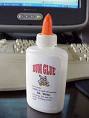
I’ve been feeling like a bit of a loser of late – perhaps it’s the summer (or the week off from preschool which placed me in writing limbo) – but my writing mojo feels a little dented so I’ve had to claw my way back from depression-dom to start the week off. The only way I know how to beat the writing blues – not a writing block mind you – but that plague of self-doubt that hits you at midnight and which follows you through the day – is to resort to an old-fashioned tried and true method. Bum Glue.

This means that I sit down and, no matter how crappy or disillusioned I feel, I write. What gets typed may be absolute drivel (and it often is at first) but I persevere. I sit down, keep my bum glued to the seat, and write.

Tonight, as I compose this blog, I am preparing myself for the challenge of a week of bum glue ahead of me. I am trying to shaking off the panic and the angst, trying to shove back the “I’m a loser” thoughts and getting ready to face my fears. As Jim so aptly wrote in his post yesterday, I just have to move up the pyramid and the only way to do that is to keep writing.

So does anyone have any pearls of wisdom for me as I take a deep breath, wriggle my behind, and prepare? How do you restore your spirits or reclaim your writing mojo? Or am I the only one who suddenly finds themselves in that deep pit looking up and wondering how to escape?

Any tips on getting the bum glue to stick?

Regrets, I have but few…

by Clare Langley-Hawthorne

My husband and I went and saw the inimitable Jackson Browne last week and it’s put me in a reflective frame of mind. Of course, the fact that Tim and I were some of the youngest fans in the audience didn’t help – but Jackson Browne has provided a very strange soundtrack to our lives. When I first met my husband he had one of those early cool portable CD players (hey, it was only 1987!) but to say I was aghast at his CD collection would be an understatement – I mean who else had The Eagles, Fleetwood Mac and Jackson Browne alongside Madonna? My tastes ran to New Order, the Violent Femmes and The Smiths so I was literally gobsmacked. I grew, however, to love Jackson Browne (The Eagles I’m afraid had to go…) and my husband’s love of his music provided new insight into him – who knew the preppy guy had an angst ridden 1970’s soul?
The concert has made me think about the nature of regret. I have to admit, even as I face down the dreaded four-zero in a few months, I don’t really have many regrets at all – and the ones I do seem pretty trivial in the context of my life. I certainly wish I had pursued my dream of being a writer earlier – but then I wouldn’t be the writer that I am now. I’m a strong believer that you stumble upon your own path – and I’m supremely grateful of the path I managed to find.
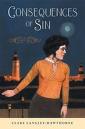
That being said, I do wish I’d been more savvy about the publishing industry when my first book came out. I would have definitely fought harder to change the cover for the hardback of Consequences of Sin (see exhibit A, on right). Although the paperback cover is fabulous (see exhibit B, on left) I still think the cover for the hardback irrevocably hurt sales and may have doomed me to Barnes & Noble (not to mention publishing) purgatory…

But it’s hard to have a clue when you’re first starting out – right??

I’m sure in a few years I’ll no doubt wish I had known now what I will know then, but I’m not going to lose any sleep over regrets (it is pretty pointless, after all), but regret, as Jackson Browne so often writes and sings about, is an important emotion. It is one that defines and shapes us, and when creating characters I think it’s important to explore not only their loves, hopes, and fears but also their regrets. In many ways our behavior is guided by regret in subtle but crucial ways – and I love getting under the skin of my characters in this way.

So what (if any) regrets do you have regarding your writing? Do your characters carry some of those same regrets? Do they have an angst ridden soundtrack to their lives or are they at peace with the path they (or rather you, as a writer) have chosen for them…?

Quick, Catch That Voice!

by Clare Langley-Hawthorne


My current WIP uses a first person perspective which is new for me. New, not only because I usually write in third person (a close third person voice I grant you), but also because this time the first person narrator is a seventeen year old. Oh and living in 1914. So last week I just rewrote the first chapter for a third time – not because I’m anal (well…) but because I hadn’t nailed the voice yet.

For any novel I think voice is important but when dealing with a first person narration it’s critical – as far as I’m concerned a reader has to fall in love, has to inhabit the ‘body and soul’ of the narrator, right from the first page or (I fear) the novel is doomed to fail.


Why did I chose the first person POV for this book? Well, almost all YA novels adopt this perspective and I think wisely so. The journey normally taken in a YA novel is, after all, a journey of self discovery, one we want the reader to identify with as closely as possible . However, once I adopted the first person it was much harder than I had anticipated to get the voice just right. I’ve had a ‘challenging’ few weeks…and the process I went through to try and establish the ‘voice’ of my protagonist Maggie Quinn was far from perfect, but here’s what I did…

  1. I reserved and read as many YA historical/paranormal books I could. I took note of how the authors approached the issue of voice and how they appeared to achieve making that voice as authenticate and compelling as possible. The best YA book I read so far was The Hunger Games by Suzanne Collins (an awesome book which is also illustrative of the fact that great YA books are really just great adult books with strong YA characters and themes).
  2. I started compiling a backgrounder for Maggie and brainstormed ideas about her inner self – delving even deeper perhaps than I have done for other characters in previous books (but then again that may also be because my husband is convinced Ursula Marlow is actually me!).
  3. I then walked around for a week or so with Maggie in my head, ruminating on how she would act and react to things.
  4. I drafted a prologue and first chapter.
  5. Read it. Realized the voice was not there.
  6. Got despondent. Decided perhaps I should focus on research for a day or so…
  7. Tossed the prologue – don’t need one!!!
  8. Rewrote chapter one. Wrote snippets of key parts for chapters two, three and four (as an outliner I already had these place marked:))
  9. Read second draft…realize I have no talent for writing whatsoever (shit!). Got even more despondent.
  10. Watched teen movies. (John Hughes, come back!)
  11. Did more historical research….
  12. Walked around a bit more with Maggie in my head. Still despondent.
  13. Rewrote chapter one again…and then a glimmer of light at the end of the tunnel. Maggie is finally taking form. (hmm…is that ‘lucky’ number 13??)

So how do you approach the issue of voice? How do you know when you ‘have it’ or you don’t? What challenges do you see for someone attempting a first person POV – any advice on the do’s and don’ts? I’m already realizing it’s limitations but believe it or not, I think I’m starting to finally enjoy it…until next week when I reread chapter one and decide Maggie’s voice (and my writing) sucks once more.

Anthem for Angst-Ridden Youth (RIP John Hughes)

By Clare Langley-Hawthorne

It’s hard to believe he’s gone – John Hughes, the director of my teenage years – but looking back I have to confess the angst and confusion of that time have never really left me (probably why writing a YA book doesn’t seem a stretch) and so today I pay homage to the great teen films of the 1980s…OMG, I can’t believe I’m actually looking back on those years with nostalgia…So bring out the Tears for Fears and New Order albums, put on those pointy black shoes (Yes, I still have them) and the neon orange socks (sadly worn through) – brush that hair mascara on for it’s time for my top five 80’s teen movies (in ascending order and only the first two I confess are actually John Hughes’ movies).

Number 5: The Breakfast Club – Oh, to have been my namesake at that school. Miss Popular eating her sushi in detention and falling for the bad, bad boy…wait that was me at school…NOT!…I was actually on exchange in Canada the year this movie came out and as far as I was concerned ‘Don’t you Forget About Me’ was the anthem for my time there.

Number 4: Pretty in Pink – ditto on my desire to BE Molly Ringwald. Hell, in Australia I went to the all-girl Methodist Ladies College – we only had the Catholic Xavier schoolboys for our angst fix…
Number 3: Say Anything – This was a little before my time but when I saw it I was hooked…What’s not to love about John Cusack with a boom box above his head belting out Peter Gabriel to the girl of his dreams? I still love the line “I gave her my heart and she gave me a pen…”

Number 2: Valley Girl – Okay, I admit this was WAY before I really hit my teen angst stride but Nicholas Cage (before he became the loser conspiracist-action-hero dude) was the boyfriend I always wanted. I also wanted to speak like a valley girl but that’s a whole other (sad) story…

Number 1: Looking for Alibrandi – Finally an Aussie movie and at number 1 no less (I am cheating a wee bit though as this didn’t come out in the 1980s though I think the original book did)!
This one came out well, well after I was a teenager but when I saw it on a Qantas flight back to Australia I confess I teared up. I’m not Italian and had no Nonna spy ring but the story of a precocious teen trying desperately to get into law school, stymied by the confines of her private school upbringing, and falling (of course) for the wrong, bad boy…how could I resist?

I let my husband read this post – he’s had to put up with my addiction to 80’s teen movies long enough. I met him, after all, the first week of university (in 1987!). I was just seventeen and yes, New Order was the soundtrack to our dating. I was also in law school (idiot that I was). I’m still with him today – but when I see these movies I can easily be transported back to the 80’s…and I wonder what happened to all the bad, bad boys (and for that matter Molly Ringwald!)

So what film was the anthem for your angst-ridden youth?

The Liar’s Club

by Michelle Gagnon

Pinocchio_3ak

No really, you shouldn’t have. I mean, sure, it is our…

ONE YEAR ANNIVERSARY!

What do you mean, you forgot? Yes, it was just a year ago today that I wrote the inaugural post for The Kill Zone. And to celebrate a year of rants, raves, and other miscellany, my fellow bloggers and I decided to do what we do best- make stuff up. Below is a series of questions. One of the answers to each question is an outright, baldfaced lie. Your job is to guess who’s fibbing.

For each correct guess, your name will be entered in a drawing for signed editions of each of our latest releases (including my coffee table book on macrame. It’s not just about macrame, it’s MADE of macrame. Patent pending).

Because after all, what anniversary would be complete without fabulous gifts?

Note: despite the outrageous nature of some of these responses, there is only one liar per question. Hard to believe, but true. The winner will be announced in my post next Thursday.

So good luck, and thanks for making this an amazing year!

1. What’s the most “outrageous truth” about yourself, one few people would ever guess?shootist

Kathryn: I once hid in the bushes outside Ted Kennedy’s home, spying on him for a Boston TV station.

John Gilstrap: I was featured in John Wayne’s last filmed performance.

Clare: I was runner up in the 1989 “Miss Melbourne” beauty pageant.

James: I’m a descendant of the Duke of Wellington

Michelle: I was a featured guest on the Maury Pauvich show.


2. What’s the strangest interaction you’ve ever had with a fan or reader?

James: A man approached me at a conference and said God told him I was chosen to write his story. I told him I didn’t get the memo.

Clare: During an radio interview for Consequences of Sin, the host claimed he had predicted 9/11.

Michelle: At a conference, a Ted Kaczynski look-alike handed me a manila envelope filled with xeroxed diary pages outlining ominous apocalyptic predictions.

John Gilstrap: After giving 20 minutes of advice to a young writer at a signing, he walked away saying, “Huh. Well, I don’t read shit like you write.”

John Ramsey Miller: In 1997 I had a stalker who followed me on a book tour to 5 cities out of 11. She changed her appearance each time and asked me to sign a book to whatever name she was disguised as.

Kathryn: During a radio interview for DYING TO BE THIN, one caller claimed there is a conspiracy to keep America fat. I said thank goodness for that, otherwise I’d have to blame my sweet tooth.


3. What’s the craziest/most dangerous thing you’ve ever done in the name of research?


John Gilstrap: I intentionally leaned against a prison fence and walked around the perimeter to see how long it would take for a guard to respond.

John Ramsey Miller: In the mid to late eighties I set up a formal portrait studio at a series of KKK rallies across the south and at the Annual Celebration of the Founding of the Ku Klux Klan in Pulaski Tennessee.

chuck norrisKathryn: I logged onto wild and wooly web sites that gave my computer a nasty virus.

Michelle: I volunteered to be tased to see what it felt like.

James: I asked Chuck Norris to show me his Total Gym workout

Clare: I navigated piranha infested waters in a dugout canoe.

4. What’s the worst line you’ve ever read in a review or rejection of your work?

John Gilstrap: An agent offered to represent NATHAN’S RUN if I would change the protagonist from a 12-year-old boy to a divorced woman.

Joe Moore: “Weak and simple plot, unbelievable and boring characters, and poor writing make this book difficult to finish.”

James: Dear Mr. Bell: Enclosed are two rejection letters; one for this book, and one for your next book.

Kathryn: Agent rejection: “I really wanted to like your story. But I just didn’t like the voice. Or the main character. I just didn’t like anything about it at all.”

Clare: “It’s painful to read more than one or two pages at a time.”

I have to say, I was impressed with my fellow bloggers’ ability to lie with aplomb. Since I could only choose one lie per question, I was forced to omit some real humdingers. Next week I’ll include outtakes/elaborations in the post.

On a side note, Clare just officially became a US citizen (and that’s the truth). Welcome and congratulations!