Letting Action Define Your Characters

by Clare Langley-Hawthorne

I just finished a book (which shall remain nameless) for my first Australian book club meeting and despite all its accolades and awards I couldn’t believe how totally uninvested I was in any of the characters. I’ve been mulling over the reasons for this ever since I skimmed my way to the finish yesterday and this morning I woke to find I knew exactly what the author’s problem was – she had failed to let her characters be defined by action.

In many ways this is a classic literary novel mistake because, lets face it, in a mystery or a thriller there’s no way an editor would let us get away with having passive characters who spent half their time engaged in inner monologues about how they felt!

We have blogged a lot on this topic but never has the reason been made so clear to me as it was after finishing this book. Although there were some dramatic moments and a terrific historical backdrop, none of these had any resonance as the characters seemed to be little more than distant, passive observers to all that was occurring in the book. So I compiled a short list for myself, as a reminder of what not to do, when I feel the literary urge coming on (and believe me, getting pseudo-literary is one of my many failings as a writer:)!)

1. Rein in those inner monologues and angst. While okay in small doses this book diluted the power of any angst-defining moments by having the main character ruminate ad nauseam. It would have been far better for the character to have been confronted by his past – in a direct and visceral way so the reader could have seen (rather than being told) how this impacted the character.

2. Cut the literary bull. Too much pondering, pretty metaphors and dream sequences drag a story down (and this book had enough of these to sink the Titanic). Far better to let the plot move the character through his or her emotions.

3. Let action/reactions tell the story not the author. In this book I felt that as a reader I was being told too much by the author – to the point where I didn’t see the characters as real. They became little more than a literary device for the author to tell me her clever observations on the societal issues of yesteryear (yikes!).

4. Insist the plot drive character development. As far as I could tell I didn’t witness any real character development or change, I was merely told that it had happened by the author.

5. Ensure each character is true to life not a literary contrivance. In this book almost all the character flaws were described but never actually witnessed. Once again, without action or plot points to reveal these I was never invested as a reader.

So if you had to do a list on using action to define characters what else would you add (or change on my list). Have you read any book recently that you have found similarly lacking? And why do authors of so-called literary books often forget the basics that we, in our field, would never be able to get away with?!

Is a Higher Profile Agent Better?

by Clare Langley-Hawthorne

So I few of my writing friends are in the process of changing agents and agonizing over who to approach. Most have references from other writers which (in my opinion) is a good way to proceed but they are also weighing up their options based on the status of the agents involved. This reminded me of a conversation I had at a writers conference a few years ago where a young would-be author quizzed me on the merits of getting a ‘high profile’ New York agent versus a local California agent (something I was totally unqualified to help her with!).

When I was looking for an agent this was the last concern on my mind (hey, I was amazed anyone would want to represent me at all!) – what I really wanted was an agent that felt like a good fit for my work and who would champion my books.

Still, I wonder whether the perception continues that having a higher profile, ‘status’ agent is better. Does it perhaps help when it comes to landing a book deal (?), does it make an author feel more important to have an agent who represents a whole heap of bestsellers (?), does it, in short, matter (?)

So what do you think? Does a higher profile agent make a difference?

NaNoWriMo Smackdown

by Clare Langley-Hawthorne

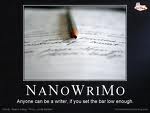
Well, maybe not quite…though there was certainly an online brouhaha when Laura Miller, a columnist at Salon.com, voiced her opinion that the November ‘write a novel in a month’ project was a ‘waste of time and energy ‘ (click here to view her article).
Miller’s view on the whole NaNoWriMo phenomenon was that it just gave a lot of people an excuse to write a load of crap that would morph into ‘slapdash’ novels adding to slush piles everywhere.
Unsurprisingly Miller became the target of online vitriol/bile/horror for daring to to diss NaNoWriMo but many of her points remain, nonetheless, totally valid. Now before I become the object of a flamewar, let me preface this by saying I think NaNoWriMo is a great way for people to motivate themselves to get a first draft finished. I’ve even contemplated doing it myself but I have to confess the fear of letting volume alone dictate my writing was too worrisome (and the mere thought of it, exhausting!). However, if we boil Miller’s objections down they actually seem pretty uncontroversial:
First, she worries that if the focus of NaNoWriMo is merely on tapping out a bad first draft (and, lets face it, all first drafts are terrible!) then would-be writers may be mistaken in believing that the endless grind of revising and editing is not required – hence her concern over all the hastily put together manuscripts subsequently invading agents desks in December.

Second she argues that the ‘selfless art of reading is being taken over by the narcissistic commerce of writing’ and worries that, while there is no shortage of people eager to write, there is, however, an acute shortage of people eager to read. Can’t say I can argue with that, as almost everyone I meet these days tells me they want to write a book but few, if any, can find the time to actually read.

In Laura Miller’s view, true writers would be pounding their keyboards whether or not NaNoWriMo existed and that we should be focusing our support on getting people motivated to become avid readers rather than would-be writers. Given the amount of money spent on the whole ‘how-to’ write industry it is depressing to realize just how much of Laura’s article rings true.

So what is your opinion of NaNoWriMo – just an excuse to pound out 50,000 words of crap or a valuable tool to nurture the next great American novel? Is our culture so focused on self-expression that we have forgotten the one thing all books need – readers?!

Losing the Psychological Battle

by Clare Langley-Hawthorne

I pride myself on being pretty upbeat and resilient most of the time, but now, I fear I am losing the psychological battle as I try to get some major revisions complete on my current WIP. I have a revised chapter outline, so I know where I am headed, and I even have the first 150 pages revised and polished…but now I feel as though I have psyched myself out of being able to finish the manuscript on the timeline I had planned. To be fair we have made a rather major move to a new (or should I say old) country but the transition has had a greater psychological impact than I expected – it’s made me question my ability to juggle my writing with being a mum.
Don’t worry I am not about to embark on a whine-fest or a ‘woe-is-me’ blog post but I am finding that I no longer have the confidence that I can find the time to get the revisions done before school holidays arrive. So what’s the big deal about the holidays, you ask?

Let me explain…The long summer break here in Australia falls over the holidays (duh! That’s when it is summer here) and this means my twin boys finish school on December 7 and do not return until February 2nd next year. Given the total absence of the concept of summer camp in Oz, this means I will be looking after my boys pretty much 24-7 – which mean writing is limited to the ‘after bed-time’ hours. So, as you can imagine, I really, really, really want to get the bulk of my revisions done by December 7th.
Normally I would view this kind of thing as another challenge and I would just tell myself to slather on the bum-glue and get down to it…but this time I suddenly find myself immobilized by the prospect. I’ve convinced myself I cannot get it done and the prospect of the manuscript revisions stretching out into February next year is depressing as hell.

So I could really do with some advice on how regain the upper hand in the psychological battle (with myself!) to get the manuscript finished. Any tips on how to un-psych myself out of this hole?
Otherwise, I fear you may be hearing a two month long scream of frustration all the way from Down Under…

Writer Indignities

by Clare Langley-Hawthorne

I know writers across the centuries have suffered many indignities – denigrated, banned, ignored, committed to asylums and marginalized – but thus far I have survived on the belief that times have changed (well, no one has committed me yet!). This weekend, however, I suffered my first real indignity. While I am sure for many people it would be a minor issue, for me it opened up a whole host of outrages. My husband went to our new Australian bank to open a term deposit and when he returned, bearing the completed paperwork, I saw listed under my occupation two words that chilled me to the bone. Those two words? Home Duties.

So I asked my husband, with just a hint of sarcasm, wasn’t there another occupation that could possible reflect what I do…I don’t know, ‘writer’, perhaps?…He turned his startled, deer-in-the headlight eyes to mine and tried to explain how he had told the bank that I was a full-time writer, but apparently being listed as ‘self-employed (which I guess was the only category they had) opened up a whole can of worms regarding verifying income etc. So for the sake of ease, they opted to use the term ‘home duties’…because of course, in Australia, what else would any self-respecting married female writer wish to do?!
I suspect you may be able to detect my feelings on this matter – not that I have anything against those who wish to list ‘home duties’ as their occupation – it’s just that that isn’t how I define myself.
Now maybe I wouldn’t be so sensitive about the issue had I not once been a lawyer who earned more than her husband (funny, I was never listed as ‘breadwinner’ on any bank forms then) or had I not recently moved to a country which seems to be imbued with a Mad Men view of women (I will blog/rant about that another time), but as it stands, I feel pretty indignant. I know the view of a bank is hardly indicative of the real value of anyone’s occupation, but still it made me feel as though my writing was little more than a hobby. I was waiting for the bank manager to phone me up and suggest I take up knitting and macrame in my spare time.

So what about you? Have you suffered any similar indignities as you try to convince the world that writer is actually an occupation and (dare I say it) a pretty valuable one, regardless of its income potential (or lack thereof!)?

Literary Tattoos

by Clare Langley-Hawthorne


I was listening to a podcast on my way back from dropping the boys at school on a new book detailing the cultural phenomenon of ‘literary tattoos’ – people who feel the need to have inked on some part of their body the name, picture, or quote from their favorite author or poet. While no one, to my knowledge, has the name Ursula emblazoned on their buttocks, the idea of a literary tattoo intrigues me – and since listening to the podcast, I find myself asking people whether they would consider getting such a thing, and if so, who would they chose?…

In the book, The Word Made Flesh by Eva Talmadge and Justin Taylor (the book which was discussed in the podcast) there are pictures of people with quotes (and illustrations) from work by Herman Melville, Franz Kafka, William Blake and Samuel Beckett (just to name a few). Each of the tattoos represent a whole story in and of themselves about how and why a person felt compelled to engrave the words on their flesh. Pretty cool really.

For my part, I am way too squeamish to get any kind of tattoo (and let’s face it, too worried about what it would look like on my saggy eighty year old body in years to come) but if I was to consider a literary tattoo, and if I restricted it to books and authors I love (look, if I got on to poetry this blog post would never end!), there are three most likely contenders:

They are (in no particular order):

Joseph Conrad’s Heart of Darkness
One of my favorite books, I would nonetheless have difficulty putting “Mistah Kurtz – he dead” or “The horror! The horror!” anywhere on my body. Even some of his more cheery quotes are still major downers so I doubt I will ever have a tattoo with such gems as “the wilderness found him out early, and had taken vengeance for the fantastic invasion. I think it had whispered to him things about himself which he did not know, things of which he had no conception till he took counsel with this great solitude–and the whisper had proved irresistibly fascinating. It echoed loudly within him because he was hollow at the core.”
Besides where would such a quote go? Back? shoulder? stomach?!

Emily Bronte’s Wuthering Heights
Now a quote from this book would be pretty amazing- though perhaps not original enough to enter the ranks of cool-dom. I could see myself with a discrete Catherine or Heathcliff quote, perhaps on an ankle…What do you think – “That is not my Heathcliff. I shall love mine yet; and take him with me: he’s in my soul” or perhaps, “I can not live without my life! I can not live without my soul!” But then again, I’m not sure what my husband would say to either of those…

David Malouf’s An Imaginary Life
Now this book is my all time favorite book and perhaps it is the one I would be most likely to use for a literary tattoo. One quote which would be wonderful, is this:
“What else should our lives be but a continual series of beginnings, of painful settings out into the unknown, pushing off from the edges of consciousness into the mystery of what we have not yet become, except in dreams that blow in from out there bearing the fragrance of islands we have not yet sighted in our waking hours”. Not bad, eh?

Well, I can’t say I am rushing out to a tattoo parlor to have anything inked on any region of my body, but still the concept is an interesting one. So tell me, have any of you got a literary tattoo? If so, who, what, why and where? If not, would you ever consider having one and if so, which quote or author would you chose?

Writing Mentors

by Clare Langley-Hawthorne

So who amongst us wouldn’t want to have a writing mentor – someone to both inspire and encourage us and someone we could turn to when we wanted that oft-needed pearl of wisdom and advice? Although I have encountered many supportive authors and received some terrific advice, thus far I have not encountered anyone who I could remotely classify as a mentor…and I kind of regret that. I almost wonder if the concept of a mentor is a relic of a golden era now long since past…so I started to do a little research…


There have of course been some famous literary mentorships, including:

  • Isaac Asimov to Gene Roddenberry
  • Anton Chekhov to Raymond Carver
  • Paul Bowles to William Burroughs
  • Graham Greene to Muriel Spark
  • Saul Bellow to Martin Amis
  • Henry James to Edith Wharton

And I see that many recent writers credit their success on having attended a class or conference run by a famous and supportive writer (Patricia Smiley and Elizabeth George for example). After undertaking this initial research (all ten minutes of it!) I have to confess to feeling a little bit wistful – though great mentor relationships can be a double edged sword (just look at the famous falling out between VS Naipaul and Paul Theroux!). So I have some questions for you today 1) have you been blessed with having (or being) a writing mentor? 2) If you have, what tangible benefits did you feel resulted and 3) If could name your ideal writing mentor (living or dead), who would it be?

The Fame Game

by Clare Langley-Hawthorne

So who amongst us hasn’t fantasized about being a rich and famous author? I have to confess to an occasional daydream, usually involving owning:
(a) A penthouse apartment overlooking Central Park

AND…

(b) A house in Mayfair, London


AND…

(c) An Irish castle on a windswept coast


AND…

(d) My very own tropical island

AND…

(e) A villa in Italy.

I don’t ask for much really…
When it comes to fame, though, I have only one goal – and that is to make it into Vanity Fair magazine – it doesn’t have to be the cover (though how cool would that be!), it doesn’t even have to be a big article (just a side column, snippet or photo would be fine) but for me it is something akin to a rock band’s lust for making the cover of Rolling Stone. I don’t know what it is about Vanity Fair, but if I could make it into one magazine that would be it.
I suppose if I was more erudite I would aim for the New Yorker or some other literary magazine, but I don’t. There’s just something juicer somehow about Vanity Fair and highbrow enough that my family wouldn’t be as embarrassed as if I graced the cover of, say, the National Enquirer…though of course, knowing my luck, that’s just where I would end up if I ever got a whiff of fame (or would that be infamy). The headline would no doubt be something horrid like, Famous Author’s Alien Lovechild Revealed!
Which would serve me right, for playing the fame game…but who can resist indulging in a little harmless ‘what if’?

So what ‘rich and famous’ daydreams do you indulge in? If you could be written about in just one magazine what would it be? The New Yorker? Fortune? Sports Illustrated:) ?

What do you expect from your editor?

By Clare Langley-Hawthorne

After Jim’s post yesterday about rejection letters, I started to think about expectations and how, for many authors, that is the hardest thing to manage. Your expectations when you send out that first query letter (a thousand calls to represent you!), your expectations about the acquisition process (everyone will fall in love with the book instantly!) and then, of course, the expectations once you are published (immediate bestsellerdom and movie deals by the fistful!). When I started out I had no real idea what to expect from any element in the publishing process. I certainly had no idea what to expect from my editor. Thankfully, I was pleasantly surprised and I remain very grateful to have had three great editors – yes, three…so that was one part of the process I hadn’t anticipated- that two of my editors would fall pregnant, have babies, and then leave the publishing house! All this before my second book had even hit the shelves!

So what should we expect from an editor? At the very least I think you should receive professional support and editorial guidance but in an ideal world, I believe an editor should be:

  1. Your greatest champion within the publishing house. This is easiest when your editor is the one who acquired your book, but even when an editor takes over a project, I think authors should feel like their editor is the one singing their praises and going in to bat for them.
  2. Your greatest and most constructive critic. A great editor can help transform your work into something better than you thought possible. Editing itself though is only part of the process, I also think a great editor should be able to communicate her thoughts as constructively as possible so an author truly feels as though she has a partner in the process.
  3. Your Organizer/Juggler Extraordinaire (or the one who makes sure all the work that needs to be done gets done on time!). An editor is like the foreman on a construction site, supervising all the work that needs to get done within the publishing house: from blurbs to jacket/cover and layout. I also think an editor who can effectively juggle all the other department needs (publicity/salesforce etc.) to make sure the author’s interests are served is worth her weight in gold.
So how do these three ‘ideals’ measure up to your expectations when it comes to an editor? What do you want to see and have you received the level of support you wanted in the past or not? I suspect many authors’ expectations differ from what their publishers/editors expect – so, for all you editors and writers out there, how do you deal with mismanaged expectations? What should a writer realistically expect from an editor and what can an author do to make sure the partnership between editor and writer runs as smoothly as possible?

Bookseller Gems

by Clare Langley-Hawthorne

Last week we lost a real gem of a bookseller and a wonderful man when David Thompson, co-owner of Murder by the Book in Houston passed away suddenly. He was only 38 years old. I was stunned and devastated to hear the news. I still remember the email I received from David soon after my first book, Consequences of Sin, came out in hardcover. I was a complete newbie at the time – I had never been to a mystery convention or a MWA or SinC meeting – and I hadn’t even heard of the bookstore (yes, I really was that dumb!). My publisher, Viking, had set up a local tour of bookstores in Northern California and I was just coming to the end of this when I got an email from David. He said how much the staff at the bookstore loved the book and asked if it was at all possible for me to come out and do a signing. He went on to tell me how much they wanted to try and garner support for me and my books, just as they had for authors like Jacqueline Winspear (whom they, very kindly, compared me to).


I subsequently flew to Houston to do the event and received a much needed ego-boost from them all. David would continue to email me and ask for bookmarks just so they could continue to promote me and my books. When Consequences of Sin came out in paperback he emailed me saying how much they loved the new cover and how much better they believed it would sell now that it looked more like what the book was about(:)). By the time the second book, The Serpent and the Scorpion, came out, Penguin committed to sending me on an expanded book tour that included Murder by the Book – and I think that decision was almost certainly a result of the terrific support I received from independent booksellers like David and McKenna.


It’s hard to explain just how much David, McKenna and the rest of the MBTB staff’s support meant to me at the time. I still believe that for new authors, independent booksellers continue to play a major role, despite the stranglehold of the big bookstore chains and online sellers like Amazon. I will miss having a champion like David in my world but am very thankful that I had the opportunity to get to know him, even if it was just a fleeting chance. My thoughts and prayers are with his wife, family and friends but I think we should also take the opportunity to celebrate the power of the bookseller – the ones like David who love the genre, know just what recommendations to make, and who want their customers to become, like them, avid lifelong fans.

So for all of you who have a great bookseller story, share it now, so we can celebrate the hidden gems that mean so much to us as writers and readers.