Introducing Hamish

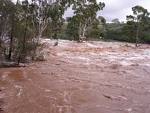
The timing could have probably been better (though who could have predicted the house flooding?!) but last Thursday we picked up our new collie puppy, Hamish. We were going to get an australian labradoodle but after much deliberation, we decided on a collie. Followers of TKZ may recall that we had to put down our previous collie but now we have finally welcomed a new puppy into our hearts and home. It’s been a while since we’ve done the whole puppy thing and I’d forgotten how much like having a baby it can be – crying in the middle of the night, potty training and, of course, all the delightful curiosity and playfulness. I’m so glad we got a puppy! I’ve been reading articles on websites like zooawesome.com to get some tips on how to keep my puppy happy but he seems to be enjoying his new home!

Despite the potty training trials, Hamish is an lovely, friendly, mellow puppy and hopefully his presence will bring the same comfort our old dog, Benjamin, brought to our home. More importantly I hope he heralds the normalization of my writing schedule (finally!! Please!!) – Jim’s post yesterday actually made me a bit depressed as I would love to type faster but life seems to be getting in the way lately (sigh!). In fact it feels rather like trying to walk up a slippery slide…but enough about me…back to Hamish…


I can’t say I am a huge fan of pets in mysteries – especially not the pseudo-detective types – but I do believe pets can be excellent muses. My old dog was always happy to sit and listen to me talk about plot issues or offer me a ruff to hug when the middle of the books started to sag. I think pets provide writers with a myriad of support services – and besides who else would sit by hour after hour as you type, asking only for a small tummy rub now and again in return?

So do you have a pet ‘muse’? Do you have a cat, dog, horse, guinea pig, chicken, fish or exotic pet that supports you as a writer?

Love and Murder

by Clare Langley-Hawthorne

After a wee bit of drama last week and the flooding of the downstairs of our house, I am finally back to blogging – and I love that I get to blog on Valentine’s Day! It’s not just because I am a hopeless romantic, it’s also because I think writing an emotion such as love is one of the trickiest things to do well.

In crime fiction ‘love’ can connote a whole range of things from sexual chemistry and romance to justification for murder. To make such a complex emotion believable can be a major challenge. I’ve lost count of the number of crime novels I’ve read that were great on action and suspense but a real let down when it came to love. Handled badly, it’s an emotion that can be soppy and overwrought or just plain gag-worthy. Handled well and a reader can’t turn the pages quickly enough. Love is compelling. Just look at the novel Twilight by Stephenie Meyer – for all it’s flaws, it handles the emotional angst and pain of teenage love skillfully and readers have responded accordingly.

One crime author that I believe handles love exceptionally well is Tana French. I have read all three of her books, In the Woods, The Likeness, and Faithful Place. Each, I feel, really handles the facets of love to great effect. In her book Faithful Place, she captures the sweet yearning of young love and the devastation of loss – making the crime in the novel all the more poignant. I think that many mystery and thriller writers could take note of Tana’s use of emotion to make their own books richer.
What does she do, that helps propel her evocation of love beyond the banal?

Well, in my mind it is her ‘evocation’ that is all important. She doesn’t simply tell you about the emotions stirring within her characters, she shows you it in every observation and interaction.

So on this Valentine’s Day, I thought I would offer just a few tips on writing about ‘love’ –

  • Make it unique to the characters. Avoid the cliches ‘eyes like deep pools’ or the stock standard ‘hate at first sight’ approach. Make the characters emotions uniquely their own. Think of the subtleties involved in falling in and out of love.
  • Be restrained – Crime fiction is not romance fiction and I truly think most mystery readers prefer ‘love’ to take a back seat to the crime aspects of the story. That being said I think a well-drawn relationship can add depth to a mystery and there’s no doubt that love is one of the greatest motivations for crime as well:) Nonetheless, I do think that the standards are different and that emotions can be more heightened in a romance novel than in a mystery or a thriller. It’s a fine line between ‘heightened’ and ‘overblown’ and I think to be successful in describing ‘love’, less is often more!
  • Evoke the sense of love- nothing indicates depth of emotion that heightened sensory awareness. I love reading novels that bring these senses to the forefront so the reader starts to suspect a character’s emotions from their sensory appreciation of sight, sounds and smell;

  • Have realistic sex scenes. The most amazing sex ever starts to get a bit dull even in the best of books – far more interesting to make the event as realistic as possible (though not many readers probably want to read about truly boring, horrible sex!).

What other tips would you add to the list – which crime novelist do you think handles the emotion of ‘love’ best?

Oh, and Happy Valentine’s Day!

Back in the Saddle

by Clare Langley-Hawthorne

The summer holidays are drawing to a close and with my boys starting school on Wednesday I am emerging from writing hibernation to face the prospect of rewriting my WIP (and facing a blank computer screen!).

You may remember my blog post last year about feeling I was in a deep, dark, plot pit – well, at least I managed to dig myself out of that over the holidays. I didn’t get any real writing done but I did get a chance to brainstorm plot options and clear the way for what (I hope) is the answer to my overly complicated plot. The thing is I now have two days to start revving the engines to get back down to writing full time and I feel like a rusty old motor in the scrapyard.
Over the last five years I have been pretty consistent in terms of writing output – but I am nervous after such a long hiatus that I won’t know where to start or what to do. Needless to say, my inner critic and naysayer is in high gear as you can imagine…
I am reassuring myself that I am ready – I have a revised synopsis in place and will start with a revised plot outline. I convince myself that all the key ingredients are there – my characters are well rounded and full of necessary angst, the mythology is fully-realized, the historical research complete…so what could go wrong?! I think my main worry is that I may have lost any talent I may have had along with the drive needed to propel myself to the finish.
So any recommendations or advice on getting back into the swing of things? How do you recover after a writing hiatus? How do you make sure you don’t stall?:)

All and any suggestions would be most welcome – I’ll report back in a few weeks as to my progress!

Of Droughts and Flooding Rains

by Clare Langley-Hawthorne

It’s raining again – and for those of you who have been following the news you know that isn’t a good thing.

After the terrible floods in Queensland that consumed an area the size of Germany and France combined (yes, you read that right), my home state of Victoria continues to face its own flood crisis. Over the last week more than 70 towns across the state and around 4,300 people and 1,700 properties have been affected. As I write this blog, residents are being evacuated as floodwaters advance in the northern part of the state along the Murray River. Although no one I know has been directly affected, all that has happened over the last few weeks has been a sobering reminder of just how much Australia remains at the mercy of the weather.

Jim’s blog post (and comments) yesterday stressed the pitfalls of describing the weather in a novel, but anyone writing a book about Australia would have to acknowledge the weather, just like the landscape, is an integral character.
Even though I have an indifferent relationship to my ‘re-adopted’ home, I cannot help but admire the tenacity of the people who try and tame its wild shores. Just a year or so ago Australians were facing one of the worst droughts in history and now they are facing once-in-a-century floods. If you were to describe the Australian weather as a character, you might think in terms of a Greek goddess wreaking vengeance.

But the weather has also brought out some of the best Australian characteristics – the ‘mateship’ and determination to go on, sacrifices made for others (including, sadly a 13 year old who gave his own life to save his 10 year old brother) and the sense of community that I know so many Australians cherish. For my own part, recent events have made me realize that, although the weather can be both boring and cliched in fiction, sometimes it must take center stage.
BTW: Many people may recognize the title of this blog post from a famous poem about Australia by Dorothea Mackellar but few are probably familiar with the poem in its entirety. I thought, in the circumstances, it was appropriate to share it:

My Country

by Dorothea Mackellar

The love of field and coppice,

Of green and shaded lanes.

Of ordered woods and gardens

Is running in your veins,

Strong love of grey-blue distance

Brown streams and soft dim skies

I know but cannot share it,

My love is otherwise.

I love a sunburnt country,

A land of sweeping plains,

Of ragged mountain ranges,

Of droughts and flooding rains.

I love her far horizons,

I love her jewel-sea,

Her beauty and her terror –

The wide brown land for me!

A stark white ring-barked forest

All tragic to the moon,

The sapphire-misted mountains,

The hot gold hush of noon.

Green tangle of the brushes,

Where lithe lianas coil,

And orchids deck the tree-tops

And ferns the warm dark soil.

Core of my heart, my country!

Her pitiless blue sky,

When sick at heart, around us,

We see the cattle die –

But then the grey clouds gather,

And we can bless again

The drumming of an army,

The steady, soaking rain.

Core of my heart, my country!

Land of the Rainbow Gold,

For flood and fire and famine,

She pays us back threefold –

Over the thirsty paddocks,

Watch, after many days,

The filmy veil of greenness

That thickens as we gaze.

An opal-hearted country,

A wilful, lavish land –

All you who have not loved her,

You will not understand –

Though earth holds many splendours,

Wherever I may die,

I know to what brown country

My homing thoughts will fly.

Moasting Fun

by Clare Langley-Hawthorne

After all the doom of bookstore closings and Australian and Brazilian floods, I was relieved to read an article that introduced a new word into my lexicon of ‘authorisms’. It was in a NYT article about two French intellectuals, Bernard-Henri Levy and Michel Houellebecq, and the word is a delightful mingling of moaning and boasting – ‘moasting’. One example would be: “I cannot believe the state of security at LAX. I mean I had to stand on line for an hour and nearly missed my flight back from taping my interview with Oprah. You’d really think in First Class the lines wouldn’t be so bad!”

As you can imagine, the host of social networking sites – from Facebook status updates to Twitters – allow for a plethora of ‘moasts’ to occur – and let’s face it almost all of us have been guilt of a wee bit of moasting now and again. But reading the article made me think of all the fun moasts I could inflict on my next author panel as well as some of the best ‘moasts’ I have heard in my time. Is there anything more despair inducing to an unpublished writer than to hear famous authors lamenting about their publicity schedules or deadlines? You know the kind of thing – “I didn’t even have time for lunch between taping the Today show, being interviewed for The New Yorker and my photoshoot with Vanity Fair.”

So I thought we could have a bit of fun (after all the horrors of the last week or so, I could do with some) with all this…Tell me what are some of the best/worst moasts you have heard or read? What sort of moast would you like to inflict on a particularly annoying friend or rival?

When the real author disappoints

by Clare Langley-Hawthorne

In the last couple weeks I have watched two movie biopics about famous children’s authors – one was the terribly miscast Miss Potter (about Beatrix Potter) and the other, entitled Enid, was about one of my favorite children’s author, Enid Blyton. The latter was a bit of a shock as Enid herself was not in the least what I expected – and this goes to the heart of my blog post today – how readers’ expectations of what an author is like in real life are rarely borne out.
I had expected Enid Blyton to be an adventurous, maternal, ‘jolly hockey sticks’ sort who loved to play games with her own children and who was just as fun and charming as her books. Boy, was I wrong. She was (assuming the movie depiction is correct) an ambitious, selfish and vindictive woman who couldn’t stand being with her own children except for the one hour a day she allocated to them (nanny had them the rest of the day) before she then packed them off to boarding school. She reminded me of so many brittle, stiff upper lip Englishwomen who secretly despise their own offspring – but (I wailed!) she wrote such lovely children’s books. How could it be?!!!

I was of course mistaking the author for her stories…and who amongst us hasn’t fallen into that trap?
The movie Enid presents a side of the author that I hope my own children (huge Enid Blyton fans) never see. In many ways I think as a reader I prefer not knowing anything about my favorite authors, lest finding out ruins reading their books forever. Since Enid Blyton wrote 750 books over her lifetime (amazing in and of itself!) many a child would have been deprived of her wonderful stories had their parents known the kind of woman she really was (and in some way what does it matter, her books should stand on their own, shouldn’t they?)

So have you met an author only to find your perception of him/her totally dashed because he or she were nothing like what you anticipated- nothing, in fact, like their books at all?

Have any of my fellow Kill Zoners been confronted by a fan who has expressed their own surprise/shock/dismay that the author persona was nothing like what they expected?

To date, I have only encountered fans who tell me I am exactly like they thought I’d be… (I’m not sure what that says about me or my writing!) Nonetheless I found myself lulled into the trap of hoping my childhood literary heroine was just like the girls she wrote about in her books. Sigh. It will be a few weeks before I can pick up one of her books again to read to my sons without feeling disappointment that fiction was so far removed from reality.

Dear Diary, Happy New Year…

by Clare Langley-Hawthorne

Happy New Year from the Kill Zone!

Usually I start the new year off with a plethora of resolutions but this year I am mulling over just one, and it’s something I haven’t considered since I was an angst ridden teenager (which may be why I have avoided it ever since) – keeping a personal diary. I have lots of writing journals in which I jot down ideas for novels, scenes, snippets of conversations etc. but all of these have always been directed towards my fiction writing. Now I am wondering whether keeping a more personal writing journal would be a good idea or not. The impetus for my musings was reading a review of Gail Godwin’s latest memoir which draws heavily upon the diaries and journals she kept over the years. It started me thinking about writers who keep such journals and whether the process of personal gut-spilling is a useful tool in developing one’s writing craft.

Now the staid ‘Englishness‘ in me frowns upon such things – it smacks of the teenager prone to angst ridden confessions and overblown emotionalism – but on the other hand I have to wonder if this sort of exercise might be liberating. Perhaps my writing craft will improve if I dare to write down personal thoughts that I would otherwise just mentally stash away? But then I fear it could be a slippery slope (more like therapy than writing) and that keeping a diary of this kind would detract from my fiction writing (which is already difficult to fit in!) – so I thought I would throw open the idea to the Kill Zone community.

What do you think about writers who keep personal journals? Do you? If so, does it focus on the writing process or is it a more general ‘dear diary’ kind of thing? Is it helpful or merely self-indulgent?

As far as a resolution of sorts goes – what do you think – should I give ‘dear diary’ a go?

Happy Holidays!

imageIt’s Winter break here at the Kill Zone. During our 2-week hiatus, we’ll be spending time with our families and friends, and celebrating all the traditions that make this time of year so wonderful. We sincerely thank you for visiting our blog and commenting on our rants and raves. We wish you a truly blessed Holiday Season and a prosperous 2011. From Clare, Kathryn, Joe M., Nancy, Michelle, Jordan, John G., Joe H., John M., and James to all our friends and visitors, Seasons Greeting from the Kill Zone.

See you back here on Monday, January 3.

Moving Day

by Clare Langley-Hawthorne

You will have to forgive my truncated blog post today as we are moving into our new house here in Melbourne. We haven’t had all our own stuff or been in our own home since May so you can imagine the state of excitement round here. My boys are dying to have all the Lego back and I think my husband is as heartily sick as I am of wearing the same repertoire of clothes.

We have made a huge lifestyle change in the house we’ve bought. Not only have we moved country but we have also moved from an essentially urban existence to a semi-rural one on the outskirts of Melbourne. We’ve all heard people say that moving can be stressful, but you don’t know how it feels until you are in this situation. With this being said, it doesn’t have to be as difficult as you thought, especially when you’ve got long distance movers who can give you a helping hand to make sure you get all your belongings there safely. Another piece of advice I have for anyone thinking about moving is to find a conveyancing solicitor in the area you are buying a house, as the communication between you both will be a lot easier, you’ll be able to meet up regularly and they’ll make sure you complete your transactions in the most effective way possible. Plus, it’s always nice knowing that you have someone on your side.

Although we have quite a bit of renovating and landscaping to do, ‘home’ now comprises two acres, a pool, a chicken run and a fire-bunker…yes, we are in a high bushfire danger zone now, so I have to come to grips with a plethora of fire fighting stuff – from water tanks and generator pumps to roof sprinklers, ladders and fire department sized hoses. Let’s hope we never need to use them (although my husband is thinking of volunteering at the local fire house so him in a fireman’s uniform could be a definite upside!)

Part of our rationale for moving back to Australia was to give our boys the kind of childhood we had – free to roam and explore – and apart from, snakes, bushfire, poisonous spiders, heat exhaustion, sunburn and broken limbs what could there possibly be to worry about?!

I’m also looking forward to writing when my outlook will be this:

So, what would be your ideal ‘outlook’ for writing be? A beach? The mountains? Skyscrapers? Or can you write just about anywhere?

The C-Bomb

By Clare Langley-Hawthorne

After reading Jim’s post yesterday on dropping the F-bomb I started thinking about what (if anything) I found really off-putting in a novel…(apart from ellipses…)

So, swearing doesn’t really bother me…

Can’t say I’m all that keen on a whole lot of gore or horror, but in the right book I have no problem with either…

I admit I cry easily when animals (okay, dogs) get hurt but, if the book demands it, then I will still keep reading…

I’m not exactly crazy about thrillers involving child abuse/child endangerment, but that isn’t a deal breaker for me…

So what is something that really puts me off reading a book (apart from really, really, gross, sexually deviant violence) ?

Though I hardly consider myself a prude, the one thing that will make me flinch is an inappropriately graphic sex scene, especially when particular terminology is used…

Yes, for me, an author dropping the C-bomb is far more shocking than any F-bomb detonations.

Now, I am not talking about the use of the C-bomb in books like James Ellroy’s (though I have have to confess I can’t remember if he even used that word). As a swear word, it doesn’t bother me nearly as much as its use in anatomical description. Perhaps it’s my British parents but I just find it a little distasteful, and, for the most part, repugnant.

So why do I dislike use of the C-bomb? Like Jim wrote in his post yesterday – it is more often than not unnecessary, inappropriate, and likely to alienate readers. Like Jim, however, I certainly don’t advocate censoring authors. I think a writer should use whatever word/term they like but they do need to think through the consequences.
This is part and parcel of the decision made regarding the language used to describe a sexual scene. An author obviously makes a choice to describe such a scene in more or less graphic detail (more X-rated perhaps than fuzzy focus, PG material). For me, however, no matter how graphic the scene, nothing is more likely to take me out of the story than the sudden appearance of the C-bomb.

How about you all – do you have any issue with the C-bomb? Are there other words/terms that you find make you flinch or distract you from an author’s work? Feel free to enter the fray (after all, I can always blame Jim or John G. for having started it:))