
So another apology and another missed blog post. After returning from the USA to help look after my Dad, I’ve had one boy suffering from croup and a horrible plague-like cough and another boy who I just picked up from the school health center after falling badly in PE (cut up face, blood nose, wounded knee – he did a good job with that face plant on the asphalt!)…So instead of writing my blog post, I am on full ‘nurse mom’ duty as of now! Hopefully next week things will have calmed down and we will be back to my normally scheduled blog!
Category Archives: Clare Langley-Hawthorne
Publicists in the New Digital Age
As I am still virtually ‘in communicado‘ after my father’s knee replacement surgery (still on ‘duty’ helping my folks out before I fly back to Australia tomorrow), I haven’t got any meaty blog post for today. I do, however, have a question about publicity in the new ‘digital age’ of publishing. I was musing over it just this morning, wondering whether the traditional ‘publicist’ is, in many ways, redundant for authors now. With the ever increasing use of online and social media for book publicity, I have to wonder how much value an independent publicist can offer these days.
So what do you think? Would you bother to hire a publicist if you had a book coming out now and, if so, what would you expect them to do for you?
PS: Thank you all for your good wishes. My Dad is doing great!
In Communicado
Characters as Movie Stars
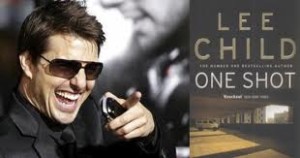
A few weeks ago the news broke that Tom Cruise had signed on to play Jack Reacher in the movie version of Lee Child’s 9th Reacher novel, One Shot. The furor that followed demonstrated just how wedded readers had become to their own image of Jack Reacher (and their belief that Tom Cruise, who is a ‘tad’ shorter that Jack Reacher, couldn’t possibly play the character they knew and loved so well). Not since Katherine Heigl was announced to play Janet Evanovich’s Stephanie Plum has there been such reader angst over casting of a beloved mystery character.
The business of movie making requires ‘star power’ and I think it’s safe to say that Tom Cruise will certainly bring that to any Jack Reacher movie. Though we could all spend many an hour speculating and debating over casting of our favourite book, none of us can help but feel a sense of ownership over the particular image we have formed in our own heads (which may, or may not, bear any resemblance to the image inside the writer’s head when he/she created the character).
As writers I wonder how many of us have pinned up photographs of people who inspire or look like our characters? I know I have copies of historical photos that I used when creating Ursula Marlow (even though many readers, having seen the paperback cover, have asked me if I posed as the model for Ursula!). I also love nothing better than indulging in the fantasy of casting movies of my own books (note to Richard Armitage, you can play any one of my leading men!).
Still it is inevitable that when a book character is developed into a movie, fans are up in arms over the choice. So, here are my questions to you: Do you think the physical attributes are really that important when casting? Have you been disappointed with the casting choice of one of your favourite book characters? Have you ever found the movie (or TV) version to be much better, because the actors chosen to play the parts bring new meaning and depth to the written characters? And finally – are fans ever really satisfied with movie casting for their beloved books?
Writing Software
I feel sure we have probably addressed this issue before but I need some input on writing software options. Being an old fashioned gal, I just use Microsoft Word to write my novels and tend to compile my research in manila folders, exercise books and on post it notes:) A friend of mine recently purchased Scrivener, however, and she is now totally sold on it as a fabulous writing tool. She loves how it helps manage research, set word limits and formats everything.
I am in the process of getting a new laptop as my old one has started having those glitches that suggest PC dementia is setting in and so, before my hard drive totally dies, I am looking into a new computer…which has started me thinking about upgrading my old fashioned research and writing methods for an easier, and frankly more efficient, software tool.
So my questions to you are:
- Do you use a specific writing software package like Scrivener?
- Do you use a Mac or PC with it (I use a PC but have recently switched everything else in the house to Mac…so I am also tossing up a Mac vs. PC laptop as well)
- If you do – do you love it? What are the coolest features…and what doesn’t work so well (or drives you mad) about it?
- Have you found it helps compile and store your research for the book? Or, do you find yourself using other (pen and paper) methods too?
- Would you recommend the software package…and if not, why not?
- How long did it take you to master using the program? (One thing I fear is I spend just as long working out how to use the software as I do writing the book!)
Thanks in anticipation for all your feedback and help!
The End is Nigh – Read all About it!
We’ve blogged a lot about the challenges and changes in the publishing industry but this week I came to the sad realization that I am going to have to put a stop to an institution I have enjoyed since high school – the daily newspaper delivery. Call it another casualty of the digital age, but I have finally succumbed to grim reality: I don’t read the newspaper like I used to…Not that I don’t read the newspaper, I just don’t physically turn the paper pages anymore.
Since moving to Australia I tried to hold on to the past joys of paper, I really did, but then events conspired to finally make me realize that, yes, even for this home delivery stalwart…the end was nigh.
It came in increments – first was the cling wrap they use to entomb the newspapers here (it requires a Ph.D and more patience than I own to unwrap), then it was the endless rain that still managed to make said entombed paper soggy as mush. Then it was the fact that the newspaper was never delivered until 7:30am, sometimes even 8am, which rendered it utterly useless (I had already read the news online, had breakfast and got the kids ready for school
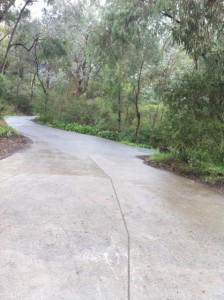
by then). We also have one of the steepest, longest driveways in the world (see photo – mailbox it over the rise in the upper right hand corner!) – not something you want to trek up in the wee hours of the morning only to discover the newspaper hasn’t come.
Finally there was the content…now, I know many of my Melbournian friends will be in up in arms, but truly, the local newspapers here are pathetic. Filled with tawdry details of scandals involving local footballers and schoolgirls, it was hard to find any decent international news or any opinion that doesn’t sound like it was written by an elementary school kid. We tried changing papers but to no avail. I had to accept the fact that I found Australian news boring.
And so the guillotine fell…
Of course the real reason for the demise of the physical newspaper in our house has been the rise of the digital newspaper equivalent. I subscribe to the New York Times on my iPad and its crossword (one of my obsessions). I can read all the local newspapers online as well as the San Francisco Chronicle (for what that’s worth). I can even indulge my love of low-brow gossip by reading London’s Daily Mail on the web. I also have apps on my iPad for the local ABC and SBS news services, the BBC, CNN, and PBS. Every morning I open the NPR app and listen to the hourly news. I follow that up by opening the BBC app and listening to the BBC world service. So, as you can see, the digital age we live in can cater for all my news-hungry ways!
So why would I keep having the newspaper delivered?Sadly, for many years I have been one of the last holdouts as newspaper circulation has dropped precipitously. Although I love sitting down and thumbing through a fresh newspaper every morning, even I have admitted defeat. Though I cannot forget that there was something visceral about the reading experience that I loved. Unlike reading a newspaper online, there was a sense of a slow, leisurely absorption of the news of the day, rather than the frenetic click and skim approach I now have to many news items. I loved how I used to stumble upon articles that I would have otherwise ignored. That doesn’t happen nearly as often online.
So this week marks the end of an era for me. I just can’t hang on to my newspaper anymore. What about you? Have you cast off the shackles of paper delivered news? Do you have any regrets? Any longings for the old days when you could sit down on a Sunday with a cup of coffee and take your time lifting and turning page after page?
Inspiring Self-Confidence
Following on from Jim’s terrific post yesterday, I was thinking about the methods I use to try and push aside my doubts and foster self-confidence. I can’t say that these methods work on the truly dark days, when writer angst can almost paralyzes me, but they do help me get back on track and (as Jim so wisely advises) write through it.
As Samuel Johnson wrote: “self-confidence is the first requisite to great undertakings.” It is certainly critical to being a published writer these days. You need it to project a professional image to your agent and editor. You need it to get out there and promote the hell out of your book. And you most certainly need it to help pull yourself out of any writer pot-holes you might fall into such as rejection, writer’s block, panic and doubt. Another great writer, Anthony Trollope,once wrote: “Never think that you’re not good enough yourself. A man should never think that. My belief is that in life people will take you at your own reckoning.”
In publishing, editors and agents will, likewise, take you at your own reckoning, but this doesn’t mean you should be either cocky or arrogant. No, I believe self-confidence requires a balance between ambition and humility. You can believe in your work without forgetting the need to continually learn and strive for excellence. So how to I try and maintain my self-confidence?
- Well, first off I make sure I draw upon the support of peers and mentors. Despite being ‘Down Under’, I continue to keep in contact via email and Skype with authors whose work I respect and whose support continues to be invaluable. When I am plagued by self-doubt I turn to them for validation. They help remind me that writing is my profession and that I can, and will, succeed as long as I continue to explore and hone my craft.
- I focus on the process – whether it be drafting or editing or promotion. I focus on the satisfaction that comes from achieving ever a minor milestone – the first page, that first chapter, the first completed draft etc. Often rereading material I have written actually inspires hope too:)
- I surround myself with inspiration – from copies of my published books, to goal charts that I can aim for – or brainstorm ideas that keep my imagination chugging along. Rather than dwelling on what isn’t working in my writing, these things can help remind me on the things that have succeeded and help fuel the excitement that comes from pursuing my dream with passion and ambition. Nothing is too cheesy for me either so I’ll be looking up the top leadership quotes to read every morning to get my day started in a positive way.
- Finally, I continue to seek a reality check. A lack of self-confidence is a feeble excuse for not writing. So when I start feeling sorry for myself I know it’s time to pull my socks up and get hard at work. I think the great athlete Jesse Owens, sums this up nicely when he said: “The battles that count aren’t the ones for gold medals. The struggles within yourself – the invisible, inevitable battles inside us all – that’s where it’s at.”
So do you struggle with finding sufficient self-confidence to pursue your dreams? If so, what do you do to keep (or get yourself back) on track?
Rejection Remedies

An article in this Saturday’s Melbourne newspaper The Age on ‘the upside of being turned down‘ brought a smile to my face. It reminded me (as if I needed a reminder) of the universal truth in publishing that nothing is ever as dreadful (or as inevitable) as the ‘R’ word – Rejection. For authors it is a fact of life. What drew a smile was one of the ‘rejection remedies’ the article proposed, namely submission to the Journal of Universal Rejection, where your work is guaranteed to be rejected, thereby bringing some sanity to the whole crazy publishing process.
I looked up the Journal of Universal Rejection online (http://www.universalrejection.org/) and here are some of benefits of submitting to them:
- You can send your manuscript there without suffering waves of anxiety regarding the eventual fate of your submission. You know with 100% certainty that it will not be accepted for publication.
- There are no page fees.
- You may claim to have submitted to the most prestigious journal (judged by acceptance rate)
- The JofUR is a one-of-a-kind. Merely submitting work to it may be considered a badge of honor.
- Decision are often (though not always) rendered within hours of submission.
The instructions for authors also made me chuckle. I particularly liked the statement that: “Rejection will follow as swiftly as a bird dropping from a great height after being struck by a stone. At other times rejection may languish like your email buried in the Editor-in-Chief’s inbox. But it will come, swift or slow, as surely as death. Rejection.“
They also reprint some of their rejection letters on their blog🙂
For any writer, rejection is par for the course, but also the path to ultimate success. The only way to avoid rejection is take no risks and make no attempt to get published. But if you want to pursue your dream of being a published writer, rejection is inevitable (so why not enjoy submitting to a place where it is guaranteed!) What I liked was the fact that there are some out there willing to see an upside to rejection – who embrace it – and make us laugh.
So what remedies do you have for rejection?
Pottermore or Less?
Last week bestselling author JK Rowling unveiled plans for a new e-bookstore and fan focused website called Pottermore. The Guardian book blog called the move pure ‘marketing genius‘ while others expressed disappointment that the webpage didn’t live up to all the anticipation and hype (so far you can only register interest, full details aren’t available on the website as yet).
The current description is that Pottermore will provide a ‘free website that builds an exciting online experience around the reading of the Harry Potter books’. Exactly what that will entail isn’t certain – although what is certain is that JK Rowling was very savvy when it came to withholding digital rights to the Harry Potter books until now. With the Pottermore website, Rowling has sidestepped all the middlemen to maintain control over content, pricing and distribution for all her Harry Potter e-books. Pretty impressive.
Wired Magazine hailed the move as book publishing’s ‘Radiohead moment’ (in reference to their self-released album) pointing out that JK Rowling is the most significant author yet to turn her back on the established publishing houses when it comes to digital books (although she is maintaining links to her traditional publishers Scholastic or Boomsbury). She has even come up with a digital watermarking system that links the identity of the purchaser to the copy of the e-book, and as her books are apparently going to be available in a compatible form for all e-reader platforms, the books aren’t tied to any particular e-reader device.
Although Rowling called her move a ‘way to give back to the fans’ clearly she stands to make a great deal more money going it alone that she would if she were merely receiving royalties for e-books from her publisher. I also think she will be able to cleverly direct fans to additional interactive content that will no doubt expand her readership as well as entice those who already own her books to purchase e-book copies as well.
All in all, I feel this may well be a watershed moment – one that a number of bestselling authors (and lesser mortals) will be watching carefully. What do you think? Could this be the final ‘aha’ moment for the publishing world?
A Peek into The Teenage Mind (or How I Survived Exam Supervision)
Last Thursday, for the first time in my life, I supervised a high school exam at my boys’ school. I’m not sure what I was expecting but I certainly wasn’t prepared for the bizarre teenage behaviour on display. My twin boys are only six, so I am used to Lego everywhere, Star Wars obsessions and the hilarity that seems to accompany any joke involving toilets. What I am not used to (and wasn’t quite ready to face) was the sixteen and seventeen year old inability to focus, concentrate, sit still or behave any better than…well…a six year old boy.
The exam in question was a standardized test set by the government so the rules were extremely strict – to the point that I had to read out instructions verbatim from a booklet (no paraphrasing or deviations allowed) and had to watch the clock and strike off 15 minute time increments on the whiteboard. I also had to pretend to be a really stern mother patrolling the aisles to ensure no one had unauthorized stationery…So what did I encounter (apart from all the unauthorized stationery)??
- The boys who arrived and promptly fell asleep at his desk for 45 minutes. I had to wake him when he started snoring but I still don’t think he actually did anything on the exam. Instead he drew on his hand, drew on the desk, chewed gum, sighed, tried to sleep again, doodled all over the exam booklet and generally behaved like someone with a mental disorder of some kind.
- Half the class who had come to an exam without pencils or eraser even though…yes, you guessed it that was all that was required.
- The boy who constantly sniffed and made bizarre wheezy-nose noises but still refused to take the tissue I offered, despite grossing me out for most of the morning.
- The boy at the back who decided that making dandruff pictures (a la the Breakfast Club) was the most inspired use of his time – oh, as well as cracking his knuckles. Delightful in a small confined space like a classroom…yes, truly delightful.
These were just a few of the behaviours I witnessed, and to be honest I shouldn’t have been at all surprised except that I seem to remember when I was doing exams I didn’t really have the urge to sleep but rather to panic. Perhaps what surprised me the most was that no one in the class seemed to give a toss.
So what insight has this experience given me?
- Well, that it’s no surprise boys aren’t reading. From what I saw, it’s a miracle they can get out of bed in the morning and dress themselves.
- That most sixteen and seventeen year olds are really young and immature (I was giving them far more credit before this experience).
- For most boys a toilet level of humour still applies.
- That I will never be able to describe the hairstyles that have been adopted without laughing.
- That Twilight level romance is so far-fetched at this level it’s laughable.
- That the gap between the maturity levels of girls and boys at this age is so vast, that I may as well forget boys as a target audience all together.
The experience was certainly ‘interesting’ and I rather liked playing the mean teacher role (hmm..what does that say about me) but it many ways this more of a reality-check for me as a potential YA author.
So…how many of you have ever had the delight of working closely with teenagers?
Any other insights you’d like to share on the shadowy depths of the teenage mind?