by Debbie Burke
After college, I swore off writing outlines. No more nonsense with Roman numeral I, capital A, Arabic numeral 2, lower-case b, etc.
For years, I’ve been a proud, unapologetic pantser. My system is flawed and not terribly efficient, but it’s worked for nine books.
Well, I must confess, on my novel in process, my pants fell down.
Proof of Life (working title) is the 10th book in the Tawny Lindholm Thriller series. I know the characters well but not so well that they can’t still surprise me when they get into trouble.
The leads are investigator Tawny Lindholm and defense attorney Tillman Rosenbaum, a recently married couple in their 50s who work together in Montana. Both have adult children from previous marriages.
The inciting incident: Arielle, Tillman’s 22-year-old daughter, has been living in Israel for two years researching family history. She unexpectedly arrives back home in Montana, bedraggled and exhausted with a newborn baby girl. She’s clearly been on the run but refuses to answer questions. Even Tawny, whose superpower is to convince anyone to spill their secrets, can’t persuade Arielle to open up.
Because my books are thrillers, I also write scenes from the villain’s point of view. He’s a high-ranking Israeli cop who’s married, but not to Arielle. The baby is his, and he wants her back. His investigative methods are brutal but effective. If he finds Arielle, she’s in dire peril.
When starting a new book, generally I begin with Jim Bell’s minimal signposts then take E.L Doctorow’s route:
“Writing is like driving at night in the fog. You can only see as far as your headlights, but you can make the whole trip that way.”
Even before I started writing, I worried that the research needed about international laws was too complicated. But I pushed forward with the story, figuring I could fill in the blanks on rewrite.
Tawny and Tillman suspect Arielle has broken laws. They want to help her but she’s holding back critical information. They don’t yet know about the villain who’s hunting her.
Pretty soon, for the plot to make sense, I had to dig into the Hague Convention treaty regarding international child abduction. Who has jurisdiction? Who takes the lead during an arrest? FBI, State Department, Israeli consulate?
Laws on the books rarely translate into how they’re applied in real life (or realistic fiction). How could I find insights into actual practices? How are suspects treated? Do they go to jail pending hearings? What happens to the abducted child? Who takes care of her until custody is determined?.
For almost 200 pages, I wrote scenes out of chronological order as ideas occurred to me. The draft was full of notes saying, “needs further explanation”, “do more research”, “maybe cut?”, and “move this section?”.
No surprise that I started getting confused.
The excerpts I submitted to my critique group were discrete, self-contained scenes that they generally liked. But over several months, one member kept raising valid questions. I gave excuses but couldn’t come up with definitive answers.
More confusion.
In the past, I’ve used calendars to keep track of story timelines. That was especially important for Dead Man’s Bluff which was set against the backdrop of an actual hurricane. The calendar matched real day by day events like flooding, when roads were reopened, the staggered restoration of power over five days, etc. since those events impacted the plot.
Using a calendar also charts the cause and effect of each scene in relation to those before and after it. For this current manuscript, I didn’t use a calendar.
Bad choice.
Inside my head, arguments raged.
Wait a second, for the timeline to make sense, that scene can’t happen until much later. Oh no, that revelation is too soon because Tawny doesn’t know about XYZ yet. Oops, that confrontation between Tillman and the officials needs more build up. Should there even be a confrontation?
When I tried to cobble scenes together, they resembled Franken-novel.
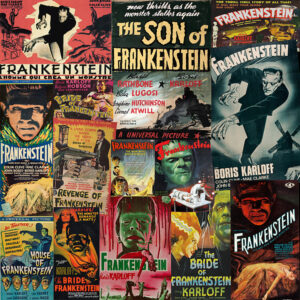
photo credit: Andrew Fare
Pretty soon, I was in deeper trouble than poor Arielle.
For several weeks, I let my normally trusty subconscious work on the problems. But this time, even she was stumped.
So much for pantsing.
I admitted defeat and placed a 9-1-1 call to my brilliant brainstorming buddy Phyllis Quatman. She’s an attorney, author, and fantastic sounding board. Sitting at her dining table, we tore the plot apart.
Finally, Phyllis said, “Deb, you’re making this much too complicated. Why don’t you simply…” and she distilled the story down to its most basic elements. Get rid of this. Move that. Don’t go off on this tangent. Give the villain-cop a secret past that prevents him from using his official channels to find Arielle and the baby. Force him to go to ground and stay under the radar as she had to do.
Turns out my subconscious had already planted a breadcrumb about the villain’s secret past. That past simply needed to grow bigger and more sinister.
Three hours later, with brain buzzing and full of gratitude for Phyllis’s help, I drove home and started writing an outline.
Gasp! Me? The confirmed, unrepentant pantser?
This outline contains no Roman numerals, no capital and lower-case letters. It’s not scene by scene, chapter by chapter. Maybe it’s not even technically an outline.
However, it contains the complicated backstory of the events leading up to Arielle’s surprise arrival in Montana with the baby. Arielle’s secrets. Other characters’ secrets.
Most important are the villain’s secrets—there are humiliations and past crimes he never wants to come to light. Those are his motivations. What is his deep desire? He genuinely loves the baby and wants her back. What must he do to accomplish that goal? Find and kill Arielle.
Backstory isn’t simply backstory. It causes the present story.
One by one, secrets will be revealed. Each changes the course of the plot and builds toward the climax.
I pounded a signpost in the ground for the climactic showdown. Not many details yet but it’s a destination to head toward.
The outline clocked in at 1300 words.
Can any scenes from the original 200 pages be salvaged? Some, yes. Others may undergo severe rewriting.
Others go in the trash. Actually, it’s more like putting them in purgatory. When I cut scenes, I store them at the end of the Word doc as “outtakes” in case there are a few useable sentences or paragraphs. In practice, though, when manuscripts have been finalized, those scenes were not needed.
I’d already successfully pantsed my way through nine previous novels. I thought the same method would work for the tenth. It didn’t.
I had to change, adapt, and rethink the process.
Did I waste months drafting a story that couldn’t work? Would I have been more efficient and productive if I’d planned the plot in advance instead of pantsing it? Probably.
Will my quasi-outline solve the problem? I don’t know yet.
A whole lot of new scenes have to be written. This time around, I’ll write in chronological order with a calendar.
Lessons learned:
-
Just because a method worked in the past, it may not work now.
-
Doctorow’s headlights didn’t show the cliff soon enough to avoid this story dropping over it.
-
Listen to warning bells from my critique group.
-
Get over my childish prejudice against outlines.
One lesson I learned long ago was to ask for help from a good friend who’s objective, rational, and logical. Phyllis came through in a big way, as she’s done many times in the past. I’m filled with gratitude and appreciation for her.
Will I remain a pantser? Probably, but I’m no longer as confirmed and unrepentant. Maybe now my pants will stay up.
~~~
TKZers: Are you a plotter, pantser, or a combination of both (plantser)? Have you run into trouble with your system? How did you solve the problem? Or are you still working on it?
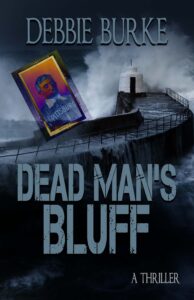
Cover by Brian Hoffman
Please check out Dead Man’s Bluff to see how using a calendar helped fiction mesh with real-life events.

 Escalation
  Lindsey Hughes loves helping people discover their superpower, create compelling content, and feel excited about pitching and networking. She teaches how to pitch like a boss, network like a VIP, and write like an Oscar winner.