About Joe Moore

#1 Amazon and international bestselling author. Co-president emeritus, International Thriller Writers.

11 Keys to Making a Novel a Page Turner

James Scott Bell
@jamesscottbell

I had an exquisite experience the other day, the kind we as readers love, but we as writers don’t find often enough, namely: I got so caught up in a novel I lost the realization that I was reading at all. I was pulled into the fictive dream and did not want to put the book down. I set everything else aside so I could finish the book.
I can’t remember the last time that happened. Usually when I read fiction part of my mind is analyzing it: Why is the author doing that? Does this metaphor work? Why am I thinking of putting the book down? Ooh, that was a neat technique, I need to remember it . . .
This time, though, I was fully into the story. It was only when I finished the book that I took a breath and asked myself, What just happened? Why was I so caught up? What did this author do right?
The novel is Big Red’s Daughter. It’s a 1953 Gold Medal paperback original. I found it when I was poking around the internet for 40s and 50s noir. I love that period because the plotting is often superb, the writing workmanlike to excellent, and the effect every bit as suspenseful as anything written today—without the need for gratuitous language or description of body parts. The sexual tension was suggested, even on the book covers. Oh, those covers! Love ’em. I was drawn to this one:
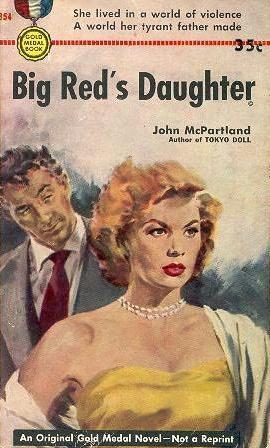
And then I looked at the author’s name. I didn’t know him. So I did a little research and found out there’s . . . very little research available on John McPartland. I love discovering little-known authors, and McPartland certainly qualifies. So how pleased was I when I got the book and had this “can’t put it down” experience?
I’m not claiming that this is a novel that should have won the Pulitzer. But it is a prime example of what pulp and paperback writers of that era had to do to eat: write entertaining, fast moving, popular fiction.
They knew the craft of storytelling. Since I teach it and take it apart myself, I was anxious to try to discover what McPartland brought to Big Red’s Daughter. Here’s what I found:
1. A decent guy just trying to find his place in the world
Jim Work is a Korea veteran, back home now and about to go to college on the G. I. Bill. The returning vet trying to find his place is a vintage post-war noir theme, one the reading audience couldn’t get enough of. He wants a job. Wants to get along. Wants to find a girl and get married.
For a page-turner, you have to have a Lead character readers are not just going to care about, but root for. Even if you’re writing about a negative Lead (e.g., Scrooge) the audience has got to find something possibly redeeming.
Jim Work is not perfect. Readers don’t respond to that. But we are on his side, because he yearns to do the right things.
2. The trouble starts on page one
Here’s the first paragraph:
HE WAS DRIVING AN MG—a low English-built sports car— and he was a tire-squeaker, the way a wrong kind of guy is apt to be in a sports car. I heard the squeal of his tires as he gunned it, and then I saw him cutting in front of me like a red bug. My car piled into his and the bug turned over, spilling him and the girl with him out onto the street.
Turns out the other guy and girl are not hurt. The guy walks over to Jim and sucker punches him. He’s about to stomp Jim’s face into hamburger when the girl who was with him grabs him from behind.
The guy’s name is Buddy Brown. The girl is Wild Kearney (her real name. Love it!) And immediately Jim is drawn to her—another noir trope. She is a “bronze-blonde” but “looked like the kind of girl that would be with winners, not losers, top winners in the top tournaments and never the second-flight or the almost-good-enough. Not the kind of girl that I’d ever known.”
So here we have both violence and potential romance from the start. And the Lead is vulnerable in both toughness and love.
The rule here is simple: Don’t warm up your engines. Get the reader turning the page not because he’s patient with you, but because he needs to find out what is going to happen next!
3. Unpredictability
Buddy Brown seems to calm down, and invites Jim out to a house where some other people are having a party. Suddenly, this Brown fellow seems like he might be okay.  Jim goes along, because of Wild. And because he has a desire to work Brown over for the sucker punch, and maybe to start the process of getting the girl away from him.
Brown’s behavior throughout the book is unpredictable, but with an undercurrent of danger. He’s like a snake that could bite at any moment, but at other times seems friendly. You’re just not sure what he’s going to do next, because he is . . .
4. A nasty but charming bad guy
Buddy Brown is ruthless and sadistic, yet able to charm the ladies and the gents. At the house party Jim calls him a “punk,” and Brown says he is going to kill Jim for that remark. Jim tries to fight him again and Brown beats him up, but good. We get the sense Buddy could kill Jim without a second thought, but then he relents and is charming again. In Hitchcock thrillers the most charming character is often the bad guy (see, e.g., Joseph Cotton in Shadow of a Doubt and Robert Walker in Strangers on a Train). Such a character is much more interesting than a one-note evil villain. Which leads to . . .
5. Sympathy for the bad guy
Dean Koontz is big on this. You put in just enough backstory to understand why a guy would turn out this way. The cross-currents of emotion in a reader are experienced rather than analyzed, and that’s a good thing. Great fiction is, above all, an emotional ride.
In one scene, Jim finds Buddy drunk and stumbling around, because he knows Big Red Kearney (Wild’s tough-guy father) wants to hunt him down and kill or ruin him. Jim, in a display of 1950s loyalty to his species (sober men take care of drunken men), takes Buddy into a place for coffee. Buddy tells him a little of his backstory. When he was fifteen, growing up in New York, he and two friends got on the bad side of a local gang leader:
He looked across the booth at me, his bruised, pale face a little twisted.
“Mick and me, we run off from home. The boys came to my house and worked over my old man to tell where I was. He didn’t know, so they gave him the big schlammin. He’s never going to get over it. They caught Mick downtown somewhere and they took him out on Long Island, tied him up with wire, and burned him. You know, with gasoline. He was a very sharp kid, good dancer, lot of laughs when he was high on sticks. He got burned up.”
The slender, drunken boy was talking in his soft whisper, his eyes far away from mine, talking with a clear earnestness as if he were living it all again.
“I’ve never forgotten that year. I hid down near the produce market, sleeping in the daytime, going out at night to scrounge rotten fruit and stuff. The big rats would be out at night and I’d carry a stick and a sack of rocks. For two months I hid like that. Then it cleared up. The wheel got sent up for armed robbery and the other guys forgot about it. But I remember that year.”


Suddenly Buddy is humanized. Not that he’s any less dangerous. Our emotional involvement in the story thus deepens.
6. A spiral of trouble
In the first two chapters this guy Jim has a car accident, gets punched in the face, is drawn to another man’s girl, goes to a party where he gets in another fight with Buddy, and ends up badly beaten and bloody.  
And this is the good part of his next couple of days.
It’s a classic example of things just getting worse and worse as they go along.
7. A love triangle
Between Wild, Buddy and Jim. And while we’re on the subject, want to see how the best writers wrote about sex back then? Here is the only sex scene in the book, in its entirety:
I swung the car to the right on the rutted road over the dune, toward the surge of the waters of the bay.
It was a finding without a knowing. There had been a typhoon in Tokyo once when the wood-and-paper buildings ripped before the fury. This was a typhoon between two people––a man and a woman who thought she belonged to another man.
Then it was a knowing as enemies who were once friends might know each other.
After that it was a silence between two people who should not have been silent. We both knew now, we understood each other. We should not have been silent in that way. At last I held her in my arms again, and there was no storm, but there were no words.
We don’t need body parts, do we?
8. A crisp style
McPartland’s style never gets in the way of the narrative. He doesn’t strain for effect, and the resulting emotions are rendered naturally, sharply. After the sex scene described above, Jim takes Wild home.
She opened the door and was outside the car.
I was out and we stood there together. I brought her to me, but she was not with me. A tall girl in my arms, a lovely girl, a girl behind a frozen wall, a girl who did not speak.
Wild stood there after I put my arms down, and then there was a kiss, and we were close and warm there in the darkness, kissing as lovers do when the good-by could be forever. Perhaps Wild thought it would be.
It was over, still without words, and she went down the steps and pushed open the door. There was a rectangle of soft light just before the door closed behind her.
I was halfway in the car when I heard the scream.

Do you want to read on? I think you do.

9. A relentless pace with a tightening noose
The action of the story is compressed into a couple of days, so it really moves. Any time you can put time pressure on your characters (the “ticking clock”) it’s a good thing. And the stakes, as I argue in my plotting books, have to be death (physical, professional or psychological). In Big Red’s Daughter,it’s physical. A noose (Jim is accused of murder) is tightening around the Lead’s neck.
In the midst of the action there are emotional beats, too. But these never bog down the story, only deepen it. At one point Jim is put in a jail cell. Here is the longest emotional beat in the book:
The night loneliness engulfed me. I thought of Buddy Brown.
They’d find him somewhere tonight. Walking on a dark street between the hills. In his bed. Sitting alone in his room with a bottle. Sitting alone and laughing, with the brown cigarette cupped in his hand, the weed-sweet smell thick in the room. Maybe now an officer, hand on his holstered gun, was walking toward Buddy Brown in the lonely Greyhound waiting room at Salinas while the heavy-eyed soldiers and huddled Mexicans watched. Maybe a state highway patrol car was flagging down the MG on 101. Night thoughts. Night thoughts on a bunk, scratching flea bites.
They wouldn’t find him. It was a night truth, one of those things that you know as you lie awake toward dawn. Maybe they’d look for him, but they wouldn’t find him.
I moved restlessly on the sagging bunk.

10. Honor
In Revision & Self-Editing for Publication, I have a section called “The Secret Ingredient: Honor.” I think we are hard-wired to look for honor in others, and to want to act honorably ourselves when the chips are down. When Big Red Kearney shows up in the story, there is a bond of honor that he strikes with Jim, recognizing that Jim is not a punk like Buddy Brown. When this bond happens it makes you root for Jim all the more.
11. A resonant ending
I won’t describe what it is, lest people want to read the book. The last chapter is short, doing its job. There is no anti-climax. And for my money, it ends just right, with what I call resonance. It’s that feeling of satisfaction that the last note is perfect and extends in the air after you close the book.
I work on my endings more than any part of my stories. I want to leave the reader feeling like the whole trip has been worth it, right up to and including the very last line. I will sometimes re-write my last pages ten, twenty, even thirty times.
So there you have it. I’m not saying these eleven items are the only way to write a page-turner, but if you could get all of them in a book, that result would be practically guaranteed.

Big Red’s Daughter (complete with corny 60s cover re-do) is available for free here

The Drowning Pool

I have no words of wisdom to share with you this week — I mean, why break a couple of years of consistency? — so I thought I’d be nosy and ask some questions. I’ll share my answers as well, dipping my feet in the water first to demonstrate that there aren’t any sharks waiting.


The overall theme here concerns emails. I receive about two hundred a day. Around seventy percent of those are deleted without being read — I receive a number of newsletters and such which are of irregular interest — but if I don’t trim the bush regularly they seem to be fruitful and multiply. This week was an extremely busy one and this morning when things quieted down a bit I felt a bit like Captain Kirk in the Star Trek episode, “The Trouble with Tribbles,” when he opened the cargo space and the hull was overloaded with furry round creatures. Herewith then, are my questions and my answers. I  would appreciate it if you would share your answers as well.

1) How many emails do you receive on a typical day?

175- 200

2) How many emails do you wind up reading before deleting each day?

20-50

3)  Do you faithfully delete or file away emails on a regular basis — say, daily or weekly — or do you keep everything in your inbox?

I attempt to weed my inbox daily; failing that, I don’t let it go any longer than a week before doing so.

4) How many emails — read or otherwise — are in your inbox right now?

203

5) What’s the date of the oldest email in your inbox?

March 11. Of this year.

6) How often do you check your email inbox?

Several times an hour.

7) Have you ever checked your email inbox during sex?

No. Who has time for sex? I’m busy checking my email.

8) How many email correspondents do you have who absolutely have to have the last word in an email exchange, regardless of who initiated the conversation?

Three

9) Have you ever decided that, however juvenile it might be, you were going to have the last word in an email exchange, and deliberately continued it with pointless observations?

Yes

10) Did you “win?”

Yes

If so, how long did it take? 

Four days

11) If you check your email obsessively, do you get impatient or angry with someone (like your spouse, best friend, or love interest) who does not?

Yes

Reader Friday: Have You Ever Wanted To. . .?

Mr. Harlan Ellison, a writer who has never been known as a shrinking violet, once had a slight disagreement with his publisher. That incident is recounted here

Tell us, have you ever wanted to react just that way? What were the circumstances? How did you handle it? What would you counsel a young writer regarding when to be, er, demonstrable in his or her ire? 

First Page Critique: Heart Failure

James Scott Bell
@jamesscottbell


Here is today’s first page critique. My notes follow the text:
HEART FAILURE
By the time Dr. Carrie Markham heard the shots, she was already huddled on the floor well of the car, shielded by Adam’s body.
One, two, three sharp reports. It took Carrie a moment to recognize them as gunshots. She flinched against an expected shower of glass, but none came. Instead, she heard muffled thumps as bullets hit the car’s seats, seats she and Adam occupied just seconds ago.
“Stay down,” he said. The pressure on her back lessened. She turned her head and watched Adam peep over the dashboard. Carrie’s heart continued its salsa dance while her mind wrestled with what was happening. After what seemed like an eternity, Adam bent down and whispered, “Okay, they’re gone. You can sit up.”
Carrie eased into a sitting position and looked around her. The parking lot of the Multiplex Cinema was as peaceful as it had been when she and Adam Davidson walked out after the late movie, just minutes ago. The few cars still there probably belonged to the people who were inside the theatre hurrying to close up and go home. If there were witnesses to the shooting, they were out of sight.  
A few minutes earlier, she and Adam were talking about closing out this Saturday night date by going for ice cream. That option was off the table now. Instead, Carrie struggled to keep from spewing her dinner onto the floor of the car, and the thought of a hot fudge sundae almost pushed her over the brink.
She swept back a stray lock of hair, took a deep breath, and tried to control her breathing. When she was sure she could speak again, she said, “Adam, what was that all about?”
***
I like the beginning situation. I advocate an opening disturbance on first pages, and this certainly qualifies. While the disturbance doesn’t have to be “big,” here it is. The opening line, however, may be trying to do too much at once. Breaking it down gives it a crisper, punchier feel:
When Dr. Carrie Markham heard the shots, she was huddled on the floor of the car.  Adam shielded her with his body.
[Note: I changed shielded by Adam’s body because that suggests Adam is dead. It threw me when it turned out he wasn’t.]
But there are problems (for me at least) with the setting and physical dynamics of the scene. Do we speak of “the well” of a car anymore? A floor’s a floor, yes? And if they’re in the front seats (because Adam peered over the dash), I just don’t think this can be accomplished physically. Front seats are divided these days, and even so, there’s not really enough room for two people to huddle down there, out of the seats, unless they are jockeys or Munchkins.
Tip: When you do an action scene like this, it’s a good idea to sketch it out for yourself, even construct a little scene on a table so you can “see” it (chess pieces work nicely for this). The readers are trying to make things fit in their minds, so you have to make sure they fit in yours first.
Next, the unfolding physics of the scene are hard for me to picture. You have no shattering glass, but bullets hitting the seats. That means bullets traveling through all kinds of metal and engine works (it’s presumed the shots are coming from the front, as Andy peers over the dash), but I just don’t think that can happen. What’s wrong with shattering glass, anyway?
I also have to wonder about two or more assassins firing into a car in a nearly deserted parking lot and then taking off without checking on their handiwork. Maybe this is to be a warning of some sort. Maybe Andy is about to explain. But right now I am thinking that subconscious reader question all writers must deal with: Would they really do that?
This also applies to emotional responses. Carrie’s question: “Adam, what was that all about?” seems almost comically casual. Wouldn’t she be a bit more freaked out? Especially if she’s about to spew?
Tip: Put yourself, like a method actor, into the emotional moments of a scene. How would YOU react? Find some kind of unexpected reaction. What if Carrie slapped Adam across the face?
Random notes:
Carrie’s heart continued its salsa dance
While it’s good to search from metaphors and fresh ways of “showing” emotion, it has to fit the tone and context. This metaphor connotes joy and happiness, the opposite of what’s going on in the scene.
That option was off the table now.
RUE: Resist the urge to explain. We don’t have to be told that the option for ice cream is “off the table.” It’s obvious. Cut this line.
Bottom line: I do like the initial situation. Couple comes out of a movie, gets in the car, and shots fired. And the shooters disappear. It makes for a great opening, where the reader will want to know what’s going on. Your task is to make it believable, both physically and emotionally. Re-envision this, re-work it . . . and then stick a novel after it.
Other thoughts? 

Self-Discipline for the Writer

Nancy J. Cohen

Writers sit in a chair for hours, peering at their work, blocking out the rest of the world in their intense concentration. It’s not an easy job. Some days, I marvel that readers have no idea how many endless days we toil away at our craft. It takes immense self-discipline to keep the butt in the chair when nature tempts us to enjoy the sunshine and balmy weather outside.

We don’t only spend the time writing the manuscript. After submitting our work and having it accepted, we get revisions back from our editor. This requires another round of poring over our work. And another opportunity comes with the page proofs where we scrutinize each word for errors. How many times do we review the same pages, the same words? How many tweaks do we make, continuously correcting and making each sentence better?

These hours and hours of sitting are worth the effort when we hold the published book in our hands, when readers write to us how much they enjoyed the story, or when we win accolades in a contest. As I get older, I wonder if these hours are well spent. My time is getting shorter. Shouldn’t I be outside, enjoying what the community has to offer, admiring the trees and flowers, visiting with friends? Each moment I sit in front of the computer is a moment gone.

But I can no more give up my craft than I can stop breathing. It’s who I am. And the hours I sit here pounding at the keyboard are my legacy.

BICHOK is our motto: Butt in Chair, Hands on Keyboard. This policy can take its toll on writers’ health with repetitive strain injury, adverse effects of prolonged sitting, neck and shoulder problems. We have to discipline ourselves not only to sit and work for hours on end, but to get up and exercise so as to avoid injury. This career requires extreme discipline, and those wannabes who can’t concentrate for long periods of time or who give up easily will never reach the summit. They can enjoy the journey and believe that’s where it ends, but they’re playing at being a writer and not acting as a professional.

We’re slaves to our muse, immersed in our imaginary worlds, losing ourselves to the story. And then we have to revise, correct, edit, read through the manuscript numerous times until we turn it in or our vision goes bleary. We are driven. And so we sit, toiling in our chairs (or on the couch if you use a laptop). Hours of life pass us by, irretrievable hours that we’ll never get back.

So please, readers, understand how many hours we put into this craft to entertain you, to educate you, and to illuminate human nature in our stories.

And this doesn’t even count the time required for social media.

I put myself in the chair until I achieve a daily quota. In a writing phase, this is five pages a day or twenty-five pages per week. For self-edits, I aim for a chapter a day but that’s not always possible. I do this is the morning when I’m most creative. Afternoons are for writing blogs, social media, promotion, etc.

How do you get yourself to sit in the chair day after day? Do you set daily goals? Do you offer yourself rewards along the way? Do you ever doubt the time you sacrifice to your muse? Or do you love the process so much that you’d not trade those hours for anything else?

<><><>

I’m currently running a blog tour. If you wish to join me, please click here. Leave a comment for a chance to win prizes.

Also, if you wish to enter my current contest, Go Here.

Writers and their canine doppelgangers

By Kathryn Lilley

So I was walking my dog on the boardwalk in Hermosa Beach the other day, totally MMOB, when I was hailed by a couple of guys clutching beers in paper bags.


“Do you think people look like their dogs?” The slightly less enebriated-looking of the two men wanted to know.

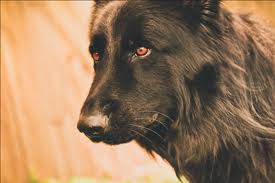
I considered the question. My dog  MacGregor is a serious-looking guy, long and lean, like a black wolf. I am none of those things, except I was wearing a black jogging suit. But with my blonde hair and general demeanor, I would say I’m more of a Golden Retriever.

Sometimes people look like their dogs, but hopefully not in my case,” I replied carefully.

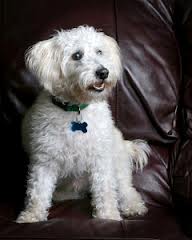
My answer seemed to satisfy my inquisitors. But it got me thinking about writers and their canine doppelgangers. So of course, I set off on a search for some matches. Here are a few I came up with.

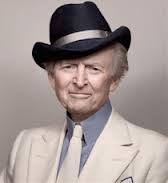
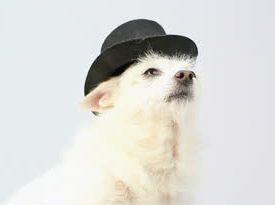
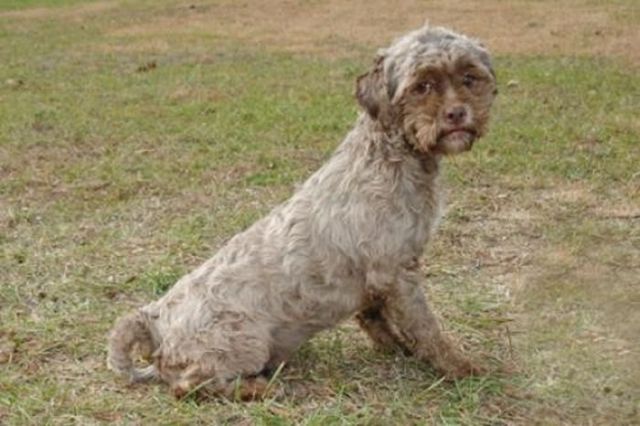
Tom Wolfe – Chihuahua-mix in a top hat
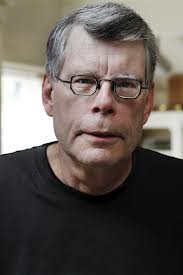
Stephen King – Dog with a Human Face
This dog, by the way, would make an excellent character in King’s next book.
 
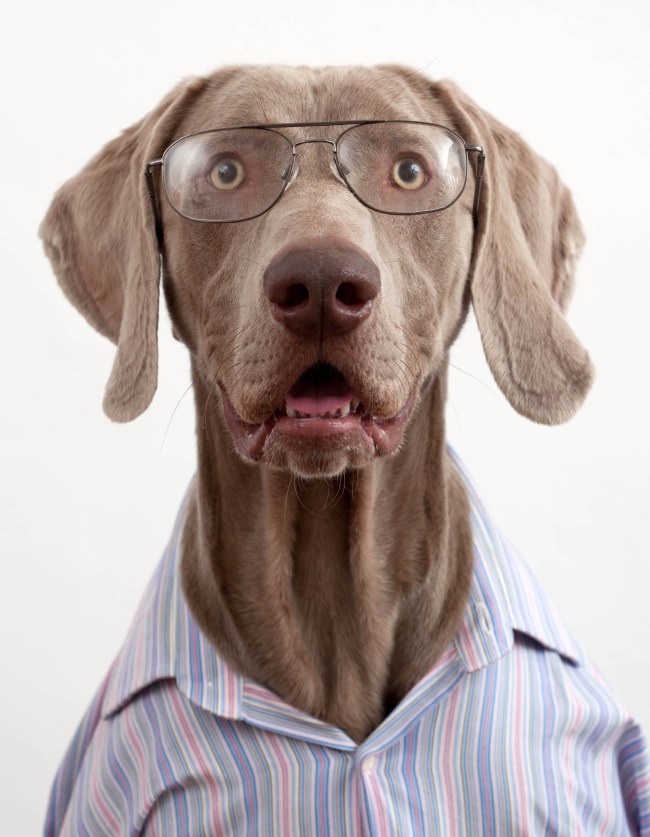
James Ellroy – Elegant pals


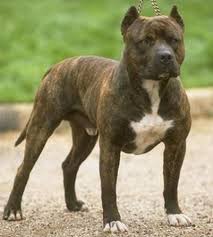
John Gilstrap, TKZ Emeritus – One Tough Dog

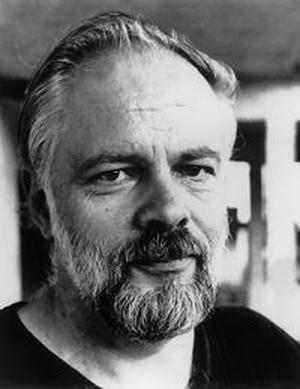
Phillip K. Dick – Beard Buddies
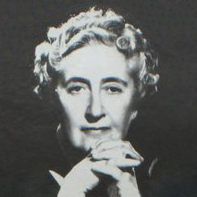
Agatha Christie – Curly tops


So, do you have a canine doppelganger? If I have to look like a critter, I’d prefer to look like my cat, Smokie. He’s my muse, is featured as a character in my books, and he’s way cooler than MacGregor.

Hunting Down The Muse

By Boyd Morrison

I’m in a situation that I haven’t been in for four years. Now that I’ve delivered my latest book, I’m no longer under contract to a publisher expecting my next novel. This is the first time since I signed my first publishing contract in 2009 that I don’t have a hard deadline. It’s both a scary and liberating scenario because I have to decide what to write next.

Like every other author, I often get the dreaded question, Where do you get your ideas? I can usually come up with a response that sounds reasonable and interesting, but the real answer is that I don’t know where they come from. I wish I did. It would make everything so much easier. I wish I could flip a switch in my mind that goes, “Okay, Brain, time for the next idea. What sounds good to you?”

Instead, Brain usually tells me to buzz off. It’s much too busy forcing me to watch TV or worrying about whether I forgot to lock the car when I left it in the mall parking lot. Other times, Brain is throwing ideas at me left and right, many of which are versions of stories that have already been done, but dumber.

Brain: Hey, what about a book about a sea creature that terrorizes a small coastal town, but this time it’s a crazed man-eating jellyfish?

Me: I hate you.

But ideas typically aren’t a problem for an author. I’ve got plenty of ideas. I just have no clue whether any of them will make good stories. I’ve started at least eight books that never made it past page 150. A few of them never made it past page ten. Some of them may grow into full novels one day, but I also wouldn’t be surprised if none of them did.

The question for me is, how should I get started on the next book? Do I need a breather to gather a bunch of new ideas and select the right one or should I plunge back into it and trust that the alchemy will produce something worthwhile?

Some authors, like Stephen King, stick to their word count every day no matter what. They force themselves to hunt down the muse and throttle it until it gives up the goods. Other authors, like Chuck Palahniuk, can take a year off to recharge and explore the world until the pressure builds up so much that they have to sit down and write the story. The muse tells them when the story is ready to go.

I think Stephen King’s process works well for “pantsers,” authors who don’t outline and write without knowing where the story will take them. But I don’t know how that can work if you are a “plotter” and you outline and research to see how a story fits together. How can you write to a word count that day if you haven’t plotted out how the next scene contributes to the story?

One technique that I’m trying was suggested by my agent. It’s called the List of Twenty. You come up with a list of twenty of ideas for a novel. The first ten or so will be obvious, so obvious that someone else may be having the same idea as you’re typing (which is why we end up with situations like two movies this year about the White House being taken over by terrorists).

But when you exhaust those first ten ideas, you start having to come up with more unusual and off-the-wall ideas, and that’s where you find the gold. Those are the ideas likelier to be unique and amazing.

Even then, you may still come up with an idea similar to someone else’s, but your spin on it might be so intriguing that it’s worth doing anyway (look at how Suzanne Collins’s The Hunger Games explored a different take on the kids-fighting-to-the-death scenario that Koushun Takami’s Battle Royale had already established).

After having completed six novels, I thought this process would have gotten easier. It hasn’t, and I don’t think it ever will. But when that inspiration does strike and the muse becomes your partner in crime, the exhilaration makes all of the struggle worth it. For me, that’s the thrill of the hunt.

The Most Important Thing Literary Agents Owe Their Clients

James Scott Bell
@jamesscottbell

You can take all the sincerity in Hollywood and put it into a gnat’s navel, and still have room for two caraway seeds and an agent’s heart. 
                                 – Fred Allen
Mr. Fred Allen was a famous curmudgeon who labored in the entertainment (mainly radio) business. I would note that the Hollywood agent and traditional literary agent are largely different species. But that doesn’t stop me from using the quote to tease my agent friends.
And I do have friends who are literary agents. Is that so odd? When I was a lawyer, people still befriended me. It can be done!
Seriously, those agents I know are good ones: caring deeply about the success of their clients, hurting when they can’t place a project, or when a client is dropped by a publisher. But they know this is the duty they signed up for. They are professional about it.
That’s a key word, professional. In any business relationship, no matter how warm, there are duties. So it’s proper to ask what each party owes the other. 
What do writers owe their agents? I think they owe them productivity, optimism, partnership and patience. There will be times, of course, when concerns must be expressed and details hashed out. Time for phone calls and complaints. But these should be rare in comparison to the positives.
A writer needs to listen. Part of a good agent’s job (we’ll get to bad agents in a moment) is to guide a career, and the writer (who ultimately makes the decision about direction) ought to consider and attend to an agent’s wisdom.
And just plain not be a “pill” (slang, 1920s, “a tiresomely disagreeable person.”)
I said we’d get to bad agents, and here’s all I have to say: it is better by a degree of a thousand for a writer to have no agent than to have a bad agent. A bad agent is one who will make you pay fees up front before reading or submitting something; who will slough you off to an editorial service which kicks back a finder’s fee to the agent; who provides no feedback on projects or proposals; and who throws up anything against several walls to see if it sticks. How does one find the good and avoid the bad? The SFWA has a postthat’s very helpful in this regard.
Now, what does an agent owe a client? Honesty, encouragement, feedback. But I think there is one thing above all, and that is what prompted this post today. Over the years I’ve heard from writer friends who are frustrated and sometimes “dying on the inside” because of lack of this one thing:
Communication.
When I was an eager young lawyer I took a course on good business practices from the California Bar. One item that stood out was a survey of clients on what they most wanted from their attorneys. At the very top of the list, by a wide margin, was communication.Whether it was good news or bad, they wanted to know their lawyer was thinking about their case or legal matter. 
Writers are the same way. Even more so, because the insecurity of the business is an ever-present shadow across their keyboards. So if a writer sends in a proposal or list of ideas to his agent, and the agent doesn’t respond within a few weeks . . . and writer sends follow-up email or phone call, and stilldoesn’t hear from agent . . .this is not a good thing. In fact, for a writer, it is close to being the worst thing.
So I would say to agents what the California Bar says to young lawyers: just let the client know what’s going on from time to time. Especially if the client has sent something to you.
Now, I know from my agent friends that there are times when they can’t drop everything to communicate immediately. They have other clients, and things may be popping for one or more of them. It may be that the writer has submitted something that is going to take a lot of time to go over and assess. The agent may be off at a conference or maybe, gasp, needs some personal family time. All understandable.
But communication can be brief, even if it is just a short email acknowledging receipt.
If I may be so bold: if a client submits a proposal, it shouldn’t take more than two months to get back to said client with substantial feedback. If the client submits some ideas, or communicates about another concern or quandary, I would think a couple of weeks is the outside limit, even if it’s brief.
I think there is one area where an agent, being human, is reticent about communicating: the area of bad news. It may be that a proposal or manuscript has failed to land. It may be a publishing house dropping a series. Perhaps the writer has sent the agent a proposal that, for the agent, falls flat, even after notes and suggestions from the agent have been incorporated. It may even be that the agent has lost confidence in the writer’s long term prospects.
At times like these it is tempting to put off communicating with the client. My plea: don’t do it. As hard as it is, as painful as it may be, this is the time the client needs you most.
And authors, remember, it’s a tough time out there in the publishing world, for agents and everybody else. So give them something good to talk about—namely, killer fiction from a productive writer.

Confessions of an Editor

By Mark Alpert

I’ve spent the past week going over my editor’s suggestions for revising my next thriller (working title: The Furies). They’re great suggestions, I’m happy to report. I feel an enormous sense of satisfaction as I go through the manuscript, repairing all the inconsistencies and gaping omissions that my editor pointed out. I’m a lucky guy to have such a careful reader. And my gratitude is enhanced by the fact that I know what it’s like to have a bad editor. Worse: I know what it’s like to be a bad editor.

For the first fifteen years of my journalism career I was a reporter for newspapers and magazines, but in 1998 I became a staff editor at Scientific American. This is a fairly typical career path because editor jobs usually pay a little better. (I’d like to emphasize the world “little.” Don’t go into journalism if you want to make a lot of money.) The new job involved some writing, but my primary responsibility was editing the magazine’s feature stories about breakthroughs in science and technology, most of which were written by the scientists who did the research. It was fun work because the topics varied so much. One month I learned all about metallic hydrogen; the next month I became an expert on the sex life of orangutans (which, by the way, is pretty damn fascinating, but that’s a subject for another blog post).

The stories were usually between 3,000 and 4,000 words, which were spread across six or eight pages in the magazine. Although most of the scientist-authors had extensive experience writing articles for research journals (such as Nature, Science, The New England Journal of Medicine, etc.), very few had written for a consumer magazine before. Therefore, the stories they submitted were full of terrible writing: lots of incomprehensible jargon, egregious overuse of the passive voice. On the other hand, the scientists were usually so delighted to be published in Scientific American — it was a big ego boost for many of them, and often a career boost as well — that they would tolerate heavy editing (and sometimes wholesale rewriting) with little complaint. And thus a monster was born.

In short, I became a tyrant. Each month I would rewrite the entire story, altering nearly every sentence. I wouldn’t have discussions with the author. I wouldn’t give the author the opportunity to make changes to his or her first draft. I would make all the changes myself and send back the rewritten manuscript with a standard note: “Please correct any factual errors I may have inadvertently introduced.” My justification for this approach was that I didn’t have the time for a lot of back-and-forth. It was quicker and easier this way. And I truly believed that I was doing my authors a favor. I was making them look good, I thought, by commandeering their stories.

I took the same attitude with the illustrations that accompanied the articles. I would draw them myself, in pencil, and fax my sketches to the artists. If their illustrations came back looking significantly different from what I’d drawn, I’d force them to do it over. I was drunk with power.

Luckily, I was saved by a book deal. After selling my first novel and getting a contract to write two more, I scaled back my duties at Scientific American. I became a contributing editor who meekly suggests story ideas instead of a staff editor who shapes and packages them. And in my new career as a novelist, I was as powerless as a cub reporter. I could no longer give orders to anyone but myself. For instance, I could suggest titles for my novels and offer my opinions on alternatives, but the final decision was up to the publisher. The same rules applied to the cover art. Most humbling of all, I had to acknowledge the fact that I made mistakes too and that my own writing could be pretty terrible sometimes.

If we lived in an Old Testament kind of world, the gods of publishing would punish me for my sins. They would make sure that the people editing my novels were just as bad as I was. My editors would force me to rip out the heart of each book, to chop up the manuscript to the point where it became unrecognizable. But apparently I’ve been granted a dispensation. My editors have always allowed me to come up with my own solutions for fixing the problems in my drafts. And the process can be intensely gratifying, like working out your problems in therapy. There are lots of Aha! moments. “Of course! The answer is so simple!”

I really don’t deserve such good treatment. If I ever become an editor again, I’ll try to be more patient and open-minded. (Who am I kidding? I’d probably go right back to being a tyrant.)


Reader Friday: Get Creative

Time to get creative. I’m going to give you two items, one is a character and the other is a thing. When you put them together, what picture pops up in your head? Write it down. Then write a segment of a scene, 150 words or less, from the picture you got. Don’t look at any comments until you do, then post your results! It’ll be a good lesson in how different writers handle the same idea in unique fashion.

Today’s combo: romance writer & red wine