About Joe Moore

#1 Amazon and international bestselling author. Co-president emeritus, International Thriller Writers.

Why I Am Not Turning the Pages of This Novel


Recently I posted about why I found a novel to be a true page-turner. I’m gratified so many authors found it helpful.
So I thought I’d share today the opposite type of experience: reading a mediocre novel I will not finish. (See also Friday’s question and comments). 

I’m not going to name the book, because I don’t believe in running down fellow authors. Nor will I quote anything verbatim. But I do think there are some important lessons to be learned.
1. An Opening Without Disturbance
The first-person narrator of this crime novel is moving through a setting, describing it, and then getting in a car and moving some more, then getting to another location and getting out of the car, and then talking to some people. This is, by definition, action. But it does nothing to hook the reader. Why? Because there’s no trouble, or even a portent of it.
What hooks a reader faster than anything else is when a character’s “ordinary world” is disturbed in some fashion. It doesn’t have to be big, like a gun fight or car chase. It just has to be something that sends ripples through the normal life of the character and makes us, the readers, wonder how the character is going to handle it. And that disturbance should happen on page one. I wrote more on the subject here.
2. A Voice Without Attitude
The key to narrative voice is attitude. This is especially true in the case of first-person POV. We have to feel we’re in the hands of a character who has blood rushing through the veins, who is passionate about something, anything. The voice has to be unique, not plain vanilla. We need to sit up right away and take notice, because the narrator catches our attention:
When I was a little girl I used to dress Barbie up without underpants. On the outside, she’d look like the perfect lady. Tasteful plastic heels, tailored suit. But underneath, she was naked. I’m a bail enforcement agent now—also known as a fugitive apprehension agent, also known as a bounty hunter. I bring ‘em back dead or alive. At least I try. And being a bail enforcement agent is a little like being bare-bottom Barbie. It’s about having a secret. And it’s about wearing a lot of bravado on the outside when you’re really operating without underpants.
That’s Janet Evanovich’s Stephanie Plum in High Five. This is a voice I am interested in hearing from. I will note, too, that the second paragraph on page one is a disturbance. There’s a reason Evanovich is so successful.
3. A Cast Without Distinction
The supporting characters in this novel are what they used to call “stock.” There’s the cop who seems like every other cop. There’s a buddy who seems like every other buddy. And so on.
If your secondary characters are not what I call “spicy,” you have missed one of the prime opportunities to make your novel a page-turner. You can avoid this by simply rejecting the first picture that comes to your mind, and making list of five, six or seven unique alternatives in terms of looks and speech patterns. 

4. A Setting Without Menace
It’s one thing to describe a setting. It’s another to have the setting operate like another character, with potential conflict infused therein. In my book, Conflict & Suspense, I have a section on setting, and include this clip from Gregg Olsen’s Victim Six:
Even in the midst of a spring or summer’s day with a cloudless sky marred only by the contrails of a jet overhead, the woods of Kitsap County were always blindfold dark. It had been more than eighty years since the region was first logged by lumberjacks culling the forest for income; now it was developers who were clearing the land for new tracts of ticky-tacky homes. Quiet. Dark. Secluded.
Notice the words Olsen chooses: marred, blindfold dark. Quiet. Dark. Secluded. It’s right after this that the killer comes on the scene, and then the cops, and then everybody dealing with a setting of menace.
City or country, rural or populated, every setting holds the possibility not just for conflict between characters, but for being part of the conflict itself.
5. A Narrative Without Surprises
I’m stressing this more and more in my workshops. As I consider the fiction that I can’t put down, and that stays with me after I’m finished, it’s this element of the unexpectedthat keeps popping up in my mind. If I keep guessing what’s going to happen next, and it does, that’s called predictability.And predictable equals dull.
The late Elmore Leonard said not to write the parts readers skip. This novel had too many of those parts. So I put it down.


One final note: This was a self-published novel. It wasn’t terrible. The sentences were strung together so I could follow the story. But that’s not enough in this brave, new world. In fact, it never has been. As one veteran editor at Penguin put it, the kind of manuscripts they really have to watch for––in order to reject them––are those that are “skillful, competent, literate, and ultimately forgettable.”
Don’t settle for competent.
***
I’ll be teaching on how to get to unforgettable fiction at two major conferences coming up. This week it’s in Los Angeles at the Writer’s Digest national conference. I’m doing a 3-hour session on Friday called “Writing a Novel They Can’t Put Down.” Also a class on “Dazzling Dialogue” on Saturday.
In November, I’ll once again be with Donald Maass and Christopher Vogler for the big, four-day Story Masters, Nov. 7-10, in Minneapolis. Hope to see some of you there!

The Advance Reading Copy

By Mark Alpert

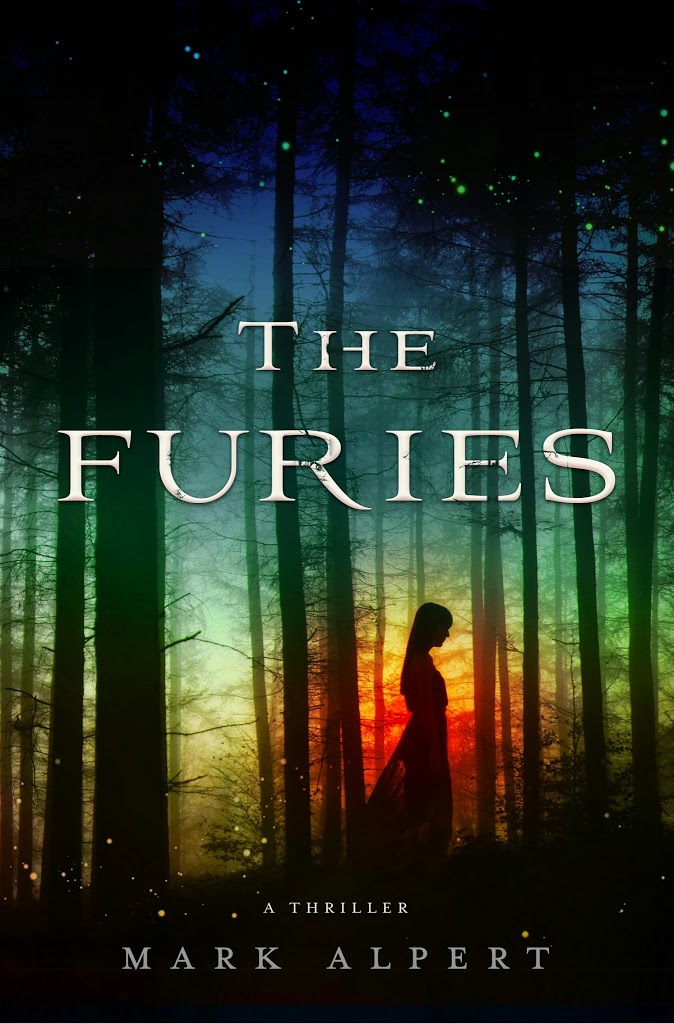
I just received a box of advance reading copies of my next novel, The Furies. This is a fun moment in the publication process. For the first time, the book actually looks like a book and not an unruly stack of manuscript pages. It’s also a fraught moment for me, because this is the point at which I will allow my wife to read the novel. She’s heard me complain about the book several thousand times, but until now she hasn’t read a word of it.

Why haven’t I let her read it until now? Because she’s a tough critic. And she’s pathologically honest. If she doesn’t like something, I can always see the disapproval on her face. Don’t get me wrong, I’m a firm believer in constructive criticism. Just about every writer could use some help pointing out the flaws that he or she has failed to fix, either because of laziness or obliviousness or sheer pigheadedness. I eagerly solicit suggestions and advice from my agent, my editor and the members of my writing group. In other words, I can take criticism from anyone but my wife. That’s just the way it is.

I’m especially worried about her reaction to this new book, because it’s a little different from all my previous novels. It’s a science thriller, but it’s also about witches. I became fascinated with the subject after my son wrote a term paper about the Salem witch trials. He learned that the witch hunt in the Massachusetts Bay colony was just one episode in a horrible series of massacres. During the sixteenth and seventeenth centuries, witch-hunters in Europe killed thousands of people. France, Germany and Switzerland were the worst. In the area surrounding the German city of Trier, 368 accused witches were burned alive between 1587 and 1593. The great majority of victims were women. Two villages in the area were left with only one woman each.

It’s incomprehensible. Scholars still argue over why the massacres happened. And because it’s so strange and horrible, it seemed like an interesting subject for a novel. I imagined a family that came to America in the 17th century after being nearly annihilated by the witch hunts in Europe. They settled in what was then the wilderness and lived in secrecy until…well, until the novel starts.

The book will be published in April, so you’ll have to wait till then to hear the rest of the story. Except for my wife, of course. She’ll have to endure several days of me saying, “What part are you reading? Why aren’t you reading it faster?” And all the while I’ll be studying her face, trying to figure out what she really thinks. It never gets any easier.

Reader Friday: I Wish I Had Not Read That

Dorothy Parker, the famous wit, once wrote, “This is not a novel to be thrown aside lightly. It should be thrown with great force.” Today’s question, without naming the author or title (unless you simply cannot restrain yourself), what is a book you’ve read that you hated? Did you force yourself to finish it?  What was it about the book that made you want to throw it with “great force”?

A Kill Zone Exclusive – The Show & Tell Book – Guest Photographer William Greiner

Jordan Dane
@JordanDane

I am so happy to have photographer William Greiner as my guest today. I am one of the lucky authors who had an opportunity to contribute to his book – Show & Tell – a beautiful hardbound book that combines his photographs with short stories from authors with names you will recognize. The book comes from UL Press (University of Louisiana at Lafayette Press) and is available now at this LINK

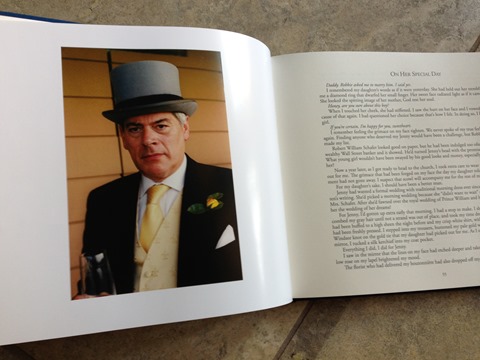
Below is the page image of the photo I wrote about in my story – On Her Special Day. I wanted you to see the fine quality of this book. I’ve ordered some for Christmas gifts and can’t wait to read what the other authors wrote. Welcome, William!

Show & Tell-show and tell, show & tell, william greiner
Cover – Show & Tell
photo (2)
On Her Special Day by Jordan Dane

So why is a book titled SHOW & TELL being blogged about on The Kill Zone?

First, the premise was to give a group of fiction writers (In this case 28 in total, including 6 TKZ writers), a photograph without any information about the image and ask each to make up a story about that image. The resulting stories are fascinating, entertaining and thrilling.

John Ramsey Miller, John Gilstrap, Joe Moore, Jordan Dane, Joe Hartlaub and James Scott Bell, amongst others, apply their writing skills to bring a story to every image.

clip_image002
“A Blur of Motion” by John Ramsey Miller

clip_image004
“The Touch” by John Gilstrap

The idea for this book came to me many years ago after doing a print trade with another photographer. In conversation, it somehow became apparent that this other photographer had a complete different take and understanding of my photograph than what it meant to me. It made me realize we all bring our own notions, expectations and experiences to what we view.

To see what your favorite TKZ author sees & tells, order SHOW & TELL from UL Press, hardbound, 28 photographs accompanied by 28 stories, 183 pages, $35. To order: click this LINK.


William Greiner is a photographer and artist, living in Baton Rouge , LA. For more on our guest, click HERE.

For Discussion: Have you ever seen a photograph that inspired you to write about it? Tell us about it.

Suspense vs. Action

By Joe Moore

Back in 1993, country singer Toby Keith had a hit with the song “A Little Less Talk and a Lot More Action”. That was a great hook for a song, but the concept doesn’t always work for thrillers. I’ve found that one of the mistakes beginning writers often make is confusing action with suspense; they assume a thriller must be filled with action to create suspense. They load up their stories with endless gun battles, car chases, and daredevil stunts as the heroes are being chased across town or continents with a relentless batch of baddies hot in pursuit. The result can begin to look like the Perils of Pauline; jumping from one fire to another. What many beginning thriller writers don’t realize is that heavy-handed action usually produces boredom, not thrills.

When there’s too much action, you can wind up with a story that lacks tension and suspense. The reader becomes bored and never really cares about who lives or who wins. If they actually finish the book, it’s probably because they’re trapped on a coast-to-coast flight or inside a vacation hotel room while it’s pouring down rain outside.

Too much action becomes even more apparent in the movies. The James Bond film Quantum Of Solace is an example. The story was so buried in action that by the end, I simply didn’t care. All I wanted to happen was for it to be over. Don’t get me wrong, the action sequences were visually amazing, but special effects and outlandish stunts can only thrill for a short time. They can’t take the place of strong character development, crisp dialogue and clever plotting.

As far as thrillers are concerned, I’ve found that most action scenes just get in the way of the story. What I enjoy is the anticipation of action and danger, and the threat of something that has not happened yet. When it does happen, the action scene becomes the release valve.

I believe that writing an action scene can be fairly easy. What’s difficult is writing a suspenseful story without having to rely on tons of action. Doing so takes skill. Anyone can write a chase sequence or describe a shoot-out. The trick is not to confuse action with suspense. Guns, fast cars and rollercoaster-like chase scenes are fun, but do they really get the reader’s heart pumping. Or is it the lead-up to the chase, the anticipation of the kill, the breathless suspense of knowing that danger is waiting just around the corner? Always try for a little less action and a lot more thrills.

Awards Season: A Survival Guide

By. P.J. Parrish

So I am doing my usual warm-up before hitting the computer yesterday morning: folding laundry and watching “Frazier” reruns. I love Frazier because beneath his smooth surface is a roiling bog of neediness and insecurity.

Yesterday was the episode where Frazier and his producer Roz are nominated for the Seebee Award, given out to Seattle’s best broadcasters. Frazier tries to be above it all, but he just can’t. He wants to win, dammit! But at the banquet, he finds out he is up against the aging icon Fletcher Grey. Fletcher has been nominated 11 times in a row and lost 10. Fletcher’s date is his 84-year-old mother who has flown in from Scottsdale — for the 11th straight year. Fletcher is also retiring. Frazier tells Roz, “if we win, they’ll string us up.” Roz says, “I don’t care. I’d crawl over his mother to win this award!”

Frazier loses, of course. His agent Beebee deserts him. Roz gets drunk on Pink Ladies.

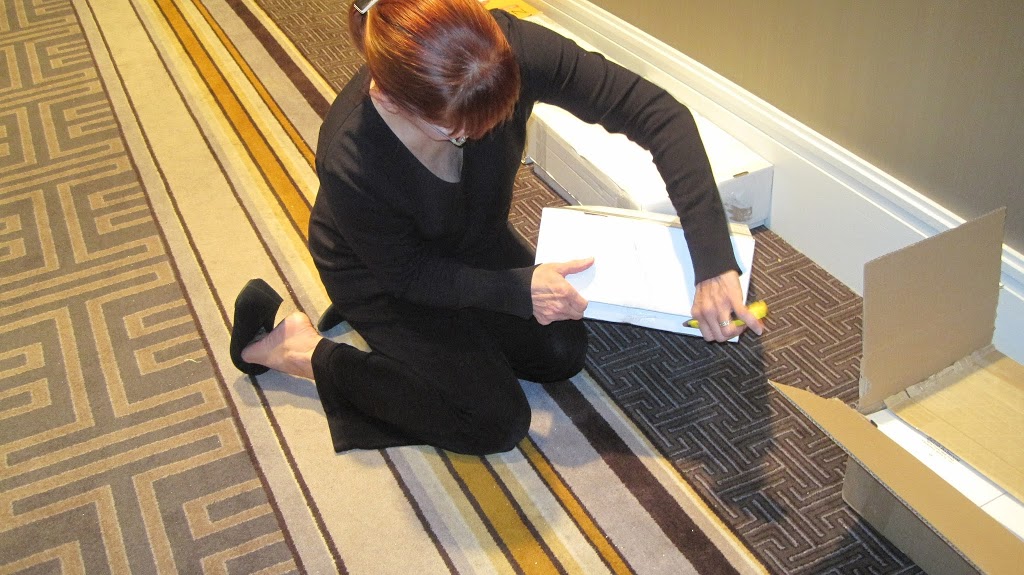
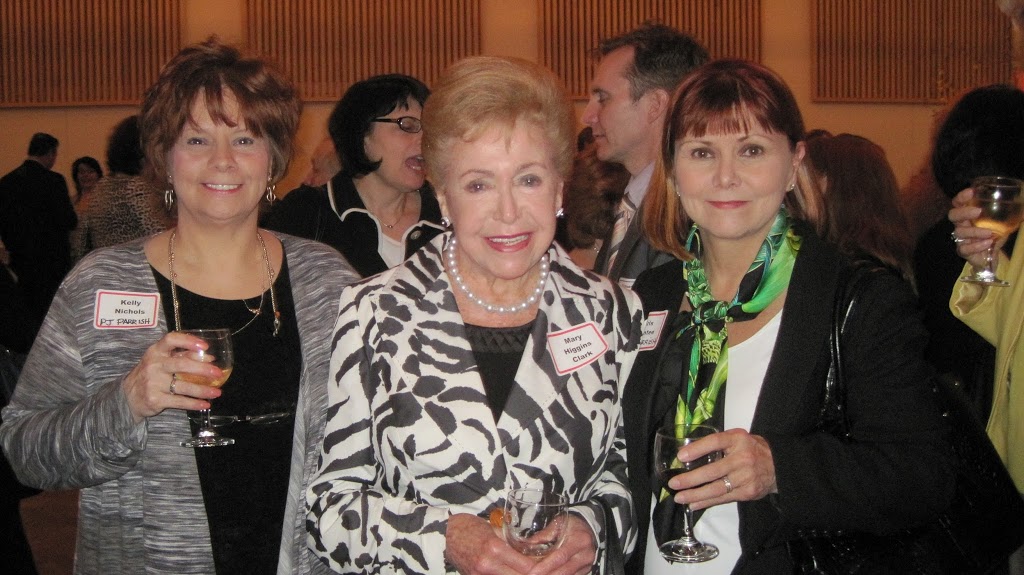
Sounds like a couple award banquets I’ve been to. A couple I have chaired, in fact. My sister Kelly and I are the chairs of the Edgar Banquet. (That’s me in the photo above unpacking Edgar programs in the Grand Hyatt ballroom. I also do windows). We’ve been doing this chairman gig for about five years now. It’s a lot of work and a lot of fun. You get to meet a lot of nervous but sweet debut authors, a few movie stars (I did an embarrassing fan-stalk of Richard “Munch” Belzer one year) and some really classy dames. (That’s Kelly and me below with Mary Higgins Clark.)

We also been judges for the Shamus Awards, the Mystery Writer of America St. Martin’s Best First Novel contest, and  the International Thriller Awards. So we’ve seen how the sausage is made.

The stories I could tell…

But I won’t. And not just because sometimes they make judges sign confidentiality agreements. Mainly it’s because ours is a very small community and I believe in author Karma. If you make a fool of yourself in public, it will come around and bite you on the butt. You can put good money on that.

Also, I’ve been on the other side of the whole awards thing. We’ve been lucky enough to be nominated for some awards over the past twelve years. Yes, it is an honor to be nominated. But it bites to lose. I can’t lie and tell you otherwise. Our second book “Dead of Winter” was nominated for an Edgar. We were wide-eyed newbies in those days — didn’t even know what Mystery Writers of America was — and we went to New York with our new gowns, got our nails done and gathered with spouses, son, and agent in the Grand Hyatt bar before the banquet to calm our nerves. Not a drop of alcohol because if we DID win, we didn’t want to go up on stage three sheets to the wind and say something stupid. (As I said, I now have stories I could tell…)

Well, when our name wasn’t announced, we all grabbed for the wine bottle in the middle of the table. The rest of the night is a blur. So is the rest of the decade, as far as awards go. Because as I said, although we got nominated for a couple, we never won. Which brings me to July 2008.

Our book “An Unquiet Grave” was nominated for the International Thriller Writers Award. Back to New York City we went, back to the Grand Hyatt. No expectations this time. My sister couldn’t make it so I sat between my husband and Ali Karem. My friend the late Elaine Flinn kept saying it was our night. Doug Lyle wished me luck. Without Kelly at my side, I sat there feeling alone and sort of empty. We might write hardboiled, but I am not. Finally, I couldn’t take it anymore. I bolted for the lobby.

Jim Fusilli was standing there and barred my way, putting an arm around my shoulders. Each nominee was announced by reading the first line of their book. Ours is “The Christmas lights were already up.” I remember thinking, “God, that sucks.”

I heard the title of our book announced as the winner. I started crying. I don’t remember what I said on stage. Many authors, when they are up for awards, have the sense of jot down a few notes beforehand so they are gracious, and  their clever speeches are quoted in the blogs the next morning.

This is what SHOULD have been in my head as I went up there:

“Thank you so much for this great honor. First, I want to thank the ITW judges who put their careers on hold for months. Their job is doubly hard in that they first must read hundreds of books but then, they must decide on just one when any of the five finalists would be worthy. Second, I want to thank my fellow nominees. I am honored to have my book mentioned among their fine works. Third, I want to thank my agent and editor who….”

This is what was REALLY in my head:

“God, I can’t believe I am crying! How pathetic and needy! Where’s the friggin’ stairs? I can’t see! Who is that man at the podium? Shit, I forget his name! THE LIGHTS! I CAN’T SEE ANYTHING! Do I have lettuce on my teeth? My bra is showing, I just know it. DON’T PULL AT YOUR BRA!! He’s handing it to me. Jesus, it’s heavy…don’t drop it…don’t drop it…don’t drop it. Say something nice about the other nominees! Can’t…can’t…can’t remember their names. YOU TWIT! You just sat on a panel with TWO of them this morning! Wait, wait…is it Paul LeVEEN or Paul LeVINE??? Forget it…buy him a drink later. I should have gone to the hairdresser before I left home. My roots are showing. Shit, did I thank my agent? JESUS! THE LIGHTS! Stop talking now…you’re rambling, you ass…stop now and just go sit down. Okay, leaving now. TAKE THE AWARD! Don’t drop it…don’t drop it…don’t drop it. Good grief…I’m here in New York City wearing Nine West because I was too cheap to spring for those black Blahniks at Off Fifth. Dear God, just let me just off this stage so I can get to the john and pull up my Spanx and get a glass of wine…”

Well, we’re entering award season soon. So here’s a few reminders. Entries are due for ITW’s International Thriller Awards. CLICK HERE for the link. There is also time to still enter the Edgars and you, the author, can do it yourself if you wish. CLICK HERE.

A few more final reminders about this awards thing from an old veteran:

If you don’t get nominated, don’t go to Amazon, read the samples and obsess about what hacks the writers are or whine that nobody has HEARD of these books and the judges don’t appreciate commercial fiction.

If you never get nominated for anything in your life, remember that many great and successful authors haven’t either. Vonnegut lost the Nebuba Best Novel award. Nabokov whiffed on seven National Book Awards AND lost the Nobel to some guy named Eyvind Johnson. And do you think guys like Lee Child go to sleep at night worrying about not winning an Edgar?

If you DO get nominated, have the sense to write out a little speech and try not to use it to give the finger to everyone who has slighted you in the past. (I told you…I have stories I can tell.)

If you lose, don’t get drunk, sling a woman over your shoulder and drag her into the the hotel elevator (Yeah, I saw that one too).

If you win, be thankful and gracious then get right back to writing.

Winning an award is nice but it won’t get the laundry folded.

The Touring Test

By Boyd Morrison

This week at Bouchercon I’ll be on a panel called “State of Grace: How not to go crazy on tour,” and my first answer will be that you should sell a couple million copies of each new book. Nothing helps preserve your sanity like flying by private jet, staying in ritzy hotels, and eating gourmet meals. I know of several major authors who travel in that kind of luxury, and I don’t think I’ve ever heard them complain about touring.

Most of us, though, sell a few copies short of a million, so we have all the hassles of any other business road warrior when we go on book tour: unpredictable flight delays, hotel snafus, fast food caught on the run, and early wake-up calls to get to the next city so you can save money by spending only one night in each hotel.

To non-writers a book tour is the ultimate sign that you’re a real author and sounds glamorous. Those of us who’ve been through tours know they can be both exciting and a tedious grind, often on the same day.

The reason for going on tour initially seems self-evident: to meet readers and sign books for them. But for a new or up-and-coming author, recruiting fans outside your friends and family can be difficult without a unique angle or significant publicity from a publisher. The true reasons for touring are two-fold. First, you’re building relationships with bookstores that can hand-sell your novel, resulting in sales long after you’ve left and loyal fans eager for the next book. Second, you try to schedule appearances on radio and TV in the cities you visit, which gets your book in front of a lot more people.

A book tour should be considered an investment, because the truth is you will never sell enough books on tour to cover the cost. If you have a publisher paying the freight, I say go for it. The in-house publicity staff can make connections with stores and media that would be hard for you to get for yourself. But if you’re thinking about paying for a tour on your own, I’d advise against it unless you can drive your own car and stay with family.

I liked touring, but I only went to five or six cities when I did it, and even that many was taxing. I’m just not a fan of cramming myself into coach seats and packing and unpacking on a daily basis. The key is to have everything organized before you leave, down to planning what clothes you’re going to wear each day. One nice thing if a publisher organizes the tour is that they often provide an escort who will pick you up and drive you to all the places you need to be.

What made my second tour go even more smoothly than the first was that my wife went with me. We were visiting cities where we knew people, so it was a great tax-deductable way to see friends and family. Even though she’s a doctor by day, she could have an excellent career as a PR rep. Not only did she help keep me on track (and keep me company), she also is a big part of my publishing story. In Milwaukee she was on NPR with me, and in Denver the talk show host even brought her on set to participate in the interview. She definitely made me look good.

I guess the main way to not go crazy is to have fun, even when you have the inevitable one-person book signing, (it happened to me several times, including in Milwaukee). Remember that lone person may be a perfect stranger who came to see you because you wrote a book, which is pretty incredible when you think about it.

What advice do you have for making a book tour more bearable?

10 Ways to Goose the Muse


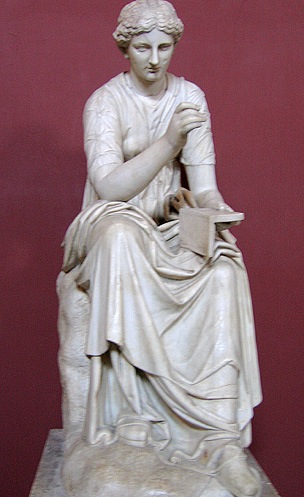
Calliope, the muse of epic poetry and story, is a fickle goddess. She drops in depending on her mood, tickles the imagination, and then takes off to party with Aphrodite. Homer famously called on the muse at the beginning of The Illiad and The Odyssey, and she deigned to answer the blind poet. But many another author, cold and alone in his garret, has cursed her for not showing up at all.
So what do you do, scribe? Wait around for a visit? Implore Zeus to flex some muscle and order his daughter to your office or Starbucks?

No! You haven’t got time to waste. You’ve got books to write. So I suggest you take the initiative and set about to prod the capricious nymph out of her scornful lethargy. 

How? Play games. Set aside a regular time (at least one half hour per week) just to play. And the most important rule is: do not censor yourself in any way. Leave your editorial mind out of the loop and record the ideas just as they come. Only later, with some distance, do you go back and assess what you have.  
Here are ten of my favorite muse-goosing games:
1. The “What if” Game
This game can be played at any stage of the writing process, but it is especially useful for finding ideas. Train your mind to think in What if terms about everything you read, watch or happen to see on the street. I’m always doing that when waiting at a stop light and looking at people on the corner. What if she is a hit-woman? What if he is the deposed president of Venezuela?
           
Read the news asking “What if” about every article. What if Tim Tebow is a robot? What if that Montana newlywed who shoved her husband off a cliff eight days into their marriage is a serial husband-killer? Or a talk show host?

2. Titles
Make up a cool title then think about a book to go with it. Sound wacky? It isn’t. A title can set your imagination zooming, looking for a story.
           
Titles can come from a variety of sources. Go through a book of quotations, like Bartlett’s, and jot down interesting phrases. Make a list of several words randomly drawn from the dictionary and combine them. 

           
3. The List
Early in his career, Ray Bradbury made a list of nouns that flew out of his memory and subconscious. These became fodder for his stories, often drawn from his childhood. 
Start your own list.  Let your mind comb through the mental pictures of your past and quickly write one- or two-word reminders. I did this once and my own list of over 100 items includes:
THE DRAPES (a memory about a pet puppy who tore my Mom’s new drapes, so she gave him away the next day. I climbed a tree in protest and refused to come down).
THE HILL (that I once accidentally set fire to).
THE FIREPLACE (in front of which we had many a family gathering).
Each of these is the germ of a possible story or novel. They are what resonate from my past. I can take one of these items and brainstorm a whole host of possibilities that come straight from the heart.
4. See it
Let your imagination play you a movie.  Close your eyes. Sit back and “watch.” What do you see? If something is interesting, don’t try to control it. Give it a nudge if you want to, but try as much as possible to let the pictures do their own thing. Do this for as long as you want.
             
5. Hear it
Music is a shortcut to the heart. (Calliope has a sister, Euterpe, goddess of music. Put the whole family to work).
           
Listen to music that moves you. Choose different styles–classical, movie scores, rock, jazz, whatever lights your fuse–and as you listen, close your eyes and record what pictures, scenes or characters appear.
           
6. Steal it
If Shakespeare could do it, you can too. Steal your plots. Yes, the Bard of Avon rarely came up with an original story. He took old plots and weaved his own particular magic with them.
So did Dean Koontz. He amusingly winks at us in Midnight about combining Invasion of the Body Snatchers with The Island of Dr. Moreau.
Listen: this is not plagiarism! I once had a well-meaning but misinformed correspondent wax indignant about my tongue-in-cheek use of the word steal. There are only about twenty plots (more or less depending on who you talk to) and they are all public domain. You combine, re-work, re-imagine them. You don’t lift exact characters and setting and phrases. That’s not kosher. Reworking old plots is.
In Hollywood, they do this all the time. Die Hard on a boat becomes Under Siege. Die Hard on a mountain becomes Cliffhanger. 
7. Cross a Genre
All genres have conventions. We expect certain beats and movements in genre stories. Why not combine expectations and turn them into fresh plots?
           
It’s very easy to take a Western tale, for example, and set it in outer space. Star Wars  had many Western themes (remember the bar scene?). The feel of Dashiell Hammett’s The Thin Man  characters transferred into the future in Robert A. Heinlein’s The Cat Who Walks Through Walls. The classic TV series The Wild, Wild West  was simply James Bond in the old West. 
When zombies got hot a few years ago, I pitched my agent the idea of a legal thriller series with a zombie as the lawyer-hero. I figured most people think lawyers and zombies are the same anyway. Kensington bought it and it became the Mallory Caine series under my pen name, K. Bennett.
           
8. Research
James Michener began “writing” a book four or five years in advance. When he “felt something coming on” he would start reading, as many as 150 to 200 books on a subject. He browsed, read, checked things. He kept it all in his head and then, finally, he began to write. All the material gave him plenty of ideas to draw upon.
           
Today, the Internet makes research easier than ever. But don’t ignore the classic routes. Books are still here, and you can always find people with specialized knowledge to interview. And if the pocketbook permits, travel to a location and drink it in. Rich veins of material abound.

9. Obsession
By its nature an obsession controls the deepest emotions of a character. It pushes the character, prompts her to action. As such, it is a great springboard for ideas. What sorts of things obsess people?
      ego
      winning
      looks
      love
      lust
      enemies
      career
Create a character. Give her an obsession. Watch where she runs.

10. Opening Lines
Dean Koontz wrote The Voice of the Night  based on an opening line he wrote while just “playing around”–
“You ever killed anything?” Roy asked.
Only after the line was written did Koontz decide Roy would be a boy of fourteen. He then went on to write two pages of dialogue which opened the book. But it all started with one line that reached out and grabbed him by the throat.
           
Joseph Heller was famous for using first lines to suggest novels. In desperation one day, needing to start a novel but having no ideas, these opening lines came to Heller: In the office in which I work, there are four people of whom I am afraid. Each of these four people is afraid of five people.
These two lines immediately suggested what Heller calls “a whole explosion of possibilities and choices.” The result was his novel, Something Happened.
           
Well, I could go on, but this post is already too long. If

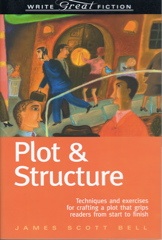
you’re interested, I have 10 more of these games in my book, Plot & Structure (from which this post is adapted).

The main lesson: don’t let the inconstant Calliope rest on her mythic derriere. She’s a muse, after all. This is what she’s supposed to do. 
So what do you do to get creative? 

Showing and Telling and Reading and Signing

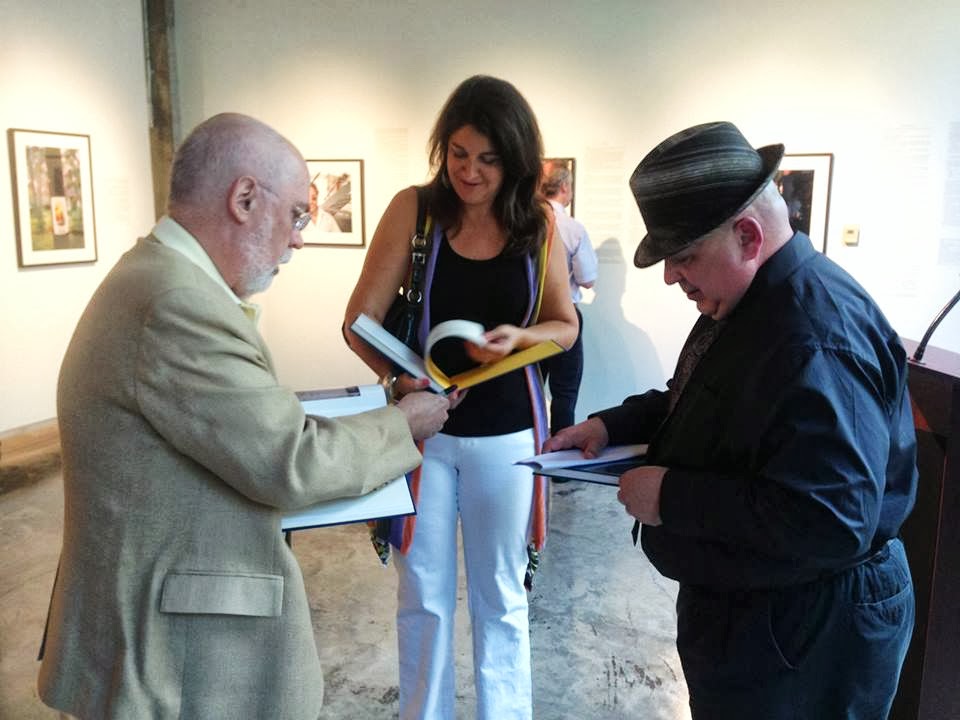
This past Thursday evening, September 12, I met fellow TKZ blogger Joe Moore for the first time at a reading and signing in Baton Rouge. The event was held at the Shaw Center for the Arts, a beautiful facility a block away from the Mississippi River. The event was a gallery exhibit for a new short fiction collection entitled Show & Tell. Photographer William Greiner commissioned short stories from twenty-eight authors, including Joe and myself (and Julie Compton, the rose between the two thorns pictured above) (photograph by Andre Chapoy; all rights reserved) by sending each author a different set of three photographs and asking each of us to write a story based upon one of them.  The photographs and accompanying stories now constitute a traveling exhibit, and also have been published in hardcover. Joe, Julie, Pat Piper, and I read our stories as part of the exhibit’s opening reception and then signed copies of the book afterward. Show & Tell in hardcover book form is available for purchase at: http://www.ulpress.org/catalog.php?item=142
A wonderful time was had by all. I decided after participating that it might be time to review (for those of us fortunate enough to be in the position that Joe M. and I were in the Thursday last) what we as authors need to do to make such an event a success. Let me hasten to tell you that I simply followed Joe M.’s lead: he is as genuinely a courteous a person as you are ever likely to encounter.
1) Show up on time. Woody Allen has famously stated that ninety percent of everything is showing up. How true. If you’re early, you’re on time; if you’re on time, you’re late; and if you’re late, you’re too late. You don’t want to disappoint people who are coming to see you. How fortunate we are, that we can do something that people will actually come to bear witness to. The least we can do is show our appreciation by appearing early.
2) Stay later. If the program/signing/reading has an end time, plan to stay at least five minutes later than that. You can visit with people who came to see you, or, if nothing else, engage in Number 5, below.
3) Be expressive. If you’re doing a reading, practice it a few times before the time appointed. Be expressive. Change your tone of voice and your facial expression while you read to reflect what is going on at the point in your story that you are reading. Reading by rote in a monotone can ruin even the best passage. An expressive reading, by contrast, can make good work better. Harlan Ellison is terrific at this, by the way. He can hold a room full of fans spellbound, making them roar with laughter at one point and silencing them the next. Which brings me to
4) Adapt. Nothing goes as planned. Jack Rea…er, Helmuth von Moltke famously said that “No battle plan survives contact with the enemy.” Just so. There were significant problems with the microphones at Show & Tell; a portion of the audience, well-lubricated by the top shelf libations which William provided, was a bit loud during the readings. What to do? Keep reading, with a smile. Some people were actually listening, and those are the folks you are reading for. Things will go wrong. Plan on it. Go around, over, under, or through the difficulty and do whatever you need to do. It’ll work out.
5) Thank everyone individually. You cannot thank too many people. Thank your friends who attended (O’Neil & Debb De Noux; Carl & Toni McGee Causey; Doug Wollfolk; Jason Furrate; and Andre Chapoy: thank you again, one and all); each person who buys a book; each person who asks you to sign a book; and the folks that got you there and propped you up (thank you again, William, and you as well, John Miller). I particularly include in the latter group the seemingly invisible people who restock the refreshments and run the cash registers. I thanked one of them last night and she told me that I was the first person attending any of the center’s events who had thanked her for being there. That’s plain wrong. It only takes a second.  They’ll remember you, particularly if you’re ever asked back.

I am sure that there are things I have forgotten. John Gilstrap has hilarious stories about things going wrong at signings (his visual accompaniments are priceless) so John, if you’re lurking out there please chime in, and I would ask each and all of you to do the same. And if you’ve attended a signing or a reading as an audience member what happened that you liked? Or that you didn’t?