About Joe Moore

#1 Amazon and international bestselling author. Co-president emeritus, International Thriller Writers.

Show Your Characters’ Reactions to Bring Them Alive

by Jodie Renner, editor, author, & speaker

A novel won’t draw me in unless I start caring jodie-renner1-Small5about the protagonist and worrying about what’s going to happen to her – in other words, until I get emotionally engaged in the story. And it’s the same for most readers, I think. For me to warm up to the protagonist, he has to have some warmth and vulnerability and determination, some hopes and insecurities and fears.

As readers, to identify with and bond with the protagonist – and other characters – we need to see and feel their emotions and reactions to people and events around them. When the character feels and reacts, then they come alive for us and we get emotionally invested and start to worry about them and cheer for their small victories. Once you have your readers fretting about your hero and rooting for him, they’re hooked.

As the late, great Jack M. Bickham said, “Fiction characters who only think are dead. It is in their feelings that the readers will understand them, sympathize with them, and care about their plight.”

Show those feelings.

So bring your characters to life by showing their deepest fears, worries, frustrations, hopes and jubilations. If readers see your hero pumped, scared, angry, or worried, they’ll feel that way, too. And a reader who is feeling strong emotions is a reader who is turning the pages.

And engage the readers’ senses, too, so they feel like they’re right there, by showing us not only what the character is seeing, but what they’re hearing, smelling, touching, sensing, and even tasting.

Show their physical reactions, too.

Besides showing us your character’s emotional reactions, show their physical reactions as well to what’s happening to them.

Show the stimulus before the response, and show the reactions in their natural order.

To avoid reader confusion and annoyance, be sure to state the cause before the effect, the stimulus before the response, the action before the reaction.

And to mirror reality, it’s important to show your character’s visceral reaction to a situation first, before an overt action or words. And show involuntary thought-reactions or word-reactions, like a quick “ouch” or swear word, before more reasoned thought processes and decision-making.

As Ingermanson & Economy put it, “Here’s a simple rule to use: Show first whatever happens fastest. Most often, this means you show interior emotion first, followed by various instinctive actions or dialogue, followed by the more rational kinds of action, dialogue, and interior monologue.”
 
And don’t skip those first steps! Remember, we’re inside that character’s head and body, so you deepen their character and draw us closer to them by showing us what they’re feeling immediately inside – those involuntary physical and thought reactions that come before controlled, civilized outward reactions.

As Bickham points out, it’s important to imitate reality by showing the reactions in the order they occur. You may not show all of these reactions, but whichever ones you choose, show them in this order.

First, show the stimulus that has caused them to react.

Then show some or all of these responses, in this order:

1. The character’s visceral response
– adrenaline surging, pulse racing, stomach clenching, heart pounding, mouth drying, flushing, shivering, cold skin, tense muscles, sweating, blushing, shakiness, etc.

2. Their unconscious knee-jerk physical action – yelling, gasping, crying out, snatching hand or foot away from source of heat or pain, striking out, etc.

3. Their thought processes and decision to act

4. Their conscious action or verbal response

Showing your characters’ feelings and responses will bring them to life on the page for the readers and suck readers deeper into your story world, your fictive dream.

But don’t go overboard with it — you don’t want your protagonist to come across as gushing or hysterical or neurotic. It’s important to strike a balance so the readers want to relate to and empathize with your main character, not get annoyed or disgusted with her and quit reading.

So how do we strike that balance? How do we as writers find the emotions to bring our characters to life, but also find a happy medium between flat, emotionless characters that bore us and hysterical drama queens or raging bulls that make us cringe?

Bickham advises us to consider how we’ve felt in similar circumstances, then overwrite first, and revise down later. “I would much prefer to see you write too much of feeling in your first draft; you can always tone it down a bit later…. On the other hand, a sterile, chill, emotionless story, filled with robot people, will never be accepted by any reader.”
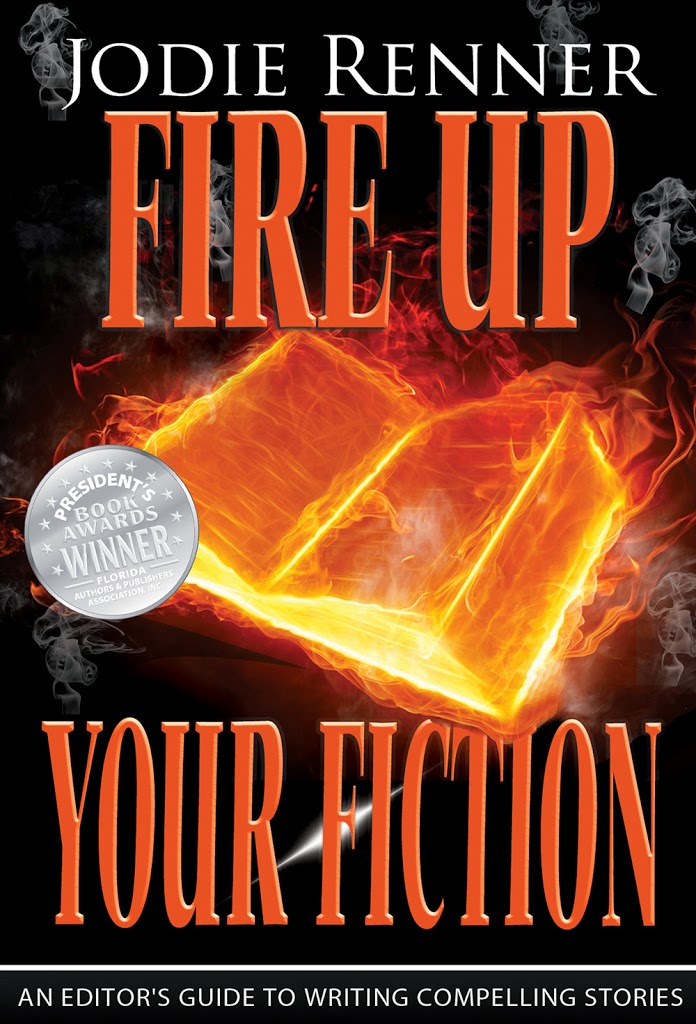
Do you have any techniques that work for bringing out your characters’ reactions and feelings? And for ensuring that you don’t go off the deep end with it?[Writing-a-Killer-Thriller_May-13_120%255B2%255D.jpg]

Jodie Renner is a freelance fiction editor and the award-winning author of three craft-of-writing guides in her series An Editor’s Guide to Writing Compelling Fiction: Captivate Your Readers, Fire up Your Fiction, and Writing a Killer Thriller, as well as two clickable time-saving e-resources, Quick Clicks: Spelling List and Quick Clicks: Word Usage. She has also organized two anthologies for charity. You can find Jodie at www.JodieRenner.com, her blog, http://jodierennerediting.blogspot.com/, and on Facebook and Twitter.
First Page Critique: Love Always, Lola

Our new first-pager is an entry titled “Love Always, Lola. My comments follow and, as always, a big thank you to our brave writer. We welcome your input and insights. — PJ Parrish
I hate kids. I have to.
“Lola? Did you hear my last question?” The disembodied voice over the phone asks.
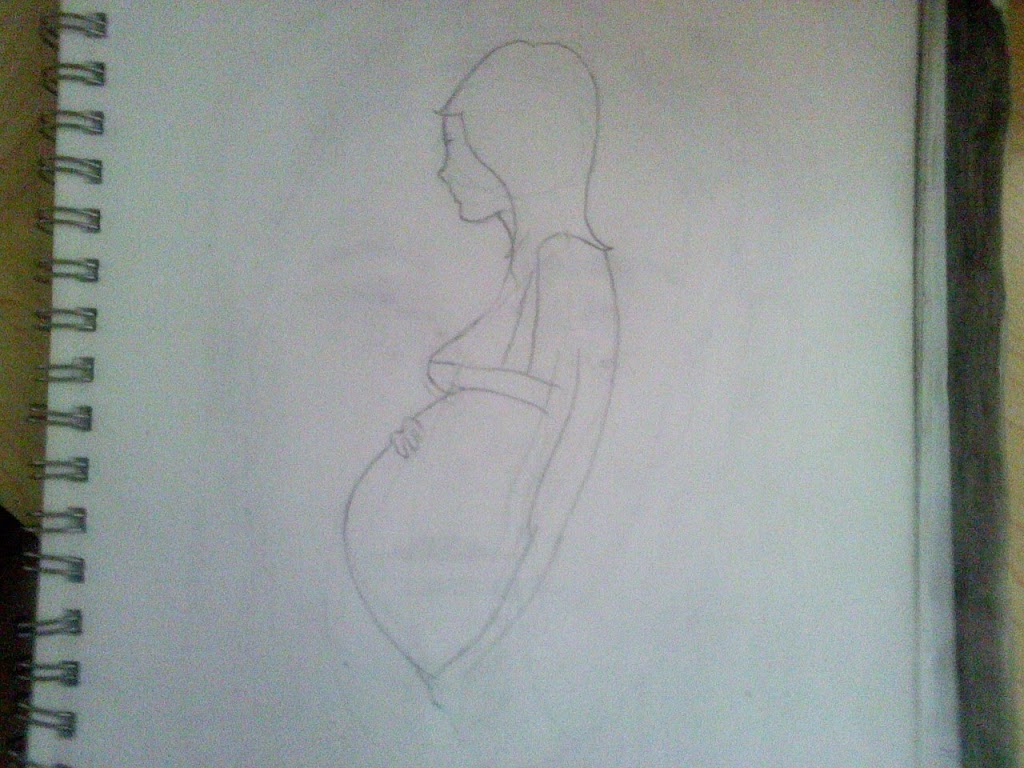
I blink, feeling for all the world like I’m about to lose my lasagna on the wood floor of my bedroom.  Zoe, my mentor here at Corner House Crisis Pregnancy Home, smiles and waves her hands in the air like she’s trying to keep the tape reel going in my mind.
“Um, yes. I like kids. Enough. They’re great.” I look down at the red and white checkered quilt on my twin-sized bed, rubbing my swollen belly to get rid of the itch.
“Do you have any experience working with them?” Mr. Compton, the voice, wants to know.
“A little, I guess. I used to babysit for my mom’s church and stuff.”
“What about camp? Do you have any experience with camp, maybe family camping trips or summer camp?”
I trace a circle around my stomach with my fingernail.
Zoe plants her hands on her tiny stick hips. “Focus!” she whispers.
“No,” I blurt. “No family camping trips or anything. But I am CPR-certified.”
“Great, that’s a start,” Mr. Compton says. “Can you tell me why you’d like to work at Camp Qavah this summer?”
“Well, I feel like I have a really great connection with kids.” Like I’m carrying one right now, literally connected to her by an umbilical cord. “I’m looking for an opportunity to grow and become my own person this summer.” I’d love to run away from who I am right now. “And I’m not afraid of hard work.” I once used my former roommate’s toothbrush to scrub the suite’s toilet.
“Fantastic.” Mr. Compton seems satisfied with my answers. “One last thing—you’ll be replacing one of our other counselors who’s had to cut her commitment short for the summer. Your first day would be mid-July. Will it still work for your situation?”
He puts it so delicately, but we both know what situation he’s talking about. That situation is currently kicking my ribs like she’s a jiu jitsu master.

“Uh, yeah. I think so. I’m due around the first of June. Mid-July should be fine.”
***
First, a personal bias: I am not a big fan of novels that open with dialogue. (I know, the first line isn’t in quotes but it is what we call “internal dialogue” in that we are in the narrator’s thoughts.) So maybe this goes to a taste thing. But I wasn’t pulled into this opening. To begin with, the first line might sound intriguing but when you think about it, it makes no sense. Why does she HAVE to hate kids? And the moment we find out she’s pregnant, the line becomes almost off-putting. Either way, the question just hangs there, unanswered, provocative for sake of provocation. Second, because the first page is almost all dialogue, there was no way for me to find my footing in the world the writer was trying to conjure up. When a reader first picks up a story, they are like a coma patient—fluttering open their eyes in an unfamiliar world, wondering, where am I, when am I, who am I? The writer has an obligation to quickly and efficiently orient. (that’s how writer and teacher Benjamin Percy put it, not me, alas.) 
Yeah, I know. Some great books open with dialogue. Charlotte’s Web opens with “Where’s Papa going with that axe?” And then there’s Little Women: “‘Christmas won’t be Christmas without any presents,’ grumbled Jo, lying on the rug.”  But it’s a tough act to pull off and in this case, it backfires because the writer has provided me with so llittle context or setting. And what does that do?
Confuse me. And that’s death to a first page. I am confused from the get-go because I think I am overhearing a telephone conversation between Lola and “disembodied voice.” Then suddenly Zoe is there but where is “there?” Is Zoe the voice? Is she in the room with Lola? Is she listening in on an extension? Speed-bump. Okay, call me dense. But the last thing you want your reader to do in your first page is work hard on the little stuff. 
Third thing: There’s not a lot of tension here. Maybe this isn’t a mystery or thriller but still, we need a compelling reason to follow Lola. And although her voice — cocky, cynical and sassy — is interesting in a snarky sort of way, the set-up isn’t enough. Telephone conversations are such a dead way to move your story along. You need them at times to impart info but I don’t think you want to waste your crucial opening with such a static — disembodied — device. Also, this style is pretty bare-bones spare (the only detail we have is that Lola is at a pregnancy crisis center). Sometimes openings give TOO MUCH information (ie backstory) but I think this one gives too little, maybe because the writer believes by holding back, he/she creates a sense of mystery. I forget who said this but it works for me: The only thing you hold back is what happens next.
All this said, there’s some good lines here, sharp observation, and the writer has a good grasp of how to construct dialogue. The writer has a nice touch. I just wish she/he had chosen a more compelling opening scene, something that is worthy of their talent. What Lola and Compton are talking about is pretty banal. This  would work as a later scene, but only after the writer has hooked me into this character’s situation and her voice. I’d suggest the writer find some really good female protag fiction to read. I mention this only because I am re-reading Wally Lamb’s “She’s Come Undone” right now. It’s a really good job of entering a female viewpoint via first-person POV.  Ditto “The Lovely Bones.” Anybody have any other good examples? 
***
I hate kids. I have to. I’m not crazy about kids either but this line was sort of offputting.
“Lola? Did you hear my last question?” The disembodied voice over the phone asks.
I blink, feeling for all the world like I’m about to lose my lasagna on the wood floor of my bedroom.  Zoe, my mentor here at Corner House Crisis Pregnancy Home, smiles and waves her hands in the air like she’s trying to keep the tape reel going in my mind. Not sure I get this image. And Zoe pops out of nowhere.
“Um, yes. I like kids. Enough. They’re great.” I look down at the red and white checkered quilt on my twin-sized bed, rubbing my swollen belly to get rid of the itch.
“Do you have any experience working with them?” Mr. Compton, the voice, wants to know.
“A little, I guess. I used to babysit for my mom’s church and stuff.”
“What about camp? Do you have any experience with camp, maybe family camping trips or summer camp?”
I trace a circle around my stomach with my fingernail.
Zoe plants her hands on her tiny stick hips. “Focus!” she whispers. Hard to whisper when you use exclamation point.
“No,” I blurt. “No family camping trips or anything. But I am CPR-certified.”
“Great, that’s a start,” Mr. Compton says. “Can you tell me why you’d like to work at Camp Qavah this summer?”
“Well, I feel like I have a really great connection with kids.” Like I’m carrying one right now, literally connected to her by an umbilical cord. Nice line but you might want to put these thoughts in italics because they are used in quick succession during dialogue. I’m looking for an opportunity to grow and become my own person this summer.” I’d love to run away from who I am right now. “And I’m not afraid of hard work.” I once used my former roommate’s toothbrush to scrub the suite’s toilet.
“Fantastic.” Mr. Compton seems satisfied with my answers. “One last thing—you’ll be replacing one of our other counselors who’s had to cut her commitment short for the summer. Your first day would be mid-July. Will it still work for your situation?”
He puts it so delicately, but we both know what situation he’s talking about. That situation is currently kicking my ribs like she’s a jiu jitsu master. Nice image.
“Uh, yeah. I think so. I’m due around the first of June. Mid-July should be fine.”

The End

By Boyd Morrison

It’s time. Sometimes you just know it. I’ve had a great twelve months being part of this Kill Zone crew of stellar writers, but I’ve decided to cede my spot to another blogger. I’ll still be following the fascinating blogs by my colleagues, so you won’t see the end of me around here.

Naturally, moving on like this has me thinking about endings in novels, particularly the ends of characters. Death is constant companion for us thriller writers. My wife is a doctor, so we often say that she saves people for a living, and I kill people for a living. In my stories I’ve slain many characters, and not just the bad guys.

In my book ROGUE WAVE, which is a disaster thriller, a key character dies at the end of the story. My editor strenuously argued for me to save the character, and we had an hour-long discussion about the ramifications of this death. In the end I convinced her that the character had to die, and I think the ending is more poignant for it. I’ve gotten many emails from readers who cried over the death. To me that was a compliment because it meant that the character had become real for them. Even if they hated that it happened, the readers almost unfailingly felt that the death fit within the story’s themes of love and selfless sacrifice.

I take great care in the decision of whether or not to kill off one of the good guys. I don’t think you can cavalierly flout the trust a reader has invested in you to deliver a satisfying story. On the other hand, to build suspense there has to be real jeopardy for the characters. If readers believe you’ll never kill off someone they’ve come to care for, where’s the tension in the story?

In my Tyler Locke series I do kill off someone who becomes a major character in one of the novels. It has a major impact on the other characters, even into subsequent installments of the series. Again, some readers didn’t like this death, but it also made them worry for all the other characters in future novels. If Boyd killed that person off, they might wonder, he’s just crazy enough to whack anyone. The tension level is automatically raised.

Obviously I didn’t kill Tyler Locke. He’s the star of the series. He can’t be killed off unless I’m doing away with the series altogether (Lee Child has proposed this very idea at several conferences when he has talked about someday ending the Jack Reacher series). For instance, no one even considers that James Bond is going to die at the end of the movie, so how can there possibly be any suspense?

If the writer might dispatch someone the main character loves or cares about, that concern is transferred to the reader. It conveys a personal stake in the outcome, which a reader will care about more than the end of the world as we know it. And if the reader knows you’ve done it before, an ending where all the good guys survive can be even sweeter, the relief more palpable.

A death of this kind can also make the story more believable. If every single good guy survives when bullets are spraying at him like they’re coming from a lawn sprinkler, while every single bad guy dies with a well-aimed headshot, the story becomes ridiculous. That kind of spectacular luck in a novel only emphasizes that you’re reading fiction. A key death, I think, confers some plausibility, even in an over-the-top action adventure. Movies have been doing this more commonly in the last few years. Think of The Dark Knight or Skyfall. Both of them were praised for a grittier, more realistic treatment of comic book and Bondian adventures, and both featured tragic deaths that had severe consequences for the plot and main characters.

Where I think authors get into trouble is when they make the deaths meaningless. As a reader, if I’ve spent hours getting to know a character, it’s deeply unsatisfying for him to die for no reason. It just seems like a mean or thoughtless gesture by the author, as if it were done for no other reason than to provoke shock. Some readers may appreciate that it makes the story seem more like real life, but unless it’s incredibly well-done, I find it off-putting.

Like my decision to move on from The Kill Zone, how you handle the characters has to come from your gut. I don’t take the decision to kill one of the good guys lightly, but when the end feels right, I know it.

Even though I won’t be a regular contributor, I’ll still be hanging out in the comments section from time to time. Thanks to all my fellow KillZoners for giving me this opportunity and to all of you who taken the time to read and comment on my blogs. Take care.

Write What You Love

And it don’t take money, don’t take fame. Don’t need no credit card to ride this train…That’s the power of love.
       – Huey Lewis and the News

I have a lot of writer friends in various career stages, and therefore considering various career moves. The nice thing these days is that there are moves, more options than ever before. This requires that writers not only know and understand the choices (in terms of possibilities and pitfalls). It also requires that writers know themselves.
One friend who has been writing steadily for many years for traditional publishers is a case in point. After receiving news that her publisher was dropping the last book in a contract, she took a break from writing and looked inside. She wrote about what she saw, and gave me permission to share it:
After taking a much-needed break when I learned in May that my third book with ____ wouldn’t be published (which was, perversely, good news for me, as I hated the story, the characters, and the obligation to write it—with 20k words and one month to deadline at the time), I finally got to the point at which I would literally get the shakes at night because I needed to be doing something creative (i.e., WRITING), but every time I pulled out a notebook or sat at the computer, I would feel even worse staring at that blank page because the only thing I could think of when trying to start something new was all of the pressure and pain (emotional and physical) of being under deadline to churn out two or three (usually three) books a year for the past four years.
But the urge to create something still existed and was driving me slightly batty. One day, when at my acupuncture appointment, I needed something to focus my mind on—something other than work, which I’d just left and had to go back to, since this was my lunch break. I decided that since I still love watching all the cooking shows on TV, I’d focus my mind on my chef character from my second contemporary. What would it be like if he were to go on Chopped or Top Chef? What if his restaurant (which he was in the process of opening at the end of his book) were featured on Anthony Bourdain’s show? So I closed my eyes to allow my mind to “play” for a while.
Then something shocking happened. That character’s sister-in-law, one of the main secondary characters in that series, stepped forward and reminded me that she, too, is a chef and restaurant owner, and has been for longer than her brother-in-law. Besides, he’s already had his story. It’s time for her to have hers. And she’s right—I’ve had readers asking me for her story for years. By the time I got back to the office, I had the entire first scene fully formed in my head.
At a conference last week, I had a chance to talk to both my agent and former editor about the story and my ideas for things I can do with the uniqueness of the ebook format, and I realized, after walking away from my meeting, that for the first time in years, I was not only interested in a story idea but actually excited about writing it.
I’m taking it slowly—I’ve finished the first chapter and figured out how I’m going to incorporate the “viewpoints” of the four potential romantic interests for the heroine, without actually making any of them a main POV character. The most fun part, however, has been revisiting the first three books to gather all of the information about this character and to update the stories of all three of the couples from those books to “where they are now” six or seven years later. 
It’s also been a great joy to return to the fictional city I “founded” and started building in 1992. As a writer who got completely burned out from having to write based on the need for money and not a passion for writing the stories I’d come up with, it’s been so wonderful to return to this setting, to these characters I’ve known for years and years. It’s a lot like going home after a long estrangement and being welcomed back with open arms and a fatted calf.
And the best part about this turn of events is that her writing will be the best it’s ever been. She’s a pro, she knows what she’s doing—but now she’s also recaptured the love.
We have to have that in our writing if we’re going to keep doing this for the long term. You’ve only got so much time. Give that time to the stories

you’re burning to tell. Do that first, and the money will follow. How much, no one can say. But joy tips the balance in your favor. For example, in addition to my novels and novellas, I’m writing short stories about a boxer in 1950s Los Angeles. I make some scratch every month on these. But more than that, I love writing them. It’s a different voice and genre than I normally write in, which has the added benefit of keeping my writing chops sharp. 

If you love what you do you’ll do more of it, and  you’ll do it better, and that will increase the odds of making a decent buck at this—either through self-publishing or finding a traditional publisher who believes in your voice and vision. Or some combination of the two. 

So my question for you today is, do you love what you’re writing? If not, why not?

Urban Wandering

I write this while sitting in a boutique hotel (it has fewer than thirty rooms and doesn’t have a pool) a block and a world away from St. Charles Avenue in New Orleans. I’m here to attend a music law seminar, visit with friends and clients, and get new ideas for stories. Always with the new ideas.

I resolved that on this trip I would pay a visit to what might be one the most infamous address in New Orleans, that being 126 Exchange Place ( also known as “Exchange Alley”). The street was and is one of the less fashionable areas of the French Quarter; it runs “north” (that term doesn’t mean the same thing in New Orleans as it does everywhere else) off of Canal Street between Chartres and Royal Streets. In the first third of the Twentieth Century it was notorious as a gay cruising spot, and I suspect that such activity has not entirely absented itself from the area, for reasons that I need not go into here. From the 1940s through the late 1970s or so it was what real estate agents would optimistically refer to as a “mixed use” area, with gambling dens, gin joints, and rooming houses comprising the primary industries.  It was at one of these rooming houses, located over a pool hall at the same 126 Exchange Place, where a divorced woman named Marguerite Oswald lived between 1955 and 1956 with her teenage son, a lad named Lee Harvey. There is no plaque noting Oswald’s relatively brief residency there, or anything at all that would incline one to perhaps linger somberly for a moment and reflect how badly lives can turn and then  affect so many others, incidentally changing the course of history.  The minimal signage, in fact, pointedly discourages loitering while informing any potential loiterers that the property is under twenty-four hour surveillance and that loitering is forbidden. And yes, there are exterior surveillance cameras that track one’s progress. Another sign above one of the sets of freshly painted double doors on the property indicates that there is a “resort” business of some sort within, though there is no listing that I can find online under the name given. The property is not on the real estate tax records, either. ‘Tis passing strange, as a great detective once said.

I took a picture of myself — what you young people like Jordan Dane would call a “selfie” — in front of the property and waited for a moment to see if someone would come out and ask what the fu-heck I was doing, but nothing occurred.  Maybe I will wander by again at some point on my way to and from the seminar site, just for grins and giggles. This short brush with history, however, nudged my muse.  I got two pages from it. What occurrence, event, accident, or happenstance has nudged your creativity recently, for better or worse?

Reader Friday: Your Dinner With…

“By the mere fact that we bother to read a novel, thus expending time which might otherwise be passed in company with actual people, we are going out of our way to meet the characters to whom the novelist wishes to introduce us. He therefore owes us an assurance that they shall be even more worth our while than the average actual person.” – Clayton Meeker Hamilton, A Manual of the Art of Fiction 

What fictional character would you most like to have dinner with? What would you talk about? 

First Page Critique: A HARD MAN TO KILL

What follows is the first page of a work entitled A HARD MAN TO KILL, with my comments afterward. Hope you enjoy both — Joe Hartlaub

When I heard the front door creak open, I rolled out of bed and snatched up the handgun that sat on my nightstand. My bare feet felt cold against the wood floor, but my body was taut and my aim steady. My wristwatch said it was six-fifty in the morning.
  I waited.
  A steady downpour of rain drummed against my windows, and the street lights slanted through my curtains and projected a small sliver of blurry yellow light.
  Footfalls came from the cramped living room outside the door. There were voices. It sounded like two people. Both of them sounded male, and both sounded as though they were moving around the house.
  Looters.
  They were having a quiet, whispered conversation, but behind the door I couldn’t make much out. I walked over to the closet, opened it quietly, and slid on my tennis shoes. Then I closed it and stopped.
  The footsteps were coming this way.
  I moved to the far end of the wall, behind the door, and waited.
  The door slowly creaked open and the footsteps came in slow and stopped.
  “No one’s here,” the guy said. “I think we’re okay.”
  Another voice replied, “Alright, yeah – sounds good. Just check the room for it, okay?”
  “Sure.”
  There were footsteps that clapped away from the room. The door closed and I could see the shadow of a guy making his way to my bed with his back to me. In the darkness I couldn’t make out much other than his scrawny build, but when he stepped into the watery light of the streetpoles I saw he was light haired and was wearing a dark, wet jacket and sodden jeans that clung to his legs. I also saw the glint of the small, silver handgun in his hand.
  He was glaring down at my bed, the twisted sheets and the comforter. He seemed to be studying it for a long time. You could almost hear the wheels turning in his head. 
  Slowly, I came up behind him.
  It would’ve gone smoother, but one of the floorboards creaked as I put down my right foot and the guy glanced over his shoulder. I kicked him in the back of his knee, grabbed a handful of his hair, and smashed it against the end of the nightstand. The guy fell to the floor.
                     *                                                *                                                    *

Ilike this. I like this very much. The author has been studying their Kill Zone Joe Moore, balancing nicely between suspense and action. The narration tells us quite a bit without slowing down the pace, and gets things rolling without diddle-fuddling around. Show, don’t tell? This piece does it. Our narrator hears a noise and but doesn’t seem particularly surprised; he just gets locked and loaded and ready to rock ‘n’ roll. He is expecting trouble. Why?  He also doesn’t call 911, which means that he either 1)knows that when seconds count, the police are there in minutes or 2)  doesn’t want the police in his house, at least until he has time to clean up. Which is it? Let’s not even mention what’s going to happen when the other burglar checks up on all of that activity in the bedroom. And what are these home invaders looking for? I’d like to see the next couple of pages to find out. If an author can keep that feeling going throughout the book, their job is done.

I have two and one-half minor criticisms before I turn things over to you all for comments: 1) In the first paragraph, our rough and ready protagonist has …”my aim steady.” The narrator is a few paragraphs too early to be aiming at anything. You don’t aim a gun until you have a target. Nobody is even in the room yet. I would submit that “hand steady” would be better; 2) the light comes from the streetpoles, rather than “of”; ½) what’s up with Beany and Cecil doing a burglary at 6:50 in the morning when neighbors are up and maybe walking the dog, leaving for work, going to pick up coffee and donuts, and the like, and thus able to witness a break-in? Roll the time back four hours and it’s a bit more realistic, in my opinion. Those are minor quibles that made me go “umm” but did not detract from my desire to keep reading. I want to see more and I believe at some point that we will all have that opportunity. Author: keep writing and keep up the good work.

Time Management for Writers

Nancy J. Cohen

How do you juggle between writing, marketing, and having a life?

Things used to be simpler when all we had to worry about was selling to a NY publishing house. When I wrote for Kensington, I turned in one book a year. Easy, right? I wrote my Bad Hair Day mysteries and nothing else. No blogs or Facebook posts. I didn’t have a second publisher to worry about making deadlines with double the work. Promotion consisted of mailing out packets of bookmarks to booksellers, letters to reader groups, and personal appearances.

blog speaker

It wasn’t until my option book was turned down that I started writing in other genres to see what would sell. Now it’s years later, and Wild Rose Press has picked up my romances while Five Star is publishing my ongoing mystery series. I am preparing to self-publish an original mystery and a few other items on my agenda as well. Currently, I have four books in various stages of the publishing process. This means edits and page proofs, along with research, plotting and promotion.

bewitching_author

Never before have we had so many options. It’s an exciting era, but it’s also utterly time consuming. Who has free time when we can publish our entire body of works through various formats, and spend hours on the social networks promoting them?

Establishing priorities is paramount. When I’m in a writing phase, I set myself a daily quota of five pages a day. That’s my minimum, and I have to be at least halfway through before I’m permitted to peek at my email via Microsoft Outlook. I have to be finished before going online. This is the only way to get your writing done. Do it first before anything else intrudes.

When I’m in a revision phase, I also set limits. Maybe it’s one chapter per day to edit or 50 pages per day to proofread. Again, this work must get done.

As for the rest of the day, it’s spent on promotion and marketing, interspersed with errands, meeting friends for lunch, or whatever else is on my daily schedule. I’m fortunate that I can write full-time. My retired husband helps out with errands, freeing more of my time. Some of you may not have this luxury. In that case, you have to set your own limits.

How many pages can you reasonably write in one day? How many pages can you edit or proofread on a steady basis? How many days a week can you devote to your writing career?

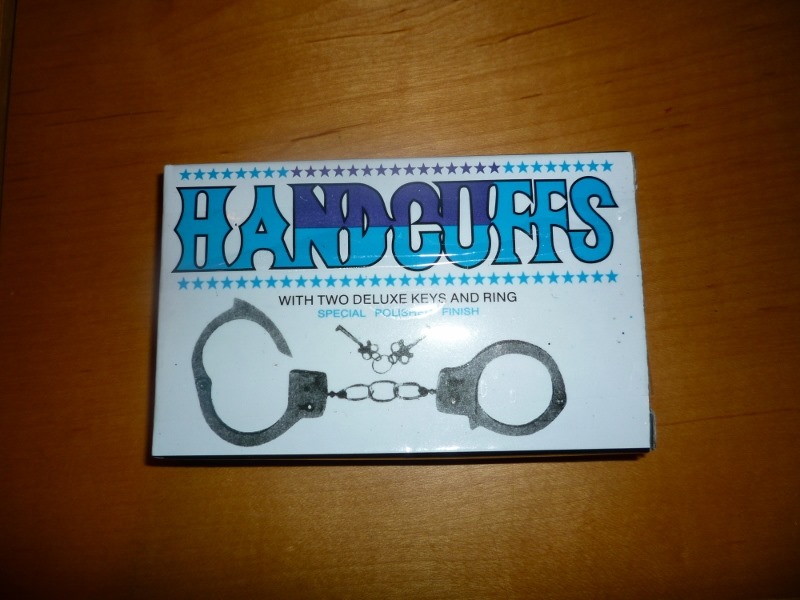
Do you enjoy social networking and marketing, or would you rather watch paint dry? Does someone have to handcuff you to the keyboard to get you to participate?

Handcuffs (800x600) (2)

Where it comes to marketing, create a specific promotional campaign for each upcoming title. Follow this template so you’re not reaching blindly in the dark. As for the social nets, pick a select few and check in there often. Visit the other sites whenever you get to them. Schedule tweets ahead of time if you have a chance. I’ll visit Facebook several times a day because I feel this one is the most important.

Twitter comes next for me. I’ll pop in there every now and then and do a few posts. Pinterest isn’t on my daily role call. I’ll pin photos after I do a blog post with pictures I’ve uploaded. Goodreads is on my list but not on a daily basis, as is commenting on other people’s blogs and posts. You have to do what feels right for you.

I’m a big believer in lists. Write down your writing and business goals for the year. Each day, decide what you have to accomplish. These lists will give you a concrete path to follow. Write down the marketing plan for your next book. This will give you a specific focus, i.e. a blog tour or a book trailer. What you don’t want to do is flounder about, because that’s truly a time waster.

So what’s your plan for today? Mine included writing this blog. Marketing task number one is done. On to task number two.

Are we ready to hear good advice?

I have a theory about writers and writing advice: “No advice is good until we’re ready to hear it.”

Take me, for example. Years ago, having just read Anne Lamott’s BIRD BY BIRD, I called up a writer friend to rave about it.
 
After burbling on about the book’s awesomeness for about three or four minutes, I heard my friend give an audible sigh.

“I’ve been telling you about that book for years,” she said (a tad ungraciously, I thought).

It was true. I’d heard my friend discuss BIRD BY BIRD before, but I’d never heard it. 

Over the years, different messages and bits of advice have bubbled to the surface of my awareness, depending on where I  was as a writer.

Here are some of the most useful nuggets that have stuck with me over the years.

  • Write every day at the same time.

I can’t remember who was first with this classic piece of advice. The bottom line: You have to develop your brain’s writing muscle the same way you develop other muscles–by repeatedly exercising it.

  • Slice the salami.

To get unstalled in her writing, Editor and writer Kate White says she had to learn how to break up large projects into small, manageable chunks. She calls it “slicing the salami.” She began by writing for fifteen minutes on Saturday and Sunday. Months later, her first book was finished. This was the single most helpful piece of advice that helped me start writing back when I was a single mom with a high-pressure job.

  • Begin and end each paragraph with a short sentence.

This is a simple technique to build pacing and rhythm into your work. The short initial sentence eases the reader’s entry into the paragraph, and the short line at the end provides a rhythmic “bounce” into the next paragraph. This advice came from Miss Snark, the literary agent; I’ve used the technique to good effect. (And if you haven’t discovered Miss Snark, you should check out her archived blog. It’s filled with tons of great writing advice)

  • Think of your writing as a camera. You’re not successful until the reader “sees” the story that’s filming in your head.

    I’ve noticed that there’s often a disconnect between a scene that is playing in the writer’s mind, and the one that is conveyed on the page. To locate   the reader in your story, you need to add context and positioning details. For example, if a minor character is standing behind the main character, about to do something interesting, you need to establish their positions relative to each other in the reader’s mind. Otherwise, readers can quickly become disoriented and untethered from the story, like an astronaut floating in deep space. (See a related post, The Real Secret of Bestsellers.)


So, what nuggets of writing advice have been the most helpful to you, in your career as a writer? 

Successful Book Groups

by Clare Langley-Hawthorne

When I lived in California I was a member of a book club that had been running for well over a decade. Now I’m in Colorado I’m seriously considering establishing one myself as I loved being exposed to books that I wouldn’t otherwise have read, and I enjoyed the discussion and sense of camaraderie that came with being with a group of like-minded book lovers.

The only thing is – I’m not sure I want to be responsible for actually setting up a book group. In California, the group had evolved and changed composition over time but the balance seemed to be just right. There were enough strong opinions to go around but no obnoxious personalities to derail the discussion. There was also enough food and drink available to help the ‘discussion’ flourish. The thing is, I’m not sure I can ever recreate this and, to be honest, I’m not sure I should even try.

Successful book groups seem to involve an almost serendipitous arrangement of personalities, opinions and characters. Get the balance right and it’s terrific – get the balance wrong and it’s a horrible endurance test for all concerned. I’ve had offers to join other book groups too – but again, I’m wary about joining. I’ve also been reading about the emergence of online book groups which sound pretty cool – only I think I’d miss the personal interaction (not to mention the accountability – much easier to lie online about having read a book!).

So – some input from TKZers is required. Specifically I’m wondering:

  • Are you a member of a great book group?
  • If so, what do you think makes it great? (or if you’ve been a member of a dysfunctional group – what was the main problem or issue?)
  • What do you think makes a successful book group? 
  • And finally…with all the social media/online options do you think the ‘in-person’ book group is becoming (sadly!) redundant?

I’m also interested in whether you tend to favor a single sex book group (the one I was in was all-women) or a mixed group and whether you think focusing on a specific genre is helpful (we could chose basically anything, which I think made it much more interesting as I had to read books I wouldn’t otherwise have read). All in all, it would be great to start up a new book group – but I know, after some ‘interesting’ experiences with writing group dynamics, just how carefully I need to tread…