About Joe Moore

#1 Amazon and international bestselling author. Co-president emeritus, International Thriller Writers.

Guilty By Gutterball

By Joe Moore

Yesterday, Kathryn gave us ten things not to do if you want to get published. I’d like to build on her theme with 8 tips on writing a strong query letter.

For writers, the query letter is probably the most important letter you’ll ever compose. Unlike an email to your mom or BFF, you must spend a great deal of time molding and shaping it into the same caliber of perfection as your manuscript. In fact, it’s even more critical than your book. If you sell your book, it will eventually get into the hands of an editor to be further refined and cleaned up. Your query will not.

So here are a few points to keep in mind before you seal the envelope and lick the stamp or press the send button in the case of an email query.

Length. Agents and editors are busy professionals. They have little time to read long query letters. It’s important that you make your case in one page or less. If you can’t, the agent might assume you won’t be able to grab a reader in the first page of your book, either. So don’t ramble on, just cut to the chase.

Attitude. Don’t come across as arrogant or condescending. Humility can go a long way to gaining respect. You should give the impression that you would be easy to work with. Listing your credentials and credits is part of the query process, but it should be done in a business-like manner and only the ones that contribute to your writing qualifications. No need to mention that you’re president of the local bowling league unless your protagonist is a professional bowler solving a string of murders committed with bowling pins and your book is called Guilty by Gutterball.

Poor punctuation, grammar and spelling. Check, recheck and check again. Let someone else check it. Let 5 people check it. Bad grammar and misspelled words are not a sign of a professional writer. If your query contains mistakes, you’re just making it harder on yourself to gain the attention and respect of an agent.

Unprofessional presentation. There are countless reference guides and writing manuals on how to compose a proper business letter. Query letters are business letters. Showing a lack of knowledge on how professionals communicate will not score you any points.

Be brief. As stated earlier, the agent or editor has a few seconds to devote to your query before moving on to the other dozens she received that day. Get to the point, and do it fast. Identify yourself. What is your desired outcome of the letter? Why did you choose that particular agent? What is your book about? Why would someone want to read it? Why are you qualified to write it? Close with a thank-you and offer to send more. Each of the above items can be stated in one or two sentences. The entire letter should be on one page. And if it’s an email query, it should still be about the same length as a physical letter.

Be ready for the follow-up. Are you prepared to supply the agent whatever she requests; full manuscript or sample chapters, short synopsis or complete outline? If not, you may not be ready to start the query process. And assume that each agent will ask for something different, so have all variations ready to go. Follow the submission guidelines on each agent’s website. Don’t be surprised if they might differ somewhat.

Identify your genre. You must know the genre into which your book falls. Know the difference between a thriller or mystery, cozy or procedural, or any of the other dozens of sub-genre. And please don’t refer to your work as a fiction novel. ALL novels are fiction. Using terms from the department of redundancy department screams amateur.

Billboard. Your query letter is a single-page billboard advertising your book. It very well could be the only shot you’ll get at SELLING yourself and your manuscript. It must be perfect. Just like your story, every word has to count. You may not get a second chance. And just like that billboard on the highway you see as you speed by, the agent has just about the same amount of time to devote to your query letter. Give yourself a fighting chance and make it perfect the first time.

How does your query compare to these points? Any other query letter tips out there?

Ten things not to do if you want to get published

So the other day I bumped into a writer I first met four years ago. He’s just now finishing up the manuscript he’d started way back then. When I asked him what his plan was for finding an agent, etc., it became painfully clear that he is missing some information that might improve his odds of getting published; unfortunately, he’s also harboring some mistaken notions that will hinder his chances. For example, he told me that he has a great cover idea for his book-to-be, and that he has developed a graphic that he’s planning to send out with his agent queries.To which I blurted out, “Oh God, don’t do that. Never do that!”

I spent the next ten minutes proselytizing about how writers who want to get published must educate themselves aggressively in the do’s and don’ts of the submission biz. We have to become like heat-seeking missiles, searching out information through professional writer’s groups, how-to books, conferences, and blogs like this one. The following pointers may seem obvious to readers of TKZ, because our readers are pretty savvy about this kind of stuff. But here goes–my Top Ten list of things not to do when you’re trying to get published: 

  1. Don’t send your manuscript out without having at least two beta readers go over your work. Preferably run it by several beta readers. If more than two of them have an issue with something in your writing, fix it. Your words are not special snowflakes that have to be preserved at all costs.
  2. Don’t send out your manuscript if it still needs work. To determine whether it needs more work, see #1. I often hear writers complain when they get tired of rewriting. They say, “Oh, I’ll just send it out and see what happens.” And then what happens next? Nada much.
  3. Don’t start submitting your work without knowing how to compose a great query letter and sample. The best advice I’ve found on the web about querying is on the pages of Miss Snark, the Literary Agent. (Her blog is no longer being updated, but you can find everything you need in the archives.) And here’s a sample of a great query letter from agent Nathan Bransford’s blog.
  4. Don’t query an agent without knowing exactly what type of work that agent is looking for. (Do query him or her exactly as requested. You can usually find the agent’s requirements for submitting work on their web site.) One of the best resources I’ve found for learning about specific agents and the work they’re looking for is Jeff Herman’s Guide to Book Publishers, Editors, and Literary Agents.
  5. Don’t send a “sample book cover” with your query to an  agent or publisher. Ever.
  6. Don’t mention in your query that your manuscript is the first book in a series. That’s the sign of an amateur. The agent and/or publisher will let you know if it can become a series.
  7. Don’t self publish unless you already have a track record as a published author. Even then, it’s probably better not to self publish. Unless you are Joe Konrath or you have an incredible platform, your book will vanish into the UUU (Unhappy Universe of the Unread).
  8. Don’t ever pay for any type of agent, “publishing service,” or entity that charges to publish your work. And be wary of contests that charge exorbitant entry fees. Some contests are legitimate, but check to make sure. Take a look at Predators & Editors before you sign on with anyone. 
  9. Don’t be defensive or cranky when you get negative feedback about your writing, and don’t burn bridges with agents, publishers, or other writers (published or unpublished). It’s a small world, and bad manners will come back to haunt you if you act like a diva. Be gracious and professional with everyone.
  10. Here’s a completely gratuitous one on behalf of published authors: Don’t approach writers you meet casually and ask them to recommend you to their agent. Unless you are a close friend or a really great writer, it’s annoying as hell.


Of course, there are always exceptions. There will always be people who make every mistake in the book and still get published. Usually this will happen because their writing is so outstanding that the professionals overlook their beginner’s mistakes. But it doesn’t happen that way very often. Before I got my series contract, I tried to become a sea sponge, soaking up every morsel of wisdom and information I could find. I took courses at UCLA Extension, joined a critique group run by a former editor of a major publisher, went to writer’s conferences, joined ITW, Sisters in Crime and Mystery Writers of America. Basically, I sought out anything I could find that could improve my writing and my odds of getting published. In the end, it was all worth it.


What has your self-education journey been like, as a writer? Do you still feel you have some things to learn, and how are you going about it? Can you add any “don’ts” to my list?


–KL

Out on the range

As my family and I are on a covered wagon trip I won’t be posting today, I will literally be out on the range! Hope to check in next week when we will be in Yellowstone.
Cheers
Clare

– Posted using BlogPress from my iPad

Writing on the Move

James Scott Bell

Been doing a lot of speaking this year, which involves one of my least favorite things: Checking into airports. I love the speaking once I arrive. It’s the getting there I’m not always thrilled with.
But if I can redeem the time by writing, I figure I break even on the travel. So here are some of the things I do to get the most out of my travel time. Maybe you can add a few tips of your own.
First, I pre-plan. I do much better if I have one or two definite goals for the flight. So the day before my trip I decide what part of my WIP I’ll work on. I spend some time preparing the scenes I’m going to write, figuring out what I want to accomplish.
Then I set a word quota so I have an objective firmly in mind. This provides a reachable goal to work toward.
I carry a file folder with printed notes I deem of use. This is for those times when they don’t let you have any electronics going on the plane.
I get the airport early so I have plenty of time to make it through security. At the gate area I scope out a place to sit and work, usually at some inactive gate nearby. Fewer people. If it’s an hour or more before boarding, I grab a coffee and take out the laptop and go. If it’s half an hour or less, I usually work on the written notes.
Onboard, I generally have a window seat. That way I can get seated and get working without having to worry about people getting up during the flight.
In the air I put on my Bose noise cancelling headphones and get the iTunes going. I write to movie soundtracks, which I’ve divided into lists depending on the mood of the scene. Usually I’m writing suspense, so I’ve got my Hitchcock scores and others at the ready.
And so it goes. When ordered to power down, I still have my written notes, or a paperback. Yes, I still carry paperbacks on planes. So sue me.
That’s my flyboy routine. On the ground, when I have to go someplace where I know I’ll have to wait, I might take my AlphaSmart with me. Again, I have pre-planned what I want to write, so I’m not twiddling my fingers over the keyboard.
Here’s the deal. We all have a finite time on this orb, and I want to get in as much writing as I can. Redeeming the time this way keeps me optimistic and productive.
Do I ever take a vacation from writing? Of course. My wife will tell you. We go away to lovely spot for some R & R. Conversations usually start like this: “Jim? Jim! There’s a great sunset over here. Jim, what are you thinking about?”
“Hm? What? Sorry, right.”
“Um, you have to look out the window to see it.”
“See what?”
“The sunset.”
“Right, right.”
“So, are you going to come to the window?”
“Just a sec, just a sec . . .”
So what about you? How do you redeem time to get your writing done? 

Stieg Larsson And The Laughing Policeman

Everyone, it seems, is talking about Stieg Larsson and the girl with the tattoo who plays with fire while kicking the hornet’s nest. I just received an e-mail from a friend in which he reports reading that amazon.com sells a Larsson book in one form or another at the rate of one per second. Can that be true? Wouldn’t it be wonderful if it was? And wouldn’t it be wonderful if every person who bought a Larsson book bought and read another book by another author as well? But I digress. I was in a used bookstore on Wednesday and was talking to a clerk when the topic of Larsson came up as it will in bookstores these days. I mentioned other Swedish mystery and thriller authors and his eyebrows went up. I wound up making a list for him. Henning Mankell was on it, of course, as was Hakan Nesser. Both of these worthies had books published long before Larsson even thought about writing his worthy novels. I expanded the list to include Jo Nesbo from Norway, and Arnaldur Indridason from nearby Iceland. At this point, the clerk was crying “uncle” and we made our farewells. I remembered one more addition to the list as I was getting into my car, however, and had to come back into the store and tell him, because it was perhaps the most important of all: Maj Sjöwall and Per Wahlöö.

The names Sjöwall and Wahlöö are probably unknown or forgotten to the majority of crime fiction readers, yet they are best known for writing a series of ten police procedural novels featuring a Swedish homicide detective named Martin Beck who heads up a special homicide division of the Swedish police. The series achieved great critical and (in some cases commercial) acclaim internationally; THE LAUGHING POLICEMAN, the fourth book in the series, found great success in the United States. It won the Edgar Award for Best Novel of 1971, and a film bearing very little resemblance to the novel was made in 1973, with the setting moved from Stockholm to San Francisco. At this point in time arguably more people have heard about the title than have read it, and if they are familiar with it at all it is as the result the film, rather than the book. All of the Beck books, by the way, have been translated to English and remain in print, though only one, THE LOCKED ROOM, is available in e-book form.

The Beck series and Larsson’s Millennium series have some interesting points of commonality. Sjöwall and Wahlöö were in an established common law relationship and openly collaborated on the series; Larsson was in a long-term, committed relationship with Eva Gabrielsson, who may or may not (depending on who you choose to believe, and on what day) have made a substantial contribution to the books as they exist in their published form. Larsson was an avowed Communist whose political beliefs fueled his journalistic endeavors and which in turn were reflected, though somewhat toned down, in the Millennium trilogy. The Martin Beck series is infused with cultural and social commentary from a socialist viewpoint as well, though, interestingly enough, THE LAUGHING POLICEMAN was in its own way critical of the shortcomings of the Swedish welfare state. For anyone who enjoys well-written police procedural novels, however, the Beck series is worth reading, regardless of one’s politics. If you have read Larsson’s Millennium Trilogy and despair of further volumes ever being published (the last chapter on that topic has yet to be written) you have ten books in the Martin Beck series waiting for your attention, approval, and enjoyment.

One more thing: along with each blogpost I am going to mention what I’m currently reading. Right now that would be THE DOUBLE HUMAN by James O’Neal: Mad Max meets Alien Nation, set in Florida twenty-five years in the future.

Buy now, and get a free Billys Pan Pizza…

by Michelle Gagnon

So I stumbled across an interesting piece in the LA Times the other day about an editor-turned-agent-turned-entrepeneur who has hooked up with the site “OpenSky” to help authors market more than just books to their audience. She listed one intriguing example: fellow crime fiction writer Michael Koryta has a book set in an old hotel in Central Indiana known for its “Pluto Water,” which apparently has health benefits. If Koryta hooked up with Open Sky, the novel could be tied to both the promotion of the hotel and of the water (OpenSky would find a supplier to bottle and ship it).

Another example: A cookbook author not only sells books through OpenSky, but also hawks a favorite barbecue sauce and grill. The author pockets 50% of the profit, with the rest going to OpenSky and others involved in the transaction.

It’s an interesting model. While the author of the piece jokes about whether or not Steig Larsson would have considered peddling the coffee his protagonist drinks, one of the things that struck me while reading THE GIRL WITH THE DRAGON TATTOO was the name dropping. Salander never had a mere generic pizza, she always ate “Billys Pan Pizza” (and lots of them). Likewise, the computer she used (a Mac), the cigarettes everyone smoked (Lucky Strikes), the cell phones they placed calls from (Sony-Ericssons)…all were named repeatedly, to the point where I wondered if Larsson had been secretly hoping for product placement tie-in deals.

Television has already started experimenting with this possibility. Some of the next generation cable boxes will enable consumers to click on the screen if they like, say, the dress that a character is wearing, which will immediately place an order to their account. And voila, a few days later they’re sporting Eva Longoria’s maxi dress.

So should authors consider going to same route?

There are certainly arguments against it (as I read the article, I could almost feel the collective shudder of horror emanating from traditional publishing houses). Books are seen by many as more than a mere commodity. A friend of mine compared it to offering happy meal trinkets when buying an oil painting. But in this age of dwindling marketing budgets, can books afford not to think outside the box? Film and television studios have both incorporated significant product placement in their offerings to offset revenue reductions. And with more books being consumed electronically, does it make sense to integrate links for people who develop a hankering for “Billys Pan Pizza” while reading the novel? Wouldn’t a cross-marketing campaign like the one pitched for Koryta’s book benefit everyone involved?

As I read it, I tried to think about what OpenSky would be willing to sell from my books. I suspect that night vision goggles and Glocks wouldn’t be their first choice, although both figure prominently in my last book (and in retrospect, I probably should have incorporated more specific brand names). But it is set in Mexico City- a link to a tourist agency, perhaps? Or an airline? Better yet, the best security company to call should you get kidnapped?

Is OpenSky offering just another opportunity to sell out, or could it provide a much needed boost to authors struggling to market and make money off their work?

Character Development

Today, our guest is my friend and fellow South Florida writer Nancy Cohen. Nancy is the author of 15 novels including futuristic romance and mysteries. For many years, Nancy and I have served as beta readers for each other’s work.

nancy-cohen I like to discuss story development because despite all the advance plotting we do, fiction writing still remains a magical process.  My agent is marketing a new mystery series proposal of mine.  Here are some insights on how the story developed.  It may help you with your own mystery.

I’d written the first 20 pages but then I came to a halt.  I was nearly to the point where I had to introduce the suspects, but I needed to know them better first.  I’d made a list of the people who were family or acquaintances of the victim.  Next, I gave them each a dirty secret so they all appeared to have a motive for murder.  The next step, and one at which my subconscious came into play, was to connect the suspects to each other.  This is when the story really starts to get more defined.  Think of the Milky Way and how the planets swirl in a big sweeping motion around the central core of our sun.  They start to condense, tighten, draw together.  That’s what happens in my head.  The story comes into focus. 

Here is where personal experiences come into play as well.  An acquaintance told me she sells an anti-aging product, and she handed me a flyer.  Cool.  One of my characters, a pharmacist, will be a snake oil salesman who markets a false product he claims is derived from water beneath the Fountain of Youth in St. Augustine.  That’s where he lives, and I’d already planned to go there on a research trip.

Then I overheard a conversation in our beauty salon.  Marla Shore, heroine/sleuth of my Bad Hair Day series, would have been proud of me.  One lady spoke about how someone was running down ducks in her neighborhood and the cops were trying to catch him.  The police would arrest him on charges of animal abuse. I gave this nasty act to another one of my suspects.  It shows his perverted character.

For my people’s occupations, I used a book called The Fiction Writer’s Silent Partner by Martin Roth.  This reference is a great source of inspiration. It lists all kinds of things related to character background, plotting, slang, genre conventions, and more.

Once I had the bare bones of my suspects, I searched for pictures to represent them.  Here I plowed through my character file, where I keep photos I’ve cut out from magazines.  I wait for that “Ah ha!” moment when the person’s face matches my character.  This inspires the physical description and maybe adds more background on the individual’s personality. 

Each suspect gets a page in my notebook with their picture and a brief description.  The heroine/sleuth gets a full page with what I call my Character Development Tool. This includes physical traits, strengths and weaknesses, short and long term goals, dark secret, etc.  See Debra Dixon’s book: GMC: Goal, Motivation, & Conflict for excellent advice on this topic.  Besides the suspects and victim, then I have to develop the recurrent characters: the sleuth’s friends, family, colleagues, and love interest.  Book one requires laying the groundwork for the entire series.

Once the character development is done and the relationships defined, the plot takes shape.  Then I can write the synopsis.  At this point, the words are ready to spill out on paper.

Do you develop your characters before plotting the story or vice versa? Or are you a pantser rather than a plotter?

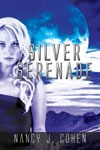
SilverSerenade Nancy J. Cohen is a multi-published author who writes romance and mysteries.  She began her career writing futuristic romances. Her first title, CIRCLE OF LIGHT, won the HOLT Medallion Award.  After four books in this genre, she switched to mysteries to write the popular Bad Hair Day series featuring hairdresser Marla Shore, who solves crimes with wit and style under the sultry Florida sun.  Several of these titles made the IMBA bestseller list. PERISH BY PEDICURE and KILLER KNOTS are the latest books in this humorous series. Active in the writing community and a featured speaker at libraries and conferences, Nancy is listed in Contemporary Authors, Poets & Writers, and Who’s Who in U.S. Writers, Editors & Poets. Nancy’s new release, SILVER SERENADE, is a sexy space adventure and her fifteenth title.

Your writer’s brain on the Internet

Recently there’s been a lot of research and discussion about the impact of the Internet on brain function.

The reviews have been mixed. Some studies indicate that surfing the Internet can enhance brain function in older people. That’s a good thing.

On the other side of the argument is a recent article by Nicolas Carr in the Atlantic Monthly, Is Google Making Us Stupid?. In the article, Carr said that his ability to concentrate is evaporating–he said that it has become more difficult to read books or lengthy articles, material that used to be easy for him to digest. “Deep reading” has become a struggle, and he blames the change on the Internet. Citing some research as well as anecdotal cases, he asserts that we are becoming a generation of word skimmers rather than true readers. We are power browsers, not researchers.

I have to say I partially agree with Carr. I’m finding it harder to battle my way through lengthy prose unless it’s so well written and dramatic that it keeps me riveted. In my case, I can pin some of the blame on hydrocephalus, because concentration is supposed to be an issue with that condition. (The brain shunt surgery I’m having later this month should fix that problem). For other people, though, the question remains: Is the Internet altering our  brain circuitry in the area that controls deep, sustained attention? Is it enhancing our ability to multitask and “info jump” at the expense of more intense levels of thought and concentration?

The debate makes me wonder what the Internet might be doing to writers. After all, we’re the ones who are supposed to be creating the “lengthy, rich prose” and books for other people to read. If our brains are being rewired somehow by the Internet, what impact will that have on  our writing? Has this change already begun to happen? How would we even know? 

As a random check, I just browsed over to the New York Times Bestseller List. Topping the list at #1 this week for nonfiction hardback is a book called SH*T MY DAD SAYS.

The book is supposed to be funny, and it’s had great reviews. I’m sure it’s written in lengthy, rich prose, filled with merit. I’ve heard it was developed from, or inspired by, the author’s Twitter postings, at 140 characters each.


Readers, meet your future.

— KL

p.s. And here’s a question–did you make it to the end of this blog post without skipping off to one of the hyperlinks? If so, God bless your un-rewired brain. If not, no worries. We all do it, more and more all the time.

10,000 Hours

by Clare Langley-Hawthorne

Firstly, a belated welcome back to fellow blog mate Kathryn. I have only just got back on-line (why is it that free wi-fi at most places just means ‘it-doesn’t-work’ wi-fi???) and I was thrilled to see she posted this week. I am sending out good vibes from Moab, Utah, where my family and I are camped for the moment.

I just finished reading Malcolm Gladwell’s Outliers on my iPad and have been musing over his proposition that it typically takes really successful people about 10,000 hours to master their expertise. In the book he does a pretty good job of dispelling the myth of most ‘overnight success’ stories, arguing that innate talent alone is not enough and that most truly outstanding people have a rare combination of talent, opportunity and support to get where they got. They also had to work damned hard – like 10,000 hours – to get that far.

That got me thinking about some of the most successful writers around and I would bet most of them would agree it took many, many years of honing their skills to get them where they are today. As for ‘instant success’ stories, JK Rowling always comes to mind but I have to confess I don’t know how long she toiled at writing before she found that one great idea for the Harry Potter series. I do know she was on the brink of poverty and wrote in a local cafe to keep warm, so things were clearly by no means easy. Is she an exception though to Gladwell’s outlier thesis? What about other so called ‘overnight success stories’ in the fiction writing world? Did they put in the 10,000 hours but we just don’t know it?

What combination goes in to creating the true ‘outlier’ writers? Talent obviously. Determination for sure. Hard work, of course…and luck, lots of luck. But what else? I wonder what Malcolm Gladwell would find if he studied the world of fiction writing…I suspect he would see a similar pattern to the other areas he examined. But do you think 10,000 hours sounds about right? What else do you think is needed to be an ‘outlier’ writer?