Author Archives: Joe Moore
My Favorite Books of 2011
It has become a practice at the end of a year to compile a “Best Of” list. That is tough to do, and to call it such is a bit of a conceit. Who am I to say? The following is a whittled down list of books that I read in 2011 that grabbed me and touched me. I had 27 or so to start with; when I started to pare it down, there were three that I felt had to be there for certain — THREE SECONDS, THE DEVIL ALL THE TIME, and FEAST DAY OF FOOLS; I literally picked the rest of the titles out of a hat. Here they are, in no particular order:
THE WOODCUTTER — Reginald Hill
LUCIFER’S TEARS — James Thompson
THE DEVIL ALL THE TIME — Donald Ray Pollack
THE HYPNOTIST — Lars Kepler; translated by Ann Long
THREE SECONDS — Anders Roslund & Borge Hellstrom; translated by Kari Dickson
FEAST DAY OF FOOLS — James Lee Burke
THE PACK — Jason Starr
BREAKING POINT —Dana Haynes
COLD SHOT TO THE HEART — Wallace Stroby
SOFT TARGET — Stephen Hunter
John Miller will be here next Saturday and I will be back after the first of the year, hopefully with some interesting news. Merry Christmas and Happy New Year to you all. And thank you for spending time with me this year.
Judging a Book by its Cover
There was an interesting piece in last week’s New York Times on the transition back to so-called “gilded covers.” It confirmed a theory that I’ve had for a few years now. Despite the gloomy predictions of prognosticators, I don’t believe that hardcover novels are facing extinction. For one thing, libraries will always need hardier books to loan out. However, I do think that as eReaders become increasingly prevalent, hardcovers print runs will be dramatically reduced. Not phased out entirely, but the vast majority of books will be released in trade paperback form. The hardcovers that are produced will predominantly be special limited editions. More care will go into cover design and production, from the paper quality to the font to the dust jackets. And chances are that the price will increase as a result, since you’ll be paying for something a bit more special.
Currently, hardcover novel sales are being hit hard. As of September, hardcover sales had declined 25% for the year. Meanwhile, eBook sales rose 161%. Total eBook sales are forecast to reach $10 billion dollars by 2016, and thus far Kindle sales have outpaced Amazon’s rosiest predictions for the Christmas season. Mass Market paperbacks are being phased out more rapidly than anticipated, and many publishers are switching even consistently bestselling novelists to trade paperback rather than hardcover releases.
And let’s be honest– hardcover book sales should be dwindling. Now, before all you fans of “real” books, who extol, “the weight of it in my hands, the smell of ink on paper” jump all over me, hear me out.
Recently I was standing in my father’s library, poring over his collection. He’s always been an avid reader, and he has a stunning collection of leather bound books. Books that are truly works of art, and an experience to read. Books with soft vellum paper and calfskin bindings; books that really do have a special smell and feel to them.
Compare that to my collection of hardcovers. The vast majority of them don’t merit the same level of adulation. The truth is, most are just as mass-produced as MMPs. They’re heavy, cumbersome, printed on relatively cheap paper with cardboard covers and a dust jacket. Honestly, few are dramatically nicer than a trade paperback. By and large, those books don’t look stunning lined up on my shelf.
So given a choice, why would I spent $20-30 for a book that, content-wise, I can enjoy on my Kindle for half that price?
I would, however, pay a bit more for something that was special.
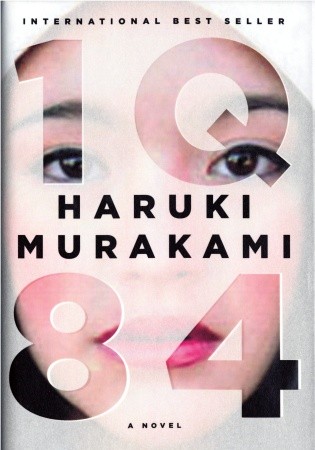
Publishers are finally coming around to that realization. The NY Times piece discusses recent hardcover releases that included special touches. Haruki Murakami’s latest novel 1Q84 features a “translucent jacket with the arresting gaze of a woman peering through.” Based on the book’s impressive sales so far, which has been the reverse of most books, (95,000 hardcover as opposed to a mere 28,000 in eBooks), investing in exquisite covers can help print sales.
The irony of this for me is that for the first time next year, my books will start appearing in hardcover form. Given the current sales climate, I’m nervous about shifting formats at this stage. However, I do think that we have an amazing cover, and hopefully the rest of the production quality will match up to it.
Real-Life Characters
Have you ever met a person who is so interesting that you had to incorporate him into a story?
We’ve just returned from a one week cruise on Allure of the Seas. My review and photos can be followed on my personal blog. It was a fabulous trip on the largest cruise ship in the world. But despite its size, we often ran into the same people.
We first saw the man at dinner. Although we had My Time Dining, we’d reserved a spot at 5:45 in the Adagio Dining Room, deck 5, each evening. My startled gaze landed on the guy as we passed him by seated at a table with a younger man.
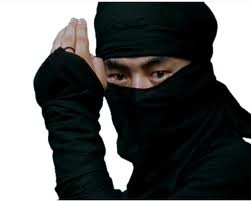
His shoulder-length wiry black hair inevitably drew my attention. He had a black moustache to match that curved down to the edges of his mouth. His dark eyes and facial features were Asian. My imagination instantly pegged him as a karate master. Was that his young disciple with him? The younger guy had light brown hair in a short cut with sideburns and looked like some fellow you’d meet on the street in the States. A more unlikely couple couldn’t be found.
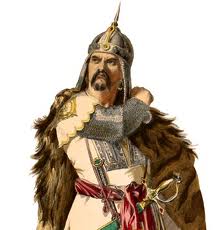
What were they doing on a cruise together? The long-haired man looked like he’d stepped out of a movie screen. He could have played an ancient conqueror, a great warrior who’d landed incognito into our time. Or perhaps he really was a foreign film star and the young man was his manager. Then again, maybe he was a secret agent or private investigator on a case and the younger guy was his sidekick, likely a computer expert.
Oh, my. I could create so many stories just from this one person. This had happened to me once before on a cruise. I saw a lady with coiffed white hair and a perfectly made up face who wore elegant Parisian ensembles. She became a countess in my cruise mystery, Killer Knots. How could I use my karate master? Time will tell, but no doubt he’ll show up in one of my books. And his role will be a lot more glamorous than in real life, where he probably was on a pleasure cruise with his partner.
Have you ever met a character so compelling that you had to put him into a book?
Presenting the Author: 24/7
By: Kathleen Pickering http://www.kathleenpickering.com
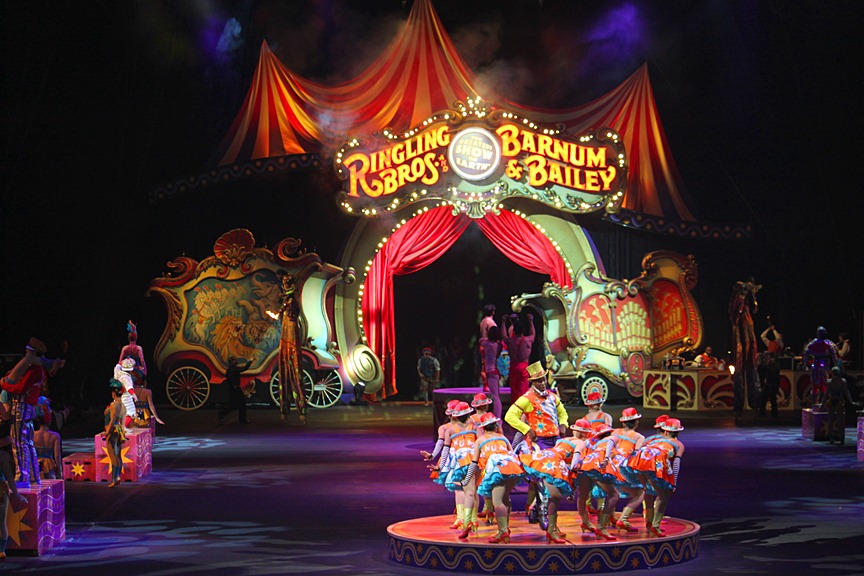
My life is a three ring circus. No wait. My husband said living with me is like a three ring circus.
A far more honest assessment, for sure. One for which I take immense pride.
Why?
Because if a writer is going to be effective in her work, she must experience life. Things have to happen. Places must be seen. People must be met, interviewed, interrogated or just plain stalked! (Just kidding. Actually, no. I’m not. Ask Heather Graham or Bonnie Raitt. Another story for another time, but at least I didn’t leave Heather horror-struck and plastered against her tour bus!)
What does this have to do with my promise from my last blog to reveal the second Tweet I am tweeting on Twitter? (What a fun sentence!)
My friend and mentor, Heather Graham, proves the “you gotta live to write” theory to me constantly. Meaning an author views the world and “is” an author 24/7. The simplest event in an author’s life is a possible morsel for a plot.
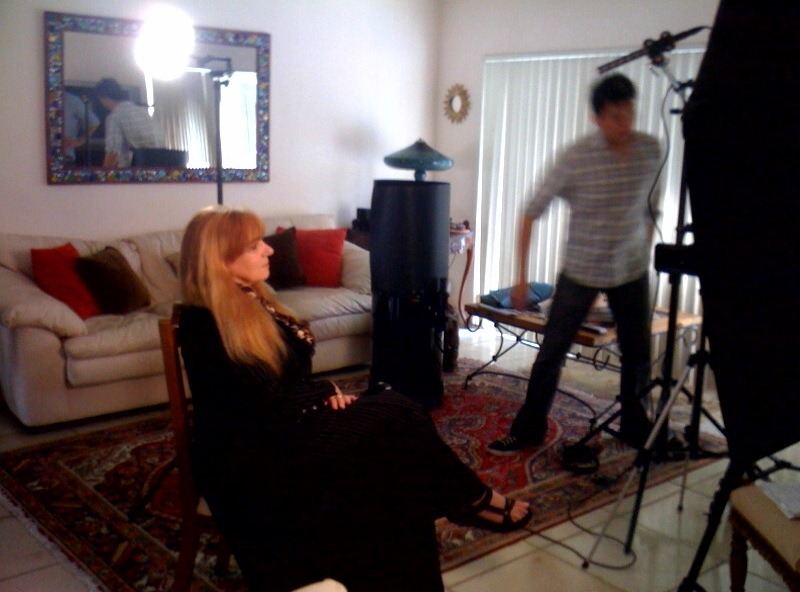
Today when I post this blog link on Twitter, my Tweet will read: Member of the Peer interviews Heather Graham at my house!
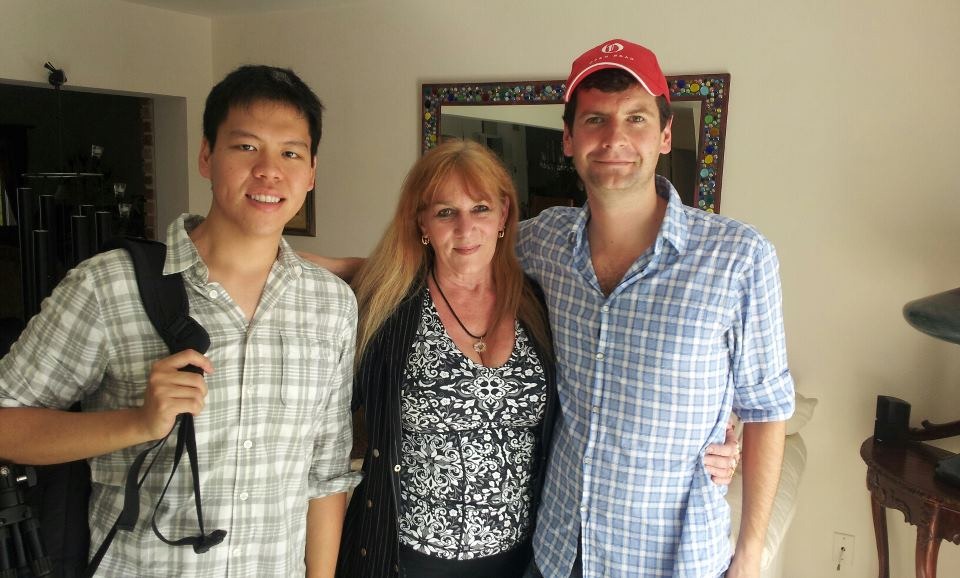
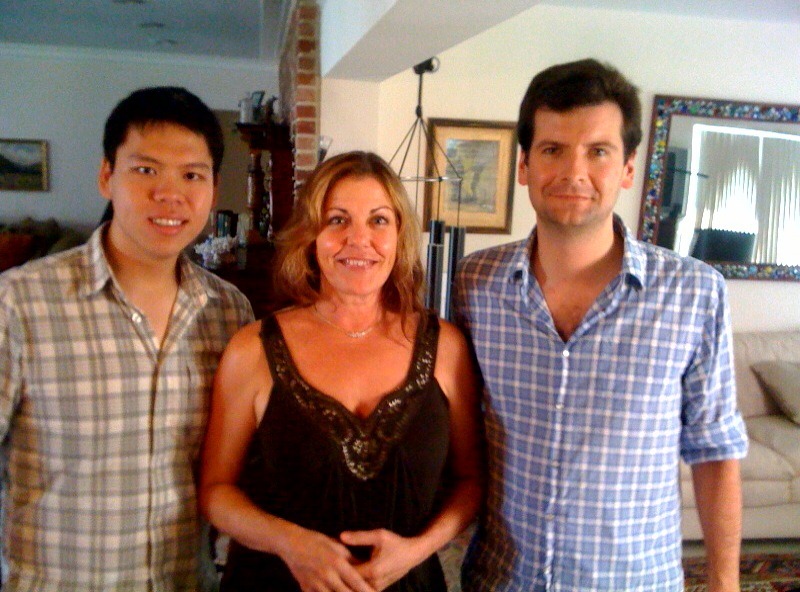
Heather is always doing exciting things to fill her “creative well” to the brim. And, sure enough, one of her adventures was an interview with British transplant Luke Parker Bowles from Open Road Media in New York. She was photographed by Tim Wu.
Heather’s interview is part of a future media campaign and I was invited to join in the fun . . . which makes Heather’s “you gotta live to write” theory suddenly a part of mine.
A good student pays attention!
Now, you may ask what makes this event a three ring circus in my life?
Well, it’s simply that this interview happened on Monday when I had just returned the evening before from a quick two day jaunt to New York for a family gathering of 75 people for a double-engagement party for my sister’s twins. And that on the heels of a five day real estate search to help another family member invest an insanely huge amount of foreign dollars in US real estate. (Yes, I am a Realtor in my secret life.)
All of which is fueling new stories. And, there is more.
This fun filled day with Heather and friends was followed by in instant surge of 12 family members, including a first for us which was both mothers-in-law under the same roof for the Thanksgiving holiday.
Did the family drama that ensued give me fodder for a new book? I know I don’t even need to answer that one.
I still have a few more days before I launch my mother-in-law back to Chile. However, the circus continues. While attending to my MIL’s needs (and they are many), going to yoga classes, taking a 12 week on-line Agents for a Conscious Evolution class, brainstorming with author friends, contributing to social media AND spending quality time with my husband, I am scrambling to finish two more book proposals for my editor to cement her beautiful offer for a three book contract with Harlequin.
What can I say to that?
I am thrilled for the circus that is my life because after I finish this blog, I can finish the two “romance in real life” proposals for my editor. Why? Because I gleaned story ideas from my travels and mingling with family, friends and strangers. I am an author 24/7. I live to write and I write to live. The trick is to see every moment as a writing opportunity. Oh, and to make really good use of those few hours of sleep!
Soooooooo . . .
Ladies and gentlemen, and children of all ages! I invite you to tell me how your lives fuel your creative wells. I am already laughing at the prospect of how Basil Sands will answer this one. (I just read on Facebook that he was grilling 40—count ‘em—40 steaks in freezing weather.)
Let the show begin!
Reasons not to Self-Publish?
Literary Agents in the Digital Age
Please. No whining.
Write What You Fear
By Jordan Dane
Everyone has heard the line – Write What You Know. When I first heard the line, the first thing that hit me was a question. What the hell did I know that would interest anybody, except my mother who is easy to please? Obviously I didn’t listen to that advice. My debut book was about a woman cop, a far cry from my accountant/commodity energy trader occupation.
Lee Child wrote on an email loop I belonged to in 2008 (of debut thriller authors he mentored as part of the International Thriller Authors debut program) that he thought it should be – Write What You Fear – because books are about emotion. Raw emotions resonate with people. We can all relate to what makes us scared or what we can hate or love. That’s not as intimidating as “write what you know” and hope someone buys it. It doesn’t take special knowledge to write about emotions you feel. It only takes an ability to dig deep, write honestly and find words to express those feelings.
Lee’s words have stayed with me.
Lately I find myself thinking about death. It’s not a subject I know a lot about, but I sure know how it makes me feel. My book ON A DARK WING (Harlequin Teen, Jan 2012) stirred these thoughts in me when I had to envision what a conversation with the Grim Reaper might entail and imagine an afterlife and a role for the Angel of Death. A young girl deals with the grief and guilt she feels after the tragic death of her mother in the book. And this week, a blogger (who will be on a tour stop for the promo of my book) asked for an interview with Death. I’ll be the voice of Death on the day of the blog post when I comment, so followers can ask their own questions. Do I have any idea what I will write? Absolutely not, but I think it’s important to keep challenging myself as an author to delve into areas of my imagination, especially when it’s most difficult.
But there’s a reason I wanted to share why writing about Death and imagining an afterlife has been particularly challenging for me. In my own life, my brother-in-law Michael (my husband’s only brother) is losing his battle with cancer. He’s in hospice now and he’s been in my thoughts and prayers for months. I can’t even imagine what that finality is like for him or his sweet wife and their family.
Sometimes the fiction we write becomes all too real…or too personal.
My post won’t be long today, but I would like to hear from those willing to share. Whether you had a personal tie-in or not, what has been the most difficult scene you’ve written or read in a book? What challenges did you face in writing it? Or why did the scene you read stick with you? Readers and/or writers can respond to this. There are scenes in books that I’ve read long ago, that I can still imagine in my head because they touched something in me that has stayed.
Please share those scenes and books that have stayed with you.
Elements of a great ending
By Joe Moore
We’ve had plenty of posts here at TKZ about story beginnings. As a matter of fact, we invite submissions and devote the month of March to critiquing the first page of your stories. Beginnings are so important because they set the hook and grab the reader.
But what about endings? Are they as important as beginnings? After all, they occur after the big finale, the gripping climax, the roaring finish. In a way, we can think of endings as anticlimactic. And yet, they have an important function to perform in any story.
First, the ending should resolve anything that was not addressed during the climax. Once the conflict between the protagonist and antagonist is put to bed, what’s left must be brought together as a resolution in the ending. There must be closure to anything still hanging in the reader’s mind.
The ending also answers the story question. Since the story question usually deals with character growth or change, the ending must make sure the story question is answered.
Let’s say that the main character had to stand by and watch his family perish in a terrible accident that he inadvertently caused. The story question might be: will he ever forgive himself and have the courage to find love again and perhaps start a new family? The actual plot might deal with something totally different, but along the way he finds a new love interest. Once the climax occurs and the plot is resolved, the reader must discover the answer to the story question. It has to be made clear in the ending. In most stories, the main character takes a journey, whether it’s physical, mental or spiritual. How he completes the journey is the answer to the story question and must be resolved in the ending.
Another function of the ending is to bring some sense of normalcy back to the characters’ lives. It can be the restoring of how things were before the journey began or it can be the establishment of a new normal. Either way, it must be resolved in the ending. Our hero has found a new love and plans to start a new family. It’s his new normal and the reader must understand the changes that he went through to establish the new normal.
If the story contains a theme, message or moral, the ending is where it should be reinforced. Not every story has an underlying theme, but if it does, it must be clarified in the ending. This way the reader can close the book with the feeling that the theme or message was accomplished or confirmed. The main character(s) got it, and so did the reader. Even if the reader doesn’t agree with the message, it has to be confirmed in his or her mind what it was, and if it was completed.
The end resolution of the theme or message must be in sync with the story. For instance, if the theme is to accept a spiritual belief in the existence of a greater power in the universe, the plot and characters must touch upon or address the idea somewhere along the way so the end resolution confirms that they have changed their beliefs to support or at least admit to the theme.
The ending should also cause readers to feel the way the writer intended them to feel. Whatever the emotional response the reader should experience, the ending is where it’s confirmed. After all, the writer is the captain of the ship. He steers the story in a specific direction—a direction he wants the reader to go. The reader is a passenger along for the journey. It’s important that in the end, the ship dock at the right port. Worse case is that it doesn’t dock at all. That’s the result of a weak ending.
The ending is how you leave your reader. It’s the last impression. And it just might be the reason the reader wants to buy your next book. Or not.
Have you been disappointed with an ending to a book or a movie? Did you invest the time only to come away feeling betrayed? And what book or movie do you feel contained all the elements of a great ending and left you wanting more?