About Joe Moore

#1 Amazon and international bestselling author. Co-president emeritus, International Thriller Writers.

Jockeying for Position in the Muddy Publishing Future

James Scott Bell
Twitter.com/jamesscottbell
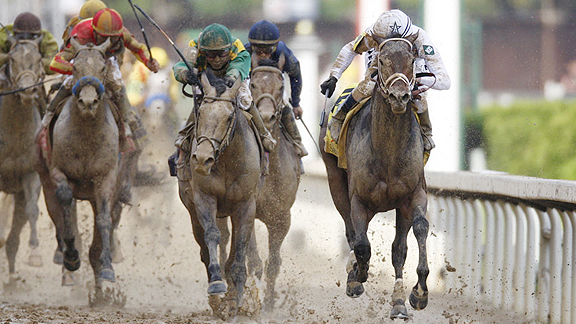


His father was a mudder. He loves the slop. Cosmo Kramer, Seinfeld


The future of the book industry got a little murkier this week. The Department of Justice, no less, thickened the soup with its announced intent to go after five of the “Big Six” publishers — plus Apple — on charges of collusion. The alleged nefariousness dates back to the wholesale versus agency controversy at Amazon.
Amazon was setting e-book prices lower than the big publishers desired. The pubs were afraid consumers would get used to lower prices, thus cutting into their margins. Also, there was major concern about undercutting a big cash cow for traditional publishing: hardcover frontlist titles. And, of course, they all worried about the future of brick-and-mortar stores as Amazon gobbled up more of the distribution pie. 

So Steve Jobs comes along (allegedly) with a plan to take major e-book business away from Amazon. With the iPad just getting fired up, Jobs (allegedly) went to the Big Six and proposed going into an e-book agency model agreement with them (Random House didn’t join the circle then, so is not part of the DOJ lawsuit). In return, the publishers would agree to keep their books off Amazon if it sold them at a lower price. In effect the five big publishers, as one, told Amazon You give us the agency model or you don’t get our books. 
The players, IOW, were jockeying for position with the future in mind. This is what big business does. It’s understandable and even desirable in a free market economy so long as the businesses are not running afoul of anti-trust laws.
Amazon, not happy with being forced into agency, decided to take on the publishing industry directly by mimicking it. So they went out and hired industry veteran Larry Kirshbaum to head up the effort. Amazon subsequently made some big name signings – Deepak Chopra and Barry Eisler, for example.
More jockeying.
And now comes a dark cloud dumping rain — the United States Gummint. The track is suddenly soaked and the mud is kicking up all over everybody.
Who is going to be the best mudder? Who is going to be left behind?
That remains to be seen. But right now it looks like agency pricing will be escorted off the track. If publishers are forced back into wholesale, Amazon will be sitting even prettier than it is now, prices will once again trend downward, and publishers’ margins will shrink. There will be renewed howls of “predatory pricing,” but the DOJ well knows that’s a much harder case to make. So Amazon goes back to selling at loss-leader prices which, in turn, will trickle down to brick-and-mortar stores where margins are razor thin anyway. More stores will probably close. Your local Barnes & Noble, for instance. There is a whole interlocking spiral here that is beyond the scope of this post.
My main interest is in what this all means for writers. For the last couple of years the self-publishing boom has been a net-gain for writers, especially those with a track record. And a backlist. But even new writers who haven’t been able to get inside the gates of the Forbidden City are seeing real money as independents.
But in gazing at the horizon in light of the DOJ’s action, some are saying that things don’t look so rosy. Here is what Mike Shatzkin, the Insightful One, has to say:
Over time, the biggest losers here will be the authors. The independent authors will feel the pain first. Agency pricing creates a zone of pricing they can occupy without much competition from branded merchandise. When the known authors are only available at $9.99 and up, the fledgling at $0.99-$2.99 looks very attractive and worth a try. Ending agency will have the “desired” effect of bringing all ebook prices down. As the big book prices are reduced, the ability of the unknowns to use price as a discovery tool will diminish as well. In the short run, it will be the independent authors who will pay the biggest price of all. But, in the long run, all authors will just get less. They will join the legion of suppliers beholden to a retailer whose mission is to deliver the lowest possible price to the consumer.

I am going to take issue with Mr. Shatzkin on his characterization of writers as the “biggest losers” in all this. Not so. This is simply another development in a long and ever changing contest. Writers who produce, consistently and well, will always have a shot at the rewards of a race well run. 
We didn’t create the Big Six or Amazon. But we will use them just like they use us. We will make strategic decisions, as they do. It’s called doing business,and writers are better positioned than ever to do it in creative ways.
So get on your horse, writer. Learn to ride in the mud. Don’t trust your fate to anybody else. You are responsible for your future, and you need to grab the reins and get into the thick of it.
For example, if you pursue a traditional contract, take a hand in negotiations. Learn what contract terms mean. Negotiate a way to produce non-competing works on your own dime. Don’t just blindly hand the reins of your very life and career to somebody else. Ever again.
Have courage. There is a lot of bumping going on in the turns. Don’t be timid. Bump back. Hang tough in the saddle. If somebody tries to hit you with his riding crop, take it from him.
While the overall effect may be greater challenges vis-à-vis “discoverability,” so what? Facing and overcoming obstacles has always been the lot of the writer. Nothing’s different now. You must produce quality, and a lot of it, for the rest of your life to have a writing career. You must add a long tail to your horse. If you do, you have a chance to cross the finish line and get pelted with flowers.
And why, as a writer, wouldn’t you do this anyway? We write. Even if some of the big publishers fall off their horses, we writers will still be in the race. Even if bookstore shelf space continues to dry up, we writers will still be coming at you.
Because we are creating stories, which is what people want and need in this crazy world. We are weaving dreams, getting under your skin, keeping you up at night, making you laugh and cry and maybe sometimes throw our books across the room. 
We are storytellers. 

And we are not going away no matter how hard it rains.
“Yawsuhh, I’ze gwine gogitzome skrimps teat.” I would never write this.

If you wrote the line in the heading, you would catch a lot of crap, even if it were accurate to a certain region. I heard that line and wrote it in a notebook, but there it has rested for a decade. Writing in dialect is probably one of the hardest calls in the dialog department. Not that you can’t do it, because you can, but it won’t work over a distance. I give the reader a taste of what it sounds like, but switch to readable non-phonic after. Sometimes I just tell the reader what the words sounded like so they get it without them having to struggle with misspelled words or those that are unfamiliar to the readers’ eye. So, I say that, it sounds like, Baawstin for Bosten, or Mizippi for Mississippi to another character. I do it once for a character. Or I may have a character purposefully mispronounce the word. i.e. “Baawstin,” Carl said, mockingly. But long runs of dialect are a no-no for me. If you write thoughts, do characters who speak in dialect, think in dialect?) I suppose they would have to.


Dialect is hard. Accents are hard, unless they are your own. Deep Southern drawl is mine because that is who I am, when I relax. I grew up in it. I know it. I have an ear for it. I also do a passable Cajun because I’ve spent a lot of time in the Louisiana lowlands, the waterways and swamps. I like writing accents I know and enjoy. Cadence. Pacing of spoken words. You can not fool people who know an accent, so you have to do it right. Immerse yourself in a region and soak up the nuances of the spoken word in that place. You have to have an ear.

Nothing about writing is easy if you do a good job at it.

How do you deal with dialects and regional accents? What’s your favorite to write, to listen to?


NEWS FLASH: There Are No Shortcuts to Success

By John Gilstrap

Everyone who does anything for a living owes it to himself to take advantage of learning opportunities.  Even after one has attained journeyman’s status, to rest on one’s laurels is to invite disaster.

Last week, I had the honor and pleasure of attending SleuthFest in Orlando, Florida.  I taught a class on pacing, and sat on three panels.  And I hung out at the bar, of course, because that’s where all business is conducted, irrespective of chosen discipline.  I met a lot of talented writers I’d never met—Heather Graham and Charlaine Harris among them—and hung out with old friends.  And, of course, there are our own Kathleen Pickering and Nancy Cohen, whom I finally met in person—Nancy in a meeting room, and Kathleen in the bar.  A lot in the bar.  I’m just sayin’ . . .

For me, the big learning moment—the a-ha moment—came during Charlaine’s luncheon keynote, and it reinforced something I’ve known and admired about Jeff Deaver for years (Jeff and Charlaine were guests of honor, along with Chris Grabenstein).  If I did my math correctly, the first book of Charlaine’s True Blood series—the one that launched her into the authorial stratosphere—was her twentieth book.  Give or take a couple of books, that was the same number of novels that Deaver had published before he became a household name with the Lincoln Rhyme series.  As Charlaine put it, she’d spent many years with $4,000 advances, pursuing what her husband had come to think of as a “well-subsidized hobby.”

I am currently pounding away at my tenth novel (fourteenth, if you count the ones that no one wanted).  I’m proud of them all, but the recent ones are so way better than the older ones.  And the ones that were never published?  Well, thank God they weren’t.

At SleuthFest, I learned (again) what I’ve long known to be the truth: writing is a business, and the only way to succeed—and success to me means hundreds of thousands of copies sold—is to keep writing and playing by the rules. Agents are more important than they’ve ever been, and brutal, professional editing is what makes the difference between passable and entertaining.

Even in these days of new media and instant gratification, the bottom line is the bottom line: There are no shortcuts to success.

All comments welcome . . .

The Kill Bell

Today TKZ is delighted to welcome guest blogger Brad Parks, whose latest release THE GIRL NEXT DOOR has been described as, “darkly humorous…a Sopranos-worthy ragout of high drama and low comedy,” by Publisher’s Weekly.

By Brad Parks

I hear it all the time, echoing in my head.It sounds like a ticking at first – high, soft and steady, like a baby bunny’s heartbeat. It’s there, but it’s not terribly insistent. At least not at first.

Then it starts getting louder. And more ominous. And harder to ignore. I begin feeling the reverberations in my chest.

Before long, it becomes absolutely incessant. And unrelenting. And undeniable. It’s down to my toes and in my ears and I can barely hear anything else.And then, brrrrrring! Off it goes:

The kill bell.

That malicious peeling noise that lets me know, as I’m drafting my latest book, that it’s time to drop a body.

That’s how it sounds to me, anyway. Maybe yours sounds different, but I’m guessing I’m not alone in having one. As a mystery/thriller writer, I know I have to kill, early and often. And since you’re on this blog – it is called The Kill Zone, for goodness sakes – you probably know it, too. Lord knows, no one here is writing cozies. I’m betting the Kill Zone authors alone traffic in more blood than your average Red Cross chapter.

But how much do we spill? And how do we know when the time is right?

That’s what the kill bell is for. I’ve come to value it, to know to listen for it, and even to anticipate it. It’s that little friend that tells me things have gotten a little too comfortable for the reader and I need to shake things up.

It’s not like it happens in predictable intervals – and thank goodness, since it would get a little too cookie-cutter if you whacked someone every 10,000 words. I can sometimes go 40,000 words without slashing so much as a single throat. Then I shoot someone and I think I’m okay for a while but, ding-a-ling, there’s the bell again. And, even if it’s a mere 2,000 words later, I’m puncturing someone’s temple with a nail gun.

I suspect every writer’s kill bell is set to a slightly different frequency, which is why we all write different books. The important thing is to respect it and, when you hear it ringing, to act. Even when it’s not clear how.

I’m thinking about one of the more recent times I heard my kill bell. I was in the midst of drafting my latest, the as-yet-unnamed Carter Ross No. 5 (No. 3, The Girl Next Door, is the one that hits next week). I was cruising along, roughly 70,000 words in, and I realized I hadn’t killed anyone since word 40,000. And that, suddenly, felt totally unacceptable.

So I gathered all my characters in a room – yes, I talk to my characters – and said, “Okay, which one of you am I going to kill?”

Naturally, they all started staring down at their feet, scuffing their shoes, shoving their hands in their pockets, that sort of thing. Can’t blame them. Who wants to die, even in spectacular literary fashion?

But at that point my kill bell was doing a full-on whoopwhoopwhoop. I knew someone had to go. So I started going through my characters one-by-one until I realized, wait a cotton-pickin’-frickin’ second, I couldn’t kill any of them! It was either someone integral to a later plot point; or people who were totally implausible to kill, because they weren’t a threat to anyone; or my protagonist, who I can’t kill (this is a series and my kids will need shoes next year, too); or my protagonist’s cat (the kill bell does not apply to animals – sorry, I just can’t deal with that much hate mail).

I was stuck. But the kill bell has to be heeded. So I went back and wrote a character into the plot at word 20,000 for the express purpose of killing her later. And it turned out be a good thing, because I actually went back and un-killed her – she had taken a double tap between the eyes, but no more! – and killed someone else instead (I burned him, if it matters). It ended up leading to a great plot twist at the end. And I had the kill bell to thank.

As I said, I know I’m not alone in this. So what about you? What tells you when to follow the impulse to kill? I look forward to a robust – if slightly disturbing – conversation on the topic…

Brad Parks is a winner of the Nero Award and the Shamus Award. His latest book, The Girl Next Door, releases from St. Martin’s Press/Minotaur Books on March 13. For more Brad, sign up for his newsletter http://www.bradparksbooks.com/newsletter.php, like him on Facebook http://www.facebook.com/pages/Brad-Parks-Books/137190195628, or follow @Brad_Parks on Twitter.

PayPal vs. Smashwords

By Joe Moore

In February, PayPal, the global e-commerce payment service notified Smashwords, one of the biggest indie publishers or electronic literature that they had one week to remove all books in their catalogue that dealt with themes of rape, incest, bestiality and underage sex. Failure to do so meant that PayPal would deactivate their services. The pressure to take this action appeared to have come from the credit card companies that partner with PayPal (owned by eBay). Smashwords has over 100k books available online. A quick search of Smashwords showed that there were about 1k titles tagged with the offensive subjects.

Smashwords has been able to negotiate an extension of the deadline in order to come to some compromise with PayPal and its credit card, bank, and credit union partners. In the meantime, as this situation goes on, it raises many questions starting with:

Should a business such as a credit card company be allowed to force its moral beliefs directly or indirectly upon another company?

Before everyone starts pointing out the lack of redeeming literary qualities of the specific books targeted, let’s just move to the bigger topics of censorship and free speech—and who in this example has the right to decide when and how to implement it. Does a middle-man payment company like PayPal have the right to decide what is obscene? If PayPal can tell booksellers what they can and cannot sell, aren’t they also telling readers what they can and cannot read?

What’s your reaction to PayPal’s mandate? Is this just the start of bigger things to come in the censorship arena?

Writing the final chapter on a recurring dream

Like many people, I have a few recurring dreams. Some of them–like the one where I discover I can fly–are good. Others are bad. One of the more unpleasant dreams has been driving me crazy for decades. In it I’m back in high school, and I suddenly realize that I’ve missed most of my classes for the entire semester. Panic ensues.


Now, it’s been a heck of a long time since I graduated safely from high school, college, and graduate school. You’d think my subconscious would have caught on by now. And indeed the dream has evolved over time. Now I wander the halls as an older adult, having for some reason decided to repeat high school (the horror!), and suddenly I realize that I’ve missed most of my classes. Panic ensues.


During this dream, I have never once entered a classroom. I am doomed to wander the halls with no exit. A couple of weeks ago, however, when I was in the middle of a writing challenge in my waking life, I had the dream again. This time, I finally found my English class. I slipped behind a desk, braving the mocking stares of students who knew I’d missed everything and didn’t have a chance. The assignment was to write a compelling 8-page paper.


I struggled to recall a story, quickly. It came in fits and starts. In the dream I gave the finished paper to the teacher. She looked up at me, smiled, and said, “You know, I think you’ve graduated from this level.” I felt…released. Validated, somehow.When I woke up, I realized that the story I’d written in the dream was the first chapter of my WIP.


I hope that that last little mutation of the dream means it won’t be back to annoy me. Maybe my subconscious has finally learned that life, indeed, moves on.
If it does come back, I hope at least I’ll be in college this time. That would be so much more interesting than high school.


Have you ever found yourself writing in your dreams? Did anything you  wrote while dreaming carry over into your waking hours?

Is There a Literary Glass Ceiling?

by Clare Langley-Hawthorne


VIDA, an American organization that supports women in literary arts, recently released ‘The Count‘ for 2011 providing a sobering (and somewhat depressing) look at the current state of rates of publication between women and men in some of the most prestigious literary review outlets (including the New York Times Book review, Times Literary Supplement and the New Yorker). The statistics on the gender split in book coverage is, though not surprising (in 2010 they were just as depressing!), an indication that we women still have a long way to go in terms of breaking the perceived literary glass ceiling.


Now, before I raise the hackles of every male reader of TKZ (and no doubt some of the female readers too!), I want to preface this blog post by stating that I do not believe there in overt bias in the literary world – what concerns me more is how we deal with what appears to be an ongoing systemic issue – one in which women continue to be underrepresented in terms of publication, review, awards and media coverage. 


My aim is to promote discussion not to whine, complain or moan (which sadly, seems to be the reaction to many women commentators when they raise the issue of gender in publishing!)


The statistics, however, speak for themselves…


For example, Vida’s ‘Count’ for 2011 reveals that at the London Review of Books last year 26% of authors reviewed were women, at the New York Review of Books that figure was 18% while at the New Yorker of the books mentioned in the ‘briefly noted’ section only 33% were authored by women.  When looking in terms of reviewers that are women the results are eerily similar – with 16%, 21% and 30% of female reviewers at the London Review of Books, New York Review of Books and Times Literary Supplement respectively.


When I started telling my husband about the figures he immediately leapt on the fact that, when considering the statistics in terms of reviews, you also need to look at the percentage of books authored by men and women. Fair enough. 


Now these statistics don’t seem all that easy to come by, though The Guardian newspaper recently contacted some of the UK’s largest publishing houses and found that for their 2011 non-fiction releases Penguin, Atlantic Books, Random House and Simon & Schuster reported 74%, 73%, 69% and 64% of their titles were (respectively) authored by males.(The article citing this can be found here) This genuinely surprised me – for I had no idea that there was such a gender imbalance in terms of publishing. 


These figures are, however, for non-fiction titles, and I wondered whether there were similar figures in terms of  fiction. An article by Ruth Franklin on the 2010 VIDA figures in The New Republic provided me with a little more insight. Franklin reviewed the Fall 2010 publisher catalogs and again, to my surprise, this revealed a similar pattern with most of the major houses hovering around 25-30% female authorship. Only Penguin’s Riverhead imprint came close to parity with 45% of its titles authored by women. When the Franklin investigated the smaller, independent presses she found their results fared just as poorly with the best performing publisher (Graywolf) having only 25% of titles by female authors.


All in all these statistics suggest we have a long way to go before we understand why women are underrepresented in publishing – especially given that the overwhelming percentage of readers are women.


So what do you think these statistics suggest (and please, no abusive comments…) and how do you think the balance can be redressed? Should it even be redressed?  In my view the first step is awareness and the second will be getting more men to read books authored by women(!) as well as more women involved in the upper eschelons of both publishing and reviewing. But will this really help? 


What are the numbers really saying about the perceived literary glass ceiling?

You Don’t Have to be a Star


You don’t have to be a star, baby, to be in my show. – Marilyn McCoo and Billy Davis, Jr.
A couple of years ago my lovely wife and I were in New York and went to see Blithe Spirit on Broadway. We had only one reason to go, the best in fact: Angela Lansbury. She’s always been a fave of ours, and the chance to see her onstage (in, it turned out, her Tony Award winning role) was too much to pass up.
Sweetening the pot was that the male lead was Rupert Everett in his Broadway debut. It would be two “names” in a revival of  a famous play.
When the curtain was about to go up an announcer told us that Mr. Everett would not be going on that night. His understudy would play the part. There were a few sighs of disappointment. Cindy and I comforted ourselves with the knowledge that the divine Angela, at least, was still a go.
And she was stupendous. The production was a hoot.
And that understudy for Everett? He was brilliant.
So good that I looked him up on IMDB after the show. His name is Mark Capri.
Now, I was an actor for a time on the boards of the Big Apple, and appreciate a fine theatrical turn. Especially from a guy who the audience was initially disappointed to see (he won them over, however, and got huge applause at the end). So I wrote Mr. Capri a note to thank him for his performance.


I bring this up for writers because it illustrates a point. Mark Capri no doubt went into acting, as all Thespians do, hoping to become a star. He did what actors are supposed to do. He got training (at no less than the Royal Academy of Dramatic Art in London). He was accepted into the Royal Shakespeare Company and began his theatrical apprenticeship.
Over the years he’s played many roles in theatre (in a serendipitous touch, he made his New York debut with the same theatre company where I made mine, The Roundabout) and guest roles on TV.
In other words, he is a professional in every sense of the term. And when he was needed for that performance in Blithe Spirit, he came through as a consummate pro should.
We are, as we all know, in the midst of the self-publishing revolution. More and more indie authors are making good money, not because they are “stars,” but because they are professionals. The ones who think just tossing up mediocre material into the digi-system is going to make them rich are fooling themselves. I posted a brief clip about this on YouTube.
The ones who will make it will follow the same path as Mark Capri. They will train, they will get some good direction, they will write, they will keep writing. A miniscule number of them may even gain “star status,” whatever that’s going to look like in the future.
But I suspect the era of the superstar writer is coming to an end. The era of the solid professional is upon us. Those who learn how to do it all well (and I’m doing my part to help) will increasingly be able to realize the dream of doing something they love and making a living at it.
They will find their audience and please them with good performances, just like the one Mr. Capri delivered that warm July evening on Broadway. 

Guy robs bank

Whoops. I fell asleep thinking about a topic for today’s post. That doesn’t sound promising, does it? So. It’s late and I’ll be brief. And appropriately, I’ll take about midnight inspiration.
Most of us keep an ink pen and paper on the nightstand next to a phone in order to write down a message for someone else or a reminder or a telephone number. It’s a holdover from a bygone, primitive age, but it’s still a handy one. And for writers, it’s a method by which we can preserve that random idea, that bit of dream world flotsam or jetsam, which we write down at 3:16 AM, when it seems so clear, so brilliant, so worthy of preserving, an transform it the next day into what will no doubt become the spring board for a franchise on the order of Spenser or Dave Robicheaux or Raylan Givens. The problem which occurs more often than not, however, is that upon awakening, one discovers that the phrase, hurriedly scrawled on that piece of paper, turns out to be something on the order of “guy robs bank.”
If dream ideas worked, I would be James Patterson or something like them. I have heard apocryphal tales of unnamed authors who transformed such hastily scribbled nocturnal notes into literary gold. I’m not sure if they are true. Michael Mann, the story goes, was wide awake in his office, seated at his desk, when he wrote down the phrase “MTV COPS” on a notepad. It was the beginning of Miami Vice. I’ve written down such gems as “nosebleed” and “empty rooms” and “she’s a rabbit.” When I turn one of those feathers into gold, you’ll hear about it here first.
So…have you ever written anything down into the dead of night that turned into a novel or story over the course of the following several weeks and months? If not, can and will you share some of the phrases that seemed like such a great idea in the dead of night, but could not withstand the light of day?

The Author’s Bucket List on Plot Structure


By Jordan Dane

I’ve never been a plotter. I’m too impatient. Once I get the general idea of a story with a compelling conflict and a notion of my cast of players, I can’t wait to “discover” the story as I write. It plays out in my head like a movie, but I’m constantly exploring new ways to get organized so my daily word count goals can be achieved without roadblocks.


Today on TKZ, I submit my latest thoughts on the 3-Act Structure and the Storyboard method of plotting. These are purely my thoughts on combining these concepts as they might apply to my writing, but maybe you’ll see elements you like in this for you.


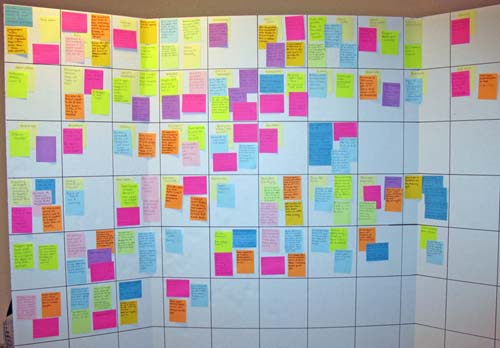
I used to think of the 3-Act Structure as beginning, middle, and end, but I’ve read it more accurately reflected as Establish, Build, & Resolve by Michael Hauge in his book “Writing Screenplays that Sell.” Thinking of these acts in this manner denotes movement. So imagine these three segments as buckets, but before I can toss wads of paper (or scenes) into these buckets, I must have a place to start. Set aside your buckets for now and grab a paper and pen—or Sticky Notes, colors optional.


Presuming I have a general notion of my book, I would create a list of 20-25 things I know about the action in my book in terms of what I call “big ticket” plot movements. No backstory. What will go on my list will be scenes that I envision as key elements to my story. They won’t be put into any order. I merely list them as they occur to me. I would brainstorm without censoring my thoughts. I heard an author talk about creating notes on 3-M sticky notes, rather than a random list, but you get the idea. I don’t expect to know every scene in my book at this stage. The storyboard I create will be an evolving beast that I will change as I write, edit, and final my book so I can see my plot at a glance.


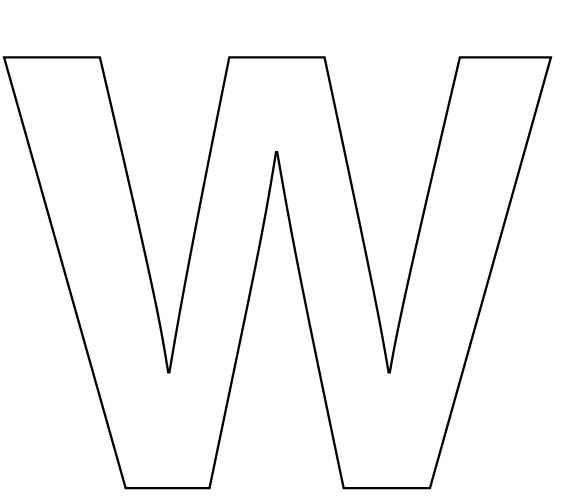
Now let’s talk about the 3-Act Structure in terms of a BIG “W.”


ACT I – Establish – The start of Act I (or the top left of my “W”) is the Triggering Event. It’s the inciting incident that will start my story, the point at which my main character’s life changes forever. As I travel down the left side of my “W,” I head for the 1st Turning Point that usually sets up the problem or the first low point or perhaps a moment of hope. This is a reversal point that changes the direction of my plot as I head out of Act 1. I’ve “Established” my world up to this point and the general conflicts and players in the first 25% of my book, in theory.


ACT II – Build – As my plot heads toward the upward middle of my “W,” that is another key reversal. If I have a book with hope in my first turning point, this shift might dash those hopes to some degree. If I have a dark moment in that first turning point, things get worse, but the plot takes another key turn one way or the other as the action “Builds.” Act II ends with the next turning point (the 2nd low point of my “W”). This is the black moment where all seems lost. This part of the “W” represents the middle part of the turning point structure or 50% of my story, the “building” middle.


ACT III – Resolve – Now I would be in Act III, the last upward line of the “W” after the black moment. I’m headed toward resolution. In this section, my hero or heroine might discover something about the villain in the story that is his or her weakness. He or she implements a plan to take advantage of this Achilles Heel, but I might consider throwing in another epiphany or twist before the end. This could be a twist or complication—an “Oh my, God” moment the reader might not see coming before the world is restored or the ending happens. This last part of the structure is the final 25%.


I’ve oversimplified these blended theories for the sake of this post. The lines of the “W” don’t have to be linear, for example. I could have little ups and downs along the way that will take me through my book, but I wanted you to have a general idea of how this could work.


Now get ready with your buckets. Each of these acts is a bucket, for the purposes of this explanation. So the list I created at the beginning—the 20-25 brainstormed scenes—each has a place in an Act Bucket. I would add to these 25 things as I get more familiar with my book, but if I were to Storyboard this out, I would create 20 squares that represent chapters in my books. (You might write differently, so make this work for you with your average number of chapters in a single-title book.) I would write my 25 items down with each one going on a 3-M Sticky Note and place them on my storyboard where I think they will go in Act I (25%), II (50%), or III (25%). Since each of these scene ideas is moveable, I can change the order and chapter they might appear to get the pace and building intensity up. Once I see things on my storyboard in a visual manner, I will no doubt want to add more Sticky Note scenes to fill out the detail and transitions in my story as the plot develops.


I generally have 4-5 scenes in a chapter. So as my story plot movement gets established and building toward a resolution, I perhaps can add colored notes to signify POV switches or character story arcs or relationship arcs to deepen my story understanding. I thought this process might fit my “pantser” approach to structure with a simple method that I can see visually as I write and evolve the story. Writing software seemed too complicated to learn with my writing schedule, but I’d love to hear of a simple brainstorming plot method or storyboard concept if you have one.


What works for you?