Smoke and Mirrors

By Joe Moore
@JoeMoore_writer

One of the most frequently asked questions Lynn Sholes and I get is “How is it possible for two people to write fiction together?” The answer is: it ain’t easy. At least it wasn’t at first. Collaboration on non-fiction is somewhat easier to understand. In general, with non-fiction, usually the “facts” already exist and the collaborators’ job is to organize them into a readable document that has a beginning, middle and end. A good outline and knowledge of the subject matter along with professional writing skills may be all the authors need.

But with fiction, nothing exists. It’s all smoke and mirrors. Fiction is a product of an individual’s imagination. It might be inspired by actual facts or events, but only the individual writer has a specific vision of those events in his or her head. So how can two people have a similar enough vision to be able to write a novel?

I can’t speak for the handful of other writing teams out there, but Lynn and I have managed to complete 7 novels together because of a number of reasons.

First, we love the same kind of books—the ones we read are like the ones we write.

Second, we have an unquestioning respect for each other’s writing skills and a deep belief that whatever one of us writes, the other can improve upon it.

Third, we believe that there’s always a better way to write something.

Fourth, we never let our egos get in the way of a good story. This comes from spending over 10 years together in a weekly writers’ critique group.

Fifth, we know each other’s strengths and weaknesses, and are willing to admit them.

Sixth, we agree on the same message in each book.

Seventh, we believe that we are on the same level of expertise.

And last, we believe that the whole is greater than the sum of the parts.

Those points cover the mental portion. Now, how do we handle the mechanics of the job? We talk, and talk and talk. Once a day we conference call, brainstorming and telling and retelling each other the story. Our two favorite words are: What if? Whether it’s global plot points or an individual scene or character motivation, we keep telling each other the story until that little imaginary movie in our minds becomes as in sync as possible. Then one of us will declare they have a “handle” on the scene or character or chapter, and create the first draft.

We write very slowly because each chapter must go back and forth many times for revision. Years ago, when we first started, everyone who read our drafts could tell who wrote what as we tried to write our first book. It took three years of hard work before we melted our voices together. Now, because the process goes through so many revisions, even I can’t always remember what I wrote and what Lynn wrote. I rely on my co-writer so much that I’ve come to wonder how individuals can possibly write a book on their own.

There are a number of advantages and disadvantages to collaborating. A disadvantage is that you split any money you make. So you’ll always make half of what you could as a single author. And like any relationship, there is always a chance of a falling out. And something could happen where an ego can become inflated and affect the process.

One of the pluses is that we never experience writer’s block. One of us will always have an idea on how to get out of a jam or move the story forward. And unlike our family, friends, trusted beta readers, and everyone else, a co-writer has an intimate, vested interest in the success of the story that no one else could have.

Lynn and I are working on our eighth book together. I’ve found that creating the first draft of a chapter is just as exciting as getting a new chapter from her and seeing where the story has gone from her perspective. I guess the whole thing boils down to trust. Trust in each other and in the goals we both want to achieve with the story and with our careers.

I truly believe that the old adage of two heads being better than one is true when it comes to writing our novels.

———————–
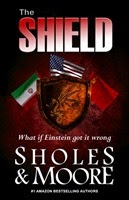
shield-cover-smallTHE SHIELD by Sholes & Moore is now available in print and e-book.

“THE SHIELD rocks on all cylinders.”
– James Rollins,New York Times bestselling author of THE EYE OF GOD.

Coming soon in audio.
Smoke and Mirrors

By Joe Moore
@JoeMoore_writer

One of the most frequently asked questions Lynn Sholes and I get is “How is it possible for two people to write fiction together?” The answer is: it ain’t easy. At least it wasn’t at first. Collaboration on non-fiction is somewhat easier to understand. In general, with non-fiction, usually the “facts” already exist and the collaborators’ job is to organize them into a readable document that has a beginning, middle and end. A good outline and knowledge of the subject matter along with professional writing skills may be all the authors need.

But with fiction, nothing exists. It’s all smoke and mirrors. Fiction is a product of an individual’s imagination. It might be inspired by actual facts or events, but only the individual writer has a specific vision of those events in his or her head. So how can two people have a similar enough vision to be able to write a novel?

I can’t speak for the handful of other writing teams out there, but Lynn and I have managed to complete 7 novels together because of a number of reasons.

First, we love the same kind of books—the ones we read are like the ones we write.

Second, we have an unquestioning respect for each other’s writing skills and a deep belief that whatever one of us writes, the other can improve upon it.

Third, we believe that there’s always a better way to write something.

Fourth, we never let our egos get in the way of a good story. This comes from spending over 10 years together in a weekly writers’ critique group.

Fifth, we know each other’s strengths and weaknesses, and are willing to admit them.

Sixth, we agree on the same message in each book.

Seventh, we believe that we are on the same level of expertise.

And last, we believe that the whole is greater than the sum of the parts.

Those points cover the mental portion. Now, how do we handle the mechanics of the job? We talk, and talk and talk. Once a day we conference call, brainstorming and telling and retelling each other the story. Our two favorite words are: What if? Whether it’s global plot points or an individual scene or character motivation, we keep telling each other the story until that little imaginary movie in our minds becomes as in sync as possible. Then one of us will declare they have a “handle” on the scene or character or chapter, and create the first draft.

We write very slowly because each chapter must go back and forth many times for revision. Years ago, when we first started, everyone who read our drafts could tell who wrote what as we tried to write our first book. It took three years of hard work before we melted our voices together. Now, because the process goes through so many revisions, even I can’t always remember what I wrote and what Lynn wrote. I rely on my co-writer so much that I’ve come to wonder how individuals can possibly write a book on their own.

There are a number of advantages and disadvantages to collaborating. A disadvantage is that you split any money you make. So you’ll always make half of what you could as a single author. And like any relationship, there is always a chance of a falling out. And something could happen where an ego can become inflated and affect the process.

One of the pluses is that we never experience writer’s block. One of us will always have an idea on how to get out of a jam or move the story forward. And unlike our family, friends, trusted beta readers, and everyone else, a co-writer has an intimate, vested interest in the success of the story that no one else could have.

Lynn and I are working on our eighth book together. I’ve found that creating the first draft of a chapter is just as exciting as getting a new chapter from her and seeing where the story has gone from her perspective. I guess the whole thing boils down to trust. Trust in each other and in the goals we both want to achieve with the story and with our careers.

I truly believe that the old adage of two heads being better than one is true when it comes to writing our novels.

———————–

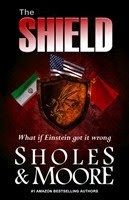
shield-cover-smallTHE SHIELD by Sholes & Moore is now available in print and e-book.

“THE SHIELD rocks on all cylinders.”
– James Rollins,New York Times bestselling author of THE EYE OF GOD.

Coming soon in audio.

A Retreat for Renewal

I’m on the road today, wending my way home from the Retreat by the Sea, a writer’s retreat organized by Writer’s Digest. It was a fabulous weekend. This particular retreat is special because you are given the opportunity to have your own work reviewed during intensive sessions that focus on preparing your manuscript for submission to industry professionals. Other sessions are jam-packed with information about craft and shaping a story.

Our instructors were the talented author and reviewer Hallie Ephron; Paula Munier, a Senior Literary Agent and Content Strategist at Talcott Notch Literary Services; and Phil Sexton, Publisher of Writer’s Digest.

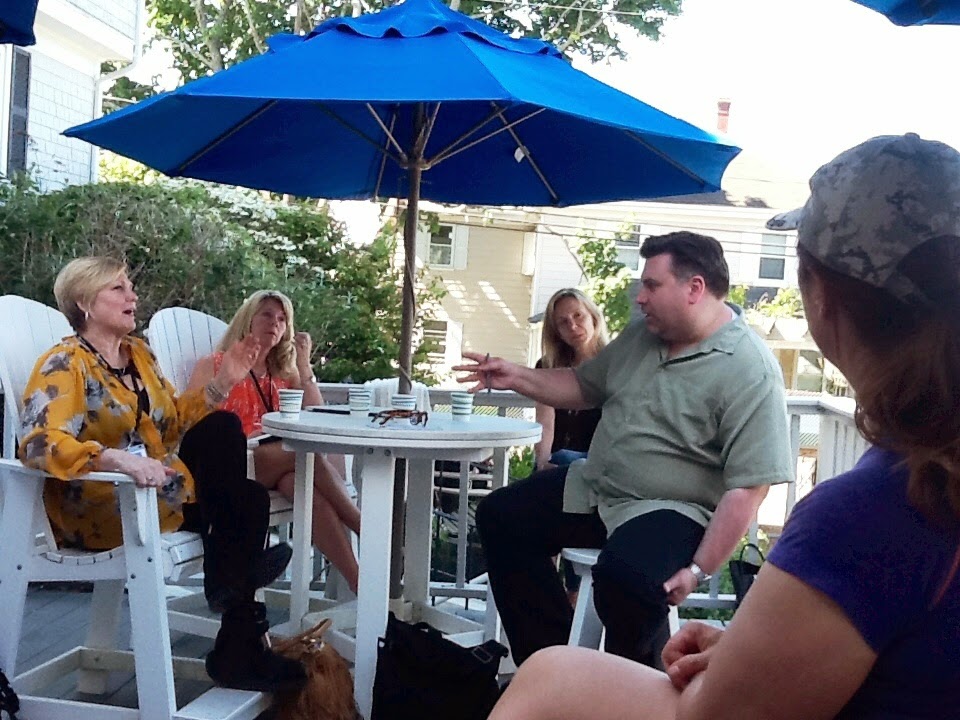
Discussion with agent Paula Munier

I had always been curious about what a writer’s retreat would be like, and this experience exceeded my expectations. In addition to the workshops and learning sessions, there was a wonderful bonhomie as the attendees got to know each other. I came away from the retreat feeling refreshed, renewed, and optimistic about the future of publishing. If you ever have a chance to go to a retreat (expecially this one!), I highly recommend that you seize the opportunity.

Have you been to a writer’s retreat before? How was the experience for you?

A Retreat for Renewal

I’m on the road today, wending my way home from the Retreat by the Sea, a writer’s retreat organized by Writer’s Digest. It was a fabulous weekend. This particular retreat is special because you are given the opportunity to have your own work reviewed during intensive sessions that focus on preparing your manuscript for submission to industry professionals. Other sessions are jam-packed with information about craft and shaping a story.

Our instructors were the talented author and reviewer Hallie Ephron; Paula Munier, a Senior Literary Agent and Content Strategist at Talcott Notch Literary Services; and Phil Sexton, Publisher of Writer’s Digest.

Discussion with agent Paula Munier

I had always been curious about what a writer’s retreat would be like, and this experience exceeded my expectations. In addition to the workshops and learning sessions, there was a wonderful bonhomie as the attendees got to know each other. I came away from the retreat feeling refreshed, renewed, and optimistic about the future of publishing. If you ever have a chance to go to a retreat (expecially this one!), I highly recommend that you seize the opportunity.

Have you been to a writer’s retreat before? How was the experience for you?

Secrecy? Privacy? How do authors protect themselves?

by Clare Langley-Hawthorne


After a recent situation in which a friend of mine found some of elements of her books reproduced without her permission, I started thinking about the issue of secrecy and privacy for authors. As far as I’m concerned, I follow some pretty straightforward guidelines and don’t tend to get too het up about ‘secrecy’ when it comes to my ideas or works in progress (then again, I haven’t had anyone nick any of my ideas either…) 

Basically, when it comes to my work, I don’t tend to publicize details of ideas or formative WIPs online or in social media – and least not until they are manuscripts out on submission or accepted for publication (or, if I was going the indie route, available as an e-book) and even then I tend to stick to just ‘blurb’ style summaries. I certainly don’t post or publicize online passage/extracts while I’m working on them (though I think that’s probably more out of embarrassment!).  I am, however, fine with chatting to my friends (both author and non-author) about what I’m working on – so I guess in my mind I have a dividing line between what I consider ‘private’ friends who know me on a personal level and ‘public’ friends who know me in my professional guise and who I may have met in person or only online via social media. 

My friend’s recent experience was a little unnerving, however, as it sounded very much like this ‘dividing line’ had become blurred – which also got me thinking about how in this Internet and social media era it is becoming increasingly hard to maintain privacy and secrecy (just look at JK Rowling and how her author pseudonym Robert Galbraith’s anonymity was undermined by a leak).

As a corollary to this, I started to think about just how hard it is to separate out the ‘private’ me and the ‘public’ me when it comes to social media. I also have rules regarding what I will and won’t post in this regard too – especially when my kids are involved (e.g. I don’t put photos up of them on Facebook). But it seems to me that the way the Internet is heading, even when you try to separate out these aspects of your life (personal vs. professional) on-line it can often be very hard to stop one bleeding into the other (just Google yourself and you’ll see what stuff ends up out on the Internet!).

So TKZers, how are you navigating the online and interpersonal landscape when it comes to your writing? Are you secretive about your work? Have you been burned by someone who used your ideas or took some of your fictional elements and incorporated them in their own work? Do you have your own guidelines for how you post things on social media or what you will/won’t say online? How do you keep the ‘private’ you and the ‘public’ you separate – or is this just an old-fashioned division which, in this day and age, is impossible to truly maintain (especially if you want to achieve a connection with your readers)?


Secrecy? Privacy? How do authors protect themselves?

by Clare Langley-Hawthorne


After a recent situation in which a friend of mine found some of elements of her books reproduced without her permission, I started thinking about the issue of secrecy and privacy for authors. As far as I’m concerned, I follow some pretty straightforward guidelines and don’t tend to get too het up about ‘secrecy’ when it comes to my ideas or works in progress (then again, I haven’t had anyone nick any of my ideas either…) 

Basically, when it comes to my work, I don’t tend to publicize details of ideas or formative WIPs online or in social media – and least not until they are manuscripts out on submission or accepted for publication (or, if I was going the indie route, available as an e-book) and even then I tend to stick to just ‘blurb’ style summaries. I certainly don’t post or publicize online passage/extracts while I’m working on them (though I think that’s probably more out of embarrassment!).  I am, however, fine with chatting to my friends (both author and non-author) about what I’m working on – so I guess in my mind I have a dividing line between what I consider ‘private’ friends who know me on a personal level and ‘public’ friends who know me in my professional guise and who I may have met in person or only online via social media. 

My friend’s recent experience was a little unnerving, however, as it sounded very much like this ‘dividing line’ had become blurred – which also got me thinking about how in this Internet and social media era it is becoming increasingly hard to maintain privacy and secrecy (just look at JK Rowling and how her author pseudonym Robert Galbraith’s anonymity was undermined by a leak).

As a corollary to this, I started to think about just how hard it is to separate out the ‘private’ me and the ‘public’ me when it comes to social media. I also have rules regarding what I will and won’t post in this regard too – especially when my kids are involved (e.g. I don’t put photos up of them on Facebook). But it seems to me that the way the Internet is heading, even when you try to separate out these aspects of your life (personal vs. professional) on-line it can often be very hard to stop one bleeding into the other (just Google yourself and you’ll see what stuff ends up out on the Internet!).

So TKZers, how are you navigating the online and interpersonal landscape when it comes to your writing? Are you secretive about your work? Have you been burned by someone who used your ideas or took some of your fictional elements and incorporated them in their own work? Do you have your own guidelines for how you post things on social media or what you will/won’t say online? How do you keep the ‘private’ you and the ‘public’ you separate – or is this just an old-fashioned division which, in this day and age, is impossible to truly maintain (especially if you want to achieve a connection with your readers)?


The Fastest Way to Improve Your Novel

@jamesscottbell

Over the years, after looking at countless manuscripts at writers’ conferences, I’ve come to the conclusion that there is one thing that can sink or elevate a manuscript right from the jump.
That thing is dialogue.
If it is flat, sodden, unremarkable and (worst of all) sounds the same when coming out of different characters, there’s a letdown. Readers may not analyze it that way, but will feel it subconsciously. The dialogue becomes one of those “speed bumps” that lessens reading pleasure.
You know who really notices? Agents and editors. To save time, most of them will turn immediately to the first chapter of a proposal, to see if the writer can write. Dialogue is one way they can tell.
If your dialogue is crisp, filled with tension, and unique to the characters, the industry pro immediately gains confidence in your ability as a writer.
Which kind of makes dialogue important, don’t you think?
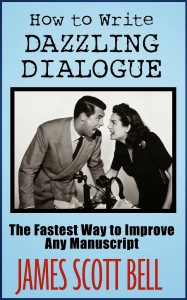
And that’s why I’ve written this book:
It is available as an ebook for $2.99 at:
For those of you who like writing books in print (so you can highlight physical pages) I’m working on that version now.
In this book I’ve tried to pull together everything I’ve learned and taught about writing dialogue. The nice thing is that the techniques do not have to be housed in the blubber of irrelevant text, war stories, rants, and veiled self-promotion. I’ve always preferred reading––and teaching––nuts and bolts, techniques that can be easily understood and immediately put to work.
We start out with a definition of dialogue. I like what the noted playwright and screenwriter John Howard Lawson said: “Dialogue is a compression and extension of action.”
Knowing just that much will go a long way toward making sure you don’t write irrelevant talk.
The book covers the essentials of dialogue, like tension and story weaving. There are abundant tools you can utilize right away, like the voice journal and the parent/adult/child method for instant conflict.
And something I haven’t seen anywhere else. I’ve put in a section on all the punctuation rules for dialogue in fiction. This can be used as a simple reference guide when you’re unsure how to render dialogue in your manuscript. Like, does the punctuation always go inside the quote mark? (Yes). Is there always punctuation? (Yes). What about semi-colons in dialogue? (Maybe you can guess what I have to say about that!)
And I’ve included some great examples from novels and film. Like this nugget from Charles Webb’s novel The Graduate (basis for the classic Dustin Hoffman movie). Here young Benjamin Braddock is at the hotel desk, getting a room to begin his affair with Mrs. Robinson. He is quite sure that everyone in the hotel will find out what he’s up to. Notice how much inner tension is rendered by the dialogue alone.
“Yes sir?” the clerk said.
“A room. I’d like a room, please.”
“A single room or a double room,” the clerk said.
“A single,” Benjamin said. “Just for myself, please.”
The clerk pushed the large book across the counter at him. “Will you sign the register, please?” There was a pen on the counter beside the book. Benjamin picked it up and quickly wrote down his name. Then he stopped and continued to stare at the name he had written as the clerk slowly pulled the register back to his side.
“Is anything wrong, sir?”
“What? No. Nothing.”
“Very good, sir,” the clerk said. “We have a single room on the fifth floor. Twelve dollars. Would that be suitable?”
“Yes,” Benjamin said, nodding. “That would be suitable.” He reached for his wallet.
“You can pay when you check out, sir.”
“Oh,” Benjamin said. “Right. Excuse me.”
The clerk’s hand went under the counter and brought up a key. “Do you have any luggage?” he said.
“What?”
“Do you have any luggage?”
“Luggage?” Benjamin said. “Yes. Yes I do.”
“Where is it?”
“What?”
“Where is your luggage?”
“Well it’s in the car,” Benjamin said. He pointed across the lobby. “It’s out there in the car.”
“Very good, sir,” the clerk said. He held the key up in the air and looked around the lobby. “I’ll have a porter bring it in.”
“Oh no,” Benjamin said.
“Sir?”
“I mean I—I’d rather not go to the trouble of bringing it all in. I just have a toothbrush. I can get it myself. If that’s all right.”
“Of course.”
Benjamin reached for the key.
“I’ll have a porter show you the room.”
“Oh,” Benjamin said, withdrawing his hand. “Well actually I’d just as soon find it myself. I just have the toothbrush to carry up and I think I can handle it myself.”
“Whatever you say, sir.”
To which I can only say, “Go thou and do likewise.” And I hope my book will help you along the way.
Speaking of dialogue in your own fiction, what do you have to say? Who writes some of your favorite dialogue?

The Fastest Way to Improve Your Novel

Over the years, after looking at countless manuscripts at writers’ conferences, I’ve come to the conclusion that there is one thing that can sink or elevate a manuscript right from the jump.
That thing is dialogue.
If it is flat, sodden, unremarkable and (worst of all) sounds the same when coming out of different characters, there’s a letdown. Readers may not analyze it that way, but will feel it subconsciously. The dialogue becomes one of those “speed bumps” that lessens reading pleasure.
You know who really notices? Agents and editors. To save time, most of them will turn immediately to the first chapter of a proposal, to see if the writer can write. Dialogue is one way they can tell.
If your dialogue is crisp, filled with tension, and unique to the characters, the industry pro immediately gains confidence in your ability as a writer.
Which kind of makes dialogue important, don’t you think?
And that’s why I’ve written this book:
Dazzing Dialogue-cover_digital
It is available as an ebook at:
In this book I’ve tried to pull together everything I’ve learned and taught about writing dialogue. The nice thing is that the techniques do not have to be housed in the blubber of irrelevant text, war stories, rants, and veiled self-promotion. I’ve always preferred reading––and teaching––nuts and bolts, techniques that can be easily understood and immediately put to work.
We start out with a definition of dialogue. I like what the noted playwright and screenwriter John Howard Lawson said: “Dialogue is a compression and extension of action.”
Knowing just that much will go a long way toward making sure you don’t write irrelevant talk.
The book covers the essentials of dialogue, like tension and story weaving. There are abundant tools you can utilize right away, like the voice journal and the parent/adult/child method for instant conflict.
And something I haven’t seen anywhere else. I’ve put in a section on all the punctuation rules for dialogue in fiction. This can be used as a simple reference guide when you’re unsure how to render dialogue in your manuscript. Like, does the punctuation always go inside the quote mark? (Yes). Is there always punctuation? (Yes). What about semi-colons in dialogue? (Maybe you can guess what I have to say about that!)
And I’ve included some great examples from novels and film. Like this nugget from Charles Webb’s novel The Graduate (basis for the classic Dustin Hoffman movie). Here young Benjamin Braddock is at the hotel desk, getting a room to begin his affair with Mrs. Robinson. He is quite sure that everyone in the hotel will find out what he’s up to. Notice how much inner tension is rendered by the dialogue alone.
“Yes sir?” the clerk said.
“A room. I’d like a room, please.”
“A single room or a double room,” the clerk said.
“A single,” Benjamin said. “Just for myself, please.”
The clerk pushed the large book across the counter at him. “Will you sign the register, please?” There was a pen on the counter beside the book. Benjamin picked it up and quickly wrote down his name. Then he stopped and continued to stare at the name he had written as the clerk slowly pulled the register back to his side.
“Is anything wrong, sir?”
“What? No. Nothing.”
“Very good, sir,” the clerk said. “We have a single room on the fifth floor. Twelve dollars. Would that be suitable?”
“Yes,” Benjamin said, nodding. “That would be suitable.” He reached for his wallet.
“You can pay when you check out, sir.”
“Oh,” Benjamin said. “Right. Excuse me.”
The clerk’s hand went under the counter and brought up a key. “Do you have any luggage?” he said.
“What?”
“Do you have any luggage?”
“Luggage?” Benjamin said. “Yes. Yes I do.”
“Where is it?”
“What?”
“Where is your luggage?”
“Well it’s in the car,” Benjamin said. He pointed across the lobby. “It’s out there in the car.”
“Very good, sir,” the clerk said. He held the key up in the air and looked around the lobby. “I’ll have a porter bring it in.”
“Oh no,” Benjamin said.
“Sir?”
“I mean I—I’d rather not go to the trouble of bringing it all in. I just have a toothbrush. I can get it myself. If that’s all right.”
“Of course.”
Benjamin reached for the key.
“I’ll have a porter show you the room.”
“Oh,” Benjamin said, withdrawing his hand. “Well actually I’d just as soon find it myself. I just have the toothbrush to carry up and I think I can handle it myself.”
“Whatever you say, sir.”
To which I can only say, “Go thou and do likewise.” And I hope my book will help you along the way.
Speaking of dialogue in your own fiction, what do you have to say? Who writes some of your favorite dialogue?

We Interrupt Our Regularly Scheduled Program…


I used to really enjoy Larry King’s column. It consisted of a number of comments of a sentence or two that were either 1) informative or 2) opinionated. One could read it quickly, and best of all, one did not have to look at or listen to Larry while doing it. Yay!

So what does that have to do with anything? I’m glad you asked: the dreaded deadline doom is approaching and I’m functioning (if that’s the word) on a few hours of sleep and really don’t feel competent to devote three or four paragraphs to a single topic. I accordingly am going emulate Mr. King and provide a sentence or two about a number of topics, primarily related to books and the musical and visual arts but also to some other things as well. We’ll be back to normal in two weeks. Maybe. Here goes:


Joseph Finder, after a layoff of a couple of years, is back with SUSPICION, which may be his best book yet…with all of the bombast about the Hachette vs. Amazon disagreement, has anyone considered that there are no good guys or bad guys here? They are just a couple of entities which are unable to come to terms at the moment but will do so eventually…I am loving every minute of 24: Live Another Day…I AM PILGRIM by Terry Hayes reads like a true account of a near-miss terrorist act. I was up all night reading it…Find a way to be the first on your block to hear “Thirteen Sad Farewells” by Stu Larsen before everyone else does. Great video, too…How will the second season of True Detective ever surpass, let alone equal, its first? I still watch all eight episodes once a week at least…Is it just me, or has this year been a particularly strong one for the mystery and thriller genres? Established authors are stepping up and writing the novels of their careers while every week brings a new and worthy debut. It has always been difficult to keep up but it seems to be well-nigh impossible now…

You know that the Skinny Cow brand of ice cream sundries and candies have officially arrived when you see that they now have their own fleet of trucks. Eating a box of the candy bars kind of defeats the purpose of having a diet chocolate treat but they are hard to resist…Health tip: add ONE drop of  Yucateco Chili Habanero Hot Sauce (the green one) to your food at each meal and mix it well. It will ward of colds and flu…

Sunbathing Animal, the new album by Parquet Courts, is a punk classic, a pre-dystopian soundtrack of what the night before the Apocalypse will feel like…following the success of Afterlife with Archie, Archie Comics publisher is planning a similar adult-themed rebooting of Sabrina the Teenage Witch…and, best for last…Kill Zone alumnus John Ramsey Miller is a step or three closer to the recognition he so greatly deserves as a television series based around his character Winter Massey approaches reality. Go, John, go!

We Interrupt Our Regularly Scheduled Program…


I used to really enjoy Larry King’s column. It consisted of a number of comments of a sentence or two that were either 1) informative or 2) opinionated. One could read it quickly, and best of all, one did not have to look at or listen to Larry while doing it. Yay!

So what does that have to do with anything? I’m glad you asked: the dreaded deadline doom is approaching and I’m functioning (if that’s the word) on a few hours of sleep and really don’t feel competent to devote three or four paragraphs to a single topic. I accordingly am going emulate Mr. King and provide a sentence or two about a number of topics, primarily related to books and the musical and visual arts but also to some other things as well. We’ll be back to normal in two weeks. Maybe. Here goes:


Joseph Finder, after a layoff of a couple of years, is back with SUSPICION, which may be his best book yet…with all of the bombast about the Hachette vs. Amazon disagreement, has anyone considered that there are no good guys or bad guys here? They are just a couple of entities which are unable to come to terms at the moment but will do so eventually…I am loving every minute of 24: Live Another Day…I AM PILGRIM by Terry Hayes reads like a true account of a near-miss terrorist act. I was up all night reading it…Find a way to be the first on your block to hear “Thirteen Sad Farewells” by Stu Larsen before everyone else does. Great video, too…How will the second season of True Detective ever surpass, let alone equal, its first? I still watch all eight episodes once a week at least…Is it just me, or has this year been a particularly strong one for the mystery and thriller genres? Established authors are stepping up and writing the novels of their careers while every week brings a new and worthy debut. It has always been difficult to keep up but it seems to be well-nigh impossible now…

You know that the Skinny Cow brand of ice cream sundries and candies have officially arrived when you see that they now have their own fleet of trucks. Eating a box of the candy bars kind of defeats the purpose of having a diet chocolate treat but they are hard to resist…Health tip: add ONE drop of  Yucateco Chili Habanero Hot Sauce (the green one) to your food at each meal and mix it well. It will ward of colds and flu…

Sunbathing Animal, the new album by Parquet Courts, is a punk classic, a pre-dystopian soundtrack of what the night before the Apocalypse will feel like…following the success of Afterlife with Archie, Archie Comics publisher is planning a similar adult-themed rebooting of Sabrina the Teenage Witch…and, best for last…Kill Zone alumnus John Ramsey Miller is a step or three closer to the recognition he so greatly deserves as a television series based around his character Winter Massey approaches reality. Go, John, go!