Morality and the Modern Writer

Happy New Year!

I’m going to dive right into 2019 by raising the tricky and controversial topic of what I’m calling ‘morality and the modern writer’. I’d been mulling over aspects of this issue ever since the MWA controversy over Linda Fairstein, when yesterday (quite serendipitously) the NYT published an article entitled ‘Must Writers be Moral?’. This article got me thinking (again) about how we deal with, and differentiate between, the actions and ‘morality’ of an artist as opposed to their work. In the Fairstein controversy, the MWA withdrew her Grand Master award following an outcry over her involvement in the infamous Central Park Five case. While I don’t intend to discuss this particular case in any detail, it highlights the very public way we are now seeing the line between art and artist play out in society today.

The NYT article (a link to which is provided here) adds a further dimension to the discussion by highlighting the increasingly widespread use of ‘morality’ clauses in publishing agreements today (something, I must admit, I was completely unaware of!). The article details the use of clauses that release publishers from their obligation to publish a book if (in the words of a Penguin Random House contract) “past or future conduct of the author inconsistent with the author’s reputation at the time this agreement is executed comes to light and results in sustained, widespread public condemnation of the author that materially diminishes the sales potential of the work.” Some contracts go even further, requiring authors to return advances should their contract be terminated. As this article outlines, even though publishers’ concern over the marketability of their authors is understandable, the issue of ‘immorality’ can be a slippery concept (especially if the publisher has sole discretion over determining an alleged infringement) and, when it comes to public condemnation, often a moving target. Some prominent writers, such as Masha Gessen, have refused to sign these clauses arguing that there is too much ambiguity involved in these kinds of ‘morality’ clauses, not to mention concerns over censorship as well as public vitriol.

In 2018 there were some very public book cancellations (most notably Milo Yiannopoulos) and scandals involving authors such as Junot Diaz that reflect the post #MeToo era. While I don’t want to engage in a heated discussion about these particular controversies, I am trying to get my head around the distinction (especially when it comes to ‘morality’) between the artist/writer and their work. Any student of literature knows that many famous writers were hardly angels – instead history is strewn with womanizers, drunks, addicts, racists, anti-semites, misogynists..and the list goes on. So how do we separate the person from his or her work? Should we judge an artist solely on their works or is the work inextricably linked to them as people (and thus, their behavior and attitudes)? In the current publishing environment it seems that writers are being held up to scrutiny in both their professional as well as their private lives.

So TKZers, what do you think about these so-called ‘morality’ clauses in publishing contracts? How do you view the distinction between a ‘writer’ and his or her ‘work’? Is such a distinction even relevant in today’s social media age?



Are You a Rereader?

Today’s post is inspired by last week’s NYT ‘By the Book’ column in which Michelle Obama was asked “are you a rereader? What books do you return to again and again?” – two questions which prompted me to think long and hard about my own habits when it comes to rereading. Growing up my father reread his faded paperback copy of ‘The Lord of the Rings’ every year – it was almost a rite of passage and when we saw the book appear once more on the coffee table it signaled something both familiar and comforting. Growing up, I was also a great rereader – all my Enid Blyton books are well-worn and dog-eared from countless reads and rereading my Chalet School collection (an obsession of mine well into my twenties as I sought to find all sixty books in the series) was an annual event (which reminds me, I need to reread them all again – it’s been too many years!).

As an adult, however, I find (like Michelle Obama) that with limited time I prefer to read new books – though there are a few books which I’ve read more than once (or even twice). My Jane Austen collection certainly gets reread (especially after visits to Austenish places like Bath) and I have to admit Charlotte Bronte’s Jane Eyre and Emily Bronte’s Wuthering Heights have had a few goes over. I also have (perhaps a bit embarrassingly) reread my Georgette Heyer collection more times than I care to remember. Going back to these books is like settling into a comfy chair with a box of chocolates – a relaxing indulgence (maybe…) but perhaps also a version of hygge:)

Rereading provides a host of different pleasures to the initial read – there’s familiarity as well as enjoyment, there’s a different kind of anticipation as the book progresses, and a different level of satisfaction when the book is finished. When I think about the books I reread, however, I notice that they really only represent a small part of my overall reading taste. If I’m honest they probably represent the more romanticized and escapist portion:)

So TKZers, are you rereaders? If so, what books do you turn to again and again? What do you think distinguishes a book that you want to reread from one which, while you certainly enjoyed it, you feel no need to pick up and read again?

The Value of Libraries

“A library outranks any other one thing a community can do to benefit its people. It is a never failing spring in the desert” – Andrew Carnegie

My local library is a hive of activity with a bustling cafe attached, a used book sale area, and a busy downstairs where almost every table is occupied by 10am with people working on laptops, reading newspapers, or logging on to the free wifi on the row of public computers available. Upstairs, there is wonderful children’s section with story time and other parent-children activities, and meeting rooms that hold an array of community events and speakers. I remain thankful that my local community and government values a library such as ours because in many other places, the very existence of community libraries is under threat. In the UK for example, nearly 500 libraries have closed since 2010 and many libraries are now being run by volunteers due to budgetary costs and restrictions. The results of this are heartbreaking, especially since, by many accounts library use is actually on the increase (see The Guardian’s report on library closures here).

After seeing posts on Twitter about the rise in volunteer-run libraries in England, I began to think more carefully about what libraries mean to me and my community. They are more than just a place to borrow books or DVDs or CDs – for some it’s a safe, warm, place to read or study, for others it may be a way to find social connection in their lives, and for some people it might be their only way of accessing the internet (which could be crucial in terms of a job search or education). The more I thought about libraries, the more I realized how lucky I was to have such a fantastic one in my community.

Growing up in Australia, our local library was really my only source of research (yes, this was in the dark ages before the internet) and it was a family outing to go there to borrow books or to get material needed for dreaded homework assignments. Now, although I can access much of my book research online, I still find myself drawn to my local library – and I’m frequently seen laden down with books as I struggle back to my car. Our library recently updated their online ebook lending system (the app is called Libby) which makes it easy to borrow ebooks and download them to my Kindle. So for me the library has immediate, work related value, in that it enables me to undertake research without completely draining my bank account:) For my twin boys, the library is still their ‘go to’ place for books and they have discovered many new series and authors simply by making a decision to try something new (no risk as no money was expended!).  For many others, the library provides intangible benefits too – offering a means of attaining social mobility, self-improvement and providing opportunities to reach beyond the limitations of social or economic class.

Still, I wonder in this day and age whether people still value libraries the way I do – so I was heartened to read the American Library Association’s annual report (which you can view here) that indicates that American libraries are still receiving the funding and attention they deserve (though that’s not to say there aren’t still challenges or threats to that!).

So TKZers, I’d love to know what libraries mean to you. Do you still visit your local community library on a regular basis? What do you think is the value of a library today?


First Page Critique: Titan’s Fall

Happy Monday! Today’s first page critique is entitled Titan’s Fall. My comments to follow. Enjoy!

Title:  Titan’s Fall

Steel gears grind overhead along thin aluminum girders. A red glow illuminated the gray cinder block wall to my right. The weighted anodized-pistol warms my palms. As I wait for the targets to line up, two questions rotate on heavy cycle: Why did my brother have to die? And, will Ms. Reddington remember I prefer chocolate cake over spice this year?

The panel next to the speaker box embedded into the wall beeps and ten cardboard birds drop down from the ceiling. According to my father, the gaming system is the latest in target technology. I wouldn’t know. My siblings and are allowed to leave the compound. The birds’ tails flash red, blue, and green. It doesn’t matter how quick they move or in which direction, blue is always first. I adjust my stance and squeeze the trigger. One by one, the targets return to the rafters.

GAME OVER.

“Kade Maddox,” Mother’s voice shrills from the intercom. “Upstairs! Now!”

My eyes flick to the red START button. Two-tenths of a second and I’ll have beaten the high score. Perhaps I can squeeze one more–

“Double-time, mister. Your father and I have to leave.”

But you just got here?

My dress shoes squeal along the glossy anti-static tiles as I sprint across the open atrium to the staircase. Spotless glass gleams all around me. Like the gaming system, the three-story, fully-staffed house in the heart of the Appalachian Mountains is supposedly hi-tech. Again, I wouldn’t know. My brother’s unexpected death changed a lot of rules.

“You promised this time would be different, August,” Mother barks. I press my back against the wall and lean closer to the door. The smell of Ms. Reddington’s overly-peppered roast beef mixes with chlorinated-air of the basement.

Father sighs. “He has been here two years longer than–”

“Don’t say his name.”

Comments:

Overall, I really enjoyed this first page. The first paragraph in particular combined just the right amount of description, intrigue and character. I thought the character’s voice was already compelling and that the humor as well as the anger and grief came through effectively, particularly in the first few paragraphs. I liked how the mystery of the brother’s death is introduced – although it did get a little confusing as we don’t really know why his death changed a lot of rules or who Kade’s mother and father are talking about in the final paragraph (I assume his brother?).

At times it was also difficult to picture the whole setting – for instance why would the air of the basement still be mixing with the kitchen aromas after Kade has gone up the stairs and through an atrium and (possibly) up another staircase? I was thrown by the reference to ‘dress shoes’ as I wasn’t sure why Kade would be wearing them to target practice. I am also assuming it is a typo in the paragraph beginning ‘the panel’ that Kade and his siblings are  allowed to leave the compound (I’m assuming it should be that they aren’t). As we always emphasize, authors should be vigilant for these kind of typos as they do have a nasty way of sneaking in and staying in!

Overall, my main recommendation would just be to add a tiny bit more in terms of background so the reader isn’t confused by some of the off-hand references to the compound or ‘supposedly’ high tech features. Just a sentence or two might help ground the reader. Are we talking a dystopian society here? What ‘rules’ were there before Kade’s brother’s death? If they could leave the compound before, what was the outside world like? What level of tech is there? and where are Kade’s mother and father going (especially since they just got here according to Kade)?

However, these are all relatively easy fixes that help ground the reader in the novel, and overall I thought this was a very promising start to a novel. TKZers, what advice would you give our brave contributor?

Compulsive Readability

A few weeks ago I purchased the latest Tana French novel, The Witch Elm, even though my TBR pile is almost to the ceiling. The reason? I buy every novel of hers as soon as it comes out. Why? Because of what I call ‘compulsive readability’ – closely aligned to the ‘trustability’ that Jim blogged about yesterday – meaning I automatically, faithfully, buy every book of hers that’s published. There aren’t many authors I’ll do that with – even J.K. Rowling missed the mark with me. I adored all the HP books and pre-ordered each installment, but then came her foray into adult books. I was uninterested in purchasing The Casual Vacancy and then with the Cormoran Strike mysteries, while I liked them, I didn’t love them (which means I got them out from the library but didn’t purchase them). In this instance, an adored author, didn’t necessarily become the compulsively readable one across all genres.

So what makes an author compulsively readable? What makes a reader buy every single book no matter the blurb or description? I think this aligns with what Jim was speaking about yesterday when it comes to ‘trustability’. I trust Tana French’s books implicitly and because of that level of trust, I won’t hesitate when it comes to buying her books. This, in essence, is what we are writers all strive for – to develop that degree of trust amongst our readers (this is what publishers are clearly looking for too!).

So what makes Tana French so ‘trustable’ to me? I thought I’d try and break down the reasons, as it helps highlight the key factors all of us should keep in mind as we build our writing careers.

First, and foremost, all her books are written to a consistently high standard – and by that I mean every single on of them is well-written, well-conceived, and (even when there may be plot holes) beautifully crafted. As a reader I have no hesitation ordering her books because I know I’m not going to be disappointed, even when they don’t appear to directly fit with the series she’s written to date (which is the case with The Witch Elm). Her writing is what has always stood out for me, not the premise of her books or the plots she spins, and this for me is critical. She never loses focus on what matters the most – the beauty of the words on the page.

Secondly, she consistently builds and maintains a world that I want to enter. Her Dublin murder squad series comprises different narrators/voices/characters but the world remains the same – which creates both an expectation and an anticipation in her readers. Whenever a new book comes out, I can’t wait to see what new spin or perspective she brings to this world (and the way she treats overlapping characters is cleverly executed – further enhancing the world).

Finally, her books never feel rushed. She doesn’t just pop out a book as if it’s merchandise. I’ve never got the feeling that she produces to a schedule (even though she almost certainly has to!) – so I don’t ever get the sense of being cheated that, now she’s successful, she’s resting on her laurels or producing ‘more’ at the expense of ‘quality’.

All these elements are worth bearing in mind as we, as writers, continue to try and establish or maintain our own careers. The difficulty is that there’s also an ineffable element – one I can’t pin down – that probably attracts me to these books over and above another (equally talented) author’s work. Nonetheless, what makes an author compulsively readable  is worth analyzing. Af all, if it was easy, we’d all be best sellers:)

So TKZers, who is your ‘compulsively readable’ go-to author? Which author are you committed to buying and why? What factors do you think go into ‘trustability’ as well as ‘compulsive readability’?


Reader versus Story

Yesterday Philip Pullman (author of His Dark Materials series) tweeted an observation that, when a ‘children’s book goes wrong, it’s often because the author is thinking of the readers and not the story. That might be true of other books too.’ While I would agree this can happen, I would also argue that sometimes a book ‘goes wrong’ when the author fails to pay sufficient attention to his or her readers – particularly in genre fiction. I’m talking about reader expectations. Stories can run aground (particularly during the publishing process) when authors fail to consider (or live up to) reader expectations.

When we critique first pages here, we often (consciously or not) consider the conventions of the genre we are considering. A couple of weeks ago we critiqued the first page of a fantasy novel that was a prologue – a device that is both familiar and welcome in the fantasy genre but which, in many other genres like mystery and thrillers, is less enthusiastically embraced. Mysteries and thrillers have a number of so-called conventions which are really more about reader expectations than story structure. Similar conventions abound in other genre fiction like fantasy and romance. When I wrote my first novel, I didn’t consider genre or reader expectations (except my own) but once the book was sold as a mystery, I needed to make revisions to make sure that it conformed to what readers would expect from the start of a historical mystery series with a female amateur detective. Now, I’m more likely to subconsciously take into account reader expectations while I’m writing an initial draft – but that doesn’t mean I artificially try to change the story to suit what I think some hypothetical reader will want. Nonetheless, reader expectations still play an important role in the revision process.

Failure to live up to reader expectations could be the reason a novel doesn’t get published or doesn’t sell as well as it could once released. Similarly, especially in the children/MG/YA space, even though a writer should never underestimate their readership (after all, nobody wants to read a book that talks down to them), failure to take into account the age of the target audience can make a book hard to position in the marketplace.

I think Philip Pullman was probably trying to highlight circumstances in which a writer focuses too much on what they think a reader will want from the story, rather than letting the story unfold. I have heard of some cozy mystery writers who have tried to tailor their stories to what they think publishers (and, by default, readers) want, in an effort to make their story more marketable/publisher friendly. This rarely succeeds unless the writer is authentic in their story choices – you can’t manufacture a story to suit what you think are the publishing trends or reader likes/dislikes.

So TKZers what do you think of Philip Pullman’s assessment? How often do you think stories ‘go wrong’ because writers are thinking of readers rather than the story?

My Crossword Obsession

Happy Labor Day!

In honor of our official workers’ holiday, I thought I’d share/confess my favorite form of relaxation/obsession – my daily crossword fix. It began as a hobby over a decade ago (I was never a huge puzzle fan as a child or teenager) and has now morphed into a bit of an obsession…one primarily focused on the NYT crossword, but which has spread so that I can no longer resist the temptation to try each and every crossword I come across – whether it be in an airline magazine or the local newspaper at a coffee shop. Nowadays, my handbag invariably has a folded, squished, half-completed crossword stuffed inside.

When I first started doing the NYT crossword, I could barely make it through Monday and Tuesday. Now, even though I might be tearing my hair out by Saturday, I’m determined to do it every day (as the NYT crossword gets harder as the week progresses, my success is measured by which day I can complete without any ‘cheating’:))

My boys have tried to encourage me to extend my crossword mania to other puzzles – and, although I enjoy doing word problems and puzzles (in Australia I loved doing the daily word Target puzzle), I simply can’t come at any of the mathematical ones like Sudoku or KenKen. I think my mind just doesn’t work that way, and the amount of frustration experienced always outweighs any satisfaction I might feel when completing these kinds of puzzles. One day I hope to challenge myself and face the dreaded cryptic crossword…but so far the ability to process any of those clues has eluded me…

As I’ve progressed over time, I’ve discovered that I’ve developed a few crossword tics. The first of these is that I have to do it on paper and always in pen, never in pencil. Although I’ve tried doing the crossword online, it just doesn’t feel the same. Ditto when it comes to trying to complete it in pencil – I just can’t do it. I have to complete a crossword in ballpoint pen, even though I hate writing with these kinds of pens as a general rule (go figure..). So my crossword on a difficult day looks like a mess of pen marks, cross-outs and (more often than not) smears of vegemite toast fingers and coffee drips…exactly how I like it:)

I’ll probably be catching up on Sunday’s NYT crossword as well as tackling Monday’s crossword this holiday weekend. What about you, TKZers, what’s your favorite puzzle? Are you similarly crossword or puzzle obsessed?

A Title by Any Other Name

By Clare Langley-Hawthorne

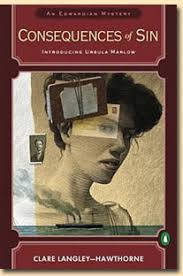
It’s no secret that the majority of my book title offerings are terrible. When I suggest them, my agent shudders and then usually takes pity on me and comes up with a better one. For my first novel, Consequences of Sin, I think my working title was something awfully bland like Dark River and my other suggestions went downhill from there. Thankfully, my agent saved me from title hell, and came up with the one that was ultimately used for the published novel. Recently, for a WIP, I told her the proposed title of the novel and she laughed and told me it sounded like porn (which it most certainly wasn’t!)…so clearly my talents as far as book titles go have not improved.

Last blog post I focused on the importance of cover art and my own personal angst over the issue. This week I want to focus on book titles – how much do they matter and, assuming they do, how does one come up with a great title for their novel?

When I think about my own reading preferences, I have to admit covers tend to trump titles. I’m usually less drawn to a book title than I am to amazing cover art – but if a book title sounds weird or off-key it can put me off. Like cover art, the title should be indicative of the level of violence, romance or horror in a novel – so if it doesn’t match the actual book it can be problematic.

There are some well-known examples of famous book titles that were almost called something else. Pride and Prejudice was almost going to be First Impressions (ugh…), Lolita was almost The Kingdom by the Sea (?…), Lord of Flies could have been Strangers from Within and 1984 was almost The Last Man in Europe. The first Harry Potter book was also, apparently, going to be called Harry Potter and the School Of Magic which definitely doesn’t have the ring of Harry Potter and the Sorcerer’s Stone (or, in the UK, the Philosopher’s Stone).  Book titles for these famous books now linger in our collective memory, so it seems strange to think of them being called anything other than what we’ve come to know and love.

So if a book title can make such an impact, how do you choose one that doesn’t suck? I think the key to this is brainstorming as many titles as possible, getting lots of constructive feedback, and then letting someone else decide:)

From researching the question of formulating a decent book title, it seems there is at least consensus that a good book title should be:

  • Short
  • Memorable
  • Provocative or Intriguing
  • Easy to say (no tongue twisters or potentially embarrassing ways of mispronouncing it)
  • Match the heart/soul of the novel

For me, this all sounds much easier said than done… Of course, if you decide to go the traditional publishing route, as the author you often have to accept a new book title generated by the publisher anyway…which might be why I usually have a lengthy list of book title options which I throw into the air…and then wait for someone else to tell me which one (if any) works.

So TKZers, how do you approaching naming your books? How important do you consider the title for you book and how do you make the final decision on the title for your book?

Cover Art Angst

Of all the difficulties associated with producing a book one of the most vexatious (for me at least) is the issue of cover art. In traditional publishing, many authors typically don’t have a great deal of say in the cover of their book, and when going indie, the issue of cover art can be fraught with design as well as cost issues. Also, the impact of a book cover cannot be understated. It matters. It’s what draws a reader to pick up or click on your novel. For me, a great eye-catching cover is irresistible. I’ve picked up many a book solely because of the cover (mind you, I’ve put many of those books back down again  the first page or blurb was ho-hum).

My own experience with book covers, however, has been mixed – with less-than ideal cover art for my first novel in hardback:

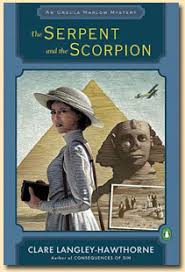
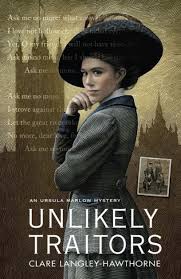
Followed by three wonderful covers for my paperbacks (all involving the same artist and model).


I think what made all the difference was that the paperback covers truly reflected the tone, mood and genre of my novels – with the right  blend of historical details, female characterization and intrigue. Now, as I contemplate the possibility of getting my rights back and possibly repackaging/re-releasing these books, I’ve started to think more about the issue of cover art and what makes a book cover great…I hesitate, though – mainly out of fear that I might chose badly. As Bookbub points out, a bad cover can have a negative impact on book sales. Hence I sometimes get that ‘deer in headlights’ look when it comes to book covers.

There are some informative blog posts providing advice when it comes to designing cover art. Jane Friedman has had some interesting guest posts on her blog on this issue (see for example 5 steps to great cover art and getting the right fit).  At the end of the day, all the advice seems to boil down to making sure the cover fits your book and attracts your target readers (something that feels easier said than done!).

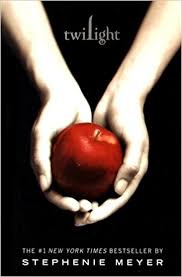
When I look at my own book shelves, a few (mainly YA) book covers stand out. There’s the original Twilight series covers which (at the time at least) stood out as unique.

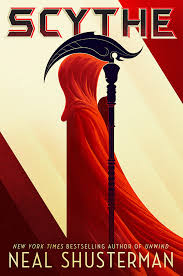
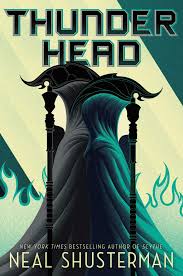
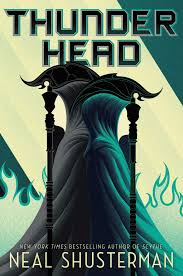
Then there’s the Scythe series by Neal Shusterman – these covers are gorgeous.

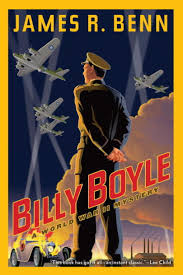
When it comes to mysteries I love the covers for James R Benn’s Billy Boyle series:

But a beautiful cover is only on element of the equation – it must also appropriately reflect the type of novel you’ve written and appeal to readers of that genre. If there’s a disconnect between the cover and the content then beauty alone won’t work. When I look at some of the list of beautiful book covers (such as Buzzfeed’s compilation for 2017, which can be found here) many of them, while certainly aesthetically appealing, wouldn’t necessarily make me want to pick up and read the book.

So what are your favorite book covers? What do you look for when seeking cover art for your own novels? What’s your experience been with cover art (either as a traditionally published or indie author) and what advice would you offer to someone thinking about repackaging their books with new cover art??


Significant Sites

When my last blog post was posted, I was on may way to Kraków in Poland – a place I didn’t know a great deal about but which I’ve always associated with the Second World War and the Holocaust (for obvious reasons). I didn’t know much about the old town or Wawel Castle (both of which I visited) but I knew my visit wouldn’t be complete without visiting the former Jewish quarter, the site of the Jewish ghetto, and Schindler’s enamel factory. As a writer of historical fiction, I find visiting significant historical places has a powerful, often visceral impact which informs not only my writing but my sense of self. On this visit, it was my trip to Auschwitz-Birkenau that left the greatest impression.

I can’t say it was an easy decision to even make the journey to Auschwitz but both my husband and I felt it was a necessary pilgrimage to make. I’ve never done extensive research on the 1930s but, as my twin boys were studying the Holocaust this last school year, I revisited Schindler’s List by Thomas Keneally and read for the first time Elie Wiesel’s memoir Night (the book my boys were required to read as part of their Holocaust unit). This helped, but it in no way truly prepared me, for what I would experience visiting Auschwitz-Birkenau. I was shocked by the immediate physical effect stepping into the camps had on me. I felt nauseated, upset, horrorified as well as, inexplicably, anxious. The initial, almost casual attitude of many of visitors angered me as did their desire to photograph everything – even the most horrific and terrifying aspects of what we saw (would you really show friends photographs of the ruins of the crematoria?) but I did notice that as the tour progressed a somber silence fell amongst even the most chatty groups of tourists. By the time we had completed our visit to Birkenau, you could sense that everyone had been profoundly affected by what they had experienced (and rightly so).

As a writer of a historical fiction, the act of visiting sites such as Auschwitz-Birkenau also gives me a renewed sense of purpose to my work. In many ways, though, I felt that my humanity demanded that I make this visit. I left feeling a renewed sense of outrage, horror, and also – after our visit to Schindler’s factory – hope.

So TKZers, have you ever visited a site that left a similarly lasting impression – one that affected you not only as a writer but as a human being?