by John Gilstrap
www.johngilstrap.com
Ever noticed that naysayers are a dime a dozen? Everywhere you go, there seems to be an unending supply of pessimists, doubting Thomases, bear-marketers and curmudgeons who seem to shine brightest when they can wallow in predictions for bad times. It’s been that way for as long as I can remember, but in recent years, the publishing world seems to have been inundated with pessimists, one half-empty glass at a time. “The book is dead,” we hear. “No one cares about the written word anymore.”
I’ve recently come to view these laments as the panicked cries of old-schoolers who see change on the horizon. I’ve known a lot of editors in my time, but I can’t think of a single one who was technologically on the edge. For them, the definition of a book begins and ends with the notion of ink on paper, classically bound in either paper or cloth. Looking out ten years, I’d say those folks have good reason to be fearful.
Or, God forbid, they could adapt.
According to an article in this week’s Publisher’s Weekly, ebook sales at B&N accounted for 3% of total book sales last year, up from less than 1% the year before. The absolute numbers might not be staggering, then the trend certainly is. Run the figures in your head, and you quickly see that the old-fashioned brick-and-mortar bookstore represents a pretty regressive business model. (As I blogged last week, even I, one of the Luddite hold-outs, got a Kindle; and if I can be converted, anyone can.)
For the sake of argument, let’s proclaim the book as we currently know it to be on a terminal course. (I personally believe that there will always be a vibrant market for bound books, but that $25 cover price for what will essentially be a reproduction antique will be a hard sell.) On the day the last printing press were to stop, the market for stories would still be thriving. People would still be reading.
How do I know? Watch how the members of the younger generation entertain themselves. They’ve got their iPhones and their social networking, but what are those, essentially, but words? When I was a kid, we rotted our minds by watching endless hours of bad television (“My Mother the Car,” anyone?). These days, television viewership is plummeting like a comet as kids turn to other forms of storytelling. Even gaming is storytelling. That’s what we do, folks. And with each new Internet fad comes new opportunities for people with imaginations to shine.
If J.K. Rowling and Stephanie Meyers have proven nothing else, it’s that the new generation craves entertainment on the page. And if the scourge of vanity presses has proven nothing else, it’s that quality still matters.
While the $25 hardcover is great for the publisher, I don’t see how it can sustain itself against the lower-priced competition. As the hardcover goes away, so does the stigma of the paperback original, and the hugely different distribution systems for the two formats. My crystal ball shows this being a heavy blow to authors who’ve grown used to 7-figure advances, but a tremendous opportunity for the vast sea of writers formerly known as midlist.
I think the publishing business is today where the transportation business was in the 1920s. The fact that automobiles rendered horse-drawn carriages irrelevant didn’t mean that people stopped traveling; it just meant that modern convenience trumped tradition. I assume that buggy wheel manufacturers who adapted to making automotive wheels did pretty well, even as the whip manufacturers found themselves with way fewer options. Carrying the analogy even further, remember that Henry Ford made a bloody fortune by producing a product that was specifically priced to be affordable.
What do you think? Do you see the publishing world imploding on itself, or do you agree with me that this is a great time to be a writer?
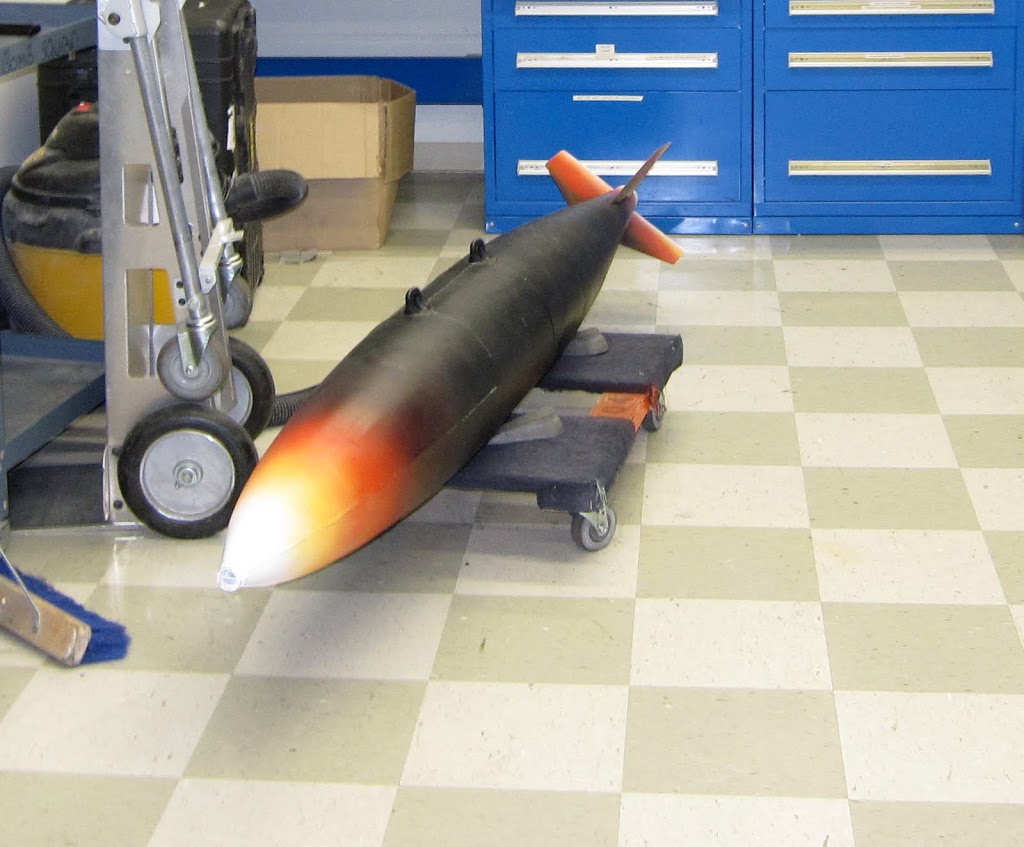
 gave me the tour said that his first call out involved a mortar made out of a highly dangerous and unstable primary explosive, picric acid. They’d all handled the darn thing before one member of the squad turned it around, saw the Japanese characters, and realized that one wrong move could blow the whole place. Fortunately, they made it to their containment unit outside safely (check out the photo of their containment unit. It strongly resembles one of those underwater mines. Any time they pick up explosive material, it gets put in here for the trek back across the city).
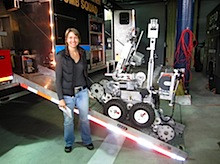
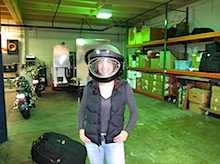 rtable after a few minutes. I asked how they decided which unlucky squad member is sent out in it, and he told me that they usually Rochambeau for it–however, the winner GETS to wear the suit. Apparently being the guy tucked safely in the command vehicle watching everything unfold onscreen is viewed as the unlucky one. Go figure.