A Whole New World

by John Gilstrap

Michelle had a schedule conflict, so she asked me to switch blogging duties with her this week. She’ll be posting tomorrow in my spot, but we should be back to normal next week–or to whatever masquerades as normal among Killzoners.
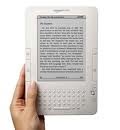
I am amazed and grateful and totally baffled at the thing that keeps on keeping on with my eBook sales. As I write this post on Wednesday evening, No Mercy continues to hold the #4 slot in Kindle sales, while Hostage Zero holds the #17 slot. That’s nine days in the top five and top fifty, respectively–much higher cotton than I have seen in a very long while. Making the deal even sweeter, I received an email yesterday from the folks from Books On Board, the world’s largest independent eBook retailer, informing me that Hostage Zero is the #3 bestseller there. That’s all wonderful. I even got a brief mention in the Wall Street Journal.

Here’s where it gets confusing: On amazon.com, the sales rankings for the print version of my books seem to be going the wrong way. Mind you, I have no idea how any of the rankings translate into real sales, but as I write this, the Hostage Zero sales ranking is well into five figures, while the print version of No Mercy sits at 2,896. (FYI, 2,896 in total sales means, according to the site, that it’s #72 in Books>Literature & Fiction>Genre Fiction>Action & Adventure. How’s that for splitting hairs four times?)

My point is that there seems to be a disconnect between print popularity and eBook popularity on amazon.com. I have no idea why, but I suspect that the mean demographic of the eBook buyer/reader is significantly different than that of the hardcopy counterpart. I think that the marketing model between the two camps is entirely different. For example, among eBook community (of which I am an enthusiastic member), word of mouth buzz–the Holy Grail of book sales–is many times more efficient. You hear a rave review of a book that sounds interesting, and you have it in your hands with a couple of clicks of a mouse. Combine the buzz with a price point that allows readers to buy two eBook thrillers by a new-to-them author for less than the price of a single eBook by a franchise author, and a runaway critical mass is easier to achieve. From there, the author and publisher pray that the momentum becomes self-sustaining.

If my suspicions are correct that the marketing models between print and eBooks are dramatically different, I think it’s clear that the difference is one-way–that eBook readers are aware of what print readers are reading, but not necessarily the other way around. When you look at the Kindle Top 100, the vast majority of titles are bestsellers in their own right in the bricks-and-mortar world, and became eBook bestsellers as a matter of transferred momentum. Problem is, it’s difficult for that momentum to transfer the other way.

Think about it. In my recent travels, I was disappointed to discover that Hostage Zero and No Mercy were both absent from every airport bookstore I visited. The spaces where they might have been stocked were filled instead with the paperback versions of the hardcovers that occupied the same spots a year ago–and then, only if the hardcover predecessor made The List. Given the price per square foot of retail space, it makes sense that airport bookstores would dedicate real estate only to the surest sales. In order to ride the momentum of a runaway eBook, those stores would have to order new stock and take a new risk in an economic environment that punishes risk takers. Extrapolate that logic out to drug stores and grocery stores and all the other retail locations that used to be outlets for paperbacks, and I think it’s clear that the mass market original is a format on life support.

On the flip side, though, I think the market for $25 hardcovers is likewise pretty bleak. It’s the price, not the format. As it is, bestsellers are discounted down to $15 or less in the Big Box stores, a number that is feasible only because non-bestsellers are still sold at full price to offset the lost revenue. The print side of publishing seems to be creating a retail environment where bestseller prices are unsustainable, cheaper options are difficult to obtain, and full-price hardcovers will have an ever-shrinking market consisting only of people who are willing to shell out five times more than they need to for the same entertainment.

It’s a whole new world indeed. What do you all think? When you look into your personal crystal ball, what does the publishing world look like five years from now?


First page critique of IMPERFECT JUSTICE

By Joe Moore

I had an author approach me at ThrillerFest to say how much he enjoyed visiting and reading TKZ. He also asked if I would post the first page of his WIP for a Kill Zone critique. So here we go.

“Oh God.”

I stood for a moment in shock not only from the horrific scene, but the fact that I had verbally reacted. I never express my thoughts in words, but what I saw would crack the resolve of even the strongest individual.

My usual response is to smile and say nothing, or more likely, release a torrent of smartass comments. I guess I use humor to release the pressure of stressful of situations, but in this case I couldn’t think of anything even the slightest bit ironic, or remotely funny.

I felt the bile rising in my throat, and grit my teeth to maintain some measure of composure. I knew I should call for help, but when I pressed the transmit button on my shoulder mounted microphone, the words wouldn’t come out. It was as if I couldn’t force air through my vocal cords. I swallowed hard and shoved my emotions as far as I could below the surface, but it didn’t help and my vision blurred as mist began to form in the corner of my eyes.

I hadn’t actually expected a body to be here. The last few calls like this had been mistaken identity. Some moron saw a pile of clothes next to a dumpster and assumed it was a dead body. I had no reason to think that this situation would be any different, but when I turned the corner to the address given to me by the police dispatcher, there was the bloody mess. Instead of seeing a homeless person sipping on a bottle of cheap wine, there was a body with an ear to ear gash across her throat.

Along the edge of the cut, a stain of blood traveled down the front, and left dark streaks on her once tan blouse. On the ground, the twin headlight beams of my cruiser sparkled off the surface of pools of blood on each side of her. Since the blood hadn’t yet dried, that meant one thing, this had just happened.

The first thing I would do is delete everything after “Oh God.” down to the paragraph that starts with “I hadn’t actually expected a body . . .” All the stuff about how the cop normally reacts is unimportant. What we want to know is how he reacts now. We can learn all the other info later if it’s really important.

I would have liked to read the cop’s radio chatter inserted right after the “Oh God” reporting the discovery of a body. If he believes the murder was just committed, shouldn’t he approach with gun drawn in case the killer is still there? Shouldn’t he call for backup?

This piece starts off a bit too soft for me. Raise the excitement with dialog, actions, reactions. Those elements will tell us so much more about the character than exposition. Let him tell the dispatcher that this one is REAL, not one of the previous false alarms. It may be routine for a cop to discover a murder victim, but it’s not for the reader. Outside of a funeral home, most people have never even seen a dead body. Pull the reader into the scene and explain the inner thoughts later. Overall, this first page needs a shot of literary adrenalin but I’d be interested in reading on a few more pages.

What do you think? Is opening with the discovery of a dead body unique or cliché? Would you like to see more action and reaction? Would you read on?

Open Tuesdays

image It’s time for another Open Tuesday while our blogmate, Kathryn Lilley, is on medical hiatus. Bring us your questions, comments and discussions. If you have a question about writing, publishing or any other related topic, ask away in our comments section. We’ll do our best to get you an answer.

And don’t forget you can download a copy of FRESH KILLS, Tales from the Kill Zone to your Kindle or PC today.

On the Road

Apologies for the brevity of this post but my family and I are on the first week of a two month long holiday across the National Parks of the American West. We have done Sequoia, Kings Canyon and Yosemite so far. Off to Death Valley today…but all this roughing it (I am by no means the camping type) reminds me of the lengths to which some people will go in the name of book research. While I have been down the Orinoco most of my research involves strolling the streets of London or hanging out at the British Museum…hardly onerous! But what about you? How far have you gone in the name of research? What would you or wouldn’t you do?

– Posted using BlogPress from my iPad

Before You Submit

James Scott Bell

The May/June issue of Writer’s Digest has a sidebar from YA editor Anica Morse Rissi, wherein she gives nine things you can do to elevate your manuscript before submission.

The list is right on, not only for getting a manuscript ready to submit to agents or editors, but also if you’re considering self-publishing. So I’m going to give you the tips with my own commentary on them.

1. Revise, revise, revise.

As the author of a whole book on the revision process, I’m not going to quibble with this one. You can, however, become “revision obsessed” and spend way too long on a project. In my book I give a process for getting over that, but you can just as well come up with one of your own, so long as you eventually send your work out. Not too soon, but not too late, either.

2. Start with conflict and tension.

This is perhaps the most important tip of all. Some of our highest traffic here at TKZ has come from posts on what to do — and what not to do — on first pages, as well as the numerous first page critiques we’ve done. Search those out in the archives. Now, conflict or tension does not have to be “big.” It can really be any sort of disturbance to the Lead’s ordinary world.

3. Don’t start with backstory.

An obvious corollary to #2. Backstory is best when it is delayed, although little sprinkles can be added to the first pages for depth. Just make the action primary up front.

4. Give the readers something to wonder about.

Mystery, unanswered questions, portents, threats. All good at the beginning and, indeed, throughout—so long as you are prepared to give satisfactory answers (unless you write for Lost, of course, then you can just keep on raising questions).

5. Avoid explaining too much, too soon.

A corollary to #4. My rule for the opening is act first, explain later. Readers do not need to know everything you do about the setting and characters at the start. They will wait a long time if there’s something dynamic and disturbing going on at the beginning.

6. Make sure your story has plot arc and emotional arc.

This is another way of saying that you need to give us the stakes inside the character, as well as outside. One way to do this is via internal conflict, which is the battle between two strong but opposing desires in the character. In High Noon, the town marshal must battle his desire to do his duty as a lawman versus his desire to keep his new Quaker bride (the producers raise the stakes nicely by having the Quaker bride look exactly like Grace Kelly).

7. Read your dialogue out loud.

This is a great practice. You hear it differently than you read it. An alternative (my own preference) is to have Word read it back to me in speech mode. Either way, you’ll catch things to change every time.

8. Use adjectives, adverbs and dialogue tags sparingly.

As far as adverbs, do a search for LY words and kill as many of those pests as you can. For dialogue tags, use said and asked as your defaults, and only when needed to figure out who’s speaking. Resist the urge to use things like he growled or he expostulated.

9. Make sure your details matter.

All details, and I mean every one in your manuscript, should do “double duty.” Not just describe, but describe in a way that sets the tone you desire. Details can characterize, foreshadow and carry motifs. In other words, don’t waste them.

To these fine suggestions, I would also add the following (from my chapter on “The Polish”)—go over each chapter and see how much you can cut from the beginning and the end. You’ll be amazed at how much faster your chapters grab, and how you’ll be left with a feeling of momentum after each scene.

So what other things do you do before you submit?

NOTE: I’ll be conducting a series of webinars for Writer’s Digest this month. The first is on novel structure. Would love to have you drop in!

First Page

When my book, UPSIDE DOWN was nominated for the first ITW Award in Phoenix, John Gilstrap was seated at my table, along with our agent, Anne Hawkins. I wish I could be seated at his table tonight. As I wrote him, I feel like Robert DeNiro in WISE GUYS when he was waiting in that diner to talk to Joe Peschi just after he became a “made” man. My fingers are crossed for Gilstrap’s NO MERCY winning an ITW award tonight.


And now to the first page, a resubmission of an earlier first page, which was critiqued a few weeks ago:

THE BULLET’S NAME

Boone, NC 1937

Jasper Green was in the middle of a sentence when, from beneath the thin plywood table, the heavy Colt in Jack Longbow’s hand responded to the positive pressure on its trigger sending a forty-five caliber hardball erupting through the surface of the table, exploding the bottle of whiskey, and entering just below Green’s lip, painting the pine-board wall behind him with his brains.

A split-second after the gun’s slide cycled another round into the chamber, Longbow spun in his chair and swept the room, ready to pull the trigger if Green had backup.

Longbow stopped the gun’s motion at the bartender and measured the threat the negress represented. Eyes wide open, her small hands flying into the air with fingers spread, she responded to the weapon’s unblinking eye by urinating on the floor.

Behind Longbow, Green’s gun, no longer being gripped by a living hand, was taken by gravity to the floor.

The corpse farted.

Longbow swung the gun and almost shot it through its still heart.

As though propelled by the issuing gas, Green toppled onto the floor, the open wounds dribbling a crimson molasses.

With his left hand Longbow lifted his Panama from the table by its crown and inspected it for blood spatter before perching it atop his head. Springing the safety up, Longbow slipped the auto into its holster under the seersucker jacket.


Thoughts?

#1 Paid in Kindle Books

by John Gilstrap

A couple of weeks ago, I posted our marketing strategy for Hostage Zero which included a limited time free giveaway of the ebook version of No Mercy in all e-formats. In principle, it seemed like a good idea: We’d let people have a risk-free peek at the first book in the series, and with luck, they’d have whetted appetities for the second installment.

Well, apparently the strategy worked. Within hours, No Mercy shot to #1 on the free-book Kindle list, where it stayed for its entire free-book run. The attention brought some very hot reviews to the amazon.com No Mercy page, and sparked some favorable cyber word-of-mouth. That’s all good, but free is free. Then a funny thing happened.

When the free-book status expired on July 5, No Mercy stayed at the #1 slot, only this time in the PAID Kindle Store, outselling Stieg Larsson’s Tattoo series books. I told myself it must be an anomaly. After a couple of hours, I figured it would slip off the list. Only it didn’t. The book stayed at #1 for over two days. As I write this, 4:37 on July 8, it’s still at #3 in the Kindle Store.

It gets better. Hostage Zero–my new release–is currently at #61 and climbing (falling?) in the Kindle Store. Dan Brown’s The Lost Symbol is #62.

All of this is very cool, but I have no idea what it means in the larger sense. Hopefully, the trend will contine and my books will become one of those word-of-mouth sensations that sets the world on fire; but it’s also possible that this is a brief flash–fun for a while, but ultimately not a big deal.

It’s not at all clear to me whether the ups and downs of the ebook market has any effect on the paper-book market. When a Kindle reader calls her Luddite Aunt Betty to say that she just read this amazing book, Aunt Betty will need to be able to find that book in the local bookstore in order to share the experience. I venture to guess that No Mercy will be a hard find this far after its initial publication. Can a runaway ebook prompt a bricks-and-mortar bookseller to restock a title? I guess we’ll see.

Hell, I don’t even know how much I make off the sale of an ebook.

Whatever this is that is happening, though, is very, very exciting.

The Virtual Water Cooler

by Michelle Gagnon

The other night I found myself debating the merits and pitfalls of social networking with a group of friends. As always, people seem to fall into one of two camps: there’s the group that thinks Facebook and its ilk are slowly destroying the social fabric, ensnaring people into shadow lives that are only experienced virtually. On the other side are people who think that social networking sites have made it much easier to connect and stay in touch with people, improving their daily existence.

The subject initially came up because of an event I attended recently. “Pop up Magazine” is a one-night only live magazine produced in San Francisco. Like a print mag, it’s divided into “Shorts,” “Features,” etc. For me the most fascinating “feature” of the night was an interview with a former Guantanamo Bay prison guard. Apparently after he was discharged, his stance on things that had happened during his stationing there shifted. The soldier made it a mission to seek out former prisoners and apologize to them- and to find them, he used Facebook. The woman interviewing him asked, “Why Facebook?” And he looked at her as thought she’d asked why he considered using the telephone to call home. Apparently there are numerous FB groups subscribed to by both former guards and prisoners where they interact, swap stories, and try to find common ground.

I found that absolutely fascinating.

Now, I understand the argument against these networking sites. There’s something terribly depressing about seeing a couple tapping away at their various electronic devices in complete silence during dinner- as I witnessed the other night at a restaurant. But for some of us, the social networking tools have filled a void. Could we live without them? Absolutely. But I would miss my virtual water cooler.

Of course, I’m a bit of a rare case. I spend most of my day alone, in total silence. I work best under those circumstances-and I’m not someone who minds being alone. But aside from the UPS guy, without Facebook, my day would be devoid of most social contact.

Maybe that’s not a bad thing (although it does lend itself to bouncing a ball against a wall for hours on end, or typing the same sentence over and over…)

I love the little breaks spent chatting with people online. I get a kick out of what people post up there (within limits- I have no interest in knowing about your pet’s digestive problems, for example, or what you just scratched). The day after the final episode of LOST aired, I spent a almost embarrassingly significant chunk of my day discussing it with people. Maybe if I worked in an office, I wouldn’t need that. But having contact with the outside world, even if it’s only virtual, is a good thing for me.

I’ve always been terrible about staying in touch. But through these sites, I’ve been able to reconnect with friends from elementary school, high school, college, and my time in New York. (And one of those people volunteered to be a beta reader, providing some of the best insights into my latest manuscript).
My mother just set up a reunion with her college roommates, people she hadn’t seen in decades, via Facebook.

And of course, what would I do without my daily Kill Zone fix? I’ve made acquaintances across the world. Engaged in debate with people I probably would never have met otherwise. I’ve spent my entire adult life living in cities where chatting with strangers is a rare occurrence. But the online networking sites remove that wall, and suddenly I find myself discussing Nora Ephron’s send-up of THE GIRL WITH THE DRAGON TATTOO with people in Tulsa, Akron, and Tokyo.

So…virtual water coolers: yea or nay?

The Return of Payne Harrison

By Joe Moore

Back in the 1980s, I was a huge fan of techno-thrillers. I loved Tom Clancy, Larry Bond, Dale Brown, Stephen Coonts and others, many of whom are still around and made the transition out of the Cold War into today’s military oriented thrillers. In 1989, a friend recommended STORMING INTREPID, and I quickly payne-harrison became a fan of a new writer by the name of Payne Harrison. Now we’ve all heard the cliché about a book being so good that you can’t put it down. That was the truth with STORMING INTREPID, the story of the U.S. using the space shuttle to deploy the Star Wars defense system and  how the Soviets manage to hijack the space craft. It was an intricate plot with a great deal of in-depth info on the technical side of things. Outrageous and totally fun.

Harrison landed on the New York Times bestseller list and followed up INTREPID with THUNDER OF EREBUS, a military thriller set in Antarctica, BLACK CIPHER, and FORBIDDEN SUMMIT. I read them all and eagerly waited for the next.

But a strange thing happed on the way to thriller #5. Harrison disappeared off the literary scene. I didn’t think much of it until one day many years later when I was going through my books looking for a particular novel and noticed all of Harrison’s books on my shelf. I realized it have been quite a long time since his last. I did an Internet search for his name and came up with very little info except notes about his previous books. Every so often, I would repeat the search with the same results. Thirteen years went by and I assumed the worst: perhaps Payne Harrison was no longer with us. After all, why would a bestselling author just disappear and quite writing thrillers?

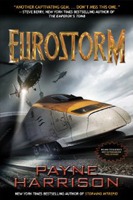
eurostorm Then a couple of weeks ago, an Amazon promo pinged in my inbox promoting the return of Payne Harrison and his new thriller, EUROSTORM. I put in my advance order and eagerly waited for the notice that it shipped. The book arrived last Friday, and I finished it over the 4th of July weekend.

Despite the 13 years absence, he has not missed a beat. The style, voice, and plotting are exactly as he left off. Reading the book was like running into an old friend after a long time apart. And EUROSTORM is like a thriller on steroids. There’s his usual huge cast of characters, impeccable research, slingshot pacing, and heart-stopping, cliffhanger chapter endings.

EUROSTORM involves deadly engineered viruses, terror and bloodshed on the Bullet Train from England to France, the reanimation of the Third Reich hierarchy after they were frozen decades ago, and the coming together of French and U.K. military assault teams with a big helping hand from a Chicago detective to stop a diabolical plan to murder millions in the name of the new Fourth Reich.

EUROSTORM is not perfect as no book ever is. In order to cover an immense amount of territory involving dozens of characters, Harrison must utilize omniscient third person POV. The camera is always at a distance so it’s hard to really “feel” for most of the characters. But this technique won’t stop you from rooting for the good guys and wishing nasty stuff on the baddies.

If you enjoy extremely fast-paced thrillers that cover a huge amount of ground and information while keeping you on the edge of your barstool, read EUROSTORM by Payne Harrison. I only hope I don’t have to wait another 13 years for his next one.

How about you? Have you ever had to wait what seemed like forever to read the next book by a favorite author? How long did you wait, and was it worth it?

Open Tuesdays

image It’s time for another Open Tuesday while our blogmate, Kathryn Lilley, is on medical hiatus. Bring us your questions, comments and discussions. If you have a question about writing, publishing or any other related topic, ask away in our comments section. We’ll do our best to get you an answer.

And don’t forget you can download a copy of FRESH KILLS, Tales from the Kill Zone to your Kindle or PC today.