
by John Gilstrap
This blog entry is scheduled to post on September 17, 2010 at 12:01 a.m. Eastern Daylight Time, so as you read it, chances are that I am either asleep or on my way to (or I have already arrived in) Salt Lake City, where I have been invited to speak at the annual meeting of the League of Utah Writers. Actually, I’ll be speaking a lot. I’m the luncheon keynoter, and I’ll also be teaching two instructional sessions.
Here’s my question to Killzoners: What would you coinsider appropriate speaker’s attire for such an event?
If this were a keynote address for my Big Boy Job, the wardrobe selection would be easy: Any color dark suit combined with any color white or blue shirt and conservative tie. But as a writer–as a “creative” person, the question is more complicated. I’ll never forget the laughter I evoked from a Warner Brothers studio head when I wore a business suit to a story meeting at his office. It was so not-Hollywood chic. You can make light, but these things matter. Like anywhere else, first impressions are important.
If I were 25, I could get away with fashionably torn jeans, shirttail out and a sports coat. That’s the new creative chic wardrobe, from what I can tell. But I’ve been 25 twice now (with change to spare), and I can’t pull that off anymore. Even if I could, I’d feel stupid.
I’d also feel stupid in a business suit and republican tie. It’s a weekend, after all, and I’m a writer, not a lawyer. In this venue, I’m not even the association executive that I play during the work week. So what’s an engineer/thriller writer to do?
A former publicist told me years ago that there should never be any doubt who the celebrity writer is. She stressed that speaking gigs are work, and as such, one should never forget that work is about sales, and that sales are about image. That means, she advised, finding the right balance between mystery, professionalism and approachability. Think about it. That’s a hell of a balance.
When I think back on the various conferences I’ve been to, some writers truly do wear writer’s uniforms that are unique to them. Parnell Hall is always (except this last summer at ThrillerFest) in blue jeans, a T-shirt and a blue sports coat. Harlan Coben is famous for his wild ties, and Robert Crais is Mr. Hawaiian shirt. I have never seen Mary Higgins Clark or Sandra Brown when they are not dressed to the nines. Sharyn McCrumb is always . . . flowy. (That’s not a slam at all, I don’t know what else to call the look.)
Thomas Harris told me one time that the reason why he does so few interviews is because he feels that the less he is known, the more people are intrigued by his books.
The photo you see of me among my Killzone colleagues to the right is what we call my “badass” photo. It’s supposed to look like a guy who writes scary books–and I guess it does–but it’s not at all my personality. I actually like people, and lord knows I love a party; but there’s a legitimate argument to be profferred that the writer-John should more closely resemble the book-John than the real-John. Okay, fine.
I don’t buy it, and maybe that’s because I know I couldn’t pull it off. For others, though–Lord knows Thomas Harris has sold a lot more books than I have–maybe therein lies the recipe for success. Who knows? As for the League of Utah Writers, I think I’ll wear the same uniform I wore at ThrillerFest: a nice gray pinstrip suit with a black shirt. No tie, though. I’m a writer, after all.
So, what do you all think? What is your writer’s uniform? What do you expect of favorite authors when you see them in person?
Know thy neighbor
I returned from vacation to sad news. My next door neighbor, Jane, had recently been diagnosed with cancer, and the day before we left the doctors told her it was untreatable. Two days later, Jane passed away.
From what I knew of her, Jane was a wonderful person- sweet, smart, funny. But truth be told, since we moved in a year ago, I’ve probably only had a dozen conversations with her. Most revolved around keeping an eye on each other’s houses when we were out of town, or the obligatory exchange of cookies at Christmas. She and her husband have lived on this block for more than a half century. She was always so sweet and welcoming, always willing to talk. And I was always in too much of a hurry. I’d wave as I passed by on my way to the store, the gym, or wherever I happened to be going.
At her memorial I had the chance to speak at length with her sister, and learned more about Jane and her life in that half hour than I had in the past year. And as I sat there listening to how Jane and her husband had met, what their house had been like when they first moved in, it struck me that in the past year I’ve been running around like a crazy person. Part of that is the combination of having a small child paired with seemingly nonstop deadlines–I had to squeeze work in whenever possible, and every other spare moment was consumed by parenting and keeping our household running.
And what got lost in all that rushing around was getting to know someone like Jane, a lovely woman who taught high school English for decades, loved reading, and lived right next door.
Coming off a weekend where I had also been completely shut off from the internet and telephone, and yet (miraculously!) survived, it was eye opening. I realized that I’ve been spending so much time working on my books and maintaining virtual relationships on social networking sites, I’ve been terribly negligent at building them with the people all around me.
Part of this might be due to living most of my adult life in cities–in most of the apartments I rented in New York, neighbors were only dealt with when they were doing something unpleasant and/or inappropriate, like playing their bongos at 3AM or letting their snakes roam the halls at night (both of which happened in one building on the Upper West Side).
Yet in the suburbs where I grew up, I have distinct memories of neighbors stopping by to introduce themselves when we moved in- and of my mother baking up a storm whenever a moving truck showed up at the house down the block. But that’s never happened to me in San Francisco or New York. And that’s a shame.
While we were gone, there was also a terrible gas main explosion in San Bruno, just south of San Francisco. Numerous homes were destroyed, four people so far are confirmed dead. And some of the most amazing stories to emerge from the incident involved neighbors rushing to each others’ aid, shuttling people to hospitals, getting them out of burning buildings. Many of those people were apparently just meeting for the first time.
So I’m going to make an effort to get the know the people around me better. I’ll be spending less time on listservs and SN sites. And the next time a moving truck shows up on our block, I’ll bake cookies and bring them over.
You can’t make this stuff up
I’m excited to welcome my friend and fellow ITW thriller author Lisa Black back to TKZ today. Lisa is stopping by on her virtual book tour to share some thoughts with us as she promotes her newest novel, TRAIL OF BLOOD.
 I am a certified latent print analyst and crime scene investigator for a local police department in Florida. Before that I worked at a coroner’s office in Cleveland Ohio. Moving to the police department—the front lines, as it were—has been quite an education, and this is what I’ve learned: people are strange.
A teenage burglar broke into a house and stole a TV—not a flat screen, an old-fashioned boxy thing—but since she didn’t have wheels, merely staggered up the sidewalk to get her booty home. There might be cities in the US where this would not look suspicious. Cape Coral is not one of them.
 I was dragged out of bed one night to process a break-in at a local sports bar where the burglar had ignored the cash register to stand on the bar and try to take the flat-screen mounted high on the wall. They always expect those things to just pop off like a picture frame. Anyway, the officers had also found a still half-frozen filet of fish behind the building and wondered if perhaps the guy had decided to pick up something for dinner after striking out with the TV. I went out to photograph it but a local cat had already decided that this particular piece of evidence wasn’t relevant to our investigation. I called out in protest, and the look that cat gave me left me with nightmares. Apparently the only reason I’m still alive is because he didn’t feel like licking the blood off his fur. Again.
Everyone lies. And many times they’re not lying to fool the police; they don’t really care what the police think. They’re lying because they need to come up with a story for their spouse, their parents, their boss. We had a guy who reported a carjacking at gunpoint. He was stopped for a light at one of the busiest intersections in town when a man jumped in with a gun and demanded the car. Instead of running into the McDonald’s, the gas station, the grocery store or any one of the fifty other businesses in the area, he runs twenty blocks to the house he shared with his girlfriend to call the police. The car was quickly located about one block from the intersection, covered with mud and crashed into a fence. The story unraveled shortly from that point: he had decided to go four-wheeling in his girlfriend’s two-wheel-drive four-cylinder sports car and slid the fender into a wall. Need I go into outraged taxpayer mode to point out that the entire police force was out looking for an armed carjacker (a scary crime in this sleepy burg) just because this bonehead didn’t have the guts to ‘fess up to his chick?
We had two 11-year-old girls call the police to say they had seen two men in a van (they’re always driving a van) kidnap their neighbor and classmate from her driveway. Police respond, alert goes out. The girl eventually arrives home…she and her family had been enjoying dinner at Applebees. At the same time we were dealing with a situation in which a mother had shot and killed her young son and then herself, and resources were diverted for two little girls’ flight of fantasy. I hope they were grounded for life.
We had to assist another town’s department by taking a look at the former home of a particular family. The house was still vacant and I accompanied a detective. Apparently there had been a cockroach problem. ‘Problem’ is putting it mildly. ‘Infestation’ would be putting it mildly. They were all dead (otherwise you wouldn’t have gotten me in the place) because someone had laid an inch of boric acid throughout and over every single surface in the place, so every room was this sea of white powder flecked with dead bugs. It looked like an indoor snowstorm of vanilla bean ice cream. If I tried to describe that in a novel, reviewers would say I was trying too hard for the gross-out factor.



Speaking of gross, once I found a brain in the back seat. The victim had been shot, the body snatchers collected the body, a Cleveland fingerprint analyst was processing the car and all of a sudden he says, “Hey, do you want this brain?” Excuse me, brain? Apparently the gunshot had cleaved off the top of this guy’s head and it landed in the back seat. It sounds really gory but actually it wasn’t. It just sat there looking all pink and convoluted and really quite neat.
I swear I am not making it up!
Have you ever put something outrageous in your book that actually happened, only to have readers think it was hysterical/offensive/ridiculous and completely invented?
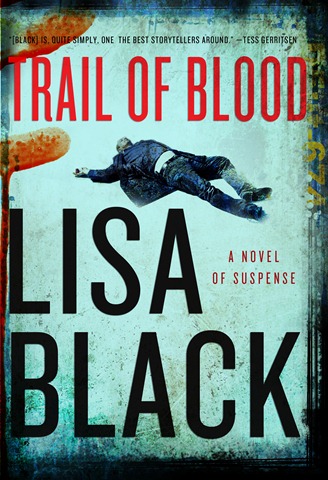 Lisa Black spent the five happiest years of her life in a morgue, working as a forensic scientist in the trace evidence lab until her husband dragged her to southwest Florida. Now she toils as a certified latent print analyst and CSI at the local police department by day and writes forensic suspense by night. Her fifth book, TRAIL OF BLOOD, involves the real-life Torso Killer, who terrorized Cleveland during the dark days of the Great Depression. For more information visit her website: www.lisa-black.com.
Conveying fear on the page

I spent a lot of time last weekend thinking about fear. It started with the 9/11 memorials. Being the morbid creature that I am, I watched the replay of the real-time events of that traumatic day–not once, but twice. I was amazed at how composed the newscasters remained as the world seemed to be collapsing all around us.
Fear was very much on my mind on Saturday night when my sister and I happened to visit a Russian attack submarine, the Scorpion, which is docked next to the Queen Mary in the port of Long Beach. It was amazing to see this relic of the Cold War transformed into a tourist attraction. It has been preserved exactly as it was for the Russian sailors (except, I assume, for the on-board nukes). You can see the torpedo tubes and attack periscope, the cramped quarters, piping, and weaponry, everything that made it yesteryear’s “terror of the deep.” The sub spawned a lively discussion about which era was scarier–the Cold War, or today’s climate of fear surrounding terrorism. I argued that the Cold War was scarier, mainly because we were facing the possibility of the extinction of the human species with the pushing of a few buttons from vehicles like the Scorpion.
Fear can be found everywhere. Recently I heard about a crime wave in Mobile,
As writers, it doesn’t matter what type of fear we are trying to convey–we have to “bring it home” to the reader by making it seem real and visceral. In my current WIP I’m struggling to convey a fear that human society as a whole is going to be changed unless our hero–or the villain, depending on how you see him–succeeds in his mission.
In your current WIP, what type of fear are you writing about? World disaster? Danger to a loved one? Female in jeopardy? What types of techniques do you use to make it real for the reader?
The Right Stuff
I just finished the terrific (and hilarious) book, Packing for Mars by Mary Roach, and was struck by a pang of wistfulness for my one remaining unfulfilled ambition – to see the earth from space. Now you would think that a book that described in laugh-out-loud detail the perils of weightlessness on a whole range of bodily functions would be off-putting but instead it provides a refreshingly inspiring vision of why we crazy humans yearn to burst free of our own atmosphere.
I was reminded of my own childhood ambitions of becoming an astronaut (crushed sadly when I realized I would need at least some modicum of mathematical expertise!). I confess my childish ‘list’ of career options was a distinctly motley collection. Writer was always top of the list (thankfully!) but after that there was actress (Cate Blanchett and I were in the same high school class after all :)), political journalist (for many years my mother had visions of me coming back from various war-torn regions in a body bag), astronaut and then (far, far down the list) politician (!). So on earth did I end up being a lawyer? Probably because people managed to convince me that I should follow a career path which would at least have an outside chance to making money.
Reading Packing for Mars reminded me once again that only when we humans follow our passions can great things be achieved. Anyone stepping back and looking objectively at manned space travel would think it madness – though no doubt someone looking objectively at the probability of publishing success would conclude the same! – but nonetheless we continue to pursue our dreams. Despite the fact that I have been able to pursue my #1 childhood ambition, I still have a yen for the possibility of space travel. The thought of seeing earth-rise is still tantalizing. I suppose I had better hope that either NASA suddenly needs someone with my meager skill set on their Mars base or that I make a cool few million dollars so I can hitch a ride on Virgin Galactic.
So what do you think, have I any shot at being the first recovering-attorney-historical novelist in space? What crazy childhood ambition did you have and do you ever still yearn for it once more?
Growing as a Writer
If you’re going to be a writer, I mean really take this writing thing seriously, you’ve got to continue to grow. Purposely. Planned out. Find ways to get better. Read books (not just for pleasure, but to see what other writers do), comb through writing books and Writer’s Digest, try stuff, take risks. The alternative is to stagnate, and who wants that? In any endeavor?
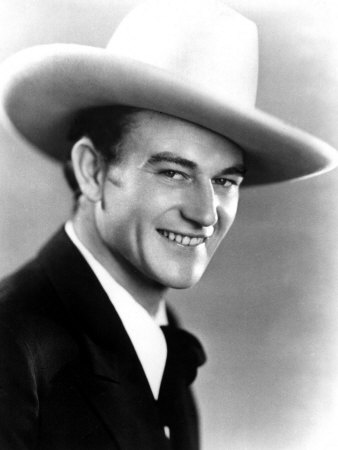
I thought about this recently as I watched some of John Wayne’s early movies via inexpensive (translation: cheapie) DVDs. John Wayne was not John Wayne when he started out. (Actually, his real name was Marion Morrison. How long would he have lasted with that moniker?)
After working as an extra for a couple of years, this former USC football player was, at age 22, plucked from obscurity by director Raoul Walsh for a big budget Western, The Big Trail (1930). The movie flopped, and Wayne spent the next nine years making low budget westerns for studios on what was called “Poverty Row” in Hollywood.
The poorest of these studios was an outfit called Lone Star. Here is where we see John Wayne trying to find himself as an actor. It was a hard search, especially when he was stuck in such poorly written, clunkily acted, one hour oaters. Pictures like Riders of Destiny (1933), where he was billed as Singin’ Sandy. (That’s right. John Wayne as a singing cowboy! Only his singing was dubbed – badly – as Wayne pretended to play the guitar – badly.)
Wayne’s acting here was wooden and uncertain. The only direction he seemed to get was to smile a lot, and that got a tad creepy. This was one forgettable actor.
But by 1936 he had moved one notch up, to Republic Pictures. In Winds of the Wasteland, for example, he seems like a different actor. Here is the real John Wayne. His acting is understated and sure. He’s even started walking that famous walk.
What happened? Wayne made a decision to grow, to get better. A lot of credit for that apparently goes to the legendary stuntman, Yakima Canutt, a real “man’s man” back in the day when that was an okay thing to be. Wayne copied Canutt’s low, confident way of speaking, and his walk. And he stopped smiling all the time.
Wayne was also befriended by an old character actor named Paul Fix, who gave Wayne acting tips, including the admonition not to furrow that famous brow so much.
The results were promising. Wayne learned. He grew.
Still, Wayne would probably have remained a B actor all his life (maybe he would have had a TV show like Hopalong Cassidy in the 1950s) had it not been for his friendship with John Ford. When the famous director wanted to make a Western in 1939 called Stagecoach, he got resistance (Westerns weren’t in vogue). When he insisted that Wayne play the Ringo Kid, he got turned down flat. But Ford wouldn’t budge, and eventually put a deal together with an indie producer. His going to bat for Wayne was what made him a star.

Wayne as the Ringo Kid in Stagecoach
But Wayne didn’t stop there. Though he never would be mistaken for Brando or Olivier, he did reach down for extra in movies like Red River (1948), She Wore a Yellow Ribbon (1949), Sands of Iwo Jima (1949, Academy Award nomination), The Searchers (1956), True Grit (1969, Academy Award for Best Actor) and The Shootist (1976), his very last film.
And of course, John Wayne became an icon, still ranking as a favorite movie star worldwide.
So, if you want to make a mark as a writer, you grow. Consciously. That doesn’t bring any guarantees. John Wayne himself needed a couple of lucky breaks to get to the heights he enjoyed. But he made himself ready, as you should.
So, do you have a plan in place to improve your writing? For the rest of your writing life? If you don’t, why not start now? (If you need some nudging in that area, I have some suggestions for you in my book, The Art of War for Writers.)
What’s your plan?
The Coolest Place in the World. Seriously.
There is no longer an excuse for writer’s block, at least as far as inspiration is concerned. I found the remedy during a recent trip to Baton Rouge, Louisiana, when I walked into Pexcho’s American Dime Museum. Pexcho’s is tucked into a dark corner of the all-but-deserted Broadmoor Center Shopping Center on Florida Boulevard, a couple of blocks east of Airline Highway. If you need to have your polite view of the universe counterbalanced by the heady weight of dark reality, Pexcho’s is the place to go.
P. T. Barnum opened the first dime museum in 1841 as an entertainment and education center for the working class. Admission, by amazing coincidence, was a dime. The concept became extreme popular over the next several decades, with such establishments featuring bizarre exhibits, freak shows, magicians, and performers. Pexcho’s American Dime Museum is the last existing such establishment in the world. A great deal of its inventory was acquired from the gone, but not forgotten, Baltimore Dime Museum which closed in 2007.
So what is Pexcho’s American Dime Museum? The coolest place in the world, nothing more or less. When I toured the establishment, late on a Sunday evening in August, Proprietor Peter Excho was happily inking a tattoo in a parlor designed for such matters in the rear of the museum. Caila, Peter’s charming wife, expertly balanced an infant while showing me around the museum, which resembles nothing less than the home of your Uncle Indiana Jones. Two red velvet chairs which once sat proudly in a house of prostitution owned by former Louisiana Governor Huey Long sit quietly next to an aquarium which houses what is known as a “Pac-Man toad,” which flattens itself into a disc until dinner, in the form of a baby rat arrives. Indigenous to the South American rain forest, this little fellow has a mouth full of inverted teeth which makes it impossible for prey to escape its grasp. And yes, it will latch on to bare feet. Another aquarium houses a Florida Snapper Turtle, which, according to my host and hostess du jour, is used by body search teams in south Florida to locate waterlogged cadavers, since it regards decayed flesh as a delicacy. A clear plastic toy gun is safely and securely ensconced within a glass case.
This item was briefly marketed as a candy dispenser. The candy pellets were placed into the toy gun, and the user then put the barrel into their mouth and pulled the trigger. A shiver went down my back. And, against a far wall, a display devoted to the French entertainer Le Petomane and which includes vials which are reputed to contain sealed samples of his gaseous products. Verification was neither offered nor requested. 
There are many, many more objects, loving displayed and wonderfully disarrayed. Peter, who spoke excitedly about forthcoming new exhibits while a young man reclined in a chair and watched his pectorals being pricked and inked with a stoic indifference, is awaiting the arrival of Abraham Lincoln’s last bowel movement, preserved from a chamber pot in Ford’s Theatre on that fateful night almost one hundred fifty years ago. That alone would be worth the return trip to Baton Rouge. You can visit online at www.pexchos.com , but you need to see the place in person to believe it. And when you get there, ask Caila to tell you the story behind the carving of the weeping pregnant woman. It is one of the saddest stories you will ever hear.
***
On a personal note: I am not the photographer in our family as should be obvious by the pictures which accompany this installment. My wife Lisa is, and her talent is surpassed only by that of my alternate blogmate John Ramsey Miller. Lisa’s work recently graced the cover of Westerville Magazine and some of her award-winning photos can be seen at the magazine’s website at http://www.columbuscityscene.org/capturing_life039s_moments.html
As you scroll down, the pictures beginning with the dragonfly (which was the September/October cover for the magazine) through the girl reading with the statue (featuring our daughter Annalisa) are hers.
***
What I am reading: TRAIL OF BLOOD by Lisa Black. A grisly discovery puts police forensic scientist Theresa MacLean in the middle of one of Cleveland’s oldest and most bizarre unsolved mysteries. You don’t want to be between me and the pages of this book until I finish it. Honestly.
Faceless Characters
A friend and fan asked me last week what one of my characters looks like. After giving it some thought, I had to admit that I have no idea. In fact, I have only a shady idea of what any of my characters look like. I know how they think and how they feel, and I know how they view the world; but their faces? Not a clue.
My characters are more like well-defined silhouettes for me. They have no faces.
By contrast, I visited a writer’s board a few weeks ago where a writing “expert” went on at length about how to develop physical profiles for your characters, using known actors or your own acquaintances as prototypes. Until that step is completed, this “expert” argued, you can’t have flesh-and-blood characters.
Hmm. Yet another example of how different authors’ processes work, and of how there are no hard and fast rules in any art form.
I wish I could say that my characters are deliberately faceless—part of an intentional statement on my part—but that would be lying. It’s just the way it works for me. Now that I think about it, I don’t notice faces all that much in real life. I’m notorious for failing to recognize people I’ve only recently met. I don’t say this with pride—in fact, it’s embarrassing and arguably hurtful, which is never my intent—but I remember conversations and mannerisms far more readily than I remember faces and names.
In my writing, I’m a limited third-person point of view purist. As the author, I work hard to keep myself out of the story. Every scene I write is filtered through the eyes and personality of the character who’s living it. As such, it’s difficult to make any casual observations about physical attributes. They would seem out of context to me.
As I write this, I am sitting at my desk, wearing blue jeans and a blue and white striped shirt. I have a hairline that doesn’t exist anymore, and I have a graying goatee on my chin. Those are the facts, but none of those would factor into a scene I wrote about a guy writing a blog post at is computer. The POV reality would be the thoughts flowing through the character’s head as he wrote, and, because I’m channeling the characters feelings, I might include something about the temperature of the room or the comfort of his chair. But why would I work in the clothes and the beard? How would that be relevant to his world view? I suppose he could scratch the beard and reveal it that way, but unless it contributed to character or plot, that passage would likely not survive my final edit. My number one rule: Never stop the flow of the story.
In the Jonathan Grave books, we know that Boxers is huge and that Jonathan is wiry because those are observations made about them by other point of view characters. We know that Gail Bonneville is “hot” and that she’s got great legs, because that’s what Jonathan first notices when they meet. And we know that she’s got beautiful eyes. But a face? Nope. At least not on the page.
Yet I hear from people all the time who are ready to cast the movie version of the books. (No, no such movies are in the works. Dammit.) Readers assign their own faces to characters as they read. Given the knowledge of beautiful eyes and great legs, readers can plug images from their own passions, whether it’s their current squeeze, or a favorite movie star.
This is a good thing. If one person is seeing Matt Damon in their head when they’re reading about Jonathan Grave, and another is seeing Clark Gable in his prime, does that mean I’m not doing my job as a writer? Or does it mean that I’m enhancing the imaginative potential of the story?
I’m probably not the best judge for such things, but here’s the God’s honest truth: No matter how you describe your characters in your story, the effort is going to be wasted on me because faces aren’t important. What’s important to me is the character’s heart and soul. Sell me on those, and I’ll hang on your every word.
The Inspiration Behind Echo

Unfortunately for the whole of humanity, I get most of my inspiration for plots from the headlines and real crime stories. And to make up for my being a creative leech, I give a face to the victims of crime and focus on the human spirit in the face of adversity. And my latest release, The Echo of Violence (Avon, Sept 2010), is no exception.
I sometimes watch a TV show called “Locked Up Abroad” on the National Geographic channel. One day, I saw the horrific tragedy of Martin and Gracia Burnham. The Burnhams were Christian missionaries who were abducted in the Philippines in May 2001, while at an expensive beach resort celebrating their anniversary. A terrorist group of Islamist Separatists called Abu Sayyaf took the Burnhams as well as twenty other hostages, holding them for ransom. Over a year later, Philippine commandos attempted to rescue the couple and a Filipino nurse. Two of the hostages were killed in the shoot-out and Gracia Burnham was rescued. Her husband Martin didn’t make it through the ordeal. More on this story can be found by clicking here.
I was also in the middle of writing my book when the incident at Mumbai occurred. I researched the details to add authenticity to my terrorists. For information on that tragic event, click here. I compared the facts of that shocking attack to various elements I had written into The Echo of Violence, things like the way the terrorists communicated with each other, their weapons and their tactics. And after consulting with my weapons expert, I had a cohesive story that felt ripped from the headlines.
But the real essence of any story lies in the emotion and the conflicts. So I pitted my terrorists against a compelling character who I still haven’t gotten out of my head or my heart. Jackson Kinkaid wouldn’t consider himself a hero, but in The Echo of Violence, he’s the only one standing in the way of a cruel fanatical terrorist leader, bent on making a name.
Kinkaid is a dark mercenary, riddled with guilt and grief over a tragedy in his past. He’s a broken, deeply private man. And in a self-destructive manner, he’s chosen to live life on the edge and risk everything to secretly steal from the dangerous men he works for—the drug cartels—and use that money to fuel his vendetta as well as various charities. Like a modern day Robin Hood, he funds worthwhile causes, including a Haitian missionary school run by his only real friend, Sister Kate. But when a group of masked terrorists attack the Catholic nun’s fundraiser and take hostages—an event where Kinkaid is the guest of honor—the race is on to save Sister Kate and the others.
Kinkaid tracks the terrorists long enough to witness them leave Haiti, bound for the mountains of southeast Cuba, treacherous terrain peppered with terrorist training camps. And with Cuba bracing for a hurricane and videos of the hostages’ beheadings being posted online, time is running out.
Shot in the raid, Kinkaid is battling a raging infection to stay on his feet long enough to rescue Kate. Being wounded has forced him into asking for help from the only organization he knows is capable of conducting the rescue, but he doesn’t trust Garrett Wheeler, the leader of the covert group, the Sentinels—and with good reason. To manipulate Kinkaid, Garrett assigns operative Alexa Marlowe to lead the mission, someone who once had feelings for Kinkaid. And when Alexa’s orders put her at odds with Kinkaid rescuing Kate at all cost, no longer is the mission about saving one life. Far more is at stake.
The Echo of Violence is book #3 in my Sweet Justice thriller series. Each book reads as a standalone plot, even though the characters’ and story lines continue. And the next time you see a compelling news story or read a headline that grabs your attention, you might have the makings for a great book.
Big IS better

I recently began reviewing books for a network of book review sites (under a pseudonym, so don’t look for any critique-bouquets or brickbats from me online), and it’s been an interesting experience. Most of the books I’ve reviewed so far have been readable, well written, and fairly interesting. (Except the historical romances. I told the editors to spare me any more bodice rippers. Can’t stand ’em.) But overall I’d have to say the books I’ve reviewed so far are simply…ho hum. With few exceptions, I’d never spend my own money to buy another book by these authors. The experience has made me wonder: What is it exactly that makes a compelling story? Why are the books I’ve been reviewing not living up to that standard? The answer, I’ve decided, is that they’re not big enough. The stories lack the “hugeness” that is necessary to make a story into a must-read novel.
What do I mean by “big”? Think of
Small-scale family dramas can be big as well as super-sized stories. Think of The Bridges of Madison County (don’t groan–it sold 12 million copies). As long as the emotional stakes are huge, any type of drama, large scale or small, can be “big.”
Do you agree that being big is important to the success of a story? What are some of the “biggest” stories you’ve loved?