And a Ho Ho Ho!

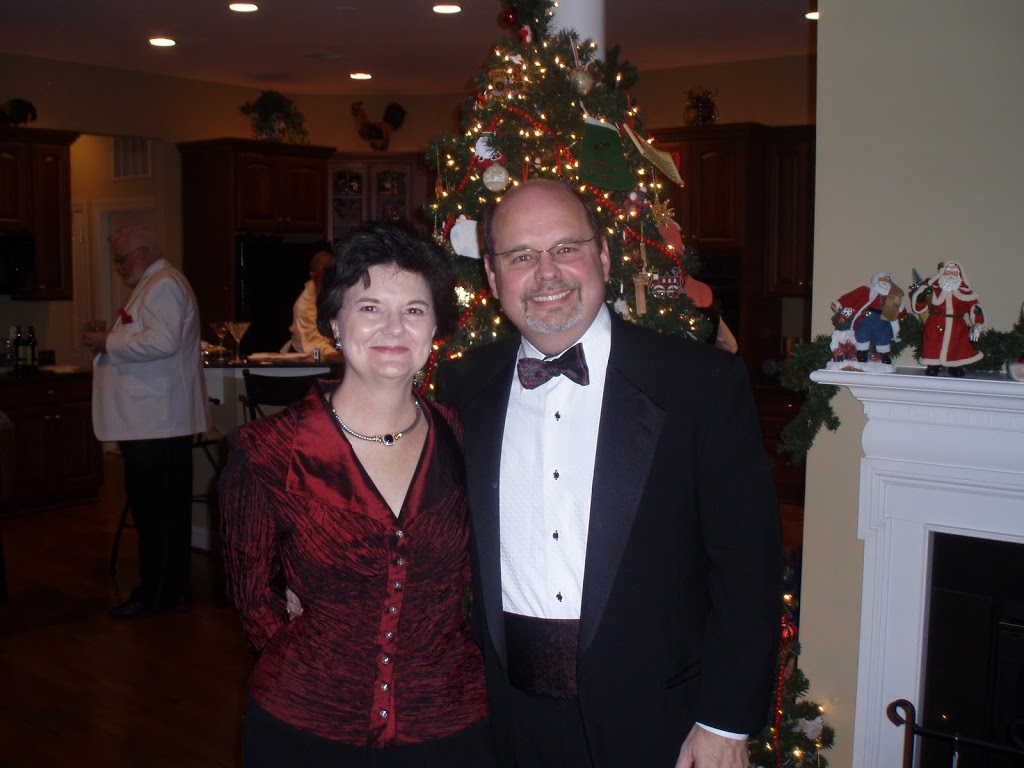
I would like to follow John Gilstrap’s heartwarming blog (you wear that tux quite well, my friend) with a comment or two about gift giving, or to be more specific, giving books, in all of the permutations in which they are available in this Christmas season 2010. The planets aligned and it struck me, once again, that we live in a wondrous age. So many choices that it might drive a person mad. But what a way to go.

I have just finished reading Autobiography of Mark Twain, Volume 1. It is the first of three planned volumes, the complete work presented as Samuel Clemens intended, right down to his request — nay, demand! — that it not see the light of day until one hundred years after his death. Dribs and drabs of it have been published before now but this is the mac daddy, right here. It is sharp, nasty, clever, astute, prescient — Clemens predicted the e-book, believe it or not — and really, really funny. There is a good laugh every paragraph or two. The folks at the U. of C. at Berkeley did a remarkable job of putting this together, especially when you consider that it was compiled from several feet of handwritten notes, transcriptions, and the like. Some reproductions of Clemens’ handwritten passages are included, and I assure you that if I had been assigned the task of herding this particular gang of cats I would be in a quiet room sipping tranquilizers and listening to Michael Hedges CDs until the end of my days. It is available for free online at www.marktwainproject.org, and in an ebook version, but hunt down a hardcover version and gift it to a bibliophile. This is a work that is meant, was born, to be held in hand (well, hands, actually,) and read the old-fashioned way.

You can gift ebooks now, in some formats, and a couple of interesting works which are ebook-only appeared this week. Marcus Wynne, long a favorite of the intelligence community which he has been a part of, has returned after too long an absence with a new stand-alone thriller entitled WITH A VENGEANCE. Wynne is painfully aware of the way in which the world works, away from the theories and hypothetical and think tanks. Marcus deals with front lines, hand to hand with the terrorists in the trenches; WITH A VENGEANCE will put you on the edge of your seat and keep you there for several hours. Some of those who read this book, pre-publication, said it was too powerful, too frightening, for the reading public. I read it two years ago and have never forgotten it, particularly the first third of it. Anyone you gift this work to will either love you forever or never forgive you. Or both.

Dave Zeltserman is one of those thriller and noir crime writers who has slowly but steadily moved from the “critically acclaimed” list the “must-read” list of mystery and thriller fans. His literary thriller The Caretaker of Lorne Field transcended genres, and will undoubtedly receive several “best of” nominations when the various and sundry literary awards start to rev up next year. Zeltserman has a new, ebook only work just out entitled Vampire Crimes, in which he cuts across genres yet again, a crime tale of the undead in which Natural Born Killers meets Near Dawn. Don’t give this one to your niece with all of the Twilight posters in her room. You could give it to her dad, however.

One of the most interesting projects of all that came across my desk last week, however, wasn’t an ebook or a hardcover, but an audio book by Jim Fusilli. It has been far too long since I’ve seen a book-length work from Fusilli, and Narrows Gate is book length, but not available as a book. It is an original work commissioned for audio by audible.com, the first to my knowledge by a single author (The Chopin Manuscript, of course, was an collaboration of many). It is part novel, part performance piece; I remember when radio dramas were still available, and if they were still in existence, they might sound something like this dark and gritty mob tale set on the mean streets of Hoboken, New Jersey in the 1940s. I don’t normally listen to audio books as I can read faster than I can listen, but this is worth making the exception for; and if you have someone who loves crime novels and audio books, they will be in your debt if you present them with this.

Your turn now. What are you giving, book-wise? And what do you wish to receive?
Christmas Traditions

By John Gilstrap

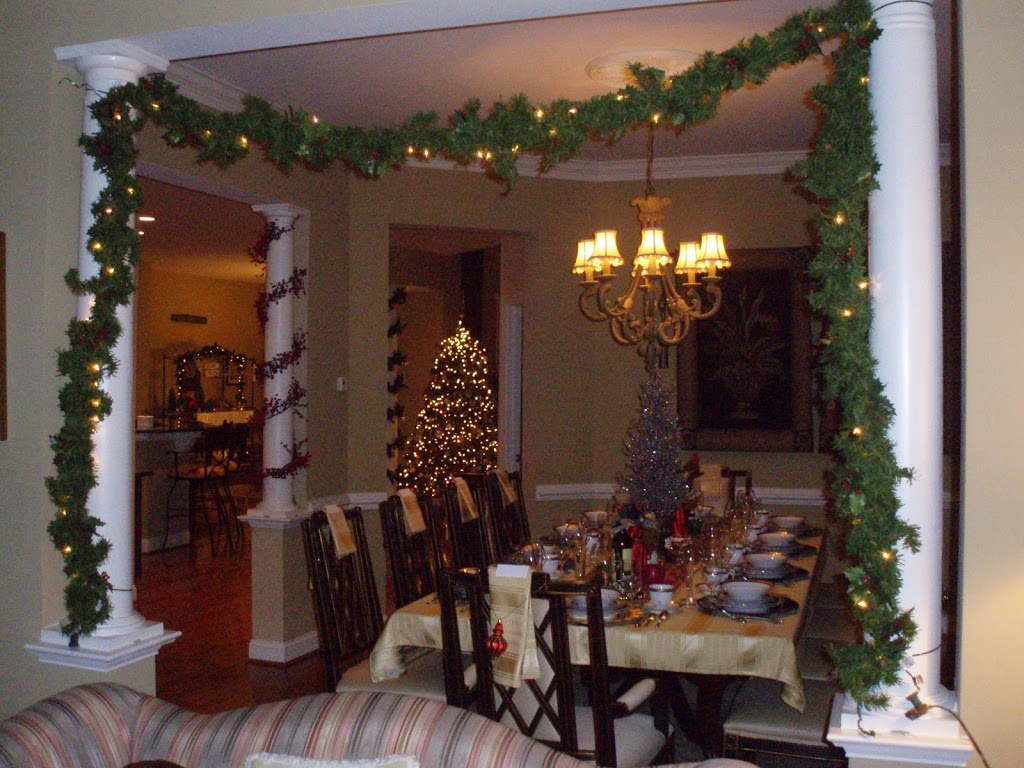
The season has begun. Forget about my “badass” photo and the thrillers I write–okay, don’t forget about the thrillers entirely–I am a softie for all things Christmas.  This is the season for giving and forgiving.  It’s the season of beautiful music, lovely sights, and for me, above all, family tradition.

Both of my parents are gone now, and I’m sorry to report that much of my extended family has become estranged over time.  Thus, it falls upon me to instill a sense of tradition upon my own son, even as the three of us build new traditions of our own.

It starts with the decorations.  They go up on the day after Thanksgiving, and they come down on New Year’s Day.  Actually, in recent years, the going up part has spilled over to the following day.  The cache of ornaments has grown over the decades, but each one of them has meaning within the family.  My wife, Joy, and I both have a sampling of ornaments from our childhoods, a few of those having been passed on to us from our parents’ childhoods.  The treetop ornament from my earliest Christmas trees is now too fragile to risk at the top of the tree, and is now displayed from a candle stick.  The box we store it in is older than I am, having once carried a favorite pair of my mother’s shoes, and it’s lined on the bottom with the front pages of newspapers dated January 1 from momentous years in our family’s history.

It’s like that with more than a few decorations.  Christmastime is a journey into family lore.

It’s also a time for entertaining.  Every other year or so, we throw a black tie dinner for a few friends at our home.  This is an “on” year, in fact, and tomorrow is the big day.  I can’t wait.  We are blessed with many friends, and between Thanksgiving and New Year’s Day, we will host or attend as many as ten different holiday celebrations, from pot luck at a neighbor’s house to cocktail parties to sit-down dinners.  If I can escape the season with fewer than five pounds added to my waistline, I consider myself a model of restraint. 

Then there are the movies that must be viewed with my son.  Tonight we watched The Santa Clause starring Tim Allen.  Before the end of the season, we’ll carve out time to watch A Charlie Brown Christmas, Home Alone, and, newest to the list, The Polar Express.  The common trait shared by these films is a huge heart.  They’re all about people who love each.  Even after seeing it well over a dozen times, I still cry at the scene in Home Alone where Kevin finally talks to the old man in the church on Christmas Eve.

So, what about you, dear Killzoners?  What are your favorite Christmas traditons?  Beyond It’s A Wonderful Life (from which I need to take a continued break), am I missing any important Christmas films?  Can we all agree that George C. Scott made the best Ebeneezer Scrooge?

“Stupid Writer Tricks”

or, “How far would you go to market your book?”

by Michelle Gagnon

A few weeks ago, author Tawni O’Dell wrote a very funny essay about some of the, oh, let’s call them “interesting,” experiences she had when marketing her first book. The article incited a rabid response on the Sisters in Crime listserv, where the debate centered on whether or not Tawni was taken advantage of because she was female, if she was a fool to go along with the absurd things that were asked of her, or if any author (gender be damned) would do the same.

Here’s what kicked off the uproar:
Tawni O’Dell’s debut, “Back Roads” is a dark, gritty portrayal of a family in crisis told entirely in the male first-person voice of 19-year-old Harley Altmyer. Entertainment Weekly offered to write a brief piece on O’Dell to coincide with the release.
Now, you can just imagine how excited her PR team was. A feature article, including photos, in a major periodical? Barring an Oprah appearance (more on that later), it doesn’t get much better.
So here’s how it went down, in O’Dell’s own words:

I was busily signing books at a table set up in the middle of the mall when I happened to look up and saw an anxious, overcaffeinated little troupe of petite Ray-Banned androgyny and ethnic ambiguity all dressed entirely in black and all clutching cups of Dunkin’ Donuts coffee coming toward me. (We didn’t have a Starbucks.) As they did so the wide-eyed, whispering herd of extra-large Steelers sweatshirts and camouflage hunting jackets milling around me split decisively in two to let them pass. The parting of the Red Sea couldn’t have been any more dramatic.

They turned out to be my photographer, Nathan (pronounced the French way, Nat-on,) his assistant, his other assistant, a makeup artist and a stylist.

One of the assistants informed me that Nathan would like to shoot me outside in some authentic Pennsylvania woods because his favorite scenes in my book had taken place in the woods and he envisioned me there. I told the assistant to tell Nathan, who was standing right beside us but apparently didn’t like to participate in his own conversations, that it was January and it was snowing. The assistant then told me not to worry, they would keep Nathan warm.

They then loaded me into their van like I was a kidnapping victim and off we drove in search of some authentic Pennsylvania woods. We didn’t have to go far. We found some behind the mall. A bunch of my family and friends that had been in attendance at the signing also came along. Nothing in the world was going to keep them from seeing this.

Nathan was thrilled with the woods. He found his voice and began barking orders in an accent I was never able to place. It was sort of a cross between Desi Arnaz and Kazu, the meddlesome martian on the Flintstone’s.

I stood by blowing on my hands and stomping my feet to keep warm when suddenly he turned to me, eyed me up and down, and proclaimed, “We need to tease her hair. I want glitter. Lots of glitter, and the clothes will have to go.”

“You want me to be naked?” I spluttered.

“Do we have some fabric?” he went on, ignoring my question and my obvious distress. “I see swaths of tulle billowing out behind her and hanging in the tree branches like a morning mist.”

“You want me to be naked?” I repeated.

Before I could do or say anything else, I was ushered back into the van where I was stripped down to my underwear and sprayed in glitter.

When I re-emerged, my chattering entourage became deathly silent. Jaws dropped open and I heard a few gasps as I crunched barefoot through the snow, wrapped in yards of sparkling gauze, with my butt hanging out, and wondering to myself, Did John Irving ever have to do this?

Nathan positioned me and began snapping away with his camera.

“You’re a wood nymph!” he cried. “Yes, you’re a wood nymph! You’re an ethereal spirit. You’re an incarnation of the sky. You’re real yet you’re not real at all.”

So. Should O’Dell have objected? Absolutely. Can I empathize with the fact that as an overwhelmed and inexperienced young author, she participated in the shoot without thinking it through first? Certainly. Have I done things in the course of hawking my books that I regret? Without question (although nudity has never been involved. Yet.)

The sad truth is that in a time of severely limited marketing budgets, when authors are must rely largely on their own resources with very little guidance, the results can occasionally be quite ugly.

Here are some of the more bizarre and extraordinary things writers have done in an attempt to sell their books:

* In 2008, an Indonesian writer threw $10,700 in cash from an airplane to promote his book. His editor probably should have clarified that when she told him to throw his entire advance into marketing, she didn’t mean it literally.
* This past spring, the aptly named Paul Story pitched a tent outside the cottage where his book was set and camped there for two months, selling copies to passing hikers (although I believe the book was mainly about isolation, so I question how many potential buyers he actually encountered).
* Remember when someone threw a book at Obama a few weeks ago? Turns out that was no political protest, but a misguided attempt by author Michael Lohan (who I can only hope is not related to Lindsay) to promote his work. No, I’m not kidding. The best part? The Secret Service released him without pressing charges.

So…I almost shudder to ask, but where would you draw the line on promotion? (Basil, I can practically hear you sharpening your quill in the wilds of Alaska.)

Oh, and don’t feel too sorry for poor Tawni. Turns out the EW article never went to print- because Oprah called and invited O’Dell to appear on her show fully clothed.

The Page 69-Bomb

By Joe Moore

Over the last week we’ve had a noticeable increase in traffic and comments. This was due to the discussion of a few controversial topics including the use of the F-bomb and the C-bomb in novels. Some of the reactions were interesting, some downright shocking. John G. and I have a phone chat about it and our end conclusion: it’s a big world out there. You can never predict an individual’s reaction, especially when it comes to the use of profanity in the pages of novels.

I must admit I’ve never stopped reading a book because of the use of a single word. Most of the time, when I do stop it’s because the writing sucks. Either the plot was cliché or the characters were two-dimensional or the writing was weak and lazy, or all the other countless reasons people jump ship before the end. But for all the visitors that have visited our cozy little blog lately to comment on these subjects, thank you. Your patronage is appreciated.

So what is the page 69-bomb? Actually, it should say, the page 69 test. I used the word “bomb”as a cheap way to keep your attention. Sorry. The page 69 test is the real topic of my blog today. What is it? A trick to help everyone in choosing a book to read.

Picture yourself standing at the new release table in your local bookstore. You see a bunch of new arrivals. Some authors you’ve heard of, some names are new. How do you choose? According to John Sutherland, author of How to read a novel, you don’t judge a book by its cover.

Dust jackets, blurbs, shoutlines, critics’ commendations ("quote whores", as they are called in the video/DVD business) all jostle for the browser’s attention. But I recommend ignoring the hucksters’ shouts and applying instead the McLuhan test.

Marshall McLuhan, the guru of The Gutenberg Galaxy (1962), recommends that the browser turn to page 69 of any book and read it. If you like that page, buy the book. It works. Rule One, then: browse powerfully and read page 69.

I tried it with a few books on my shelf to see if I was attracted to a book by what I found on page 69. Of course, these were books I’d already read. I was highly skeptical. It sounded more like a gimmick or parlor trick that a true test of a book’s worth. What I wanted to see is if page 69 reflected the story or style or voice of the book. Was it a good sample of things to come? In theory, page 69 should be far enough into a story that it exemplifies the heart of the tale. What I found was that, in just about all cases, the page 69 test worked.

After a few of these test cases, I worked up enough courage to do the test on my own books. I started with my current WIP (written with Lynn Sholes). Here’s what’s on page 69 of The Blade Of Abraham:

“Maybe I’ll do it,” I said, immediately thinking I would regret the commitment.

“I’m not going to hold you to it yet.” He nodded toward the half-empty Johnnie Walker bottle sitting on the railing. “I can’t let you make a decision while under the influence.”

“It never stopped you before.” I realized that was uncalled for. “Sorry.” I took a bite of the eggs. “You always were a good omelet maker.”

We sat in silence eating. After the last bite, I was full and totally mellowed out. Of all the people in the world, Kenny was the only one who knew me so well—all my secrets, all my vulnerabilities and fears.

He extended his hand. “Give me your plate. I’ve got a pan of hot soapy water waiting. I’ll drop them in and we can worry about it in the morning.”

I didn’t have much resistance left so I handed over the bare plate. Kenny disappeared for a couple of seconds before rejoining me on the swing. His arm slid around me and it seemed so natural.

“Tired?” he asked.

“Pleasantly.” I leaned my head on his shoulder.

“I’ve missed you, Max.” He lifted my chin and kissed me. Not hard. Just soft and affectionate. Cautiously, as if he might hurt or offend me. And that felt natural, too. “It should have worked out,” I said. “We screwed up.”

“What’s done is done.”

I looked at him. “There were times you made a damn good husband.”

Not exactly a knock-down, drag-out scene from a thriller is it? After all, The Blade Of Abraham is about an attempted detonation of a nuclear device in a major American city and the race to prevent it. Page 69 is the end of a chapter. It involves two people: my main character Maxine and her former husband. Max is a retired federal agent who got shot up pretty bad while on a mission and chose to leave after 20 years as a civilian federal agent with the OSI. Her ex has shown up to ask her to come back to work for the government, something she has no desire to do. It’s only when he tells her why they need her back that she must face the choice of risking all that she has left in life or remain safe and secure in her cozy Colorado mountain hideaway.

The basis of this quiet, serine scene is in fact the basic structure of the entire book. A woman is intrigued by a challenge, decides to take it on only to have her life wrecked down to her emotional bedrock. She has to pull herself back up from the depths, meet the challenge, and overcome everything thrown in her way to save not only her own emotional life but the very real lives of millions of innocent people.

Now that I’ve taken the page 69 challenge, how about the rest of you writers out there. Got the guts to show us your page 69 and determine if it exemplifies the heart of your story? Naturally, if page 69 falls on a page with just a couple of lines, you have permission to post page 68 or 70. But the point I’m trying to determine is, does the page 69 test work on your manuscript or published book? If someone picked up your book and only read page 69, would they want to buy it?

And for the readers out there, how about your favorite (or not so favorite) book. Does the page 69 test work for you? Remember, this is only a test. No actual books will be harmed in the writing of this blog.

————————————
THE PHOENIX APOSTLES, coming June 2011
"A compelling page-turner." – Carla Neggers

Good news for ebooks: the 82-year-old mother test

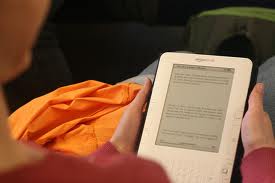
About this time last year, TKZ hosted a couple of spirited discussions about the merits of e-books, Kindles, and electronic publishing in general. After watching my 82-year-old mother become a devoted “Kindle convert” during the course of a recent cross-country road trip, I suspect that the technology battle is over. E-books have won.

My mother (nicknamed “Mimi” by friends and family) and I recently drove from South Carolina to Los Angeles in a cream puff of a car, a ’99 Mercedes sedan (it had only 17,000 miles on it when we hit the road). My sister had given Mimi a Kindle at the outset of our trip–and as we set off, my mother was a gracious but reluctant recipient. Thanks, she said, but I’ll never be able to hold it right for reading. It just won’t feel the same as a book. Will I have to keep it on a wire like the laptop I never use?

And then she plugged it in. Two days later, I couldn’t pull her away from the thing.

By the time we got to Phoenix, Mimi had already made her way through two Stieg Larsson books, and was downloading more. She was so enraptured by the reading experience that she was barely coming up for air.

Before she got her Kindle, Mimi was a voracious reader, but her buying habits wouldn’t have brought joy to publishers. Unable to make it out to the library anymore, she had become an avid reader of used books–we would send her box loads of second hand books. As a child of the Depression, Mimi thinks paying $26.95 for a brand new hardback is practically sinful, and she’d fuss at us if we splurged on any title we could have bought used from Amazon at a fraction of the price.(I tried to explain to her that buying new books helped ensure the future of her favorite authors, but try explaining that to someone who peeled the foil off the backs of gum sticks during World War II).

Mimi is so excited about her Kindle, it’s like we’ve given an addict her first hit.  She rhapsodizes about how you can increase the font size, and the long battery life.

After all the angst and anguish about what e-books will do to publishing, I think the future is bright–in the future, readers like Mimi will be downloading and paying full price for e-books. By being able to browse and read samples online, they’ll be exposed to new releases and other books they may never otherwise have read. And–did I mention? They’ll pay full price.


I think this is great news for writers and publishers. I call it the “82-year-old mother test.” Bottom line: If Mimi loves your product, you’ve got a great future. And boy, does Mimi love her new Kindle.

If my mother has joined the ranks of e-reader converts, I’m ready to declare an end to the debate (at least on Tuesdays, which is my blog day). The e-book era is officially here. May we all live long, e-read, and prosper.

What about you? Have you overcome previous doubts about e-books and joined the ranks of e-readers? Are you secretly hoping for an iPad, Nook, or Kindle this year?

The C-Bomb

By Clare Langley-Hawthorne

After reading Jim’s post yesterday on dropping the F-bomb I started thinking about what (if anything) I found really off-putting in a novel…(apart from ellipses…)

So, swearing doesn’t really bother me…

Can’t say I’m all that keen on a whole lot of gore or horror, but in the right book I have no problem with either…

I admit I cry easily when animals (okay, dogs) get hurt but, if the book demands it, then I will still keep reading…

I’m not exactly crazy about thrillers involving child abuse/child endangerment, but that isn’t a deal breaker for me…

So what is something that really puts me off reading a book (apart from really, really, gross, sexually deviant violence) ?

Though I hardly consider myself a prude, the one thing that will make me flinch is an inappropriately graphic sex scene, especially when particular terminology is used…

Yes, for me, an author dropping the C-bomb is far more shocking than any F-bomb detonations.

Now, I am not talking about the use of the C-bomb in books like James Ellroy’s (though I have have to confess I can’t remember if he even used that word). As a swear word, it doesn’t bother me nearly as much as its use in anatomical description. Perhaps it’s my British parents but I just find it a little distasteful, and, for the most part, repugnant.

So why do I dislike use of the C-bomb? Like Jim wrote in his post yesterday – it is more often than not unnecessary, inappropriate, and likely to alienate readers. Like Jim, however, I certainly don’t advocate censoring authors. I think a writer should use whatever word/term they like but they do need to think through the consequences.
This is part and parcel of the decision made regarding the language used to describe a sexual scene. An author obviously makes a choice to describe such a scene in more or less graphic detail (more X-rated perhaps than fuzzy focus, PG material). For me, however, no matter how graphic the scene, nothing is more likely to take me out of the story than the sudden appearance of the C-bomb.

How about you all – do you have any issue with the C-bomb? Are there other words/terms that you find make you flinch or distract you from an author’s work? Feel free to enter the fray (after all, I can always blame Jim or John G. for having started it:))

The Great F-Bomb Debate


In John G’s Friday post, he gave us clips of his most recent editorial letter. One of the admonitions in it was to lose the F bombs, because “some people will object to it.”
I happen to agree with his editor. We’ve had this discussion before, but this seems a good time to focus on it a bit more, and get specific. Yes, artistic license and the First Amendment allow for its use. We’ve had decades of rants and even lawsuits defending the F bomb. Well, maybe it’s time for some arguments against it. Here are three for your consideration:
1. It might affect your market share
I think it’s more than some who object to the F bomb. I think it’s a lot. In today’s culture, there’s enough that’s offensive, from the slacker at the counter to the boor cutting you off in traffic and delivering a one finger salute.
People are pummeled enough by life. How many want to get whacked with F bombs when reading for pleasure?
So purely from a mercenary standpoint, why shrink your audience? As John’s editor said, no one ever complains that there aren’t any F bombs in a book. (I note here that I do believe there is a valid distinction to be made between this word and “milder” swearing. It’s the same distinction George Carlin made in his famous routine about the seven words you can’t say on television. You may research that one at your own risk).
2. It’s not original
When Lenny Bruce started using the F word in performance, it had shock value. When novelists and filmmakers picked up the practice, same thing. When Quentin Tarantino and the Coen Bros. tried to make an art form out of it, the tide started turning. It’s been done. No one is going to marvel at the creative use of the F word anymore.
You want to know what’s original? Finding ways not to use it. That takes more skill, just as it takes more skill for a comic to get a laugh without resorting to the word.
3. It’s not necessary
But, the protest will come, I write about reality! The F word is real. How can I write about gangs or mafia types without it?
Well, let’s see. How did one of the best TV shows of all time, which ran, what, 20 years, do it? Watch the early seasons of Law & Order. You will get a lesson in how to do gritty without F bombs. (Without, in fact, using any of those infamous seven words you can’t say on TV).
Here’s the thing: fiction is not a re-creation of reality. We have documentaries and non-fiction for that. Fiction is a stylistic rendition of reality for emotional effect. You want readers caught up in a fictive dream, and to leave them with an emotional wallop. You do this by being creative with language. If you use the F word, however, you’re liable to take a lot of readers out of the dream.
Now, maybe you’re a writer who doesn’t care, because you are, by thunder, going to write the word if you think you need it. Fine. I’m just saying we are the masters of the language, not the other way around. Are we shaping our book or is our book running us? The great film noirs and crime novels of the 40s and 50s managed to be every bit as suspenseful (and, to be frank, were usually better written) than much modern fare. Did lack of the F bomb hurt them? Do we think, Ah, that Dashiell Hammett, what a bore? Chandler, what a rube? I didn’t think so.
So what’s your take on the whole F bomb thing? And please, no comments about “censorship” here. That’s not even close to what I’m talking about. I’m a First Amendment guy. You’re free to use it if you want to.
Do you want to? 

Reading Myself, Myself…

John Ramsey Miller

Last week I uploaded a completed manuscript I finished a year ago to my Kindle and started reading it. After having read it numerous times on the computer screen and on paper, I was amazed how on my Kindle I found myself reading it differently as it was more just book-like. It was easier for me to spot my typos, see the weaknesses and flaws that I missed on the other passes. Of course correcting on the Kindle is beyond my understanding and abilities, so I will have to go back to the lap box. It’s one of those novels with good bones, but it needs work. I know my strengths, but not as well as I know my weaknesses. My friend Phillip Hawley read it and made a lot of very valuable and insightful comments and suggestions. In fact he’d make a great editor. I’ve had four great editors, and they made my books what they were. No doubt about it. In fact, sometimes I feel like I am one of them singers who’s records are only great because of the producer’s mastery of soundboards and studio tricks that fool the ears of just about everybody.

Speaking of my Kindle, I noticed one of the novels I read by Ken Follett (A Dangerous Fortune) contained several typos–probably put there by the typesetter. Just made me wonder why they weren’t caught in the years since the book was published and lately transferred to Kindle format. There’s nothing more annoying than finding typos in your book that were put in after the final edits, or missed by the final set of checkers after everybody else missed them. Worse still is finding them early and then having them “not” be corrected.

Of late I’ve been reading a lot more than I usually do. Maybe it’s the time of year and the gloomy days. I think I should be reading less, living and writing more.

I hope everybody reading this had a great Thanksgiving. Mine was Norman Rockwell perfect until the first shots were fired across the table. I’m looking forward to our annual Christmas fiasco.

The Art of the Editorial Letter

By John Gilstrap
I believe that the editorial letter is an art form unto itself. This is the missive that a writer’s editor sends ahead of the marked-up manuscript to give a general sense of direction, and to pass along thoughts for ironing out rough patches in a story.

I’ve had a lot of editors over the years. One in particular loved to hear himself write, producing a 9 page editorial letter for me, single-spaced in 10-point Times New Roman. These were the days when you received an actual letter—you know, the kind with an envelope and postage. It was excruciating to read, and a nightmare to decipher.

For an editor, I imagine that the letter is a balancing act.  It’s tough to offer enough input without being too bruising to the writer’s ego. It also means knowing how sensitive your author is to such bruising.

My current editor is Michaela Hamilton of Kensington Publishing—truly the best in the business—and she has granted permission for me to share her letter regarding my next novel, Threat Warning (July, 2011) with our dear Killzoners. Her text is italicized here only as a means to keep her comments separate from mine. (I have omitted sections of the letter that might serve as spoilers to the book.)

I think it’s interesting to note how much of her input to my work parrots what we’ve been discussing in this space over the past year. Here we go:

Dear John,

I have greatly enjoyed rereading the ms of THREAT WARNING. It is an outstanding thriller.

Note to the sensitive among you: This is the last purely positive statement in the letter, and that’s the way it should be. “Outstanding thriller” is plenty enough affirmation from a big honkin’ New York editor. Hearing what works is pleasing, but in this context, it’s a waste of time. This is a repair mission, not a teaching moment.

Cuts are needed for pace throughout. Don’t over-explain. Your action and dialogue speak brilliantly for themselves. Keep pace moving.

I can hear Jim Bell shouting, “You go, girl!” Like authors everywhere, I have a tendency to over-indulge on explanation. She’s not telling me anything I don’t know in principle, but I can’t wait to see the sections she’s talking about. I thought it was pretty damn tight already.

Jonathan’s dialogue and internal monologues sometimes sound pompous. I understand that he’s a thinking reader’s action hero, but I don’t think he should talk or think like a Ph. D. candidate, especially in the middle of an action scene.

Translation: Quit slowing down your own story, Gilstrap! The reader will get it!

Some names struck me as odd or inappropriate.

She goes on to list the names that she thought were difficult, but I cut that section because the discussion gives away too much. The bottom line is that names need to be pronounceable, even when they are read.

Don’t resort to overused gestures such as shrugged, nodded, sighed, shook his head. These are ok occasionally, but in general, seek more vivid gestures that tell more about a character, help set a mood, and create visual dimension in the scene.

Guilty as charged. My problem here is that the ones she notes are the only conversational gestures that I know of. I stipulate that I overuse them, but if anyone has other gesture arrows that I can add to the quiver, feel free to speak up.

You know how I feel about adverbs. I’ve crossed out enough for a small country. Keep them to a minimum.

Comments like this make me smile. They show that my editor likes me enough to make fun outright.

I am also something of a nut about “moment.” It should not be overused. “Long moment” hits the same raw nerve with me as “very unique.” Use it if you want, but not too often, ok?

Again, I know I do this. I just have a hard time stopping myself.

Scenes in . . . need to move much faster. I don’t think thriller fans will want to sit through . . .; and the static scenes of . . . need to be kept short and punchy.

I know that’s a lot of truncation, but there was a lot of spoiler material in there. Note the emphasis on pacing, pacing, pacing. In a thriller, the phrase “static scenes” is synonymous with “scenes that suck.” Also, Joe, note her use of the semicolon. I’m just sayin’ . . .

Some other scenes also got too preachy for my taste. I’ve marked suggestions for cuts.

Pacing again.

Language: I suggest deleting the F-word and “Jesus” when used as an exclamation. I was surprised at how often the F-word appears in the ms . . . My advice is not to use it. Some people will object to it. But no one will object if it does not appear in the book. I’ve never seen a reader letter or email saying the book would have been better if it had a few more F-words.

Truthfully, this one surprises me a little. First off, I’m surprised that the F-bomb appears as much as it apparently does, and secondly, Michaela has never objected to it before. I think it’s a point well-taken. Clearly, I’ve got some crossing out to do.

Thank you for taking these comments into consideration. After you’ve had a chance to think about them, and to review the edited ms, please send me a new Word document incorporating all changes. I look forward to turning it in for production as well as rights submissions.

Okay, here’s the thing: I don’t have to make any of these changes. My name is on the cover, after all, and the things we’re talking about in the editorial letter are not of the magnitude that would cause the manuscript to be rejected. I will make the changes, however, because they’re all valid comments. Folks, there is nothing more valuable to a professional writer than a professional editor.

If possible, I would love to receive the revised ms the week of Nov. 29.

Well . . . I’ll try.

It’s Thanksgiving. Why are you online?

Okay, guess we all need time away from the table. And maybe football isn’t for everyone. So you’re here with me on Thanksgiving. And like me, you’ve probably eaten waaaay too much, but in case you’re in doubt about that, you should look for the signs here:

Top Ten Signs You’ve Eaten Too Much at Thanksgiving Dinner

10. Hundreds of volunteers have started to stack sandbags around you.

9. Doctor tells you your weight would be perfect for a man 17 feet tall.

8. You are responsible for a slight but measurable shift in the earth’s axis.

7. Right this minute you’re laughing up pie on the carpet.

6. You decide to take a little nap and wake up in mid-July.

5. World’s fattest man sends you a telegram, warning you to “back off!”

4. CBS tells you to lose weight or else.

3. Getting off your couch requires help from the fire department.

2. Every escalator you step on immediately grinds to a halt.

1. You’re sweatin’ gravy.

My other blogger mates would have a thought provoking post about much more heady matters, but hey, that’s not me. With the tense novels I write, I need a good laugh. So I dug out my parachute pants and got into it with M. C. Hammer.


As we speak, I’m having Thanksgiving at my sister’s house. (I know. You thought I was online with you, but I hate to break it to you, I posted early. Sorry.) This year it was my responsibility to make a family classic, our traditional Cranberry Chutney, one of my dad’s contributions. But after seeing this video, I’m not sure I’ll ever be able to eat cranberries again.


For the sake of discussion, I’d love to hear from you, as long as you’re here. What are your favorite things to do on Thanksgiving? And what dishes do you consider sacred MUST HAVE traditions?

On behalf of all of us at The Kill Zone, I hope you’re having a special day with your family and loved ones. We appreciate your visits to our site. It makes us feel like family, so thanks. Have a wonderful holiday season and don’t forget…

Books make wonderful gifts!