Inspiration for Writers

Readers always ask writers, “Where do you get your ideas?”
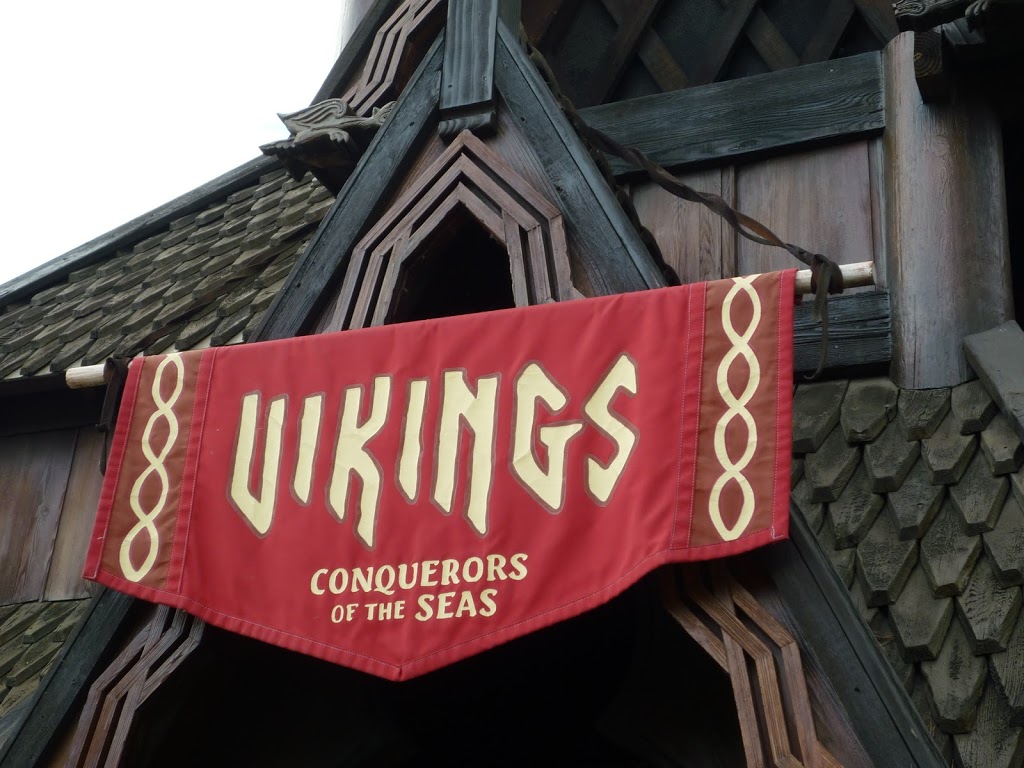
Ideas for novels can come from anywhere. The inspiration for my paranormal romance series arose from a ride at Disney World’s Epcot theme park (Epcot = Experimental Prototype City of Tomorrow). In World Showcase stands the Norway pavilion and a ride called Maelstrom, one of the best attractions in the theme park, in my opinion. You board a boat and enter a dark tunnel up a steep incline. At the top, staring down at you, is a glowing eye. The boat takes you into a misty forest where a troll pops up (or is it three trolls? I don’t remember). This evil character casts a magic spell on you to “Disappear…disappear.”
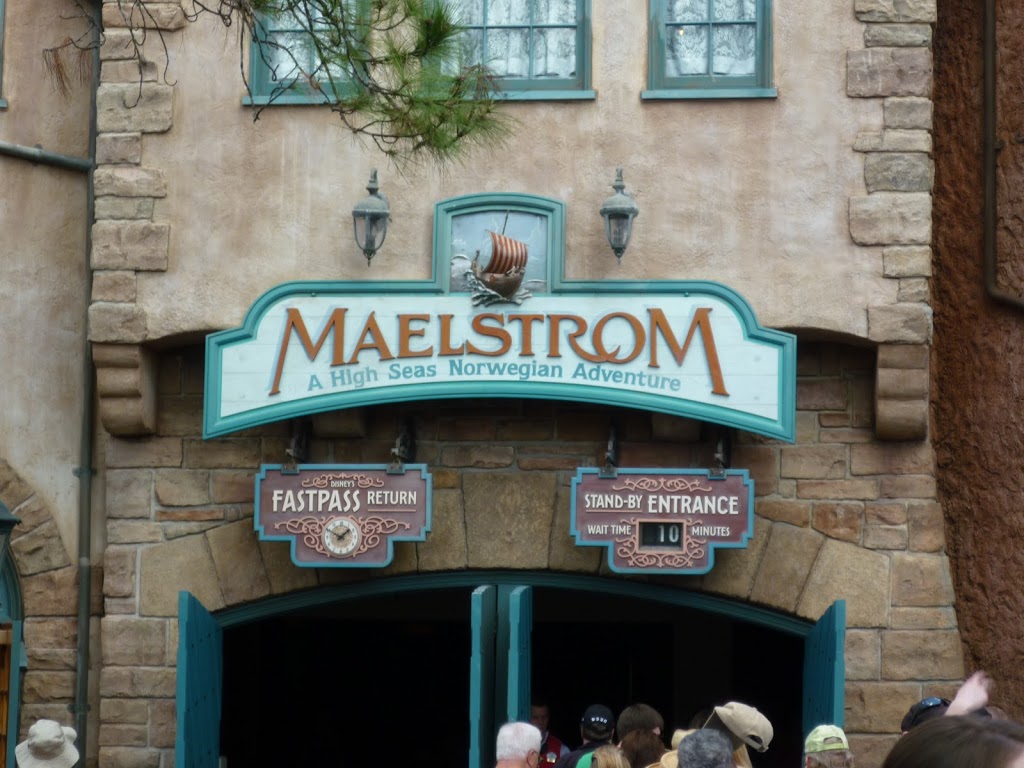
Suddenly, you are whisked backward through time (and literally backward as well). Then the  boat glides past a series of historical panoramas depicting Norse history. But then, uh oh, it appears as though your transport is about to plunge over the edge of a waterfall. Instead, after a slight turn, your boat does plunge downward but at a much less scary angle, landing with a splash amid oil rigs at sea. You’re back in the present and disembark at a seaside village.
From here, guests are herded into a theater for a film about Norway. Here’s a tip: if you do not wish to linger, walk directly past the seats and out the door on the opposite side before the film starts. You’ll exit in the shops and can browse the expensive wool sweaters, fanciful troll dolls, books, and jewelry. The Norway pavilion also has a sit-down restaurant and a fast food café. A little known gem is a tiny museum with lifelike figures depicting ancient kings and warriors.
From this experience was born my fictional Drift Lords series with a band of warriors who come from outer space to save Earth from an invasion of Trolleks (my term for trolls), who arrived through a rift between dimensions (think Bermuda Triangle). They join forces with a group of Earth women whose special powers are just awakening. An ancient prophesy says history is repeating itself and Ragnarok, the destruction of the universe, approaches and only our heroes and heroines can prevent disaster.
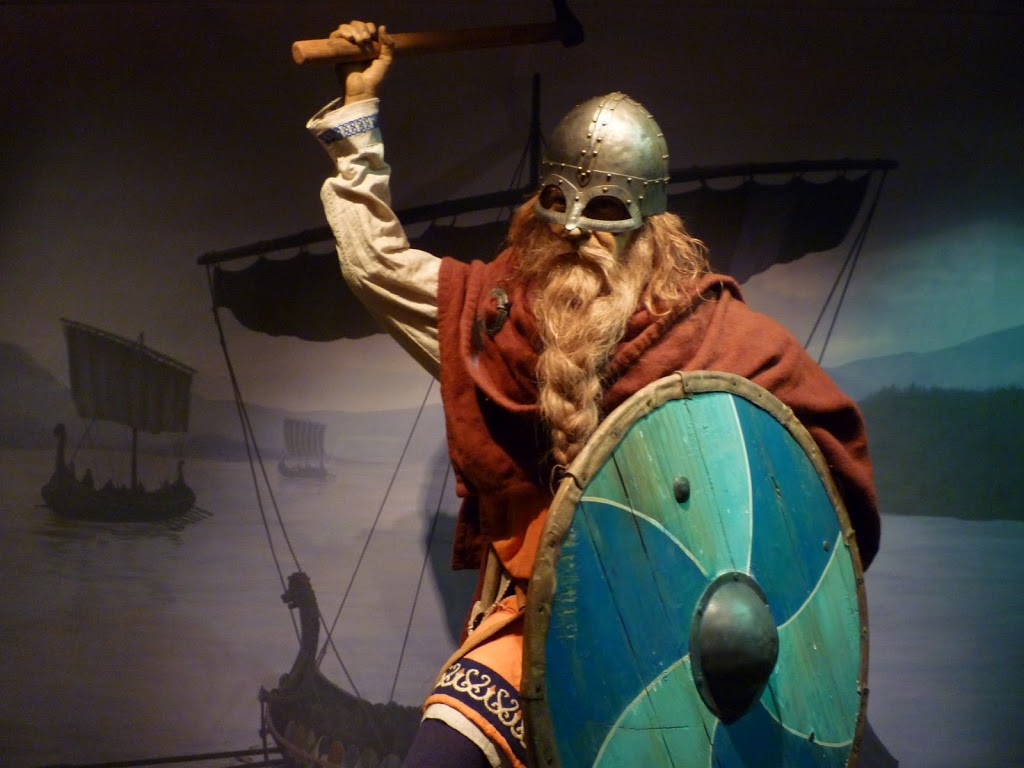
My story is based on Norse mythology. I bought some books at the Norway pavilion on Vikings and Norse gods, studied up on the mythology, and watched some movies involving trolls. By now I’ve completed two books in this trilogy with one more to go. I put that aside to work on later because I’m working diligently to finish a mystery, first book in a new series, inspired by a reader at one of my book signings who said, why don’t you write a mystery about xxx−and so I did. Again, inspiration hit from an unexpected place.
Where do our ideas come from? They’re out there. We have only to latch onto them and turn them into our fictional worlds. And world building is a topic for another time.
So fellow writers, what inspired your current project?
FACEBOOK IS HERE TO STAY: A Great Medium For Free Exposure

By: Kathleen Pickering

I have seen three TV shows in the past week where characters mentioned Facebook. This fact cements in my mind that Facebook as a media tool is here to stay. So, my question is: Are you still not on Facebook?

If you’re like my mother, you are not, and never will be, on Facebook. (That’s a story for another time.) However, if you are a curious planet dweller with a story to tell, Facebook is a phenomenon not to be missed. It is the perfect tool for authors or artist of any sort. The ability to reach millions of people for free, and as personably as humanly possible on the Internet, creates an outrageous boon every author needs: Contacts! Lots of ‘em!

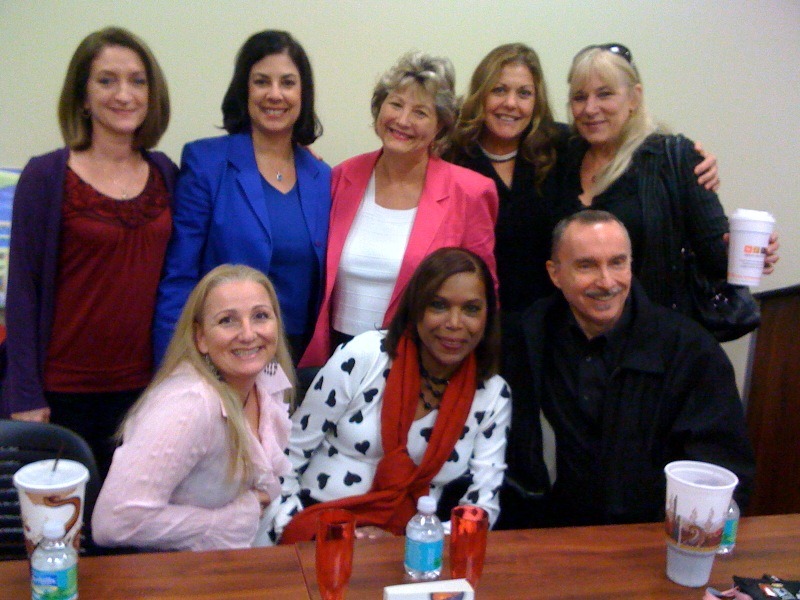
Writing Facebook BuddiesAuthor friends and fellow Facebook Buddies. Top L to R: Allison Chase, Nancy Cohen, Linda Conrad, Kathleen Pickering, Heather Graham. Bottom L to R: Traci Hall, Marcia King Gamble, Michael Meeske.

For those of us on Facebook, here are some quick tips I have learned to enhance your “Tribe” of friends:

For making friends:

When you offer and/or accept friend requests always add a note to the request, i.e., “Thank you for the friendship. Feel free to visit me at http://….” (or mention the topic that connects you as friends.)

Create Groups:

Build a tribe of your own with chat groups to discuss items relating to your business or areas of interests shared on Facebook. Go to your Message section and click on the “Groups” tab on the RH side. Then, click “Create Group” on the top. Send the group invitation to everyone on your Friends List. Be consistent with your Tribe with regular contact. Use your Group/ Tribe solely for relationship building and providing value to your group. Send them links to your blogs and videos. Note: Only promote business once per month, maximum. Your group is not for marketing; it is to establish you as an expert in your field.

Create Events:

When holding an on-line or on-site event and want to attract attendees, create this link. It is important that YOU be the Event Leader. It sets you apart as creative and reliable. Again, the Events link is found in the Message Section. Be sure to add an email contact for RSVP or inquiries. This is a great tool for building contact information. Tip: If you know how to build a Caputre Page for email captures, do not give the link to the event. Instead, set up a Capture Page for email captures to build your mailing list, then give the link to the event.

Tag Photos/Videos:

Take the time to “Tag” your friends in your uploaded photos/videos. This sends a direct link to their Facebook page as well as posts the photo/video on your profile page.

Create A Fan/Business Page:

Where your Facebook page is your social activity, your Fan Page is your business face. Both pages can be linked. (See Help Section under “Account”.)

Ideally, no more than 30 minutes per day should be all you need–either in the morning with your coffee or end of day before closing down business. If you cannot update daily, set a schedule that will work for you. They key: be consistent.

The more YOU reach out, the more you will attract visitors. Birthday announcements appear daily on Home page (right hand side). Send birthday greetings. (Stand apart from the crowd and use your computer’s camera to send a video and personalize your good wishes!) Respond with a quick reply to others’ posts, as well. You’ll enjoy the interaction as much as your friends.

Bottom Line: Facebook is your chance to shine and be recognized as unique among many by keeping a personal touch in the world of commerce. I have even gone so far as to place a Kathleen Pickering Welcome Video on my YouTube channel inviting folks to visit my Facebook page.

I invite you to visit me at http://www.facebook.com/kathleenpickering. Let’s be friends! If you know any Facebook tips, I’d love to hear them!

A Clean Desk Policy?

I seem doomed to have my writing environment in constant upheaval. Today we had workmen jackhammering up tile in the downstairs part of the house that got flooded and so I had no wifi, no room to get to my desk (because all the furniture is still stacked up in my study) and a whole lot of dust to clean up. Now, I am hardly the type to have a clean desk policy but this is getting ridiculous!

I remember the law firm I worked for in Melbourne many years ago tried to impose a strict clean desk policy. You were not supposed to have a scrap of work on your desk at the end of the day. Needless to say I failed miserably. I am a woman who works in ‘piles’ and if I don’t have these prominent situated around my office I can’t for the life of me remember what I am supposed to be doing. I was lucky that the partner who I worked for at the time, a very anally retentive lawyer with a spotless desk, took pity on me and let me continue in my dirty, piled up paper, working fashion. Apparently, he said, he couldn’t really fault me as I managed to work just as efficiently despite the mess. Although I would much rather work in a clean office environment, just as I think everyone else would too as it would allow us to get more work done. I might have to ask my manager if we can buy from Green Facilities or somewhere similar to ensure that our office remains as clean as possible.

I was pleased to read that this phenomenon is borne out in a book called The Perfect Mess by Dave Freedman and Eric Abrahamson which contends that those with cluttered, messy desks are often more efficient and creative than their neatnik brethren. Since my desk always looks like a disaster zone I think I am going to stick with the Freedman/Abrahamson interpretation…but nonetheless I have to wonder whether most writers are like me – or whether I am just deluding myself that disorder is merely a sign of a great author in the making.

As it is, I am always surrounded by piles of research and printed out copies of the latest manuscript. Currently I have marked up copies of part one of my young adult WIP, a pile of articles on Orphic mythology, notebooks with scrawls for two new projects I am contemplating, an atlas of WWI with post it notes spilling forth, files relating to my sons’ school stuff I need to attend to, and a messy pile of handwritten notes with a revised plot outline in progress.

So what about my fellow writers? Do you, like me, have a messy desk full of piles of paper or are you a neat freak with everything organized and de-cluttered for the sake of productivity and sanity? What do you think, is a messy desk a sign of creativity or just plain slovenliness?


– Posted using BlogPress from my iPad

Can Dark Shed Light?

I got my start in the Christian fiction market. It was a natural fit for me because I’ve always been interested in the great questions surrounding life, the universe, and everything––what theologian Paul Tillich called matters of “ultimate concern.” (And what Douglas Adams called 42).

Basically, how do we figure out this journey we’re all on?

In college I loved philosophy, though I didn’t major in it. I took a much more practical major, film. But all through college and after, I continued to read philosophy and theology. Love Plato. Love Pascal. Love the Stoics. I tried reading Kant but my head exploded. Aquinas was tough but fair. I’ve tangled with Nietzsche and the existentialists.  
The point is, I guess, that I just find compelling the threads of great thoughts as they wind down through the centuries.
Even now, with a general market publisher (Hachette) for my Try series, I find my characters involved in the big questions. Ty Buchanan is a lawyer whose fiancée is killed on page one of the first book, sending him reeling spiritually and every other way. He is befriended by an African American priest and a basketball playing nun who have one view of things. He hangs out at a coffee place run by Barton C. “Pick” McNitt, a former philosophy professor at Cal State who went insane, recovered, and now pushes caffeine and raises butterflies for funerals. He’s an atheist.
Buchanan finds himself bobbing and weaving between these characters even as he’s trying to find out the truth behind his fiancée’s death. 
And so it goes. The fiction I love best has characters going through inner as well as outer challenges, dealing with a dark world and trying to find their way around in it.
My recent release, Watch Your Back, has generated some responses from my established readers. One comment is that the tales seemed “dark” and unlike my previous work. This, I note, in spite of the fact that I do not use gratuitous elements in my fiction. I like to write in a style that would fit a 1940’s film noir (noir, of course, is French for dark).
So here’s why I chose the material I did for Watch Your Back: Dark tales can often be the most moral of all.
I believe in what John Gardner, the late novelist and writing teacher, said in an interview in Paris Review. Good art is about “creating, out of deep and honest concern, a vision of life that is worth pursuing.” He contrasted this with art that is just “staring, because it is fashionable, into the dark abyss.” And staying in the abyss. That doesn’t interest me.
As I look back at my work, the thread that seems to run through all of it is the pursuit of justice. Maybe that’s in part because of how I was raised, by an L.A. lawyer who fought for justice for the indigent as well as for paying clients.
Now, a dark story, in my view, ought to explore the consequences of human actions. Indeed, isn’t that what Greek tragedy was all about? By showing the audience the catastrophe of hubris, the theater was training citizens in virtue. There was a cosmic justice in the tragic fall.
Cut to: Stephen King. I would argue that King’s “dark” fiction is highly moral. Much of it shows, for example, what happens when one trucks with evil, even with good motives. Pet Sematary is perhaps the most lucid example of this. He has many others. I would call your attention especially to the fabulous mini-series he wrote, Storm of the Century. I won’t give away any spoilers, but you ought to watch it to see how this sort of thing is really done.
So, in my stories in this latest collection, you will find criminals, rip-off artists, adulterers and liars. But I believe you will also see I am not dwelling in the dark. When characters get it “wrong,” that’s another way of showing what’s right.
On the other hand, I’m not being didactic. I’m not a professor. I’m a writer whose first job is to keep you turning the pages. My favorite writers of all time do that for me, and then leave me thinking about the book when it’s over. I don’t know if you can ask much more of a fiction writer than that.

And that’s what I try to do in my fiction, including Watch Your Back.

So who are some of the writers who have taken you through a dark story with a candle in their hands?

Crippolater, Alligator


John Ramsey Miller

In October while converting a porch into a room in my home, I touched my left thumb to a moving table saw blade. Don’t know how to describe the sensation except to say it was a sort of thrunk-thropping followed immediately by a realization that the anatomy of my left extremity would be forever altered to some degree. Then there was a serious infection and some necrosis of the tissue in the pad. To make a long story short, as I am typing with one finger on my right hand, I had surgery a few days ago to rebuild by flapping and grafting the disastered digit, and it’s in a huge bulbous cast so I am going to apologize for a very brief blog this week as typing is hard enough when you aren’t on painkillers. On March 3rd I’ll get to see if the surgery was successful, and hopefully I can get back to writing again. I really miss my time at the keyboard.

Has anything ever happened to interrupt your schedule for more than a few days?

My Oscar Picks

By John Gilstrap

One really cool perk of belonging to the Writers Guild of America (WGA) is the gift that starts giving sometime in lat October, and runs fairly steadily through the end of the year: the flood of movie screeners for awards season.  Because none of the films I’ve been paid to write have ever been produced, I am not a member of the Academy, yet I do get to vote for the WGA Awards, and that in itself is pretty cool.

Some years, the flow of screeners is better than others, but 2010 brought a bumper crop.  Don’t get me wrong, I still go to the theater periodically, but not nearly as often as I used to.  When watching in the privacy of my own home, I’ve never once had to shoot a dirty look to a rude teenager with a cell phone.  That alone greatly improves the movie-going experience.  (Plus, we can pause the movie for bathroom breaks.)

With the Oscars looming this coming Sunday (my birthday!), I thought I’d make my pitch for a few of the major categories, listing which contestants I think should win, and, in some cases, who I think will win, even if I disagree.

Best Supporting Actress.  This one is tough for me, as I think it’s tough for anyone who watched some of the performaces that are competing with one another.  Hailee Steinfeld’s portrayal of Mattie Ross in True Grit was spellbinding.  She commanded every scene she was in.  I couldn’t take my eyes off of her.  If she won, I would not be disappointed.  But my vote goes to Helena Bonham Carter in The King’s Speech.  Through facial expressions alone, she was able to project a love of her husband that tore at my heart.

Best Supporting Actor.  Geoffrey Rush in The King’s Speech.  ‘Nuff said.  I can’t imagine the award going to anyone else this year.  Much is said of Christian Bale’s performance in The Fighter, but while I thought he was terrific in the role, he engaged in a little bit too much scenery chewing for me.  Geoffrey Rush, on the other hand, merely lived his character.

Best Actress.  Okay, time for full disclosure here.  This is the category for which I saw the least number of films.  I’m going to default to Annette Bening in The Kids Are All Right.  Her portrayal of a heartsick middle-aged lesbian was a memorable part of a very memorable movie.  That said, all the buzz says the Oscar is going to Natalie Portman for The Black Swan.  Having not seen the movie (yet), I defer to the opinions of others.

Best Actor.  Another tough call.  Jeff Bridges as Rooster Cogburn in True Grit was a force of nature.  I loved every minute of his screen time.  (Every minute of the film, for that matter.)  While Jesse Eisenberg was fantastic in The Social Network, I don’t think the story was big enough to compete with some of its competition.  My choice for Best Actor is Colin Firth in The King’s Speech.  He was, in a word, fantastic.

Best Adapted Screenplay.  Aaron Sorkin for The Social Network.  Reading a Sorkin screenplay is like taking a master class in writing action and dialogue.

Best Original Screenplay.  Lisa Cholodenko and Stuart Blumberg for The Kids Are All Right.  Okay, that’s my pick.  I don’t think it will win, though.  The momentum all seems to be behind David Seidler for The King’s Speech.

Best Picture.  For me, it’s a tie between True Grit and The King’s Speech.  If I were to place a bet, I think the smart money is on The King’s Speech. 

So, Killzoners . . . What do you think?  Here’s your chance to go on the record.

Book Trailers and Our Visual Society

I got a Droid phone for Christmas and went from practically the Stone Age into a vision of an amazing future. I can scan barcodes and shop for the best price in town, use my GPS to find the latest trendy restaurant available by voice command, and even read books off my phone using a kindle download app for free. But the reason I’m blogging about my phone and the latest book trailer I had made for my first Young Adult book – In the Arms of Stone Angels (Harlequin Teen, Apr 2011) – is a cool app that I want to share with you.

A QR code looks like a Rorschach test. It is square and you may have seen them on pages of magazines, on signs, busses, business cards, etc. It works like a barcode and can be scanned like the stores ID their inventory at cash registers, but this code can be made by ANYONE using the hyperlink I posted above. It can be scanned via smart phone, like the Droid, with the right reader app. You can insert a secret message in text, insert contact information, or it can make a connection to a wireless network or link to a web page that opens on the phone’s browser. You can make the QR image play the part of a secret code made available only to winners in a contest or the code can direct a reader to your latest book trailer. Instant gratification for our visual society and a cool app toy!


This QR Code can be downloaded into a jpeg file that can be printed onto your latest bookmarks or made into stickers, whatever floats your boat. Anyone with a smart phone and a QR Code scanner can read your message. And in one swipe off your bookmark (or any other promotional material), a reader can be looking at your trailer in an instant. How cool is that?!

My contact at “Trailer to the Stars,” Misty Taggert, gave me the heads up on this app. It’s hard to quantify if book trailers actually sell books, but I sure love making them. And using a professional company like Misty and crew really made this effortless for me. I’m on deadline and they made the collaboration easy and simple, for my part. For them, not so much. I’ve done trailers myself before. It takes time and way more skill than I possess to do a trailer like this.

It’s hard enough to encapsulate your story into a short film of a minute and a half. But add a script, voice over talent, production music and action videos that fit, and movie animation effects for mood, and the process can get very complicated. And way above my paygrade.


For Discussion:
1.) What do you think of book trailers as a promotional tool? I was particularly interested in doing a trailer for YA. My target age for this book is 13-18 years old. And since Amazon and Barnes & Noble host trailers on an author’s book page, it’s great to have the opportunity to post a trailer at the point of sale.

2.) Have a great phone app to share? If you have a new phone and a great app to share, I’d love to hear about it. Hearing about new technology really stirs the creativity in me when I think of writing new books. Imagine an app that gives you Bluetooth capability, but also sends subliminal and subversive messages to your brain. Or picture an app that protects and backs up the contacts on your phone, in case it’s lost or stolen, but all the information for loved ones and friends (addresses, photos, phone numbers) make them a target for a dangerous predator unless you do exactly as they say. No one is safe. Anything can turn into a conspiracy with the right dose of paranoia.

3.) Want someone to indulge you? Hmmmmm, Basil? If you’re like the always inventive Basil Sands, you may want someone to invent an app just for YOU. What kind of phone app would that be?

Playing Jenga with my book

By Joe Moore

There’s a great game called Jenga. It’s comprised of lots of wooden blocks from which you build a tower. Each player in turn removes one wooden block from anywhere within the tower. The object of the game is to game1not be the one to remove the block that tumbles the tower into a heap of rubble. After all, each block is connected, touches, or relies on the others. The tower must remain structurally stable and strong to keep from falling and breaking. It’s fun to play, but you know that if you pull the wrong block, you can cause a chain reaction that brings the tower down. Once it falls, the game is over.

This week, I’m deep into the editing of the galley proof for my upcoming thriller, THE PHOENIX APOSTLES (June 8). It’s one of, if not the most critical stage of the novel writing process. Up until now, it’s been all fun and games: playing “what if”, outlining, researching, writing, discussing the plot with my agent/editor, sending out portions of the manuscript to my beta readers, rewriting, changing and shifting plot and characters, panicking that I won’t meet the deadline, turning in the manuscript on the deadline day, waiting for the initial feedback from my editor, strategizing with the publisher’s publicity department, seeing the cover art for the first time, worrying, and waiting. A treat arrives in the mail in the form of an ARC (advance reader copy) that my editor snagged for me. I get to see the mockup of the book and cover, and hold it in my hands, and show family and friends that there really will be another book, and I really am a writer, and the first four books weren’t just flukes. So up until now, it’s been tons of fun.

Suddenly, I get an email from the copy editor. The galley proof (the entire text printed as it will appear in the final version) will arrive on such and such a date, and she needs my corrections back on such and such a date to meet the “to-press” date. And she includes the statement that causes all warmth to drain from my body to be replaced with bone-crunching Arctic fear: this will be my final opportunity to make changes.

I’m about to play Jenga with my book.

OK, I can handle it. After all, everyone who read the manuscript loved it. Sure, there’s going to be a few typos that even the editor and proof reader missed. Hey, we’re all human, right? I’ll just whip through this baby, catch a few minor flaws, and get it back ahead of time.

Note: one big advantage here; I have a co-writer, and she’s got her own copy of the galley proof, and she’s going through the same exercise I am. So we figure it’ll be a quick read-through and we’re done. Then we can get back to the fun stuff, right?

So far, I have 5 pages of changes, mostly small items, but a couple of plot issues that need a great deal of thought before we commit to a change. The reason is, one small change, even a word, can break stuff all over the place. Pull the wrong block and the book comes tumbling down.

“This will be your final opportunity to make changes.”

Most of the changes going back to the copy editor are small stuff. But if I stumble across something that needs to be clarified and that clarification causes something else to be changed, and that change causes a major . . .

You get the idea. Editing the galley proof is like pulling blocks in the Jenga tower without it crumbling down around me. It’s not fun, and you don’t get a second chance. Who said writing a novel wasn’t dangerous?

How does this stage of the process go for the rest of the writers out there? Do you love it or hate it? Do you play Jenga with your book?

————————————
THE PHOENIX APOSTLES, coming June 8, 2011.
”Leaves the reader breathless and wanting more.”
– James Rollins

Obsessions: The downside of working at home

As a full-time writer, I have the luxury of working at home. But recently  I’ve seen signs that I need to get out more.

I’m not a music person, but I like to have some kind of background noise when I’m working. I used to keep the TV on, but that became too distracting. So one day when I was browsing for online streams, I stumbled across the local police channel. I could actually listen to every back-and-forth between the dispatcher, police,  and emergency units.

A new distraction–make that an obsession–was born. It took me a few days to decipher the codes and garbled transmissions, but I finally got the hang of the official communications.  We live a few blocks away from the fire station, and we hear sirens several times a day. I used to pay them little attention. Now I’m like a duck on a June bug, hitting that police stream to find out what’s going on in my little town.

And I have to say, it’s been a bit unnerving. It’s not reassuring to learn that your local PD is on the lookout for an armed and dangerous thug who just escaped a police perimeter in a neighboring town. Or that the gas station at the bottom of the hill was just  robbed by a masked bandit who has been attacking places all over the area.

My husband, who also works at home but who has a structured, self-disciplined routine, recently gave me a strange look when I peered fearfully out the window.

“What are you doing?” he asked.

“Looking for a silver Honda, driven by 5-foot nine guy who is possibly Asian,” I reply. “He robbed the Chevron station. He has a gun, nine millimeter. “

“Oh.”

My husband has learned not to probe my odd statements too deeply. I think he attributes my eccentricities to the fact that I’m a writer.

And truthfully, I rationalize many of my quirks as being a byproduct of a creative mind. For example, I figure I have to learn how cops really talk, so that helps me justify listening to the emergency channel for hours on end.

The truth is, it’s just another one of my home-grown obsessions. I have others. I have an intense interest in volcanoes, for example. I monitor the status of volcanoes across the planet–I usually know when one’s about to blow, long before you hear about it on the news. (News editors must not share my volcano obsession.)  Why? Well, for some reason I have this inner certainty that a major volcano is going to explode, a Krakatoa-level event that’ll throw us back into another mini-Ice Age. (If it actually happens, it’ll be hell on crops and the economy, but at least it’ll take care of global warming.)

The reality is, I should probably get out of the house more. When I had a day job, I didn’t indulge my obsessions nearly so much. I simply didn’t have time. Maybe I should volunteer, do something useful. But I’d probably volunteer for something related to one of my obsessions, like becoming a Neighborhood Watch captain. Do they get to talk on the police radio, do you suppose?

But enough about my obsessions. Do you have any you can share?

Introducing Hamish

The timing could have probably been better (though who could have predicted the house flooding?!) but last Thursday we picked up our new collie puppy, Hamish. We were going to get an australian labradoodle but after much deliberation, we decided on a collie. Followers of TKZ may recall that we had to put down our previous collie but now we have finally welcomed a new puppy into our hearts and home. It’s been a while since we’ve done the whole puppy thing and I’d forgotten how much like having a baby it can be – crying in the middle of the night, potty training and, of course, all the delightful curiosity and playfulness. I’m so glad we got a puppy! I’ve been reading articles on websites like zooawesome.com to get some tips on how to keep my puppy happy but he seems to be enjoying his new home!

Despite the potty training trials, Hamish is an lovely, friendly, mellow puppy and hopefully his presence will bring the same comfort our old dog, Benjamin, brought to our home. More importantly I hope he heralds the normalization of my writing schedule (finally!! Please!!) – Jim’s post yesterday actually made me a bit depressed as I would love to type faster but life seems to be getting in the way lately (sigh!). In fact it feels rather like trying to walk up a slippery slide…but enough about me…back to Hamish…


I can’t say I am a huge fan of pets in mysteries – especially not the pseudo-detective types – but I do believe pets can be excellent muses. My old dog was always happy to sit and listen to me talk about plot issues or offer me a ruff to hug when the middle of the books started to sag. I think pets provide writers with a myriad of support services – and besides who else would sit by hour after hour as you type, asking only for a small tummy rub now and again in return?

So do you have a pet ‘muse’? Do you have a cat, dog, horse, guinea pig, chicken, fish or exotic pet that supports you as a writer?