
I’m currently reading The Slap by Christos Tsiolkas, an Australian book that provoked quite a bit of controversy a couple of years ago, not surprisingly, as it centers around someone slapping another person’s child at a backyard BBQ. Although I find the issues it raises about Australian culture and parenting interesting, I have nearly thrown the book in the bin (and seriously, I’m not sure I even want to bother reading the rest of the book) because of the repellent nature of the characters.
What makes this strange, for me at least, is that it is the very unpleasantness of these characters that has made the story less rather than more compelling. This is in complete contrast to the previous two books I have read – The Ghost Road by Pat Barker (about shell shocked WW1 soldiers including the poet Wilfred Owen and a character, Billy Prior, who is unsympathetic for most of the book) and A Game of Thrones by George R.R. Martin – which has a number of pretty unlikeable characters.
So what makes an unsympathetic character nonetheless compelling? Why is it that in some books, you might dislike, even loathe, a character, but still find the book intriguing – while in others, that same visceral reaction makes you want to hurl the book at the nearest wall and be done with it?
Although I am not the sort of writer who subscribes to the notion that you have to have a sympathetic main character, I do believe that there must be some redeeming feature, flaw or level of humour that ensures a reader isn’t alienated by an unlikeable character. In the case of The Slap I’ve found some characters so distasteful that I simply don’t want to spend any more time inside their heads. In the case of the other books (which are as unlike each other as it is possible – one, historical the other total fantasy) the world and the characters that inhabited it were flawed but intriguing. They hadn’t crossed the line to become either dull or intolerable.
But how, when you are writing a novel, do you avoid falling into this trap? None of us want to read books about one-dimensional goodies or baddies, but neither do we want to hang-out with boring or repellent three-dimensional characters either.
This got me thinking about how to write ‘unpleasant’ characters, knowing of course, that there are no rules – only pitfalls to avoid. For me, these include alienating a reader, failing to provide any redeeming feature for a character, or ‘telling’ the reader to such an extent that the reader does not believes the character to be realistic. For me (and I am in the minority as most reviewers loved The Slap) the characters themselves impeded the story. I didn’t want to delve into their minds, not because it was an unpleasant place to be, but because it was unpleasant to the point of being dull. It turned me off what I might otherwise have been interested in reading. I had no sympathy. I had no compelling reason to find out what happened to them.
So how do you think writers should tackle the subject of unpleasant and unsympathetic characters? Who do you think does this successfully and why?
In many ways, tone can be as important as characterization. In Kingsley Amis’ Lucky Jim, the protagonist is likeable because of the humor brought to his predicament as well as the tone of the book. Perhaps in The Slap I simply didn’t like the ‘voice’ brought to bear for the characters – too strident, too boorish, to misogynistic perhaps. That probably says as much about me as it does about the book…but still how do you feel about reading books about characters you find morally (or otherwise) repugnant?
My Meeting With America’s Greatest Living Writer
I was in New York last month for the annual Writer’s Digest conference. Mrs. B and I got there a couple of days early to do some New Yorky things—like going to see Alan Rickman in a new Broadway play about writers, strolling through a snowy Central Park, sampling the hot pastrami at Katz’s Deli.
But the highlight by far was getting to sit down for an hour with America’s greatest living writer.
That designation, of course, is highly subjective. I would think that it would have to be someone who’s been at it a long time. Half a century at least. And someone who has put out a prodigious amount of work that is of the highest quality.
In fiction, Ray Bradbury snaps immediately to mind. Living in So Cal, I’ve had the chance to meet and chat with Mr. Bradbury on a few occasions. He is one of my writing heroes and would get a lot of “greatest living writer” votes.
But if we also include non-fiction writing in there (and why shouldn’t we?) the man we met with definitely deserves a place at the table.
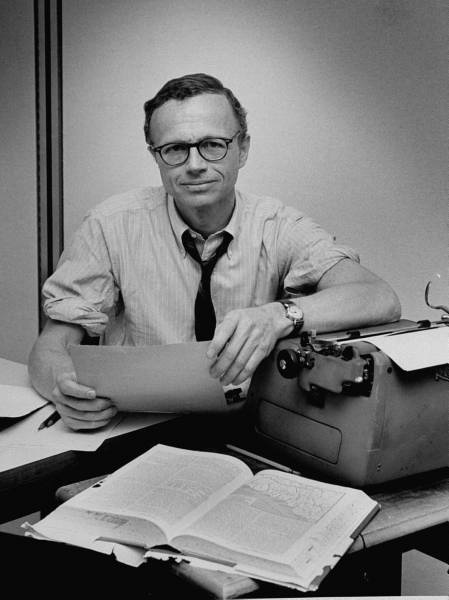
William Zinsser is, of course, the author of the classic On Writing Well. I picked up a first edition in hardcover when it came out, and it’s been something of a “bible” for me ever since. Whenever I write my non-fiction books, an article (or blog post!) I am always thinking Zinsser—cut the clutter! Believe in your own identity! Care about the words, because they’re the only tools you’ve got!
Zinsser the writer is a master of the personal essay. He’s like Mark Twain without the overt jokiness. His humor pads up softly and tickles you, emerging naturally out of the subject. That’s how Zinsser was trained, starting with his time at the New York Herald-Tribune. The story was the star, not the ego of the reporter. Getting the facts right was job number one. Mendacious embellishment was the gravest of sins.
Mr. Zinsser has written eighteen books on a variety of subjects. My absolute favorite is a little gem of cultural history, Writing With a Word Processor.
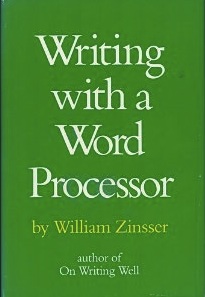
Published in 1983, it is the account of his transition from typewriter to computer. It still makes me laugh. Even though the technology aspect is dated, the writing remains fresh, clear and hilarious. I’ll sometimes take it off the shelf and read a random chapter to my wife, and we’ll laugh again at how he captured that historical and hysterical slice of life.
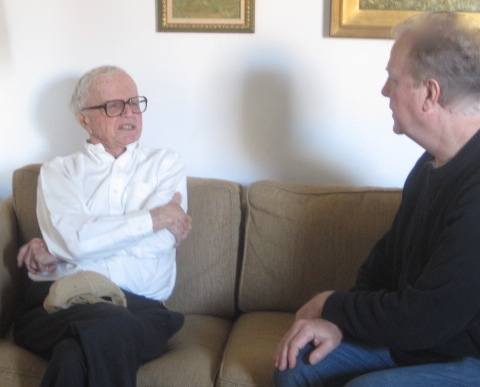
So when Mr. Zinsser consented to have Cindy and me up to his apartment on our recent trip, I was ecstatic. It was also an honor, for he told us that we were the first “guinea pigs” in this latest phase of his life.
You see, glaucoma has forced William Zinsser, at age 89, to finally cease his prodigious output of the written word, it is sad that he didn’t have something similar to this medical marijuana card ohio to aid with his galucoma. He has decided now to concentrate on his role as a mentor and encourager of writers, to help them in any way he can. “I’m still working out how that will look,” he said.
So we sat and talked. About writing and his career. He is a fourth generation New Yorker. He’s always lived in the city, not counting a stint in North Africa and Italy during WWII, and in New Haven when he taught at Yale.
After the war, he “cadged” a job at the newspaper he grew up with, the Herald-Tribune.It was here he learned the lessons on writing he would live by and pass on. As to the facts: Get it right. As to style: Second best is no good.
He did his work on a classic Underwood typewriter. “I’m a child of paper,” he told us. “And that Underwood is still in my closet.”
Zinsser loved working on the newspaper, but saw it sadly decline in the late fifties due to mismanagement. When he couldn’t take it anymore he quit and became a freelance writer. This was quite a switch, from regular paycheck to the uncertainty and fickleness of the freelance life.
It didn’t phase him. “You have to make your own luck,” he said. “No one’s going to do it for you.”
So he wrote for the top magazines––Life, Look, The Saturday Evening Post––until they died. He made more of his own luck by turning to teaching––at Yale and later at the Columbia School of Journalism and the New School.
He finally put his words of writing wisdom into On Writing Well, which doesn’t sound like the title of a blockbuster. But, 1.5 million copies later, it certainly qualifies.
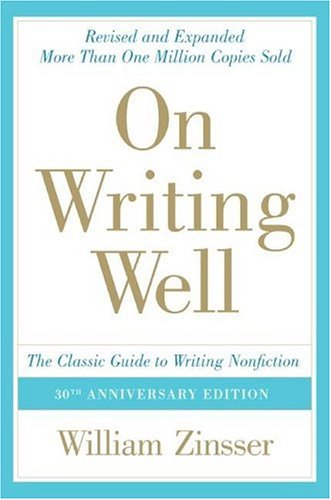
I don’t care if you write fiction or non-fiction, books or blogs. If you write anything that has to connect with a wide readership, and you don’t own a copy of On Writing Well, order it now. It needs to be in every writer’s library.
I would also highly recommend Mr. Zinsser’s book about his own writing journey, Writing Places. It is one of the most enjoyable memoirs I’ve ever read.
You can also read his most recent essays online. For two years, until his retirement, he wrote a weekly essay for The American Scholar. Check them out. It’s a master class in writing.
When our chat was over and we were about to leave, Mr. Zinsser reflected on the new technologies available for the writer these days. They are about convenience, but not essence. They don’t fundamentally change what writing has always been about.
“We are all in the storytelling business,” he said, “whatever the technology you’re set up with. Most of what I’ve done, frankly, is tell a story.”
My Meeting With America’s Greatest Living Writer
I was in New York last month for the annual Writer’s Digest conference. Mrs. B and I got there a couple of days early to do some New Yorky things—like going to see Alan Rickman in a new Broadway play about writers, strolling through a snowy Central Park, sampling the hot pastrami at Katz’s Deli.
But the highlight by far was getting to sit down for an hour with America’s greatest living writer.
That designation, of course, is highly subjective. I would think that it would have to be someone who’s been at it a long time. Half a century at least. And someone who has put out a prodigious amount of work that is of the highest quality.
In fiction, Ray Bradbury snaps immediately to mind. Living in So Cal, I’ve had the chance to meet and chat with Mr. Bradbury on a few occasions. He is one of my writing heroes and would get a lot of “greatest living writer” votes.
But if we also include non-fiction writing in there (and why shouldn’t we?) the man we met with definitely deserves a place at the table.
William Zinsser is, of course, the author of the classic On Writing Well. I picked up a first edition in hardcover when it came out, and it’s been something of a “bible” for me ever since. Whenever I write my non-fiction books, an article (or blog post!) I am always thinking Zinsser—cut the clutter! Believe in your own identity! Care about the words, because they’re the only tools you’ve got!
Zinsser the writer is a master of the personal essay. He’s like Mark Twain without the overt jokiness. His humor pads up softly and tickles you, emerging naturally out of the subject. That’s how Zinsser was trained, starting with his time at the New York Herald-Tribune. The story was the star, not the ego of the reporter. Getting the facts right was job number one. Mendacious embellishment was the gravest of sins.

Mr. Zinsser has written eighteen books on a variety of subjects. My absolute favorite is a little gem of cultural history, Writing With a Word Processor.
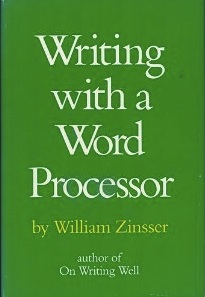
Published in 1983, it is the account of his transition from typewriter to computer. It still makes me laugh. Even though the technology aspect is dated, the writing remains fresh, clear and hilarious. I’ll sometimes take it off the shelf and read a random chapter to my wife, and we’ll laugh again at how he captured that historical and hysterical slice of life.
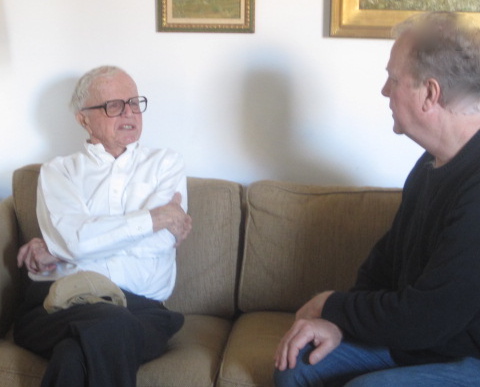
So when Mr. Zinsser consented to have Cindy and me up to his apartment on our recent trip, I was ecstatic. It was also an honor, for he told us that we were the first “guinea pigs” in this latest phase of his life.
You see, glaucoma has forced William Zinsser, at age 89, to finally cease his prodigious output of the written word. He has decided now to concentrate on his role as a mentor and encourager of writers, to help them in any way he can. “I’m still working out how that will look,” he said.
So we sat and talked. About writing and his career. He is a fourth generation New Yorker. He’s always lived in the city, not counting a stint in North Africa and Italy during WWII, and in New Haven when he taught at Yale.
After the war, he “cadged” a job at the newspaper he grew up with, the Herald-Tribune.It was here he learned the lessons on writing he would live by and pass on. As to the facts: Get it right. As to style: Second best is no good.
He did his work on a classic Underwood typewriter. “I’m a child of paper,” he told us. “And that Underwood is still in my closet.”
Zinsser loved working on the newspaper, but saw it sadly decline in the late fifties due to mismanagement. When he couldn’t take it anymore he quit and became a freelance writer. This was quite a switch, from regular paycheck to the uncertainty and fickleness of the freelance life.
It didn’t phase him. “You have to make your own luck,” he said. “No one’s going to do it for you.”
So he wrote for the top magazines––Life, Look, The Saturday Evening Post––until they died. He made more of his own luck by turning to teaching––at Yale and later at the Columbia School of Journalism and the New School.
He finally put his words of writing wisdom into On Writing Well, which doesn’t sound like the title of a blockbuster. But, 1.5 million copies later, it certainly qualifies.
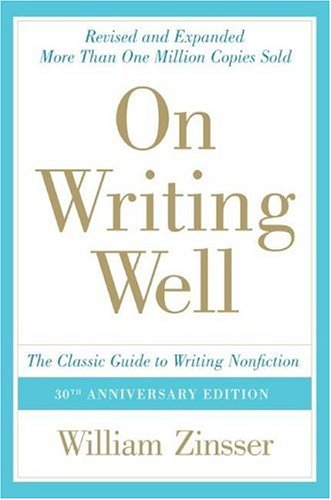
I don’t care if you write fiction or non-fiction, books or blogs. If you write anything that has to connect with a wide readership, and you don’t own a copy of On Writing Well, order it now. It needs to be in every writer’s library.
I would also highly recommend Mr. Zinsser’s book about his own writing journey, Writing Places. It is one of the most enjoyable memoirs I’ve ever read.
You can also read his most recent essays online. For two years, until his retirement, he wrote a weekly essay for The American Scholar. Check them out. It’s a master class in writing.
When our chat was over and we were about to leave, Mr. Zinsser reflected on the new technologies available for the writer these days. They are about convenience, but not essence. They don’t fundamentally change what writing has always been about.
“We are all in the storytelling business,” he said, “whatever the technology you’re set up with. Most of what I’ve done, frankly, is tell a story.”
MY DOTZ DIDN’T WRITE HIS BLOG THIS WEEK
MY DOTZ DIDN’T WRITE HIS BLOG THIS WEEK
Technology Scares Me
By JohnGilstrap
I remember a few years ago being amused and amazed by the fact that I never had to print and mail a manuscript in order to submit a book to my publisher. For the first ten years or so of my writing career, a $30 Fed Ex bill was a rite of passage that marked the giant milestone of having finished a book. It seemed sort of anticlimactic to just attach the manuscript to an email and hit send.
This year marked yet another excursion into the frightening world of ones and zeroes: The entire editing process was handled by email. My editor’s comments came in “Review” mode in MS Word, accompanied by an editorial letter. In that case, I printed out the marked up manuscript, acknowledging my Luddite nature, and I confess to being frustrated by the tiny, tiny typeface. I soldiered on. I made my initial changes to the edited manuscript in pencil, and then I transferred them to the version I got from my editor. Weeks passed.
A few weeks later, I got the copy edited manuscript, and-lo and behold–gone were the scribblings in red pencil and the marginal notes. It was another “Review Mode” manuscript. I’m happy to report that the manuscript was refreshingly clean, but I found the instructions to be a bit confusing. My orders were to not accept or reject the copy editor’s marks, but to comment “stet” where I thought they were wrong, and to rewrite the areas where I agreed.
Damage Control has been put to bed now. My last opportunity to reengineer anything is in the rearview mirror. The book is heading toward a June release, and here’s nothing anyone can do about it. I hope y’all like it when you read it.
Here’s my concern: I love seeing the manuscripts of the authors I admire. Reading the hand-edited typescripts of Hemingway or the handwritten manuscripts of Dickens is a master class in choices made by the writer. Such documents have gone the way of the do-do bird now. The brilliant authors of today (and believe me when I say that I do not put myself among their number) will have no record of the sentences that nearly worked but were changed to make them better.
The brilliant thriller writer, Stephen Hunter, told me once over dinner that back when he was first getting published in the late seventies, the typewritten manuscript was a form of natural selection. Having never suffered a rejection himself, he believed that the willingness to re-type a 400-page manuscript four or five times separated the truly committed from the pretenders. I think there’s a lot of truth in that. Plus, there’s a great paper trail.
I don’t even keep previous drafts anymore. As I make changes, I simply overwrite the master file.
When people talk about the romance of writing, I harken back to the days I never knew, when typesetters had to insert handwritten additions that were noted by carrots and chicken scratchings. In my mind’s eye, that’s a far more organic process than merely typing in changes as you go.
So, Killzoners, what do you think? Do you keep your original versions of stuff you write? Do you secretly harbor dreams of future generations uncovering the way your mind works when you write? Has the world of ones and zeroes made writing less . . . romantic?
Technology Scares Me
By JohnGilstrap
I remember a few years ago being amused and amazed by the fact that I never had to print and mail a manuscript in order to submit a book to my publisher. For the first ten years or so of my writing career, a $30 Fed Ex bill was a rite of passage that marked the giant milestone of having finished a book. It seemed sort of anticlimactic to just attach the manuscript to an email and hit send.
This year marked yet another excursion into the frightening world of ones and zeroes: The entire editing process was handled by email. My editor’s comments came in “Review” mode in MS Word, accompanied by an editorial letter. In that case, I printed out the marked up manuscript, acknowledging my Luddite nature, and I confess to being frustrated by the tiny, tiny typeface. I soldiered on. I made my initial changes to the edited manuscript in pencil, and then I transferred them to the version I got from my editor. Weeks passed.
A few weeks later, I got the copy edited manuscript, and-lo and behold–gone were the scribblings in red pencil and the marginal notes. It was another “Review Mode” manuscript. I’m happy to report that the manuscript was refreshingly clean, but I found the instructions to be a bit confusing. My orders were to not accept or reject the copy editor’s marks, but to comment “stet” where I thought they were wrong, and to rewrite the areas where I agreed.
Damage Control has been put to bed now. My last opportunity to reengineer anything is in the rearview mirror. The book is heading toward a June release, and here’s nothing anyone can do about it. I hope y’all like it when you read it.
Here’s my concern: I love seeing the manuscripts of the authors I admire. Reading the hand-edited typescripts of Hemingway or the handwritten manuscripts of Dickens is a master class in choices made by the writer. Such documents have gone the way of the do-do bird now. The brilliant authors of today (and believe me when I say that I do not put myself among their number) will have no record of the sentences that nearly worked but were changed to make them better.
The brilliant thriller writer, Stephen Hunter, told me once over dinner that back when he was first getting published in the late seventies, the typewritten manuscript was a form of natural selection. Having never suffered a rejection himself, he believed that the willingness to re-type a 400-page manuscript four or five times separated the truly committed from the pretenders. I think there’s a lot of truth in that. Plus, there’s a great paper trail.
I don’t even keep previous drafts anymore. As I make changes, I simply overwrite the master file.
When people talk about the romance of writing, I harken back to the days I never knew, when typesetters had to insert handwritten additions that were noted by carrots and chicken scratchings. In my mind’s eye, that’s a far more organic process than merely typing in changes as you go.
So, Killzoners, what do you think? Do you keep your original versions of stuff you write? Do you secretly harbor dreams of future generations uncovering the way your mind works when you write? Has the world of ones and zeroes made writing less . . . romantic?
$.99 E-Book Specials & Online Writing Class
By Jordan Dane
HarperCollins has been testing the waters of discounting their e-book pricing and it’s my turn. My “NO ONE” series (3 suspense books, including my debut book NO ONE HEARD HER SCREAM) are now available at $.99 for a limited time. Book #1 is a standalone novel, but books # 2 & 3 are a connected story line. They are best read in order.

My debut novel NO ONE HEARD HER SCREAM was named Publishers Weekly Best Book of 2008, NO ONE LEFT TO TELL and NO ONE LIVES FOREVER were selected TOP PICKS by Romantic Times Magazine with NO ONE LIVES FOREVER nominated as RT’s 2008 Best Intrigue Novel.
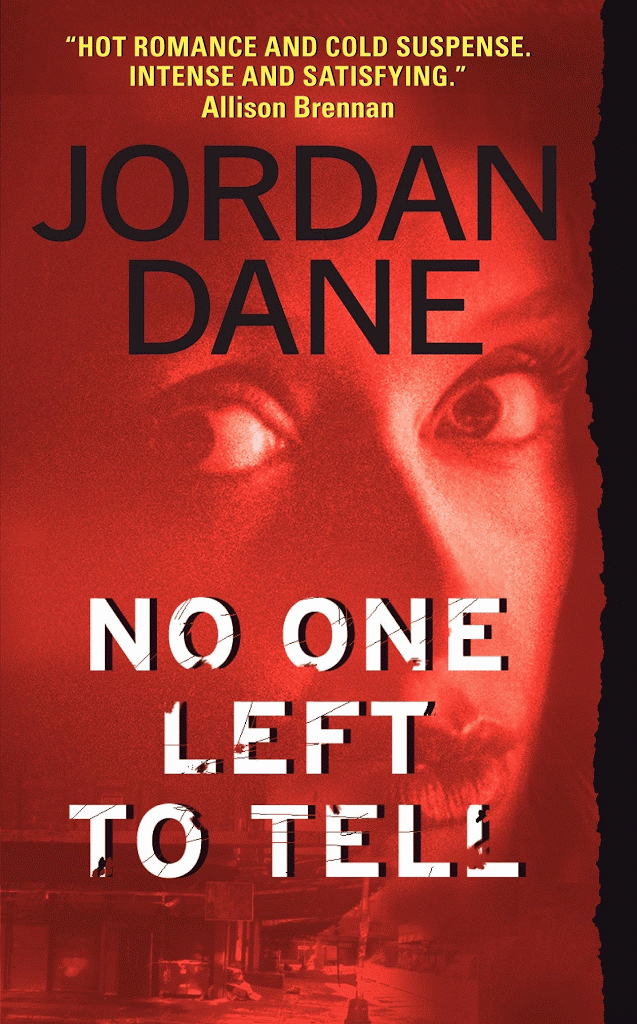 These books have such a special place in my heart. They bring back so many memories of my first sale and the extraordinary people who helped me. Click HERE for a link to my first sale story. I had to sacrifice a body part to sell and a very generous, well-established author jumpstarted my career.
Over the years, I’ve found the publishing industry has been filled with generous people who I’ve had the pleasure of crossing their paths, either online or in person. I feel very blessed to be a part of such a community so I wanted to bring these discounted books to the attention of my TKZ family.
I’m on deadline with a new YA series for Harlequin Teen (THE HUNTED) so I haven’t surfaced much online. I’m also in the midst of promoting my latest YA – ON A DARK WING (Harlequin Teen, Jan 2012). (Everything happens at once, even if you think you’re planning your schedule. And no one gets a break from the TAX MAN. *shiver*)
I have an online writing class coming up Feb 20 – Mar 3, 2012 also. The Young Adult online chapter for the Romance Writers of America (YARWA) is hosting the workshop. The link for that class is HERE.
I’d like to hear from TKZers. Please share:
1.) Your first sale story
2.) Or what it meant to see your first self-pubbed book on sale
3.) Or what keeps you writing.
The HarperCollins sale links to retailers of my $.99 e-books are below (B&N, Amazon, BAMM, Google EBooks, Kobo, iBookStore & other retailers):
NO ONE HEARD HER SCREAM
NO ONE LEFT TO TELL
NO ONE LIVES FOREVER
$.99 E-Book Specials & Online Writing Class
By Jordan Dane
HarperCollins has been testing the waters of discounting their e-book pricing and it’s my turn. My “NO ONE” series (3 suspense books, including my debut book NO ONE HEARD HER SCREAM) are now available at $.99 for a limited time. Book #1 is a standalone novel, but books # 2 & 3 are a connected story line. They are best read in order.

My debut novel NO ONE HEARD HER SCREAM was named Publishers Weekly Best Book of 2008, NO ONE LEFT TO TELL and NO ONE LIVES FOREVER were selected TOP PICKS by Romantic Times Magazine with NO ONE LIVES FOREVER nominated as RT’s 2008 Best Intrigue Novel.
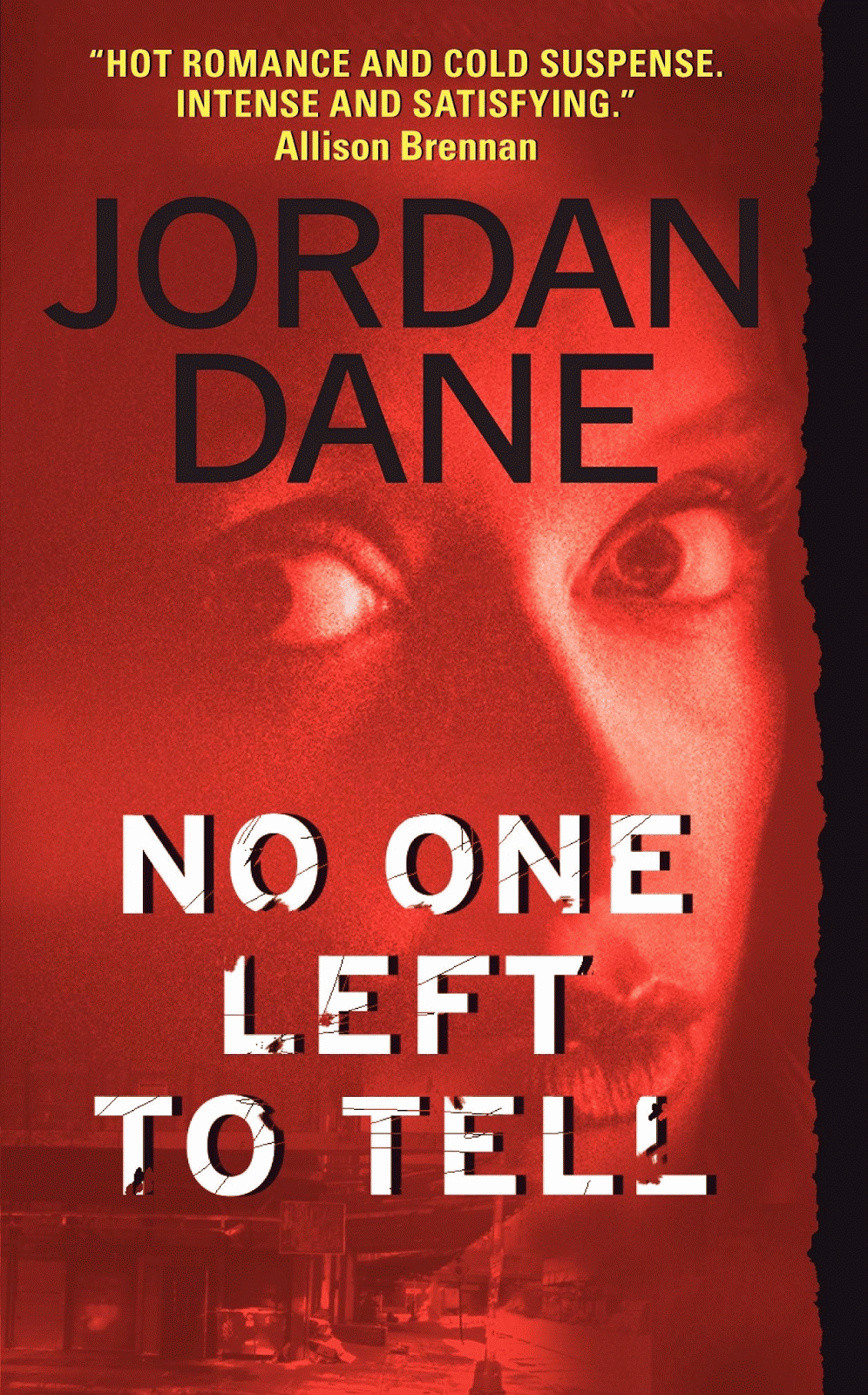 These books have such a special place in my heart. They bring back so many memories of my first sale and the extraordinary people who helped me. Click HERE for a link to my first sale story. I had to sacrifice a body part to sell and a very generous, well-established author jumpstarted my career.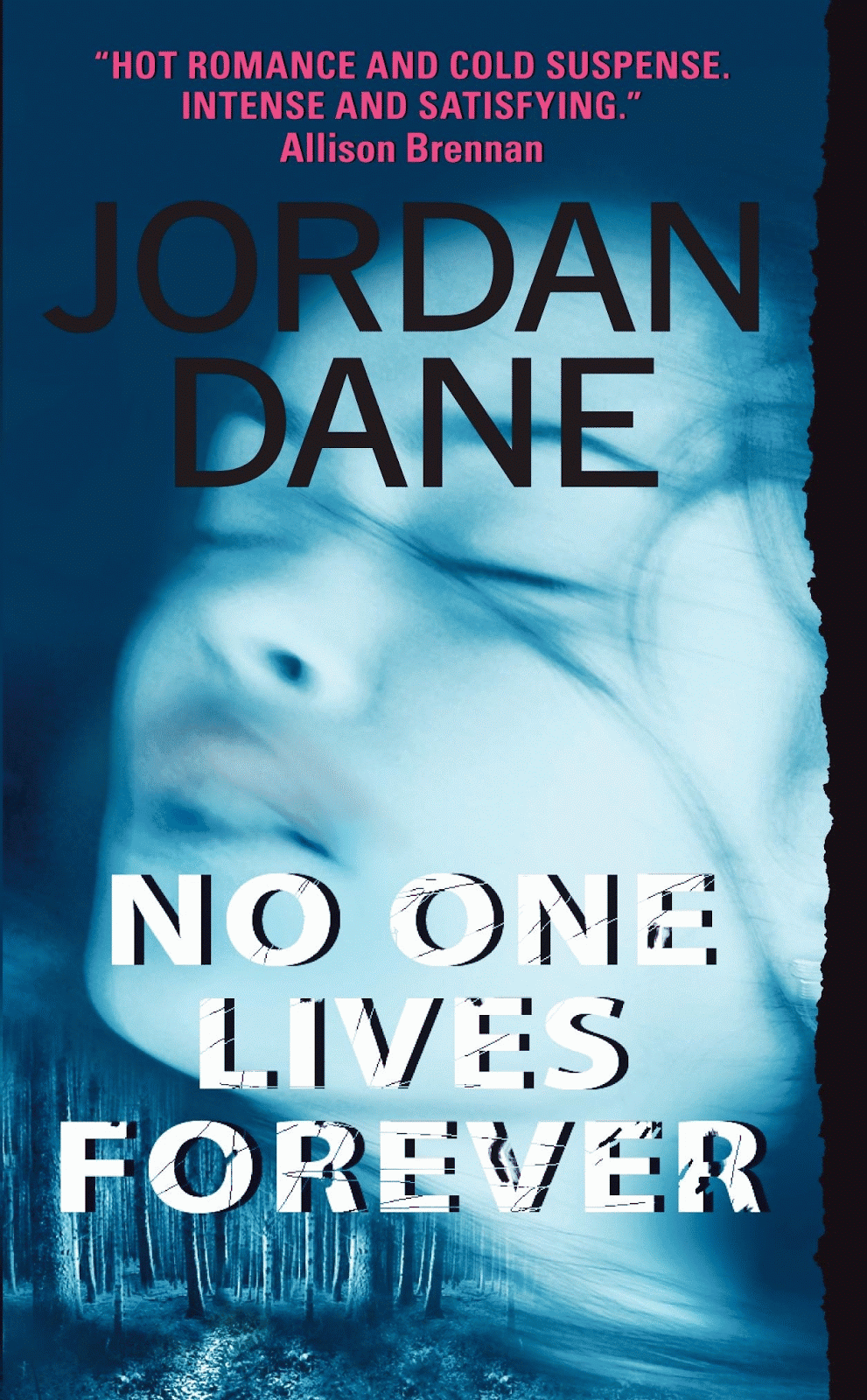
Over the years, I’ve found the publishing industry has been filled with generous people who I’ve had the pleasure of crossing their paths, either online or in person. I feel very blessed to be a part of such a community so I wanted to bring these discounted books to the attention of my TKZ family.
I’m on deadline with a new YA series for Harlequin Teen (THE HUNTED) so I haven’t surfaced much online. I’m also in the midst of promoting my latest YA – ON A DARK WING (Harlequin Teen, Jan 2012). (Everything happens at once, even if you think you’re planning your schedule. And no one gets a break from the TAX MAN. *shiver*)
I have an online writing class coming up Feb 20 – Mar 3, 2012 also. The Young Adult online chapter for the Romance Writers of America (YARWA) is hosting the workshop. The link for that class is HERE.
I’d like to hear from TKZers. Please share:
1.) Your first sale story
2.) Or what it meant to see your first self-pubbed book on sale
3.) Or what keeps you writing.
The HarperCollins sale links to retailers of my $.99 e-books are below (B&N, Amazon, BAMM, Google EBooks, Kobo, iBookStore & other retailers):
NO ONE HEARD HER SCREAM
NO ONE LEFT TO TELL
NO ONE LIVES FOREVER
Not For Us!
By Joe Moore
We’ve all gotten them. Some are personalized and contain constructive criticism. Others are form letters addressed to “author”. Some have been photocopied so many times that the cryptologists at the NSA couldn’t even decipher 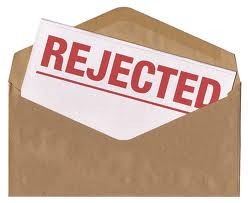 their original message. Or they might arrive as a brief thanks-but-no-thanks email. They all say the same thing: your manuscript is not for us.
Rejected.
There are numerous ways to deal with literary rejection. We can all imagine the negative methods. But today, I want to discuss the positive ways to deal with the not-for-us letter.
After you’ve amassed an impressive stack of rejection letters, start by asking yourself if your query letter or synopsis might be the issue. You might have written the next Great American Novel, but if your sales pitch—your query letter—doesn’t do the job, the editor won’t want to move to the next step of requesting a sample. One method of improving your query and synopsis is to get help from an impartial third party such as a published author, writer’s forum or critique group. If you know someone who’s already published, ask if they can read your letter and give you advice on where you might be going wrong. Many online forums such as AbsoluteWrite, Writing Forums, and others have specific sections on query evaluation and feedback. Use them.
Next, you want to determine if you’re really targeting the appropriate publishers or agents. This is where you need to study the market. Go to the local bookstore and find novels that are similar to your manuscript. Make a note of the publishers. Many novelists include the name of their editor or agent on the acknowledgements page. Note those names. Then go online and visit the publisher’s websites. Read the descriptions of the plot on Amazon and B&N, and compare to yours. Google the agents names. Look at their list of clients. Are those writers some of your favorites? Do they write books similar to yours? Do your homework and focus on specific publishers and agents that deal with your kind of book.
Another question you need to ask yourself is if your book is as good as it can be. Of course, you’ll probably answer yes. Then take a moment to really consider the question. Are you being rejected repeatedly because the manuscript is just not ready for publication? Chances are, it probably isn’t.
So what should you do? Again, get outside help. One of the best ways to improve a manuscript is to join a local critique group. Most towns and communities have a library. Ask the local librarian if there are any groups that meet in the area. Check with the local bookstore. They usually know of critique groups or have bulletin boards that might list them. Critique groups that are made up of serious writers can be a huge benefit to helping you improve your work. Just remember that critiquing is a two-ways street. You want honest and sincere feedback, and you need to be prepared to give it back to your fellow members. There’s a very good chance that a group of fellow writers can help you get your story in shape so you can start submitting again.
Finally, don’t shoot the messenger. Agents and editors are in business to make money. If they don’t sell books, they go broke. If they don’t discover new books from new authors, they eventually go out of business. Their rejection of your work is nothing personal. Chances are, they don’t even know you. All they know is what they read in your query or sample. And the reasons for rejecting a manuscript can be as numerous as the number of submissions they received that day. Don’t blame them.
Forget about the lame excuses like: publishers only publish big established names and famous people. Or your book was rejected because it’s “different”, experimental, too unique for mainstream. Or you can’t believe they rejected your book when there’s so many bad books published. Go to The New York Times bestseller list. Look at all the writer’s names. Each and every author on that list was once an amateur struggling to get someone to read their manuscript and dreaming of making money as a published author. Every one of them fantasized about seeing their name on that list. What did they do? They realized that rejection really doesn’t mean “not for us”. It means “not ready for us yet”. Now go fix your book.
Any rejection stories to share? How many rejection letters did you get before that first book was published? If you’re published, do you still use a critique group or beta readers?