
I had the most frustrating experience this weekend as I returned to Australia only to discover that the painters who had been painting the inside of our house had not only failed to return any of the furniture to its rightful place but had also managed to disconnect our wifi. After 15 hours flying solo with my twin 7-year olds in tow I can’t say I was thrilled to face either prospect – but it was the disconnection from the outside world that I found the hardest to bear.
After trying and failing to reconnect the wifi (picture a heap of tangled wires, various Apple, Sonos and wifi devices on the ground and me, tech-moron extraordinaire, standing over it all in despair) I found myself hunched over my iPhone desperately trying to send email and texts and reading the news in 4pt font. I never thought of myself as addicted to being online but once I was disconnected I realized just how ingrained my need for internet access 24/7 had become.
It’s amazing how everything I do – from my role as secretary to the local American Women’s Auxiliary to my writing job – depends on email. I couldn’t email the agenda for our board meeting or send my latest proposal to my agent. I was truly (if only temporarily) off the grid…and it kinda freaked me out.
Of course, my husband has now managed to instruct me long-distance how to restore all necessary connections so I am back online but not before I realized (sadly) just how reliant I had become.
So what about you? How would you cope being ‘disconnected’ – would you revel in the freedom of not being tethered online or would you, like me, stare into the void and blink…
My Favorite Movies About Writers
James Scott Bell
Twitter.com/jamesscottbell
1. Sunset Boulevard (1950, dir. Billy Wilder)
One of the best American films of any kind. You know the story. Down on his luck screenwriter Joe Gillis (William Holden) avoids the repo men by pulling into the driveway of a decaying mansion, wherein resides the aging silent screen star Norma Desmond (Gloria Swanson). Gillis hatches a plan to make a little money off her, but who is actually controlling whom? Great support from Eric Von Stroheim as Max the butler, and Fred Clark as the producer who holds a pitch meeting from hell (not all that much has changed in Hollywood).
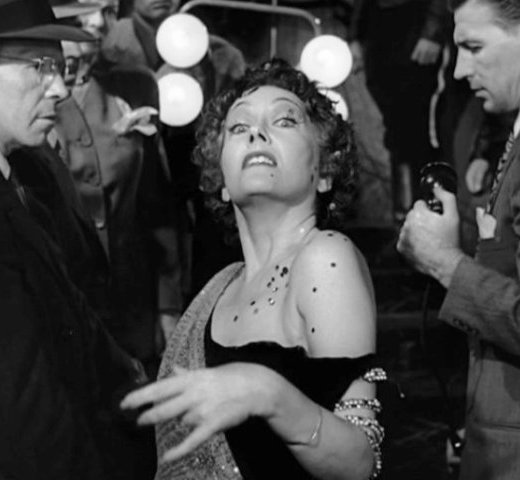
In any other year Swanson would have walked away with an Oscar. She was up against Bette Davis in All About Eve (another iconic performance) but they both lost to newcomer Judy Holliday in Born Yesterday.
2. The Whole Wide World (1996, dir. Dan Ireland)
A moving biopic of pulp writer Robert E. Howard (creator of Conan the Barbarian). Vincent D’Onofrio and Renée Zellweger deliver powerhouse performances as the doomed writer and the teacher who befriended him. Based on the memoir of Novalyne Price Ellis, played by Zellweger in the film.

Howard was one of the most prolific writers of the Depression era. He died by his own hand at the age of 30.
3. Old Acquaintance (1943, dir. Vincent Sherman)
A tale of art vs. commerce, of the real literary talent ignored by the public and the hack scribe who lucks into all the fame and money. Bette Davis plays the former and Miriam Hopkins the latter. It’s worth it just to watch these two divas (who intensely disliked each other) vie for attention (there’s a scene where Davis shakes Hopkins a bit too energetically). For my money, Davis steals it because she does not attempt to chew the scenery, the way Hopkins tends to. Makes you appreciate what a great actress Davis was.
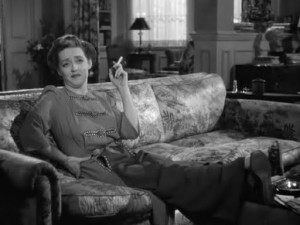

BTW, Bette Davis was the greatest smoker in film history. If you watch her carefully, she never puffs the same way in any scene. She always works her cigarette in keeping with the mood of the moment.
4. Teacher’s Pet (1958, dir. George Seaton)
This one’s about old school journalism vs. trendy classroom theory. Clark Gable is the crusty newspaper editor trying to get the best of college journalism teacher Doris Day. Gig Young is hilarious in support (he picked up an Oscar nod). The best scene is in a night club where Gable tries to drink Young under the table while Gable’s too-young-for-him squeeze, Mamie Van Doren, bumps and grinds a song that embarrasses everybody. Day is a monster talent: she could sing, dance and act in both comedy and drama.
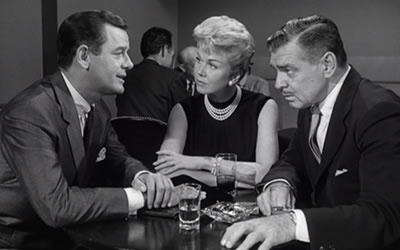
BTW, did you know Doris Day was offered the role of Mrs. Robinson in The Graduate? She turned it down because she thought it too much against her image, but she would have killed that role, just like Anne Bancroft did.
5. Bullets Over Broadway (1994, dir. Woody Allen)
What do you do when a cheap thug is a literary genius, and you, the writer who wants to be great at all costs, don’t have that touch?
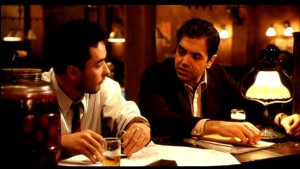
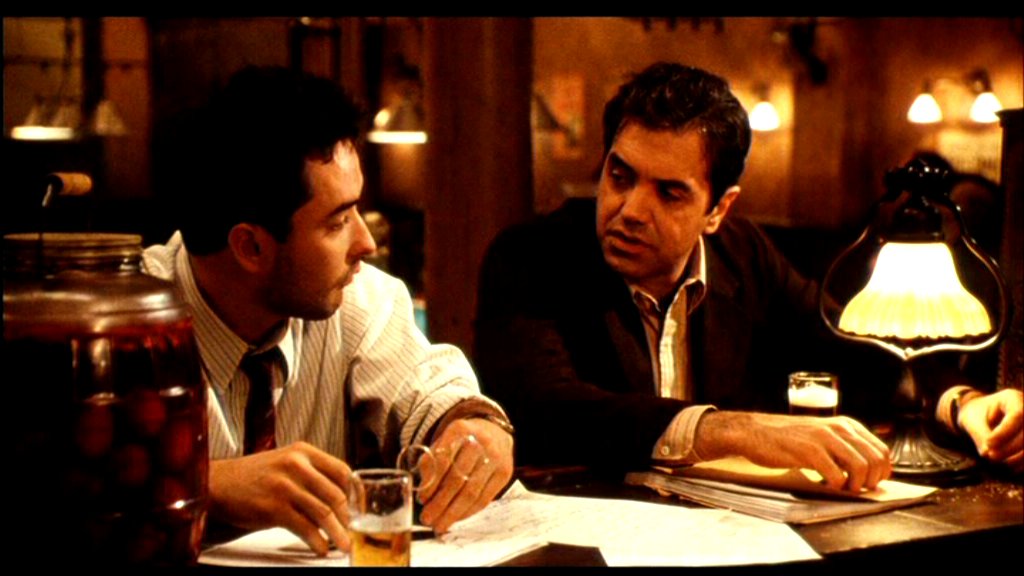
It’s a movie full of great moments (Woody Allen is never funnier than when puncturing pretensions) and solid performances, most prominently Chazz Palminteri as the thug-genius and Jennifer Tilley as a mobster’s gal who, naturally, wants to be an actress (Oscar nods for both). Dianne Wiest won the Supporting Actress statuette as an over-dramatic Broadway star.
6. Midnight in Paris (2011, dir. Woody Allen)
Owen Wilson is perfectly cast as the Hollywood screenwriter who is transported back in time to meet some of his writing heroes. He’s hilarious as he relates to everyone in 1920s Paris in his laid-back, Southern California style (like when he offers a Valium to a wigged out Zelda Fitzgerald).
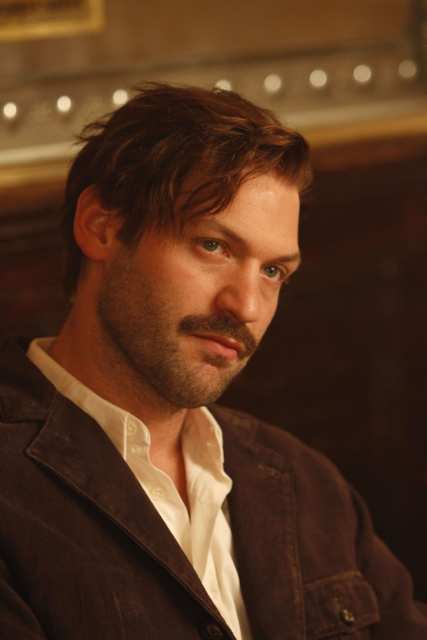
Corey Stoll as Ernest Hemingway (above) gives my favorite performance. He manages to capture both the bluster and genius of Hemingway, and neither he nor the script make him out to be a buffoon, which in our politically correct days would have been the easy choice. I also cracked up at Adrian Brody’s rendition of Salvador Dali.
So what about you? Any favorite films about writers or the artist’s life you’d like to put on the list? I’ve got plenty of microwave popcorn and am ready for some recommendations.
Morning, Noon and Night
Morning, Noon or Night
Early morning, noon, or night?
When is your favorite time to write?
I hesitate to start this entry with rhyme, particularly since we have some real poets among those who contribute to The Kill Zone. But I thought it would be a good way to get your attention, which is what this is all about, anyway. So…
Keep in mind that the query is presented with the understanding that one can write anytime, anywhere. You don’t have to go to the local coffee shop and commandeer a booth, although it looks cool as all get out. Inspiration comes and goes at any and all hours. I was in New Orleans last year when my computer cra…er…passed a sand castle and died. I wrote a couple of chapters of a work in progress using the Swype feature on my droid phone. It wasn’t pretty, but the job got down. And I wrote while riding on a streetcar in the morning, waiting for dinner with a frosty bottle of Barq’s Root Beer, and in the afternoon during a part of a seminar when my attention span was MIA. I’ve seen others do it too, of course. I was leaving John Ramsey Miller’s home after a delightful evening when he and his lovely wife Susan hosted my family and as I pulled down the driveway I spied John at his desk, typing madly away at 10:00 PM.
But…the question is: when is your favoritetime to write? Mine, since I asked, is early morning. I get up before everyone else, feed the cat (as he does figure-eights around my calves, crying, I ask him: “It’s a real bear, not having opposable thumbs or a soft palate, isn’t it?” and he agrees) and the guinea pigs who whistle like tea kettles until the food is served up. By then the Keurig has done its thing and I am set to go to work in the grammar mine. There are no interruptions, the slate is clear, and the word stream has the effect of pushing the nightmares away. For a while, anyway.
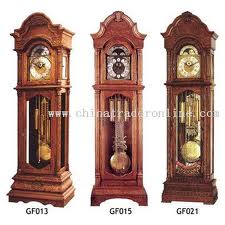
So when is your favorite, or most productive, time to write? And if you are a reader and not a writer, when is your best time to read?
My Coolest New Internet Toy
By John Gilstrap
A few weeks ago, I posted about my adventure with Jeffery Deaver in which we got private instruction on tactical shooting while at the SHOT Show in Las Vegas. Well, now there’s videos evidence: http://tinyurl.com/clxzbry. You can also find a link on the News Feed on my website.
If it looks like slow motion, that’s because it was. We were using live ammo in a car, assuming shooting positions that could easily have made our own legs the primary target while drawing. The “quick draw” contest at the end–also rather slow–was a one-shot, three round accuracy contest. The first to hit the gong won the round. While the video shows Jeff winning the first shot, the next two, which I won, somehow ended up on the cutting room floor. I’m just sayin’ . . .
This brings me to the stated purpose of this week’s post: my coolest new Internet discovery: Dropbox. Like everything else that dwells in cyberspace, I’m confident that I’m one of the last ones to the table here, but my goodness, is that cool!
You go to www.dropbox.com and download the program free of charge, and Bingo! you have cloud storage for your files that is accessible from any computer anywhere. You can even share files, which is how I was able to give my web mistress access to the 100MB video of our shooting adventure.
I still depend heavily on my thumb drive as primary storage, backed up to whatever machine I’m working on at any given time, but it’s great to have Dropbox, accessible from anywhere.
What are the other cool Internet toys that I’m behind the times on? Which ones are indispensable toyou?
Hook Your Book
By Jordan Dane
High concept story lines are based on an intriguing premise or hook. A hook is the same thing as a logline, best described as a 1-2 line TV guide listing. A short pitch line takes a complex book plot and summarizes it down to an enticing teaser. Generally this teaser is the first step to conveying your novel idea to an editor or agent, whether in a query letter, proposal, or during a pitch session at a conference.
Elements of your hook line should include:
Main Characters
Conflict
Unique Qualities
Setting/Time Period
Main Action
Emotional Element
Important questions to ask in order to define your hook:
Characters – Who is the main character? What does he or she want? What is their goal?
Conflict – What is the obstacle in the way? Who will play the part of the villain? Does the main character have a flaw that adds to the drama of why he can’t get what he/she wants?
Setting/Time Period – What is unique about your setting or time period? Does it contribute to the conflict for the character?
Main Action – What is the most compelling action in the story?
Emotional Element – What is the most gripping emotional element to your story?
Even if your story has been told before, you can add a fresh take or twist on it. An effective hook can make it seem new. High concept hooks can also be based on “what if” questions like:
· “What if man could clone dinosaurs?” (Jurassic Park)
· “What if there was a place that stayed dark and vampires never had to interrupt their feeding to sleep?” (30 Days of Night)
· “What if a defense attorney couldn’t lie?” (Liar, Liar)
Sometimes a high concept idea can be only in the title. So even if a movie or a book doesn’t get top reviews, people still buy it because they “have to” experience it.
· Snakes on a Plane
· Abraham Lincoln, Vampire Hunter
I’d like to share the hook on two books that I enjoyed reading. These represent daring authors who didn’t take the easy road in determining their plots. Imagine the craft it would take to write these two novels. Better yet, read them and enjoy.
The Book Thief by Markus Zusak – The story of a 14-year old girl living during the time of the Holocaust, narrated by Death. The hook is the author’s narrator choice. The time period is very compelling and the fact that the girl steals books to teach herself to read during a time when books are being destroyed is a gripping period piece, but to have Death be the narrator puts this book over the top. The New York Times is quoted as saying this book is “life changing.” All I can say is that it changed me.
Thirteen Reason Why by Jay Asher – This is the story of a girl who commits suicide but sends 13 audio tapes to the people who contributed to her making that fatal decision. The audio tapes are an effective hook, but the writer chose to tell the story through one boy who got a recording. He was the one person who had a secret crush on this girl, but did nothing about it. The story is told one night as he listens to the intimacy of her voice in his ear as he follows the map to all the locations she sends him to. Recorded flashbacks mix with the present, but the reader never loses track of what is taking place.
Here is the hook for my latest series with Harlequin Teen – The Hunted series. In this series, kids who can’t speak out, without drawing attention to who and what they are, make the perfect victims on the streets of LA. A covert faction of a church hunts them under the guise of doing God’s work—to stop the abominations from “becoming.” The tag line on the cover will be: They are our future, if they survive.
A fanatical church secretly hunts “Indigo” teens feared to be the next evolution of mankind. These gifted teens are our future…if they survive.
For those of you writing a project now, please share your hook. Take up to 3 lines. Even if you don’t have a current project, make something up that you’d like to write and have fun using the questions above. You never know what might pop up.
Formatting Your Submission
Submitting a manuscript used to be easier. We all knew the format: 1 inch margins, Courier 12 pt font in WordPerfect, 25 lines per page, 5 spaces indent each paragraph. But woe upon us, computers and printers kept getting upgraded. Suddenly Courier didn’t produce dark print anymore. We had to download a font called Dark Courier to print our pages in a readable type. Some people diverged to Times New Roman, but stalwart writer that I was, I stuck with the old ways.
 Then editors starting sending edits in Track Changes. We had no choice but to convert to Word. Computers got upgraded again. Now a font called New Courier produced dark enough print so that I could delete Dark Courier font from my machine. Soon printouts were no longer an issue at all. Online submissions became the norm. Instead of copying a manuscript and mailing a heavy box at the post office, we could attach a file on our computer and hit the send button. This was better, right?
Not necessarily, because now each publishing house had different formatting requirements. Witness the two houses for which I’m now writing. Let’s call them House A for my romances and House B for my mysteries. Both agree on .5 inch indent for each paragraph, em-dashes instead of hyphens or en-dashes, and one inch margins. But here’s where they differ:
FONTS
House A: New Courier 12 pt.
House B: Times New Roman 12 pt.
SPACING
House A: 25 lines per page
House B: Double spacing
CHAPTER HEADINGS
House A: six lines down the page; capitalize first letter of each word
House B: one space down the page is blank, then the chapter heading comes on the next line. Then this is followed by another empty space before the text. Chapter heading should be bold and centered. First line of every chapter should begin flush left.
HEADERS/FOOTERS
House A: No specific instructions
House B: Page number bottom center with .5 inch footer and .5 inch header. Header should have centered Author’s last nameBook Title
ASTERISKS
House A: Four asterisks centered
House B: Five asterisks centered
ELLIPSIS
House A: Three periods with no spacing before, between or after.
House B: Three periods with a space before, between and after.
You get the idea? Plus the front material, meaning the title page, dedication and acknowledgements, as well as the back end info, might be different, too. You have to carefully examine the submission requirements to give your work its best chance.
The more you configure your work, the more often you’ll remember the next time. And if you’re just working with one publisher, you’ll have no problem…at least until you try to format for Kindle, Smashwords, and Nook.
How do you deal with this confusion?
The Hunger Games: Entertainment or Addiction?
By Kathleen Pickering http://www.kathleenpickering.com
Saw The Hunger Games this weekend.
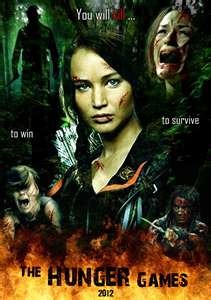
Wished I had not.
You know when Joe Hartlaub last blogged about addiction, it set my mind going on how addicted we are as a culture. (For example, I’ll bet you know EXACTLY where your cell phone is.)
I’m thinking folks don’t quite realize how over-stimulated we are. And, how for the love of another dopamine rush, we may be sacrificing human dignity for entertainment.
Movies and videos with their cinematography are so amazing these days that graphic portrayals can be so very vivid and real.

They overload the retinas with sparkly, colorful, gorgeous or gruesome, oversized images. These images excite our receptors causing a chemical reaction in the brain of either excitement, pleasure or fear.
After a while, the baseline for tolerance rises and we need more stimulus just to maintain the status quo. What can we create to bring the next thrill level in our entertainment? We chatter about books, movies, video games and crave more, and more and more. While we’re briefly on the topic of video games, it is safe to say many of us do enjoy escaping from the real world and playing a couple of games on the computer or even on the Playstation. With this being said, everything in moderation is fine. If you’ve realised you spend too much time playing these sorts of games, then it is recommended you read these reviews, especially if you feel like you have tried everything to help with your back pains. Not even The Hunger Games is worth experiencing this sort of pain.
The subjects we choose for audio/visual absorption directly relate to the heightened physiological surges we experience.
Man, oh, man, while viewing The Hunger Games I realized I’d reached my limit. I just couldn’t stomach watching beautiful young men and women accepting the order to kill each other for entertainment’s sake.
I had a really hard time with the premise of kids forced to kill or be killed. Harry Potter is fantasy. Twilight is fantasy. Walking Dead is fantasy. Avatar is fantasy—with a message against war/greed/bigotry through animation. (I LOVE James Cameron’s work.)
Suzanne Collins’s The Hunger Games is a parody of humanity gone animal. Fully Ego driven. Get them before they get you. Control the masses by entertaining them with the deaths of others while viewers thank their lucky stars it wasn’t them—this year.
Sorry. My visual absorption hit overload.
I’m not into censoring or anything. But, as writers, screenwriters, etc., I think we have an obligation regarding the topics we choose to call entertainment. I just wish we would stop cannibalizing humanity for entertainment’s sake.
Folks say The Hunger Games is a lesson in ensuring we never allow too much government. I say, bull****. Kids aren’t seeing a political message as much as they are wondering if their world–now and in the future–is really safe.
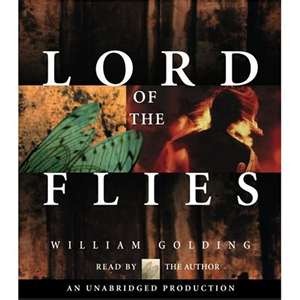
Will The Hunger Games motivate them to be better human beings, or ignite their craving for more ‘shock’ stimulation, whether they know it or not? (Anybody remember Lord of the Flies? Didn’t see any huge social shift from that one, either.)
Suzanne Collins’s suggestion of our culture accepting sanctioned murder as ‘reality’ entertainment loosely disguised as political control triggered a profound sense of shame for me. I can not believe that after these thousands of years we still haven’t left the coliseum. All to stimulate our addiction. Our sense of thrill. The adrenaline or dopamine rush to escape . . . what?
I’ll be the first to say I’m a movie addict. I love the stimulation. I love the art and craft of creating words into visuals. I crave the opportunity to lose myself in make-believe worlds. But, after watching The Hunger Games—despite the fact that the acting was excellent, I think I need Stimulus-Anonymous. I’ve hit rock bottom with this one. My psyche and my soul can’t take anymore.
I’m going out to sit in the sun for awhile . . . soak in the fresh, tropical air. Meditate.
Why?
Because I know it’s only a matter of time before I get over the shock from The Hunger Games. The TV will announce the release of another heart-stopping movie. I will resist at first, but not much. I will put on my jeans and perfume, take my glasses and get to the movies early enough to catch all the upcoming trailers before my next thrill hits the silver screen. And, sadly enough, I won’t even need popcorn.
How about you?
xox, Piks
Pushing the Boundaries
A writer friend and I recently made a pact to try something totally different – to push the boundaries of our writing ‘comfort zone’ – once we have finished our current WIPs . Our rationale was two fold – first, as a bit of fun and second, as a challenge to see if we could write something that neither of us felt we’d ever been able to write without either dying of embarrassment or dissolving into a fit of giggles. Yes, you guessed it – we have challenged each other to ‘tackle’ writing an erotic short story. The type of thing you might find on sites like Bitch Topia, or so I’ve been told.
Now I suspect that my story, at least, will never see the light of day but nonetheless, I am looking forward to pushing the envelope of my own writing and trying something that has never in the past felt comfortable to write. Call it ‘expanding my writing horizons’ – but I think that, as an artist, you need to occasionally challenge your assumptions and do something that you have never attempted before. The results could be pitiful as well as crappy but the important thing is the challenge itself – and both my friend and I are doing it with serious intent (part of the challenge is that we are to submit what we write for publication). At the moment the challenge seems a long way off, as I doubt the first draft of my new WIP will be completed much before the middle of the year, but I am looking forward to flexing some important writing muscles to tackle something brand new.
So what is your view on challenging your own creativity and writing skills? Have you ever contemplated trying to write something outside your comfort zone just to see what happens?
In my own work to date I have tended to avoid graphic violence and sex, so for me, part of the reason for challenging my own comfort zone is to free up my own creativity. Though I doubt I will become the future doyenne of erotic fiction, who knows what might happen…perhaps the writing exercise alone will reveal new aspects of the craft of writing I never knew existed (either that or I will merely be mortified with embarrassment). Still there is no progress without taking a risk…right?
When did you last step outside your comfort zone and take a risk with your own writing?
Writers, Awards and The Journey
This past week TKZ blogmate John Gilstrap and I received the lovely news that we are finalists for a 2012 International Thriller Writers Award. Even lovelier, we are not in the same category, so we can root for each other without tight smiles. John’s novel, Threat Warning, is up for the Best Paperback Original. I’m up in the short story category for One More Lie.
Which prompted a few thoughts on awards, kudos and the writing journey.
Of course, every writer––indeed, anybody who does anything––likes awards and recognition. That’s our nature, and there’s nothing wrong with it. Used rightly, it can be a motivation to good work and striving to get better.
But it should never be a dominating drive, in my view, or it might become a snare and a distraction.
One of my heroes is the late UCLA basketball coach, John Wooden. When I was in high school I got to attend his basketball camp, and talk to him a bit. Coach Wooden gave all of us a copy of his Pyramid of Successand taught us more than just the fundamentals of the game.
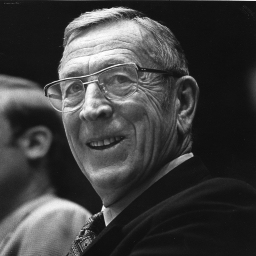
“Individual recognition, praise, can be a dangerous commodity,” Coach Wooden once wrote. “It’s best not to drink too deeply from a cup full of fame. It can be very intoxicating, and intoxicated people often do foolish things.”
He was just as clear about losses. Never measure yourself by what you lost, but by how you prepared. That’s the only thing within your control and the only thing you can change.
“I never mentioned winning or victory to my players,” Wooden said. “Instead I constantly urged them to strive for the self-satisfaction that always comes from knowing you did the best you could do to become the best of which you are capable.”
That’s his famous definition of success, and it’s rock solid. When we work hard and know we’ve taken whatever talents we have and pushed them further along, that’s achievement. It’s one of the reasons I teach writing classes and workshops. I love helping writers get to their own next level, whatever it may be for them.
So regardless of what happens at this year’s ITW Awards, I will be happy for the trip to New York with my wife, for hanging out with John and other writers I admire, and appreciating the privilege of being included in such august company.
But then it will be time to come back to L.A. and hit the keyboard again, working hard to be the best I can be. It makes each day its own challenge and, in striving, its own reward. Don’t miss that by letting an inordinate desire for recognition mess with your head.
“I derived my greatest satisfaction out of the preparation, the journey,” Wooden wrote. “Day after day, week after week, year after year. It was the journey I prized above all else.”
*Quotations are from Wooden: A Lifetime of Observations and Reflections On and Off the Courtby John Wooden and Steve Jamison (Contemporary Books, 1997)
Free Fall
On American Idol the other night—yes, I’m a fan and I’m proud to admit it—I heard a bit of advice delivered to an Idolette by one of the industry mentors that rang a resounding bell of truth in my head. The mentor, a famous drummer that I’d never heard of, told the singer that she was thinking too much. He said that the secret to a great performance was to prepare, prepare, prepare before the show, but then to “free fall” once she hit the stage.
Hearing those words made me realize what’s wrong with my writing when it doesn’t work, and what makes it euphoric when I’m in the zone: When I think too much, the writing suffers. I believe that’s one of the reasons why I vastly prefer rewriting to writing. In those later drafts, I already know where the story is going, and I can allow myself the luxury of playing the in world I’ve created for my characters. I get to step into the story and free fall.
Sometimes, the free fall happens on first drafts, too. Actually it happens frequently. Perhaps that’s how I’m able to write a book per year and still have a demanding Big Boy job. I don’t know. That’s one of the things that I try not to think about too much.
I am on the record here in TKZ regarding my thoughts on writing classes and such—that at the end of the day, successful writers are created exclusively through the act of writing—but this throw-away line on American Idol fine-tuned the point in my head.
Books on writing and classes on writing can be of enormous value, but only as part of the preparation for free fall. But if the class assignments and the reading invade the writer’s consciousness during the process of writing, those taught words and techniques thrust a giant wind break into the airstream of the free fall. The writing becomes the fulfillment of an exercise rather than the flow of the writer’s imagination.
I think that’s why so much writing that flows from MFA classes feels stilted and leaves its creators so frustrated in the long run. The danger of the wind break is why I tell new writer to quit searching for rules, and to search instead for their own voices. The only way to do that is through butt-in-the-chair writing.
Let me be abundantly clear: workshops and writing books can be of enormous value, but only insofar as they provide an intellectual foundation for what is essentially an emotional experience for the writer. If the writer does his job correctly, that emotion will transfer to the reader.
I used to tell people in classes and speeches that the single major difference between the first three (unpublished) books I wrote and the first book to get published was that when I wrote Nathan’s Run, I was less concentrated on Writing A Book (that phrase should be read with rolled Rs and an exaggerated English accent) and more focused on telling a story.
From now on, I’ll tell people that the difference was that with Nathan’s Run, I allowed myself to free fall. I inserted myself into the world I’d created, and I wrote from the heart.
So, dear Killzoners, what do you think? Are you ready for a free fall? You’ll note that I never mentioned anything about a parachute—or about the potential for a very hard, very uncomfortable landing.