
Okay, I’ll start with the apology. When my editor told me that last week was the launch of the front-of-store displays for Damage Control, she was mistaken. In reality, all of the promotional stuff starts next Monday with the launch of a post card to the 1,744 people on my mailing list, followed up the next day (the actual launch day) with a mass mailing of the same post card to Kensington’s 15,000-plus-person list.
If you’d like to be added to the list, send me an email to john at johngilstrap dot com and I’ll make sure that happens. If you want to be removed from the list, there’s a link to that effect on anything you might receive from me.
Forgive me if I seem overly opportunistic, but I’d like to talk to day about what readers can do to most favorably impact the careers and livelihoods of the authors they like. Obviously, buying books is an important first step, but it goes further than that.
Buy on or before the launch date. More and more, the book industry is governed by the numbers. If a book sells well in its first days, it is guaranteed to have a long life in the marketplace. If it doesn’t, life becomes difficult. It’s not just about the money that a book earns. In fact the absolute value of the revenue generated is less important than the velocity with which it is generated. Thus, if there’s an author out there whose book you know you will ultimately buy, you can have a far greater impact on the writer’s career if you pre-order or order in the first week than you can if you wait even two or three weeks after release.
Tell people about your purchase. Even with the retraction of the paper book market and the death of the corner bookstores, word-of-mouth continues to be the number-one source of sales for books. Your post on Twitter or Facebook or Amazon or Barnes & Noble makes a huge difference. And if you don’t like one of my books, please spell my name correctly: G-R-I-S-H-A-M.
Tell your local bookseller. If you’re a merchant, and you’ve got a couple thousand products on your shelves, there’s no way that you can be truly familiar with more than a few. When you hear from a satisfied customer, that voice resonates loudly. This is particularly important for authors who are relatively new in their careers.
If you don’t find a book on the shelves, ask the bookseller to order it. Again, for the first- or second-timer whose books are rarely ordered again after the two or three original copies are sold, these requests literally translate to the life or death of their careers.
Utilize social media. This is an area where I’m still learning my way around the basics. If an author you like tweets something you think is interesting, re-tweet it. Forward it via email. Like it on Facebook.
Write to authors. It’s a lonely world when you tell stories to your screen, and then launch them into the ether. It’s always nice to know that there are real people out there on the other end of the writing equation.
So, what have I missed?
An Indie Author’s Checklist – A Look Behind the Curtain of OZ (Post #1)
This is post #1 in a blog post series that I hope you will find interesting—things that I have learned on my indie author journey. Since I’ve been fortunate enough to be published by HarperCollins and Harlequin Teen, I can see and appreciate the differences in what I will be doing as I self-publish. I’m discovering what my houses do behind the scenes for authors on the e-book front and realize that when I become an indie author, I will have to make choices on how to expand my distribution and retail visibility—ways my traditional publishers did for me without me knowing it.
My first recommendation for any indie author is to do your research on what’s involved. It’s not simply writing a story, editing it well, spending some coin to format and cover it, and uploading it onto Amazon and expect readers to find you. You first have to put out the best book you can, because quality will help you build a readership. Secondly, there is a business side that detracts from your writing time and you must be aware of how time consuming this can be. You won’t be able to load your book up and have readers flock to find you. It takes time to build a virtual shelf of quality work and expand your distribution. That’s why I wanted to share my experiences so you can research what will work for you and not spin your wheels, trying to gain traction.
This series of posts are intended to jumpstart your research, but for the purposes of discussion, I will lay out the decisions I had to make as I began. I’d spent time researching and building service provider contacts. I already had an infrastructure in place where I had an online presence, blogs, twitter accounts, Facebook pages, and many other sites that I have grown my online presence. A new indie author would not start where I did. They’d have to catch up and that takes time and money to set up your promotional foundation. This post is not intended to start from scratch. I’m sharing my experiences, starting from a spot where I already had insights into the industry. I hope what follows will help any author build on their expertise.
For me, the process started with me making decisions on which service to upload my books into after I’d done my initial due diligence into self-publishing. I knew I would upload to Amazon and B&N. They provide comprehensive systems that make the process easy and their reach encompasses most of the e-books being sold today. So realize that if you upload to Amazon Kindle and B&N Nook, you are probably reaching 60-70% of the digital books being sold. In a quickly changing world, however, the shift in technology could change this dynamic, but for now I’m comfortable with my digital offerings being on these two sites. For many established authors, who want to step foot into the indie world, this might be enough. But it’s not enough for an indie author with dreams of finding another way to make a living and who might be starting from scratch.
A traditional publisher uses its name to aggregate digital books to retailers and provides the latest offerings in a bundle. They support and build an infrastructure to get their books into as many viable venues as possible, to get books into the hands of today’s online readers. An indie author is on their own to figure out how to expand their reach and what to promote, but traditional houses have resources en masse with staff to support that effort. For an indie author to learn what works—and to grow what they know— they must navigate uncharted waters of Distributors and Retailers that are willing to allow self-published authors or small houses to have the same access as larger publishing houses.
I thought it would be interesting to break down what I’ve learned into five posts and create a future page of resource links on my FRINGE DWELLER blog for indie authors that I will maintain for myself and to share. My hope is to demystify the process of self-publishing so authors can make informed business decisions on how to get their work in the hands of readers directly. Ultimately, this will become a comprehensive “how to” book on author promotion that will cover various topics from branding and online presence, to press kits and resources, with practical tips on distribution. This indie process has educated me and will continue to do so.
But in doing this, I’m also realizing what my traditional houses have been doing for me and appreciate their efforts. I’m hoping to maintain a balance that works for me where I can still have projects through traditional publishers, but reap the benefits and gain experience with being an indie author for certain projects. Sustaining my online presence and growing my name recognition will hopefully be a benefit and a WIN-WIN for any house I work with as I self-publish. By expanding my reach, I can also give my agent more to represent.
Even authors who have no plans to self-publish can gain an appreciation for what goes on behind the scenes beyond your desk, your publisher, and your friendly retailer—because today’s readers have many ways to discover books outside the brick and mortar stores.
Here are the bullet point topics I will cover in this blog post series:
1.) Introduction (Post #1)
2.) E-Book Retailers – A Checklist Place to Start (Post #2)
3.) Distributors & Library Sales (Post #3)
4.) Retailers with Volume Restrictions or Limited Access (Post #4)
5.) Conclusions & Introduction to My Resource Page (including review sites receptive to indie author books by genre) (Post #5)
Please share your questions and topic suggestions that you hope I will cover so I can target the focus of my series. I’d appreciate your input.
In the mean time, I hope you will indulge me in a little blatant self-promotion for my first ever self-published offerings.
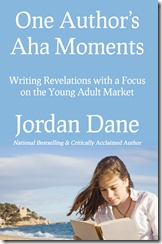 ONE AUTHOR’S AHA MOMENTS (92-page POD, e-book) is geared toward aspiring authors and has an emphasis on the Young Adult genre. These writing tips may also be helpful to experienced authors and those who write other genres. My advice comes from my personal experiences on writing fiction for adult and teen markets and what has worked for me. Topics include: Young Adult fiction themes, voice, and characteristics; how to create characters editors look for & give them a unique voice; plot structure that even a non-plotter can love; how to hook your book; the writer’s life, goal setting, editing, book promotion and more.
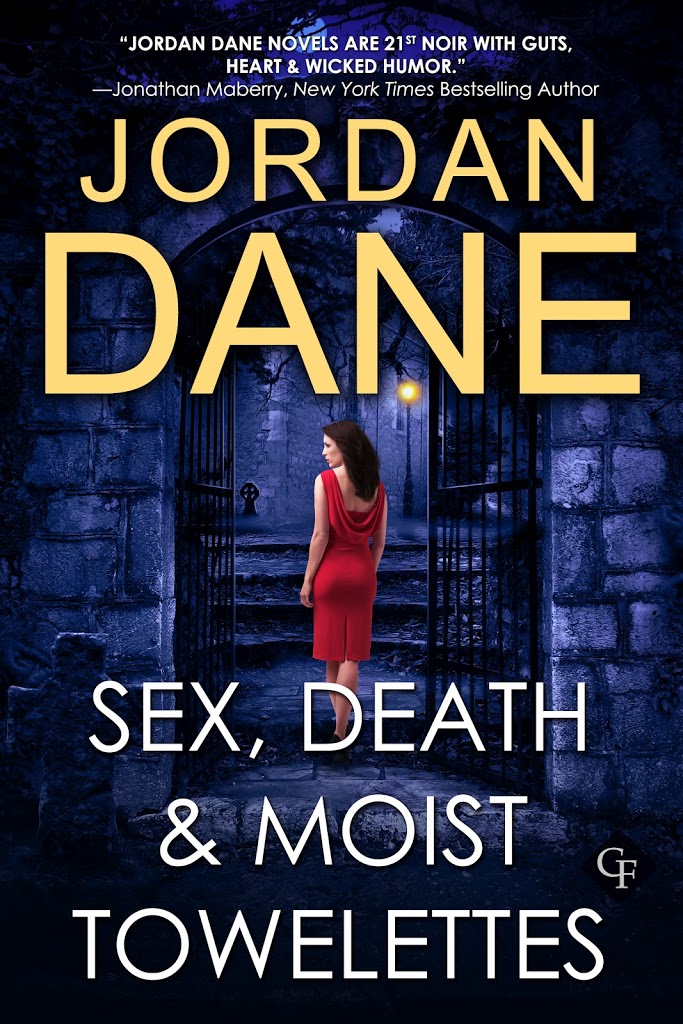
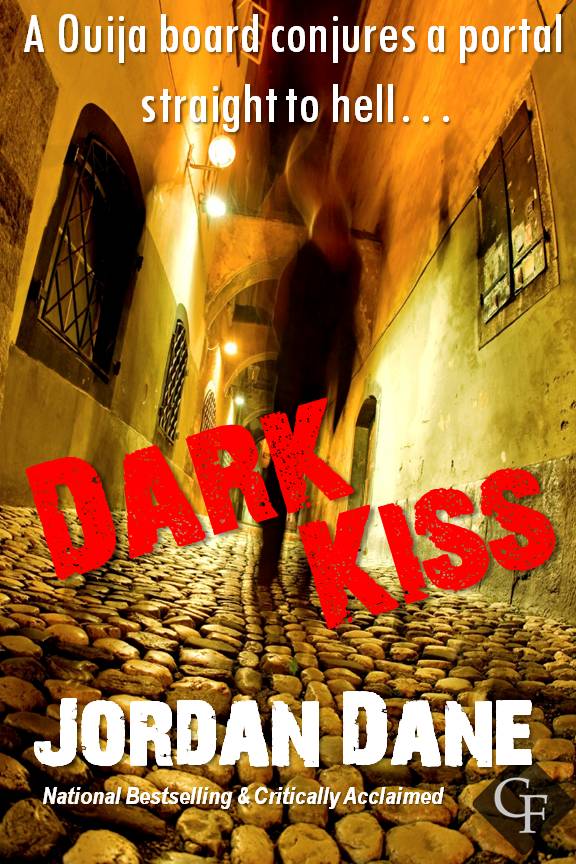
My first anthology of short stories—SEX, DEATH & MOIST TOWELETTES (e-book)—is now available. It’s a mix of stories from crime fiction noir to paranormal, with my brand of dark humor. As a teaser for anyone not familiar with my adult paranormal writing, I’m releasing DARK KISS (e-book) as a single short story from the anthology for a discounted price.
Boxer vs. Karate Guy
Today, I want to welcome a guest blogger and old friend of mine to TKZ. Tom Schreck and I became acquainted a few years ago when we shared the same publisher and both posted on a blog called InkSpot. If you know Tom, you are aware of his love of boxing and dogs. He’s written a whole bunch of great books about both. Check out his Amazon author’s page for more info. Today he’s going to give us a lesson in street fighting. Enjoy and take note!
Who Wins, Boxer or Karate Guy: A Thriller Writer’s Guide?
By Tom Schreck
I’ve lived in both of these worlds and this is the most common question I get: Who wins in a street fight?
The answer is an easy one.
It depends.
It obviously depends on each individual’s skills and training. But let’s work from the assumption that we have two identically trained and talented individuals. One is a boxer and the other a karateka.
They get into it in the street with no rules.
Here are the variables that I need to know.
1. Who gets the first shot in?
2. How much room do they have to fight?
3. Is the karate guy from a style who relies on kicks?
4. Has the karate guy trained in full contact?
5. Is the boxer a good mover?
6. Is the boxer a power puncher or a finesse fighter?
If the karate guy hasn’t trained in full contact, doesn’t get the first shot in and if he relies on kicks (especially high ones) he’s screwed. Not training in full contact puts him psychologically way behind. The boxer will able to take harder shots and not be fazed. The karateka will be in trouble when he takes a full shot.
If the fight is in close quarters the boxer MAY have an advantage because the ability to kick will be neutralized.
If the boxer gets hit with a karateka’s blow first he’s in trouble if it’s well placed. Boxers don’t train in chops to the throat, fingers to the eyes and elbows to the temple. If the boxer isn’t a big puncher, has poor boxing defense and isn’t good at movement, he’s also in trouble. If he relies on finesse in the ring to score points he’s in trouble.
When the fight evolves into holds or winds up on the ground there are many more variables. If the karate guy has experience in holds and pressure points, the boxer will be in trouble. If either combatant has grappling experience they are likely to win.
 Here’s the thing about real fights. If you want to win one throw a sucker punch (or the equivalent sucker technique.) Catch your enemy when they aren’t paying attention and make it count. Incapacitate them by knocking them unconscious or by doing something that really hurts–then incapacitate them with follow-up stuff.
Fair fights are for suckers.
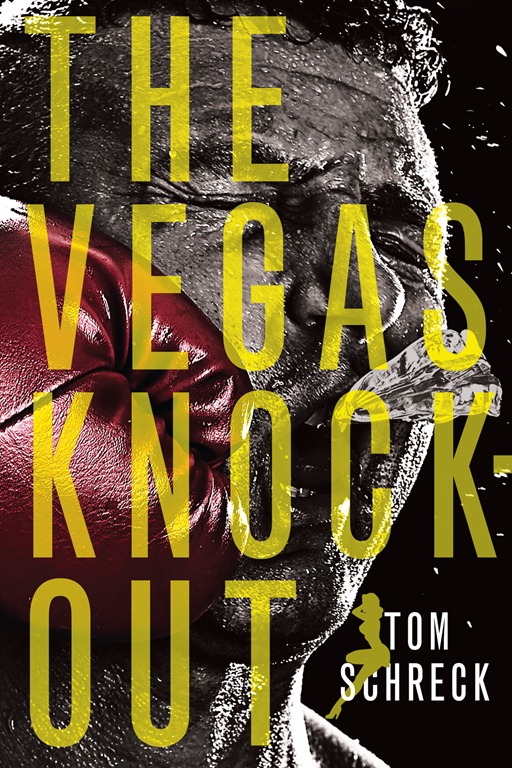
Tom Schreck writes the Duffy Dombrowski Mysteries and his newest release THE VEGAS KNOCKOUT, was released on May 15. Visit www.tomschreck.com and “like” his fan page on Facebook for a chance to win a Kindle Fire.
Even the best ideas need flawless execution
Has this ever happened to you? You have a great idea for a story–an idea that’s so strong, so clear, the story should probably write itself. But then you find yourself struggling with the execution phase. No matter how hard you work, no matter how many times you rewrite, the draft doesn’t measure up to the power of that first idea. Ever been there?
We all have. It’s called writing.
Part of the secret of becoming a professional writer is learning to get out of one’s own way. Every writer is different–we all have certain strengths, and we all have tics and weaknesses. During the writing process, we must prune out those tics as ruthlessly as a fastidious English gardener.
Today’s writing sample is SISTERS OF THE EARTH. I’ve added my comments at the end, including some suggestions for pruning and a bit of replanting.
Angel stood on the top step debating. A gentle wind brushed her curls from he face; it was soothing and grounding. She could do the responsible thing and end the night right here and right now. But she had always played it safe, always kept things nice and in place. But lately things have not been going the way that she had hoped that they would. She now stood to lose everything that she worked for and she didn’t know if she was able to handle it. Once again her life was on its axis debating on which way it was going to spin. She foolishly thought that she would be able to direct that spin.
Ly-Coris stood on the sidewalk waiting for her decide. He was silent but she could feel his presence just the same. She put the key in the door and slowly let it open. She didn’t turn to him, didn’t say anything. She wanted something that she was not able to verbalize and hoped that he understood. She knew that he did when he silently closed the door behind them.
“There is something that I should tell you, and it may be hard to hear,” he said leaning against the doorframe.
She turned to him with a startled look. She had never done anything like this before but she was certain that there wasn’t a whole lot of talking involved. He didn’t seem to notice or care and that just irritated her even more.
“I’m not what you think that I am, Angel. I need you to know…”
Angel stopped him from talking by placing her lips over his, hoping that he would take a hint and move on. There wasn’t any reason to talk; nothing was going to last past this night. He was warm and sweet and just what she needed. His body felt right against hers, but something was suddenly wrong. He was responding, pulling her into him. She could feel his fingers grazing against her skin. But something was off. She pulled back and swallowed all of her instincts.
Kathryn’s comments:
I like the rhythm and flow of the narrator’s voice here. It has a natural, appealing quality to it. I could easily see myself sticking with this narrator to see what develops, story-wise.
But the writer gets in her (I’m assuming it’s a her) own way more than once. And that’s not a good thing, especially on the first page.
Any editor or agent would be put off by the typo in the second sentence (“he face”). Yes, it’s a small mistake, but such a lapse early on lowers the reader’s expectations for the skill of the writing. I’d also suggest adding a comma to the first sentence, so that it reads, (“Angel stood on the top step, debating.”) I’d also remove the semicolon and replace with a period–semicolons are seldom used in popular fiction these days.
There’s a confusion of tenses later in the first paragraph (“But lately things have not been going the way that she had hoped that they would.”)”Have” should be “had” there. I’d also suggest dropping the “that”s to improve readability. The rest of that paragraph introduces back story, which drags down the scene. Instead of putting us in the narrator’s head right then, I’d suggest staying with action and dialogue. You need to paint a strong picture for the reader so that we see what your narrator sees, before you go off into back story.
I have the same advice for narrator’s interior thoughts in the next paragraph (“She wanted something that she was not able to verbalize and hoped that he understood. She knew that he did when he silently closed the door behind them.) Let the action and dialogue–including the silence–convey what is happening here, rather than explaining it all from inside her head. Remember the old adage, “Show don’t tell.”
I got confused what was meant by “this” in a later paragraph, (“She had never done anything like this before…”) The writer has shown the narrator debating and angsting about something, but at this point, I still wasn’t clear what was going on in this scene. By rewriting the scene to convey more action and dialogue, the writer will enable the reader to stay firmly anchored in the moment.
Back to the plus side: the writer does a good job of conveying sexual tension between the two characters in this scene. By reworking it a bit to show us what is happening, rather than telling us, I think the writer will be off to a good start.
Other thoughts about this piece? And, can you share any great ideas you’ve had in the past, which have faltered in the execution? How did you learn about your weaknesses as a writer, and what are you doing to overcome them?
Plotting for Success
Recently, we have been critiquing first-page submissions here at TKZ and focusing very much on that first ‘inciting incident’ that draws a reader into your book. We’ve emphasised the need to start at the right place (so readers aren’t sitting around twiddling their thumbs through backstory) and to introduce tension, character and exposition in a way that compels a reader to keep reading.
Achieving all this is no mean feat but for many writers the next critical issue is plotting the rest of the novel so that initial level of tension and excitement doesn’t drift or sag. For me, the hardest part of plotting is keeping things simple (as I have a tendency to overly complicate everything!) and because of this I outline (and re-outline) throughout the writing and editing process. Even if you don’t outline, however, I think you need to have a mental grip on the key elements of plot as you are writing.
Now, I get to make an unsolicited plug for James Scott Bell’s excellent book Plot & Structure: Techniques and exercises for crafting a plot that grips readers from start to finish. In this, Jim summarises the basic plot elements with the acronym LOCK:
- Lead (the main character that draws readers into the story)
- Objective (what gives the lead a reason for being in the story – what compels and drives them -often either to get something or to get away from something)
- Confrontation (the battle between the lead and the opposition – what is preventing the lead from achieving what he/she needs)
- Knockout (an ending that answers all the major questions and which leaves the reader satisfied)
In so doing Jim neatly encapsulates the critical elements needed for a successful book – particularly a thriller or mystery. As Jim points out, confrontation is the engine of plot and at critical junctures in the book the lead must face his/her battles in order to transition to the next level of confrontation in the story.
When facing a sagging middle, I always remember Jim’s comment that middles are all about confrontations and setting up for the final battle to come. This helps me keep focus and tension in those murky middle waters. I also find that right from the start I have the key plot elements in mind and these continually inform the writing process and keep me on track.
So after all the emphasis we have placed on first-pages recently, it’s now time to revisit the plot that drives the rest of the narrative, and for all of you who submitted (and those of you who didn’t), how would you dissect a successful plot down to its constituent parts? What advice would you give to fellow writers on plot and structure?
What, in your view, are the critical plot elements?
Please Remember
In April, 1917, a puckish, fun loving nineteen-year-old Marine named Frederick Hamilton “Ted” Fox was about to be shipped off to France. His mother, Esther, and sister, Frederica (whom everyone affectionately called “Freddy”) came to the train station to see him off.
Ted Fox was my great uncle. In the photograph below I hope you can see the expressions on the faces. Ted, I am told, had a generous and robust spirit, and a smile that could light up a room. Esther looks so proud of him. And my great aunt Freddy has the most engaging, vivacious and interested look about her. She was an artist, and in those heady days just before the Roaring 20’s she had an artist’s temperament about living life to the full. They all came together in this amazing photo:

Corporal Ted Fox arrived in France and began preparing for action. It came in June of 1918, in what came to be known as the Battle of Belleau Wood.
At dawn on June 7th, the Marines were ordered to advance toward the German lines and their deadly machine gun nests.
The first wave ended in slaughter.
Ted Fox’s squad, along with another, were dispatched to flank the nests. They cleaned out one, and went for another. It was during this second wave that Ted Fox, leading his men, was killed by a bullet to the head.
News traveled slowly in those days, and it took nearly six months for Esther to receive the final news of her son’s sacrifice. She’d written a letter to a naval hospital and that letter was seen by a wounded soldier. He took it upon himself to write to her.
Great Lakes, Ill.
February 15th, 1919
Dear Friend Mrs. Fox- – –
My attention was called to a letter you wrote the hospital in relation to your son who was killed in action. He was in the same company and platoon that I was. I did not see your son fall but I assure you that he fought gallantly for his country and died upon the field of battle bravely. I’m sure his last thoughts were of his dear Mother at home and praying that the news of his death would not be too great a shock to her. As being in battle I know that one thinks of his dear ones at home and not of what may happen to oneself. We all knew that we were either going to be killed or wounded in such a terrific battle that was then raging but all faced it bravely and fought fiercely until we fell. I was wounded severely but escaped with my life in the same battle that your son was killed . . .
Mrs. Fox, I know that you are and should be very proud to be a mother of such a son that volunteering gave his life to his country.
All the boys that died on the field of battle will never be forgotten and shall be honored by their comrades.
A Marine,
Private Roy R. Drowty
U.S. Naval Hospital
Great Lakes, Ill.
As a memorial, Esther Fox was given a specially commissioned piece of art, showing the female symbol of America, Columbia, honoring the war dead. At the top it says: COLUMBIA GIVES TO HER SON THE ACCOLADE OF THE NEW CHIVALRY OF HUMANITY.
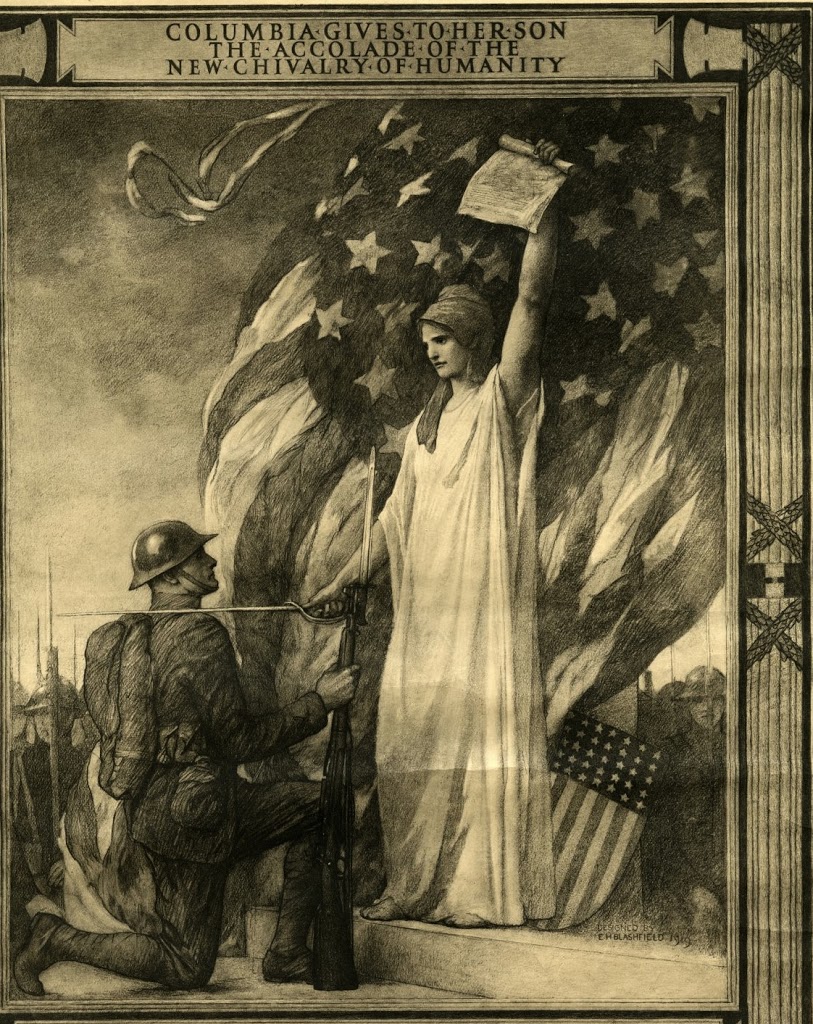
This memorial now hangs in my home.
And when my dad, Arthur Scott Bell, was born in 1919, the family decided to nickname him Ted, in honor of his uncle. In a way, my dad was a living memorial to Ted Fox. And he carried that legacy with him when he went into the Navy in World War II.
I believe in memorials. I believe we have to remember sacrifice. If we don’t, if we give up on the idea of honoring those who gave “the last full measure of devotion” for our greater good, we will not only lose what’s best in America but also what’s best in the human spirit.
War is hell. And young men and women, wave after wave of them, have gone into hell for us. I don’t care what side of the political spectrum you come from. Each of us owe our war dead and wounded all the honor we can bestow. They’re not politicians or pundits. They’re the brave ones who’ve been there for us, no matter what we believe. In fact, so that we can continue to believe what we want and talk about it, demonstrate about it, vote on it.
The line in Private Drowty’s letter that stands out for me is this one: We all knew that we were either going to be killed or wounded in such a terrific battle that was then raging but all faced it bravely and fought fiercely until we fell.
The line in Private Drowty’s letter that stands out for me is this one: We all knew that we were either going to be killed or wounded in such a terrific battle that was then raging but all faced it bravely and fought fiercely until we fell.
That’s why we need to remember.
In the last stanza of Lt. Col. John McCrae’s World War I poem “In Flanders Fields” (referring to a place where war dead were buried) we, the living, are given a charge. I pray you will take a moment to think about it before you dive into your beer and hot dogs this Memorial Day weekend:
In the last stanza of Lt. Col. John McCrae’s World War I poem “In Flanders Fields” (referring to a place where war dead were buried) we, the living, are given a charge. I pray you will take a moment to think about it before you dive into your beer and hot dogs this Memorial Day weekend:
To you from failing hands we throw
The torch; be yours to hold it high.
If ye break faith with us who die
We shall not sleep, though poppies grow
In Flanders fields.
First Page Critique: TEAM MADNESS
Presented for your consideration: the first page of a work entitled TEAM MADNESS:
“River Madden!”
I jerked in my seat and looked at my classmates, all eight of whom stifled laughter while keeping their heads down and their eyes on their notebooks. They’d been like that every since we’d handed our assignments in at the beginning of class, and I wasn’t sure why. But it wasn’t one of them calling my name.
Professor Higgins glowered behind his battered wooden desk. Our desk/chair thingys sat in a semi-circle eight feet from him, all the distance the cramped, overheated cubby hole of a classroom allowed. Late afternoon autumn sunlight filtered through the tall windows to my right. The two rows of overhead fluorescent lights switched from humming a lullaby to belting out Bad Boys—off-key. I ignored them.
Higgins’ narrowed eyes stared at me from his purpled face, and his plump hands clenched on a stack of papers. Oh, oh. My essay topped the pile. I could recognize it by the bright pink stationery. It’s not a color I would have chosen for a dissertation on the Neanderthal religion, but by the time I’d finished the required reading at 2 a.m., it was too late to knock on doors and ask where to get paper. So I’d used what I’d found in my desk, left by the previous occupant of my room. It sucked being the new guy at Dimensional Protective Service.
From the tone of his voice and use of my full name, Higgins had called more than once. S**t (edited by blogger). I’d either fallen asleep again, or my schizophrenic brain had tuned him out to listen instead for patterns in the clicking of the heat ducts or the tapping of wind-blown leaves against the windowpane. I liked history and wanted to be a good student, quiet and attentive, but he delivered his lectures in a dry, droning voice I couldn’t focus on no matter how hard I tried.
“Um, yes, sir?”
The little digital clock on Higgins’ desk chimed, announcing the end of the insufferable class, and I thought I’d been saved by the bell. No such luck.
“Come here, Mr. Madden,” Higgins rumbled.
TEAM MADNESS breaks one rule right out of the gate — nothing wrong with that — by not featuring explosions, mayhem, sex, and/or karate within the opening paragraphs. Now, I LIKE books that start off with those elements. Who among us, however, who has seriously (or otherwise) pursued the benefits of a classical education, did not at some point or another find themselves in the Birkenstocks of Mr. Madden? The author does a good job of showing us the classroom; the buzzing of the florescent lights is a nice touch and the description also reveals that Madden may have some autism spectrum issues with which to deal. The first page does not pick you up by the ears and drag you along, but it does crook its finger and gesture you; I would read more just to see where things go after Madden mercifully exits the classroom.
Some proofreading and clean-up is needed. I counted a couple of typos on the first page — “every since” should be “ever since,” just for starters, and “ thingys” should be spelled “thingies” believe it or not — and if that’s how things start off there are probably going to be two or three similar errors per page, on the average. It’s a distraction, at the least, and unnecessary. That irritation notwithstanding, what is presented here isn’t a bad start at all.
Lift-Off
If you wander into your local Barnes & Noble this weekend, you will, with luck, trip over the copies of Damage Control that are stacked in racks near the front of the store. It’s launch time, and I’m thrilled to report that B&N has taken a big position on the book. They’ve also posted the Jonathan Grave’s Arsenal videos I talked about in last week’s post.
And yes, today’s post is going to be pure, breathless, shameless self-promotion. It only happens once a year, folks, so please hang in there with me. Onward . . .
If you check the book section of USA Today next week (or maybe it’s the following week), you’ll see an ad for the book. USAToday.com, too. And lots of other places.
Are you a subscriber to Goodreads.com? If so, in the next few weeks, you’ll see this ad:

I love that ad. It was designed by MJ Rose with Authorbuzz. Folks, if you’ve got a few extra bucks in your pocket for promotion, I highly recommend you give her a shout. I’ve used her with great success for all of the Grave books, and she’s really good at what she does.
Now, all that has to happen is for the stars to align, for people to like Damage Control and tell all their friends.
Keep your fingers crossed for me. And next week, I promise I’ll be back to regularly blogging.
First Page Critique: Shopping Can Be Deadly (& Fun)
by Jordan Dane
I am still chuckling over this delightful submission. It felt like a cross between Janet Evanovich’s Stephanie Plum (a guy version) and a lite tongue-in-cheek rendition of Robert Crais’s Elvis Cole. (Elvis has some pretty funny schtick.) See you on the flip side for my critique and I would love to hear what you think too, TKZers.

SHOPPING CAN BE DEADLY
Detective Rule #13: Treat every case like it’s your first case, especially if it is.
I checked my watch and then the wet windshield. A twenty-eight-year-old vivacious woman crossed the street. She was my client, Mrs. Ellen Donefield. Eleven o’clock and she was right on time. Her ash blonde hair was covered by a red scarf, her highly pilates-ized body was covered with St. Somebody’s fashions and her back was covered by me, Guy Graff, a twenty-seven year old private investigator on his first case.
Yesterday, in my office she told me that for the past two weeks she had been followed while shopping in Beverly Hills and hired me to find out who it was. She didn’t feel threatened but she wanted him stopped.
The expensive streets in Beverly Hills were filled with bustle and haste on this Valentine’s Day buying posh presents and keeping out of the rain. I got out of my ’94 Tercel and glanced around the soaked street. I wasn’t the only one watching my client. A dark haired man, with a deep tan and dressed in a brown plaid suit fit Mrs. Donefield’s description. And yes, he was definitely watching that body too. I felt professional, finding my man right away.
Mr. Plaid looked directly at me, checked his watch, then turned his gaze back to Juicy Couture the boutique Mrs. Donefield had just entered. I knew this guy had no idea of who I was but to look inconspicuous, I also looked at my watch and tapped my foot as if waiting for my girlfriend. Little did he know Janice broke up with me two months ago. She didn’t believe my new business venture would generate a large income. So far, she was right.
Mrs. Donefield emerged from the store after a few minutes of shopping. I watched her out of the corner of my eye. Too busy waiting for my pretend girlfriend, I didn’t notice that the Mr. Plaid was gone.
Detective Rule #3: You can lose a sock when doing laundry but don’t lose the guy stalking your client.
Critique
Okay, by the end of this book, I can see the author doing an anthology on all the “Guy” rules, the “World according to Graff.” All anyone would need is a Craig’s list ad and they’d be in the PI business. This has a classic PI feel to it, but it’s updated with the appealing wit of the author. I definitely want to read more of this story.
The first line pulled me out a little. “I checked my watch and then the wet windshield.” The wet windshield might be a way for the author to comment on the weather, but it struck me as odd that anyone watching a vivacious woman (and client) would notice the drops of rain on the windshield, especially on their first case.
In the first paragraph, the words “on his first case” are redundant after the very funny Rule #13. I’m sure this clever author can think of many ways to get this across another way, like “a twenty-seven year old private investigator with a newly minted license with the ink still wet and a week old ad on Craig’s list.”
“…her highly pilates-ized body was covered with St. Somebody’s fashions and her back was covered by me, Guy Graff…” This is a very funny way to introduce the first person POV character, without the reader waiting too long to know who the voice is. (I love the character name too.)
This sentence should be broken apart or revised since the subject—streets—cannot buy posh gifts. “The expensive streets in Beverly Hills were filled with bustle and haste on this Valentine’s Day buying posh presents and keeping out of the rain.” The streets can be filled with bustle and haste (I like that description), but a secondary subject needs to be added to make this grammatically correct. Also, the word “expensive” when describing the word “streets” is a miss for me too. The “shops” are expensive, unless streets in Beverly Hills are made of gold, which they might be.
“’94 Tercel” – Priceless! Nuff said.
“Little did he know Janice broke up with me two months ago. She didn’t believe my new business venture would generate a large income. So far, she was right.” This little aside by Guy is so funny. The author jabs in a touch of back story, but does it with humor that also reflects on Guy. He thinks he’s being clever with his toe tapping “technique.” I love this.
The way this submission ended is priceless too. “Too busy waiting for my pretend girlfriend, I didn’t notice that the Mr. Plaid was gone. Detective Rule #3: You can lose a sock when doing laundry but don’t lose the guy stalking your client.” I love how the author spells out Rule #3 by starting with losing a sock in the laundry. This not only makes the character very relatable, but it endears him to the reader as well.
Summary – First person POV works so well in this story. It’s classic PI, but the humor of this character shines through and the reader will want to stay in his head, especially if the funny rule making descriptions continue. It’s like Guy is making stuff up as he goes and these rules will come more from his mistakes than his successes. Each thought feels as if it comes straight out of Guy’s head and that not only reflects on what’s happening, but each line also shows his self-deprecating humor, his opinion of his surroundings, and his nature.
Whoever wrote this, thanks for the laugh and I wish you well! Great stuff. What did you think, TKZ?
DOG: First Page Critique
This story shows the importance of making the reader care about your characters. Engage the reader right away and she’ll want to see what happens next. Tell her what’s happening without any emotional impact and she won’t care. Let’s see what you feel when you read this page.
DOG: FIRST PAGE CRITIQUE
Kathy Culbrennan probably wouldn’t have paid attention to the dog except that it was a cold day and threatening snow.
“Poor thing,” she murmured as she passed.
The German shepherd had been tied to the bike rack alongside the Strand Theater, the town’s only movie house. It followed her with mournful eyes, head on its paws, belly against the cold concrete, but didn’t offer to rise.
In the summer, dog owners often left their pets tied to the grating while they ran down the block to Horace Drugs or sometimes kids would tether their pets while they took in a movie. But on this day before Christmas Eve, winter had settled into the Rockies with a vengeance.
As an emergency nurse Kathy had seen unimaginable things, so many that this was barely a blip on the radar. Even kind folks could be thoughtless in surprising ways, especially if their mind were on other things. Still, leaving a pet tied up this way on such a frigid day seemed odd. She glanced back. Beautiful dog, classic black and tan markings. She hoped the owner returned soon.
The dog went out of mind as she cut across the town square to the Teapot Inn, a small brunch restaurant and the town’s go-to place for ladies who lunched. Today would be the last chance she and her two closest friends would have to get together before the new year.
Emilie Winthrop would be flying off to join her husband in London on Christmas Day, and Thane Margulies had planned a lengthy Mediterranean cruise so she wouldn’t have to face New Year’s Eve alone, having just broken up with husband number five or six, depending on how you counted.
The tearoom was almost empty and service quick as the ladies laughed their way through soup, salad, and a hearty blackberry/chicory tea that Del, the owner, had brought back from her last trip to Mumbai. Emilie, the oldest member of the group and a decorator, handed out remembrances of small golden knight statuettes done up in sprigs of holly and thin red ribbon.
My Critique
I am engaged in this story right away and feel sorry for the German Shepherd. Kathy is a sympathetic character who cares about the dog, at least initially. It may be a little harsh to say “this was barely a blip on the radar,” but she does hope the dog’s owner will return soon.
Could you add in the town after Strand Theater? I’m wondering where this takes place.
Regarding the last two paragraphs, I’d rather learn this info through dialogue. Can you have the friends in conversation reveal tidbits of backstory? Even if you want to get past the lunch date quickly to get back to the dog, as I suspect, a quick conversation here would be more interesting on revealing character than just telling us about her friends and having them laugh their way through the meal. And you might have Kathy peering out the window, worrying about the dog who is still there.
As a reader, I am intrigued by the story and care about what happens. Good job!