
John Ramsey Miller
Do not get me wrong. I love and appreciate my readers ….mostly. I recall when fans sent letters to the publisher who forwarded them to me. That’s how long I’ve been around. Most were complementary, some not so much…
Every published author has to deal with people who find mistakes in their book and have to get in touch immediately so they can do a “superiority” dance. Nonny-Nonny-Boo-Boo, I know more n’ you do! We all hate their slimy little entrails. I have written people and told them not to ever read my books again and I’ve offered to pay them for the book they bought if they would agree not to ever buy another one. My wife gets crazy when I do things like that.
I have told people that the mistakes were obviously typos put there by a typesetter who zoned out and the copy editor missed catching it. With what publishers pay copy editors and the nature of the setters reading and keying in the words of every kind of book there is, and I get it. So now so should you, anal compulsive reader dearest.
Most readers are truly dears, but there’s that one in five thousand who read novels the way surgeons read the New England Journal of medicine. You get words wrong in that tome and people can die. I seem to get a few readers who read with their feet up and a red pencil clenched between their teeth.
Here’s the thing. I write stories in real time as I imagine them. If I put in mistakes, they are often invisible to me in consequent readings and edits. I see something, I read it the way I imagined it–if that makes sense. Sometimes my lens is clouded. If (the editorial) you are going to read for grammatical accuracy, don’t read my books. Read law books. If you find a mistake in my books, keep it to yourself, because it isn’t in my control. Write the typesetter or the copy editor and tell them they ruined my book for you. I can do nothing at this point but allow how friggin anal you are and repeat for the twentieth time, “Tell somebody who will be impressed that you read each word and found something that didn’t belong, or found something missing, even after a dozen professionals missed it.”
If the editor(s) don’t initially fix it, it will remain as broken as when I built it.
I was not an English major, and I couldn’t diagram a sentence if my life depended on it. I will dangle participles like I used to hang those foil strip icicles on Christmas trees, end a sentence with a preposition, misspele words, run a sentence from Eugene to Miami Beach, double tap words, CAPS and lower cases lie where they fall, and more terrible, unforgivable things. It’s just me.
Here’s an example. (Spoiler Alert) If I remember the book correctly, in UPSIDE DOWN I have a character say something in German when he is about to kill another assassin (like he could accomplish that). The reader should think this guy is the German assassin in a clever disguise. This woman writes to tell me that she teaches German and loves knockschnizzels and she has to tell me that my German grammar is badly flawed and whoever does my research should be “drawn and quartered.” Otherwise she loved the book. My reply went something very much like this:
Dear (Her name here),
My stepmother is German. I took German in college as my foreign language. I have several close friends who are German or who speak German at least conversationally. The phrase you are referring to was taken directly from a Babel Fish translation of the English I wrote in the little block. You see, the character got the German he spoke from babel Fish because he wasn’t German at all, which I thought clear enough. He wanted to trick the real German assassin by tossing off a phrase he got from Bable Fish (since he did not speak German) and having the other guy answer in his native tongue. I don’t know how you missed that since this is the only note I’ve received out of 200,000 copies out there.
Thanks for taking time to write.
John
She wrote me a lovely e-note response apologizing and saying that she had gone back and re-read the scene and was shocked she got it wrong. The fact is, I got it from Babble Fish because I planned to make it perfect later and never checked it or had anyone else do it. The copy editor actually noted it and asked if it was a correct translation, and it was never repaired by me or anyone else. And truth is, it could be taken that way, or hers. But the point is, I recovered and I came back and performed the superiority dance myself. I loved it. I should have felt, but I didn’t feel at all guilty. I wish I could have done that with every one of those I’ve ever received. But sometimes you are standing there naked to the world ashamed to be associated with a word-fail most foul, and to some, unforgivable.
Truthfully, it’s nice to know someone with literary Asbergers is carefully policing the pages. Although, as goes with real cops, we’d all rather see them pulling someone else over.
The big problem with me self-publishing a book is that fact that it will be rife and rifled with mistakes large and small. If I lose a few anal compulsive readers, I doubt I’ll much notice …or care. But I am sure I will hear from most of them.
Pixar Story Rules
My son, Chris, sent me an interesting set of writing rules that he found in a blog called The Pixar Touch. It presents one storyteller’s view on how to create compelling stories. Here it is in its entirety:
Pixar story artist Emma Coats has tweeted a series of “story basics” over the past month and a half — guidelines that she learned from her more senior colleagues on how to create appealing stories:
#1: You admire a character for trying more than for their successes.
#2: You gotta keep in mind what’s interesting to you as an audience, not what’s fun to do as a writer. They can be v. different.
#3: Trying for theme is important, but you won’t see what the story is actually about til you’re at the end of it. Now rewrite.
#4: Once upon a time there was ___. Every day, ___. One day ___. Because of that, ___. Because of that, ___. Until finally ___.
#5: Simplify. Focus. Combine characters. Hop over detours. You’ll feel like you’re losing valuable stuff but it sets you free.
#6: What is your character good at, comfortable with? Throw the polar opposite at them. Challenge them. How do they deal?
#7: Come up with your ending before you figure out your middle. Seriously. Endings are hard, get yours working up front.
#8: Finish your story, let go even if it’s not perfect. In an ideal world you have both, but move on. Do better next time.
#9: When you’re stuck, make a list of what WOULDN’T happen next. Lots of times the material to get you unstuck will show up.
#10: Pull apart the stories you like. What you like in them is a part of you; you’ve got to recognize it before you can use it.
#11: Putting it on paper lets you start fixing it. If it stays in your head, a perfect idea, you’ll never share it with anyone.
#12: Discount the 1st thing that comes to mind. And the 2nd, 3rd, 4th, 5th – get the obvious out of the way. Surprise yourself.
#13: Give your characters opinions. Passive/malleable might seem likable to you as you write, but it’s poison to the audience.
#14: Why must you tell THIS story? What’s the belief burning within you that your story feeds off of? That’s the heart of it.
#15: If you were your character, in this situation, how would you feel? Honesty lends credibility to unbelievable situations.
#16: What are the stakes? Give us reason to root for the character. What happens if they don’t succeed? Stack the odds against.
#17: No work is ever wasted. If it’s not working, let go and move on – it’ll come back around to be useful later.
#18: You have to know yourself: the difference between doing your best & fussing. Story is testing, not refining.
#19: Coincidences to get characters into trouble are great; coincidences to get them out of it are cheating.
#20: Exercise: take the building blocks of a movie you dislike. How d’you rearrange them into what you DO like?
#21: You gotta identify with your situation/characters, can’t just write ‘cool’. What would make YOU act that way?
#22: What’s the essence of your story? Most economical telling of it? If you know that, you can build out from there.
I think this is about as complete a list of “rules” (even though there are no rules in a creative endeavor) as I’ve ever seen. What do you think?
==
P.S., I learned yesterday that Damage Control made the USA Today Bestseller List. Yay!
KICKING AND SCREAMING
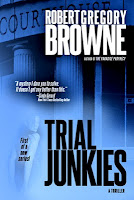
Today on TKZ we’re thrilled to host Robert Gregory Browne, whose latest novel TRIAL JUNKIES is an Amazon #1 Hot New Release.
I practically had to be pulled kicking and screaming into self-publishing.
I came into the book world through the traditional route and was conditioned to believe that the only way into the industry was to write a book, look for an agent, have that agent submit the manuscript and pray that a publisher accepted it.
Once I managed to get past that particular obstacle, I thought the only way to stay in the industry was to write the books my publisher wanted me to write and regularly meet my deadlines.
So when I heard that a few authors had decided to take advantage of the so-called Kindle revolution and start self-publishing ebooks, I thought they had completely lost their minds. Did they really think they could make a living selling books for three or four bucks on Amazon?
Surely they had to be nuts.
But an odd thing started to happen. Several of my friends who had decided to take the leap were actually starting to see their incomes rise. Not dramatically, but this was certainly proof that it was possible to, at least, supplement your income with self-publishing sales.
Yet, I remained on the fence. Not fully convinced that self-publishing was the way to go.
I’m not a particularly greedy guy, but I have to say that there was one piece of news I received from a friend that made me reconsider my position. She sent me an email saying, “I made thirty thousand dollars last month in ebook sales.”
Now, to a midlist writer—even one who has managed to do this job full-time and eke out a fairly good living—that was a number that couldn’t be ignored.
Thirty thousand dollars? Surely she was either fudging the truth or I hadn’t read the email correctly. And if she was making that kind of money, she had to be an anomaly.
Or did she?
I soon started to get reports from other self-publishing friends that they were making ten, twenty, thirty, even forty thousand dollars a month selling ebooks on Amazon.
How could this be possible? I wondered. If I were to self-publish a book would I ever manage to earn that kind of loot? Because, let’s face it, few people go into the authoring business to make money. We midlisters are used to modest advances and modest sales. And most are forced to do the job part-time because their royalties just aren’t high enough.

I went to my financial advisor and I said, “Can you believe that some of my friends are making thirty or forty thousand dollars a month through self-publishing?”
He immediately nodded his head and said, “Sure. What you’re seeing is the cut the publisher usually takes.”
Well, folks, greedy or not, I didn’t need much more convincing. I was already in the midst of writing a new book and decided somewhere around the third act that I needed to forego shopping it around and self-publish the sucker. That book was called TRIAL JUNKIES and I launched it about three weeks ago by offering it for free and giving away 46,000 copies.
And I’m happy to report that a few days after the giveaway, TRIAL JUNKIES hit the Top 100 in Kindle Books and became the #1 bestselling legal thriller on Amazon. As of this writing, it’s still there and I’m keeping my fingers (and toes and eyes) crossed that it sticks around for a while.
Over a period of a few months, I’ve gone from skeptic to firm believer. Not merely because of financial potential, but because I’ve never felt so in control of my own destiny. I wrote the book that I wanted to write, on my own terms, and handled every aspect of its release from formatting to cover design. That’s the kind of control that no author gets in the traditional publishing world.
Will everyone who self-publishes be as lucky as I’ve been? Probably not. But the odds in the traditional publishing world are no better.
These are new, scary times we’re living in and I can’t yet say that I’m a success at self-publishing—only time will tell that.
But at this point I’m loving every second of it…
Robert Gregory Browne began his career by selling a two-part mystery story, NOTHING BUT THE COLD WIND, to EasyRiders magazine. After more than a decade as a screenwriter, Browne shifted his focus to his first love, novels, and wrote KISS HER GOODBYE, which recently served as the basis for a CBS Television series pilot, starring Dylan Walsh and Terry Kinney.
Rob’s subsequent books are the thrillers TRIAL JUNKIES, WHISPER IN THE DARK, KILL HER AGAIN, DOWN AMONG THE DEAD MEN and THE PARADISE PROPHECY (as Robert Browne).
First-page critique: CANNIBAL’S HYMN
By Joe Moore
I took a break from first-page critiques last time around to make room for my friend and guest blogger Tom Schreck to give us some tips on hand-to-hand street fighting. Now back to my regularly scheduled blog. Today, I take a look at a first-page submission called CANNIBAL’S HYMN. My thoughts and suggestions are on the flipside.
Fredrick’s knees and hands shook as he pulled his wallet from a back pocket, bumping his wrist on the Glock snugged against the small of his back. He extracted a business card and flicked the wheel of a cigarette lighter. On the seventh try, and after
turning his back to the mouth of the cave, the flame stood upright and he set fire to the card stock. Crouched down, he tucked the curling paper into a small mound of dried leaves. His hands were turning white and going numb from cold and he could barely feel his toes, even though he slept with his tennis shoes on.
I should have bought boots. Or better socks, he thought. Shielding the infant pyre with his hands the wind blew across his back and dropped snow onto his neck. He shivered. He snapped pieces off of a branch and began laying them on top of the smoldering tinder. Tight, tiny pops gave way to less meek snaps as the fire grew. He blew steady breaths through pursed lips at the bottom of the fire. The horse clomped about, swishing its tail outside.
Turning around Fredrick stared through the aperture of the cave towards the trees. The snow fell in orderly, regimented lines that seemed more akin to the static waves painted on community theater backdrops than real weather and his eyes began to lose focus, depth disappeared and the forest flattened into a single crowded plane of dark green, gray and white. Then, right then, a small voice opened fire in the back of his mind. He knew it was right. There was no way he was getting away. Everything was too far, the weather too hateful, too many people looking.
He hunched over and crawled back into the darkness of the cave. Pawing around in the darkness he gripped his backpack and pulled it towards him. Setting the Glock to one side he reached down along the side of the bag and shimmied a collapsible aluminum bowl from the bottom and pushed it into shape. But the bottle of water was frozen.


OK, here’s what I know so far: Fredrick is trying to build a fire outside the entrance to a cave. He is hiding from “people”. It’s freezing and he’s not properly dressed for the elements. He is armed. There is a horse nearby. He has come to the realization that he may not survive. After Fredrick starts the fire, he goes inside the cave to fetch a bowl and heat some water.
First the good news. The writer has established two strong questions here that should keep a reader wanting to turn to the next page.
1. Will Fredrick survive the cold?
2. Will he avoid capture?
Now the not-so-good news. This is a hodgepodge of mixed images and confusing staging. Some of the writing is illogical. And a number of things just don’t work visually. Here’s my line-by-line critique.
Fredrick’s knees and hands shook as he pulled his wallet from a back pocket,
Does this mean that the rest of his body parts did not shake? Why isolate the shaking to his knees and hands?
bumping his wrist on the Glock snugged against the small of his back.
Is “snugged” really the word to use here? Is it even a real word? It stopped me as I tried to determine if it was a typo. How about snuggled or pressed?
He extracted a business card and flicked the wheel of a cigarette lighter.
It sounds like the cigarette lighter was in the wallet, too. Unless it really was in the wallet, I would suggest clarifying that he removed it from a pocket or pouch or whatever.
On the seventh try, and after turning his back to the mouth of the cave, the flame stood upright and he set fire to the card stock.
This is an instance of staging confusion. Is Fredrick inside the cave and is shielding the flame from the wind blowing in or is he outside the cave and shielding the flame? Why would he turn his back to the mouth of the cave if he was outside? At this point, I’m not sure where he is. But I do know that building the fire outside in the wind makes little sense.
Crouched down,
The word “down” is not needed since it’s physically impossible to crouch “up”. The economy of words rule: deliver the most information with the least amount of words.
he tucked the curling paper into a small mound of dried leaves. His hands were turning white and going numb from cold
“Were turning” is passive voice, and there’s no need to mention that the numbness is from the cold. What else would it be from?
and he could barely feel his toes, even though he slept with his tennis shoes on.
Why would he do otherwise? Sleeping with his shoes off under these conditions would be insane.
I should have bought boots. Or better socks, he thought.
Better socks? Like $100 silk dress socks? Instead of a meaningless word like better, how about thicker or insulated or woolen or hiking?
Shielding the infant pyre with his hands
OK, I admit that a “pyre” is technically a type of fire—a heap of combustible material, but it’s usually the size of a Rose Bowl Parade float. He may have high hopes that his fire will grow to the size of a pyre, but seriously, this is thesaurus-intensive writing. And it’s the wrong image to put into the reader’s mind.
the wind blew across his back and dropped snow onto his neck. He shivered. He snapped pieces off of a branch and began laying them on top of the smoldering tinder.
Now I know he’s outside the cave. So where is the logic in trying to build a fire in the wind when he could use the shelter of the cave instead?
Tight, tiny pops gave way to less meek snaps as the fire grew. He blew steady breaths through pursed lips at the bottom of the fire.
What other kind of lips would he use to blow steady breaths? And the way this sentence is constructed, the pursed lips are at the bottom of the fire. A cleaner version would be: He blew at the bottom of the fire.
The horse clomped about, swishing its tail outside.
The horse? So is it his horse or did the animal just wander up out of nowhere? Another bit of confusing staging. And it swished its tail outside. Outside of what? The cave?
Turning around Fredrick stared through the aperture of the cave towards the trees.
So is he now inside the cave looking out? And the choice of the word aperture is another example of thesaurus-intensive writing. Yes, technically, aperture is a type of opening. But the image it places into the mind of the reader is normally associated with the parts of a camera lens. Is Fredrick a photographer?
The snow fell in orderly, regimented lines that seemed more akin to the static waves painted on community theater backdrops than real weather
I’ve never seen snow fall in regimented lines. If anything, it’s exactly the opposite. I’ve also never seen “static waves” painted on a community theater backdrop. As a reader, I can’t relate to these references.
and his eyes began to lose focus,
Mine, too.
depth disappeared and the forest flattened into a single crowded plane of dark
green, gray and white.
No idea what’s going on here. Is he on drugs? Hallucinating?
Then, right then,
I think one “then” should do fine.
a small voice opened fire in the back of his
mind.
Opened fire connotes gunfire. Since we don’t know who Fredrick is yet, it would be easy to assume with this phrase that he is military and thinks in military terms. If he is, then this is probably OK. Otherwise, it might not be the best word choice.
He knew it was right. There was no way he was getting away. Everything was too far,
Too far as in distance or plot development? In other words, was the closest place to which he could escape too far away, or had pervious events leading up to this scene gotten too far out of hand?
the weather too hateful,
Hateful is normally a human emotion and may not be the best word choice here. Unless the author intends for the weather to become a contributing “character” with human attributes (think OLD MAN AND THE SEA), I would suggest words like harsh or severe might be better.
too many people looking.
A slight clarification would help here and ratchet up the suspense. Rather than the generic word “looking”, how about something more intense as in, too many soldiers out to kill him or too many cops out to capture him or too many villagers with pitchforks hunting . . . Obviously I don’t know the story, but I think this is a missed opportunity to create tension.
And if so many people are searching for him, wouldn’t the smoke from the fire attract their attention?
He hunched over and crawled back into the darkness of the cave.
OK, so he really is outside the cave.
Pawing around in the darkness
Pawing conjures up the image of the actions of an animal, not a human. That may be fine if the writer wants to start planting seeds in the reader’s mind that Fredrick is someone with animal-like instincts, despite the tennis shoes and bad socks.
he gripped his backpack and pulled it towards him. Setting the Glock to one side he reached down along the side of the bag and shimmied a collapsible aluminum bowl from the bottom and pushed it into shape. But the bottle of water was frozen.
Again, the staging is confusing. Where did the water bottle come from? Like the horse, did it materialize out of thin air? A short clarification avoids confusion.
As we’ve said many times, it takes a lot of guts for a writer to submit a sample for a public TKZ critiquing. And I have the utmost admiration for the courage of anyone who does. At the end of the day, this exercise is all about helping a writer become better at the craft. This submission is not bad at all, but it needs a great deal of clean-up and revision. I get the impression that this is probably a really cool story. The writer needs to decide what images to plant in the reader’s mind that correspond closely to those of his own, and avoid confusing alternatives. Probably the biggest sin committed here is questionable word choice. The words are all a writer has to get the story clearly into the head of the reader. It’s not easy. If it were, everyone would be writing books. Hey, wait, come to think of it everyone is.
So I hope that this writer will take my comments and sometimes snarky suggestions as a means to improving skills. It’s never personal. In fact it can’t be because I have no idea who wrote this submission. It’s always about advancing the art of story telling. Good luck.
Any additional thoughts? Do you agree or disagree with my suggestions? Would you keep reading?
The REAL secret of best-sellers

I had an epiphany the other day.
My dear friend Pam and I were taking a rare cross-country trip together for the first time in years. This trip, to a weekend reunion of Wellesley friends, was to be our girls-weekend-off escape from the pressures of work and life.
Just before we boarded Jet Blue, we each extracted our books for the road (hardcovers, mind you!). It turned out we’d selected the books–both mega bestsellers–with the particular goal of being a good “airplane read.”
“These kind of books aren’t even well written, but they’re perfect for a plane ride,” Pam observed.”They’re written like movies.”
Like movies.
Two hours into the flight, I opened up my book and looked at it with fresh eyes. It did, indeed, read like a movie.
What are the elements that make a novel “like a movie”?
- They are written in a highly visual style, with an overall effect that functions almost like a camera’s lens.
- They keep the reader flowing precisely in the moment from scene to scene, at the breaking surface of the action. They focus on what the character sees, hears, is feeling, at that exact moment.
- There are few digressions into back story or descriptions.
- There’s a lot of “white space,” which means the action and dialogue is flowing briskly, and the pacing is swift.
- The chapters are short–sometimes, only a page or two. Again, that helps the action and pacing drive forward.
I don’t know why the phrase “like a movie” hit me with such force. All of these elements–action, pacing, tension–are things we always strive to do as writers. But that the end goal was to write “like a movie”? That was a new thought for me.
Do you agree that most best-selling thrillers are written like movies? What are the elements you see that contribute to pulling it off?
Building the Mythology

Last week I had the privilege of witnessing a true ‘once in a lifetime’ event – the transit of Venus.
Visible from Melbourne for some six hours last Wednesday, I took my boys out of school and headed down to the historic observatory in our botanical gardens in the hope of actually seeing it (we had terrible weather during the week so there were no guarantees we’d even see the sun!). The local astronomical society had set up telescopes on the lawn and, inside the observatory, the historic 19th century telescope was perfectly positioned to capture an event that, by most calculations, won’t occur again until 2117.
After waiting over two hours (!) it was finally our turn and, thankfully, the clouds parted and we got a terrific view of Venus as it travelled between the Earth and the Sun. Thing was, after all the build up, what we really saw was a tiny black dot passing across a white disc…so how come my boys declared it to be one of the most ‘awesome’ things they had ever seen?
Mythology.
By that I mean that after all the anticipation, research, and history involved, the actual event took on its own kind of mythic status. Therein lay its power and therein lies the power behind some of the most popular bestselling books and films. Think of Harry Potter – or the film Alien. Even Twilight has a detailed mythology that draws readers in. So when writing your current manuscript consider the mythology you are building inside. This doesn’t mean you have to be writing fantasy or science fiction because even with mystery and thrillers what you are creating is your own mythology and a world that will draw a reader in and compel them to read further.
So what do you need to create ‘mythology’ within your work?
It could be (to name a few):
- A sense of an epic battle between good and evil being played out
- An emotional resonance that seems to tap into a universal yearning (for love, for peace – whatever you like)
- A world that despite being foreign, alien, or even historical feels so fully formed that a reader is transported (using all five senses)
- A sense of something that lifts a reader from the mundane to the profound
As a writer or a reader, what do you think about when you consider the ‘mythology’ of a book? Do certain issues resonate with you and therefore raise a book to mythic status in your eyes? Have there been events in your life which have gained almost mythological status? How do you weave mythology into your own work?
Rhino Skin
Today’s column is brought to you by Kit Shannon, turn-of-the-century Los Angeles lawyer. ANGELS FLIGHT, the second novel in The Trials of Kit Shannon series, is now available for Kindleand Nook.
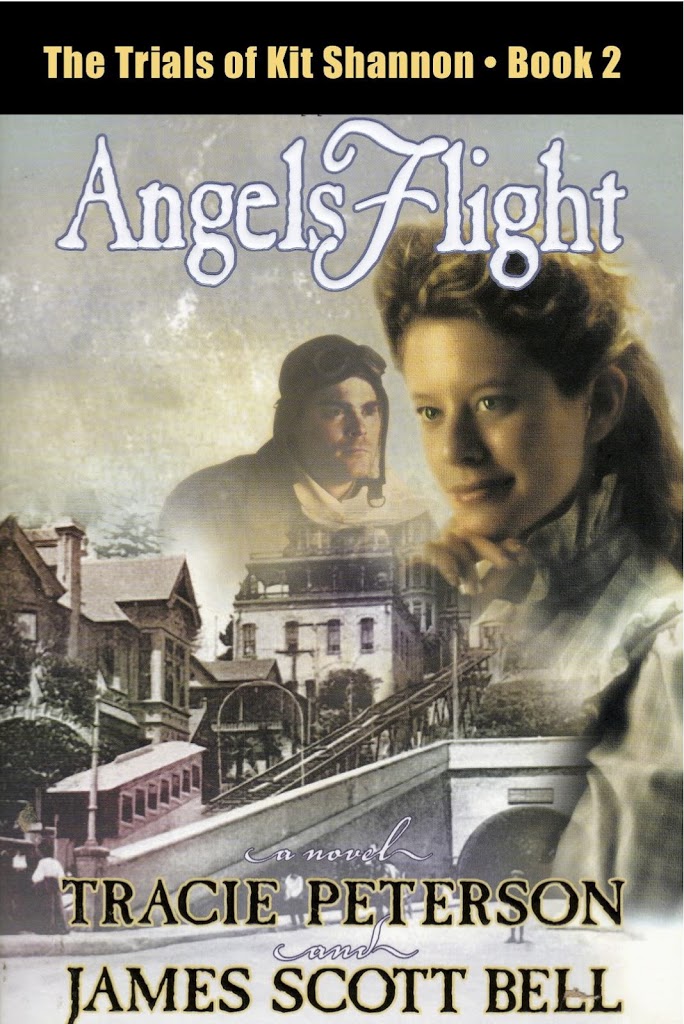
Nothing had prepared her for the hostility of a city gripped by prejudice . . .
But you have to be prepared for the slings and arrows of the writing life. These may come in the form of rejection letters, bad reviews, angry reader e-mails, personal jabs from a family member, or any number of other places.
To survive, you need to develop Rhino skin. You need an outer armor that takes the hits but doesn’t stop you. Here’s how you get it:
1. Let rejection, or criticism, hurt for a day, no more

It’s all right to take a hit and feel its full force. Don’t try to hide from the emotional impact. Give vent. Destroy a pillow if you must. But let go after half an hour or so. Determine to go immediately to #2.
2. Write
When my son fell off his two wheeler the first time out, I didn’t let him quit. I got him back on the bike and almost burst my lungs running with him. We repeated the process till he got it.
He did not like falling. But when he was back on the bike and peddling, he was not thinking about the fall. He was thinking about staying up for the next few feet.
Writing is like that. When you are down about your writing, pound out those words. Dennis Palumbo, in his book Writing From the Inside Out,says “Every hour you spend writing is an hour spent not fretting about your writing.”
A daily quota is tonic for your ache.
What you’ll find is wonderful: when your mind reflects back on the hurt, the wound won’t be as deep as it once was. And the more you do write, the more the hurt begins to fade. You won’t forget it, but it won’t debilitate you.
3. Review your career path
And that’s what you’re on. Do not think of yourself as someone trying to sell a novel. You are a writer, and that means you never quit.
Do you need to start another book? What will you do differently? What can you learn from the rejection or the critic that is of actual value to you? Learn that thing then write and forget the rest.
4. Reward yourself
For a writing job finished, for a quota met, for a manuscript completed, heck, for just about anything, treat yourself to something.
When I finish a manuscript I like to take a full day off and go on a literary goof. There are used bookstores in L.A. I like, so I’ll start there, browse the shelves, pick up that Cornell Woolrich I’ve been missing, or add to my collection of 50’s paperback originals.
I might just go to a park or the beach, put out a chair and read.
That night, I’ll take my wife to one of our favorite places for dinner. You simply have to enjoy the journey or what’s the point of it all?
5. Remind yourself
Two reminders to put inside your head.
The first is to remember that the greatest writers of all time have been rejected and, once published, slammed in a review.
Thomas Bailey Aldrich, writing in the Atlantic Monthly in 1892, said of Emily Dickinson, “An eccentric, dreamy, half-educated recluse in an out-of-the-way New England village—or anywhere else—cannot with impunity set at defiance the laws of gravitation and grammar. Oblivion lingers in the immediate neighborhood.”
Nothing of Mr. Aldrich, to my knowledge, remains in print.
An unnamed editor returned Tony Hillerman’s first Navajo detective manuscript to him, with a note: “If you insist on rewriting this, get rid of all that Indian stuff.”
When you get a rejection or bad review, remember you’re in very good company.
And then remind yourself constantly that you are a writer, because you write. There are many more people who do not write yet feel perfectly at ease sniping at those who do. When such a snipe comes your way, know that you are the one putting yourself on the line, opening a vein, walking the tightrope, singing a solo under hot lights. You are part of a courageous bunch who are all about doing. Teddy Roosevelt’s famous advice applies to writers:
“It is not the critic who counts: not the man who points out how the strong man stumbles or where the doer of deeds could have done better. The credit belongs to the man who is actually in the arena . . . who, at the best, knows, in the end, the triumph of high achievement, and who, at the worst, if he fails, at least he fails while daring greatly, so that his place shall never be with those cold and timid souls who knew neither victory nor defeat.”
Get in the arena. Go at your writing with all the devotion and love and enthusiasm you have. When the darts of rejection or criticism come your way, keep writing. You will stop them with Rhino skin, and keep right on charging ahead.
The Butterfly Effect
One of the leading stories this week concerned the passing of Ray Bradbury. This is noteworthy considering that in the 1940s Bradbury was to a great extent consigned to the pulp magazines. I’d wear a legacy such as that like a badge of honor now, but back then it was anything but. So-called “serious” or “literary” authors did not frequent those types of publications. Bradbury kept plugging away and by the mid-1960s his novels and short stories were being studied in university courses. If you wanted to break a friend into the science-fiction genre, you did so by steering him over to the paperback section of a drug store and thrusting FAHRENHEIT 451 (“Oh yeah, I’ve heard of that. Did he write that?”) or THE MARTIAN CHRONICLES or THE ILLUSTRATED MAN into their hands. Bradbury has seen his work go from pulps to hardcover to paperbacks to yes, e-books. News comes that there is going to be a huge roll-out of his work in digital form, sooner rather than later. A few things were available at the time of this death; a sticking point that had kept more from being available had nothing to do with adversity to the technology; Bradbury simply did not want the libraries to be bypassed. Indeed, word comes down that in accordance with The Man’s wishes e-book versions will be available for lending from your local library as well.
Most folks talk about FAHRENHEIT 451 when they mention Bradbury. I’m going to talk about four short stories that have stuck in my mind for over fifty years. Every time we get a gullywasher around here, when the rain pours and pours for more than a day or so, I think of “The Long Rain” a gem of Bradbury’s from 1950. First published in a wonderful little periodical titled Planet Stories, the tale deals with three earthmen who are stranded on Venus in the midst of the torrential rains which at that time everyone thought enveloped the planet. A classic. “The Small Assassin” is one of the darkest stories that Bradbury, or anyone, ever wrote. I missed its original publication in 1946 in the pages of Dime Mystery(love that title) by a few years but I am sure it caused a stir. Read this story about a baby who may or may not be homicidal and see what you think about toys left on the stairs and pretty things. “Way in the Middle of the Air” was published in Other Worlds in 1950 and became a part of the canon of The Martian Chronicles. It was social commentary disguised as science fiction, telling the tale of the day that all of the black folks left the country and emigrated to Mars, and the surprising reaction from some quarters. While I have never forgotten this story since the day that I read it, it, I had particular cause to recall it several years ago, during one of a series of visits to New Orleans. I was staying on the east side of the city at that time and, purely by happenstance, went for two days without seeing a Caucasian face. It briefly crossed my mind that perhaps all of the white folks had left the country and I had somehow missed the memo. The story was still so vivid in my mind, some forty-odd years on, that I expected to see the rocket departing when I looked up in the sky. The most haunting of Bradbury’s stories for me personally, however, remains 1952’s “The Sound of Thunder.” It has been heavily anthologized, but first appeared in Collier’sin 1952. I as a rule don’t care for time travel stories, but this one is quite different, a cautionary tale about the importance of following directions and staying on the path. The term “butterfly effect” was indirectly coined as a result of this story. If you haven’t read it, do so and see why.
Now it is your turn. What is your favorite Ray Bradbury novel, collection, or short story? Do you recall when you first read a Bradbury work? How did it affect you? And if you have never read any of Bradbury’s works, we’d like to know that, too.
Leave Your Warm-Up in the Gym
By John Gilstrap
Week before last, I had the honor of serving on the staff of the Writing Away Retreat in beautiful Breckenridge, Colorado, where we awoke to snow, only to have it melt in the 70-degree afternoon sunshine.
Here’s how it works: Twenty writers (as many as 31, actually) gather in this massive mansion of a house just off Main Street, where they spend five days together in the most nurturing, creative environment that I have experienced outside of teaching I used to do at Virginia’s Governor’s School for the Humanities and Visual and Performing Arts. Cicily Janus, the Retreat’s creator and hostess, is a gourmet chef who creates outstanding meals out of only fresh and natural foods. We’re not talking granola and seeds here, folks, but rather fresh beef, fresh eggs, fresh fruit and vegetables. Mac-n-cheese lunch day is a nearly religious experience.
As faculty—a position I shared with a number of other professional writers, editors and literary agents—my job was to critique 10,000-word submissions from the attending writers. That accounted for a few hours of every day, and the rest of the time allowed me to write nearly thirty pages of HIGH TREASON, my Grave book for 2013. I confess that it was a little intimidating to consider offering an honest critique and then dining and partying with the people on the other end, but I was thrilled to see that this was a group of realists, who understand that honest criticism is part of the writing journey.
As far as I can tell, no one ever turned on a television, unless it was in their private bedroom (this is a BIG house), and every attendee found the inspiration they needed to take the next step forward on their manuscript. Folks, if given the opportunity to attend one of these events, I recommend that you pounce on the opportunity. (I have no idea what people pay to attend, but when you factor in the four-star lodging and five-star food, I’m sure it’s worth the price.) I will forever have fond memories of the alcohol-infused marathon 8-Ball tournament with Andre, Signe and Eric. I’m sure I didn’t win, but I have no idea who did.
There’s a talent bell curve in any event like this, but I have to say that overall, I was highly impressed with the level of talent among the students. Two stories in particular have what I think is tremendous commercial potential.
While strengths and weaknesses vary, though, nearly 100% of the submissions shared the same weakness: a first-chapter digression to backstory. They’d launch with a terrific hook, they’d get some good momentum going, and then they’d slam on the brakes to tell me stuff that I really didn’t need to know. The rationale was always the same: “I need the reader to understand where my character is coming from.” Or some variation thereof.
No, they don’t the reader needs to be pulled along by compelling real-time, on-stage action. Motivation can wait. Motivation can always wait.
We all do it, folks. very writer on the planet makes the same mistakes. What separates the professionals from the hopefuls is the ruthless, critical eye that allows us to carve up our beloved creations with a dull machete.
Of the submissions I critiqued, a full 30% included the recommendation to kill the first chapter and start with the second. In one case, I suggested that the book start on page 25. It’s as if we address the daunting task of writing a book with 2,500 words of warm-up. Twenty-five hundred words of tuning. Rehearsal, maybe. That’s fine. Whatever gets the creative juices flowing.
And now that the juices are flowing, erase the rehearsal from your recording CD.
**
Okay, now there’s one bit of shameless self-promotion (as if I need to burden you with more of that). I learned earlier this week that Threat Warning was nominated for a Shamus Award from the Private Eye Writers of America. It’s one of the big ones, and I’m totally jazzed.
First Page Critique: The Year of the SSSSSnake
By Jordan Dane
My post series on self-publishing (post #2) will continue after this first-page critique. You know the drill. My comments on the flip side.
San Jose, California
Casey crouched behind the concrete block retaining wall and peered around the corner. Bright light shown from an industrial overhead light, illuminating the parking lot in back of the old computer parts shop.
Five men dressed in black t-shirts were loading long unmarked boxes into the back of an equally unmarked van. Three of them had guns tucked into the back waistband of their jeans. Guns. She squinted into the wash of flood light, but couldn’t make out the van’s plate.
Dammit. She was going to have to get closer. A job was a job, right? Brian had assured her it was a good one. Yeah, like he was at the top of her ’T for Trustworthy’ list. But he had said it paid well. In cash.
Still, guns. She blew out a breath. But cash. She nodded to herself. Get closer, check it out, then leave — fast — if… Yeah, if.
The shadows were ink black from the light, but sparse. She glanced at her Kawasaki leaning a few feet away. Not exactly a stealth cycle. On foot, then. She shifted her weight, ready to dart behind a huge SUV three rows over. They won’t see you. The light’s too bright. Stay low. No noise. She swallowed, hard. They won’t see you.
Her hip vibrated. She fell back, landing on her butt, scrabbling in the gravel to make sure she was out of sight behind the wall. She grabbed the phone and flipped it open. “What the fuck have you gotten me into, you slimy piece of shit?” she hissed in a harsh whisper. “They have guns, Brian. Guns.”
“Get out of here, little girl,” the voice on the phone said.
She went still, then checked the caller ID. Private caller. Not Brian. Shit. “Who the hell‘re you?”
“You’re in way over your head. Go home.”
Looks like Casey is in real trouble. And they’ve got GUNS! (Sorry mystery author, but I had to clear the italics. Blogger went weird on me.) Overall, there is a lot to like about this intro. I get a sense of action and Casey’s POV is fun to read. I’m intrigued enough to turn the page, for sure, but there are improvements that could be made to tighten the opener.
Casey crouched behind the concrete block retaining wall and peered around the corner. Bright light shown from an industrial overhead light, illuminating the parking lot in back of the old computer parts shop.
This opening line didn’t do anything for me. The only thing of value here is the name Casey being introduced and a quick reference to the setting being a parking lot behind a parts shop. The author clearly is trying to establish that Casey can see what’s going on (their guns) because of the overhead light. I’m also not sure why a last name for the character is not given. If we are in the head of the character, they would not refer to themselves in the 3rd person, but at the start of a book, this is the one area you can mention the name and readers expect it. Sure, the name could be introduced in conversation, but why not mention it in the intro. The details mentioned in the first two lines might work better if they were included in tightened paragraph 2, such as:
Possible rewrite – Casey crouched in the dark watching five men dressed in black. They were loading long unmarked boxes into the back of a van parked behind an old computer parts shop. Three of them had guns. Guns. From behind a retaining wall, she squinted into the wash of the flood light they worked under, but couldn’t make out the van’s plate.
At the start of the next paragraph, there is an example of passive voice.
Passive-She was going to have to get closer.
Stronger-She had to get closer.
A job was a job, right? Brian had assured her it was a good one. Yeah, like he was at the top of her ’T for Trustworthy’ list. But he had said it paid well. In cash.
Although this is in Casey’s voice, it took me out of the action a bit, even though these lines are short. These lines made me wonder why she would do this job if she didn’t trust Brian. This reflects on her smarts too.
The author might have considered having Casey creep closer, out of her safety zone of the retaining wall and her bike, before she gets that creepy phone call from someone watching HER. Having said that, I would suggest that these lines be shortened to (if they apply): Brian promised her cash for the job, but how far could she trust another thief?
Still, guns. She blew out a breath. But cash. She nodded to herself. Get closer, check it out, then leave — fast — if… Yeah, if.
These lines are redundant (the guns and the cash) and don’t add anything. They TELL the reader what she wants to do, rather than SHOW them. The debate in her head reads a little choppy and is harder to follow. For me, it detracted from the action. I would rather SEE her getting closer with a build-up of tension before her cell vibrates.
The shadows were ink black from the light, but sparse. She glanced at her Kawasaki leaning a few feet away. Not exactly a stealth cycle. On foot, then. She shifted her weight, ready to dart behind a huge SUV three rows over. They won’t see you. The light’s too bright. Stay low. No noise. She swallowed, hard. They won’t see you.
The first line caused me to read it over. Shadows can’t be ink black with a light shining on them. I understand what the author meant, but this description made me reread it. Perhaps something like – Beyond the light, shadows were inky black.
This paragraph starts out with the shadows and how they won’t see her, but the Kawasaki lines interrupt this idea that is picked up at the end again. Casey’s thought process is out of sequence and leaps around as a result. How important is it to mention that she rode in on a Kawasaki (other than the chuckle factor)? Can that aspect wait until her getaway?
The Kawasaki made me chuckle and wonder what she was thinking. If she’s casing a place or doing anything in stealth, why ride in on a loud Kawasaki? And why even consider getting closer using her bike? (I’m guessing here, but is there a reason that the huge SUV is mentioned, like perhaps that a cop is on a stake out in that SUV and is the guy calling her at the end?)
Her hip vibrated.
This description pulled me out. Surely there is a better way to describe this. Her hip isn’t doing the vibrating. Her cell is.
She fell back, landing on her butt, scrabbling in the gravel to make sure she was out of sight behind the wall.
This sentence could be sharper. Something like – After landing on her butt, she scrambled and dove for cover.
She grabbed the phone and flipped it open. “What the fuck have you gotten me into, you slimy piece of shit?” she hissed in a harsh whisper. “They have guns, Brian. Guns.”
Using the F bomb on the first page has been mentioned before on TKZ as something to avoid. Although it doesn’t bother me, I do appreciate that other readers could be unnecessarily offended and this could detract from book sales and reviews. Something to consider.
I do love the fact that Casey gets a mysterious call from someone watching her at the end of this intro. Definitely makes the reader wonder what’s going on. I’d turn the page. How about you?
It takes a lot of guts to submit your work for critique. Kudos to the author. Having your work under a microscope on a blog for feedback, it is easy to comment on each line. I hope the suggestions made today strengthen your work. I always learn from these critique sessions. Thanks for your submission.