World Building – Indigo-style

by Jordan Dane
@JordanDane


My young adult novel, Indigo Awakening, launched two days ago on December 18. It is the first book in the Hunted series with Harlequin Teen. The inspiration behind this book came from researching Indigo children. Query “Indigo Child” on the Internet and you’ll get over 8 million hits. Real life and headlines often inspire my books and this time is no exception. For the purposes of fiction, I took liberties in my portrayal, but Indigo kids are generally described as highly intelligent, gifted teen psychics with a bright “indigo” aura and a mission to save the world. They have high IQs, see angels and commune with the dead. Are Indigo children real or are they manipulated by adults to believe they’re special? Are they dysfunctional misfits or mankind’s evolutionary savior? You decide, but I find the notion of man’s evolution intriguing. Here is the synopsis:

Because of what you are, the Believers will hunt you down.

Voices told Lucas Darby to run. Voices no one else can hear. He’s warned his sister not to look for him, but Rayne refuses to let her troubled brother vanish on the streets of LA. In her desperate search, she meets Gabriel Stewart, a runaway with mysterious powers and far too many secrets. Rayne can’t explain her crazy need to trust the strange yet compelling boy—to touch him—to protect him even though he scares her.

A fanatical church secretly hunts psychic kids—gifted “Indigo” teens feared to be the next evolution of mankind—for reasons only “the Believers” know. Now Rayne’s only hope is Gabe, who is haunted by an awakening power—a force darker than either of them imagine—that could doom them all.

They are our future—if they survive…

Five Key Ways I Built my Indigo World

1.) I triggered my premise with a “What If…” question that had conflict – The most important question in a writer’s arsenal is “what if.” What if Indigo kids are the next evolution and their psychic abilities are evolving and escalating? Who would fear this and feel threatened? I had to have a larger than life villain with a universal reach to terrorize these children. (Yeah, that’s how authors think.)

2.) I created conflict through a powerful enemy – The Church of Spiritual Freedom (specifically, a covert operation of overzealous “Believers”) use their faith as justification to persecute those they fear, believing God is on their side. They fear that Indigos and Crystal children threaten humanity’s existence with their “unnatural” superiority. That’s the basic conflict, a David versus Goliath storyline with an abundance of potentially evocative themes.

3.) I did research to add depth and dimension –I blended my research on Indigo kids with the topic of psychic abilities to create a different kind of world that wouldn’t be formulaic. I wanted the reader to “feel” these powers and how they erupt or evolve within each character. I didn’t want to simply describe traditional psychic capabilities. I wanted readers to understand how these kids feel as their power explodes or how their gifts morph into something far greater after they make contact with the “hive mind.”

4.) I provided a cultural context and hierarchy to my world that added to internal conflict for my characters – There is a hierarchy of Indigo Children/Indigo Warriors/Crystal Child. I made Indigo kids the base level with the status of a Crystal child more unique, powerful, and elite. Indigos are highly intelligent intuitive teens who “feel” their way through life, trust their instincts above all else, and can often see angels and the dead. Some Indigos are warriors with a fierce fighting spirit and a rebellious nature. This difference fuels future conflict between the cultures as Crystal children tend to be more peace loving and innocent. They are our future, if they survive, but what kind of world will they build?

5.) I built in consequences for wielding power – There is a dark side to having these powers—a duty and responsibility—and when the Believers tamper with science and human nature, they battle something they should have respected more. In book #2, Crystal Storm, There are consequences on both sides when power (of any kind) becomes abusive.

1.) If you could have a secret Indigo power, what would that be?

2.) Have you ever experienced a psychic moment or do you know anyone who you think is a real psychic?


“Dane’s first offering in her new series, The Hunted, is sensational. Indigo Awakening has strong characters and a wild and intense story, matched only by the emotions it will generate within you. Readers will love this book and eagerly await the next adventure. Fantastic! A keeper.”

~Romantic Times Book Review Magazine – 4.5 Stars (out of 5)

Blending Sex and Suspense

Nancy J. Cohen

How do you fit romance into a non-stop thriller? These genres are not mutually exclusive. Look at your movies for examples. Romancing the Stone with Kathleen Turner and Michael Douglas, and The Librarian: Quest for the Spear with Noah Wyle and Sonya Walger are two of my favorites. What recent thrillers have you seen where a romantic relationship is involved? How did the film get this across to viewers?

Here’s how to start with your own story: Give your characters internal and external conflicts to keep them apart. The external conflict is the disaster that will happen if the villain succeeds. The internal conflict is the reason why your protagonists hesitate to get involved in a relationship. Maybe the heroine was hurt by a former lover and is afraid of getting burned again. Or she has a fierce need for independence. Why? What happened in her past to produce this need? Maybe your hero doesn’t want a wife because his own parents went through a bitter divorce, and secretly he feels unworthy of being loved. Or maybe he feels that his dangerous lifestyle wouldn’t suit a family. Keep asking questions to deepen your people’s motivations.

Your characters will be immediately attracted to each other through physical chemistry. This pulls them together while the inner conflicts tear them apart. Soon the benefits of a relationship begin to outweigh the risks. Perhaps they have to work together to rescue a hostage or to escape the bad guys. As the story progresses, they become emotionally closer as they progress through the stages of intimacy. In a thriller, this might happen at a faster pace than other genres. But even thrillers need down times from the tension.

Here’s an abbreviated version of the stages of intimacy:

1. Physical awareness: Your characters notice each other with heightened sensitivity.
2. Intrusion of thoughts: Your character begins thinking about this other person often.
3. Touching: First, it may be an arm around the shoulder, lifting a chin, touching an elbow. They come closer until the desire to kiss is almost palpable. Rising sexual tension is the key here, not so much the consummate act. Your couple can have a stolen moment when they’re being chased by the villain and are forced into close proximity, for example. Even if it’s a momentary diversion, you’re advancing the level of awareness.
4. Kissing
5. Touching in more intimate places
6. Coupling: Focus on the emotional reactions of your characters. Avoid clinical terms or use them sparingly. This is lovemaking, not just sex. For it to be romantic, think “slow seduction”, not “slam bam, thank you ma’am”, unless the scene or characters warrant this behavior. If a sex scene doesn’t fit into the story’s pacing, leave it out. Or maybe all they have time for is a quickie. In that case, let’s see the emotional aftermath. Maybe the hero acts out his concern for the heroine’s safety after they’ve been together.

When all seems to be going well, throw a wrench into the relationship. Perhaps it appears as though the heroine betrayed the hero. Or he walks out on her because he fears his own vulnerability. Finally, they both change and compromise to resolve their differences by the story’s end.

Keep in mind that I’m writing this advice from a female viewpoint. Also, I write romance in addition to mysteries, so I have the mindset for that genre.

I used to read spy stories and men’s adventure in my younger days. Those were guy novels with a woman of the week. None of those relationships were meant to last. I suppose this is what makes the difference. If you don’t care about your two characters ending up together, then the woman may merely serve as a sex object. And that might not endear you to your female readers (who happen to buy more books than men).

As for series, people read ongoing series for the characters and want to see them grow and change. Giving us relationships we care about is what will encourarge readers to buy your next book. So think about your purpose before going into the story. Where do you want these two people to go? Why can’t they get there? What do they have to overcome in order to be together? And if they don’t end up as a couple, then what purpose does their relationship serve?

Here’s an example from Warrior Rogue, my next release. The hero and heroine have just met when they’re involved in a mid-air terrorist attack aboard their private business jet. This is from the heroine’s viewpoint. They’ve landed on a beach on a remote Pacific island.

“Come on, we can’t waste time.” Paz signaled to her from the open hatchway.

She staggered toward him. Peering outside, she was glad to note they didn’t need the emergency chute. They could easily jump the short distance to the ground. Holding her long skirt, she leaped after Paz onto the beach.

He caught her in his muscular arms and gently eased her down. His tousled hair, determined jaw, and ocean blue eyes had never looked better.

“Thank you. You saved our lives.” On impulse, Jen rose on her tiptoes and kissed him.

She’d only meant it to be a brief expression of gratitude, but Paz’s gaze intensified. He swept her into his arms and gave her a passionate kiss that left her breathless.

“We’re safe now.” He broke away with a regretful expression. “At least, for the moment. But we shouldn’t linger.”

“For the moment? What does that mean?” The memory of those ugly men who’d attacked them returned with full force. “You know who assaulted us, don’t you? When are you going to tell me what’s going on?”

“Let’s summon help first. I need to put my comm unit back together. If we can hook it into a local network, you can call your people.”

“I have my cell phone.” She patted her purse.

His hand clamped onto her arm. “We should scout around. Our landing probably attracted attention, and we don’t want the wrong people to find us.”

Note how their level of intimacy advances in this short scene. If you’re writing from the male viewpoint, when Paz catches Jen, he could get a whiff of her scent.

So how do you work romance into your fast-paced thriller?

The Christmas gifts all writers need

By P.J. Parrish

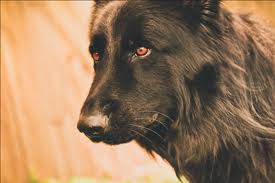
See that picture at left? That is my dog Bailey. The antlers are photoshopped on but I dress her up in Santa outfits every year and she’s a good sport about looking silly. Dogs can teach us writers something this holiday season. We need to lighten up.

This epiphany came after yet another of my sleepless nights. I was worrying about a plot pothole in our novella-in-progress, and about not finishing it, and then what if nobody downloads it from Kindle Select…you get the idea, right?

As usual, I retreated to the sofa and the remote. Nothing on except “The Da Vinci Code.” I know, bad movie, but I hadn’t seen it so I figured it would at least put me to sleep. And then that creepy Albino monk starts screwing barbed-wire anklets to his legs and beating himself bloody with cat ‘o nine tails. And I started thinking about all the pain we writers inflict on ourselves. Self-doubt, exhausting promotion tours, crippling envy, three-books-a-year contracts, flop-sweat fear. Hell, we don’t need Kirkus. We’re killing ourselves.

So I have some Christmas presents for you.  They are the exact things you probably won’t give to yourself. But you need them. My gifts to you are…

1. Permission to write badly. I give this to myself every year because I am one of those perfectionist nuts who gets paralyzed trying to make every word sing. It has taken me a decade to understand that to get to the good stuff, you have to well, poop out a lot of crap.

2. The ability to know when you are brilliant. And you are. Even if it is just for one page, one paragraph, one sentence. You know when you’ve hit that sweet spot. You can feel it. Cherish it. You’re not going to do it every time, but you don’t need to. Brilliance, like diamonds, shines best when you think quality not quantity.

3. A friend to celebrate the good news. Even if it’s as small as you finished chapter two. Even if it’s as big as a six-figure book deal and Ridley Scott on your speed dial. Success is nothing without someone to share it.

4. An honest critic. You need that one true friend who can tell you when you have lost your way. Your mother loves you too much to tell you the truth about your book. Treasure the one who can look you in the eye and say, “this sucks, you can do better.”

5. The courage to question your agent or editor. Blind loyalty is dangerous. In politics, love…and publishing. A great agent or editor can be your biggest ally. But it is YOUR responsibility to steer your career.

6. A week off. Leave the laptop. The cell can go to hell. Find someplace to which you can truly retreat, where the world cannot intrude. I recommend St. Barts if you can afford it. But your backyard deck will do. Drink good wine. Read trash. Eat too much. Make love. Dance in the snow. Breathe in pink…breathe out blue.

7. The courage to talk to a writer “bigger” than you and know you have something to offer. The first time I found myself standing next to Lee Child I turned into the third verse of Janis Ian’s song “At Seventeen.” Years later, I still cringe but now I can talk to Lee without blathering. I just picture him naked.

8. A few extra bucks to attend a conference so you know you’re not alone. You need to get periodic infusions and if you approach cons right, you come away replenished and eager to work.

9. A walk in the woods to clear your head. You’ve got to quiet those shouting voices of doubt in your brain. This happens only in quietude. Or maybe during a drive on I-95 with “Bohemian Rapsody” blaring.

10. The clarity to recognize the seed of inspiration in the smallest things. You’re stuck. You’ve painted yourself into a corner with the plot. Take a step back and look for small things. Open your brain and all your senses. You never know where the answer will come from.

11. Time to appreciate your family for appreciating how hard you work. Your people are important. Tell them. Often.

12. Kindness to reach down to someone who admires you. No matter where you believe you are on the writer food chain, no matter how low you think you are, someone is looking up to you. Be nice to them. Karma, baby, karma…

13. Permission to spend some of that advance money or Kindle royalty check on yourself. Buy a great bottle of Meursault. Rent a red convertible. Get botox. Splurge on Celtic tickets. A friend of mine just got a new agent, signed a six-book contract with a new publisher — this after years of bad luck. She bought herself a diamond ring.

14. Courage to venture out of your comfort zone. This is a tough one because sometimes you can get wacked alongside the head for your trouble. But there is no growth without chances taken. You just have to believe you are right. Even when everyone else — and maybe even the sales — are telling you otherwise.

15. And lastly, I give you the gift of faith. Faith that someone will love your book enough to buy it. That you have another good story still inside you. That no matter how tangled your book might feel, you will find the way home. That you are….brilliant.

Peace, dear friends.

Giveaway Report

Two weeks ago, I wrote about why I was giving away my latest novel as part of Amazon’s KDP Select program. Now that the offer is complete and I’ve had a week to see some results, I thought I’d share how it went and whether I think it was worthwhile.

To recap the advantages of Select, once you give ninety days of exclusivity to Amazon, your Kindle ebook can be borrowed by members of Amazon Prime as part of the Kindle Online Lending Library. Amazon has paid around $2.25 per borrow in the past, but they recently announced that, for the months of December to February, they have added a $1.5 million bonus to the normal pool of money allocated for borrows. Depending on how many additional authors enroll in KDP Select, it means the amount per borrow could go up substantially during this period (Amazon won’t report the figure for December until 2013; they always tell authors after the month is over).

The other advantage of Select is the ability to give away your book for free for up to five of those ninety days. The days don’t have to be sequential, and you can opt to use only a portion of them or none at all. For my book, The Roswell Conspiracy, I originally chose three days, December 5-7.

To promote the giveaway, I let all my fans know on Facebook and Twitter and asked them to share the information with their friends and followers. I also filled out forms on two dozen blogs that promote free books. Five of those sites ended up promoting the book during some part of the giveaway. Blogs that I didn’t solicit also picked my book to promote.

Thanks to those mentions, the free downloads did so well that I decided to extend the giveaway for the full five days in a row. The Roswell Conspiracy had risen into the free top 100 on the Kindle store, so I wanted to continue the momentum. The giveaway ended on December 9 at a number nine free overall ranking in the Kindle store, with 25,343 downloads.

I think that’s a pretty sizeable number of downloads, although it’s impossible to tell how many of those downloaders will end up actually reading the book. When I set out on this experiment, I expected the benefit to be primarily in the long term, with reviews trickling in during the coming months. I also hoped that those who read The Roswell Conspiracy would like it enough to buy my other books.

What I didn’t expect was the short-term boost. As I anticipated, the sales ranking dropped substantially from what it was before the free giveaway since I had sold zero copies on the days it was free. Despite the drop in ranking, I started to see noticeably stronger borrows and sales immediately. My theory is that Amazon’s algorithms had linked my book with all the other books that people had downloaded during that time, so that it appeared in a large number of “Customers who bought this item also bought” scrollbars. The Roswell Conspiracy was therefore seen on many more pages within the Amazon bookstore. Even though the book was no longer free, the important thing was that people could see it existed.

Because of these sales and borrows, the book’s ranking started to go up quickly (borrows seem to be accounted for in the Amazon ranking, though no one knows the secret formula). Before the giveaway, my sales ranking was hovering around 12,000. Within three days, The Roswell Conspiracy got up to the 600 range. It’s now been a week since the giveaway ended, and as I write this the ranking is 1105.

My conclusion already is that the giveaway was worth it. I’ve had enough borrows to completely make up for the income I expected to lose on Nook, iBooks, and Kobo over the next three months combined (remember Select’s exclusivity requirement). And the sales alone have already equaled my earnings from Kindle in the entire month of November. In addition, the number of reviews has increased by 50% in the last week over what the book had received in the previous four months, and they’ve been overwhelmingly positive.

I don’t know if this boon will continue. One downside of using up all my free days at once is that I can’t use that as a tool to juice sales during the rest of the exclusive period. If you’re thinking about enrolling in Select, remember that one anecdote doesn’t equal data. I can’t say how well this program will work for others, but I’d love to hear in the comments about positive or negative experiences from people who’ve done it before. I can tell you that I’m happy I tried it.


Honor Thy Fiction


On December 20, 1943, a 22-year-old bomber pilot named Charlie Brown was in trouble over Germany. He and his newly formed unit were returning from their first mission, a successful one that took out a munitions factory in the heart of enemy territory. But before they got away, German planes strafed Brown’s B-17, tearing it up and wounding several of the crew.
Brown himself was knocked out and recovered only at the last moment to prevent a fatal nose dive.
Now desperate to get his limping plane back to England, Brown looked to his right and, to his horror, saw a German Messerschmitt tracking right with him.
What Brown didn’t know at the time was that the German pilot was Franz Stigler, an ace, who was one kill short of number 23. That would have garnered him the Knight’s Cross, the highest honor for a German soldier in World War II.
Here’s something else Brown did not know. Stigler had been schooled in the old warrior code that you fight with honor. He was told by his commanding officer never to shoot at an enemy in distress, like a flyer going down with a parachute. The reason? “You follow the rules of war for you, not for your enemy. You fight by the rules to keep your humanity.” (This was not Nazi doctrine, of course. But there were many soldiers who fought for the “Fatherland” more than for Hitler, and who had religious roots. Stigler himself was a Catholic).
Stigler had seen that the B-17 had no tail guns blinking, no stabilizer, and a blown away tail-gun compartment. He also saw a terrified tail gunner behind guns streaked with icicles of blood.
Charlie Brown thought the German would open fire, but instead saw the pilot vigorously pointing to the ground. Brown took that a signal to land in Germany. Brown shook his head. He and his crew all wanted to try for England.
Stigler yelled out “Sweden!” to Brown, but Brown didn’t understand. Now he was sure the German would open fire. So he ordered his gunner to take aim. When Stigler saw what was about to happen, he saluted Brown and said, “Good luck. You’re in God’s hands now.”
The stunned American pilot saw no more of the Messerschmitt. He and his crew barely made it back to England, but make it they did, with their incredible story. Only it was a story the American brass kept under wraps. They did not want to humanize the Germans!
Stigler kept quiet about it, too, because what he had done would have been considered an act of treason for the Nazis. He knew that if he’d been seen escorting the wounded Americans, and his plane number identified, he could have been executed.
After the war, Stigler emigrated to Vancouver. Brown continued his Air Force career for another twenty years.
In 1990, Brown decided to try and find out who that German pilot was. It was a long shot, of course. They were almost half a century removed from the events. But Brown gambled with an ad in a newsletter for veteran fighter pilots, stating that he was looking for the one who “saved my life on Dec. 20, 1943.” He held back a key piece of information to test whoever answered the ad.
Stigler saw the ad in Vancouver. He yelled to his wife. “This is him!” He wrote a letter to Brown. Brown called Stigler on the phone and without even being asked, Stigler gave Brown the secret information.
The two men, both in tears, arranged to meet. They became “special brothers” for the rest of their lives and died six months apart in 2008. Stigler was 92, Brown was 87.
Their story is told in a new book, A Higher Call. You can read more about the men here.
Honor is a thread that runs deep through the human spirit. It is what has built civilizations. It is what prevents us from being a mere sub-section of the animal kingdom. And it takes a special kind of cynicism or pathology to snuff that out.
In my view, it is the storytellers who have the power to keep honor and nobility and sacrifice (and thus civilization itself) alive. It has always been so, from the ancient myths to Greek drama to the morality plays to world literature. I often deliver a keynote address to conferences called “Storytellers Save the World,” because in this sense, they do.
Think of the honor shown by characters as diverse as Atticus Finch and Harry Potter. It is a character of surpassing honor that keeps the Hunger Games trilogy from finishing up in a nihilistic, dystopian darkness.
Honor is the missing ingredient in much current, and ultimately forgettable, fiction. As the noted novelist and writing teacher, John Gardner, once put it, “The good artists are the people who are, in one way or another, creating, out of deep and honest concern, a vision of life . . . that is worth pursuing. And the bad artists, of whom there are many, are whining or moaning or staring, because it’s fashionable, into the dark abyss.”
Honor may be the very lifeline that keeps us from falling into that dark abyss. We are a people in need of honor, for our collective soul. And if we don’t keep that we won’t just be reading about dystopian worlds. We’ll be living in one. 
Honor thy fiction. Champion the sentiments that hold us together. This is especially important now, two days removed from the awful events in Newtown, Connecticut. Like so many of you, I spent much of the day Friday in tears. I would hear more reports, think of the children, and weep again.
My wife told me about one little boy. He was with about fourteen other classmates and a teacher, holed up in a bathroom. He said he knew karate. “It’s OK,” he told the teacher. “I’ll lead the way out.”
That’s honor and self-sacrifice in seedling form. That is the hope for our future.
A future we can also affect with the stories we choose to tell. 
Choose well. 

Seeing Your Scenes

by Mark Alpert

I started having eye problems a few months ago. My eyes got dry and irritated while I slept, and my vision was blurry when I awoke. My ophthalmologist said this was a common, age-related problem. He recommended eye drops and a humidifier. It’s not a big deal, just annoying. I hate the fact that my body doesn’t work as well as it used to.

And it made me think about the importance of eyesight to a writer. Most writers are also voracious readers, so we ruin our eyes on novels and newspapers, not to mention all the hours spent rereading our own manuscripts. What’s more, so much of our memory and imagination is visual, at least for writers with normal eyesight. For better or worse, I rely on my eyes more than my other senses, blithely ignoring entire universes of sound, smell and touch. When I think of my childhood, I see mental snapshots of my family’s old apartment in Queens, along with a half-remembered collage of classrooms, playgrounds and birthday parties. And when I use my imagination to construct fictional scenes, the building blocks are mostly visual: what the setting looks like, what the characters look like, how their expressions change, and so on.

In my latest novel, which will come out in a couple of months, I take this idea to its logical extreme: you are what you see. One of the characters in the book, a brilliant bioengineer, figures out how to build brain implants that can copy and download a person’s visual memories. The technology has great commercial potential; millions of people would surely pay for the implants so they could archive their lives or share their favorite memories on Facebook. But the bioengineer has an ulterior motive. He’s dying of cancer, and he believes he can resurrect himself by downloading all his visual memories to a powerful computer that can mimic the functions of the human brain. The computer would be programmed to generate new thoughts and emotions based on his memories, and because memories are the building blocks of personality and identity, the intelligence inside the computer would be identical to the bioengineer’s intelligence (in theory at least).

This idea, I hasten to add, isn’t my own invention. It’s the Holy Grail of the Singularity movement, which has been inspired by the writings of futurist Ray Kurzweil (The Singularity is Near) and others. My twist on the notion is to focus on visual memories. Scientists understand the visual cortex better than other brain regions, because it’s relatively easy to do experiments that involve visual stimuli. Researchers have constructed elaborate, spaghetti-like maps showing how visual information moves from one part of the brain to another, traveling to the regions that store memories (so you can recognize the objects you’re looking at) as well as the regions that control muscle movements (so you can catch the baseball that’s speeding toward you). Because we already know a lot about the visual cortex, the prospect of building a computer that mimics this brain region seemed somewhat believable to me — more like a thriller, and less like science fiction.

In my novel, the bioengineer’s technology goes awry, of course. (I won’t say any more, because I want you to read the book!) But while I was writing the novel I became convinced that the underlying premise — you are what you see — may have some truth to it. I don’t believe there’s any need to assume the existence of some intangible, unobservable entity (soul, spirit, whatever) to explain the mysteries of consciousness and personality. The brain can assemble an identity out of the memories of early childhood, because the interconnected whole is greater than the sum of its parts. Strictly speaking, some of the parts aren’t really memories — they’re instincts genetically hard-wired into the brain, which govern an infant’s life until learned behaviors can take over. And memories of sound, smell, taste and touch also have powerful influences, particularly on the development of language and emotions. But for someone like me, who relies so much on eyesight, life is like a long, meandering movie, a film that’s being constantly re-edited as I watch it.

And this brings me back to fiction. When I’m working on a novel, I see the scenes in my mind’s eye before I put them down on paper. I can’t start writing until I can see, at least blurrily, where the characters are and what they look like. As I write the scene, the setting and characters usually come into better focus, and when I’m finished I can go back to the blurry parts at the beginning and sharpen them by adding more detail. I also add sounds and smells if they’re relevant and compelling; it’s a good idea to describe taste sensations when the characters are eating, and tactile sensations are vital to any description of sex or violence. But for me, the process starts with images. I have to see it to believe it.

I’m not alone on this one, am I? Do most authors visualize their scenes before writing them? And does anyone else have this nighttime dry-eye problem? I’d appreciate any advice, because it’s driving me crazy.

When the good old days are anything but.

by Michelle Gagnon

Jimmy Savile

I hadn’t been paying much attention to the Jimmy Savile pedophile scandal–after all, living on this side of the pond, I had no idea who he was. It was just another of those stories that popped up on Twitter occasionally–I was vaguely aware that a deceased former BBC star had been accused of child abuse, years after the incidents took place. But that was about all I knew.

Until one afternoon, I followed a link and read an interview with an alleged former victim. While discussing the abuse she suffered, the woman said, “You have to understand, this happened in the 80s. It was a different time.”

A small part of me instantly bridled at that–after all, I came of age in the 80s, and it was hardly the horse and buggy era. We were well aware that the world wasn’t always a safe place for children. When Adam Walsh was murdered, the entire nation was riveted- and I received a stern lecture from my parents on stranger danger. When a flasher propositioned two girls at my bus stop, the entire East Greenwich police department staked it out for over a week.

But then I remembered my 8th grade English teacher, Mr. X. I won‘t use his real name, because although he’s most likely retired by now, he’s probably still alive and well. Mr. X was one of the more popular teachers in school- he was charismatic and funny.

And, in retrospect, clearly a pedophile.

His M.O. involved choosing one boy in class–my year, it was a sweet kid named Chris. Chris was one of the only kids I knew at the time whose parents were divorced–in Rhode Island, that was still a rarity. Chris lived with his mother, who just happened to be in a community drama group with Mr. X.

It started with Mr. X making inappropriate remarks about Chris’s mother–discussing how sexy she’d looked at rehearsal the night before, or how he couldn’t wait to “stick his tongue down her throat” onstage. We all found this hilarious, to our great discredit. (Chris, although those comments clearly made him uncomfortable, always did his best to laugh along with the rest of the class).

This behavior escalated. Poor Chris would be openly mocked in front of the class. Mr. X would challenge his manhood, usually by mimicking him in a squeaky voice. And if Chris protested, he would take him over his knee and spank him, or make him sit on his lap. And this all transpired in full view of twenty-nine other kids, in the middle of what was supposed to be a safe environment for us- school.

Looking back, I’m utterly mortified that none of us found this behavior odd. We all thought of it as a delightful, entertaining part of Mr. X’s teaching style. And I doubt that Chris ever told his mother what was going on–we were at that age where when your parents asked how school was, you said, “fine,” and went to your room.

Last year, I discovered that a fellow crime writer had grown up in my hometown and attended the same school- including Mr. X’s class, a decade after me. And apparently, ten years later, Mr. X was still up to his old tricks: honing in on one boy and treating him in an entirely inappropriate manner.

As more stories emerge from the Savile scandal, not to mention the horror stories about Jerry Sandusky and the Penn State football program, I’m forced to acknowledge that the 1980s weren’t the enlightened era I thought they were. The awareness of what constitutes sexual abuse was far less clear back then than it is today. I like to think that my daughter will never have to experience anything akin to what Chris suffered in Mr. X’s class– but that if she ever did something like that, she’d know to speak up about it.

The Reinvention of the Library

By Joe Moore

Dylan said, “The times they are a changin’.”, and it’s true in so many areas of our lives. An obvious example is analyzing the demographics of the recent presidential election and realizing that 20th Century political strategies don’t work in the 21st Century. But beyond politics, there are many other changes taking place, particularly in the publishing industry with the rapid growth of electronic books.

BranchPhotoNOSo in this age of digital publishing, how will the community library adapt and survive?

Some, like the ones in my South Florida region are reinventing themselves with a solid plan for keeping their doors open. Libraries still have millions of books to lend, but what some are doing, and all need to consider, is to turn themselves into active community centers. They need to expand book-lending into a wide variety of community services and functions from helping with job searches to offering classes in a wide variety of activities for all ages. Getting bodies in the door and becoming places to socialize are the keys.

BranchPhotoNO1In my community of Coral Springs, among teaching dance and cooking lessons, and how to use Craig’s List, the library system offers a smart phone app that helps patrons learn more than 30 languages.

Because of the expanded features, local libraries are defying dire predictions of death in the digital age and are now busier than any time in their history. Statistics show that fewer than half of the library’s transactions involve the checking out of a printed book. Patrons are downloading e-BranchPhotoNO2books, audiobooks and music through the library’s online sites.

The use of the library’s cybercafés and free WiFi is exploding. Now patrons can borrow DVDs, e-book readers and iPads. Their popularity is evident with long waiting lists for each. There is an abundance of online classes including foreign language courses and arts and crafts.

The goal as stated by so many library managers is to let the public know that they’re about more than just books. The main library in the county has a first-floor lounge with 56 computers available for their patrons, many struggling with the economy. With many out of work, they no longer have Internet access. That’s where the library comes in. Advice and classes in resume writing, interview techniques and how to search want ads are basic features of the reinvented library.

The times are changing for the better with libraries becoming less of a dusty, silent reading room to an active, busy community hub; a fun and useful place for everyone.

How about the libraries in your community. Are they adapting or struggling? And even more interesting, when was the last time you visited your local library.

===============

THE BLADE, coming February, 2013 from Sholes & Moore
"Full-throttle thriller writing." — David Morrell
"Sholes & Moore deliver razor-edge suspense." — Lisa Gardner

Grabbing the Zebra, and Other Survival Tactics for Writers

Earlier this week, a dear writer friend shared her most important survival instinct with me.

My friend–I’ll call her “Jane”–is the creator of a popular children’s sitcom, and an uber-successful writer. She also happens to be deathly afraid of animals. Especially wild animals.

Jane’s fear of the wild is regularly put to the test during production season, mostly because her show’s cast includes a 7-foot Asian Water Monitor Lizard. Although Mr. Lizard looks like a refugee from Jurassic Park, he’s usually a docile fellow. (But, as Jane notes, “His handlers make sure to feed him before he goes onstage.” Hungry 7-foot Asian Water Monitor Lizards get cranky, evidently.)

In addition to the lizard, last week Jane’s show featured a zebra: It was a cute but extremely nervous zebra. (Sharing walkons with a dinosaur probably didn’t help the zebra’s stage fright). 
Jane was onstage typing up some production notes when  the zebra’s handlers let him stretch his legs nearby. Somehow the animal managed to slip his rope, whereupon he bolted. And of course, he bolted straight toward Jane.
Jane kept her head. She pushed Save. Only then did she add, “Would someone grab that zebra?” 

Yes, ladies and gentlemen–even under the most extreme duress, my courageous writer friend remembered to Save Her Work.
So that’s Jane’s most valuable tip for the week. What about yours? What’s your most important habit as a writer, the one that has gotten you through thick and thin? We want to know!