What follows is the first page of a work entitled A HARD MAN TO KILL, with my comments afterward. Hope you enjoy both — Joe Hartlaub
Time Management for Writers
How do you juggle between writing, marketing, and having a life?
Things used to be simpler when all we had to worry about was selling to a NY publishing house. When I wrote for Kensington, I turned in one book a year. Easy, right? I wrote my Bad Hair Day mysteries and nothing else. No blogs or Facebook posts. I didn’t have a second publisher to worry about making deadlines with double the work. Promotion consisted of mailing out packets of bookmarks to booksellers, letters to reader groups, and personal appearances.
It wasn’t until my option book was turned down that I started writing in other genres to see what would sell. Now it’s years later, and Wild Rose Press has picked up my romances while Five Star is publishing my ongoing mystery series. I am preparing to self-publish an original mystery and a few other items on my agenda as well. Currently, I have four books in various stages of the publishing process. This means edits and page proofs, along with research, plotting and promotion.
Never before have we had so many options. It’s an exciting era, but it’s also utterly time consuming. Who has free time when we can publish our entire body of works through various formats, and spend hours on the social networks promoting them?
Establishing priorities is paramount. When I’m in a writing phase, I set myself a daily quota of five pages a day. That’s my minimum, and I have to be at least halfway through before I’m permitted to peek at my email via Microsoft Outlook. I have to be finished before going online. This is the only way to get your writing done. Do it first before anything else intrudes.
When I’m in a revision phase, I also set limits. Maybe it’s one chapter per day to edit or 50 pages per day to proofread. Again, this work must get done.
As for the rest of the day, it’s spent on promotion and marketing, interspersed with errands, meeting friends for lunch, or whatever else is on my daily schedule. I’m fortunate that I can write full-time. My retired husband helps out with errands, freeing more of my time. Some of you may not have this luxury. In that case, you have to set your own limits.
How many pages can you reasonably write in one day? How many pages can you edit or proofread on a steady basis? How many days a week can you devote to your writing career?
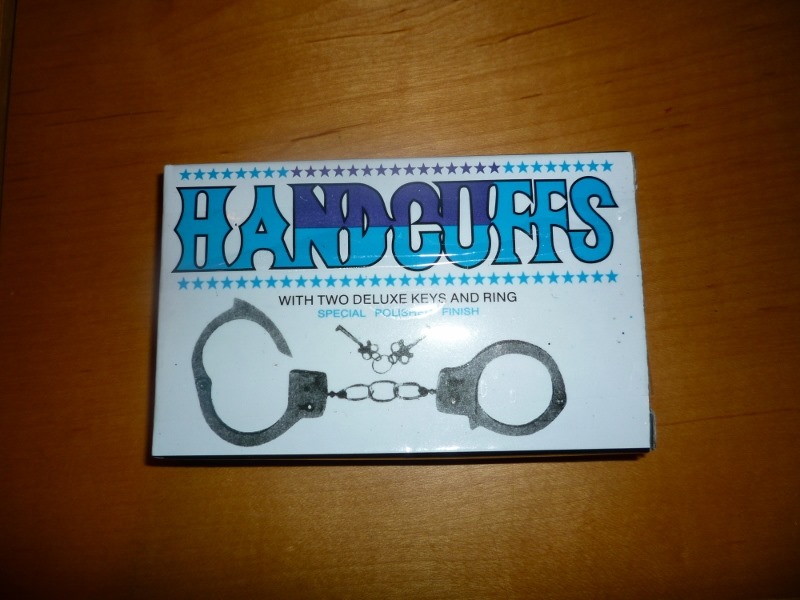
Do you enjoy social networking and marketing, or would you rather watch paint dry? Does someone have to handcuff you to the keyboard to get you to participate?
Where it comes to marketing, create a specific promotional campaign for each upcoming title. Follow this template so you’re not reaching blindly in the dark. As for the social nets, pick a select few and check in there often. Visit the other sites whenever you get to them. Schedule tweets ahead of time if you have a chance. I’ll visit Facebook several times a day because I feel this one is the most important.
Twitter comes next for me. I’ll pop in there every now and then and do a few posts. Pinterest isn’t on my daily role call. I’ll pin photos after I do a blog post with pictures I’ve uploaded. Goodreads is on my list but not on a daily basis, as is commenting on other people’s blogs and posts. You have to do what feels right for you.
I’m a big believer in lists. Write down your writing and business goals for the year. Each day, decide what you have to accomplish. These lists will give you a concrete path to follow. Write down the marketing plan for your next book. This will give you a specific focus, i.e. a blog tour or a book trailer. What you don’t want to do is flounder about, because that’s truly a time waster.
So what’s your plan for today? Mine included writing this blog. Marketing task number one is done. On to task number two.
Are we ready to hear good advice?
I have a theory about writers and writing advice: “No advice is good until we’re ready to hear it.”
Take me, for example. Years ago, having just read Anne Lamott’s BIRD BY BIRD, I called up a writer friend to rave about it.
After burbling on about the book’s awesomeness for about three or four minutes, I heard my friend give an audible sigh.
“I’ve been telling you about that book for years,” she said (a tad ungraciously, I thought).
It was true. I’d heard my friend discuss BIRD BY BIRD before, but I’d never heard it.
Over the years, different messages and bits of advice have bubbled to the surface of my awareness, depending on where I was as a writer.
Here are some of the most useful nuggets that have stuck with me over the years.
- Write every day at the same time.
I can’t remember who was first with this classic piece of advice. The bottom line: You have to develop your brain’s writing muscle the same way you develop other muscles–by repeatedly exercising it.
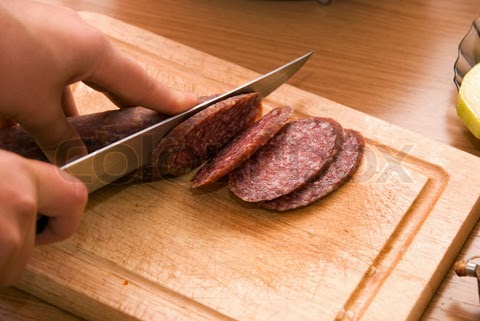
- Slice the salami.
To get unstalled in her writing, Editor and writer Kate White says she had to learn how to break up large projects into small, manageable chunks. She calls it “slicing the salami.” She began by writing for fifteen minutes on Saturday and Sunday. Months later, her first book was finished. This was the single most helpful piece of advice that helped me start writing back when I was a single mom with a high-pressure job.
- Begin and end each paragraph with a short sentence.
This is a simple technique to build pacing and rhythm into your work. The short initial sentence eases the reader’s entry into the paragraph, and the short line at the end provides a rhythmic “bounce” into the next paragraph. This advice came from Miss Snark, the literary agent; I’ve used the technique to good effect. (And if you haven’t discovered Miss Snark, you should check out her archived blog. It’s filled with tons of great writing advice)
- Think of your writing as a camera. You’re not successful until the reader “sees” the story that’s filming in your head.
I’ve noticed that there’s often a disconnect between a scene that is playing in the writer’s mind, and the one that is conveyed on the page. To locate the reader in your story, you need to add context and positioning details. For example, if a minor character is standing behind the main character, about to do something interesting, you need to establish their positions relative to each other in the reader’s mind. Otherwise, readers can quickly become disoriented and untethered from the story, like an astronaut floating in deep space. (See a related post, The Real Secret of Bestsellers.)
So, what nuggets of writing advice have been the most helpful to you, in your career as a writer?
Successful Book Groups
When I lived in California I was a member of a book club that had been running for well over a decade. Now I’m in Colorado I’m seriously considering establishing one myself as I loved being exposed to books that I wouldn’t otherwise have read, and I enjoyed the discussion and sense of camaraderie that came with being with a group of like-minded book lovers.
The only thing is – I’m not sure I want to be responsible for actually setting up a book group. In California, the group had evolved and changed composition over time but the balance seemed to be just right. There were enough strong opinions to go around but no obnoxious personalities to derail the discussion. There was also enough food and drink available to help the ‘discussion’ flourish. The thing is, I’m not sure I can ever recreate this and, to be honest, I’m not sure I should even try.
Successful book groups seem to involve an almost serendipitous arrangement of personalities, opinions and characters. Get the balance right and it’s terrific – get the balance wrong and it’s a horrible endurance test for all concerned. I’ve had offers to join other book groups too – but again, I’m wary about joining. I’ve also been reading about the emergence of online book groups which sound pretty cool – only I think I’d miss the personal interaction (not to mention the accountability – much easier to lie online about having read a book!).
So – some input from TKZers is required. Specifically I’m wondering:
- Are you a member of a great book group?
- If so, what do you think makes it great? (or if you’ve been a member of a dysfunctional group – what was the main problem or issue?)
- What do you think makes a successful book group?
- And finally…with all the social media/online options do you think the ‘in-person’ book group is becoming (sadly!) redundant?
I’m also interested in whether you tend to favor a single sex book group (the one I was in was all-women) or a mixed group and whether you think focusing on a specific genre is helpful (we could chose basically anything, which I think made it much more interesting as I had to read books I wouldn’t otherwise have read). All in all, it would be great to start up a new book group – but I know, after some ‘interesting’ experiences with writing group dynamics, just how carefully I need to tread…
Why I Am Not Turning the Pages of This Novel
The Advance Reading Copy
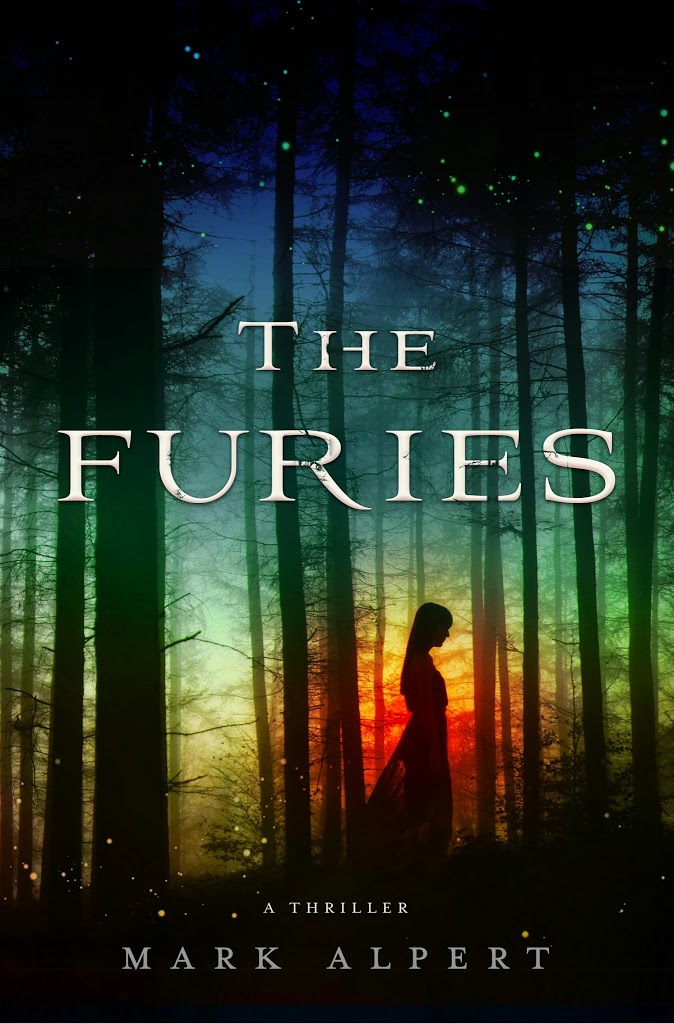
By Mark Alpert
Why haven’t I let her read it until now? Because she’s a tough critic. And she’s pathologically honest. If she doesn’t like something, I can always see the disapproval on her face. Don’t get me wrong, I’m a firm believer in constructive criticism. Just about every writer could use some help pointing out the flaws that he or she has failed to fix, either because of laziness or obliviousness or sheer pigheadedness. I eagerly solicit suggestions and advice from my agent, my editor and the members of my writing group. In other words, I can take criticism from anyone but my wife. That’s just the way it is.
It’s incomprehensible. Scholars still argue over why the massacres happened. And because it’s so strange and horrible, it seemed like an interesting subject for a novel. I imagined a family that came to America in the 17th century after being nearly annihilated by the witch hunts in Europe. They settled in what was then the wilderness and lived in secrecy until…well, until the novel starts.
The book will be published in April, so you’ll have to wait till then to hear the rest of the story. Except for my wife, of course. She’ll have to endure several days of me saying, “What part are you reading? Why aren’t you reading it faster?” And all the while I’ll be studying her face, trying to figure out what she really thinks. It never gets any easier.
Reader Friday: I Wish I Had Not Read That
Dorothy Parker, the famous wit, once wrote, “This is not a novel to be thrown aside lightly. It should be thrown with great force.” Today’s question, without naming the author or title (unless you simply cannot restrain yourself), what is a book you’ve read that you hated? Did you force yourself to finish it? What was it about the book that made you want to throw it with “great force”?
A Kill Zone Exclusive – The Show & Tell Book – Guest Photographer William Greiner
I am so happy to have photographer William Greiner as my guest today. I am one of the lucky authors who had an opportunity to contribute to his book – Show & Tell – a beautiful hardbound book that combines his photographs with short stories from authors with names you will recognize. The book comes from UL Press (University of Louisiana at Lafayette Press) and is available now at this LINK.
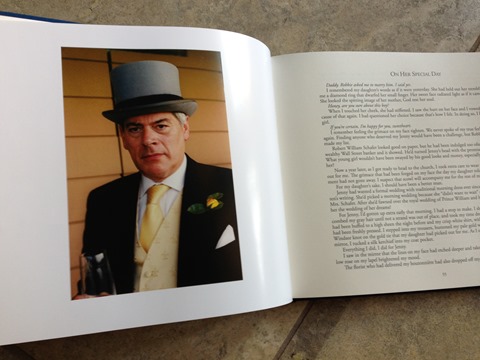
Below is the page image of the photo I wrote about in my story – On Her Special Day. I wanted you to see the fine quality of this book. I’ve ordered some for Christmas gifts and can’t wait to read what the other authors wrote. Welcome, William!
![]() |
| Cover – Show & Tell |
| On Her Special Day by Jordan Dane |
So why is a book titled SHOW & TELL being blogged about on The Kill Zone?
First, the premise was to give a group of fiction writers (In this case 28 in total, including 6 TKZ writers), a photograph without any information about the image and ask each to make up a story about that image. The resulting stories are fascinating, entertaining and thrilling.
John Ramsey Miller, John Gilstrap, Joe Moore, Jordan Dane, Joe Hartlaub and James Scott Bell, amongst others, apply their writing skills to bring a story to every image.
| “A Blur of Motion” by John Ramsey Miller |
| “The Touch” by John Gilstrap |
The idea for this book came to me many years ago after doing a print trade with another photographer. In conversation, it somehow became apparent that this other photographer had a complete different take and understanding of my photograph than what it meant to me. It made me realize we all bring our own notions, expectations and experiences to what we view.
To see what your favorite TKZ author sees & tells, order SHOW & TELL from UL Press, hardbound, 28 photographs accompanied by 28 stories, 183 pages, $35. To order: click this LINK.
William Greiner is a photographer and artist, living in Baton Rouge , LA. For more on our guest, click HERE.
For Discussion: Have you ever seen a photograph that inspired you to write about it? Tell us about it.
Suspense vs. Action
By Joe Moore
Back in 1993, country singer Toby Keith had a hit with the song “A Little Less Talk and a Lot More Action”. That was a great hook for a song, but the concept doesn’t always work for thrillers. I’ve found that one of the mistakes beginning writers often make is confusing action with suspense; they assume a thriller must be filled with action to create suspense. They load up their stories with endless gun battles, car chases, and daredevil stunts as the heroes are being chased across town or continents with a relentless batch of baddies hot in pursuit. The result can begin to look like the Perils of Pauline; jumping from one fire to another. What many beginning thriller writers don’t realize is that heavy-handed action usually produces boredom, not thrills.
When there’s too much action, you can wind up with a story that lacks tension and suspense. The reader becomes bored and never really cares about who lives or who wins. If they actually finish the book, it’s probably because they’re trapped on a coast-to-coast flight or inside a vacation hotel room while it’s pouring down rain outside.
Too much action becomes even more apparent in the movies. The James Bond film Quantum Of Solace is an example. The story was so buried in action that by the end, I simply didn’t care. All I wanted to happen was for it to be over. Don’t get me wrong, the action sequences were visually amazing, but special effects and outlandish stunts can only thrill for a short time. They can’t take the place of strong character development, crisp dialogue and clever plotting.
As far as thrillers are concerned, I’ve found that most action scenes just get in the way of the story. What I enjoy is the anticipation of action and danger, and the threat of something that has not happened yet. When it does happen, the action scene becomes the release valve.
I believe that writing an action scene can be fairly easy. What’s difficult is writing a suspenseful story without having to rely on tons of action. Doing so takes skill. Anyone can write a chase sequence or describe a shoot-out. The trick is not to confuse action with suspense. Guns, fast cars and rollercoaster-like chase scenes are fun, but do they really get the reader’s heart pumping. Or is it the lead-up to the chase, the anticipation of the kill, the breathless suspense of knowing that danger is waiting just around the corner? Always try for a little less action and a lot more thrills.
Awards Season: A Survival Guide
So I am doing my usual warm-up before hitting the computer yesterday morning: folding laundry and watching “Frazier” reruns. I love Frazier because beneath his smooth surface is a roiling bog of neediness and insecurity.
Yesterday was the episode where Frazier and his producer Roz are nominated for the Seebee Award, given out to Seattle’s best broadcasters. Frazier tries to be above it all, but he just can’t. He wants to win, dammit! But at the banquet, he finds out he is up against the aging icon Fletcher Grey. Fletcher has been nominated 11 times in a row and lost 10. Fletcher’s date is his 84-year-old mother who has flown in from Scottsdale — for the 11th straight year. Fletcher is also retiring. Frazier tells Roz, “if we win, they’ll string us up.” Roz says, “I don’t care. I’d crawl over his mother to win this award!”
Frazier loses, of course. His agent Beebee deserts him. Roz gets drunk on Pink Ladies.
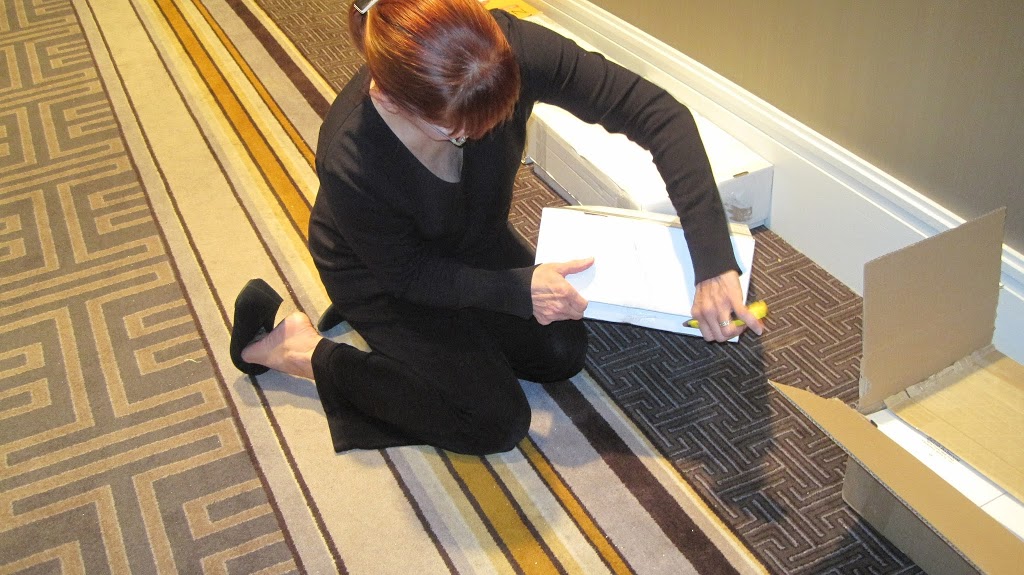
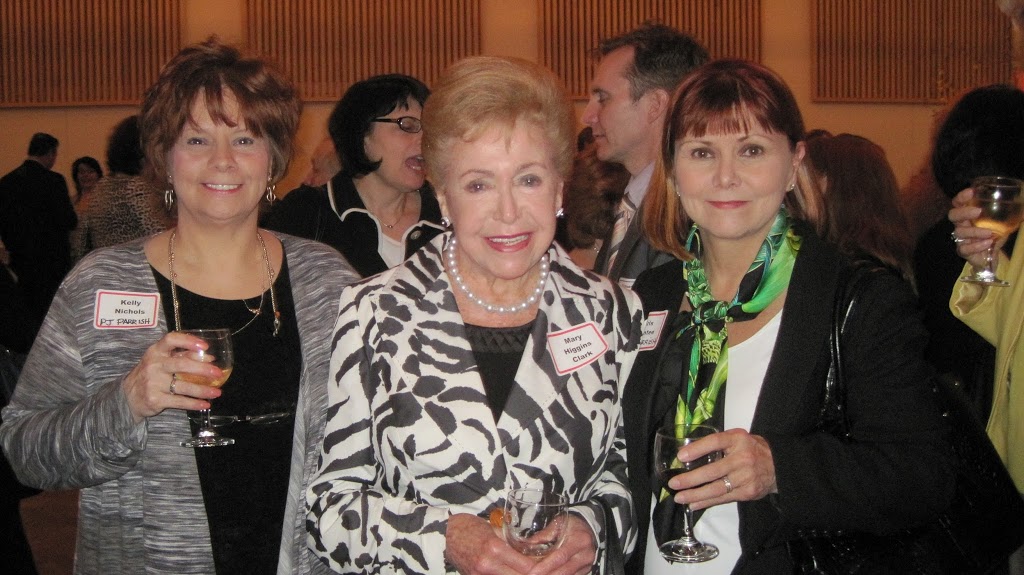
Sounds like a couple award banquets I’ve been to. A couple I have chaired, in fact. My sister Kelly and I are the chairs of the Edgar Banquet. (That’s me in the photo above unpacking Edgar programs in the Grand Hyatt ballroom. I also do windows). We’ve been doing this chairman gig for about five years now. It’s a lot of work and a lot of fun. You get to meet a lot of nervous but sweet debut authors, a few movie stars (I did an embarrassing fan-stalk of Richard “Munch” Belzer one year) and some really classy dames. (That’s Kelly and me below with Mary Higgins Clark.)
We also been judges for the Shamus Awards, the Mystery Writer of America St. Martin’s Best First Novel contest, and the International Thriller Awards. So we’ve seen how the sausage is made.
The stories I could tell…
But I won’t. And not just because sometimes they make judges sign confidentiality agreements. Mainly it’s because ours is a very small community and I believe in author Karma. If you make a fool of yourself in public, it will come around and bite you on the butt. You can put good money on that.
Also, I’ve been on the other side of the whole awards thing. We’ve been lucky enough to be nominated for some awards over the past twelve years. Yes, it is an honor to be nominated. But it bites to lose. I can’t lie and tell you otherwise. Our second book “Dead of Winter” was nominated for an Edgar. We were wide-eyed newbies in those days — didn’t even know what Mystery Writers of America was — and we went to New York with our new gowns, got our nails done and gathered with spouses, son, and agent in the Grand Hyatt bar before the banquet to calm our nerves. Not a drop of alcohol because if we DID win, we didn’t want to go up on stage three sheets to the wind and say something stupid. (As I said, I now have stories I could tell…)
Well, when our name wasn’t announced, we all grabbed for the wine bottle in the middle of the table. The rest of the night is a blur. So is the rest of the decade, as far as awards go. Because as I said, although we got nominated for a couple, we never won. Which brings me to July 2008.
Our book “An Unquiet Grave” was nominated for the International Thriller Writers Award. Back to New York City we went, back to the Grand Hyatt. No expectations this time. My sister couldn’t make it so I sat between my husband and Ali Karem. My friend the late Elaine Flinn kept saying it was our night. Doug Lyle wished me luck. Without Kelly at my side, I sat there feeling alone and sort of empty. We might write hardboiled, but I am not. Finally, I couldn’t take it anymore. I bolted for the lobby.
Jim Fusilli was standing there and barred my way, putting an arm around my shoulders. Each nominee was announced by reading the first line of their book. Ours is “The Christmas lights were already up.” I remember thinking, “God, that sucks.”
I heard the title of our book announced as the winner. I started crying. I don’t remember what I said on stage. Many authors, when they are up for awards, have the sense of jot down a few notes beforehand so they are gracious, and their clever speeches are quoted in the blogs the next morning.
This is what SHOULD have been in my head as I went up there:
“Thank you so much for this great honor. First, I want to thank the ITW judges who put their careers on hold for months. Their job is doubly hard in that they first must read hundreds of books but then, they must decide on just one when any of the five finalists would be worthy. Second, I want to thank my fellow nominees. I am honored to have my book mentioned among their fine works. Third, I want to thank my agent and editor who….”
This is what was REALLY in my head:
“God, I can’t believe I am crying! How pathetic and needy! Where’s the friggin’ stairs? I can’t see! Who is that man at the podium? Shit, I forget his name! THE LIGHTS! I CAN’T SEE ANYTHING! Do I have lettuce on my teeth? My bra is showing, I just know it. DON’T PULL AT YOUR BRA!! He’s handing it to me. Jesus, it’s heavy…don’t drop it…don’t drop it…don’t drop it. Say something nice about the other nominees! Can’t…can’t…can’t remember their names. YOU TWIT! You just sat on a panel with TWO of them this morning! Wait, wait…is it Paul LeVEEN or Paul LeVINE??? Forget it…buy him a drink later. I should have gone to the hairdresser before I left home. My roots are showing. Shit, did I thank my agent? JESUS! THE LIGHTS! Stop talking now…you’re rambling, you ass…stop now and just go sit down. Okay, leaving now. TAKE THE AWARD! Don’t drop it…don’t drop it…don’t drop it. Good grief…I’m here in New York City wearing Nine West because I was too cheap to spring for those black Blahniks at Off Fifth. Dear God, just let me just off this stage so I can get to the john and pull up my Spanx and get a glass of wine…”
Well, we’re entering award season soon. So here’s a few reminders. Entries are due for ITW’s International Thriller Awards. CLICK HERE for the link. There is also time to still enter the Edgars and you, the author, can do it yourself if you wish. CLICK HERE.
A few more final reminders about this awards thing from an old veteran:
If you don’t get nominated, don’t go to Amazon, read the samples and obsess about what hacks the writers are or whine that nobody has HEARD of these books and the judges don’t appreciate commercial fiction.
If you never get nominated for anything in your life, remember that many great and successful authors haven’t either. Vonnegut lost the Nebuba Best Novel award. Nabokov whiffed on seven National Book Awards AND lost the Nobel to some guy named Eyvind Johnson. And do you think guys like Lee Child go to sleep at night worrying about not winning an Edgar?
If you DO get nominated, have the sense to write out a little speech and try not to use it to give the finger to everyone who has slighted you in the past. (I told you…I have stories I can tell.)
If you lose, don’t get drunk, sling a woman over your shoulder and drag her into the the hotel elevator (Yeah, I saw that one too).
If you win, be thankful and gracious then get right back to writing.
Winning an award is nice but it won’t get the laundry folded.