A Friend, A Talent, Lost …


John Ramsey Miller

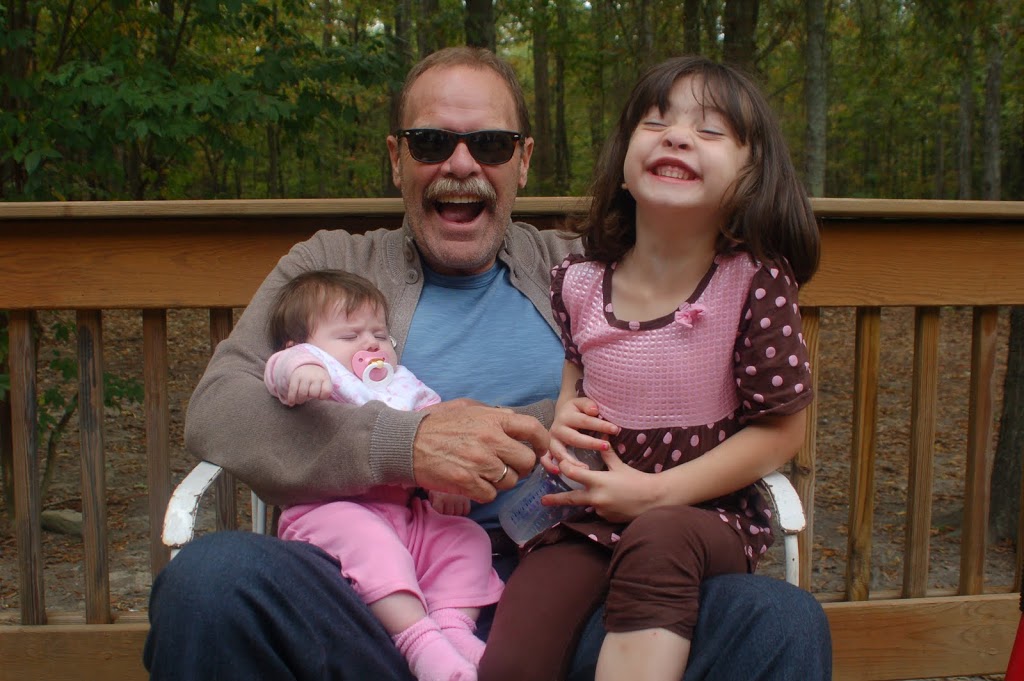
Today I write with a hole in my heart, and tears clouding my eyes. I am stunned and I am angry. I am sitting here, watching (out the window) two of my grandchildren who are playing in a pool my wife bought at Walmart for five dollars, but I am reflecting on my dear friend for many years, Jay McSorley. He died this morning and I still disbelieve, feeling I am being conned and that he is all right over there in Iceland, so close to where his family started. The older you get the more you lose, and the more it matters.

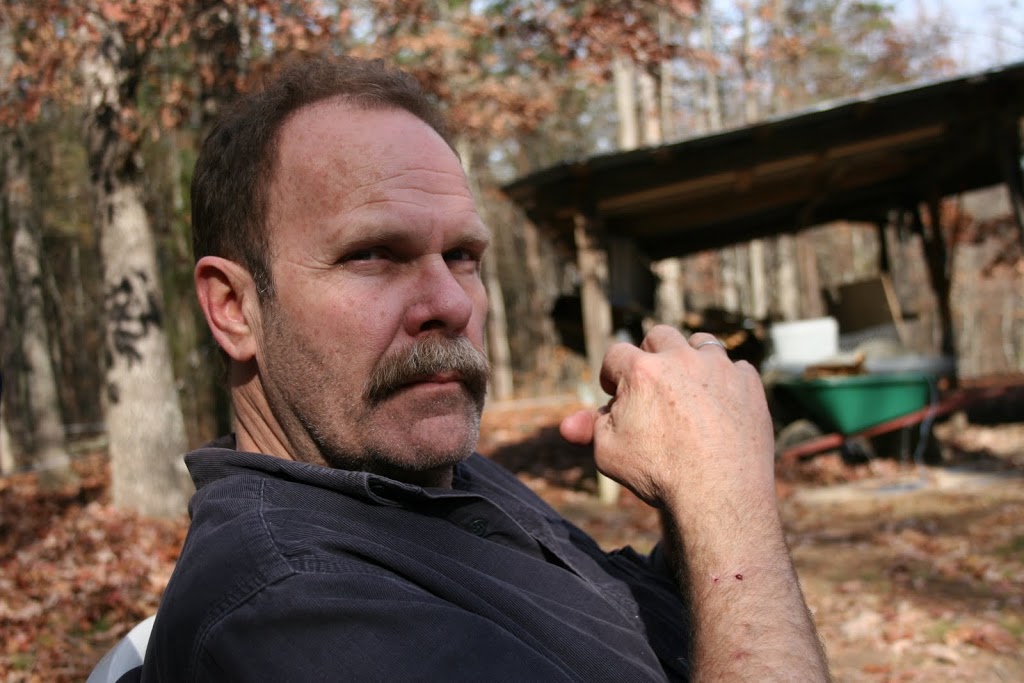
Charles Jay McSorley was born in New Bern, North Carolina. He left there young, and he never lived anywhere very long, but where he lived, his mark and memories remain with all he met. He was one of the most talented authors, I’ve ever read. He had the smile of Peck. His eyes were beacons of intelligence and warmth. He was one of the most interesting and kindest people God ever created. So this morning he died in a hospital in Iceland, a world away from us, but closest to the one who loved and knew him best. He was fine one moment, then closed his eyes and was gone.

Jay lived in all over the United States and all over the world. He was at home in any country, with any men and women who spoke any language. He had the gift of bowling bowling people over with stories of his life. Tragedy and comedy are related, and he made had them always in the same bed.

Years back, when he was in Ireland, he sought out his family’s roots in the village he understood they had come from. He went to the Catholic Church to look through the records to find his kinsmen. The priest told Jay he was no more Irish that than the Pope because McSorley was the name the Irish gave to those children descended from the rapes of the pillaging Vikings. My God, he was a Viking. Vikings lived on the edge, with their faces in the saltwater wind as they lurched forth to conquer and pillage, never imagining they could find their way back home.

Jay died once before, in Kansas City, Kansas, but he returned that time, got the bypass deal, and we laughed about it. He told me while there might not be a God, there’s something out there waiting for us all. He saw it clearly. An adventure. A perfect equation to join. I believed him. I believed everything he ever told me. He never lied to me.

He could hold any gathering in the palm of his hand. With equal ease and enjoyment, he read advanced math books, poetry, and novels about ner-do-wells. He didn’t just live, he exploded life, and he understood more than just about anybody what makes people and things tick. And he lived every day as Jay McSorley, never making concessions to threat or promise.

His heart was one in a long line of the McSorley hearts that betrayed its owner by going weak in a natural stronghold. A heart so expansive goes at full steam and can’t go on forever. He wasn’t afraid of death, only of being pitied, or becoming frail. He was afraid of subsisting on soft food. He was steak and potatoes, and never tasted sprouts. His father died young of the same betrayal of heart. Jay told me over-and-over that he had no regrets. He had married the perfect woman for him, as she had the perfect man for her. His children were a source of pride and amazement, and he had a grandchild on its way in that he will never hold, and every child wanted to be held in those strong hands, and kissed, and warmed in his smile. Together he and his mate, Lisa, were a unit of the full measure of love and devotion.

As a writer he eclipsed and shamed me and damned near any writer you can name. A natural, he was. Nobody could describe with his flair, or see into and communicate human emotion like he could. He could make you laugh and cry at the same time. He got “it” and he had a gift for sharing it, but he didn’t desire to become famous, or join in any chase that was not of his design. Had he published and become a best-selling author, he would not have been impressed with praise, or accepted accolades without laughing at the absurdity of being praised. Doing was his reward, writing entertained him. I fought to get him to let me shop his manuscripts, but he would not. He wrote for himself and for his wife and sometimes a friend, but not for profit or notoriety.

McSorley listened more than he spoke, but when he spoke there was laughter following along, an accent to his baritone and sense of humor. He grew beards in a matter of hours, and shaving took a long hot shower to accomplish. He was a Viking, after all. When he passed he was working on a short story that would certainly have been published and he was excited about it. He was the greatest writer you may never read. Someday I hope to get my hands on the words he crafted, and share them. If it is possible, I will do that and he will be a name remembered, long after I am vanished.

He was my friend. He was my brother. I loved him deeply. I will miss him as long I live. And I will miss what he could have been, should have been, even beyond what he was, which was more than most of us can hope to be. He would have been a character in one of my books, but I lack the talent to bring him to life on a page. Good-by my dear and gentle friend.


Aging Traditions

By John Gilstrap
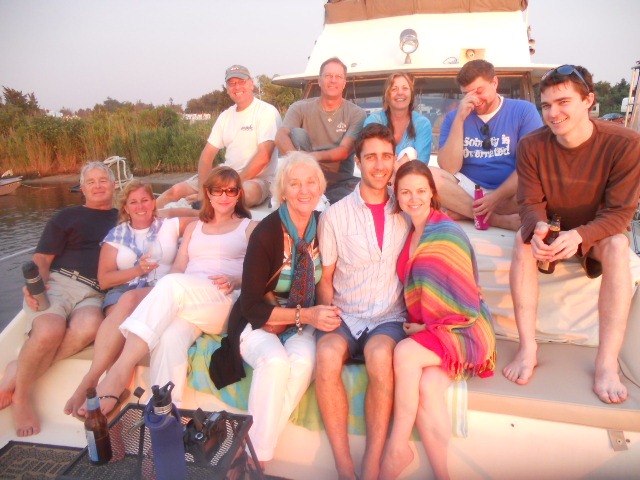
I have just hours ago returned from my extended family’s nearly annual weeklong trip to the Outer Banks of North Carolina. My father-in-law, Randy, realized a long time ago that as children become adults, and their attitudes and priorities change, often the only thing that keeps them from evolving away completely is the pressure of a family tradition. Thus, he rented a huge house right on the beach and invited his four kids and their families to a glorious week of sun, fun and a little bit of family angst. When the tradition first started, the youngest cousin wasn’t yet born. This year, she’ll turn eighteen. I guess that means we’ve been doing it for twenty years. God bless Randy and his largesse.

As we all know, families are dynamic things, wrought with disagreements and squabbles that seem so important at the time, but in the end mean nothing. For one reason or another, it’s possible for siblings to go weeks or months without meaningful communication–not because they’re bent out of shape at one another, but simply because ife gets in the way. Once a year, though, there’s a certain forced familiarity at the beach that smooths the rough spots and forces communication. Throw a little alcohol into the mix, along with a game or four of Pictionary, and lo and behold, it turns out that the family really does love each other.
As an in-law, I learned early that marrying the youngest daughter grants only a kind of grudging probation that is continually evaluated. Siring the only male child among the grandchildren gave me a little more stability, but ultimately, it turns out that loving said baby daughter for going on thirty years now has granted me permanent status in the family. As both of my own parents moved on from this ife to the next, those inlaws turned out to be a pretty damned supportive group.

My sojourns to Nag’s Head began when I was in my early thirties, and keeping up with sugar-high little kids was barely a challenge. Back then, I could run up Jockey’s Ridge to keep up. Now, I wager that even a brisk walk might require a stop or two along the way. Back then, the go-carts and putt-putt golf were thrilling because I could see the thril through my son’s eyes. They were special times.

This year, Chris couldn’t even join the vacation until late in the week because of job responsibilities. I missed him when he wasn’t there. A lot. I missed the conversations in the car going to and from. I miss the way things used to be.

Now, as Randy’s health deteriorates at a disturbing rate, I find myself facing some unpleasant realities, and asking questions that seemed unaskable back in the day: Is this tradition about to end? Is it maybe time for the tradition to end, so that we can all live with the polished perfection that defines pleasant memories?

I don’t have any answers, but I know that on at least a few occasions, various members of the family came on these trips merely because Randy called, and when Randy calls, people listen. It turns out that this father knew best. When the day comes that Randy follows my own parents into whatever lays beyond, those of us who are left behind will have some big shoes to fill.

Here’s my fantasy: Five, ten, fifteen years from now, when Chris is married and has kids of his own, I want to rent a house on the beach, knowing full well that when I call, the family will be there. I’ll buy the ice cream and the taffy, and in the cool of the evening, as the breeze tastes like salt, Joy and I will be the old folks on the ground watching their kid run up Jockey’s Ridge again.

The Best Moments In My Career …So Far

John Ramsey Miller


Recently someone asked me what the highlight of my career (to date) was. I said it was when I sold my first novel. I’ve thought about that and the truth is there have been scores of “best” moments. Seeing my first book in a store. Writing with tears in my eyes. Seeing three of my books in one rack in an airport. And there was being nominated for peer awards on a couple of occasions. Didn’t win, didn’t much matter, still doesn’t. One of the best was having my wife toss me a line that “made” the scene and the book a lot better. The problem was why one character would allow himself to trust another after he felt betrayed by her. It was something that had perplexed the editor and my agent and myself. Finally I told my wife what the problem was and she gave me the line that made it all make sense. None of us could figure out what that needed to be, but Susan knew. Had I asked her weeks earlier, it would have never been a sleep loser. How had I assumed my wife wouldn’t know the power of love and trust, and how to put into a short sentence that was in perfect pitch for both of the characters.


One of my favorites happened when my first book was making some noise. I was invited to Denver to speak about my process, etc… to between 1000 and 2000 people at a National Kidney Foundation fundraiser, which was one of those formalish deals. I was to speak just ahead of Clive Cussler. At the opening hob-nob I had three scotches. Clive Cussler reminded me that we were at 5,000 feet. Not to worry, I hadn’t made any notes on what I was going to say so I didn’t have to fret flubbing my lines. I have never planned out what I intend to say before I stand at the podium. I talked about my childhood, early influences, and (as I recall it) I had the crowd eating out of my hand. My opening line was about being a Native Son of Mississippi and about the tradition of porch sitting and storytelling. You told a story on my porch and there had better have been interesting descriptions, setting, character development, a build up, and a punch line to entertain or amaze. I said that my uncle was a Supreme Court justice and my aunt a hopeless hypochondriac who made up stories to keep me from going outside where I could be killed or carried away. I said, “Guess which one I spent my time with.” Somehow, everything I said brought the house down. I was well oiled and the stories just appeared to me. The best part of the story (I mean how hard is it to have too many drinks and say the right things to people who are also having drinks?) was when Mr. Cussler started his talk with the words, “I’ll never follow John Ramsey Miller again.” To have him say that made me feel very important indeed, and that is a great feeling.


My favorite part of my career has always been the time I have shared with other authors and their families followed by the time I’ve spent writing.

The World Runs On Fear. How Much longer Will We Be Necessary?

John Ramsey Miller

I was thinking about how much of the morning, noon, and nightly news is geared toward frightening people by cherry picking the worst examples of inhumanity from the stacks. I watch very little news these days because I feel better when I don’t. I’m not sure a boat filled with people turning over on the Volga does more than make me not want to go on loaded boats on the Volga or even the Yazoo River.

The numbers of people killed here and there don’t mean much because we are inundated with 100 killed by bombs here and thirty there. It makes most people not want to travel at all. And it makes you wonder why anyone in the rest of the world would want to come here. Certainly the other news gatherers around the world portray America as the wild west, which it isn’t. I mean every place has dangers. I guess it’s all about perspective. I kill a Copperhead on the porch, I don’t stay indoors or move to the city. I am just more careful about watching where I walk and put my hands.

Since Caylee Anthony was killed by her mother, are we to be suspicious of mothers in general? I see they will be a spate of laws to prevent another mother from killing her daughter so she can party. I suppose having a law that makes it a crime to not report you missing daughter will go a long way toward preventing insane women from killing their children and not calling the police immediately. Everybody knows that murderers plan their activities according to what legislators will or won’t allow.

I read that in remote African villages people often burn witches, or people who are shape-shifters. We have the same thing here, but not so much witches or shape shifters, as, say, Muslems or Moonies. Are there still Moonies running around?

Large numbers of people can be manipulated by a very few people fanning the flames of fear. Fear overrules intelligent discourse. You can’t use rationale against fear because most fear isn’t rational. Leaders often gain power and rule using fear and suspicion to galvanize and keep people from feeling safe. The truth is I feel manipulated by politicians on both sides of the aisle and I think more and more people feel that way. How are people to know the truths of any matter unless they are involved in them. If you manage a checkbook, you know the country is on shaky financial ground. And you wonder how the government can agree on anything that can fix things. You know what they say about having to hit rock bottom before you can face reality and make changes.

I think people who live normal lives like being afraid, but they like maintaining a safe distance from the actual threats. People like thrillers because they are at a safe distance from the bad thing in the book. I suspect that people living with constant real fear don’t read thrillers. What would be the point? I don’t know if the world is actually more dangerous than it always has been, or if its just that it is so in our faces.

We may become obsolete. I mean, in the face of our reality, what can we possibly make up or add to the mix that is more bizarre or frightening than real?

So this guy walks into a booksigning, and…

I’m going to take up from Michelle Gagnon’s terrific post on planning a book signing and pose a question: what is the funniest thing that has ever happened to you at a book signing? Either as the guest of honor or as an attendee? John Gilstrap tells HILARIOUS stories about doing a booksigning at Costco,involving the bay doors and a de facto wind tunnel. Sandra Brown also tells a great story about the first signing she ever did. What’s yours?

I don’t really have one. Well, yes I do. I did a signing at a local store and was all set up by the entranceway, showered, shaved and tap-dancing, and actually had people who weren’t related to me or in my circle of friends buying books. A guy — a big guy — walks through the door, sees me sitting there signing a book for a very nice lady, and rudely interrupts, asking “Where’s the music department?” I immediately responded, “Second floor. Turn right at the top of the escalator and go all the way back.” Of course, that was where the restrooms were located. For all I know, he’s still looking.

Your turn.

The Fourth and Celebration

By Kathleen Pickering


http://www.public-domain-image.com (public domain image)

I could think of no better way to celebrate finishing a week in Manhattan attending the annual RWA conference than to sit on the Great South Bay with loved ones, applaud the spectacular sunset and watch fireworks.

For those of you unfamiliar to Long Island’s south shore (except for the recent disturbing news of serial killings along these marshes), let me assure you, these beaches are some of the best watering holes in the country.

As a child, I remember charging home from school on the last day before summer break to pile in the boat with my parents and motor to the town beach where I and my seven siblings lived for two, glorious months. Oh, the lost hours running barefoot along the dunes, fishing and clamming, bird-watching and shell hunting, tumbling in the Atlantic—because those waves certainly tossed small beings without effort, and camp fires at night—because back then, we could!

My parents were no fools taking us to the beach for the summer. It was like camp with no rules. My folks had just as much fun as we did. They taught us boating safety, and gave us freedom they’d never allow at home.

Can you imagine ten people living in close quarters, and loving every minute of it? To the surprise of many observers, we never had an accident. Not even a stitch. I honor my parents for giving us free reign to be kids while ensuring we understood and respected our surroundings.

You can imagine my delight in continuing my parent’s summer tradition when my husband and I bought our own sailboat and introduced our sons to beach living. Some of my siblings bought boats as well, so the beach became a second-generation family affair. Our sons grew up dockside with their cousins like brothers and sisters, forging bonds that will last their lifetime.

So, yesterday, coming “home” (since I now live in Fort Lauderdale) to spend the Fourth of July on my sister’s boat with her family, my family and dear friends, made me so very grateful for this wonderful event that is my life!

July 4th I sat with my sons, my new daughter in law, completely satisfied with the people they’ve become.  Pop! Pop! Ahhhhhh! Fireworks!

I caught up with friends I haven’t seen in months and shared news, like for me, RWA turned out to be another wonderful networking opportunity and and chance to hammer out three new proposals with my editor.  Sizzle! Pop! Oooooh! More fireworks!

I also heard of some hardships loved ones are facing, that really, no one should face. Yet, watching them forget their troubles while fireworks lit the sky cemented gratitude in me for this time together. Swiiiishhhh! Pop! Boom! Even more fireworks!

So, for those of us with troubled times crowding our thoughts, I suggest taking a moment to let the kid in you enjoy the fireworks and celebration July Fourth offers. Heck, let the fireworks last all year long! After all, The Fourth celebrates our great nation overcoming oppression in pursuit of freedom to follow our dreams. For that I feel gratitude, right down to my toes. The child in me wants to ooooh, and ahhhh and remember never to forget how lucky we truly are!

Won’t you join me in celebrating? How did you spend The Fourth of July?

Is Your Discomfort Zone Expanding With The Universe?

John Ramsey Miller

I suppose it’s no surprise that young people still don’t want to hear what the older people have to say. There is an ancient saying that goes: “Young men think old men are fools. Old men know young men are.” I’ve been thinking lately that maybe this is one time when the young know more about certain things than we do and we might look to them for assistance. I figure I know a lot more about some things than the youngsters know, but it’s possible that what I don’t know, that they do, is more important right now to survival in the “new” world.

A couple of weeks back, my brother left his new iPad on the coffee table. He back came into the room to find my six-year-old granddaughter playing a game on it. She had never seen an iPad, but she turned it on, and was playing a game on it. Kids are not intimidated by technology the way most of us (guys and gals of a certain age) are. I have to admit that I am feeling sort of lost in the technology department, and am not yet seizing the “new” opportunities everybody is talking about. Well, I don’t have a book ready yet. I’m thinking about it and measuring myself for the new world, but I have more questions than answers. My kids get it and they see what is invisible to me.

The problem I have in this new exciting world is one of visualization. Back when I was in advertising [If memory serves correctly after thirty years] I remember a story that David Rubinstein told me. Rubenstein Bros. is one of the finest men’s clothing stores in New Orleans and has been in business for half a million years. David told me that when he and his brother, Andre, took over the store, they decided to change the advertising mix, from a system of ads in the newspaper, to adding radio spots. They recorded a commercial and when they played it for their father, he asked them what it cost to make. When they told him he was flabbergasted. “It lasted no time, I don’t remember what it said, and it cost more money than I have in my pocket!” With an newspaper ad, it was there in your hand. You could read it as many times as you liked, admire the art, and act on it or not. With radio, it was words in the air, and they were gone as soon as the ad stopped. If you heard part of it, you could not replay it.

I used to laugh at that story, but from a different angle than I see it now. Back then, I thought the old man was pathetically outdated, which perhaps he was. But something in the air was …in the air and didn’t actually exist. And it was advertising money he thought should be used on something proven, something he understood and was tried and true. The times were changing, the old model was dying, and his sons saw that they needed more and different in a changing market. The people they wanted to bring into the store, were young people who listened to music. The sons grew the business by leaps and bounds because they went with the new ways, going after the up and comers. But as we get older don’t feel comfortable with change we can’t see how to use in the old way. Now I understand that we are all locked in our habits, wanting the things that worked when, to work forever. My problem is that it’s all about comfort zones. None of us want to be left behind gnawing on a dinosaur bone while others are feasting on some kind of new-fangled, ding-dong tofu burgers with sprouts.

The old model for any enterprise is going to become crippled, but still working for a while before it fails entirely, but probably not for long. Our world is changing, and it calls for new eyes and open minds.

I am having trouble embracing what seems to me no more substantial than air. I’ll be okay. I know that. I have always trusted my instincts. I can write stories, and I can get the kids to make sure they are put in the air where they need to be so people can find and read them.

I know it really doesn’t matter to people whether I jump on the tech wagon, or watch it go by with others riding on it. I figure I’ll just bring in the kids.

Pottermore or Less?

by Clare Langley-Hawthorne


Last week bestselling author JK Rowling unveiled plans for a new e-bookstore and fan focused website called Pottermore. The Guardian book blog called the move pure ‘marketing genius‘ while others expressed disappointment that the webpage didn’t live up to all the anticipation and hype (so far you can only register interest, full details aren’t available on the website as yet).

The current description is that Pottermore will provide a ‘free website that builds an exciting online experience around the reading of the Harry Potter books’. Exactly what that will entail isn’t certain – although what is certain is that JK Rowling was very savvy when it came to withholding digital rights to the Harry Potter books until now. With the Pottermore website, Rowling has sidestepped all the middlemen to maintain control over content, pricing and distribution for all her Harry Potter e-books. Pretty impressive.

Wired Magazine hailed the move as book publishing’s ‘Radiohead moment’ (in reference to their self-released album) pointing out that JK Rowling is the most significant author yet to turn her back on the established publishing houses when it comes to digital books (although she is maintaining links to her traditional publishers Scholastic or Boomsbury). She has even come up with a digital watermarking system that links the identity of the purchaser to the copy of the e-book, and as her books are apparently going to be available in a compatible form for all e-reader platforms, the books aren’t tied to any particular e-reader device.

Although Rowling called her move a ‘way to give back to the fans’ clearly she stands to make a great deal more money going it alone that she would if she were merely receiving royalties for e-books from her publisher. I also think she will be able to cleverly direct fans to additional interactive content that will no doubt expand her readership as well as entice those who already own her books to purchase e-book copies as well.

All in all, I feel this may well be a watershed moment – one that a number of bestselling authors (and lesser mortals) will be watching carefully. What do you think? Could this be the final ‘aha’ moment for the publishing world?

Drinking with Authors and Other Scraps


NEW YORK (Reuters Life!) – A New York children’s author who used a curse word in exasperation during a plane delay at a U.S. airport was ejected from the aircraft for disruptive behavior.
Robert Sayegh, 37, said Atlantic Southeast Airlines overreacted to his salty language when it summoned police aboard to escort him off the Sunday evening flight at Detroit Metro Airport.

I get it. Most of us get exasperated and drop the F bomb, but not on planes. Flying is hard enough without upsetting flight attendants. Times have changed. They don’t fly terrorists, obvious madmen, drunks, or dirty mouths. If old Bob there hadn’t been a kiddie-book author it would not have been news. Kids don’t read papers, so the publicity won’t help his sales. It got me thinking about the times my mouth has thrown me into a bear stew. Roald Dahl proved you don’t have to be an angel, or even a nice person, to write great and classic kids books. But I’m sure Robert is a great guy once you’ve had a drink with him. Maybe the author was late for a conference. I bet the bar at a kiddie authors conference is Lamp Shade City.

On occasion, my social filters fail. One example of hundreds: I was in a restaurant in New York a few years ago sitting with another author and our conversation rolled around to some example of violence and gore. Conversation was purely technical, as I recall––heads of shotgun suicides that looked like day lilies, or perhaps what high-velocity rounds do to a human body. I was blissfully unaware of my surroundings until a woman at an adjoining table interrupted us to say, “Could you please change your conversation, we’re trying to eat here.” I don’t get that. I’ve been at an autopsy where the ME and an assistant were talking about cooking various venison dishes while the ME was popping out a brain, and weighing it. You get inured to what exposure to such subjects do to other people when you are always thinking and writing about it.

Most authors are curious about a wide variety of things, and they will go to amazing lengths to learn something potentially useful. Instead of having knowledge in a concentrated area, their knowledge tends to be as wide-ranging as that of a Jeopardy Champion. I once sat through an hour-long story that had no punch line at all. It was riding in a ox-drawn cart five miles across a desert only to ride off a cliff. Conversations with most of the authors I’ve met (especially in a bar) are almost always interesting, entertaining, and enlightening. It’s no surprise that authors tend to find each other’s company pleasurable. You sit having drinks, listening to people who know how to tell a good story with maximum impact¬, and it is never boring.

I’ve never decided if conferences were profitable, but they are worth the investment simply for entertainment value and being in contact with peers. It can be expensive to attend Bouchercon, Thrillerfest, Magna Cum Murder, or any one of a hundred national, regional or local writers conferences. If you’ve never been or can’t afford $1500.00 on a weekend, what you should do, if you’ve never done one, is drive to the closest one and go to the closest bar to the conference rooms (Usually in the venue hotel), get a table, order a drink to nurse, and just sit there. When the authors start walking in and the place starts filling up, offer one a place at your table. Soon the table will be crowded with authors because they are social animals, especially after a drink or two. The later it gets the better the stories. Don’t be shy. Most authors are approachable. This will never fail, and you can decide if you want to sign up for the next one and spend the money. You don’t have to be a published author. You can be a fan of a conference’s genre, a librarian, or an accountant. It doesn’t matter at all. If you have questions, you’ll get real answers and unguarded ones at that. And you will laugh. That in itself is worth the effort and the expense.

I am a fan of interesting conversations over drinks in a quiet bar or on my deck. I am not very comfortable in crowds, but I’m okay in crowded bars filled with good people. You don’t have to be a drinker for this at a conference. A quarter of the authors in the room will be drinking soda with a bit of lime in the glass, which is, of course, a fictionalized drink.

John Ramsey Miller

Drinking with Authors and Other Scraps

Drinking with Authors and Other Scraps

NEW YORK (Reuters Life!) – A New York children’s author who used a curse word in exasperation during a plane delay at a U.S. airport was ejected from the aircraft for disruptive behavior.

Robert Sayegh, 37, said Atlantic Southeast Airlines overreacted to his salty language when it summoned police aboard to escort him off the Sunday evening flight at Detroit Metro Airport.

I get it. Most of us get exasperated and drop the F bomb, but not on planes. Flying is hard enough without upsetting flight attendants. Times have changed. They don’t fly terrorists, obvious madmen, drunks, or dirty mouths. If old Bob there hadn’t been a kiddie-book author it would not have been news. Kids don’t read papers, so the publicity won’t help his sales. It got me thinking about the times my mouth has thrown me into a bear stew. Roal Dahl proved you don’t have to be an angel, or even a nice person, to write great and classic kids books. But I’m sure Robert is a great guy once you’ve had a drink with him.

On occasion, my social filters fail. One example of hundreds: I was in a restaurant in New York a few years ago sitting with another author and our conversation rolled around to some example of violence and gore. Conversation was purely technical, as I recall––heads of shotgun suicides that looked like day lilies, or perhaps what high-velocity rounds do to a human body. I was blissfully unaware of my surroundings until a woman at an adjoining table interrupted us to say, “Could you please change your conversation, we’re trying to eat here.” I don’t get that. I’ve been at an autopsy where the ME and an assistant were talking about cooking various venison dishes while the ME was popping out a brain, and weighing it. You get inured to what exposure to such subjects do to other people when you are always thinking and writing about it.

Most authors are curious about a wide variety of things, and they will go to amazing lengths to learn something potentially useful. Instead of having knowledge in a concentrated area, their knowledge tends to be as wide-ranging as that of a Jeopardy Champion. I once sat through an hour-long story that had no punch line at all. It was riding in a ox-drawn cart five miles across a desert only to ride off a cliff. Conversations with most of the authors I’ve met (especially in a bar) are almost always interesting, entertaining, and enlightening. It’s no surprise that authors tend to find each other’s company pleasurable. You sit having drinks, listening to people who know how to tell a good story with maximum impact­, and it is never boring.

I’ve never decided if conferences were profitable, but they are worth the investment simply for entertainment value and being in contact with peers. It can be expensive to attend Bouchercon, Thrillerfest, Magna Cum Murder, or any one of a hundred national, regional or local writers conferences. If you’ve never been or can’t afford $1500.00 on a weekend, what you should do, if you’ve never done one, is drive to the closest one and go to the closest bar to the conference rooms (Usually in the venue hotel), get a table, order a drink to nurse, and just sit there. When the authors start walking in and the place starts filling up, offer one a place at your table. Soon the table will be crowded with authors because they are social animals, especially after a drink or two. The later it gets the better the stories. Don’t be shy. Most authors are approachable. This will never fail, and you can decide if you want to sign up for the next one and spend the money. You don’t have to be a published author. You can be a fan of a conference’s genre, a librarian, or an accountant. It doesn’t matter at all. If you have questions, you’ll get real answers and unguarded ones at that. And you will laugh. That in itself is worth the effort and the expense.

I am a fan of interesting conversations over drinks in a quiet bar or on my deck. I am not very comfortable in crowds, but I’m okay in crowded bars filled with good people. You don’t have to be a drinker for this at a conference. A quarter of the authors in the room will be drinking soda with a bit of lime in the glass, which is, of course, a fictionalized drink.

John Ramsey Miller from Paradise