The Great Summer Mystery: How to Open a Clam

by: Kathleen Pickering  http://www.kathleenpickering.com

It’s my turn to blog today. Unfortunately, I’m away on vacation this week (and last week) and have been ensconced on a boat along the Fire Island seashore.

sailors haven

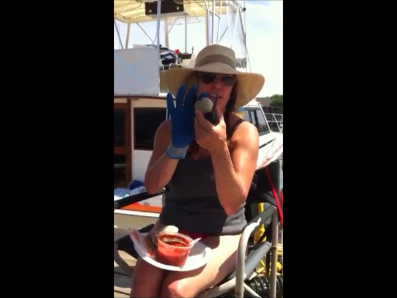
Hence, my writing only has been to keep on deadline. Otherwise, I’ve had my feet in the sand, been body surfing and learning one of the great mysteries of the Great South Bay: How to open a clam.

Snapshot 1 (7-16-2012 2-33 PM)

Click here to view the video:

How To Open A Great South Bay Clam

Afterwards, I’ve been sitting back and enjoying glorious summer sunsets like these:

photo

sunset-sailors haven

In my writing vocabulary, times away like these are called Percolating—or giving the mind time to rest and let new ideas work their way to the surface.

See? Even when on vacation, the writer is always working. I guess somebody has to do it!

Hope you enjoy the clam shucking video. Feel free to post any questions pertaining to this particular quahog—or how to find this free lunch!

Write on, my friends.

xox, Piks

(Next post will be relevant. I promise!)

Do we Really Want to Know the Alternate Endings?

by Clare Langley-Hawthorne

News that we will finally get to see all of Ernest Hemingway’s 47 alternate endings for A Farewell to Arms in print has me conflicted. At some level I am intrigued, as it would provide a unique insight into all the options Hemingway went through until he was (apparently) satisfied. 


On the other hand, though, I don’t really want to see those behind the scenes machinations (it seems a little too much like the Great Oz being exposed). At one level, I like the satisfaction that comes from accepting a story for what is (not for what it could have been). 


Although I am sure I would have loved a happier ending to many of my favourite books, it dilutes the power somehow of the ending that was finally chosen, if I know all the other options the author weighed up (especially if some of these options turn out to be really lame!). So all in all, I’m not sure I want to trudge through all of Hemingway’s alternate endings just as I wouldn’t want to know if Emily Bronte considered a sappy ending to Wuthering Heights that involved Heathcliff and Catherine living happily ever after…


Or would I?


One of the most well-known examples of alternate ending controversies is with Charles Dickens’ Great Expectations. Dickens changed his original ending (one in which Pip returns to hear that Estella has remarried) to the one that exists in most editions (they meet in the grounds of Satis House and in the final line “I saw no shadow of another parting from her” there is the implication that Pip and Estella might end up together). The original ending was much more downbeat and apparently Dickens’ friend, Edward Bulwer-Lytton (who read the original draft), urged him to change it to be more positive. Now I  probably would not have enjoyed the original, more pessimistic ending so in one sense I am relieved that he changed it – but do I really want to know that this was how Dickens’ originally wanted it to end? 


Knowing the alternate endings that famous authors such as Hemingway or Dickens considered provides insight into both the mind of an author as well as the writing process – but I’m still not sure I want to find when I finish a book,  a list of all the other possible endings that had been discarded (which is how I assume Scribner is going to present Hemingway’s alternate endings for A Farewell to Arms). It would seem to cloud the enjoyment of the reading experience and make me question the ending that was ultimately decided upon.


But what about you?

  • Would you like to know the alternative endings some of your favourite writers considered and ultimately discarded?
  • Have you ever wanted to go back and change the ending to your own book, after it was published?

Getting Out of the Protection Racket

 by Meg Gardiner

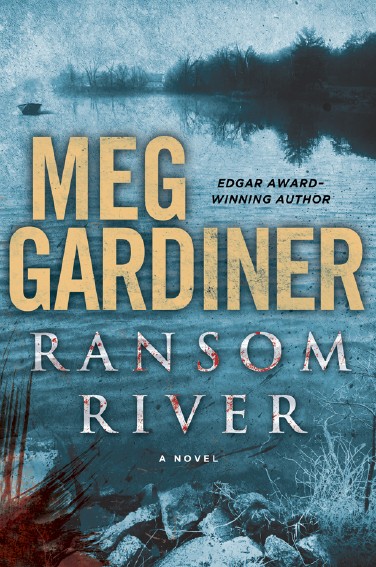
The Kill Zone is delighted to welcome Edgar Award-winning author Meg Gardiner. The Boston Globe says of her latest thriller: “RANSOM RIVER  is everything you want in a blockbuster thriller: multiple plot twists, thoroughly creepy psychotic villains, danger at every turn.” In other words: “It’s awesome!” Meg’s latest is a departure from her popular series, and today she discusses a critical question for every thriller author.

Thrillers toss characters into danger. They force cops to chase maniacs through dark woods. They make covert agents disarm suitcase nukes—while trapped by rising floodwaters and clutching a basket of kittens. The writer’s job is to keep the reader worrying: Who’ll survive? Please let it be the cop. And the kittens… won’t somebody think of the kittens?


But here’s the thing. If your sympathetic characters always survive—the hero, the partner and girlfriend and Fluffy—are you writing a real thriller? Or are you conducting a puppet show?
This raises the question: Should you ever kill a major character?

Michelle Gagnon has done it. George R.R. Martin does it so regularly that readers preemptively cry, “Noooo!” before opening his books. On the other hand, I recently heard Sue Grafton promise that none of the regulars in her Kinsey Millhone series is going to die. And I felt so relieved. I felt happy and grateful.  

And I’m not following in her footsteps. Here’s why.
A few years ago, I realized I was protecting my characters. Not in any obvious way—in my novels they faced plenty of peril. The Evan Delaney series opened with a major character critically injured and disabled. Heck, Jo Beckett’s husband was buried before chapter 1 began. But when I sat down to write, I unconsciously assumed that all the characters I liked would make it out alive.

This was a bad thing.
Bad, but natural. It takes me a year to write a novel, and in that time my characters grow on me. I want them to stick around, and to be happy. That’s my problem: I want them to live normal lives and play softball and build loving marriages and have beautiful babies.
And as soon as I think like that, part of me starts to write them as content, easygoing, settled… and wants to keep it that way.

You can see that what works well in real life would take the edge off in a thriller.

And I saw that I was never truly jeopardizing my characters’ lives or relationships. Sure, I’d write scenes where they faced doom, and readers would worry… but I knew they weren’t at risk. In my own mind, I never truly put their fate up for grabs. I kept them safe. During the course of the novel they got scared and maybe beaten up or even shot, but in the end they always got together for margaritas and a good, if rueful, laugh.

But safe leads to static. Safe kills suspense.
One of my favorite books on craft, Stein on Writing, talks about the concept of the crucible, “the container that holds the characters together as things heat up.” It’s a key to successful plotting:  

“Characters caught in a crucible won’t declare a truce and quit. They’re in it till the end. The key to the crucible is that the motivation of the characters to continue opposing each other is greater than their motivation to run away. Or they can’t run away because they are in a prison cell, a lifeboat, an army, or a family.”

It’s a great concept, and an excellent way to increase drama. But by promising my favorite characters a safe landing, I was creating a crucible and then providing them with ejector seats and parachutes. 

That’s when I reset my mental parameters to imagine: What if anybody can die? What if any and all relationships—family, friends, lovers—can be ripped apart by events and choices? And once I put it all on the table, I saw a more powerful way to write fiction. I opened myself to creating stories that went to the end of the line.

So I got out of the protection racket.

Now I try to write without a net for my characters. My new novel Ransom River throws heroine Rory Mackenzie from the frying pan into the fire. She’s a juror on a murder trial who finds herself fighting for her life when gunmen attack the courthouse. Though she escapes, she lands in a hotter crucible—she discovers that the attack is connected to an old unsolved case, and to dark skeletons in her own family history. Bringing the truth to light might destroy her and the people she loves.

I think I took the story as far as it could go. And part of me still thinks, Yikes, Rory. You’ve got some nasty relatives. Sorry, kid. But I know I shouldn’t change a word.

Here’s my writing advice: Put your characters to the test, and don’t let them get out of it by any means but their own grit and blood and pain. 

Don’t let coincidence save them. Don’t let somebody else come to their rescue. Don’t provide a secret fire exit to the sunny side of the street.  


Make them act. Make it hard. Force them to sacrifice. If they’re characters that readers care about, you’ll create genuine suspense. You’ll raise the stakes, and write books that readers shove into their friends’ hands, saying,
You’ve got to read this.

MegGardiner.com   | Visit Meg on Facebook   and Twitter  | @MegGardiner1

Rethinking the “Like” button

Graphic by Scott Beale, Laughing Squid

Recently I’ve been inundated by “Like” requests from Facebookers. “Like” my page! “Like” my product! “Like” my book! Like me! Like me!


I used to be a promiscuous Liker. Show me your Like button, and I’d press it. Why not? I figured. There’s little enough like in the world, say nothing of love. I was a one-woman sunshine squad, spreading the Like around.


But then I read that if you Like something, your endorsement might turn up in a Facebook ad or Sponsored Story. I started worrying about my lengthy trail of Likes. Egad, what if my mug wound up in an ad for Jello(R) Chocobeasts? I moved quickly to counteract potential damage; first I reset my Privacy options so that my name can’t be used without specific permission. Then I went through the products that were hawking messages in my timeline; I must have liked those products sometime in my glad-handering past. I Unliked all the ones I could track down.


Nowadays I seldom press the “Like” button. Like Sally Field, I have to really, really like you. To “Like” you, I mean. And I’ve started to pine for a “Dislike” button.


It’s not personal. It’s business. But isn’t that what all the Like-mongers are after, after all? Our business?


Am I the only person who has grown wary of the Like button? Have any of you wound up unintentionally in an ad, simply because you Liked something?

What Your E-Reader Knows…

by Clare Langley-Hawthorne

An article in today’s Australian newspaper has prompted me to re-think exactly how much my e-reader knows about me and how little I know about the technology that is used to monitor the book apps I’ve downloaded on my iPad and iPhone. 


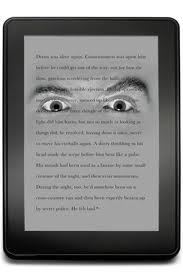
Today’s article, “Your e-book is reading you” (which I think is a reprint of an article in the WSJ – the link to which is here.)  highlights the amazing amount of data these kind of devices can provide not just about what you are reading but how. Gone are the days when no one knew when you skipped the boring bits, abandoned a literary classic or got totally bogged down and bored. Instead (apparently) your e-reader knows:

  • How fast you read the book and when you slowed down, skipped bits, or stopped reading it altogether
  • Which passages you highlighted or bookmarked 
  • How many times you opened a book and how long you read it for
  • How quickly you purchased/downloaded a sequel after finishing a book

I have to say, I never really thought about my e-reader gathering such data, but now this information is proving invaluable to sellers as well as publishers. They can now use this knowledge to gain insight into your reading habits. They can tell when a reader’s interest tends to drop off, when a series might be flagging and the kinds of books readers consume in one sitting versus those which tend to get read in fits and starts (most non-fiction, apparently gets read this way).  


This information can also be very specific and some publishers are even conducting market tests in which readers can customize elements of the book – from the level and intensity of love scenes (!) to which of three potential suitors a female protagonist chooses. At one level this smacks of commercial dilution of the creative process (rather like writing a book by committee!) but obviously this kind of analysis is proving invaluable for publishers (and writers) on exactly what  readers want. By looking at the pace with which books are read and the places where readers get bogged down or bored, publishers can also glean when a writer is losing  a reader’s interest. 


For instance, for Suzanne Collins’ hugely successful Hunger Games trilogy publishers found out:

  • It takes the average reader 7 hours to read the final book on the Kobo e-reader (which equates to about 57 pages an hour)
  • That 18,000 Kindle readers highlighted the same line in the second book – “because sometimes things happen to people and they’re not equipped to deal with them”
  • On Barnes & Noble’s Nook e-reader, the first thing most people did upon finishing the first book in the trilogy was to download the next one.

Obviously this kind of data makes it clear why the series is so popular – readers read it voraciously and then immediately want to read the next installment. But how do you feel about your e-reader knowing that much about your reading habits?


Do you consider it an invasion of privacy? I for one would prefer no one knew which bits I skim over, especially if I’m reading some impressive high-brow literary tome:) As a writer, though, I can imagine this information could provide an amazing insight into what my readers liked and disliked about my books. At the same time this feels kind of scary and, dare I say it, a bit depressing too (knowing Big Brother is watching what everyone is reading in such detail). What do you think, should we be scared or exhilarated by the prospect?


Reader Friday: Where do we write?

Note: Starting today, on Fridays we are going to be running the first of a few special topics. For lack of a better phrase, we’re calling it “Reader Friday.”

The writer’s desk. Sometimes, it’s the place we rush to eagerly in the morning, impatient to spin magic from nothing more than thoughts and dreams. Other times, our desk is Hell on Earth. We’re chained to it, driving to make a deadline. Or struggling to fill a stubbornly blank screen.

One thing is true of all writers: We spend a lot of time at our desks. Where we work may say a lot about who we are as writers.

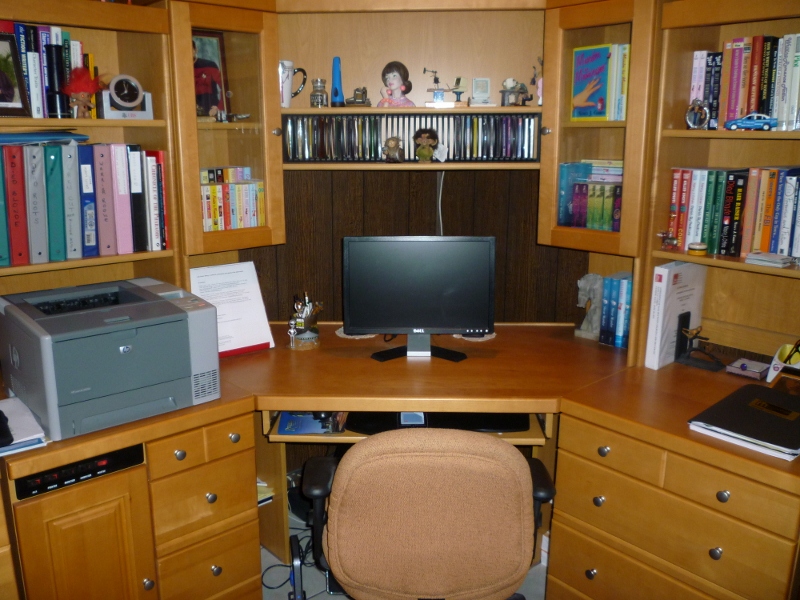
Here are some of the TKZ gang, as reflected by our desks.


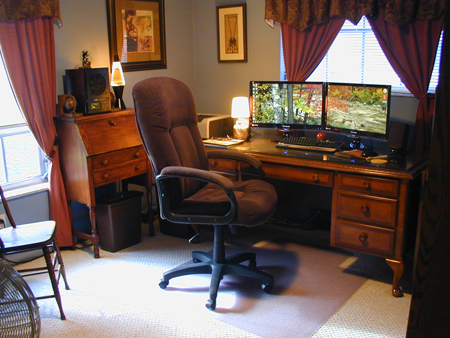
Joe Moore – A picture of serenity

Just looking at the picture of  Joe’s office makes me feel relaxed. But Joe, is it always this neat?


James Scott Bell – City View


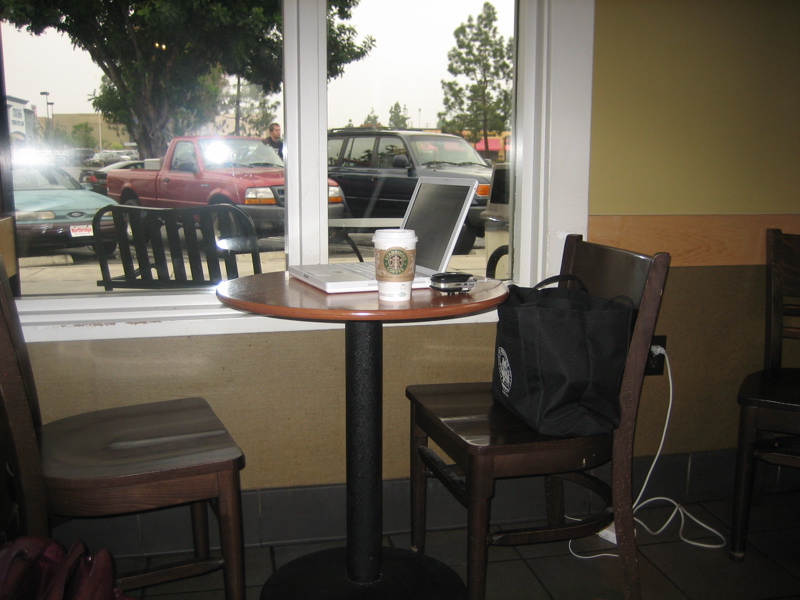
Jim Bell shared a picture of his favorite writing spot–a local coffee shop with a great view of LA street life. 

Jordan Dane — Have Diva Dog, will Travel

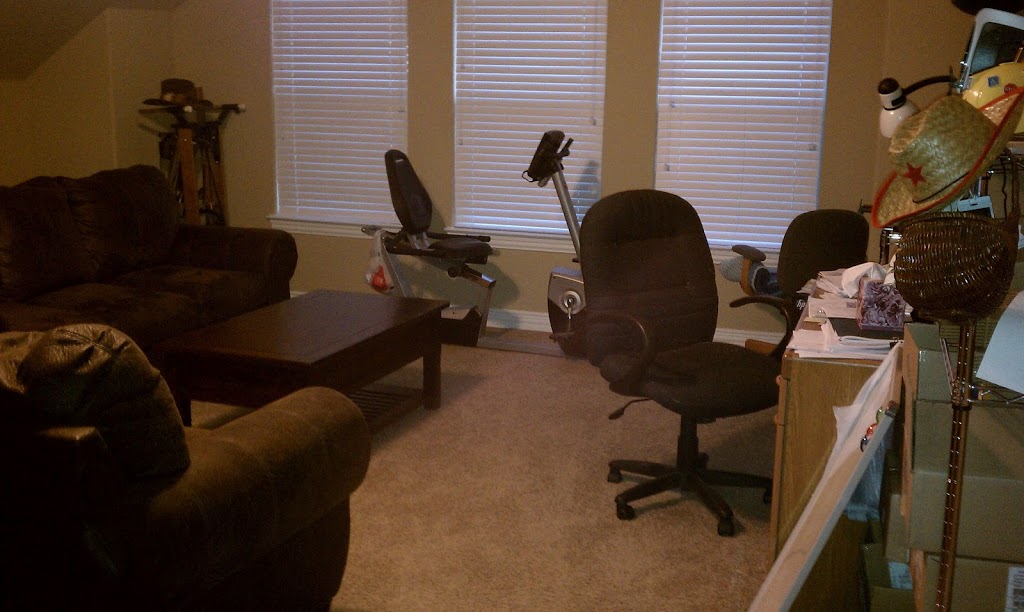
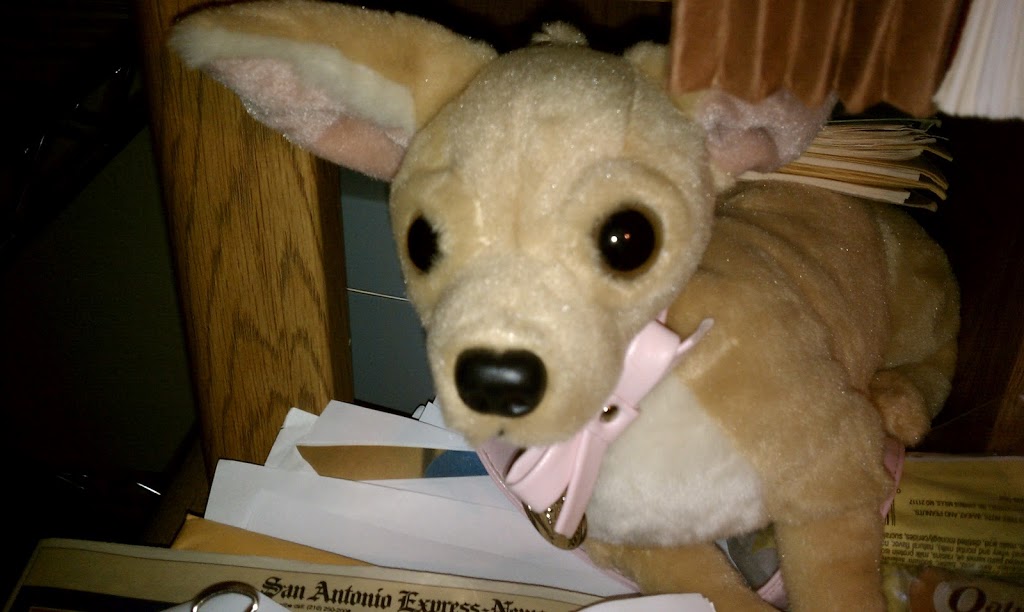
Jordan’s well-appointed office doubles as home for her Diva Dog, which she takes to signings.

Nancy Cohen — A Writer’s CentCom

Nancy’s writing hub looks like a setting for “War Games II”. Her next thriller?

Michelle Gagnon — Thinking Outside the Box

Michelle is in the middle of a move, so she’s temporarily between offices. 

“It’s interesting, because lately I’ve found that I actually work best away from my official “desk”; on airplanes, or other places where there isn’t easy access to the internet so that I don’t get as distracted,” she says. “…I am toying with doing away with a real office in favor of working in different parts of the house depending on my mood.”

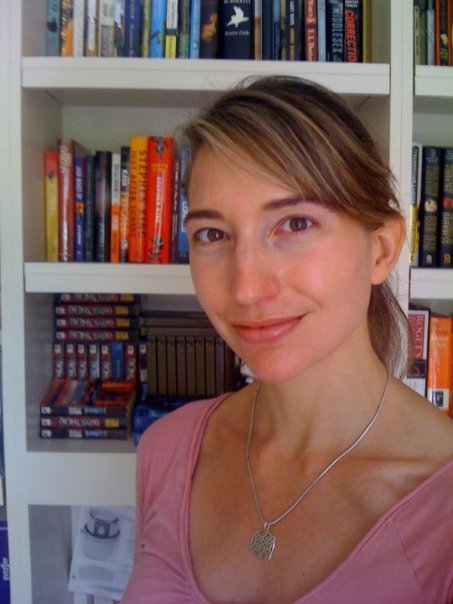
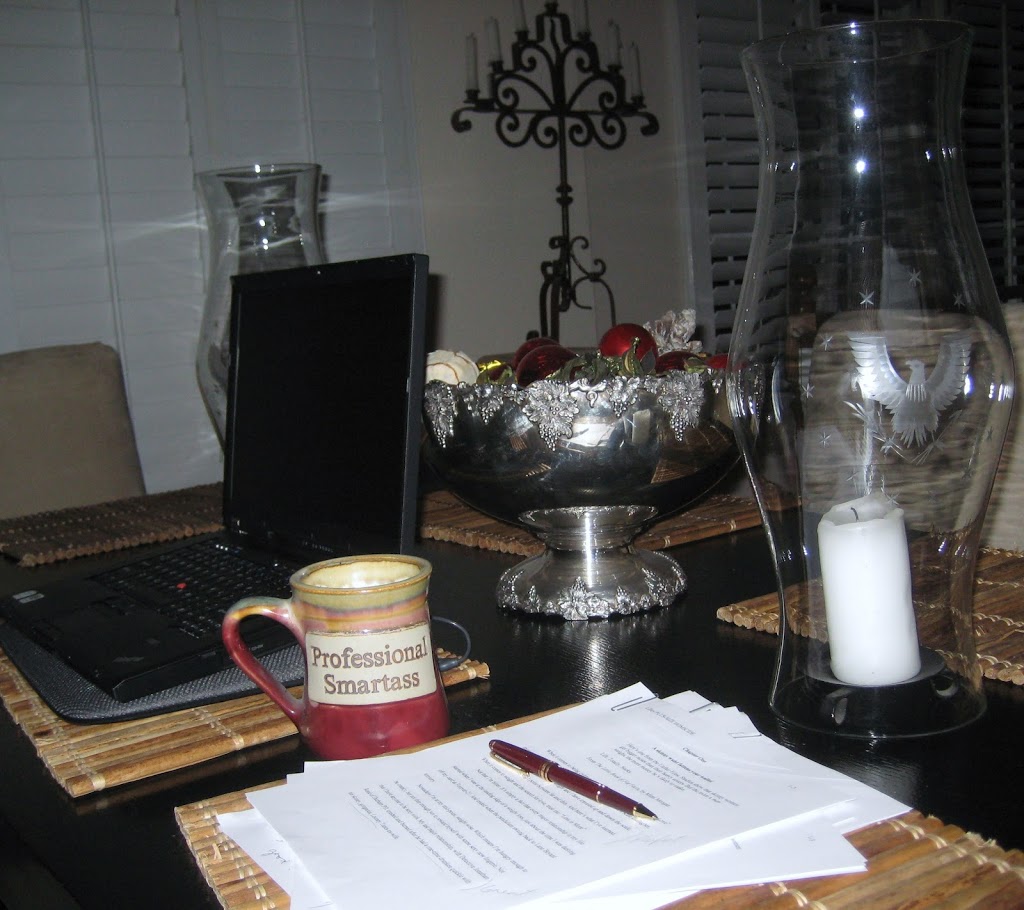
Kathryn Lilley — A Terminal Case of Wanderlust


I’m a restless soul, always on the move. I plug in my laptop wherever I happen to land. Yesterday, it was the dining room table. I took this shot as I wrote today’s blog.

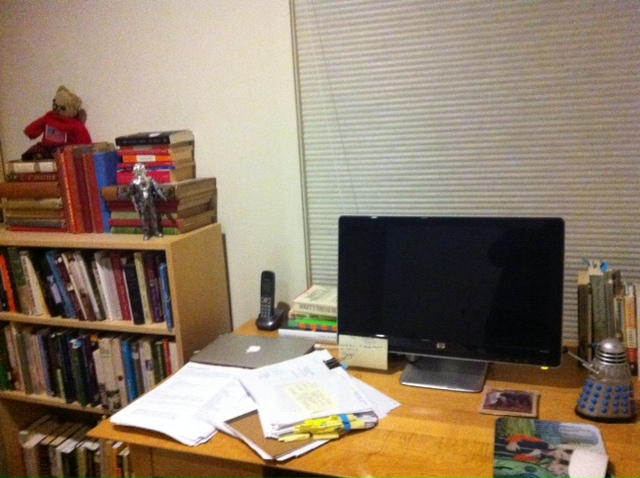
Clare Langley-Hawthorne — The Exterminator

About her office Clare says, “You can see the Dalek on my desk…I can push a button and hear ‘exterminate’ when things aren’t going so well with the manuscript!”

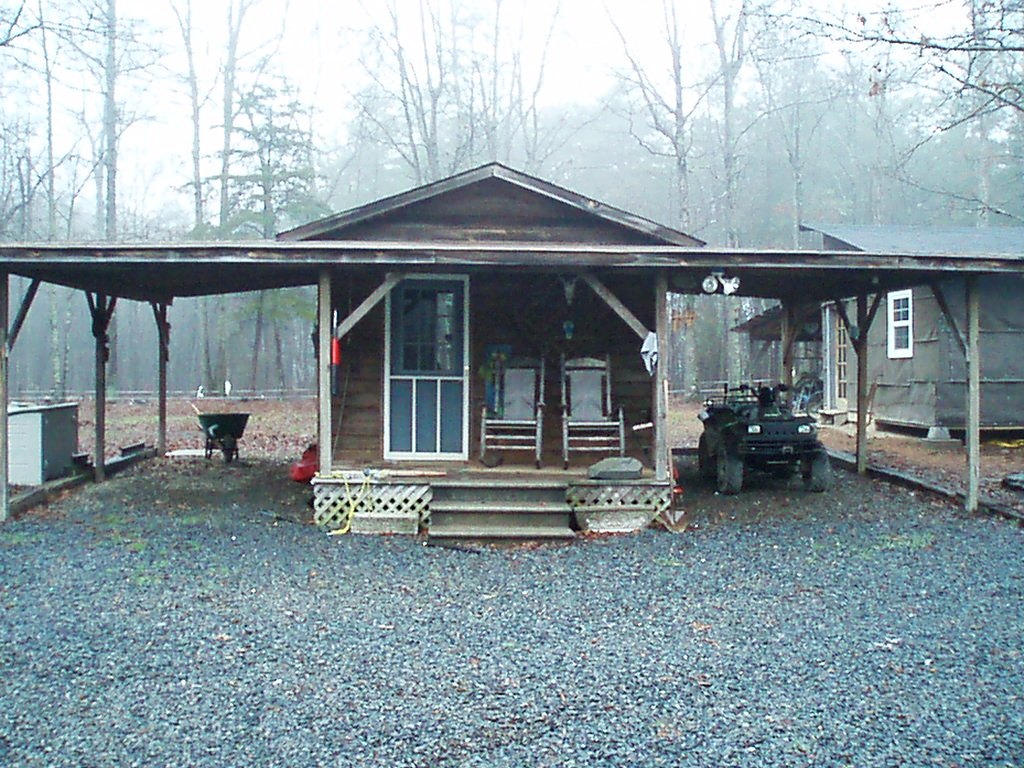
John Ramsey Miller — Blogger Emeritus


Before he transitioned to his new silk-screening endeavor, John left us with a picture of his writing cabin. Alas, no chickens in sight–the evil fox got ’em!

Next Friday: Let’s see where you write!

For next Friday’s post, we want to hear about where our TKZ readers write! Send us a photo of your desk. You can send it to killzoneblog at gmail dot com.

If you have any thoughts about writing desks, or if you have any writing-related questions, feel free to post them today in the Comments. We’ll all be dropping in from time to time today; we’ll do our best to answer them.

Identity Theft: Cloud Files and Urgent Phone Calls

by: Kathleen Pickering http://www.kathleenpickering.com


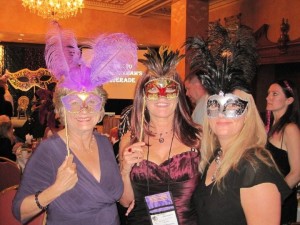
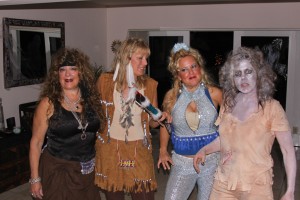
Will the real Kathleen please step forward?

47818_1620714999377_1281480214_3375064_7165332_n[1]

6827_151133441022_711531022_4017786_5894507_n[1]

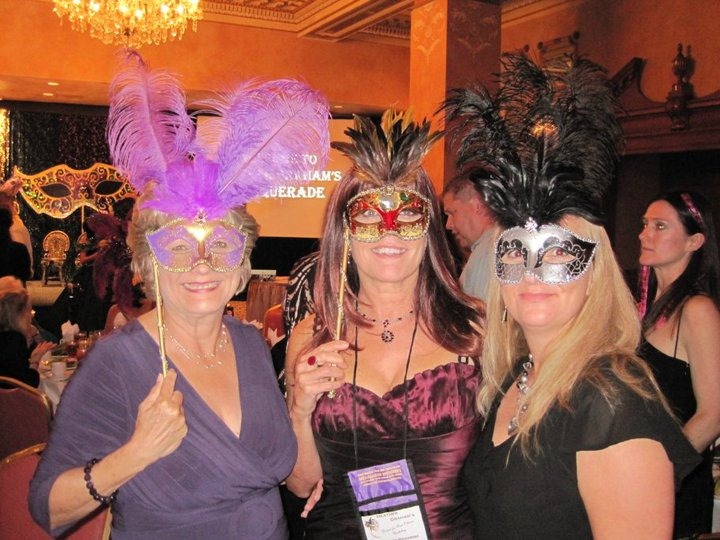
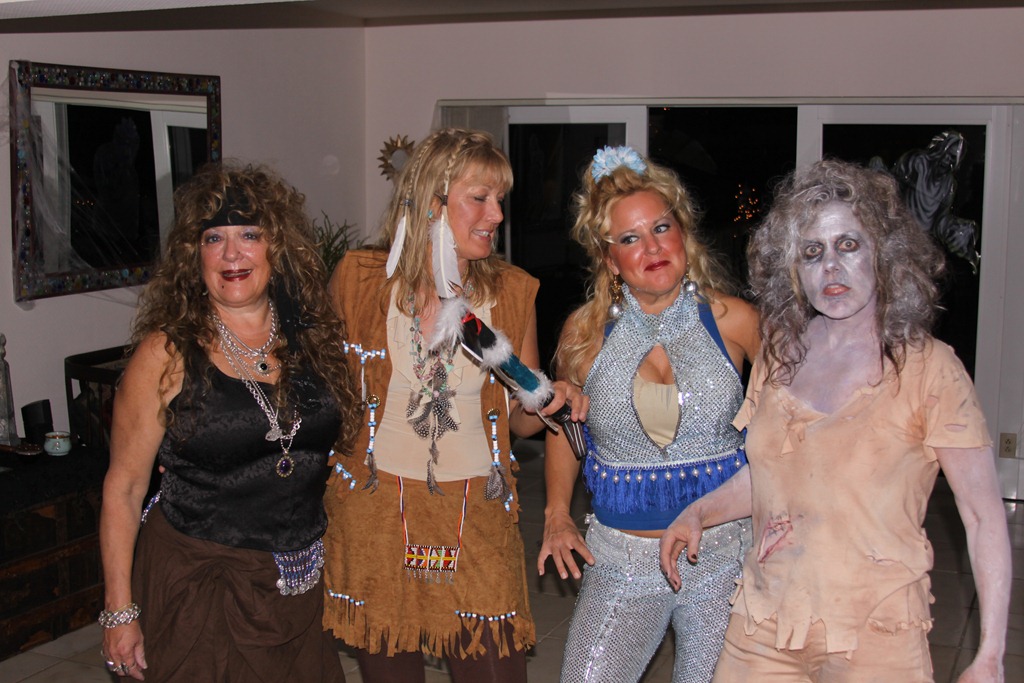
Masked Ladies

357

While we may seek to keep our identity private, either by costumes or maintaining a low profile (the latter of which I have no idea how to do!), I learned a really hard lesson over this weekend.

I learned that the potential for identity theft could even happen to me.

Early Saturday morning I was awakened by an urgent phone caller telling me that my computer (which was in “sleep” mode) was downloading dangerous viruses that would soon crash my hard drive.

I questioned the caller. He said he was with Microsoft Windows and that I was wasting precious time by asking questions. Now, I’d like to say I was half asleep, but my gut reaction was to hang up on this dude and I ignored myself.

What an idiot!

When will I learn to trust my gut? I’m telling you. No more Ms. Nice Piks in this corner. No. No. No.

I am embarrassed to tell you that I trotted into my office and gave this clown remote access to my computer so he could show me the infected files which turned out to be error and warning messages typical of Microsoft files. Then he proceeded to try to sell me an antivirus program for $130.

I said, no. He bullied me some more then I hung up. But no, that wasn’t enough. He was still remotely connected. When I notated on the screen that he should exit my computer, he had the audacity to tell me to wait–twice!

In hindsight. I should have turned the darned thing off, but hindsight is 20/20—and the slimy dog had control of the mouse. Sheesh!

I posted the episode on Facebook and folks responded saying they’d had the same or similar experience and the guy really was trying to get me to by an expensive antivirus program. I hope that was all. Others offered advice on restoring my PC before the event to eliminate any viruses he may have planted.

Then, I went and purchased an Identity Theft system to monitor my PC. I learned some interesting info and want to share it with you.

There are plenty of sites out there to give info on how to protect against identity theft. Nextadvisor.com is a good place. Here’s a link to compare Identity Theft services: Compare IT Services.

I also found tips to prevent Identity Theft. One point of vulnerability is storing your data on Cloud or DropBox—remote sites to hold files instead of on your own computer. You end up trusting your on-line server to protect your stored files from hackers. Word is that the law is nebulous over who is liable for data theft on these sites. Since Cloud and similar services are free, the user is usually held responsible for any breach of information. Do your homework before placing valuable information out there!

Here are a few tips to avoid Identity Theft:

1. Instead of signing the back of your credit card, write “request ID”.

2. Shred everything that has your name on it.

3. Destroy Digital Data. Erase any info on discarded computers, smartphones, etc. that hold data on you. Break them, if all else fails.

4. Read through statements carefully. Be sure your being billed for items/services you purchased.

5. Don’t leave mail in the mailbox. Easy target for looters.

6. Check your credit reports at least once per year.

I bought Identity Guard for my computer because not only does it monitor my SS#, bank accounts, loans, credit cards and the use of my name, phone and address, Identity Guard monitors my PC with an anti-phishing and virus protection called Zone Alarm for the duration of membership. I feel pretty confident that I’ve protected my security at last.

Another site, 5Identity Theft Protection, offers tips to protect social media activity and internet passwords. Here’s the link. This site is loaded with info: Identity Theft Protection

Here are some additional warning signals I found on 5Identity Theft Protection to tell if your identity has been compromised:

– you are denied credit or loans for no apparent reason

– monthly credit card statements, utility bills, etc. stop arriving

– you receive a credit card without asking for one

– you receive bills from places you haven’t been

– you receive notices from collection agencies

– some of your mail is missing.

Hope this info helps and encourages you to think of me if someone asks for access to your computer. If they call you, the answer is, NO! (I know, you already know this!) Be sure to think twice before putting your valuable information into the ether-net for purchases and signing up at different sites. Always check that the site is secure. In closing, I wish that your identity only be lost as far as the next costume you wear!

Happy writing!

xox, Piks


And I’m Following Gilstrap, As Usual.

 By John Ramsey Miller
A few years ago one of my dearest friends, John Gilstrap, invited me to join the Kill Zone Blog Group.  I suppose I was the last of the original seven to be called on. And I got the best day, Saturday. I thought blogging would be a great way to exercise my pomposity, talk about where stories come from—life,  and to be truthful with newcomers about what the craft was really like. I hope I’ve done some of that over the past four years and whatever John thinks as to the number of blogs. I have had my dear friend, Joe Hartlaub taking every other Saturday since life started taking up more and more of my time. I’ve got nothing else left unsaid that I can think of.
I’ve truly enjoyed writing most of the articles, although sometime I had nothing in mind right up until I was against the deadline. Since I’ve had Saturdays I could write Friday evening. Sometimes I’d be into my happy hour before I realized I hadn’t posted my blog. A couple of times James Scott Bell would have one ready and he’d be kind enough to go in a day early, and let me go after him. My 5:00 constitutional is either a single malt self-served neat, a scotch on the rocks, scotch and soda, a vodka martini with big ole huge Mangarangololo olives, gin and tonic, beer, and I usually do several of one of those.
I have enjoyed great latitude blogging here, often bragging about my marvelous chickens, my grandchildren, children, my excellent dogs or the garden my wife loves tending. I was here when my Marine son was in Iraq on the Syrian Border pushing at the insurgents. Sometimes I have written a post I wished I had thought through better, or hadn’t taken on the subject matter.  I’ve been a nice guy and I’ve been a bastard when reviewing authors submitting first pages.  My sense of humor is sometimes hard-edged, my patience often too thin.  I’ve wished I knew more about this craft, but I’ve always been an instinctive writer, not a taught one because I rarely pay attention to advice or suggestions. My bad.
I will miss being here, but I’m going to keep writing at a relaxed pace (doing a book with Mark Tufo) and if it works, it works. I think it will.  Tufo is a great guy.
So far in life I’ve had several successful careers.  I had a career as a photographer. I produced 75 record album covers for major record labels. I traveled for LOOK, LIFE, PEOPLE, COUNTRY MUSIC MAGAZINE. I did a series of “formal” Death Row portraits. I loved it.
I co-owned a successful Advertising Agency in New Orleans. Loved that too.
I wrote features for the Miami Herald’s TROPIC MAGAZINE. Great fun.
I wrote a non-fiction book about the 2 Live Crew’s obscenity Trials. Weird, but interesting.
I wrote one screenplay and sold it to a major studio where it vanished into turnaround. 
I wrote a New York Times Best Seller. I followed that with six other novels. I have, last count, 2 million books in print.  A few have sold. It was all a blast.
I wrote a book with eleven other authors and it was the audio book of the year beating out Harry Potter and The BIBLE. Then I gave my slot to another author for the next book, because I thought the project was a great opportunity for me and I was convinced that another writer should have the same opportunity I’d had. I have never regretted that decision and I don’t think THE COPPER BRACELET suffered for it. Great experience.
A few months ago joined my son in a silk-screening business he started in his garage and we moved it into a large commercial space with high-falooten equipment. His wife is expecting my seventh grandchild in a week or two. It’s just the two of us, working shoulder to shoulder. Nobody knows or cares that I was a best selling author. I’m just Pops up there. I’m getting my hands dirty and having the time of my life. I’ve got Plastisol inks under my nails right now. You guys ever need custom printed T-shirts or embroidered caps to sell your books, call us.  DaVinTee is the name. We’re in Concord, NC.  Just say that you heard about us on John’s Kill Zone Good-Bye blog and get a 20% discount off our already low, low prices. 
Will I miss this blog? I think so. Will I miss all of my blog mates and readers?  Absolutely. I’ve a few years left and I plan to run through them grinning. It’s time for me to walk away and let someone else step up. Joe and the gang will keep this blog at the top, where it deserves to be. I will be lurking, and like, Gilstrap. I’ll be commenting because it’s our nature. That is the way of life and the way it should be. I’ve spent my life walking from thing to thing, and it’s kept me smiling.  
 Hell, I’m smiling now. Oh, and may God bless you one and all.

MOVE OVER HARDCOVERS: E-books Just Outsold You

By: Kathleen Pickering http://www.kathleenpickering.com

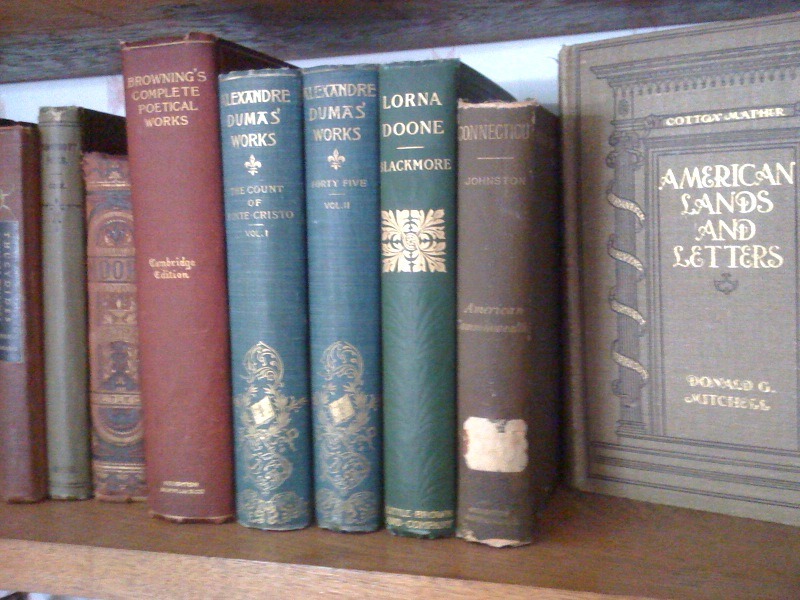
books

Before I even begin on today’s news, let me offer a superb website for the latest in breaking news for the publishing industry, called GalleyCat:

http://www.mediabistro.com/galleycat/

Don’t go there now, because I’ll lose you here. GalleyCat is chock full of fascinating info that could capture your attention for hours—but, I need you now!  So, do copy and paste this link into your Favorites to peruse after you’ve read my fascinating info today on e-book sales outselling hardcovers for the first time in the US.

This new is from an article written by Lauren Indvik on Mashable. (Another great site for breaking news, BTW!)

Looks like e-books brought in $282.3M in the first quarter of this year (up 28.1% from last year). Adult hardcover novels earned $229.6M (up 2.7%). Adult paperbacks continued to lead at $299.8M but sales are down 10.5% from last year.

Downloaded Audio books are up 32.7% from last year selling at $25M. So, the trend is pretty clear. The flood of e-reading devices crossing the board from tablets, smartphones to dedicated e-readers have taken a bite from the paper book industry.

What did I do? I went and bought some Apple stock (better late than never). The writing is on the wall–never mind on the e-readers!

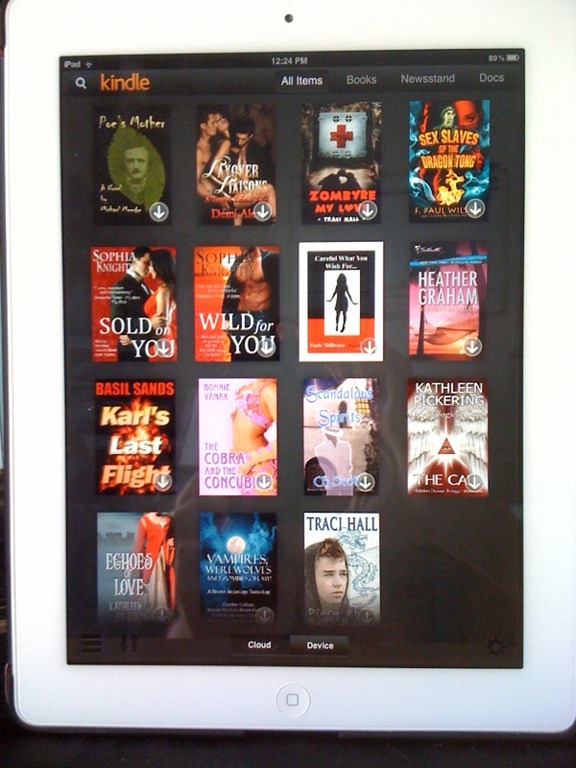
kindle

Have you gone to the dark side and traded in your hard copies for your Kindle, Nook or other e-reading device? I cherish my hard cover books and can’t imagine taking an e-reader into the tub (unless of course, it’s waterproof!) Yet, I haven’t been loyal to my paper novels, either. Here’s a page in my iPad Kindle file of books by fellow authors. I mean, really? How can we resist carrying around hundreds of books on a slim little tablet? Are paper books doomed?

Tell me what you think.

xox, Piks

How prolific should you be?

by Clare Langley-Hawthorne

Following on from Jim’s post yesterday on attacking the self-publishing game, I started thinking about how the indie e-book phenomenon is affecting reader expectations as to the number of books a writer should be producing. In May a New York Times article explored how many bestselling writers now feel that one book a year is simply not enough. 


Publishers are placing increasing pressure on authors to accelerate production, often asking for additional material such as novellas and short stories to supplement the e-books being released. In a market where entertainment is being churned out at a faster and faster rate, I can’t help worry that the push for constant new material in the e-book market comes at the expense of quality – but what writer can afford not to be prolific when the market demands it?


There aren’t many of us who can match James Patterson in terms of output (I believe he released 12 titles last year with 13 due this year!) but with the demands on authors increasing all the time, I wonder how many of us feel compelled to produce more simply out of fear? 


In the indie market, clearly an author has to balance consistent output with quality in order to build readership but, as an author whose first novel was published, I don’t exactly have a huge drawer load of old manuscripts I can put out there – and there are limits to how fast I can write new material to the level  that I feel is publication worthy. It seems rather a daunting challenge – balancing the need to produce with the need to keep quality standards high. 


So what do you think? Are some of these prolific authors sacrificing quality for quantity? Is your publisher pushing for you to produce more than one book a year? If you are considering (or in the process of attempting) the indie route, how are you approaching this issue? What is your target output – and how do you plan on achieving it?