
John Ramsey Miller
Do not get me wrong. I love and appreciate my readers ….mostly. I recall when fans sent letters to the publisher who forwarded them to me. That’s how long I’ve been around. Most were complementary, some not so much…
Every published author has to deal with people who find mistakes in their book and have to get in touch immediately so they can do a “superiority” dance. Nonny-Nonny-Boo-Boo, I know more n’ you do! We all hate their slimy little entrails. I have written people and told them not to ever read my books again and I’ve offered to pay them for the book they bought if they would agree not to ever buy another one. My wife gets crazy when I do things like that.
I have told people that the mistakes were obviously typos put there by a typesetter who zoned out and the copy editor missed catching it. With what publishers pay copy editors and the nature of the setters reading and keying in the words of every kind of book there is, and I get it. So now so should you, anal compulsive reader dearest.
Most readers are truly dears, but there’s that one in five thousand who read novels the way surgeons read the New England Journal of medicine. You get words wrong in that tome and people can die. I seem to get a few readers who read with their feet up and a red pencil clenched between their teeth.
Here’s the thing. I write stories in real time as I imagine them. If I put in mistakes, they are often invisible to me in consequent readings and edits. I see something, I read it the way I imagined it–if that makes sense. Sometimes my lens is clouded. If (the editorial) you are going to read for grammatical accuracy, don’t read my books. Read law books. If you find a mistake in my books, keep it to yourself, because it isn’t in my control. Write the typesetter or the copy editor and tell them they ruined my book for you. I can do nothing at this point but allow how friggin anal you are and repeat for the twentieth time, “Tell somebody who will be impressed that you read each word and found something that didn’t belong, or found something missing, even after a dozen professionals missed it.”
If the editor(s) don’t initially fix it, it will remain as broken as when I built it.
I was not an English major, and I couldn’t diagram a sentence if my life depended on it. I will dangle participles like I used to hang those foil strip icicles on Christmas trees, end a sentence with a preposition, misspele words, run a sentence from Eugene to Miami Beach, double tap words, CAPS and lower cases lie where they fall, and more terrible, unforgivable things. It’s just me.
Here’s an example. (Spoiler Alert) If I remember the book correctly, in UPSIDE DOWN I have a character say something in German when he is about to kill another assassin (like he could accomplish that). The reader should think this guy is the German assassin in a clever disguise. This woman writes to tell me that she teaches German and loves knockschnizzels and she has to tell me that my German grammar is badly flawed and whoever does my research should be “drawn and quartered.” Otherwise she loved the book. My reply went something very much like this:
Dear (Her name here),
My stepmother is German. I took German in college as my foreign language. I have several close friends who are German or who speak German at least conversationally. The phrase you are referring to was taken directly from a Babel Fish translation of the English I wrote in the little block. You see, the character got the German he spoke from babel Fish because he wasn’t German at all, which I thought clear enough. He wanted to trick the real German assassin by tossing off a phrase he got from Bable Fish (since he did not speak German) and having the other guy answer in his native tongue. I don’t know how you missed that since this is the only note I’ve received out of 200,000 copies out there.
Thanks for taking time to write.
John
She wrote me a lovely e-note response apologizing and saying that she had gone back and re-read the scene and was shocked she got it wrong. The fact is, I got it from Babble Fish because I planned to make it perfect later and never checked it or had anyone else do it. The copy editor actually noted it and asked if it was a correct translation, and it was never repaired by me or anyone else. And truth is, it could be taken that way, or hers. But the point is, I recovered and I came back and performed the superiority dance myself. I loved it. I should have felt, but I didn’t feel at all guilty. I wish I could have done that with every one of those I’ve ever received. But sometimes you are standing there naked to the world ashamed to be associated with a word-fail most foul, and to some, unforgivable.
Truthfully, it’s nice to know someone with literary Asbergers is carefully policing the pages. Although, as goes with real cops, we’d all rather see them pulling someone else over.
The big problem with me self-publishing a book is that fact that it will be rife and rifled with mistakes large and small. If I lose a few anal compulsive readers, I doubt I’ll much notice …or care. But I am sure I will hear from most of them.
Category Archives: Writing
The REAL secret of best-sellers

I had an epiphany the other day.
My dear friend Pam and I were taking a rare cross-country trip together for the first time in years. This trip, to a weekend reunion of Wellesley friends, was to be our girls-weekend-off escape from the pressures of work and life.
Just before we boarded Jet Blue, we each extracted our books for the road (hardcovers, mind you!). It turned out we’d selected the books–both mega bestsellers–with the particular goal of being a good “airplane read.”
“These kind of books aren’t even well written, but they’re perfect for a plane ride,” Pam observed.”They’re written like movies.”
Like movies.
Two hours into the flight, I opened up my book and looked at it with fresh eyes. It did, indeed, read like a movie.
What are the elements that make a novel “like a movie”?
- They are written in a highly visual style, with an overall effect that functions almost like a camera’s lens.
- They keep the reader flowing precisely in the moment from scene to scene, at the breaking surface of the action. They focus on what the character sees, hears, is feeling, at that exact moment.
- There are few digressions into back story or descriptions.
- There’s a lot of “white space,” which means the action and dialogue is flowing briskly, and the pacing is swift.
- The chapters are short–sometimes, only a page or two. Again, that helps the action and pacing drive forward.
I don’t know why the phrase “like a movie” hit me with such force. All of these elements–action, pacing, tension–are things we always strive to do as writers. But that the end goal was to write “like a movie”? That was a new thought for me.
Do you agree that most best-selling thrillers are written like movies? What are the elements you see that contribute to pulling it off?
Building the Mythology

Last week I had the privilege of witnessing a true ‘once in a lifetime’ event – the transit of Venus.
Visible from Melbourne for some six hours last Wednesday, I took my boys out of school and headed down to the historic observatory in our botanical gardens in the hope of actually seeing it (we had terrible weather during the week so there were no guarantees we’d even see the sun!). The local astronomical society had set up telescopes on the lawn and, inside the observatory, the historic 19th century telescope was perfectly positioned to capture an event that, by most calculations, won’t occur again until 2117.
After waiting over two hours (!) it was finally our turn and, thankfully, the clouds parted and we got a terrific view of Venus as it travelled between the Earth and the Sun. Thing was, after all the build up, what we really saw was a tiny black dot passing across a white disc…so how come my boys declared it to be one of the most ‘awesome’ things they had ever seen?
Mythology.
By that I mean that after all the anticipation, research, and history involved, the actual event took on its own kind of mythic status. Therein lay its power and therein lies the power behind some of the most popular bestselling books and films. Think of Harry Potter – or the film Alien. Even Twilight has a detailed mythology that draws readers in. So when writing your current manuscript consider the mythology you are building inside. This doesn’t mean you have to be writing fantasy or science fiction because even with mystery and thrillers what you are creating is your own mythology and a world that will draw a reader in and compel them to read further.
So what do you need to create ‘mythology’ within your work?
It could be (to name a few):
- A sense of an epic battle between good and evil being played out
- An emotional resonance that seems to tap into a universal yearning (for love, for peace – whatever you like)
- A world that despite being foreign, alien, or even historical feels so fully formed that a reader is transported (using all five senses)
- A sense of something that lifts a reader from the mundane to the profound
As a writer or a reader, what do you think about when you consider the ‘mythology’ of a book? Do certain issues resonate with you and therefore raise a book to mythic status in your eyes? Have there been events in your life which have gained almost mythological status? How do you weave mythology into your own work?
Cruise With Your Muse: An Opportunity to Create
By: Kathleen Pickering http://www.kathleenpickering.com
I believe networking is one of the most important writing business tools for authors. I’ve stressed this fact several times in previous discussions.
While TKZ is a mystery writers site, I make it a point to attend cross-genre conferences because we are ALL writers with something to teach each other.
Today, I’m here to suggest an excellent conference opportunity to add to your networking schedule—or to use as a jump off point if the conference world is new to you.
The Florida Romance Writer’s Cruise With Your Muse Conference, in my humble opinion, offers one of the most laid-back atmospheres to either get your feet wet in the writing industry or celebrate your writing career.
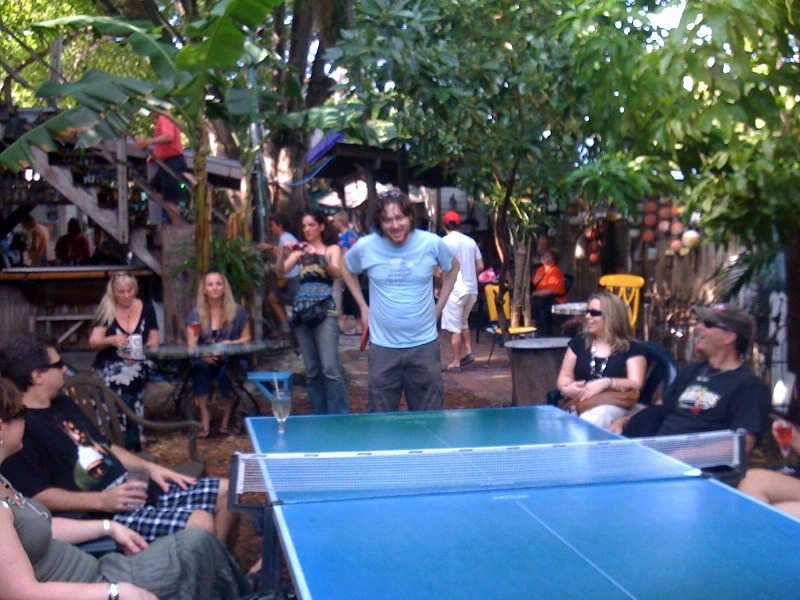
Adam Wilson playing ping-pong while the group awaits table for breakfast at Blue Heaven in Key West.
![22236_282690434155_700359155_3635882_220329_n[1]](https://killzoneblog.com/wp-content/uploads/2012/06/22236_282690434155_700359155_3635882_220329_n-25255B1-25255D_thumb-25255B1-25255D.jpg "22236_282690434155_700359155_3635882_220329_n[1]") There is something about attending writing workshops and mingling with authors, editors and agents aboard a beautiful ocean liner that sets the mood for relaxed, fun and productive results. Fellow Blogger, Nancy Cohen, who writes romance and mysteries has also attended this conference as a workshop presenter.
There is something about attending writing workshops and mingling with authors, editors and agents aboard a beautiful ocean liner that sets the mood for relaxed, fun and productive results. Fellow Blogger, Nancy Cohen, who writes romance and mysteries has also attended this conference as a workshop presenter.
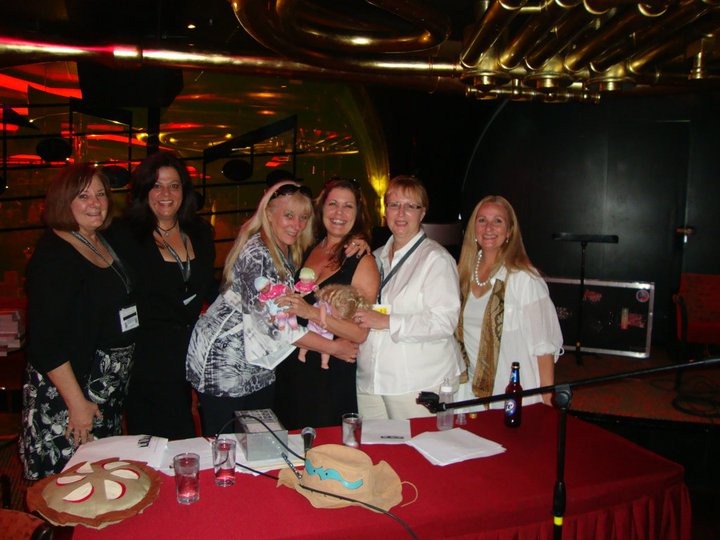
Joan Johnston, Aleka Nakis, Heather Graham, Kathleen Pickering, Sally Fairchild and Tracy Hall after a skit honoring three of FRW’s founding mothers.
Attendees such as authors Heather Graham (who will attend the up-coming cruise), Alexandra Sokoloff, Joan Johnston, Sally Fairchild, Erin McCarthy (another up-coming 2013 attendee), Karen Kendall, as well as TOR editor Eric Raab, Simon & Shuster editor Adam Wilson, Harlequin editor Wanda Ottewell, and agents Lucy Childs and Lucienne Diver were just some of the contributors to previous conferences’ success. You will also note that several of the above named folks write and represent genres other than romance.
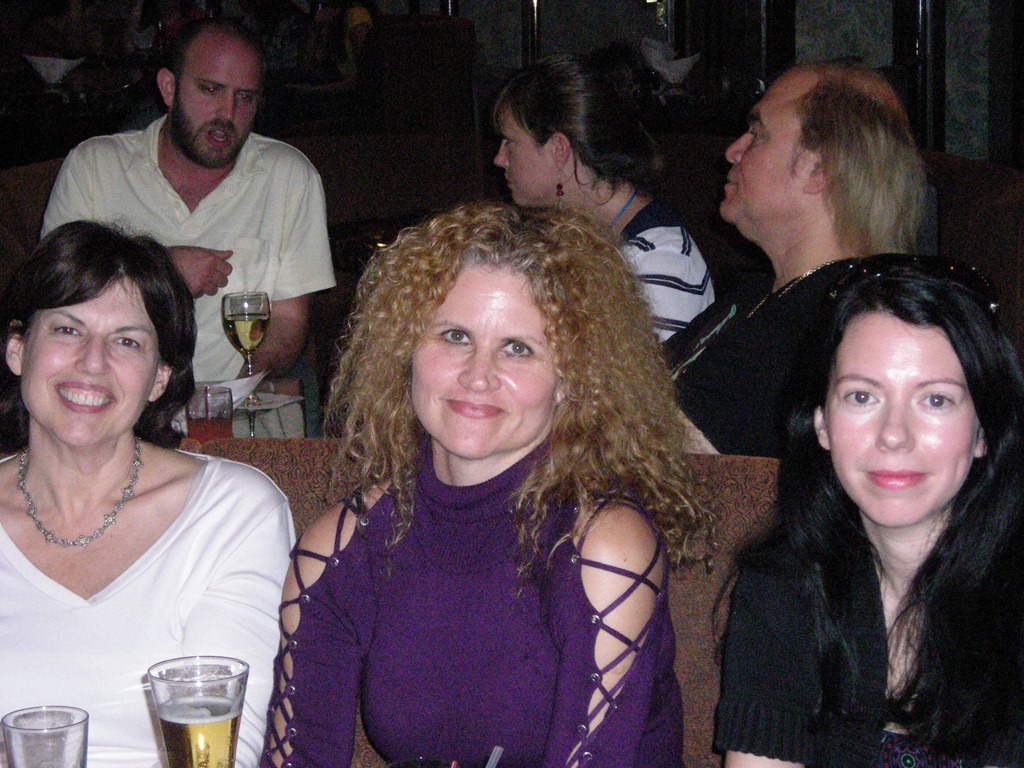
After three years of conference networking, my career launched as the result of the last Florida Romance Writers Cruise With Your Muse Conference in 2011. I met my editor and agent on board. Networking with them in such a care-free environment helped us get to know each other better without the the stress of “performing.” In these two short years working with my agent and editor, I have signed contracts for four books and another novel is being shopped around as we speak.
I consider that excellent results from attending a Cruise!
Charlaine Harris fans will be thrilled to know that Charlaine is our Keynote Speaker for the next FRW Cruise.
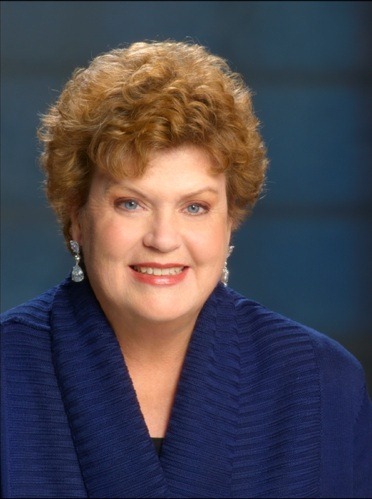
Charlaine is the New York Times Best Selling author of the Sookie Stackhouse urban fantasy series and HBO series, True Blood http://www.hbo.com/true-blood.
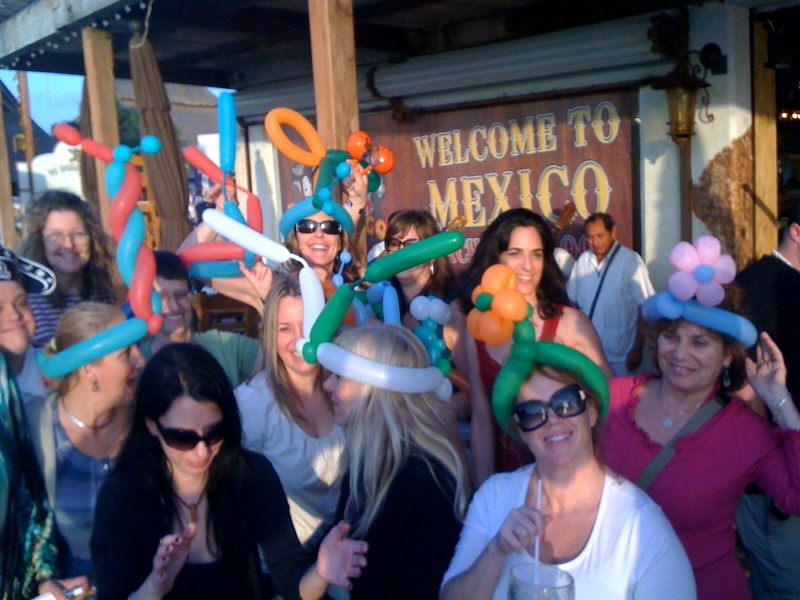
Charlaine possesses thirty years of knowledge and success in the writing industry. She will be sharing her insights with authors. Wouldn’t you just love some one-on-one time with her? And, I know she’s going to look hot in a balloon hat!
Visit Charlaine’s website for more details about her amazing career. (http://www.charlaineharris.com/)
Here is a photo from the last conference lunch on the wharf in Cozumel. It’s like a WHERE’S WALDO picture, but if you look closely you can spot notable authors, editors and agents. (Another of these photos adorns the banner on my Facebook page. www.facebook.com/kathleenpickering)
So, I beg forgiveness for turning this blog into an advertisement for the FRW Cruise, but I so wholeheartedly endorse networking as a writing business tool, that I didn’t want to miss the chance to share this opportunity.
I will be on this Cruise. I hope to see you there!
Write on, my friends!
xox, Piks
Early Readers
Always on the lookout for some great new books for my twin boys to read, I was in two city bookstores last Friday when a depressing realization set in…As I scoured the shelves it became increasingly obvious how gender segregated these early readers seem to be. On the boys’ side were books like the Zac Powers and Jack Stalwart secret agents series, Boy vs. Beast and Battle Boy while on the girls’ side were the Rainbow Magic Fairy books, Ivy and Bean, Mermaid and Unicorn books.
Although I know there are definitely cross-over books like The Magic Tree House books (which are, believe it, or not hard to find in Australia), the way the section was laid out made it clear that there were ‘boy books’ and ‘girl books’ and I had to wonder what kind of message this sent to kids (who are, after all, the readers of the future).
Although I’m not the sort who believes we should inflict some crazy gender neutrality on kids, it is kind of depressing that the majority of ‘boy’ books are all about aliens, battles and secret agents while the girls books were all pink and cutesy with themes of flowers, fairies, unicorns and magic…I wonder as these kids grow up how this will affect their reading choices (which, to be fair, vastly improve as they get to middle grade and teen books).
My boys think I should rectify the situation by writing some awesomely cool series aimed just for them (I only wish ideas came that easily!) but all I can do is try to mitigate the situation by opening their minds to a whole range of reading choices. I remember growing up that, though there were obviously some girl/boy-centric books, there were heaps of stories that appealed to everyone. Both my husband and I grew up on Enid Blyton’s Famous Five, Mystery and Adventure series and so when we talk about books that we loved as children we have lots of common ground. I just can’t believe twenty-odd years later, that the gap between what boys and girls read seems to have grown wider – at least among primary/elementary school kids.
Perhaps part of the reason is the perception that it is hard to get boys to read and so publishers have been focusing on ‘cool’ themes to try and encourage boys to pick up a book. Nothing wrong with that…but I have to admit, as a parent, I would love to see books that have broader appeal. Not to mention that the actual writing itself is pedestrian. I fear that the early book market become little more than a production line pushing out a plethora of bland, badly written books.
I feel like there are so many amazing children’s picture books and then there is this huge gap until middle-grade or young adult books (where I think there are some fabulous things going on). Should I be worried that by the time my boys reach that point they will think that books are divided (like clothes) on gender lines (blue for boys, pink for girls…)?
So what do you think? Is reading in these early years getting more gender specific? Is anyone else depressed when they look at books aimed for 6-10 year olds?
ME AND HORSES ON THE OUTER BANKS ALL WEEK. DEAR GOD
John Ramsey Miller
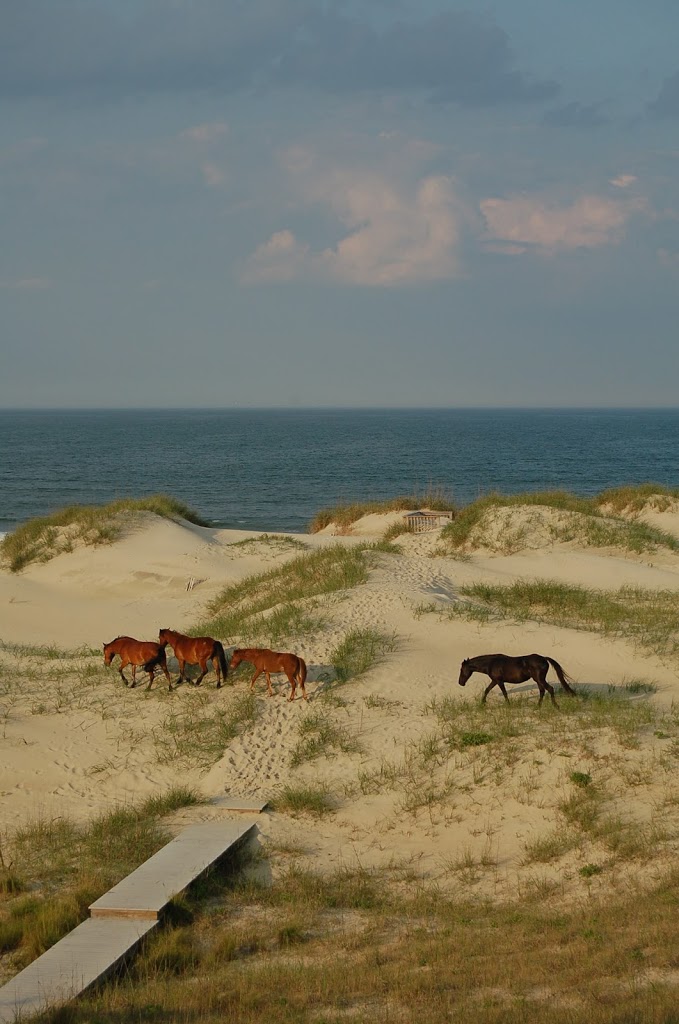
I’ve been at the very ass end of the NC Outer Banks since last Saturday with a web connection that is only slightly better than it was when Wilber, or (was it) Orville was lifting off at Kitty Hawk, right up the road a few miles. I’m typing with my mouth held at a 20 degree angle and outside the wind is blowing 30 knots with thunder booming. A beach ball just flew by the windows doing fifty miles per. I saw an airplane pulling a banner this morning and it was going backward.
I’m not a beach person. I don’t like the taste of salt water, the sounds of the surf, or the sand in my teeth. I’ve been reading non-stop, surrounded by family all lobster red from doing beachy things day after day. Oh, and we weathered a tropical storm (Beryl?) that drove rain into the windows of our 15 bedroom house (we have 35 family members here and all are top flight people I dearly love). We have a huge media room but none of us knows can get anything to show on the projector dealy. Well, cartoons for the kids. Self-defense dictates that cartoons are playing somewhere in this house at all times. We had like thirty cases of wine, lots of scotchy type liquids and cigars. It’s all about gone, and we’re driving out tomorrow. No roads out here. You 4-wheel up and down the beach and then go over the right dunes to0 get to your house. Trucks by the hundred all day and night. And wild horses on the beach and beside the houses eating the flower beds to the sand. The Spanish dropped the horses off by running their ships into the reefs or some such. Some of the beasts truly look that old, and probably still have galleon splinters in the withers.
I downloaded a bunch of books last week before I . I got the six-book WOOL series by a guy named Hugh Howey who lives in Boone, NC. After I read those, I bought his MOLLY FYDE Bern Saga of four books. I’m hooked on this guy’s work. Seriously, this guy’s worlds are as real as the one out your door. Maybe realer. Someone told me yesterday that the WOOL series has been purchased for a film series by a hot shot bunch jealous of the HUNGER GAMES success. I can see it. Both series from a self-published author, whose books will knock socks off at ten miles. I’ve been stuck to my Kindle in a silo world in Georgia and in outer space. I suggest you read the first WOOL book (get the first five for $3.99) and I defy you to stop at the first.
My dog sitter called to tell me that a fox or a possum got into the aviary/roost and killed all of my chickens, including Rusty, my rooster. Our five chickens were four years old and hardly laying any more, but we enjoyed watching them not lay eggs anymore, kick dead leaves, and peck at the ground. When I get back I’m going fox hunting.
So anyway I’m just here to tell you all that I’m not doing a blog this week. and why. LOOK AT THE HORSES!!!
Launch Week
Okay, I’ll start with the apology. When my editor told me that last week was the launch of the front-of-store displays for Damage Control, she was mistaken. In reality, all of the promotional stuff starts next Monday with the launch of a post card to the 1,744 people on my mailing list, followed up the next day (the actual launch day) with a mass mailing of the same post card to Kensington’s 15,000-plus-person list.
If you’d like to be added to the list, send me an email to john at johngilstrap dot com and I’ll make sure that happens. If you want to be removed from the list, there’s a link to that effect on anything you might receive from me.
Forgive me if I seem overly opportunistic, but I’d like to talk to day about what readers can do to most favorably impact the careers and livelihoods of the authors they like. Obviously, buying books is an important first step, but it goes further than that.
Buy on or before the launch date. More and more, the book industry is governed by the numbers. If a book sells well in its first days, it is guaranteed to have a long life in the marketplace. If it doesn’t, life becomes difficult. It’s not just about the money that a book earns. In fact the absolute value of the revenue generated is less important than the velocity with which it is generated. Thus, if there’s an author out there whose book you know you will ultimately buy, you can have a far greater impact on the writer’s career if you pre-order or order in the first week than you can if you wait even two or three weeks after release.
Tell people about your purchase. Even with the retraction of the paper book market and the death of the corner bookstores, word-of-mouth continues to be the number-one source of sales for books. Your post on Twitter or Facebook or Amazon or Barnes & Noble makes a huge difference. And if you don’t like one of my books, please spell my name correctly: G-R-I-S-H-A-M.
Tell your local bookseller. If you’re a merchant, and you’ve got a couple thousand products on your shelves, there’s no way that you can be truly familiar with more than a few. When you hear from a satisfied customer, that voice resonates loudly. This is particularly important for authors who are relatively new in their careers.
If you don’t find a book on the shelves, ask the bookseller to order it. Again, for the first- or second-timer whose books are rarely ordered again after the two or three original copies are sold, these requests literally translate to the life or death of their careers.
Utilize social media. This is an area where I’m still learning my way around the basics. If an author you like tweets something you think is interesting, re-tweet it. Forward it via email. Like it on Facebook.
Write to authors. It’s a lonely world when you tell stories to your screen, and then launch them into the ether. It’s always nice to know that there are real people out there on the other end of the writing equation.
So, what have I missed?
Even the best ideas need flawless execution
Has this ever happened to you? You have a great idea for a story–an idea that’s so strong, so clear, the story should probably write itself. But then you find yourself struggling with the execution phase. No matter how hard you work, no matter how many times you rewrite, the draft doesn’t measure up to the power of that first idea. Ever been there?
We all have. It’s called writing.
Part of the secret of becoming a professional writer is learning to get out of one’s own way. Every writer is different–we all have certain strengths, and we all have tics and weaknesses. During the writing process, we must prune out those tics as ruthlessly as a fastidious English gardener.
Today’s writing sample is SISTERS OF THE EARTH. I’ve added my comments at the end, including some suggestions for pruning and a bit of replanting.
Angel stood on the top step debating. A gentle wind brushed her curls from he face; it was soothing and grounding. She could do the responsible thing and end the night right here and right now. But she had always played it safe, always kept things nice and in place. But lately things have not been going the way that she had hoped that they would. She now stood to lose everything that she worked for and she didn’t know if she was able to handle it. Once again her life was on its axis debating on which way it was going to spin. She foolishly thought that she would be able to direct that spin.
Ly-Coris stood on the sidewalk waiting for her decide. He was silent but she could feel his presence just the same. She put the key in the door and slowly let it open. She didn’t turn to him, didn’t say anything. She wanted something that she was not able to verbalize and hoped that he understood. She knew that he did when he silently closed the door behind them.
“There is something that I should tell you, and it may be hard to hear,” he said leaning against the doorframe.
She turned to him with a startled look. She had never done anything like this before but she was certain that there wasn’t a whole lot of talking involved. He didn’t seem to notice or care and that just irritated her even more.
“I’m not what you think that I am, Angel. I need you to know…”
Angel stopped him from talking by placing her lips over his, hoping that he would take a hint and move on. There wasn’t any reason to talk; nothing was going to last past this night. He was warm and sweet and just what she needed. His body felt right against hers, but something was suddenly wrong. He was responding, pulling her into him. She could feel his fingers grazing against her skin. But something was off. She pulled back and swallowed all of her instincts.
Kathryn’s comments:
I like the rhythm and flow of the narrator’s voice here. It has a natural, appealing quality to it. I could easily see myself sticking with this narrator to see what develops, story-wise.
But the writer gets in her (I’m assuming it’s a her) own way more than once. And that’s not a good thing, especially on the first page.
Any editor or agent would be put off by the typo in the second sentence (“he face”). Yes, it’s a small mistake, but such a lapse early on lowers the reader’s expectations for the skill of the writing. I’d also suggest adding a comma to the first sentence, so that it reads, (“Angel stood on the top step, debating.”) I’d also remove the semicolon and replace with a period–semicolons are seldom used in popular fiction these days.
There’s a confusion of tenses later in the first paragraph (“But lately things have not been going the way that she had hoped that they would.”)”Have” should be “had” there. I’d also suggest dropping the “that”s to improve readability. The rest of that paragraph introduces back story, which drags down the scene. Instead of putting us in the narrator’s head right then, I’d suggest staying with action and dialogue. You need to paint a strong picture for the reader so that we see what your narrator sees, before you go off into back story.
I have the same advice for narrator’s interior thoughts in the next paragraph (“She wanted something that she was not able to verbalize and hoped that he understood. She knew that he did when he silently closed the door behind them.) Let the action and dialogue–including the silence–convey what is happening here, rather than explaining it all from inside her head. Remember the old adage, “Show don’t tell.”
I got confused what was meant by “this” in a later paragraph, (“She had never done anything like this before…”) The writer has shown the narrator debating and angsting about something, but at this point, I still wasn’t clear what was going on in this scene. By rewriting the scene to convey more action and dialogue, the writer will enable the reader to stay firmly anchored in the moment.
Back to the plus side: the writer does a good job of conveying sexual tension between the two characters in this scene. By reworking it a bit to show us what is happening, rather than telling us, I think the writer will be off to a good start.
Other thoughts about this piece? And, can you share any great ideas you’ve had in the past, which have faltered in the execution? How did you learn about your weaknesses as a writer, and what are you doing to overcome them?
Plotting for Success
Recently, we have been critiquing first-page submissions here at TKZ and focusing very much on that first ‘inciting incident’ that draws a reader into your book. We’ve emphasised the need to start at the right place (so readers aren’t sitting around twiddling their thumbs through backstory) and to introduce tension, character and exposition in a way that compels a reader to keep reading.
Achieving all this is no mean feat but for many writers the next critical issue is plotting the rest of the novel so that initial level of tension and excitement doesn’t drift or sag. For me, the hardest part of plotting is keeping things simple (as I have a tendency to overly complicate everything!) and because of this I outline (and re-outline) throughout the writing and editing process. Even if you don’t outline, however, I think you need to have a mental grip on the key elements of plot as you are writing.
Now, I get to make an unsolicited plug for James Scott Bell’s excellent book Plot & Structure: Techniques and exercises for crafting a plot that grips readers from start to finish. In this, Jim summarises the basic plot elements with the acronym LOCK:
- Lead (the main character that draws readers into the story)
- Objective (what gives the lead a reason for being in the story – what compels and drives them -often either to get something or to get away from something)
- Confrontation (the battle between the lead and the opposition – what is preventing the lead from achieving what he/she needs)
- Knockout (an ending that answers all the major questions and which leaves the reader satisfied)
In so doing Jim neatly encapsulates the critical elements needed for a successful book – particularly a thriller or mystery. As Jim points out, confrontation is the engine of plot and at critical junctures in the book the lead must face his/her battles in order to transition to the next level of confrontation in the story.
When facing a sagging middle, I always remember Jim’s comment that middles are all about confrontations and setting up for the final battle to come. This helps me keep focus and tension in those murky middle waters. I also find that right from the start I have the key plot elements in mind and these continually inform the writing process and keep me on track.
So after all the emphasis we have placed on first-pages recently, it’s now time to revisit the plot that drives the rest of the narrative, and for all of you who submitted (and those of you who didn’t), how would you dissect a successful plot down to its constituent parts? What advice would you give to fellow writers on plot and structure?
What, in your view, are the critical plot elements?
First Page Critique: TEAM MADNESS
Presented for your consideration: the first page of a work entitled TEAM MADNESS:
“River Madden!”
I jerked in my seat and looked at my classmates, all eight of whom stifled laughter while keeping their heads down and their eyes on their notebooks. They’d been like that every since we’d handed our assignments in at the beginning of class, and I wasn’t sure why. But it wasn’t one of them calling my name.
Professor Higgins glowered behind his battered wooden desk. Our desk/chair thingys sat in a semi-circle eight feet from him, all the distance the cramped, overheated cubby hole of a classroom allowed. Late afternoon autumn sunlight filtered through the tall windows to my right. The two rows of overhead fluorescent lights switched from humming a lullaby to belting out Bad Boys—off-key. I ignored them.
Higgins’ narrowed eyes stared at me from his purpled face, and his plump hands clenched on a stack of papers. Oh, oh. My essay topped the pile. I could recognize it by the bright pink stationery. It’s not a color I would have chosen for a dissertation on the Neanderthal religion, but by the time I’d finished the required reading at 2 a.m., it was too late to knock on doors and ask where to get paper. So I’d used what I’d found in my desk, left by the previous occupant of my room. It sucked being the new guy at Dimensional Protective Service.
From the tone of his voice and use of my full name, Higgins had called more than once. S**t (edited by blogger). I’d either fallen asleep again, or my schizophrenic brain had tuned him out to listen instead for patterns in the clicking of the heat ducts or the tapping of wind-blown leaves against the windowpane. I liked history and wanted to be a good student, quiet and attentive, but he delivered his lectures in a dry, droning voice I couldn’t focus on no matter how hard I tried.
“Um, yes, sir?”
The little digital clock on Higgins’ desk chimed, announcing the end of the insufferable class, and I thought I’d been saved by the bell. No such luck.
“Come here, Mr. Madden,” Higgins rumbled.
TEAM MADNESS breaks one rule right out of the gate — nothing wrong with that — by not featuring explosions, mayhem, sex, and/or karate within the opening paragraphs. Now, I LIKE books that start off with those elements. Who among us, however, who has seriously (or otherwise) pursued the benefits of a classical education, did not at some point or another find themselves in the Birkenstocks of Mr. Madden? The author does a good job of showing us the classroom; the buzzing of the florescent lights is a nice touch and the description also reveals that Madden may have some autism spectrum issues with which to deal. The first page does not pick you up by the ears and drag you along, but it does crook its finger and gesture you; I would read more just to see where things go after Madden mercifully exits the classroom.
Some proofreading and clean-up is needed. I counted a couple of typos on the first page — “every since” should be “ever since,” just for starters, and “ thingys” should be spelled “thingies” believe it or not — and if that’s how things start off there are probably going to be two or three similar errors per page, on the average. It’s a distraction, at the least, and unnecessary. That irritation notwithstanding, what is presented here isn’t a bad start at all.