Olympics and Writing – Learning from Failure

by Clare Langley-Hawthorne

The London Olympics are now over and, for Australia at least, there has been a lot of soul searching over the perceived failure of some of the Australian athletes. 

I’m not a big sports fan but even I found it incredulous that the first question posed to many Australian athletes (particularly the swimmers) after they won silver or bronze was “How disappointed are you?” It got to the stage where our media was obsessed with the shortcomings of our Olympians rather than celebrating the amazing achievement involved in qualifying to even participate. 

Though it’s only human nature to focus on winning, the current climate seems to belie the positives that can come from ‘failure’ itself. We hear time and time again of writers and artists as well as athletes whose failures helped drive them to even greater success. But this isn’t something most of us like to admit.
I mean who wants to fail?

Fear of failure is what stymies many of us from reaching for our dreams. It holds us back from taking risks and, when we do fail, there are always plenty of naysayers to crowd around and say “we told you so!”

But – and this is a big but..I’m a strong believer that failure is integral to success. I don’t think there are many successful people out there who won’t have experienced some low point, some kind of failure, that hasn’t made them more resilient and more determined to succeed. Look at Winston Churchill, Walt Disney or Albert Einstein. Look at the initial pile of rejections John Grisham, Stephen King and Dr. Seuss received. 

JK Rowling talked about her own failures when she spoke to the graduating class of Harvard in June 2008 saying:

“You might never fail on the scale I did, but it is impossible to live without failing at something, unless you live so cautiously that you might as well not have lived at all – in which case, you fail by default.”


So as a way of throwing off the post-Olympics doldrums here in Oz, I’d like to invite you to submit the best ‘failure to success’ story. It can be your own story, someone else’s story or even one for your favorite bestselling author. 

Come on, let’s celebrate failure.
Finding the right Muse

I love the idea of having a Muse. Not a grand, ephemeral, spiritual Muse, but an actual Muse. The kind of Muse that can sleep on the bed and follow you around the house, like a dog. Dogs make great Muses. They always come when you call them. Especially when  you have a piece of meat in your hand. 

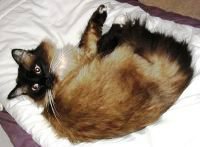
Cats in general do not make reliable Muses. My Muse is Smokie the Ragdoll cat; I introduced him in my Fat City Mysteries as Elfie, Kate’s Ragdoll. (I changed his name and gender to make sure he didn’t know I’d “used” him as a character!) Elfie née Smokie is a great character, but a finicky Muse. He turns up to lend creative inspiration only when he damn well pleases. Mostly he’s pleased when I’m opening a can of tuna.

Recently I wondered about famous writers and their muses. I did a little digging: 

F. Scott Fitzgerald:

F. Scott Fitzgerald’s most potent Muse was probably his wife, Zelda.  Her Muse-dom came with a catch, however: she refused to marry Fitzgerald until he could support her in a lifestyle befitting America’s first celebrity flapper. Fitzgerald sprang into action. He quickly cranked out THIS SIDE OF PARADISE, and published it to critical success. Zelda agreed to marry him soon afterward. Then she set about making the rest of his life a living hell. 

The F. Scott Fitzgerald Rule about Muses: Don’t marry them.

Ernest Hemingway

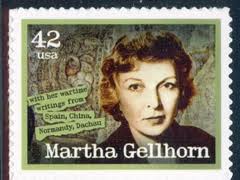
Hemingway had a similarly bad outcome with one of his Muses, journalist Martha Gellhorn. The couple met at a bar in Key West (where else?). She later became his third wife. Gellhorn was reportedly too strong and spirited for Hemingway. She dumped him.

The Hemingway Rule about Muses: See the F. Scott Fitzgerald Rule.

I’m beginning to see a trend here. Famous writers are inspired by living, real people. People with whom they have hot, torrid affairs, but are better off not marrying. 

Hmm. Those of us who are happily married to non-Muses will simply have to find our creative inspiration another way. 

What about you? Do you have a Muse? If so, send us a picture. We’ll post the pictures this Friday. You can send the picture of your Muse to killzoneblog at gmail dot com.

Prequels, Sequels, Novellas…The Ebook Deluge

by Clare Langley-Hawthorne

A while ago I blogged about increasingly expectations among publishers (and the reading public) that  authors produce more than one book a year – now, as I peruse the emails in my inbox from Amazon, I’ve noticed another phenomenon – the increasing number of ‘extras’ authors are now providing. 


There was an email regarding the new prequel to James Dasher’s book The Maze Runner (which I loved – will be pre-ordering that for sure!) and then a notice regarding an e-book offering from Veronica Roth (who wrote the terrific Divergent Trilogy) with a novella describing a key scene from her first book from the male protagonist’s point of view. This, coupled, with all the extra content I am seeing on offer from authors (including, I might add from one of our blog mates, Michelle Gagnon, who has written an e-book prequel entitled No Escape,  to her young adult book Don’t Turn Around), has got me wondering about the pressure authors now face to produce a stream of material to support their full-length books. 


Publishers are obviously keen to keep the buzz alive with a plethora of e-book offerings – from prequels, novellas and short stories – in an effort to sate readers’ appetites until the next full-length book is released. As a reader I love this (always happy to gobble up more from my favorite authors!) but as a writer I wonder about the pressure these increasing demands place (especially in light of the need to produce more than one full-length book in the year as well!)


Though I am seeing most of these additional content offerings in young adult fiction (which makes perfect sense),  I wonder whether this reflects a kind of tipping point, not just in young adult books, but across the board. Now, don’t get me wrong I think it’s great that e-books and online marketing make this kind of additional content and material accessible. It gives authors an ideal opportunity to introduce readers to the worlds they have created and to further drive interest in their work. The push to supply all this  additional content must, however, come at a cost – and I am wondering, as writers, how we feel about having such increasing demands on our time, creativity and energy. How can we juggle all the demands now made upon us?


So I’m looking for feedback:

  • For those of you with upcoming releases, how much pressure has there been to produce prequels, novellas and other e-book shorts? 
  • How have you found juggling these demands with those of your full-length projects? 
  • How do you maintain standards? 
  • Have you said no to any of these demands? 
  • Have you contemplated ‘outsourcing’ some of these extras to ghost writers or publicists? 

For everyone else, have you noticed this trend? What do you think of it? Does some of emphasis on volume of content dilute the books or enhance them?


Words we love way too much

I have a bad habit of overusing pet words in conversation. Every once in a while I’ll seize on an appealing new word and insert it at every opportunity.

Often I’m unaware of this repetition until someone points it out to me. Usually that someone is my youngest sister. 


“Is ‘draconian’ the new word of the day?” she’ll ask helpfully.  “That’s the third time you’ve used it today.” (I figure her obsessive need to point out my verbal flaws is a youngest sister thing.)


I’ll think back and realize that yes, I have been overdoing draconian. I’m on a draconian diet. The city council passed draconian new trash-day parking fines. And so on.


“Epiphany” is another word I’ve pounded into the dust. If I ever have another epiphany in my lifetime I’ll have to keep it to myself, because that word has been banned in my circle of close friends and relatives. I call them my Beta Chatters.

I’m always looking for signs of Word Repeatus Syndrome in my writing. And I usually find it. I’ve learned to do a global edit for any suspicious words. Suspect words include any that I particularly like. For example, “halcyon” would be a word I’d check, just because I like how it sounds. I’m probably a recidivist repeater of that term.  I’d also check  ‘recidivist’. If the word appears more than two times in the manuscript, or once in a chapter, I rewrite it.

I always check for repetition when a beta reader asks  about the meaning of a word. You can get away with using an unfamiliar word once, but do it twice and you look like you’re trying to be a pretentious know-it-all. (See last Friday’s post).


What about you? Do you have a tendency to overuse favorite words? Do you make a special effort to root them out during edit?

Kirkus Indie: When a Review is Good for You

By: Kathleen Pickering  www.kathleenpickering.com

Great news for the self-published author looking for a marketing boost above the pile: Kirkus Indie reviews self-published works.

Believe it or not, word of mouth is still one of the strongest motivators for sales. Book sellers, librarians, book clubs, reviewers—your best friend—will all have an answer if ask, “Have you read anything good lately?”

Here’s where Kirkus Indie comes in. To quote them directly, “The Kirkus Indie program gives independent authors a chance to obtain an unbiased, professional review of their work, written in the same format as a traditional Kirkus review with the same chance of earning the coveted Kirkus Star.

Our Indie program curates the self-published segment of the industry to help consumers and industry influencers (such as publishers, agents, film producers, librarians and booksellers) discover books they may otherwise never find.”

The beauty of a Kirkus review is that you, the author, can chose whether or not the review goes public. If you don’t like the results, use the 250-300 word critique to improve your work and move on. However, should you be tickled to the tailbone about how your book was received, not only is the review yours to publish as you see fit, Kirkus will  post the review on their website at no extra charge. (The fee, I’ll discuss later. I want you to see the good stuff first.)

In addition to the website review, your review also gets distributed to their licensees, including Google, BN.com, Ingram, Baker & Taylor and more.

And if that’s not enough, the editors will consider your  review for publication in Kirkus Reviews magazine, which is read by librarians, booksellers, publishers, agents, journalists and entertainment executives. Plus, the review may be selected as a feature in the Kirkus email newsletter which distributes to more than 50,000 industry professionals and consumers.

Now, you ask, who does the reviewing? Meg LaBorde Keuhn, COO of Kirkus Media recently told Author Cheryl O’Donovan in a RWR article that editorial integrity is sacred to Kirkus. Only professional reviewers who are genre experts, independent and totally unbiased are hired.

O’Donovan cited author Darcie Chan who said a Kirkus Indie review played an important role in helping her make self-publishing history by selling over 500,000 e-books and counting. The Kirkus Indie review encouraged readers to take a chance on her as an unknown author.

Nice. Smile

Kirkus Indie is the fastest rising segment in the Kirkus organization, being followed closely by its new editorial service. (Visit Kirkus Editorial for more info.)

What’s the catch? You pay for your review.

Standard service with a 7-9 week response time costs $425. Express services for $575 returns your review within 4-6 weeks. Kirkus Indie requires two copies of the published book or completed manuscript. For e-book only format a manuscript PDF is sent directly to the editor.

Now, we all know that the self-publishing industry is booming. This author believes that obtaining a favorable review from an established reviewer branded with an 80 year reputation for being the toughest book critic in the world makes good business sense.

What do you think?

Write on, my friends!

xox, Piks

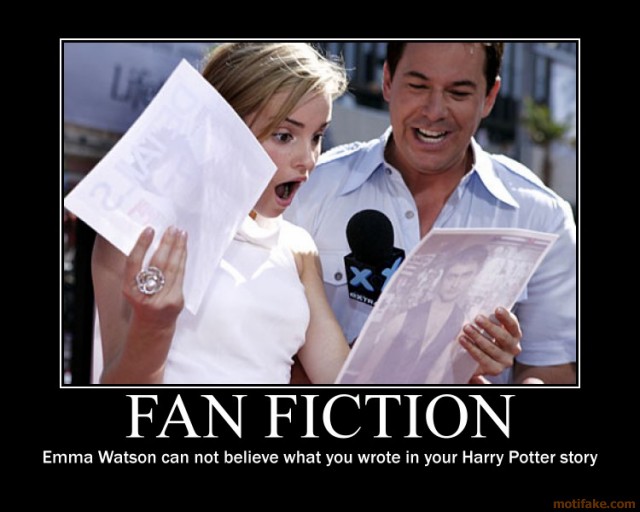
Fan Fiction

by Clare Langley-Hawthorne

If another person asks me whether I have read Fifty Shade of Grey I will scream (I haven’t by the way) – though far worse are the well-meaning acquaintances who eagerly ask whether my current book is anything like it (because, of course, a historical mystery writer would be writing erotic fiction wouldn’t she?!)


My answer is always the same – no…no, I’m not particularly interested in reading about sadomasochistic sex and no, I’m not particularly interested in writing about it either. I’m also not all that interested in reading or writing fan fiction though most of the women I know who have read Fifty Shades of Grey are surprised when I tell them this is how the trilogy initially began – as a homage to Twilight’s Edward and Bella. 


I don’t know a great deal about fan fiction but it would I guess Fifty Shades of Grey is the most successful of its kind (even though, obviously, it has moved beyond this now and has it’s own characters etc.)  and seeing its success it got me thinking about why people write fan fiction and how the original writers/creators feel about this. 

Obviously the likes of Jane Austen aren’t with us to provide pithy bon-mots on the whole “Pride & Prejudice with Zombies” phenomenon but I am sure many authors have mixed feelings about their fans writing works derived from their own. It must be a strange feeling reading someone else’s take on the characters and worlds you have created, and I wonder how I would feel if this happened to me. To be honest I would just be amazed that any of my books had inspired fan fiction:) but, after that, my true feelings would probably be pretty mixed about the whole thing. Would I feel flattered? Dismayed? I’m not really sure (and it would depend, of course, on the nature of the fan fiction involved).


So what about you? As a reader have you ever been inspired to write fan fiction? As a writer, what would be your take on it? 

Drop that polysyllable!

Source: The Onion

Last year The Onion referenced a new “feature” in Microsoft Word: a squiggly blue line which alerts the writer when a word is “too advanced for a mainstream audience.”

Okay, so the squiggly-line thing was just an Onion joke. But I think writers actually do feel pressure to choose simple words to avoid alienating readers.

Here’s an example: A few months ago, after reading my manuscript to my writer’s group, I got a quizzical reaction to the word “fortnight.”  No one knew what it meant (a unit of time equal to 14 days.)

Our group is made up of well-educated, professional people, so I was stunned that no one had heard of the word. Granted, fortnight is primarily used in Britain and the Commonwealth countries, rarely in the US. But still.

Grudgingly, I rewrote the line to use “two weeks” instead of fortnight. But the new version seemed flat. So I changed it back. (And anyway, my character has a British boyfriend, so there!)


I don’t intentionally reach for “big” words to impress people. I select words for precision and rhythm. The best backhanded compliment I ever got was when a manager said, “You use big words, but unlike most people, you sound like you know what they mean.” Uh, yes.

The first external pressure I got about vocabulary took place when I was writing Nancy Drews. The writers were discouraged from using words that might lose the young readers. I think that’s a mistake. When I was reading Nancy Drews at age ten, one of my biggest joys was to discover new words. To check the kinds of words I looked up back then, I went back to my ancient copies of ND; I found the word “portend” on the jacket copy of one book. Portend! What are the odds that portend would make it into contemporary versions? Nada much.

Gradually over the years, vocabulary-stretching seems to have become less popular. If the “mainstream audience” doesn’t know a term, the thinking goes, it must be a reader turnoff. Some writers self-police by avoiding the unfamiliar.


Maybe this trend will go away with the advent of ereaders with built-in dictionaries. Or maybe there’s no trend, and I’m off base. So tell me: Do you feel pressure to rein in your vocabulary in your writing? Do you shy away from using a perfect word because you fear you might lose a reader?

A collective Primal Scream

I have a close relative whom I’ve loved dearly for nearly half a century. It was only after we became social media friends, however, that I discovered she is an avid partisan. Make that rabid partisan. Whenever I open Facebook, my Notification globe bleeds red with urgent missives–it’s her daily in-flow of videos, cartoons, and other headlines designed to enlighten me about the hanky-panky of political evil-doers.

Other friends and family proselytize across a spectrum of political thought, and beat the drum for pet causes. One matriarch frequently emails me jokes making sport of one candidate in particular. (She knows I like the guy, so I have to assume she’s being passive aggressive–a common, if somewhat unlovable, trait in my family.)

I used to get irked by the chatter. Sometimes, especially when someone forwarded me a particularly outlandish bit of Internet lore, I’d retort with articles of rebuttal, or a link to Snopes.


Now I’ve changed my thinking. It’s been a rough week for America, and we’re heading into a hotly contested political season. People are cranky.We’re not just cranky at the other guy’s candidates. We’re pretty much ticked at our own candidates, too. Everyone’s upset about different things, and no one is coming up with great solutions. Or any solutions.


When I was at Wellesley years ago, we had a biannual tradition known as Primal Scream. On the eve of final exams, we’d run through the hallways collecting haggard, haunted-looking freshmen. We’d gather them on the roof of McAfee Hall and tell them to scream. Just scream as loud as you can, we said. Get it all out. There we’d stand, 40 or so young women strong, screaming from the roof at the top of our lungs. God knows what the campus police must have thought about Primal Scream. And then, slowly, we’d begin to laugh. Huge gales of giddy, exhausted, exam-demon purging laughter. Somehow cleansed, we’d return to the books.


I’m beginning to see the outcries on social media as our society’s Primal Scream. Instead of standing on a rooftop, we’re tweeting and venting from Facebook and Twitter.


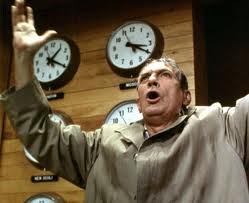
Thirty-plus years ago in Paddy Chayefsky’s “Network”, an anchorman loses his cool on the air. He exhorts his viewers to get mad, throw open a window, and scream.  Back in the day the idea of a raving anchorman was an absurd, darkly funny notion. Now it’s SOP. This will give you an idea: Yesterday when I was playing Howard Beale’s “Network” speech on my laptop, my husband padded through the room.


“It’s just the same old news over and over again,” he complained, mistaking Chayefsky’s Academy Award-winning speech for a cable news opinionator.


As an author, I try to curb my instincts on social media. For example, I’ll reread this post three times to make sure I’ve purged it of any identifiable sectarian tilt. But I no longer resent speechifying by family and friends. I have reframed it in my mind. I see us all standing at our windows and on the rooftops, unleashing our malaise into the dark. It might be a cleansing thing for the collective soul.


In your author role, do you steer clear of politics, religion et al online? Have you ever stepped unwittingly into a hornet’s nest by expressing a particular view?

Villains in Fiction

by Clare Langley-Hawthorne

In the aftermath of any tragedy it is human nature to seek out a rationale – a reason or some kind of motivation – for what has unfolded. It is a basic part of a psyche, I think to try and understand human behaviour, even when it seems bewildering, horrendous and evil. Real life events, such as what happened on the weekend, are incomprehensible on so many levels and as writers we face many issues and concerns when creating fictionalized evil. We often tread a fine line between entertainment and horror as well as believability and imagination.


As writers we also have to delve into the minds of all our characters to try and understand what makes them tick, and we have to move beyond mere stereotypes, particularly when forming our antagonists. 


It can often be all too easy to fall for the ‘psychotic’ serial killer or other sort of evil cliche without trying to provide for the reader a solid grasp of what lies behind this. Villains rarely consider themselves villains. Sometimes they feel justified (in their own perverted way) or compelled by something to do what they do. Unlike in real life, in fiction, we can often provide the reader with a rationale for someone’s behaviour.


So how do you create a believable villain? How do you ensure that, when it comes to the battle between good and evil, neither side slides into caricature? I’ve been thinking about this a lot in my current WIP and I have some to a few conclusions (or observations, at least) as I go through this process:


1. Characters don’t think they are dumb so don’t make them do ‘dumb’ things just because they are (cue manic Dr. Evil laughter) the bad guy. 
2. Don’t fall into the trap of making evil generic. For every character there needs to be a specific reason, cause or motivation for his or her behaviour. The more specific and believable this is, the more believable a character will be.
3. Give you villain a clear objective. I’m not a big fan of the psycho who just seems to do stuff because he is, well, ‘psycho’ – this always seems to the to dilute the power of having an antagonist. 
4. Think as much about the back story for your villain as you do for the protagonist of the story – this will ensure the character behaves consistently and with clear purpose. It also helps you avoid falling into a cliche if you have a fully realized back story.


So how do you approach the process of creating villains? Are there any ‘evil doers’ in novels that strike you as the ‘dumb and dumber’ of their kind? What about the most chilling, compelling and believable villains in fiction? 

Reader Friday: Questions for TKZ?

Hey guys, it’s Reader Friday, and we want to know what’s on your mind. Do you have any burning writing questions you’d like to ask the TKZ’ers? Post ’em in the comments. We’ll be monitoring the blog today, and will update it with answers. (Of course, you can ask non-writing questions too, but your results may vary!)


Meanwhile, let’s play a game we haven’t played in a while. Grab the closest book to you right now. Not the best selling book, or the most impressive, but the closest one. Now turn to page 67. What is the third sentence on that page? Post it in the Comments, and we’ll try to guess what book it’s from. Or if we can’t, we can make up a title! Whoever posts should come back later in the day and reveal what the title is.


Here’s one to start:


“I will never forget that moment.”