Our friend Basil Sands posed a question for today: How deeply do you develop the characters in your fictional world, and do you write about them beyond the primary works?
“I just put up a novella and a couple shorts that flesh out some of my main characters from the past four books with details that had been alluded to in those books,” Basil writes. “Do you guys & gals do stuff like that? And when you do, do you keep it to yourself or put it up for the world to see?”
Over the past couple of days we’ve been having some good discussions about paid reviews on Amazon, and the credibility of online reviews. Most people said that Amazon reviews don’t affect their purchasing decisions. So I started wondering: Nowadays, how do people hear about the books they purchase? Is it mostly by word of mouth, blogs, reviews? Or some other way?
I thought I’d start an unscientific survey. Tell us the title of the last book you purchased, and describe how you heard about it. (I know there’s got to be a way to insert an actual poll in this post, but I have no idea how to do it. So tell us in the comments!) Has the way you hear about new books changed much over the past five years? My most recent book purchase was A WORLD ON FIRE: Britain’s Crucial Role in the American Civil War, by Amanda Foreman. I heard about it on BOOK TV (It’s one of my favorite go-to sources for reviews and author interviews. I often grab my Kindle and buy something immediately after watching a book discussion there). What was yours?
Jim’s timely post yesterday on the paying for reviews scandal involving the self-published ‘John Locke’ got me thinking about the changing nature and validity of ‘reviews’ in the cyber-age. We’ve had flame-wars, hate campaigns as well ‘friend’-reviewing and, more recently, the purchasing of favorable Amazon reviews all in the name of attaining that most coveted of prizes – the title of ‘bestselling author’. Given all the hoopla, I was interested to see The Guardian’s book blog posting question ‘are Amazon reader reviews killing off the critic?‘ In this blog post they ask whether ongoing issues with Amazon reviews have killed off the book review or whether they have actually made traditional, editor-commissioned book reviews more important than ever? I have been mulling over same thing though wondering whether the answer to this question is even relevant. It’s clear that most people buy books based on the recommendations of friends and from ‘word of mouth’ rather than Amazon reviews – though in this day and age, word-of-mouth opinions is often generated by online hype which (as the John Locke case illustrates) are easily open to manipulation. While I like Jim’s solution to open up more books for readers to look at online – so they can read sample chapters for themselves and decide – I still wonder about the increasing irrelevance of reviews. At the moment I view most Amazon reviews with skepticism – as more-often than not the one-star review sounds like a rant and the five-star review sounds like pandering. However, I also find it’s getting increasingly harder to distinguish promotion from objective reviews online at all, and it’s pretty clear that publishers and authors alike are desperate for anything that will set them apart from the background ‘noise’ of the Internet. This means for me, at least, I take most online reviews with a grain of salt. I do, however, continue to view reviews found in newspapers, magazines and journals with some degree of confidence. Not that I will agree with the reviewer by any means – but I do regard what is written as an actual critical appraisal rather than an exercise in PR. So what do you think? Have online reader review sites basically killed off the traditional book critic? Do you think independent book reviews (in newspapers or other media formats) still resonate with readers or are they of only marginal importance?
I am for a number of reasons happy to watch the month of August 2012 receding in the rear-view mirror. Let’s hear it for September. I thought that instead of crafting some offering, weighty or otherwise, it might be interesting to ask some questions and get some answers. Obviously, you don’t have to answer them all or even participate to begin with; and I won’t comment on answers (as Gallagher says in another context, it’s okay to laugh, just don’t point!).
Here we go. My own answers follow each question:
1) Last book I read: GONE by Randy Wayne White
2) Last television show I watched: Copper
3) Last movie I watched in a theater: Cast Away, in 2000 (yes; it has been that long since I have been to a movie theater)
4) Last movie I watched at home: Body Heat
5) Last music CD I listened to: The Complete Ric & Ron Recordings, Vol. 6
6) Last person with whom I spoke on the telephone: my younger daughter
7) What time I went to bed last night: 11:10 PM
8) What time I woke up this morning: 5:20 AM
9) Strangest thing that happened to me in August: I took my daughter to her doctor and the office receptionist lost my driver’s license and medical insurance card
10) If I were having one last meal, I would I want it to be? Zapp’s Voodoo potato chips 11) and a bottomless glass of Barq’s Root Beer
12) In September, I am looking forward to: The Cutting Edge Entertainment Law Seminar in New Orleans
It is a truth universally acknowledged, that a single man in possession of a good fortune, must be in want of a wife.
It was the best of times, it was the worst of times.
That all important first line of a novel…the one I agonize over as a writer. The one that, when I pick up a book, I read to assess (along with the rest of the first page) whether I’m going to buy it or not. But how much does it really count? In my current novel, I spent a long time deliberating over the first line – not because it was complicated or particularly awe-inspiring but because it needed to immediately draw the reader in and establish that things had already gone awry for one of the main protagonists. The first line is literally the hook to grab your reader and pull him/her in – but really, how much time should you spend on getting it right?
In my opinion, an ideal first line should immediately establish one of the following:
Mood
Theme
Dissonance
Threat
Character
World
It should neatly encapsulate the theme of the story to come and lead seamlessly into the first page that, as we have so often blogged about, is integral to creating a compelling (and ultimately saleable) novel. And this the entry point can be unforgettable. I mean who can ignore the simplistic beauty of the opening to George Orwell’s 1984: It was a bright cold day in April, and the clocks were striking thirteen. Immediately we get a sense of mood, a sense of foreboding, and a vision of a world quite different to our own – and all in one line. Or take Ray Bradbury’s first line of Fahrenheit 451: It was a pleasure to burn. and my personal favorite (maybe because this is so often true…) I have never begun a novel with more misgiving (W. Somerset Maugham, The Razor’s Edge). But sometimes I wonder, is it worth all the agony? Do you think the first line of a book is really that important? Apart from the classics, what memorable first lines have you read recently?
Note: We’re delighted to announce that writer Kristy Montee has joined the TKZ family. Kristy and her sister Kelly Nichols write as P.J. Parrish, the New York Times bestselling author of ten Louis Kincaid and Joe Frye thrillers. Their books have appeared on both the New York Times and USA Today best seller lists. The series has garnered 11 major crime-fiction awards, and an Edgar® nomination. Parrish has won two Shamus awards, one Anthony and one International Thriller competition. Kristy has her first post next Tuesday. Stay tuned!
I attended my first writer’s conference back in 2005. Armed with an almost-finished manuscript and hungry for information about the publishing business, I absorbed every panel I could squeeze into two days.
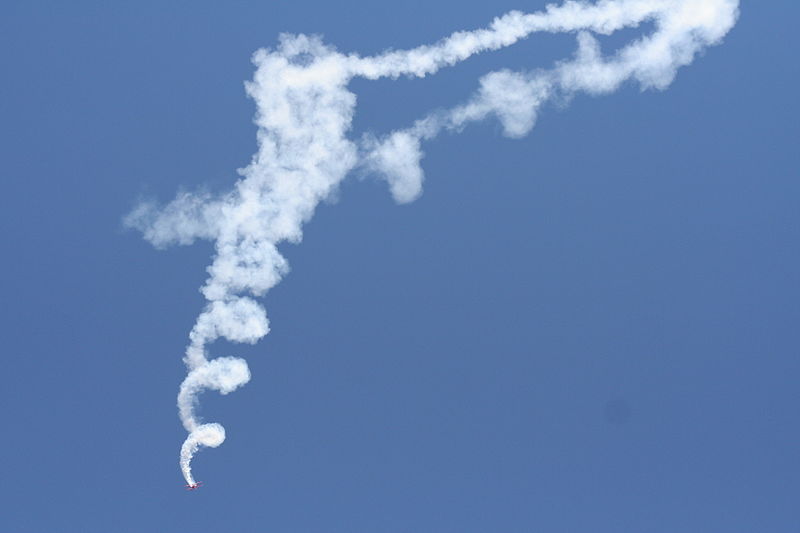
During a panel on how to write series fiction (I didn’t have an agent yet, so I was dreaming big), we learned about something called the “death spiral.” A death spiral occurs when a book’s print run doesn’t sell out completely. This sales gap prompts the publisher to order a smaller print run for a writer’s next book, guaranteeing lower sales numbers the next time around. And so on. The result: the death spiral.
I left that presentation feeling haunted by the notion of a death spiral. Death spirals help explain why new writers have traditionally felt intense pressure to promote their books in the first twelve weeks. If your book doesn’t thrive during its brief tenure on the bookstore shelves, the thinking goes, you might not get another shot. In an industry where sales numbers follow writers forever, the unfortunate victims of death spirals were sometimes advised to start the publishing process over by adopting a pseudonym.
Then along came the explosion in indie publishing. Say what you will about indies, the stigma of self-publishing is rapidly disappearing. Readers have made it clear: They don’t care who publishes a book. They just want a good read.
It occurs to me that indie publishing may finally put an end to the dreaded death spiral. Or at least, writers now have the hope of a softer landing. If a publisher doesn’t renew our contract, we can simply publish on our own–and possibly even make more money.
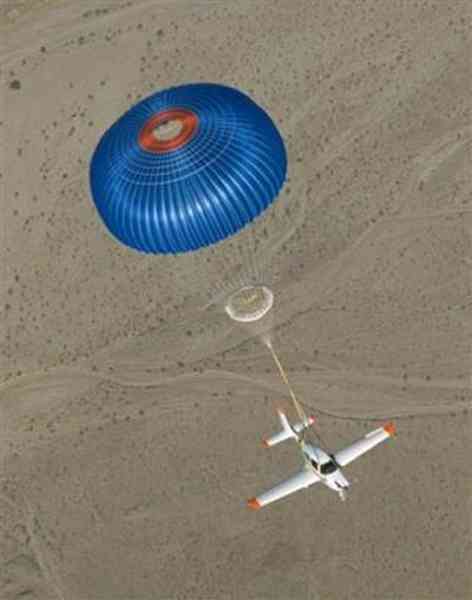
The idea of indie-publishing as a career parachute won’t be news to most TKZ’ers. But I remember how nervous I was about death spirals, just a few years ago. If I were in the same position today, I wouldn’t be quite as anxious.
How about you? As a writer, have you ever worried about falling into a death spiral with your publisher? Has the increasing viability of indie publishing changed your outlook at all?
My twin sons are avid absorbers of books and between what they can read themselves, what we listen to on audio books and my bedtime reading to them, we seem to have amassed an amazing backlist of children’s books. Now, of course comes the inevitable plea-“why can’t you write a children’s book, mum?” (my current output gets little more than a collective shrug from these two). I have to confess I have an idea brewing which I think, maybe, possibly, might make a terrific series chapter book…but (and it’s a big but), books for children are not an endeavour I would ever enter into lightly. Children’s books are, in my opinion, some of the hardest to write. Not only because children are the harshest, most brutally honest of all reviewers but also because I remember the impact reading had on me as a child and I want to live up to those expectations. In the spirit of this, I have been compiling a list of my favorite chapter books I read as a child and identifying what made these so significant and memorable to me. There are books such as those by Enid Blyton that made me wish I could have adventures on my own island, classics such as Little Women that made me cry, and books like A Wrinkle in Time and the Narnia series that made me want to create my own fantastical worlds. What sets all of these books apart from the dull readers we were obliged to consume at school was the same elements that make a great thriller or mystery – they created compelling characters and places, had terrific plots and pacing and were the sort of books you literally couldn’t put down. So not much to live up to right? As I continue my ‘research phase’ on children’s chapter books, I’d love to add some more titles to my list – ones that are the kind of books that stand the test of time. I’d like you to cast your minds back to when you were about eight or nine, and remember the books that made all the difference to you. They might be the ones that first inspired you to write – or the ones that made you the avid reader you are today…then let me know what you think about writing for children: a terrific new adventure or potentially treacherous seas?
It’s Friday, and this week we’re leaving the blog open for general discussion. What’s on your mind, writing-wise? We’d love to get a discussion going today based on your input. If you have any questions for our bloggers and readers, this is a good time to post in the comments. Here are some possible topics for discussion (but feel free to add more): What are you working on these days? How is it going? Are you having any specific stumbling blocks you’d like us to talk about? Have you been submitting work? If so, how are you finding the marketplace? What’s working for you, what’s not? Happy Friday, guys! And as always, thanks for being part of the TKZ community!
Recently I served on a panel at the Romance Writers of America annual conference on the topic of “Care and Feeding of the Writer’s Soul.” Below is only a fraction of the empowering presentation put on to a full house by Ellie James, Trinity Faegen, and yours truly. I had no idea how important our message would be to the attendees who found us afterwards and hugged us with tears in their eyes. So my message today is to take care of YOU.
1.) Meditation – Meditation isn’t about chanting “Ohms” and contorting your body. ANY repetitive action can be considered meditation—walking, swimming, painting, and knitting—any activity that keeps your attention calmly in the present moment. When your mind is at rest, the brain can be stimulated in a creative fashion.
2.) Visualize Being Relaxed – Imagine a relaxing setting away from your tensions, your perfect dream spot. This could be a vacation spot or a fancy luxury spot where you are pampered. Visualization could also include something you touch to trigger that feeling of calm—a silk robe, warm water, or a cashmere sweater.
3.) Breathe Deeply – Relaxed breathing is deep, not shallow. Get in a comfortable position and let out all the negativity in a deep expelled breath through pursed lips. Drop your shoulders to release the tension and imagine your core as the powerful place of your strength. Keep your mind focused deep into your power spot and consciously expel the stress with each breath. Breathe in the new and expel the negative until you are renewed. Believe it and make it so. Do this TEN TIMES and feel your body relax more with each step.
4.) Take a Look Around You – Something an author should do anyway. Keep your mind focused on one thing. No multi-tasking. Stay in the moment and focus on one thing or activity. Staying in the present can help promote relaxation, without all the clutter the mind can generate. If you are outdoors, focus on a bed of flowers or the sound of the birds. If you’re in a mall, keep your attention to one window, maybe one pair of shoes. Focus on how it was created, examine the details. Tell a story about that one object. As long as you focus on one object in the present, stress will take a backseat.
5.) Drink Hot Tea – Make a moment in your day to have a cup of tea. Go green. Coffee raises levels of the stress hormone cortisol in the body, while green tea offers health and beauty. Chamomile tea is a traditional herbal favorite for its calming influence. Any black tea is a stress reliever too.
6.) Show Love – Cuddle your pet or give an unexpected hug to a friend or family member. Giving a hug is like getting one back. Snuggling is good too. Snuggle that spouse who supports your writing. Social interaction helps your brain think better. Ever try a hug or snuggle for writer’s block? Physically showing affection—like stroking your pet—may actually lower your blood pressure. It can’t hurt.
7.) Self – Massage – If you don’t have time to visit a professional masseuse, try giving your neck a rub with both hands or use one hand to massage the other arm and alternate. The act will increase your blood circulation and be part of your newfound ritual to take care of yourself. Reward yourself with this each day when you’ve hit your word count. Make it your ritual of caring.
8.) Take a Time Out – When you sense stress happening or too much is bombarding you, take a time out. Walk away. Go to your happy place. Don’t let stress win. Find a quiet corner or room and decompress. Listen to your breathing and your heartbeat. Slow everything down. Remember that time is always on your side.
9.) Take a Musical Detour – Maybe with your afternoon tea, add music. If your mind is focused on the beauty of each note, this can also accomplish relaxation by keeping you in the present, away from your stressers.
10.) Take an Attitude Break – Believe it or not, THIRTY SECONDS is enough time to switch from stress to relaxation if you make the time. To do that, engage your mind in positive thoughts. Do this by anything that triggers a positive feeling in you—picture your child or your spouse, imagine your pet doing something cute, or picture wearing your favorite jewelry or shoes. Whatever that image is, it will slow your breathing, relax your tense muscles, and put a smile on your face. Your heart rate will slow down and a feeling of peace will follow.
Share what gets you through stress. You have any good tips?
To close, I’d like to share another secret with you: the outrageous benefits of Laugh Yoga. The technique is simple and can be done at any time, including five in the morning in Mumbai.
If you have trouble with this video, click on the link HERE.
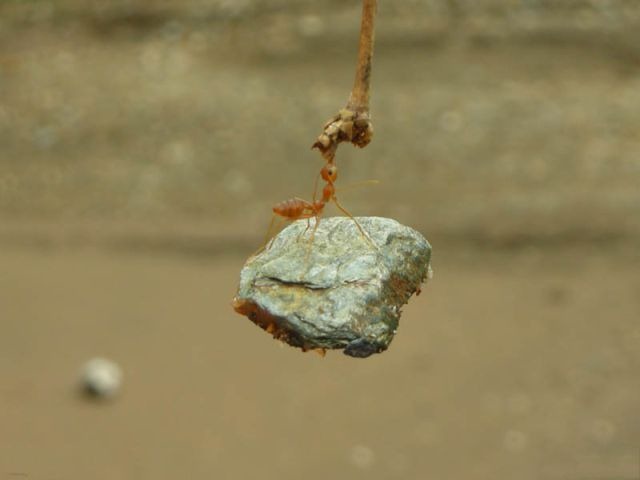
Dig this ant. Biting a stick while being lifted off the ground AND holding on to what would seem the equivalent of Mount Rushmore to one of us humans.
I exaggerate, but you get my point. That little arachnid doesn’t even have a six pack, or long hair, a tattoo or wear the latest sports gear—not even a pair a sneakers to get the job done.
What he is doing, is what he was born to do. And that simple expectation, folks, is all we should want from ourselves.
Especially, as writers. If we didn’t have the tools of the trade, we’d be talking up a storm, making sure our stories were getting passed down and around because before authors had technology, pens, parchment or rock faces to inscribe their thoughts, they had mouths. Authors spoke their stories twining them into legends, fairy tales and fables for their clans.
It’s all about adapting. Life is that journey of knowing who you are and growing where you are planted. You don’t give up. You don’t gripe. You search out the most exciting and creative path and keep growing. Ultimately, you create beauty of your own by doing what you were born to do whether the world cheers you on, fails to notice or stands in awe at your creativity.
Working with what you got is the best gift you can offer. I invite you all to celebrate yourselves in your writing careers (or your whatever careers!) because as unique as you are, we certainly are lucky to have you.
This blog will be serving as my parting words as a “second” Tuesday blogger on The Kill Zone. Unfortunately, my Mount Rushmore is getting a bit bigger than I can handle, so I have to shave a bit off the boulder here and there. I have enjoyed my short time among the esteemed Kill Zone crew and am honored they gave me a slot!
I’m hoping that perhaps once in a while an opportunity will arise to sneak in a post. But, for now, I have to sign off. Thank you all for spending time here. I know my replacement will have plenty to share. So stay tuned!
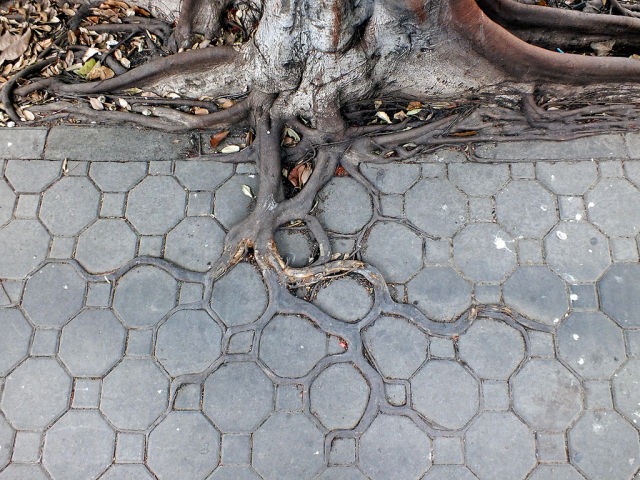
I’ll see you guys on that writing sidewalk. You know, the one that’s always there—you just step on when you can, or off when you need to. I think I’ll be sprinting for the next few years, but don’t let me pass you by without a hello!
Write on, my friends, and thanks for all the fun. The Kill Zone rocks!!